Top local listing services for B2B manufacturing are platforms that distribute a plant's name, address, phone, categories, and structured business data across search engines, data aggregators, and industrial directories so procurement buyers can find the right supplier. The category includes general citation networks like Yext, BrightLocal, Whitespark, Moz Local, and Synup, alongside industrial directories that index manufacturing-specific suppliers.
This guide covers the definition of a local listing service for industrial firms, why manufacturers should compare options before subscribing, the leading platforms and the directories they syndicate to, evaluation criteria for multi-facility plants, the features that matter most for industrial buyers, an implementation playbook across a manufacturing network, and the common mistakes that quietly cost rankings.
We define what separates a true listing service from a generic local SEO tool, and explain why industrial directories matter alongside Google Business Profile.
We compare the major platforms head to head, mapping each to data aggregator coverage, industrial directory reach, pricing models, and reporting depth so multi-facility manufacturers can match a tool to actual procurement search behavior.
We unpack the features that drive results: schema and structured data support, review management built for industrial suppliers, multi-facility setups, and the reporting metrics that connect listing health to RFQ pipeline.
We close with an implementation sequence for rolling listings across a plant network, plus the costly errors to avoid, including category misselection, inconsistent NAP across facilities, and what actually happens when a subscription-based service lapses.
What Is a Local Listing Service for B2B Manufacturing?
A local listing service for B2B manufacturing is a platform that distributes a plant's name, address, phone, categories, hours, and structured business data across search engines, data aggregators, and industrial directories so procurement buyers and engineers can verify the supplier. These services differ from generic listing builders because they handle multi-facility rollouts, industrial category taxonomies, and the citation footprint that underpins local seo for industrial businesses.
How Does a Local Listing Service Differ from a Local SEO Tool?
A local listing service differs from a local SEO tool in purpose and scope. A listing service pushes NAP, categories, and structured attributes into a defined citation network and keeps those records synced. A local SEO tool measures visibility, tracks rankings, audits on-page signals, and reports performance. Listing services write data outward; local SEO tools read data and diagnose it.
Why Do B2B Manufacturers Need Local Listings on Industrial Directories?
B2B manufacturers need local listings on industrial directories because procurement buyers research anonymously and rely on supplier databases, citation networks, and search engines that continuously exchange NAP data.
Industrial directories sit inside that spiderweb. A plant missing from Thomas, MFG.com, IndustryNet, or Kompass is invisible to buyers running supplier discovery, which still drives a meaningful share of qualified RFQs.
Which Citation Categories Apply to Manufacturers and Industrial Suppliers?
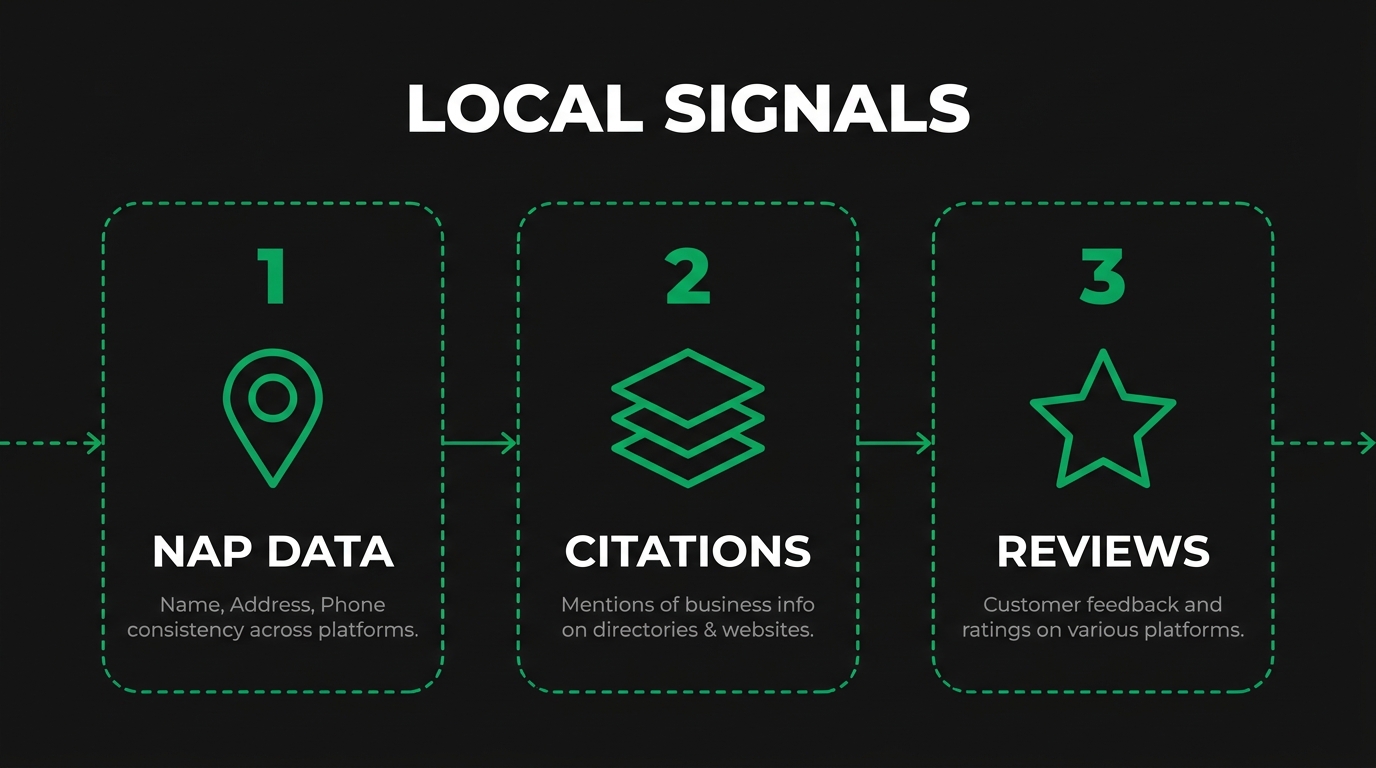
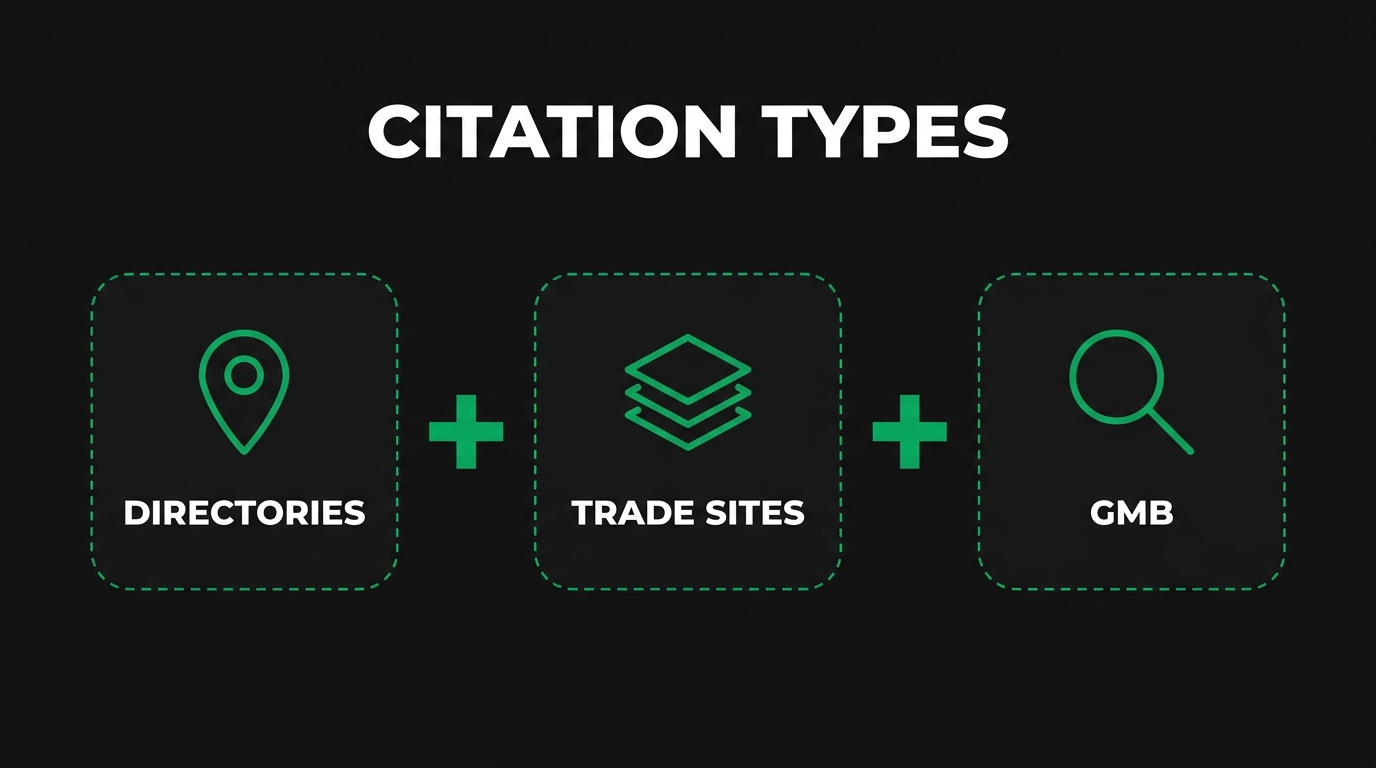
The citation categories that apply to manufacturers and industrial suppliers span four groups: general business directories (Google Business Profile, Bing Places, Apple Business Connect), data aggregators (Data Axle, Foursquare, Neustar Localeze), industrial supplier directories, and certification or association registries.
Industrial category depth matters. A CNC shop listed under a generic "manufacturer" category alone will lose visibility to competitors that claim specific process, material, and certification taxonomies. Accurate citation categories bridge directly into the feature comparison that follows.
Why Should Manufacturers Compare Local Listing Services Before Choosing One?
Manufacturers should compare local listing services before choosing one because each platform has different aggregator coverage, industrial directory reach, pricing models, and accuracy guarantees. A wrong tool wastes spend and leaves procurement queries uncovered. The sub-questions below explain how NAP consistency, duplicates, and listing errors influence rankings.
How Does NAP Consistency Impact Procurement Search Visibility?
NAP consistency impacts procurement search visibility by signaling to search engines that a manufacturer's plant is a single, trusted entity worth surfacing on local queries.
When a plant publishes mismatched phone numbers or addresses across aggregators, search engines downweight the entity. Procurement buyers searching a process plus city query then see a competitor with cleaner citations rank higher. NAP consistency is the floor of local search performance. The same discipline applies to seo for small manufacturing companies, where citation hygiene compounds quickly.
What Risks Come from Duplicate or Inaccurate Industrial Listings?
The risks from duplicate or inaccurate industrial listings include suppressed rankings, misrouted RFQs, and Google Business Profile suspension. Duplicates split entity authority across competing records, so neither version inherits the full citation graph. Inaccurate addresses route procurement contacts to the wrong facility, breaking the supplier evaluation funnel. Reviews and photos accumulate on the wrong record, eroding social proof on the canonical listing.
How Do Listing Errors Affect Google Business Profile Rankings for Plants?
Listing errors affect Google Business Profile rankings for plants by reducing category relevance, eroding trust signals, and triggering policy enforcement.
Category mismatches starve the profile of impressions on the queries it should win. Hours and phone errors lower conversion from impression to call. Per Birdeye's State of Google Business Profile, 86% of all Google Business Profile views came from category-based searches, which makes correct primary category selection the highest-leverage fix for industrial plants. Listing accuracy is rank insurance, not rank polish.
Which Are the Top Local Listing Services for B2B Manufacturing Companies?
The top local listing services for B2B manufacturing companies include Yext, BrightLocal, Whitespark, Moz Local, and Synup, alongside vertical industrial directories. Each platform varies in aggregator coverage, multi-location handling, and reporting depth. The sub-sections below profile each option and the manual directories worth claiming.
What Does Yext Offer Multi-Facility Manufacturers?
Yext offers multi-facility manufacturers a network-based listings platform that pushes verified location data into search engines, voice assistants, maps, and dozens of partner sites through direct API integrations rather than aggregator forwarding. The system supports CSV bulk uploads and per-location attributes, which suits manufacturers with multiple plants under one brand. Yext also bundles review monitoring, analytics, and structured-data enhancements aimed at multi-location operators.
How Does BrightLocal Support Industrial Citation Audits?
BrightLocal supports industrial citation audits by scanning a plant's NAP across major data sources, flagging missing or inconsistent listings, and offering managed citation building. The platform includes a Citation Tracker, Listings Health, and reputation tools tailored to multi-location reporting. For industrial firms, the audit module surfaces gaps across general aggregators and select industry directories, then prioritizes fixes by authority. BrightLocal does not directly push to as many partner sites as Yext, but its audit-first approach helps manufacturers diagnose what they own before paying for distribution. This makes it useful as a measurement layer alongside any distribution-focused platform when comparing local citation management tools for industrial businesses.
What Coverage Does Whitespark Provide for Manufacturing Categories?
Whitespark provides manufacturing categories with strong coverage of industry, niche, and regional directories beyond the major aggregators. Whitespark's local citation finder identifies citation opportunities competitors already hold, then offers managed services to build matching listings. The platform's strength is depth in long-tail directories that include trade-specific and regional industrial sources, which is valuable for plants targeting procurement buyers in defined geographies. Coverage of Foursquare and Data Axle, the two surviving major U.S. aggregators, is included.
How Does Moz Local Handle Bulk Plant Listings?
Moz Local handles bulk plant listings through a partnership-based distribution network that submits NAP data to Google, Facebook, and major aggregators including Foursquare and Data Axle, with batch upload for multi-location chains. The platform tiers pricing per location, includes basic review monitoring, and offers automated duplicate suppression on supported sources. Moz Local trades direct partner-site breadth for a leaner, more affordable footprint that works for manufacturers with five to fifty facilities. Reporting focuses on listing accuracy and presence rather than rank tracking. The product fits operations that already use Moz Pro for SEO measurement and want listings administration on the same vendor for procurement convenience.
What Are the Capabilities of Synup for Industrial Brands?
The capabilities of Synup for industrial brands include listings distribution to a partner network, review management, social posting, and analytics dashboards segmented by location. The platform offers automated NAP correction, duplicate detection, and CSV bulk upload for chains and franchises. Synup positions itself as an enterprise alternative to Yext at a lower per-location cost, with similar bulk-edit workflows. For industrial brands, the platform's directory partner list skews toward general SMB sources, which limits coverage of vertical procurement directories. Manufacturers should pair Synup with manual submissions to industry-specific platforms such as Thomasnet and IndustryNet to close the procurement directory gap that no general listings service fully closes.
Which Industrial Directories Should Manufacturers Submit To Manually?
The industrial directories manufacturers should submit to manually include Thomasnet, IndustryNet, GlobalSpec, MFG.com, Kompass, MacRAE'S Blue Book, and certification body registries. These platforms index process capabilities, certifications, and material specializations that general listing services cannot represent. Vertical directories also segment by emerging process families such as what is additive manufacturing, where buyers expect machine-envelope and material-grade attributes inline.
Submitting manually allows precise category selection, full capability descriptions, and inclusion of qualification documents. Trade association rosters add topical authority that data aggregators do not capture. The combined manual and automated approach maximizes citation depth across general local search and procurement-specific discovery channels.
How Should Manufacturers Evaluate Local Listing Services Side by Side?
Manufacturers should evaluate local listing services side by side on four axes: pricing model, aggregator and directory coverage, reporting and duplicate suppression, and integrations with existing CRM and ERP systems. The comparison framework below applies whether you run one plant or fifty.
What Pricing Models Do Listing Services Use for Multi-Location Plants?
The pricing models listing services use for multi-location plants include per-location annual subscriptions, tiered packages by location count, flat platform fees with location add-ons, and one-time managed citation builds. Per-location annual is the most common, ranging from roughly $150 to $1,000 per location per year depending on the directory partner network. Tiered packages reduce per-unit cost above defined thresholds, which favors larger operations. Flat-fee builds suit manufacturers needing initial cleanup without ongoing subscriptions.
Which Data Aggregators and Industrial Directories Does Each Service Cover?
The data aggregators and industrial directories each service covers vary, but the U.S. ecosystem now centers on two major aggregators: Foursquare and Data Axle. Yext covers a large direct partner network through APIs. BrightLocal, Whitespark, Moz Local, and Synup all push to the surviving aggregators with differing levels of partner-site reach. None of the major listings services covers Thomasnet, IndustryNet, or other procurement-specific directories at depth, which leaves manual submission as the only reliable route for industrial vertical visibility. Confirm coverage maps before signing, and request a current partner list. The same evaluation logic applies when comparing contract manufacturing vs custom manufacturing seo approaches at a strategic level.
How Do Reporting and Duplicate Suppression Features Compare?
Reporting and duplicate suppression features compare across services in three dimensions: scan depth, automation level, and remediation workflow. Most platforms scan a defined set of sources weekly or monthly. Yext suppresses duplicates automatically across its direct network. BrightLocal flags duplicates and provides a manual workflow. Moz Local removes duplicates on supported partner sites only. Synup offers automated detection with batch resolution. Whitespark identifies duplicates during the citation finder run, then handles cleanup as a managed service.
Procurement queries depend on a single canonical entity.
What Integrations Matter for Industrial CRM and ERP Workflows?
The integrations that matter for industrial CRM and ERP workflows include Salesforce, HubSpot, Microsoft Dynamics, NetSuite, and SAP for syncing location data, plus Zapier or webhook support for custom flows. Industrial manufacturers often hold authoritative location data in ERP systems already, so the listings platform should accept that source as the master record. Two-way sync prevents stale data when plants relocate or change phone routing. Review notifications routed into CRM allow sales and customer service to triage inbound signals.
What Features Matter Most for B2B Manufacturer Listings?
The features that matter most for B2B manufacturer listings are schema and structured data support, review management built for industrial suppliers, multi-facility setups, and reporting metrics that connect listing health to RFQ pipeline. The sub-sections cover each feature in procurement-grade detail.
How Important Is Schema and Structured Data Support?
Schema and structured data support is highly important because structured markup helps search engines parse a manufacturer's entity attributes and qualifies pages for rich results.
For industrial plants, LocalBusiness, Organization, and Product schema convey address, capabilities, certifications, and service areas in machine-readable form. Listing services that emit schema directly on syndicated pages, or sync structured data to a plant website, multiply citation value. JSON-LD is the W3C-recommended serialization. Without schema, a listing service distributes only flat NAP data and leaves entity relationships to inference.
Which Review Management Features Help Industrial Suppliers?
The review management features that help industrial suppliers include centralized review monitoring across Google, Facebook, and industry directories, automated request workflows tied to project completion, response templates, sentiment analytics, and FTC-compliant disclosure controls. Industrial buyers often weigh peer references heavily during supplier evaluation. Per the Federal Trade Commission, the Commission's Rule on the Use of Consumer Reviews and Testimonials addresses deceptive and unfair conduct involving consumer reviews and testimonials.
How Do Listing Services Handle Service-Area and Multi-Facility Setups?
Listing services handle service-area and multi-facility setups through location-group hierarchies, attribute inheritance, bulk CSV uploads, and per-location user permissions. Multi-facility manufacturers benefit from group templates that push brand-level fields like primary category and description while keeping location-level fields such as address and hours editable per plant. Service-area handling matters for plants serving multiple metros from one facility, since misconfigured radii either suppress impressions or trigger Google's distance-based filters. Manufacturers running an explicit gbp multi-location strategy for industrial companies should test service-area boundaries quarterly. The right platform reduces edits from per-listing to per-group, which compounds time savings across plant networks.
What Reporting Metrics Should Manufacturers Track Each Quarter?
The reporting metrics manufacturers should track each quarter are listing accuracy rate, citation count by directory, Google Business Profile impressions and direction requests per location, review velocity and average rating, duplicate suppression count, and procurement query rankings tied to RFQ submissions.
Tying listing metrics to pipeline value is the procurement-grade discipline most generic tools ignore. Quarterly cadence catches drift early. Monthly cadence is overkill for stable networks, while annual cadence misses Google Business Profile policy changes that quietly suppress visibility.
How Do You Implement a Local Listing Service Across a Manufacturing Network?
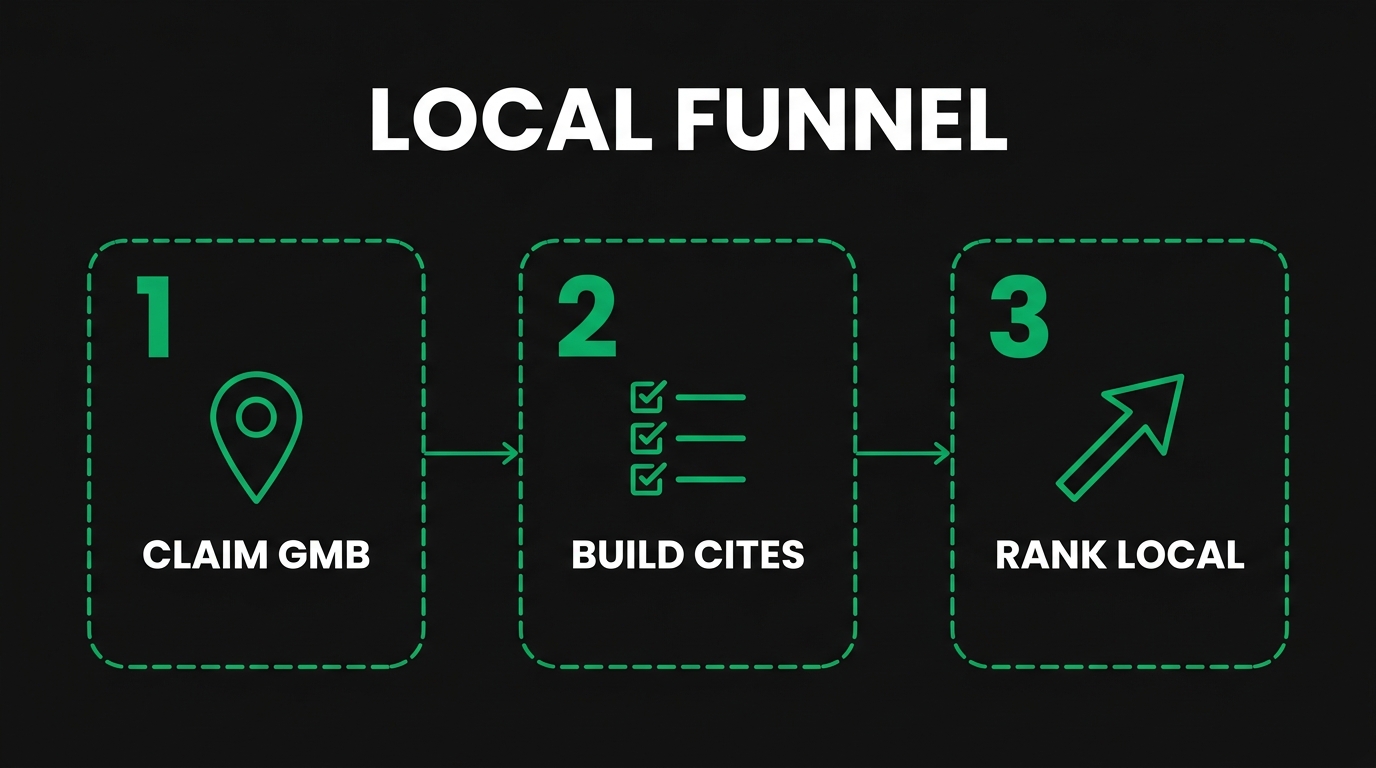
You implement a local listing service across a manufacturing network by running a pre-launch citation audit, standardizing NAP across facilities, claiming the right industrial categories per plant, and maintaining listings on a fixed cadence after distribution. Each step is below.
What Pre-Launch Citation Audit Should Plants Run First?
The pre-launch citation audit plants should run first inventories every existing listing across data aggregators, Google Business Profile, Apple Maps, Bing Places, industrial directories, certification registries, and trade rosters, then scores each for accuracy, ownership, and duplicate status. The audit produces a worksheet of listings to claim, fix, suppress, or create. Pull this baseline before subscribing to any platform, since paying a service to push data over an unaudited foundation propagates errors at scale. The exercise surfaces forgotten plant addresses from acquisitions, abandoned phone numbers, and category misconfigurations. A walkthrough on how to audit local citations for a manufacturing plant accelerates multi-facility work.
How Should Manufacturers Standardize NAP Across Facilities?
Manufacturers should standardize NAP across facilities by designating one master record per plant in the ERP or CRM, defining naming conventions that handle DBA versus legal entity decisions, choosing a single phone format, and using street addresses that match USPS standardization. Suite numbers, building numbers, and dock identifiers must follow a documented rule. Each facility owner should sign off on the master record before any listing service ingests it.
Standardization is a documentation exercise first.
Which Industrial Categories and Attributes Should Each Plant Claim?
The industrial categories and attributes each plant should claim include the most specific Google Business Profile primary category that matches the plant's core process, plus secondary categories for complementary capabilities, attributes for certifications, hours, payment methods, and accessibility features. Per Google Business Profile Help, you can set 1 primary category and up to 9 additional business categories. For industrial plants, primary categories often include Manufacturer, Machine Shop, Metal Fabricator, Tool & Die Shop, or Industrial Equipment Supplier, depending on the dominant process.
How Do You Maintain Listings After Initial Distribution?
You maintain listings after initial distribution by setting a quarterly review cadence for accuracy, monthly review monitoring, and immediate alerts for unauthorized edits or new duplicates. Most listing services provide change-detection tools that flag user-suggested edits, third-party data updates, and Google policy enforcement actions. Maintenance also covers seasonal hour changes, holiday closures, and post-acquisition consolidations. Manufacturers should assign a single owner per plant for listing health and route review notifications to a shared inbox or CRM workflow.
Audit categories every quarter without exception.
What Common Mistakes Do Manufacturers Make with Local Listings?
The common mistakes manufacturers make with local listings include choosing the wrong industrial category, allowing inconsistent phone or address data across facilities, and underestimating what happens when a subscription-based service lapses. The sub-sections explain each error and the cost in lost procurement visibility.
Why Is Choosing the Wrong Industrial Category a Costly Error?
Choosing the wrong industrial category is a costly error because primary category dictates which procurement queries surface a plant in local search. A general "Manufacturer" category captures broad intent but loses to competitors using more specific categories on process-driven searches. Buyers searching for "machine shop" or "metal stamping" prefer plants tagged with those exact categories, since Google rewards specificity. Per Google Business Profile guidelines, choose the fewest number of categories it takes to describe your overall core business, selecting categories that complete the statement "This business IS a..." rather than "This business HAS a..."
How Does Inconsistent Phone or Address Data Damage Local Pack Rankings?
Inconsistent phone or address data damages local pack rankings by splitting entity authority and triggering Google's trust filters that suppress profiles in the three-pack.
A plant excluded from the three-pack loses the highest-converting placement on procurement queries. The visibility loss compounds because data aggregators redistribute incorrect data to dozens of secondary sites. Cleanup is sequential, not instantaneous, since aggregator refresh cycles run weekly to monthly. Inconsistent data is the slowest-resolving SEO problem manufacturers face.
What Happens When You Cancel a Subscription-Based Listing Service?
When you cancel a subscription-based listing service, listings on partner sites that the service controls via API push often revert to their pre-service state or get removed entirely within weeks. Yext and similar network-based services maintain listings on partner sites only while the subscription is active. Aggregator-based services like Moz Local persist longer because aggregator records remain in place after subscription end, though updates stop. Manufacturers should ask vendors to disclose post-cancellation behavior in writing before signing.
How Should You Approach Local Listing Selection with Manufacturing SEO Agency?
You should approach local listing selection with Manufacturing SEO Agency by aligning the platform choice to procurement search behavior, manufacturing-specific directories, and revenue-tied reporting rather than generic SMB feature lists. The two sub-sections cover what the agency contributes and the article's key takeaways.
Can Manufacturing SEO Agency's Local SEO Service Help You Compare and Deploy Listing Solutions?
Manufacturing SEO Agency's local seo for manufacturers service helps manufacturers compare and deploy listing solutions by mapping each plant's procurement-intent keyword footprint, auditing existing citations across general and industrial directories, and recommending platforms that match facility count, ERP integration needs, and reporting requirements. Manufacturing SEO Agency works exclusively with industrial-only clients, which means category recommendations reflect actual manufacturing processes rather than generic small-business templates. Manufacturing SEO Agency ties listing health to RFQ pipeline and closed revenue through CRM-integrated reporting.
What Are the Key Takeaways About Top Local Listing Services for B2B Manufacturing We Covered?
The key takeaways about top local listing services for B2B manufacturing we covered are: a listing service distributes NAP and structured data across general aggregators and industrial directories, while a local SEO tool measures performance, and the two functions should be evaluated separately. Yext, BrightLocal, Whitespark, Moz Local, and Synup cover different partner networks at different per-location prices, and none fully replaces manual submission to Thomasnet, IndustryNet, and certification registries. Schema support, FTC-compliant review management, multi-facility setups, and reporting tied to RFQ pipeline are the highest-value features. Run a pre-launch citation audit, standardize NAP, claim specific Google categories, and audit quarterly.