A local citation audit for a manufacturing plant is the systematic review of every directory, trade network, and map listing that mentions the facility's name, address, and phone number to identify inaccuracies, duplicates, and coverage gaps. The audit protects procurement-driven search visibility and keeps supplier listings aligned with how engineers and purchasing managers verify plants.
This guide covers what a manufacturing citation audit is, why plants need it, what data to collect, how to find and evaluate every listing, how to fix inconsistencies, how to benchmark against competitors, how to build new citations, and how to measure revenue impact.
We define local citation audits specifically for industrial facilities, explaining how NAP fields, NAICS codes, and certifications behave differently from retail listings.
We walk through the audit preparation: the master NAP sheet, plant-specific attributes like process codes and certifications, and multi-facility documentation.
We show how to discover every existing citation using search operators, scanning tools, and trade-association checks, then evaluate each one by authority, industry fit, and traffic.
We detail how to identify and fix inconsistencies, prioritize corrections across hundreds of listings, and benchmark citation profiles against industrial competitors.
We close with how to build new citations without duplicates, measure audit impact on plant SEO, and tie citation cleanup to RFQs and pipeline revenue.
What Is a Local Citation Audit for a Manufacturing Plant?
A local citation audit for a manufacturing plant is the structured review of every online mention of the facility's name, address, and phone number across directories, trade networks, maps, and industry databases to find inaccuracies, duplicates, and gaps. The audit anchors local seo for industrial businesses to verifiable data, not guesswork. Subsections define what counts as a citation, how manufacturers differ from retail, and how NAP consistency shapes entity signals.
What Counts as a Local Citation for an Industrial Facility?
A local citation for an industrial facility is any online reference that names the plant alongside its address, phone, or additional identifiers such as NAICS code, certifications, or DUNS/UEI. Structured citations appear in directories like Thomasnet, MacRAE's, and IndustryNet. Unstructured citations show up in trade publications, supplier news articles, association rosters, and regulatory filings. Both types feed entity signals to search engines. A manufacturing citation carries more than a phone number; it also records process capabilities, tolerances, and certification data that procurement buyers use to qualify suppliers. Treat every mention as a data record.
Why Do Manufacturing Plants Need a Different Citation Audit Than Retail Businesses?
Manufacturing plants need a different citation audit than retail businesses because buyers verify suppliers through industry directories, certification registries, and procurement networks, not foot-traffic directories. A retail audit focuses on Yelp, Apple Maps, and consumer aggregators. A manufacturing audit prioritizes Thomasnet, OASIS for AS9100, SAM.gov, NAICS-coded databases, and trade association rosters.
What Role Do NAP Consistency and Entity Signals Play in Citation Audits?
NAP consistency and entity signals play a foundational role in citation audits by telling search engines and procurement platforms that every listing references the same verified plant. When plant name, address, phone, and capability attributes match across sources, Google consolidates entity signals, strengthens the Business Profile, and rewards prominence. Inconsistent records fragment the entity and suppress rankings.
In a manufacturing context, entity signals extend to certifications, NAICS codes, and process capabilities, which must match the plant's own site.
Why Should Manufacturing Plants Audit Their Local Citations?
Manufacturing plants should audit their local citations because inaccurate records suppress procurement-driven search visibility, weaken Google Business Profile prominence, and divert RFQs to competitors. The audit converts scattered listings into a verified entity. Subsections cover how inaccurate citations hurt visibility, how they influence Business Profile rankings, and what RFQ risks come from outdated plant data.
How Do Inaccurate Citations Hurt Procurement-Driven Search Visibility?
Inaccurate citations hurt procurement-driven search visibility by fragmenting the plant's entity across conflicting records, which suppresses rankings when buyers search process, material, and certification queries. When NAP fields disagree, engines hedge confidence and rank more consistent competitors.
For industrial buyers, a mismatched address or an expired certification is enough to drop a supplier from the shortlist. Procurement teams do not troubleshoot inconsistencies; they move on.
How Do Citations Influence Google Business Profile Rankings for Industrial Suppliers?
Citations influence Google Business Profile rankings for industrial suppliers through prominence signals that tell Google how well-known and well-referenced the plant is.
Strong citations on Thomasnet, trade journals, association rosters, and certification registries build this prominence layer. Consistent NAP data also supports local seo for manufacturers by confirming the plant's identity across sources.
What Revenue and RFQ Risks Come From Outdated Plant Citations?
The revenue and RFQ risks from outdated plant citations include lost RFQs, failed supplier qualification, and redirected procurement spend. A buyer searching an industry directory reaches a closed facility, a wrong dispatch phone, or an expired certification and quietly removes the supplier from consideration.
What Data Should You Collect Before Starting a Citation Audit?
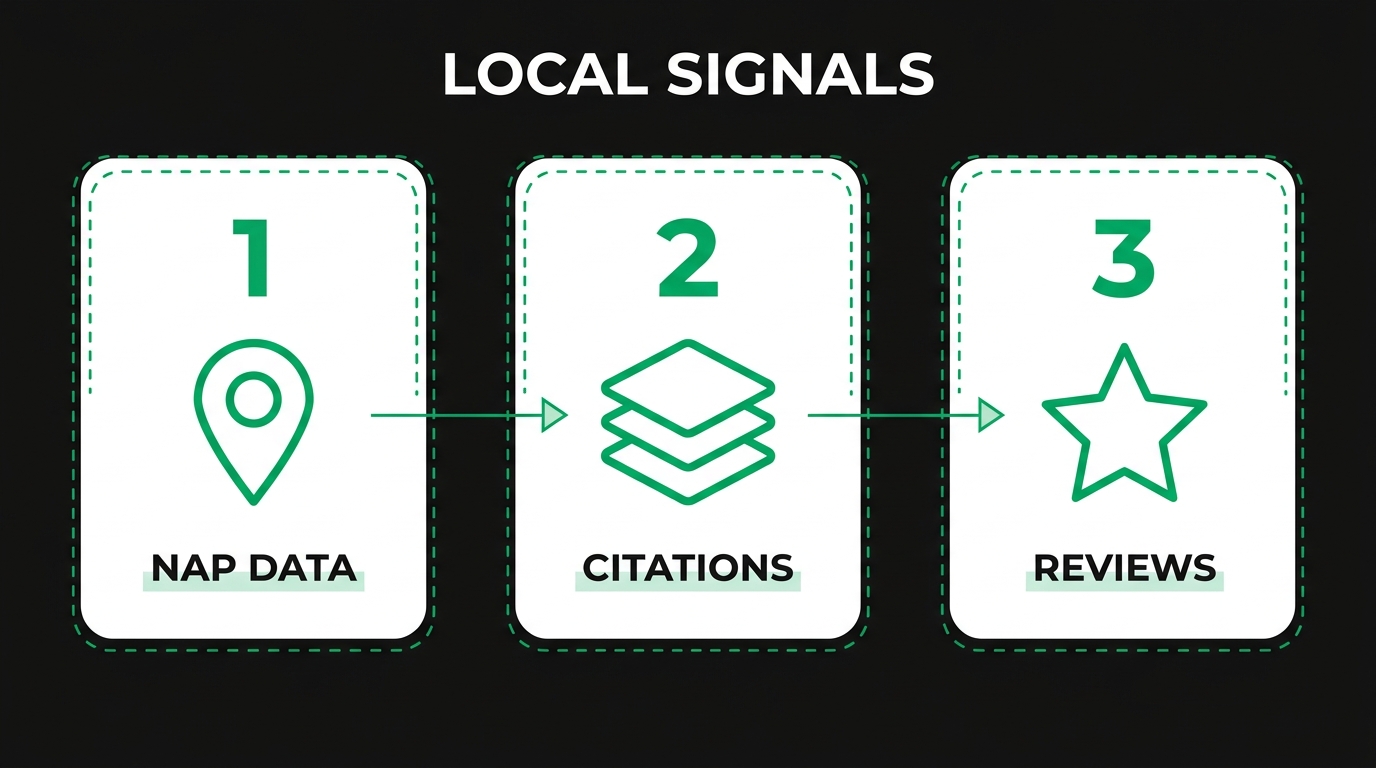
The data to collect before starting a citation audit includes the plant's verified NAP fields, legal entity names, NAICS codes, certifications, capability attributes, and a master sheet tying every facility to its authoritative record. Complete data prevents circular corrections. Subsections cover required NAP fields, plant-specific attributes, and how to build a multi-facility master sheet.
Which NAP Fields Must Match Across All Citation Sources?
The NAP fields that must match across all citation sources are the legal business name, street address, suite or bay number, city, state, ZIP code, phone number, and primary website URL. Industrial audits extend NAP to include DUNS/UEI, NAICS codes, hours, and service-area definitions.
Align SAM.gov entries to the plant's Business Profile, website footer, and directory records. A single deviation like "Ave" versus "Avenue" becomes a ranking drag across hundreds of listings.
What Plant-Specific Attributes Should You Document for Each Location?
The plant-specific attributes to document for each location are process capabilities, material grades, machinery lists, lot-size range, tolerances, and active quality certifications such as ISO 9001, AS9100, IATF 16949, and NADCAP accreditations.
Record certification numbers, issuing registrar, expiration dates, and scope statements. Add inbound-freight details, loading-dock capacity, and cleanroom classifications. These attributes drive supplier-filter results on Thomasnet, GlobalSpec, and OASIS; they also feed seo strategies for manufacturing specifications when capability pages sync to the same master data.
How Do You Build a Master NAP Sheet for Multi-Facility Manufacturers?
A master NAP sheet for multi-facility manufacturers is built by creating one row per location with every verified NAP field, capability attribute, certification, and directory URL where the facility appears. Centralize the sheet in a shared database with change-control owners at each plant. Follow a gbp multi-location strategy for industrial companies so the sheet drives every Business Profile, SAM.gov UEI, and certification-expiration field.
How Do You Find Every Existing Citation for a Manufacturing Plant?
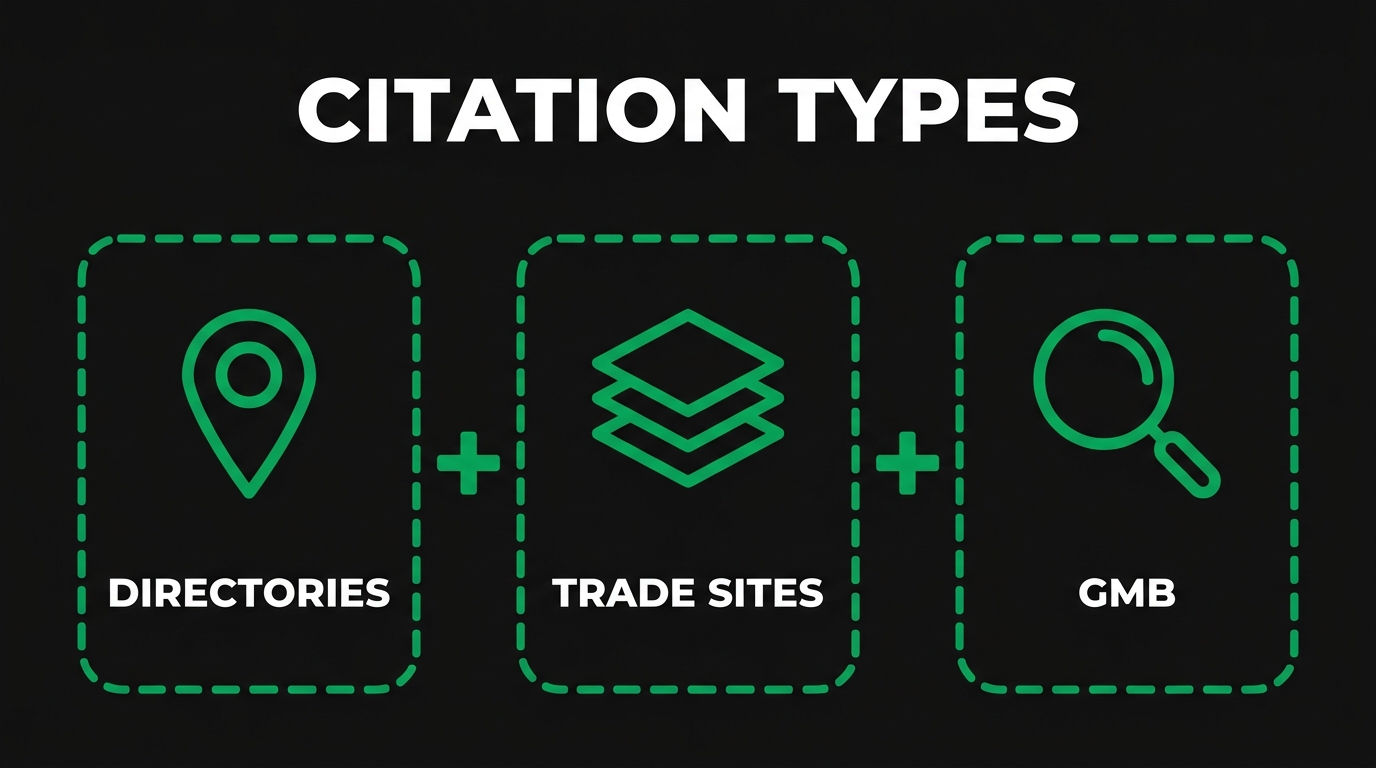
Finding every existing citation for a manufacturing plant requires search-operator sweeps, citation-scanning tools, and manual checks across trade associations and supplier networks. No single source lists them all. Subsections cover search operators, scanning tools, and how to discover citations on trade and supplier network sites.
Which Search Operators Uncover Hidden Industrial Citations?
Search operators that uncover hidden industrial citations include exact-phrase queries combining quoted plant name with quoted street address, phone-number queries with hyphen and parenthetical variants, and site-restricted searches across industrial TLDs. Use operators such as `"Plant Name" "123 Main St"`, `"(555) 123-4567"`, `intitle:"Plant Name"`, and `site:thomasnet.com "Plant Name"`. Repeat with historical phone numbers and legacy DBAs to surface orphaned listings.
Flag every duplicate the operators surface for merge or removal later.
What Tools Scan Manufacturing Directories and General Business Listings?
The tools that scan manufacturing directories and general business listings fall into three groups: general aggregator-fed scanners such as Moz Local and Yext, dedicated local-SEO scanners such as BrightLocal and Whitespark, and manufacturing-specific databases including Thomasnet, GlobalSpec, and IndustryNet. Pair a general scanner with manual queries on industrial directories since aggregator scanners rarely cover industry-specific sources. Compare vendor workflow fit against local citation management tools for industrial businesses before committing budget.
How Do You Discover Citations on Trade Association and Supplier Network Sites?
Discovering citations on trade association and supplier network sites requires manual audits of every association the plant pays dues to, every OEM supplier portal it participates in, and every tier-1 customer microsite listing approved suppliers. Start with NAM, MAPI, NTMA, PMPA, and industry-specific bodies aligned to the plant's processes. Check state manufacturing extension partnership (MEP) member listings, regional economic-development directories, and chamber databases.
Each association mention compounds entity prominence and often outperforms generic directories in procurement-relevant search results.
How Do You Evaluate Citation Quality and Relevance?
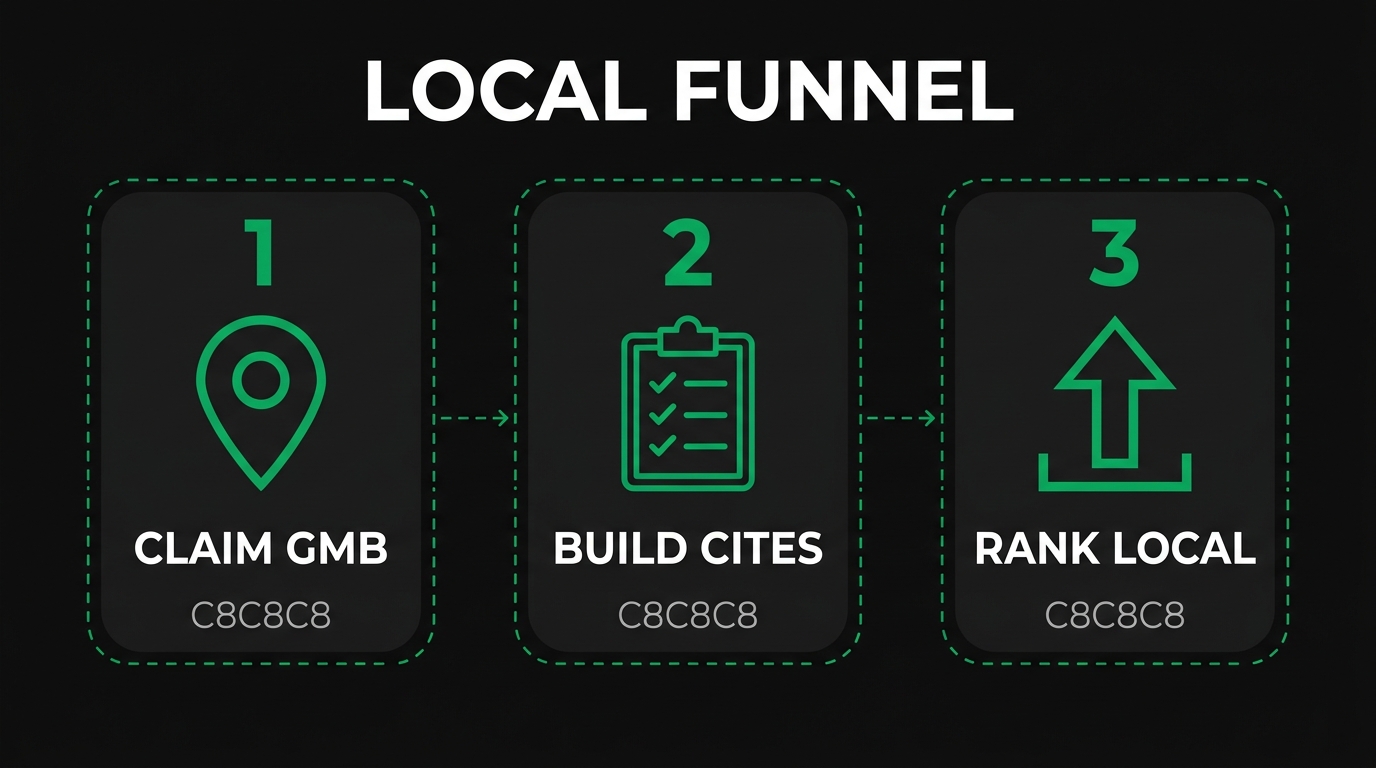
Evaluating citation quality and relevance requires scoring each discovered listing by authority, industry fit, and referral traffic, then pruning low-value entries that drain maintenance time. Quality beats volume for manufacturers. Subsections define what makes an authoritative citation, how to score citations by multiple signals, and which low-value records to ignore.
What Makes a Citation Authoritative for a Manufacturing Plant?
A citation is authoritative for a manufacturing plant when the host domain is recognized by procurement buyers, moderated for accuracy, and tied to an industry-specific context such as certifications, processes, or regional manufacturing ecosystems. OASIS for AS9100-certified suppliers, Thomasnet for product sourcing, SAM.gov for federal contracting, and state MEP rosters meet these criteria.
An authoritative citation publishes clear edit controls so the plant can keep data current. Treat self-service directories that never moderate as lower authority.
How Do You Score Citations by Domain Trust, Industry Fit, and Traffic?
Scoring citations by domain trust, industry fit, and traffic uses a three-column matrix where each listing earns 1 to 5 points per factor. Domain trust weighs organic authority, age, and backlink profile. Industry fit weighs category alignment with the plant's processes, materials, and certifications. Traffic weighs referral visits from the citation source into the plant's website across the audit window. Total scores above 10 warrant ongoing maintenance; 7 to 9 earns conditional updates; under 7 is a candidate for removal.
Which Low-Value Citations Should You Prune or Ignore?
The low-value citations to prune or ignore are thin scraper directories, abandoned regional portals, consumer-only aggregators with no industrial category, and duplicate profiles created by aggregator spam. Skip any record that refuses edits, charges for corrections without editorial value, or injects advertising across listings. Consumer-focused sites like retail-only review platforms add no procurement value. Focus maintenance budget on the top 30 percent of listings by combined trust and industry fit. Ignore the long tail except to confirm NAP matches. The bridge to fixing the listings worth keeping begins with inconsistency triage.
How Do You Identify and Fix NAP Inconsistencies?
Identifying and fixing NAP inconsistencies involves diffing every discovered citation against the master sheet, classifying the error type, prioritizing corrections by impact, and executing updates through a controlled claim-and-edit workflow. Subsections cover the most common errors, how to prioritize fixes across hundreds of listings, and the correct workflow to claim and update inaccurate citations.
What Are the Most Common Citation Errors for Manufacturing Plants?
The most common citation errors for manufacturing plants are missing or misplaced suite and bay numbers, phone numbers showing legacy main-line versus current dispatch-line values, plant addresses listed under parent-company headquarters, expired certification numbers on industry registries, and category mismatches that hide the plant from process-specific filters. Additional errors include inconsistent hours between Business Profile and directories, missing service-area definitions for multi-state manufacturers, and orphaned duplicates created by acquisitions or rebrands.
Record every error with severity, source URL, and recommended correction before starting fixes so the audit produces a defensible change log.
How Do You Prioritize Corrections Across Hundreds of Listings?
Prioritizing corrections across hundreds of listings means ordering by ranking impact first, buyer-visibility risk second, and maintenance cost third. Fix Google Business Profile, Apple Business Connect, Bing Places, and the top five industrial directories first. Resolve duplicates before NAP tweaks because duplicates fracture signals the most. Correct certification-registry entries in the same pass since procurement buyers verify them directly. Use the scoring matrix from the evaluation phase to sequence remaining fixes. Treat technical prerequisites in parallel so the plant's primary domain remains crawlable while corrections propagate.
What Is the Correct Workflow to Claim and Update Inaccurate Citations?
The correct workflow to claim and update inaccurate citations follows five steps: verify ownership access for each source, claim unclaimed profiles using postcard, phone, or email verification, submit NAP corrections that match the master sheet exactly, request duplicate-listing merges where the platform supports them, and log the change with a screenshot and timestamp.
For aggregator-fed listings, correct the source record so downstream directories update automatically. Close each correction with a verification check 7 to 14 days later to confirm the edit persisted. Manufacturing SEO Agency runs this correction workflow as part of its manufacturing audit and technical SEO remediation engagements, aligning every fixed citation back to the plant's topical authority footprint. This closes the loop before benchmarking against competitors.
How Do You Benchmark Citations Against Industrial Competitors?
Benchmarking citations against industrial competitors means reverse-engineering the directories, associations, and publications where top-ranking rivals appear, then scoring the gap between their citation profile and yours. The goal is a prioritized closure list. Subsections cover how to reverse-engineer a competitor's profile, which directories top-ranking competitors use, and what citation gaps reveal the biggest ranking opportunities.
How Do You Reverse-Engineer a Competitor's Citation Profile?
Reverse-engineering a competitor's citation profile uses the same search operators applied to your own plant, substituting the competitor's exact name, phone, and legacy addresses. Run `"Competitor Name" "street address"`, scan link profiles in Ahrefs or Majestic for directory backlinks, and pull their Business Profile references. Extract every directory, association, and trade publication they appear on into a comparison sheet.
Prioritize sources ranked by multiple competitors since shared citations signal procurement relevance.
Which Manufacturing Directories Do Top-Ranking Competitors Use?
The manufacturing directories top-ranking competitors use consistently include Thomasnet, GlobalSpec, MacRAE's, IndustryNet, MFG.com, Kompass, Engineering360, and ISO/AS/NADCAP certification registries.
Regional add-ons include state MEP rosters, NAM member directories, and OEM portals for the sectors the plant serves. Each entry carries its own verification requirements.
What Citation Gaps Reveal the Biggest Ranking Opportunities?
The citation gaps that reveal the biggest ranking opportunities are process-specific registries the competitor owns but your plant has not claimed, regional directories tied to buyer cities, and certification databases that directly answer procurement filter queries. A missing NADCAP or AS9100 listing often explains why a competitor wins aerospace RFQs that match your capabilities. Gaps in OEM approved-supplier microsites compound over multi-year contracts.
Close high-fit gaps first to compound ranking impact before scaling new submissions.
How Do You Build New Citations After the Audit?
Building new citations after the audit follows the gap list: submit to high-ROI industrial directories first, deduplicate during submission, and lock in a cadence that keeps records clean as the plant evolves. Subsections cover which industrial directories deliver the highest ROI, how to submit accurate citations without triggering duplicates, and what cadence keeps a manufacturer's citation profile clean long term.
Which Industrial Directories Deliver the Highest Citation ROI?
The industrial directories that deliver the highest citation ROI are Thomasnet, OASIS for AS9100 suppliers, NADCAP registries, SAM.gov, state MEP listings, trade-association member directories, and OEM approved-supplier microsites.
Add industry-specific sources per process: foundrymag for foundries, MoldMaking Technology for tooling, Control Engineering for automation. Teams short on capacity often compare local listing services for b2b manufacturing so each submission ships with correct NAICS codes, certifications, and capability taxonomy. ROI compounds when the top 20 sources are complete and accurate.
How Do You Submit Accurate Citations Without Triggering Duplicates?
Submitting accurate citations without triggering duplicates starts with confirming the plant is not already listed on the target directory, matching the master NAP sheet character-for-character, and using the same verification email domain across platforms. Search the directory with plant name and phone variants before submitting. Upload consistent logos, photos, and boilerplate descriptions. SAM.gov confirms there is no fee to register on SAM.gov, which keeps submission cost low but verification strict.
Request aggregator feeds update source records first so downstream listings inherit corrections.
What Cadence Keeps a Manufacturer's Citation Profile Clean Long Term?
The cadence that keeps a manufacturer's citation profile clean long term is a quarterly NAP sweep, a semiannual deep audit, and an annual certification-expiration review anchored to the master sheet. Manufacturing SEO Agency builds this cadence into its procurement-intent keyword architecture so citation integrity, topical coverage, and RFQ-tied reporting move on the same calendar. Assign one owner per facility, document every change in the audit log, and re-verify the top 20 sources after every major event such as a new certification, facility expansion, or leadership change.
Align quarterly sweeps to the same calendar so no renewal lapses.
How Do You Measure the Impact of a Citation Audit on Plant SEO?
Measuring the impact of a citation audit on plant SEO requires KPI tracking, attribution from citation traffic to RFQs and pipeline revenue, and a reporting cadence tuned to multi-location operations. Subsections cover the KPIs that show citation health is improving, how to tie citation cleanup to RFQs and pipeline revenue, and what reporting cadence works for multi-location manufacturers.
Which KPIs Show Citation Health Is Improving?
The KPIs that show citation health is improving include NAP consistency rate, duplicate-listing count, Business Profile impressions, Business Profile direction requests, Business Profile calls, directory referral traffic, keyword ranking movement for process and location queries, and certification-registry uptime. Track the percentage of top-20 sources fully compliant with the master sheet.
Rising NAP accuracy maps directly to rising profile performance across impression, call, and direction metrics.
How Do You Tie Citation Cleanup to RFQs and Pipeline Revenue?
Tying citation cleanup to RFQs and pipeline revenue uses UTM-tagged directory links, CRM source fields, and call-tracking numbers that flag citation-origin inquiries. Map each RFQ back to its first-touch citation source using CRM attribution, then calculate pipeline value and close rate by source. Run cohort comparisons before and after the audit to quantify lift.
The same attribution scaffolding also supports seo for small manufacturing companies, where every tracked dollar matters even more than at enterprise scale.
What Reporting Cadence Works for Multi-Location Manufacturers?
The reporting cadence that works for multi-location manufacturers is monthly per-facility scorecards, quarterly consolidated program reviews, and an annual strategic audit. Monthly reports cover NAP accuracy, duplicate count, Business Profile metrics, and directory referral traffic per plant. Quarterly reviews roll up trends across the portfolio and surface systemic issues, such as an acquired plant whose citations still show prior ownership. Annual audits revisit the master sheet, re-score the citation matrix, and reset the gap list. This cadence closes the loop from citation integrity to revenue impact before the bridge to full-service engagement.
How Should You Approach a Citation Audit With Manufacturing SEO Agency?
Approaching a citation audit with Manufacturing SEO Agency means combining industrial-only domain fluency with procurement-intent strategy, so every correction, new citation, and reporting cycle maps to RFQ pipeline rather than vanity traffic. Manufacturing SEO Agency specializes in industrial SEO and pairs citation audits with topical authority and technical SEO. Subsections cover how the audit and topical authority services fix plant citation problems and the key takeaways from this guide.
Can Manufacturing SEO Agency's Audit and Topical Authority Services Fix Plant Citation Problems?
Manufacturing SEO Agency's audit and topical authority services fix plant citation problems by combining a full technical crawl, current keyword-footprint mapping, and reverse-engineering of competitor rankings with procurement-intent keyword architecture and complete topical coverage of every process, material, and certification. As industrial seo specialists, Manufacturing SEO Agency aligns Business Profile data, industrial directory entries, and the plant's website into one consistent entity.
Revenue-tied reporting then maps every ranking gain to RFQs, pipeline value, and closed revenue, not keyword positions in a vacuum.
What Are the Key Takeaways About Auditing Local Citations for a Manufacturing Plant?
The key takeaways about auditing local citations for a manufacturing plant are that citations remain a meaningful local ranking signal when quality and accuracy beat volume, that manufacturer audits must extend NAP to include NAICS codes, certifications, and capability data, that reverse-engineering competitors closes gaps faster than scattershot submissions, and that revenue-tied reporting keeps the program funded. Start with a verified master sheet, discover every existing citation, prune low-value records, fix inconsistencies on high-authority sources first, build the competitor-gap list, and lock in a quarterly cadence. Manufacturing SEO Agency can run the full cycle when an internal team lacks bandwidth.