
SEO strategies for manufacturing specifications are the keyword, on-page, schema, and authority-building tactics that make material, process, tolerance, finish, and certification pages visible to procurement engineers, buyers, and AI answer engines. We write these pages so every datasheet line doubles as an indexable fact.
This guide covers the specification page in search context, why granular spec coverage changes rankings, how to research procurement-intent keywords, what to put on the page itself, how schema markup exposes spec data, how topical authority forms across a full catalog, the technical SEO factors that govern datasheet-heavy sites, how to earn backlinks from standards bodies and trade publications, and how to measure RFQ impact.
The first theme, specification pages in SEO context, defines what counts as a spec page, which data types signal intent, and how a spec page differs from a generic product listing.
The second theme, visibility drivers, covers buyer trust, engineer search behavior, ranking gains from granular coverage, and citation rates inside AI Overviews.
The third theme, keyword research and on-page execution, explains how to surface specification-level demand, cluster material and process queries, validate intent, and then structure titles, tables, meta descriptions, and internal links on the resulting page.
The fourth theme, schema markup and topical authority, walks through Product, TechArticle, HowTo, and certification markup, plus the hub-and-spoke structure that ties specifications into a coherent topical map.
The fifth theme, technical SEO and authority building, handles crawl budget, page speed, faceted navigation, duplicate content, trade-publication links, and revenue-tied measurement against the RFQ pipeline.
What Are Manufacturing Specifications in an SEO Context?
Manufacturing specifications in an SEO context are indexable facts about material grade, process, tolerance, finish, and certification that procurement engineers query directly. This section explains what counts as a spec page, which data types carry intent, how spec pages diverge from generic product listings, and which procurement queries they target.
What Counts as a Product Specification Page?
A product specification page is a URL that publishes the measurable attributes of a part, material, or process in a structured, crawlable format. It lists alloy grade, dimensional tolerances, surface finish, hardness, test method, applicable standard, and certification. A generic product page sells benefits. A specification page documents verifiable values that a buyer can reference inside an RFQ.
Every row in the datasheet should map to a concept search engines can parse, preferably in plain HTML so each attribute remains extractable by crawlers, AI answer engines, and competitive procurement tools. Follow the same principles covered in basic seo strategies for factories for catalog-scale content.
What Specification Data Types Drive Search Intent?
The specification data types that drive search intent are material grade, dimensional tolerance, surface finish, process certification, and compliance standard. Buyers type exact values, such as 6061-T6 aluminum, ±0.001 inch tolerance, Ra 32 surface, AS9100 certified, or RoHS compliant.
According to Google Search Central guidance on Product structured data, when you add structured data to your product pages, your product information can appear in richer ways in Google Search results (including Google Images and Google Lens).
Each datapoint should appear as discrete markup so AI Overviews and rich results can lift the exact value.
How Do Specification Pages Differ From Generic Product Pages?
Specification pages differ from generic product pages in four ways: attribute density, standards references, measurement tolerance, and certification traceability. A generic product page leads with marketing copy, brand language, and use-case imagery. A specification page leads with the datasheet, cites ASTM or ISO standards, lists exact tolerances, and links to test reports.
Procurement does not trust generalized copy. Engineers trust numbers, standards, and verified ranges. The practical rule is that every claim should either cite a test method or a governing standard, and every variant should live at its own URL so one SKU equals one indexable fact set.
What Procurement Queries Target Specifications?
Procurement queries that target specifications are long-tail strings containing material grade plus process plus tolerance plus standard. Typical examples include "6061-T6 CNC machining ±0.002 tolerance", "Inconel 718 investment casting AMS 5662", and "medical grade PEEK injection molding ISO 13485".
These queries appear low-volume but convert at RFQ rates far above category-level keywords because the searcher already defined the part. Mapping each query to a dedicated spec page captures buyers at the moment they are about to request a quote, which is the point of maximum commercial intent in the industrial buyer journey.
Why Do Specification Pages Matter for Industrial Search Visibility?
Specification pages matter for industrial search visibility because procurement engineers search by exact values, and depth of coverage signals supplier legitimacy to buyers, Google quality raters, and LLM answer engines. This section covers buyer trust, engineer search behavior, ranking advantages, and citation rates.
How Does Specification Depth Influence Buyer Trust?
Specification depth influences buyer trust by providing verifiable evidence of manufacturing capability. Buyers read tolerances, certifications, and test methods as proof. Thin pages with no concrete numbers signal unproven capability, and the buyer moves on before ever reaching a contact form.
Google's quality framework aligns with this behavior. According to Google Search Central, trust is the most important member of the E-E-A-T family because untrustworthy pages have low E-E-A-T no matter how Experienced, Expert, or Authoritative they may seem.
Depth, standards citations, and test-report linkage translate directly into ranking and RFQ-conversion signal alike.
Why Do Procurement Engineers Search by Specification?
Procurement engineers search by specification because they already defined the part before they opened the browser. The CAD file fixes the tolerance, the drawing fixes the finish, and the governing contract fixes the certification.
According to Thomasnet research on the Thomas Network, there are 1.6M Engineers and 503,000 Procurement Professionals working in the U.S., and two in three (69%) manufacturing companies are looking into bringing production to North America.
These buyers reach the supplier page after the decision set is narrow, so the page must match the spec string or the search ends on a competitor's URL.
What Ranking Advantages Come From Granular Spec Coverage?
Ranking advantages from granular spec coverage include long-tail dominance, featured-snippet eligibility, topical-authority accumulation, and cross-variant internal-link equity. Each spec combination is a discrete query cluster with low competition and high commercial intent.
When a single supplier covers every combination of material, process, and tolerance, it collects the long tail that competitors ignore. Over time, this wide coverage earns the site credit for the broader category, lifting head-term rankings as a downstream effect, which is the mechanism behind manufacturing seo for market share.
How Do Specifications Improve AI Answer Citation Rates?
Specifications improve AI answer citation rates by exposing discrete, verifiable facts that LLM retrieval systems can lift without rewriting. Answer engines prefer sources where a single sentence holds a single numeric claim, a named standard, and a measurable tolerance.
Pages built from datasheet rows meet that pattern structurally. When the spec is expressed as "Alloy 625 per ASTM B446, ±0.001 inch true position, 45-55 HRC", an LLM can cite it verbatim. This earns the supplier the attribution slot inside AI Overviews and chatbot answers covering that exact specification.
How Should You Research Keywords for Specification Pages?
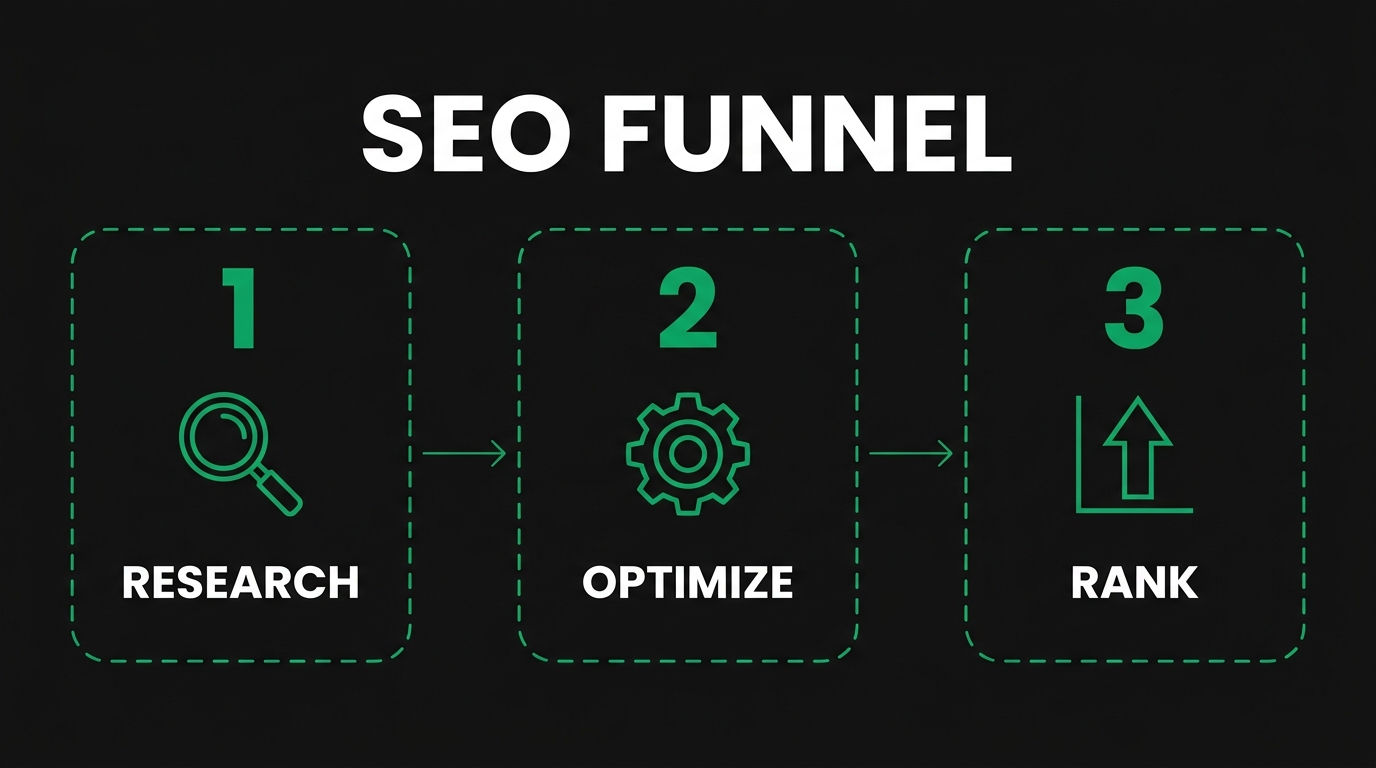
Keyword research for specification pages works by mining procurement vocabulary across material grades, processes, tolerances, finishes, and certifications, then validating each phrase against actual buyer intent. This section covers the tools, the clustering logic, long-tail patterns, and intent validation.
What Tools Surface Specification-Level Search Demand?
The tools that surface specification-level search demand include Google Search Console query data, Google Keyword Planner filtered to industrial terms, Ahrefs and Semrush for competitor keyword gaps, AnswerThePublic for question intent, and trade directory search logs.
Pair these with supplier-side evidence such as incoming RFQ text and sales-call transcripts to catch phrases no public tool captures. The full technical stack for this is documented in best seo tools for b2b manufacturing.
Specification queries run at monthly volumes of 10 to 200 per phrase, so rely on clustering rather than single-keyword thresholds.
How Do You Cluster Material, Process, and Tolerance Queries?
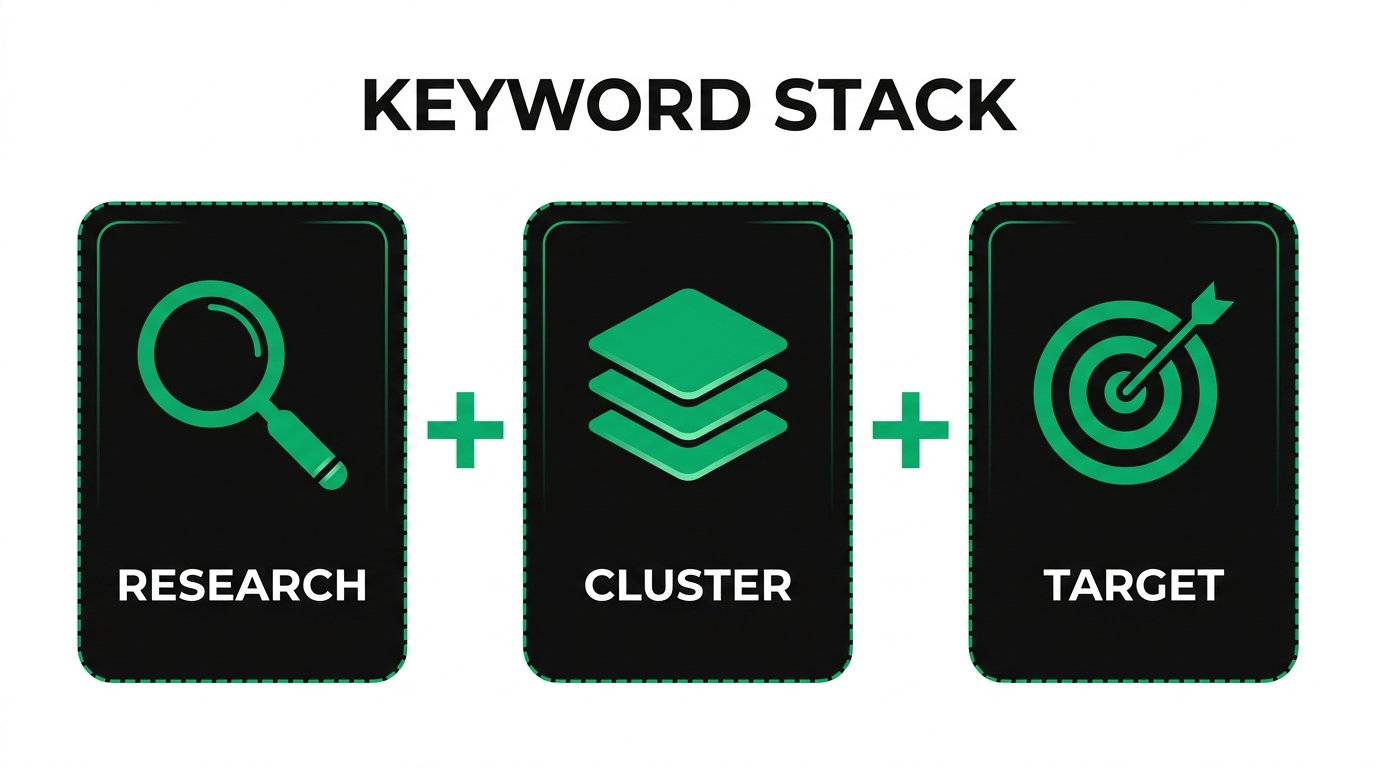
You cluster material, process, and tolerance queries by building a three-axis matrix: every supported material grade on one axis, every process on a second, and every tolerance or finish band on a third. Each cell becomes a candidate page.
Group cells that share identical buyer intent into one page when the data overlap is more than eighty percent. Split them when the tolerances, standards, or end applications diverge. The cluster architecture keeps each URL focused on a single commercial question, which prevents keyword cannibalization and preserves the ranking strength of each spec variant independently.
What Long-Tail Patterns Match Procurement Behavior?
Long-tail patterns that match procurement behavior are four-to-eight word strings combining grade plus process plus value plus standard or industry. Typical formats are "[grade] [process] [tolerance] [standard]", "[material] [finish] for [application]", and "[process] supplier [certification] [region]".
Examples include "17-4 PH stainless CNC turning AS9100", "anodized 6061 aluminum ±0.0005", and "ITAR CNC machining aerospace tier two". These strings convert at rates well above generic category terms because each word narrows the supplier set. The complete phrase describes a buyer who has already drafted the RFQ mentally and needs only a matching page.
How Do You Validate Spec Keyword Intent Before Targeting?
You validate spec keyword intent before targeting by running three checks: SERP composition, competitor coverage depth, and RFQ correlation. Open the current SERP and confirm it shows supplier pages, not informational articles or distributor directories.
Then examine the top three ranking pages for datasheet depth. If they rank without real specification detail, the keyword is a capture opportunity. Finally, cross-reference the phrase against historical RFQ keywords that converted. Target only phrases with supplier-intent SERPs, shallow competitors, or proven RFQ lineage to keep the page roadmap aligned with revenue.
What On-Page Elements Optimize a Manufacturing Specification Page?
The on-page elements that optimize a manufacturing specification page are the title tag, H1, specification table, meta description, and internal link block. Each element carries a procurement cue that tells the buyer and the crawler what the page is for. This section covers all four.
How Should You Structure the Title Tag and H1 for Spec Pages?
Title tag and H1 structure for spec pages should front-load material grade, process, and governing standard, then append the supplier noun. The format is "[grade] [process] [standard] | [supplier]" for the title tag and a plain descriptive variant for the H1.
Keep titles under sixty characters, keep H1 under eighty, and never repeat the same phrase in both. The H1 can expand with tolerance range or industry. Avoid generic tokens like "high quality" or "precision" because they occupy character budget without matching a real procurement query.
What Belongs in a Specification Table or Datasheet Block?
A specification table or datasheet block should contain material grade with ASTM or AMS reference, dimensional tolerances with units, surface finish with Ra value, hardness with test method, applicable certification number, and test-report link. Each row carries one attribute and one verified value.
Render the table in plain HTML so crawlers can extract each cell. Avoid PDF-only datasheets because PDF content is indexed weakly and cannot feed Product schema. Keep the block above the fold whenever possible so engineers scanning a SERP snippet see the exact values before they scroll.
How Do You Write Meta Descriptions That Capture RFQ Intent?
Meta descriptions that capture RFQ intent should restate the spec string, name the certification, and close with a quote-request verb. Keep them under 155 characters to prevent truncation.
A working template is "[Process] of [grade] to [tolerance] per [standard]. [Certification] certified. Request a quote on [application]." This echoes the buyer's search string, which lifts click-through rate on commercial SERPs. For catalog-scale pages where meta descriptions repeat at volume, rotate the application or industry variable so each page reads differently while the core spec structure remains consistent, which supports manufacturing seo for market share.
Which Internal Links Strengthen Specification Topical Clusters?
Internal links that strengthen specification topical clusters are hub-to-spoke links from a process hub to every grade page, spoke-to-spoke links between related grades, and spoke-to-application links from grade pages to end-use case studies.
Use the exact procurement phrase as anchor text, for example "6061-T6 CNC machining" rather than "learn more". Keep anchor variety natural by rotating standard references and tolerance qualifiers across the cluster. A balanced cluster typically contains one hub, six to twelve grade spokes, and two to five application bridges, which is enough to establish topical depth without diluting the hub's ranking authority.
How Does Schema Markup Enhance Specification Visibility?
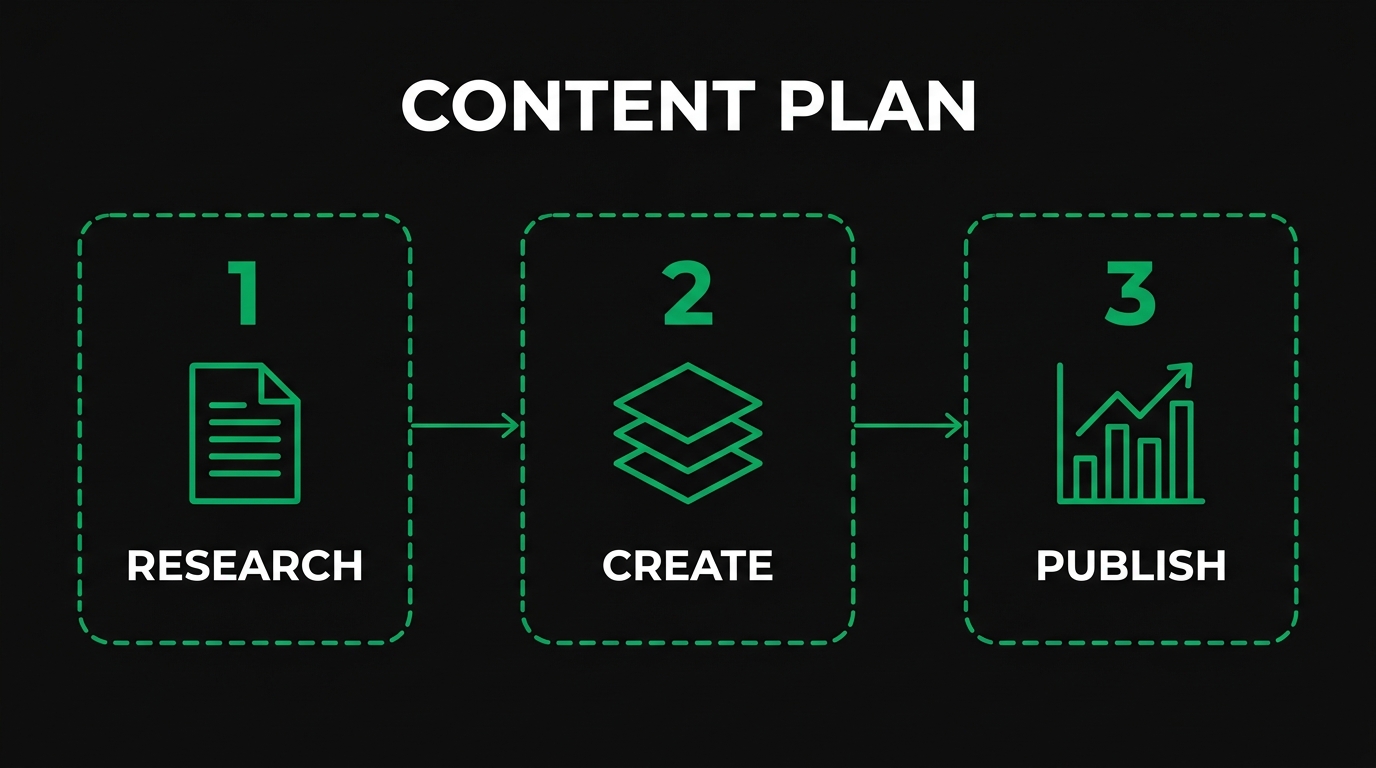
Schema markup enhances specification visibility by exposing material grade, process, tolerance, and certification as structured data that Google and AI answer engines can parse into rich results. This section covers the relevant types, custom-part Product schema, TechArticle and HowTo use, and certification markup.
Which Schema Types Apply to Industrial Specification Pages?
The schema types that apply to industrial specification pages are Product, ProductModel, TechArticle, HowTo, Organization, BreadcrumbList, and FAQPage. Product carries the core datasheet. ProductModel carries each variant. TechArticle and HowTo cover process explainers. Organization ties certifications to the supplier entity.
Schema.org defines Product as any offered product or service. For example: a pair of shoes; a concert ticket; the rental of a car; a haircut; or an episode of a TV show streamed online.
Combine two or three types per page where they apply, keep each valid, and test in the Rich Results tool before deploying.
How Do You Implement Product Schema for Custom Manufactured Parts?
You implement Product schema for custom manufactured parts by using the Product type with material, additionalProperty, and manufacturer fields, even when price and availability are not published. Fill material with the grade, then add additionalProperty entries for tolerance, finish, hardness, and standard.
Set manufacturer as your Organization schema. Omit offers when the part is quote-only rather than cataloged with fixed pricing. Google treats a well-formed Product entity as legitimate even without a price when the additionalProperty block carries verifiable engineering data. This structure mirrors the schema patterns covered in top seo agencies for oem catalog audits.
What Role Does TechArticle or HowTo Schema Play for Process Pages?
TechArticle and HowTo schema for process pages marks up the procedural knowledge that informs a specification decision. A TechArticle wraps a process explainer such as "anodizing 6061 aluminum to MIL-A-8625 Type II". A HowTo wraps a step sequence with tools, materials, and output tolerance.
Use TechArticle when the content teaches capability and uses the process as the subject. Use HowTo when the content is a numbered procedure, with each step carrying a name and optional supply. These schemas route process pages into educational SERP features distinct from the commercial Product results, expanding total visibility across the cluster.
How Should You Mark Up Certifications and Standards?
Certifications and standards should be marked up inside Organization schema using the hasCredential property, and inside Product schema using additionalProperty with the standard reference as value. Certifications include ISO 9001, AS9100, ITAR registration, ISO 13485, and NADCAP.
Name the issuing body, the certificate number, and the valid-through date in the credential object. Google surfaces this data in knowledge-panel candidates and, increasingly, inside AI answer summaries that compare supplier qualifications. The same pattern applies when a page discusses what is additive manufacturing certifications such as ASTM F42 compliance, giving the buyer a verified credential at a glance.
How Do You Build Topical Authority Around Specification Content?
You build topical authority around specification content by mapping every material, process, and tolerance a supplier offers into a connected content system, then publishing enough spec depth that Google associates the domain with the entire category. This section covers the map, the coverage model, hub-and-spoke linkage, and application pages.
What Does a Complete Specification Topical Map Look Like?
A complete specification topical map looks like a three-level tree: category hubs, process spokes, and grade leaves. Category hubs cover metal fabrication, CNC machining, additive manufacturing, injection molding, and finishing. Process spokes cover each operation within the hub, such as milling, turning, or EDM.
Grade leaves cover each material variant, such as 6061-T6 aluminum or 17-4 PH stainless. Application crosslinks connect leaves into industries, such as aerospace, medical, or automotive, giving every leaf two ancestry paths: one technical and one commercial. The complete map contains a hundred to several hundred URLs at a typical supplier depth.
How Do You Cover Materials, Processes, and Tolerances Comprehensively?
You cover materials, processes, and tolerances comprehensively by auditing every capability actually performed in the shop, then building a page for each unique combination that has search demand or RFQ lineage. Start from the work order history.
If the shop has machined 6061 to ±0.001 tolerance in the last twelve months, that combination deserves a page. Aim for about eighty-five percent coverage of the real capability set on the site within the first year. The remaining fifteen percent can be added reactively as new materials or tolerances enter production, which is the pacing model captured in basic seo strategies for factories.
How Should Hub and Spoke Content Connect Specification Pages?
Hub and spoke content should connect specification pages through a two-way linking pattern: the hub links down to every spoke using the spoke's primary spec phrase as anchor, and every spoke links back to the hub using the hub's category term.
Spokes within the same hub should cross-link only when the engineering relationship is genuine, for example when one grade substitutes for another. According to Google Search Central, crawl budget can be a concern for larger sites with 1 million+ unique pages with content changing once a week, and medium or larger sites with 10,000+ unique pages with daily content updates.
Keep cross-links purposeful so crawl budget concentrates on real spec pages.
What Is the Role of Application Pages Within a Specification Cluster?
Application pages within a specification cluster serve as industry bridges that collect long-tail commercial intent. They answer queries such as "CNC machining for aerospace brackets" or "medical-grade injection molding PEEK". Each application page summarizes the process, cites the relevant certifications, and links out to the individual spec pages that support that industry.
The application page wins the industry-plus-process query. The spec page wins the grade-plus-tolerance query. Together they capture both the buyer early in sourcing and the engineer finalizing the RFQ, without cannibalizing each other's ranking authority.
How Do Technical SEO Factors Affect Specification Page Performance?
Technical SEO factors affect specification page performance through crawl efficiency, page speed, faceted URL handling, and duplicate-content prevention. Large catalogs fail silently when any of these break. This section covers crawl budget, datasheet page speed, faceted variant management, and duplicate-spec handling.
How Do You Handle Crawl Budget for Large Specification Catalogs?
You handle crawl budget for large specification catalogs by prioritizing indexable spec URLs, blocking filter combinations, and consolidating variants through canonical tags. Ship a clean XML sitemap that lists only the canonical spec URLs and update it whenever the catalog changes.
Use robots.txt to disallow crawl paths that combine more than two filters at once. Monitor crawl-stats reports for signs of budget waste. When Googlebot is crawling session parameters or internal search URLs, the ranking spec pages re-crawl less often, which delays new catalog updates from appearing in results.
What Page Speed Targets Apply to Datasheet-Heavy Pages?
Page speed targets that apply to datasheet-heavy pages are the Core Web Vitals thresholds. According to Google Search Central, strive to have LCP occur within the first 2.5 seconds of the page starting to load, strive to have an INP of less than 200 milliseconds, and strive to have a CLS score of less than 0.1.
Specification tables, product images, and embedded CAD previews push LCP up. Lazy-load preview imagery, serve spec tables in raw HTML rather than JavaScript, and preload the primary product image. Test on throttled mobile connections because procurement buyers often browse from shop floors with weak cellular signal.
How Should You Manage Faceted Navigation Across Spec Variants?
Faceted navigation across spec variants should be managed by declaring which facet combinations are valuable query targets and blocking the rest. According to Google's crawling documentation, because the URLs created for the faceted navigation seem to be novel and crawlers can't determine whether the URLs are going to be useful without crawling first, the crawlers will typically access a very large number of faceted navigation URLs before the crawlers' processes determine the URLs are in fact useless.
Keep single-facet URLs indexable when they match real queries, such as a material filter. Block two-facet and three-facet combinations through robots.txt and noindex directives so crawl budget stays on canonical spec pages.
How Do You Prevent Duplicate Content Across Similar Specifications?
You prevent duplicate content across similar specifications by consolidating near-identical variants under a canonical page and using rel=canonical tags on the absorbed variants. According to Google Search Central, a canonical URL is the URL of a page that Google chose as the most representative from a set of duplicate pages.
When two spec pages share more than ninety percent of their content, merge them into one URL with a variant selector. When they share less, rewrite each to emphasize the genuine engineering difference. Unique test-report links, tolerance ranges, and application context differentiate pages more reliably than reworded paragraphs.
How Do You Earn Backlinks to Specification Content?
You earn backlinks to specification content by treating datasheets, tolerance tables, and standards crosswalks as linkable assets that trade publications, standards bodies, and industry directories actually reference. This section covers trade-publication targets, datasheet pitches, directory authority, and standards citations.
Which Trade Publications Link to Specification Resources?
Trade publications that link to specification resources include Modern Machine Shop, Manufacturing Engineering, Assembly Magazine, Quality Magazine, Aerospace Manufacturing and Design, Medical Design and Outsourcing, and Design News. Each runs process explainers and sourcing features that need supplier-side technical references.
Pitch editors with specific datasheet assets rather than generic company pitches. A tolerance-capability crosswalk, a material-substitution chart, or a certification-matrix page earns links because it solves a real editorial need. For full outreach mechanics see how to use moz link explorer for industrial to identify which pages already rank with citations worth pursuing.
How Do You Pitch Datasheet Improvements as Linkable Assets?
You pitch datasheet improvements as linkable assets by turning internal engineering content into public-facing reference tables that solve a search query competitors have left unanswered. Examples include a combined ASTM-to-ISO standards crosswalk, a complete hardness-conversion chart, a surface-finish Ra-to-RMS table, or a tolerance-stack calculator.
Write one authoritative page per asset. Add citations to the governing standard. Keep it printable and in raw HTML, not locked inside a PDF. Pitch the asset to editors writing adjacent articles and to academic curators maintaining engineering resource pages. One well-built asset can earn ten to fifty editorial links across a year.
What Industry Directories Drive Authority to Spec Pages?
Industry directories that drive authority to spec pages include Thomasnet, MFG.com, Engineering360, IQS Directory, Maker's Row, and specialized vertical directories such as GlobalSpec for electronics or Qualtim for fastener sourcing.
Directory listings route high-intent buyers directly to spec pages, and most directory profiles allow deep-link fields that point to individual material or process URLs. Use those deep-link fields to distribute equity across the catalog rather than sending every directory visitor to the homepage. Keep NAP data consistent across directories so the entity-match signal remains coherent to Google and to the directories themselves.
How Do Standards Bodies and Associations Strengthen Citations?
Standards bodies and associations strengthen citations because their domains carry high topical authority and their outbound links are sparse by design. ASTM International lists 13,000+ Global ASTM Standards, 35,000+ Volunteer Members, 125 MoU Partner Countries, and 9,400+ citations in 100+ nations.
Contribute to technical committees, publish conformance test data, and write authored content for association journals. When an SME or NIST page references a supplier-authored application note, the citation carries topical weight Google weighs heavily for industrial queries, lifting the entire spec cluster for the cited capability alongside referenced additive manufacturing seo case studies.
How Do You Measure SEO Performance for Specification Pages?
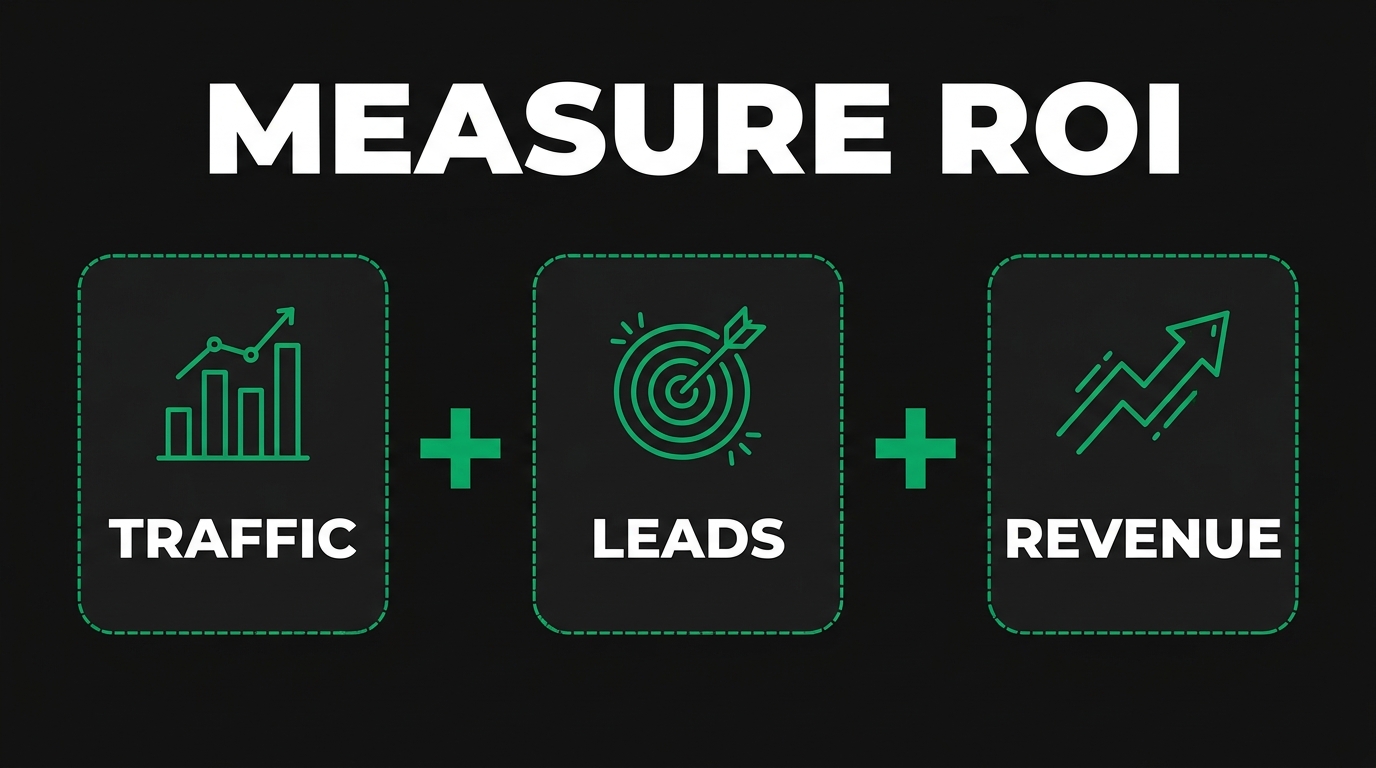
You measure SEO performance for specification pages by tying rankings to RFQ submissions, tracking conversion attribution from organic landing pages, aligning reporting cadence with the industrial buying cycle, and benchmarking catalog coverage against competitors. This section covers all four.
Which KPIs Tie Specification Rankings to RFQ Pipeline?
KPIs that tie specification rankings to RFQ pipeline are spec-page organic sessions, quote-form conversion rate by landing page, average deal value per RFQ, and closed-won revenue attributed to organic sessions. Track each metric at the URL level, not the sitewide level.
A spec page is a revenue unit. Rank, traffic, conversion, and closed revenue form the chain. Disconnecting any link breaks the case for ongoing investment. Measuring at the spec-page level also exposes which material and process combinations generate the highest deal size, which focuses future content and link-building priorities with far more precision than generic organic reporting.
How Do You Attribute Procurement Conversions to Spec Pages?
You attribute procurement conversions to spec pages by connecting Google Search Console query data to Google Analytics sessions and joining those sessions to CRM quote records through a unique identifier.
According to Google Analytics help documentation, the Google organic search traffic report is a pre-made detail report that displays landing pages with associated Search Console and Google Analytics metrics for your linked Search Console property.
Stitch the CRM layer on top by pushing the landing-page URL into the quote record at form submission. This three-layer stack gives a defensible line from keyword to revenue, comparable to the attribution approach contrasted in oem seo vs b2b manufacturing seo.
What Reporting Cadence Aligns With Buying Cycles?
A reporting cadence that aligns with buying cycles is monthly at the URL level, quarterly at the cluster level, and annually at the revenue level. Industrial buying cycles span ninety to three hundred sixty days, so weekly swings rarely reflect real performance.
Monthly reports catch indexation and ranking shifts. Quarterly reports catch cluster-wide momentum such as a new hub gaining topical authority. Annual reports tie organic investment to pipeline and closed revenue. This cadence keeps the engineering, marketing, and sales teams on compatible review windows without reacting to noise from normal SERP volatility.
How Do You Benchmark Specification Coverage Against Competitors?
You benchmark specification coverage against competitors by running a capability crosswalk: list every material, process, and tolerance you support, then pull every indexed spec URL from the top three competitors and map the overlap. Gaps point to pages to build.
Coverage parity is the floor; coverage leadership is the target. When a supplier publishes forty more grade-and-tolerance pages than the nearest competitor with equivalent schema depth, the long-tail SERP share compounds quickly. Use log-file analysis and SERP scraping tools to verify the benchmark quarterly, since competitors add pages continuously inside active industrial categories.
How Should You Approach Specification SEO With Manufacturing SEO Agency?
You approach specification SEO with Manufacturing SEO Agency by starting with a catalog audit, then layering procurement-intent keyword architecture, datasheet-grade on-page content, and RFQ-tied reporting. This section covers the agency's capability to build spec architectures and a recap of the key takeaways.
Can Manufacturing SEO Agency Build Procurement-Intent Specification Architectures?
Yes, Manufacturing SEO Agency can build procurement-intent specification architectures. Manufacturing SEO Agency focuses only on industrial manufacturers and organizes every engagement around material, process, tolerance, finish, and certification vocabulary. Manufacturing SEO Agency pairs a manufacturing audit with keyword clustering by grade and process, then translates the clusters into a spec-page roadmap tied to live RFQ data.
The service stack includes technical SEO remediation, PR-grade editorial link building, AI search visibility engineering, and revenue-tied reporting that connects spec-page rankings to pipeline. Engineers, purchasing managers, and supply-chain directors receive content written in process, material, and certification language they already use. Manufacturing SEO Agency operates as industrial seo specialists supporting CNC, injection molding, metal fabrication, additive, aerospace, automotive, electronics, and medical sectors.
What Are the Key Takeaways About SEO Strategies for Manufacturing Specifications We Covered?
The key takeaways about SEO strategies for manufacturing specifications are that specification pages are the revenue unit of industrial SEO and every tactic ladders up to them. Here are the main points:
- Treat every material-process-tolerance combination as a separate indexable asset with its own URL, datasheet, and schema payload.
- Research keywords directly from procurement vocabulary and validate intent against live SERPs and historical RFQ data before committing a page.
- Structure the on-page layer around title plus datasheet plus RFQ meta description, with internal links across the hub-and-spoke cluster.
- Mark up Product, certification, and process content with Schema so AI answer engines cite the exact values.
- Protect crawl budget and Core Web Vitals on large catalogs through canonical discipline, faceted-URL governance, and lean HTML datasheets.
- Earn links from trade publications, directories, and standards bodies using genuine engineering assets rather than generic outreach.
- Measure at the URL level and tie rankings to quote-form conversions and closed revenue, with a monthly URL, quarterly cluster, and annual revenue cadence.
Specification SEO rewards engineering precision and sustained coverage. Build depth once, then compound it.