A B2B SEO tool for manufacturing is software that helps industrial firms research procurement-intent keywords, audit technical performance, build topical authority around process and certification specifics, and tie rankings to RFQs and pipeline revenue.
This guide covers what qualifies a tool as manufacturing-fit, the fifteen best B2B SEO tools we recommend, how to evaluate vendors before buying, how to combine tools into a working tech stack, and the implementation mistakes that erode return on software spend.
The first theme defines a manufacturing-fit SEO tool by the capabilities separating industrial use cases from consumer marketing software, the differences manufacturers need versus consumer brands, and the workflow stages requiring dedicated B2B tools.
The second theme profiles the fifteen platforms by role, spanning all-in-one suites such as Ahrefs and Semrush, technical crawlers such as Screaming Frog and Sitebulb, content platforms such as Surfer, Clearscope, and MarketMuse, enterprise systems such as Conductor and BrightEdge, Google's own Search Console and Analytics 4, Schema App for structured data, and AlsoAsked for procurement question intent.
The third theme explains evaluation criteria, procurement scoring, and pricing models industrial buyers should weigh before signing a contract.
The fourth theme covers stack design, tool combinations that cover the full procurement funnel, CRM integration, and data workflows connecting SEO activity to revenue reporting.
The final theme surfaces the implementation mistakes manufacturers most often make, including underused stacks, configuration errors, and reporting distortions that mask real tool ROI.
What Defines a B2B SEO Tool for Manufacturing?
A B2B SEO tool for manufacturing is software that targets procurement-intent queries, maps process and certification taxonomies, and ties organic visibility to RFQ pipeline. The sub-sections below cover capabilities that separate industrial platforms from generic suites, why manufacturers need different tooling than consumer brands, and the workflow stages requiring dedicated software.
What Capabilities Separate Manufacturing SEO Tools from Generic Marketing Software?
The capabilities separating manufacturing SEO tools from generic marketing software are industrial taxonomy coverage, process and material keyword depth, technical crawl handling of spec sheets and PDFs, and attribution logic that connects rankings to quote requests rather than e-commerce checkouts. Generic platforms optimize for consumer search volume, not low-volume high-intent industrial terms.
The practical test is whether a platform can distinguish "aluminum extrusion" as a material query from a supplier query.
Why Do Manufacturers Need Different SEO Tooling Than Consumer Brands?
Manufacturers need different SEO tooling than consumer brands because industrial buying cycles are longer, involve multiple stakeholders, and depend on technical content rather than price or brand preference. Tools built for consumer retail prioritize transactional keywords, review schema, and shopping feeds, while industrial buyers search by tolerance, material grade, certification, and lead time.
A manufacturing stack must handle PDF spec sheets during crawls and integrate with CRM systems that track RFQs. Operators building foundational programs often start with seo for small manufacturing companies before scaling stack complexity.
Which Workflow Stages Require Dedicated B2B SEO Tools?
The workflow stages that require dedicated B2B SEO tools are keyword discovery, technical auditing, content production, link acquisition, and revenue reporting. Free government resources cover niche security and OT gaps commercial vendors skip.
The stages include: procurement-intent keyword discovery, spec-sheet crawl auditing, buyer-stage content production, trade-publication outreach, and RFQ-tied reporting. A strong grasp of terminology begins with a solid industrial keywords? ultimate guide before vendor selection starts. That foundation shapes which tools you actually need.
What Are the 15 Best B2B SEO Tools for Manufacturers?
The 15 best B2B SEO tools for manufacturers combine all-in-one platforms, technical crawlers, content optimization suites, enterprise systems, Google's native stack, structured-data editors, and procurement-intent miners. The sub-sections below profile each tool by role and the manufacturing scenario where it earns its license fee.
Why Is Ahrefs the Strongest All-in-One Platform for Industrial SEO?
Ahrefs is the strongest all-in-one platform for industrial SEO because its backlink index, keyword database, and content explorer together cover the three disciplines manufacturers need daily: technical diagnostics, procurement-intent keyword mapping, and competitor link intelligence. Its Site Explorer surfaces which trade publications link to competing CNC shops or injection molders.
For outreach scoping, paired analysis with best backlink analysis tools for manufacturing and the best seo competitor analysis tools manufacturing clarifies where Ahrefs replaces single-purpose crawlers.
How Does Semrush Support Procurement-Intent Keyword Strategy?
Semrush supports procurement-intent keyword strategy by grouping queries into topic clusters, revealing SERP feature coverage, and mapping commercial-intent variants across process and material terms. Its Keyword Gap tool shows how to find competitor keywords that contract manufacturers rank for but your site does not. Teams comparing shortlists cross-reference top keyword research tools b2b manufacturing and broader tools for global keyword research to confirm Semrush fits their budget. Semrush Position Tracking pivots by country and device, which matters when buyers search from plant IPs across regions.
What Makes Moz Pro a Reliable Choice for Manufacturing Domain Authority?
Moz Pro is a reliable choice for manufacturing domain authority because its Domain Authority metric, Link Explorer index, and Page Authority scoring give marketing leaders a defensible way to benchmark industrial sites against procurement directories. Moz's on-page grader flags missing specification keywords and schema opportunities on catalog pages. Practitioners running link campaigns frequently follow how to use moz link explorer for industrial to structure outreach lists. Moz earns its place for teams that report authority progress to non-technical executives.
Why Do Manufacturers Use Screaming Frog for Technical Crawls?
Manufacturers use Screaming Frog for technical crawls because its desktop crawler handles faceted catalog navigation, PDF spec sheet extraction, and custom JavaScript rendering that cloud-based auditors often cap at page limits. The tool reveals orphaned product pages, redirect chains from legacy CMS migrations, and duplicated metadata across SKU variants.
Screaming Frog excels on high-URL-count manufacturer sites where free Search Console sampling misses edge-case indexation issues.
How Does Sitebulb Visualize Industrial Website Architecture?
Sitebulb visualizes industrial website architecture by producing interactive crawl maps, hint-based audit reports, and depth charts showing how many clicks separate a spec sheet from the homepage. Its visual reports help manufacturers explain internal linking weaknesses to engineering stakeholders who distrust spreadsheet dumps. Sitebulb flags thin content on product variant pages, missing hreflang for multinational plants, and canonical conflicts from faceted filters. For dense product taxonomies, Sitebulb shortens decision cycles between SEO and web development teams.
Why Is SE Ranking a Practical Choice for Mid-Market Manufacturers?
SE Ranking is a practical choice for mid-market manufacturers because its rank tracking, competitor research, and white-label reporting work at a lower price point than Ahrefs or Semrush while still covering core procurement keyword workflows. Its backlink checker, on-page audit, and local SEO modules meet the needs of a single-facility manufacturer running lean.
Mid-market operators typically pair SE Ranking with Screaming Frog to cover rank tracking plus deep technical auditing.
What Does Surfer SEO Bring to On-Page Optimization for Industrial Pages?
Surfer SEO brings on-page optimization for industrial pages through NLP-driven content scoring, SERP-based keyword density benchmarks, and real-time editor guidance that helps engineers-turned-writers hit topical coverage targets without over-optimizing. Surfer's Content Editor scores drafts against top-ranking pages for process and application terms, highlighting missing subtopics like tolerance ranges or certification standards. For manufacturers producing application notes and whitepapers, Surfer accelerates content quality assurance. Surfer shines when technical writers need guardrails rather than creative direction.
How Does Clearscope Help Manufacturers Build Topical Authority?
Clearscope helps manufacturers build topical authority by scoring drafts on semantic relevance, surfacing related entities competitors cover, and grading content depth against the live SERP for industrial queries. Its content grader rewards breadth of entity coverage, pushing writers to include material grades, certification standards, and process tolerances that engineers search for. Clearscope integrates with Google Docs and WordPress so manufacturing marketing teams work inside existing publishing workflows. For agencies producing 20-plus pieces per month, Clearscope reduces editor passes by enforcing consistent topical depth.
Why Do Industrial Marketers Choose MarketMuse for Content Planning?
Industrial marketers choose MarketMuse for content planning because its AI-driven topic modeling, content briefs, and competitive inventory surface gaps at the site level rather than the single-page level.
MarketMuse addresses those gaps by assigning content scores to every page on the domain. The platform earns its license fee when manufacturers commit to scale content programs.
How Does Conductor Support Enterprise Manufacturing SEO Programs?
Conductor supports enterprise manufacturing SEO programs through integrated keyword insights, content briefs, and performance dashboards that align marketing, product, and engineering stakeholders across multi-facility organizations. Conductor's workflow modules track content from brief to publication, which suits distributed teams across plants.
Conductor fits best when annual content output exceeds 200 pieces across business units.
Why Is BrightEdge Used by Multi-Facility Manufacturing Operations?
BrightEdge is used by multi-facility manufacturing operations because its Data Cube, Opportunity Forecasting, and StoryBuilder dashboards aggregate rankings across product lines, geographies, and division-level websites into a single executive view. Multi-facility manufacturers use BrightEdge to benchmark subsidiary domains against shared corporate competitors. Its competitive reporting compares procurement-intent keyword ownership across enterprise portfolios. BrightEdge pricing puts it squarely in the Fortune 1000 manufacturer category.
What Role Does Google Search Console Play in Manufacturing SEO?
Google Search Console plays a foundational role in manufacturing SEO by surfacing the exact queries manufacturers rank for, the pages Google has indexed, and the technical errors Google's crawlers encounter on spec-sheet URLs.
Manufacturers rely on its Index Coverage, Core Web Vitals, and Performance reports as the baseline diagnostic layer before third-party tools.
How Does Google Analytics 4 Track Procurement-Intent Behavior?
Google Analytics 4 tracks procurement-intent behavior through event-based measurement, engagement metrics, and funnel exploration reports that help manufacturers measure which organic sessions lead to RFQ submissions, spec-sheet downloads, and distributor locator interactions. GA4's cross-platform attribution reveals which organic landing pages actually convert buyers despite ranking outside the top three positions. Manufacturers configure conversion events for quote requests, catalog downloads, and demo bookings.
Why Is Schema App Critical for Industrial Structured Data?
Schema App is critical for industrial structured data because its JSON-LD editor, deployment manager, and validation layer let manufacturers mark up Product, Organization, LocalBusiness, and FAQ schema across thousands of catalog pages without touching source code.
Schema App delivers that CTR lift for manufacturers whose catalogs run into the tens of thousands of SKUs. Industrial structured data also feeds AI search answer panels.
How Does AlsoAsked Surface Procurement Question Intent?
AlsoAsked surfaces procurement question intent by scraping Google's People Also Ask boxes and mapping question clusters around process, material, and supplier queries engineers and purchasing managers type into search. Its visual tree view helps content teams group related FAQ queries around a seed term like "CNC machining tolerances" or "medical-grade silicone injection molding." For manufacturers building topic clusters, AlsoAsked reveals the question space competitors have not yet answered. Picking the right combination of these fifteen tools depends on stack size and evaluation criteria.
How Should Manufacturers Evaluate B2B SEO Tools Before Buying?
Manufacturers should evaluate B2B SEO tools before buying by scoring industrial use-case fit, applying procurement scoring rubrics, and aligning pricing models to actual usage. The sub-sections below cover evaluation criteria, vendor scoring, and pricing model selection.
Which Evaluation Criteria Matter Most for Industrial Buyers?
The evaluation criteria that matter most for industrial buyers are industrial keyword coverage, PDF and JavaScript crawl depth, CRM integration, procurement-intent filtering, and reporting that ties rankings to RFQ pipeline. Secondary criteria include API access, white-label reporting, and support response time.
Industrial buyers also engage across ten or more channels per the McKinsey rule-of-thirds framework, so multi-channel reporting earns weight.
How Should Procurement Teams Score SEO Tool Vendors?
Procurement teams should score SEO tool vendors using a weighted rubric that evaluates capability coverage, data accuracy, integration depth, support SLAs, contract flexibility, and total cost of ownership over a three-year horizon. A practical scoring template assigns 30 percent to capability, 20 percent to data accuracy verified through pilot tests, 20 percent to integrations, 15 percent to support, 10 percent to contract flexibility, and 5 percent to ancillary services.
Pilot every shortlisted tool against 100 real procurement queries before committing.
What Pricing Models Apply to Manufacturing SEO Software?
The pricing models that apply to manufacturing SEO software are per-seat licensing, URL-tracking tiers, keyword-tracking tiers, usage-based API pricing, and enterprise annual contracts. The models include: per-seat licensing for individual analysts, keyword-tracking tiers scaling with rank tracking volume, URL-tracking tiers based on crawl volume, usage-based API pricing for data extraction, and enterprise contracts bundling unlimited usage with account management.
Pricing decisions connect directly to how tools assemble into a working stack.
How Do Manufacturers Combine SEO Tools Into a Working Tech Stack?
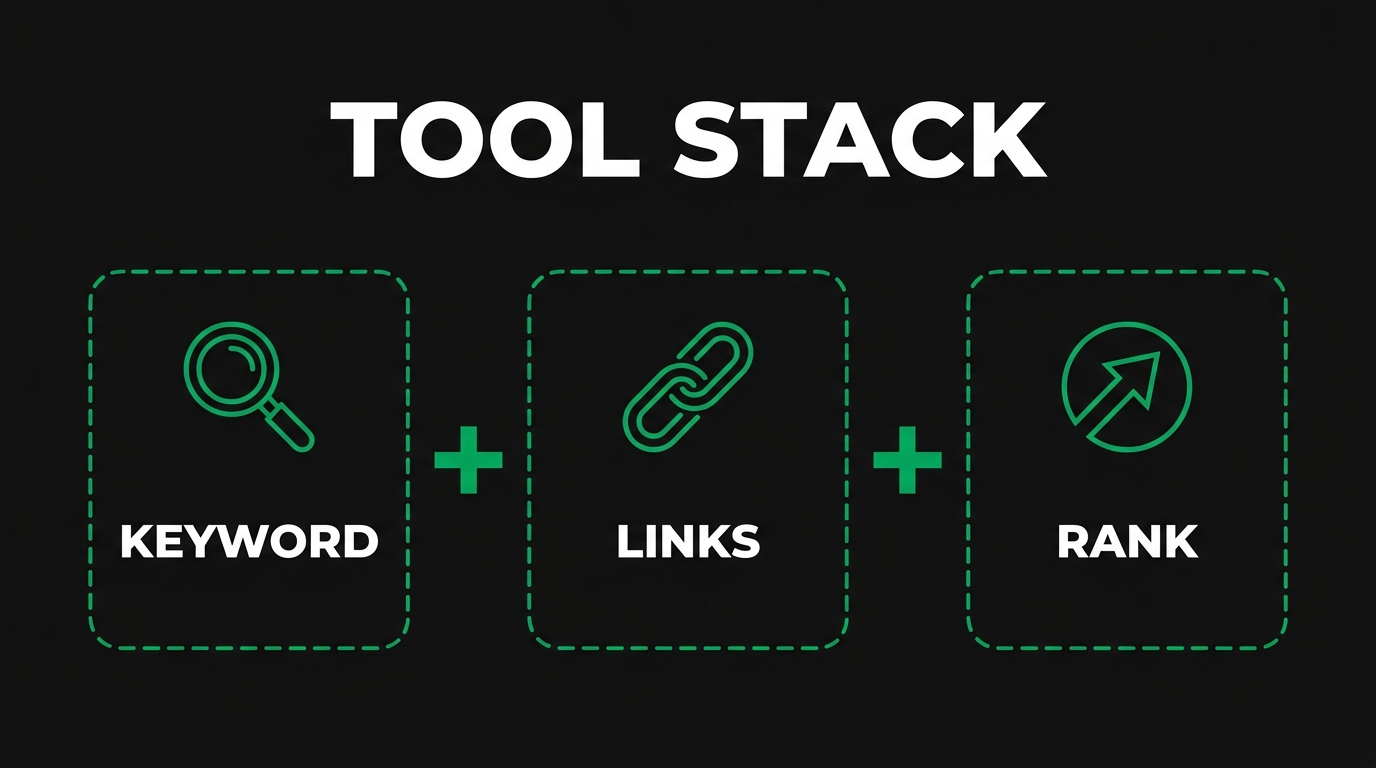
Manufacturers combine SEO tools into a working tech stack by pairing one all-in-one suite with a dedicated technical crawler, a content optimization platform, Google's native analytics, and a structured-data editor. The sub-sections below cover funnel coverage, CRM integration, and revenue workflows.
Which Tool Combinations Cover the Full Procurement Funnel?
The tool combinations that cover the full procurement funnel pair discovery tools, evaluation tools, and conversion tools across each stage. The combinations include: Ahrefs plus AlsoAsked for top-of-funnel question discovery; Semrush plus Clearscope for middle-funnel content optimization; Screaming Frog plus Sitebulb for technical fitness before campaigns launch; and Google Search Console plus Google Analytics 4 for bottom-of-funnel conversion measurement.
Mapping tools to funnel stages clarifies which subscriptions to renew and which to cut.
How Should Manufacturers Integrate SEO Tools With Their CRM?
Manufacturers should integrate SEO tools with their CRM by piping organic session data, form-fill events, and ranking changes into Salesforce, HubSpot, or Dynamics so sales teams see the content path that led to each RFQ. The integration pattern uses GA4 as the common layer: organic events flow from GA4 into the CRM's marketing attribution model.
API-level connections between Ahrefs or Semrush and the CRM are rarely justified; ranking data usually belongs in BI dashboards alongside CRM pipeline reports.
What Data Workflows Connect SEO Tools to Revenue Reporting?
The data workflows that connect SEO tools to revenue reporting are ETL pipelines that combine rank tracking exports, Google Search Console data, GA4 event data, and CRM opportunity data into a single BI dashboard. The workflow includes: scheduled Search Console exports via API, GA4 to BigQuery streaming, CRM to BigQuery via Fivetran or equivalent, rank tracker exports via Ahrefs or Semrush API, and a Looker or Power BI layer joining all sources on URL and session_id.
Implementation mistakes at this stage are where most tool ROI gets lost.
What Implementation Mistakes Should Manufacturers Avoid With SEO Tools?
The implementation mistakes manufacturers should avoid with SEO tools are underusing the stack, misconfiguring rank tracking and crawl settings, and reporting on the wrong metrics. The sub-sections below cover each failure mode and the fix we apply in client engagements.
Why Do Manufacturers Underuse Their SEO Tool Stack?
Manufacturers underuse their SEO tool stack because onboarding rarely covers industrial use cases, internal champions leave, and day-to-day reporting defaults to the homepage dashboard rather than procurement-intent workflows.
The fix is quarterly usage audits tied to seat justification, plus a documented runbook for each tool mapping specific workflows to specific buyer-journey stages. Without a runbook, expensive platforms collapse into a single keyword research habit.
Which Configuration Errors Reduce Tool Accuracy?
The configuration errors that reduce tool accuracy are wrong location settings, missing subdomain inclusion, unfiltered brand-term rank tracking, and crawlers blocked by robots.txt or aggressive bot protection. The errors include: rank tracking set to generic United States when procurement buyers search from specific states; subdomains like parts.example.com excluded from the tracked property; branded queries inflating average position metrics; and crawls blocked at the WAF layer that hide thousands of indexable SKU pages.
Each error skews reporting in ways that mask real performance problems.
How Do Reporting Mistakes Distort SEO Tool ROI?
Reporting mistakes distort SEO tool ROI by averaging keyword rankings across irrelevant terms, counting brand-search traffic as organic success, and reporting sessions without tying them to RFQ pipeline dollars. The distortions include: averaged position reports that hide winning and losing pages inside a single number; branded-keyword traffic inflating organic performance; and session counts reported without RFQ conversion context.
The fix is segmenting reports by intent, excluding brand terms, and joining every organic metric to closed-won pipeline in the CRM.
How Does Manufacturing SEO Agency Help You Choose and Operate the Right SEO Tool Stack?
Manufacturing SEO Agency helps you choose and operate the right SEO tool stack by auditing current subscriptions, matching capability gaps to industrial use cases, and running the stack on your behalf through revenue-tied reporting. Manufacturing SEO Agency works as your industrial seo specialists across tool selection and execution.
Can Manufacturing SEO Agency's Industrial Keyword Research Services Translate Tool Data Into Pipeline?
Yes, Manufacturing SEO Agency's industrial keyword research services translate tool data into pipeline by mapping procurement-intent keywords to RFQ-worthy landing pages, scoring queries by buyer-journey stage, and tying ranking movement to closed-won opportunities in the CRM. Manufacturing SEO Agency builds procurement-intent keyword architecture from Ahrefs, Semrush, and AlsoAsked exports, layered with engineering interview transcripts that generic tools cannot capture.
Manufacturing SEO Agency's industrial keyword research services turn tool subscriptions into a measurable pipeline engine for CNC, injection molding, metal fabrication, additive, aerospace, and regulated industrial clients.
What Are the Key Takeaways About the 15 Best B2B SEO Tools for Manufacturing We Covered?
The key takeaways about the 15 best B2B SEO tools for manufacturing are: pick one all-in-one suite such as Ahrefs or Semrush; pair it with Screaming Frog or Sitebulb for technical crawls; add a content platform such as Surfer, Clearscope, or MarketMuse; include Conductor or BrightEdge only at enterprise scale; always run Google Search Console and Analytics 4; use Schema App for structured data at catalog scale; and mine AlsoAsked for procurement question intent. Evaluate every vendor with a weighted rubric before buying. Configure rank tracking and reporting to tie rankings to RFQ pipeline, not vanity averages.