Industrial keywords are the specific, technical search terms that engineers, procurement managers, and supply chain buyers type into Google when sourcing parts, processes, materials, certifications, or industrial suppliers. We define them as the procurement-intent vocabulary of B2B manufacturing, distinct from generic consumer queries because they combine process, material, tolerance, certification, and application signals into a single high-value search.
This guide covers what industrial keywords are, why they matter for manufacturer visibility, the main types you need to target, how to identify and research high-value terms, which tools support the work, and the common mistakes that cost B2B pipeline.
We explain the linguistic patterns, search-intent categories, and SPO structures that separate an industrial query from a B2C one, so you can recognize genuine procurement demand the moment it appears in a keyword tool.
We show how industrial keywords map to the RFQ funnel, why specific technical language attracts higher-value accounts, and how the right keyword strategy converts organic rankings into pipeline value.
We break down the main categories of industrial keywords: process-based, material-specific, certification and compliance, application or vertical, and capability or tolerance terms, each tied to a different slice of procurement intent.
We walk through how to identify high-value terms, score them against buyer value, analyze competitor footprints, and validate them with sales and engineering teams.
We then cover the step-by-step research process, the platforms that track long-tail B2B queries, and the strategic errors, such as chasing vanity terms or misaligning intent, that quietly drain manufacturer pipelines.
What Defines an Industrial Keyword in Manufacturing SEO?
An industrial keyword is a search query that names a specific manufacturing process, material, tolerance, certification, or application used by B2B buyers sourcing suppliers. This section covers how industrial keywords differ from generic B2C queries, which search-intent categories apply, and the linguistic patterns that identify a genuine industrial search.
How Does an Industrial Keyword Differ from a Generic B2C Keyword?
An industrial keyword differs from a generic B2C keyword in intent, vocabulary, and buyer identity. Industrial keywords encode procurement signals such as process name, material grade, tolerance, certification, and geographic qualifier, whereas B2C terms target price, brand, and consumer features. The querying audience differs: engineers, procurement managers, and supply chain directors research suppliers, not retail consumers.
Understanding what is industrial seo helps frame why these terms behave differently from consumer search.
Which Search Intent Categories Apply to Industrial Keywords?
The search intent categories that apply to industrial keywords include informational, navigational, commercial-investigation, and transactional intent, with a heavy skew toward commercial-investigation and transactional queries. Industrial queries cluster in spec comparisons, supplier shortlisting, and RFQ preparation.
The high-value terms, such as "titanium 6Al-4V 5-axis CNC machining aerospace," carry transactional intent even when tools estimate near-zero volume, because each search can represent a direct RFQ.
What Linguistic Patterns Identify a Genuine Industrial Search Query?
The linguistic patterns that identify a genuine industrial search query are noun-stacked compound phrases combining process, material, specification, certification, and geography. Typical structures include "process + material grade," "process + tolerance + application," and "process + certification + location," such as "Swiss-turned 316L stainless steel medical components AS9100." Commercial modifiers, such as supplier, services, quote, pricing, and RFQ, flag readiness to buy.
Genuine industrial queries read like part-drawing callouts, not conversational questions, consolidating procurement constraints into one string.
Why Are Industrial Keywords Critical for B2B Manufacturer Visibility?
Industrial keywords are critical for B2B manufacturer visibility because they align organic rankings with procurement-intent search behavior. This section covers how industrial keywords map to the procurement funnel, why engineers use specific technical terms, and how the right terms drive RFQ volume and pipeline value.
How Do Industrial Keywords Map to the Procurement Funnel?
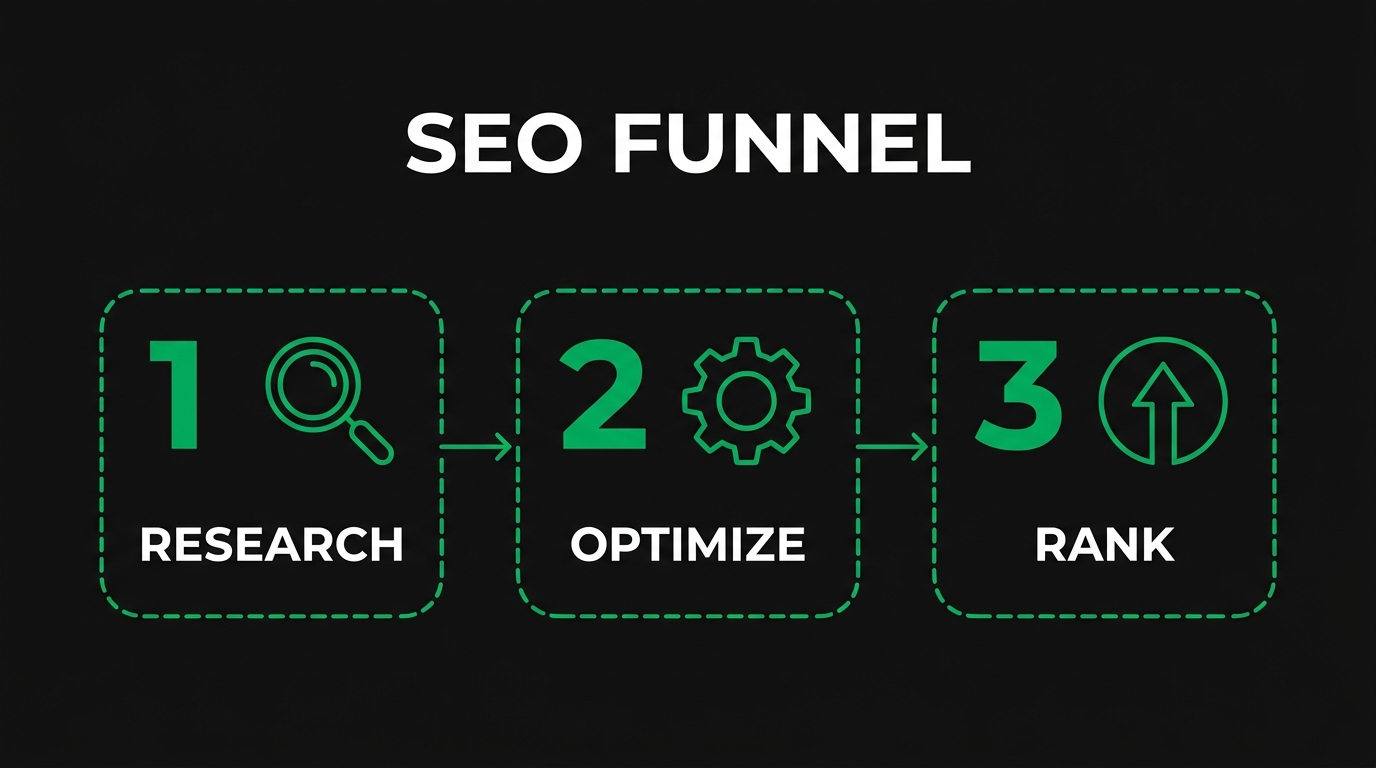
Industrial keywords map to the procurement funnel by aligning query language with each stage: awareness, evaluation, and RFQ submission. Early-funnel searches use broad process or material research terms, such as "injection molding materials comparison." Mid-funnel queries add qualifiers, such as capability, tolerance, or certification, indicating supplier shortlisting. Late-funnel searches include "quote," "supplier," "RFQ," or location modifiers.
Why Do Engineers and Procurement Managers Use Specific Technical Terms?
Engineers and procurement managers use specific technical terms because generic language cannot filter the thousands of suppliers returned for broad queries, and part specifications demand precision. Exact-match technical vocabulary pre-qualifies suppliers, reducing evaluation cycles and aligning queries with drawing callouts.
How Do Industrial Keywords Influence RFQ Generation and Pipeline Value?
Industrial keywords influence RFQ generation and pipeline value by filtering traffic so that only procurement-ready buyers land on a manufacturer's page. High-intent keywords counter buying committee stalls by surfacing the supplier during evaluation, when committees search for exact-match capabilities.
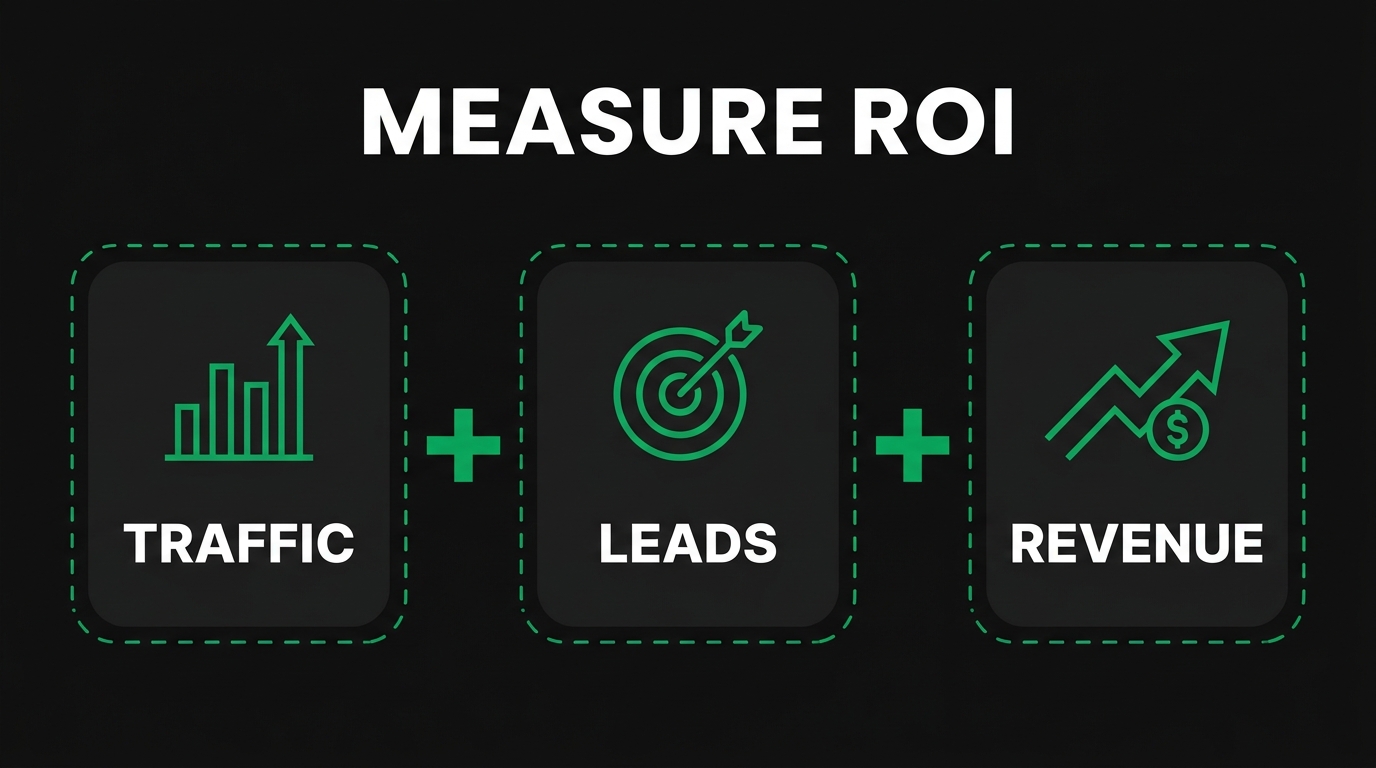
Rankings tied to process, material, and certification terms convert into measurable RFQs, shortlists, and closed revenue, which is why procurement-intent keyword architecture drives pipeline rather than surface traffic.
What Are the Main Types of Industrial Keywords?
The main types of industrial keywords are process-based, material-specific, certification and compliance, application or industry-vertical, and capability and tolerance terms. Each type corresponds to a procurement constraint that engineers and buyers encode into their search queries.
What Are Process-Based Industrial Keywords?
Process-based industrial keywords are queries built around a named manufacturing operation, such as CNC machining, injection molding, metal fabrication, die casting, sheet metal stamping, additive manufacturing, Swiss turning, or laser cutting. These keywords rank suppliers by capability name, so "5-axis CNC machining services" or "thermoplastic injection molding supplier" signals a direct capability match.
Process keywords form the foundational layer that every material, certification, and capability modifier attaches to.
What Are Material-Specific Industrial Keywords?
Material-specific industrial keywords are queries that name a substrate, alloy, polymer, or grade used in manufacturing, such as 6061 aluminum, 316L stainless steel, Inconel 718, PEEK, ULTEM, titanium 6Al-4V, or copper C110. Material terms pair with process terms to form high-intent phrases, such as "Inconel 718 5-axis machining."
Ranking for material keywords captures procurement traffic the moment the bill of materials is drafted.
What Are Certification and Compliance Industrial Keywords?
Certification and compliance industrial keywords are queries that name a quality standard, regulatory framework, or accreditation that gates supplier selection. Examples include AS9100, ISO 9001, ISO 13485, IATF 16949, Nadcap special processes, ITAR registration, and FDA 21 CFR Part 820.
Certification keywords are narrow but deeply transactional, because an uncertified supplier is disqualified on the first screen.
What Are Application or Industry-Vertical Industrial Keywords?
Application or industry-vertical industrial keywords are queries that name an end-market or specific application, such as aerospace components, medical implants, automotive powertrain parts, semiconductor wafer handling, oil and gas downhole tools, or defense electronics housings. Each vertical carries unique tolerance, traceability, and qualification requirements.
Ranking for "aerospace machining supplier" or "medical device contract manufacturer" signals vertical fluency and raises average deal value.
What Are Capability and Tolerance Industrial Keywords?
Capability and tolerance industrial keywords are queries that encode measurable process parameters, such as tolerance bands, part size envelopes, axis counts, cavity counts, or surface finish specs. Examples include "±0.0005 inch tolerance machining," "micron-level grinding," "12-inch diameter turning capacity," or "mirror finish polishing." These phrases are extremely long-tail and often show low or zero measured volume, yet they pull high-value RFQs because they match engineering intent exactly.
Capability terms round out the taxonomy and set up how to identify the highest-value terms.
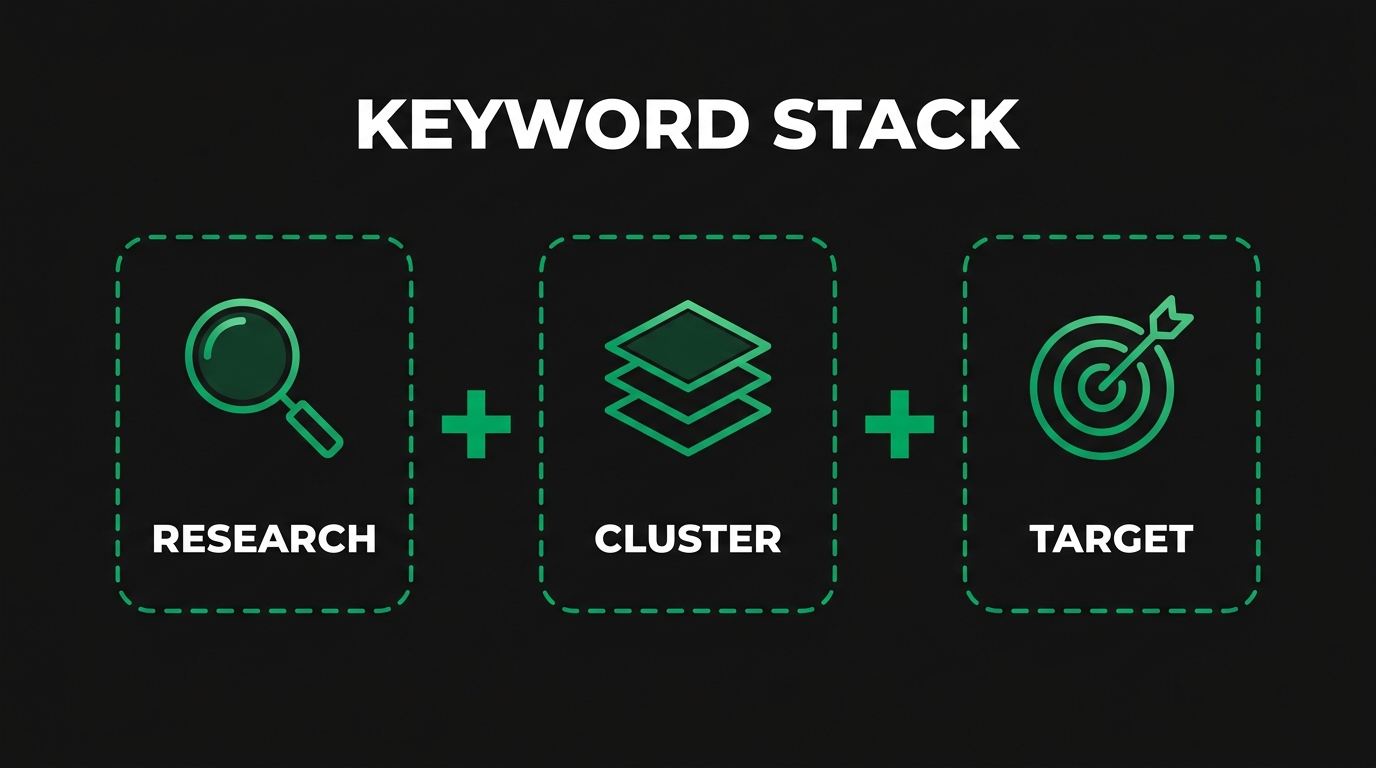
How Do You Identify High-Value Industrial Keywords?
You identify high-value industrial keywords by scoring terms on procurement-intent signals, buyer value per query, competitor footprint, and sales-team validation, rather than on raw search volume alone. This section covers the signal attributes, the volume-versus-value tradeoff, competitor footprint analysis, and internal validation.
Which Keyword Attributes Signal Procurement Intent?
The keyword attributes that signal procurement intent include process specificity, material grade, tolerance, certification, vertical, geographic qualifier, and commercial modifiers such as supplier, services, quote, pricing, or RFQ. High-intent queries typically combine a process with a material grade, certification, or geographic qualifier to identify buyers ready to issue an RFQ.
Queries carrying three or more of these attributes almost always represent active evaluation.
How Do You Evaluate Search Volume Against Buyer Value?
You evaluate search volume against buyer value by modeling the expected pipeline contribution of each keyword, not just its monthly search count. A phrase with 20 monthly searches that maps to a six-figure contract outperforms a phrase with 10,000 searches that attracts unqualified traffic.
The evaluation framework multiplies estimated volume by average deal size, close rate, and intent strength, surfacing the long-tail terms that drive actual RFQs.
How Do You Analyze Competitor Keyword Footprints?
You analyze competitor keyword footprints by mapping which industrial terms each ranked competitor covers, where they rank, and which gaps remain. The workflow starts with a ranked competitor list, exports their organic keyword set, filters for procurement-intent queries, and flags the terms the client does not yet cover. Learning how to find competitor keywords systematically turns raw exports into prioritized opportunities.
Gaps in competitor coverage become the fastest paths to ranking, because less authority is needed to displace weak pages.
How Do You Validate Industrial Keywords with Sales and Engineering Teams?
You validate industrial keywords with sales and engineering teams by cross-checking tool-generated terms against real RFQs, CRM notes, and drawing-package vocabulary from active quotes. Sales teams confirm which phrases buyers use during first calls and which qualifiers appear in winning proposals. Engineering teams verify the technical accuracy of material grades, tolerances, and certification names.
This validation loop rescues zero-volume terms that tools ignore and bridges keyword discovery to the step-by-step research workflow.
How Do You Conduct Industrial Keyword Research Step by Step?
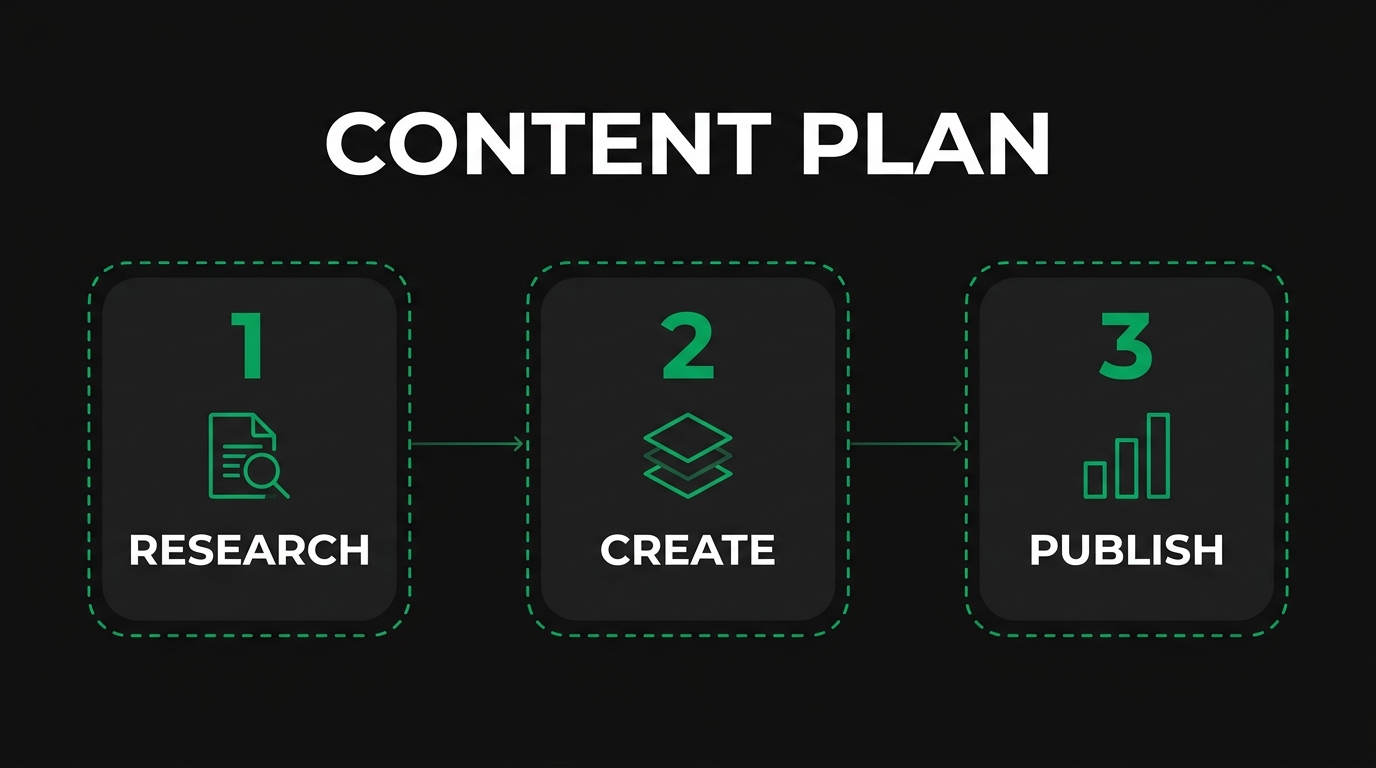
You conduct industrial keyword research step by step by building a seed list from real manufacturing inputs, expanding seeds with search operators and SERP features, clustering terms by procurement stage, and prioritizing clusters for topical authority. This disciplined workflow turns scattered keyword ideas into a ranked pipeline-mapping asset.
How Do You Build a Seed List from Process, Material, and Certification Inputs?
You build a seed list from process, material, and certification inputs by extracting the exact vocabulary used on shop-floor documentation, engineering drawings, capability sheets, and recent RFQs. The seed list should pair every process with each supported material grade and every relevant certification to form multi-attribute phrases, such as "AS9100 5-axis CNC machining Inconel 718 aerospace."
A strong seed list balances breadth, such as every capability, against depth, such as every material variant, so expansion has productive ground to work from.
How Do You Expand Seeds Using Search Operators and SERP Features?
You expand seeds using search operators and SERP features by running each seed through Google with operators such as quoted phrases, site: filters, and related: queries, then harvesting People Also Ask entries, related searches, auto-complete suggestions, and image-pack alt text. SERP features reveal the sub-questions buyers ask, the qualifiers they add, and the content formats Google rewards.
Expansion also pulls from keyword tools, and pairing it with industrial seo strategies broadens the seed set into a hundreds-strong candidate list. To measure whether those candidates perform, use how to track industrial keyword rankings as an always-on feedback loop.
How Do You Cluster Industrial Keywords by Procurement Stage?
You cluster industrial keywords by procurement stage by grouping queries into awareness, consideration, evaluation, and RFQ stages based on intent signals. Awareness queries read like "what is Swiss turning." Consideration queries add qualifiers, such as "Swiss turning services for medical components." Evaluation queries add certification or location. RFQ-stage queries include commercial modifiers, such as "quote" or "RFQ."
Clustering is best done with topical tagging, not just search-volume buckets.
How Do You Prioritize Keywords for Topical Authority Buildout?
You prioritize keywords for topical authority buildout by scoring each cluster on buyer value, competitive gap, and content-production feasibility, then sequencing clusters to build topical depth around the highest-intent capabilities first. Terms such as "titanium machining services aerospace defense" can show "N/A" in keyword tools while driving multiple six-figure deals per year.
Teams expanding topical depth often partner with top manufacturing marketing firms to compress the content production cycle. The prioritized roadmap starts with exact-match procurement terms, expands into adjacent capabilities, and builds full topical clusters so the site becomes the authoritative entity for the discipline.
Which Tools Support Industrial Keyword Research and Tracking?
The tools that support industrial keyword research and tracking include full-stack SEO platforms, free keyword utilities, SERP-scraping tools, and dedicated rank trackers, each covering a different slice of the B2B manufacturing query universe. This section covers the platforms, the free-versus-paid tradeoff, and the tracking workflow.
Which Platforms Cover Long-Tail B2B Manufacturing Queries?
The platforms that cover long-tail B2B manufacturing queries include full-stack SEO suites, keyword-database specialists, and question-mining tools that expose procurement-intent phrasing. Practitioners compare the best keyword research tools for b2b and the top keyword research tools b2b manufacturing against broader stacks, such as the best seo tools for b2b manufacturing and tools for global keyword research. Niche verticals demand niche coverage, for example how to implement seo for robotics depends on platforms that surface component-level queries consumer tools ignore.
How Do Free Tools Compare with Paid Industrial SEO Tools?
Free tools compare with paid industrial SEO tools on query-database depth, competitor exports, SERP feature tracking, and historical data. Free options, such as Google Keyword Planner, Google Search Console, AnswerThePublic free tier, and browser SERP scrapers, are useful for validation and question-mining but miss long-tail procurement terms. Paid platforms, illustrated by the semrush vs ahrefs for industrial seo comparison, expand databases into millions of low-volume terms, surface competitor keyword gaps, and track rank trends weekly.
How Do You Track Industrial Keyword Rankings Over Time?
You track industrial keyword rankings over time by registering the prioritized keyword set inside a rank tracker, tagging terms by procurement stage, monitoring position history weekly, and correlating movements with content changes, link acquisition, and SERP feature shifts. Learning how to track industrial keyword rankings in a structured workflow distinguishes meaningful rank lift from noise.
Ranking trends should tie to pipeline outcomes, such as RFQ volume and shortlist inclusion, so the tracker becomes a revenue instrument rather than a vanity dashboard.
What Common Mistakes Do Manufacturers Make with Industrial Keywords?
The common mistakes manufacturers make with industrial keywords are chasing vanity terms, ignoring long-tail procurement queries, and misaligning page intent with keyword intent. Each error quietly drains pipeline by attracting traffic that never becomes an RFQ.
Why Does Targeting Vanity Keywords Fail B2B Manufacturers?
Targeting vanity keywords fails B2B manufacturers because broad high-volume terms, such as "CNC machining" or "injection molding," pull research traffic, tire-kickers, and consumer queries rather than procurement-ready buyers. Vanity terms carry the heaviest competitive density, so ranking costs more and ROI is thinner.
The better strategy is to own dozens of mid-volume, high-intent procurement phrases where deal size, close rate, and authority economics all work in the manufacturer's favor.
How Does Ignoring Long-Tail Procurement Queries Hurt Pipeline?
Ignoring long-tail procurement queries hurts pipeline because those exact phrases are where qualified buyers describe active projects, yet many manufacturers discard them due to low tool-reported volume. Long-tail terms carry the procurement signals, such as material grade, certification, and tolerance, that separate a real RFQ from a browsing visit.
Pipeline losses compound because each missed phrase could have produced a shortlist-worthy impression, and seo for industrial lead generation only works when the content layer matches how buyers search.
Which Misalignments Between Pages and Keyword Intent Damage Rankings?
The misalignments between pages and keyword intent that damage rankings include targeting a transactional query with an informational blog post, targeting a certification-gated query with a page that never mentions the certification, and targeting a capability query with a page lacking specification detail. Google rewards pages that match the dominant intent for each query, so a mismatched asset caps ranking even with strong links.
Page-intent alignment also shapes conversion, because buyers landing on a mismatched page leave without requesting a quote. Fixing alignment unlocks existing inventory that already targets the right phrases.
How Should You Approach Industrial Keyword Strategy with Manufacturing SEO Agency?
You should approach industrial keyword strategy with Manufacturing SEO Agency by treating keywords as procurement-intent architecture mapped to every stage of the RFQ funnel. As a dedicated industrial seo agency, Manufacturing SEO Agency builds keyword programs for B2B manufacturers whose buyers are engineers and supply chain directors.
Can Industrial Keyword Research Services Help Build Procurement-Intent Visibility?
Industrial keyword research services can help build procurement-intent visibility by combining process, material, certification, and vertical vocabulary into a mapped topical architecture that engineers recognize in search. Manufacturing SEO Agency provides industrial keyword research services focused on exact procurement phrases, such as "5-axis CNC machining titanium aerospace parts," rather than vanity terms.
Compared with general top manufacturing marketing firms, Manufacturing SEO Agency specializes exclusively in industrial SEO, delivering a keyword program that ties organic visibility directly to measurable revenue.
What Are the Key Takeaways About Industrial Keywords We Covered?
The key takeaways about industrial keywords we covered are that industrial keywords encode procurement signals (process, material, certification, tolerance, vertical, location), differ fundamentally from B2C queries, and map to each stage of the RFQ funnel. High-value terms are identified by procurement intent, buyer value, and competitor gaps, not raw volume. The research workflow builds seeds, expands through SERP features, clusters by stage, and prioritizes for topical authority. The right toolset blends free utilities with paid platforms and tracks rankings against pipeline outcomes. Avoiding vanity terms, respecting long-tail procurement queries, and aligning page intent with keyword intent are the highest-leverage discipline changes a manufacturer can make.