Industrial SEO is the practice of ranking manufacturing websites for the process names, material specifications, certifications, and procurement-intent queries that engineers, purchasing managers, and supply chain directors type into search engines when sourcing suppliers. It differs from generic B2B SEO because the audience, the query structure, and the commercial outcome all revolve around RFQ pipeline rather than lead volume alone.
This guide covers what industrial SEO means for manufacturing companies, why it drives manufacturer growth, the core components of a complete program, how to build a procurement-intent keyword strategy, how to develop ranking industrial content, how to support AI search and LLM citations, and how to measure ROI.
We open by defining industrial SEO against generic B2B SEO and mapping the verticals that depend on it most, from CNC machining to aerospace, medical, and contract manufacturing.
We explain why industrial SEO is critical for manufacturer growth, showing how organic visibility influences procurement decisions, drives revenue outcomes, and makes RFQ-intent keywords more valuable than vanity traffic.
We break down the core components of an industrial SEO program, including procurement-intent keyword architecture, topical authority across process, material, and certification queries, technical SEO hygiene, and schema markup.
We then move into keyword strategy, content development, AI search optimization, and ROI measurement, so manufacturers can tie organic rankings directly to pipeline value and closed revenue.
What Does Industrial SEO Mean for Manufacturing Companies?
Industrial SEO is the search optimization discipline that ranks manufacturers for process, material, and certification queries used by procurement buyers. It covers how industrial SEO differs from generic B2B SEO, what defines industrial search behavior, and which verticals depend on it most.
How Does Industrial SEO Differ From Generic B2B SEO?
Industrial SEO differs from generic B2B SEO in three load-bearing ways: audience, query structure, and commercial outcome. Generic B2B SEO optimizes for marketers, HR leads, and SaaS buyers who search category terms. Industrial SEO optimizes for engineers, purchasing managers, and supply chain directors who search narrow procurement strings built around process names, material grades, tolerances, and certifications. Generic B2B buyers convert through demos. Industrial buyers convert through RFQs after weeks of silent evaluation. A page ranking for "5-axis CNC titanium aerospace bracket AS9100" must prove capability with tolerances, inspection data, and certification numbers, not testimonials. This is the core reason generic seo for small manufacturing companies playbooks underperform once a manufacturer competes for procurement-intent traffic.
What Search Behaviors Define Industrial Buyers?
Industrial buyer search behaviors are defined by long procurement-intent strings, deep website scrutiny, and extended silent research periods before any vendor contact. Buyers stack process names with material grades, tolerances, and certifications into single queries such as "contract manufacturer injection molding medical grade PEEK ISO 13485." They rarely click paid ads, open five to ten supplier websites in tabs, and compare capability pages side by side. Engineers hunt technical specifications; procurement managers hunt certifications, lead times, and audit history.
A manufacturer ranking for these queries wins multi-week evaluations before a sales conversation starts.
Which Manufacturing Verticals Rely Most on Industrial SEO?
The manufacturing verticals that rely most on industrial SEO are CNC machining, injection molding, metal fabrication, additive manufacturing, aerospace, automotive, electronics, food and beverage, pharmaceutical, plastics, OEM, and contract manufacturing. Verticals where certifications gate procurement, such as aerospace (AS9100, NADCAP), medical device (ISO 13485, 21 CFR Part 820), and automotive (IATF 16949), see the highest ROI because certification queries are high-intent and low-volume. OEM manufacturers in particular face unique search patterns, which is why understanding what is oem seo matters when vertical strategy is built. Contract shops and custom fabricators also lean heavily on industrial SEO because their buyers search combinations of capability, industry, and geography that generic directories never rank. These next sections move into why the discipline is critical for manufacturer growth.
Why Is Industrial SEO Critical for Manufacturer Growth?
Industrial SEO is critical for manufacturer growth because procurement decisions now form silently online, before any sales contact. This section covers how industrial SEO influences procurement decisions, the revenue outcomes manufacturers see, and why RFQ-intent keywords outperform vanity traffic.
How Does Industrial SEO Influence Procurement Decisions?
Industrial SEO influences procurement decisions by controlling which suppliers appear during the silent research phase that precedes every RFQ.
For manufacturers, that 80% is spent on Google, on trade publications that rank on Google, and on supplier capability pages that rank on Google. If a manufacturer does not rank for the procurement-intent string a buyer uses, the manufacturer is not on the shortlist.
What Revenue Outcomes Do Manufacturers See From Industrial SEO?
Manufacturers see revenue outcomes from industrial SEO in three forms: qualified RFQ volume, higher average order values, and faster procurement cycles. Growth tracks the long tail.
Ranking capability pages for specific process-material-certification combinations produces smaller traffic volumes per keyword but substantially higher close rates, because the queries filter for buyers with active sourcing needs. Real-world industrial seo agency case studies typically show double-digit monthly RFQ growth within nine to twelve months of a procurement-intent program going live. Pipeline value rises faster than traffic, which is the inverse of consumer SEO.
Why Are RFQ-Intent Keywords More Valuable Than Vanity Traffic?
RFQ-intent keywords are more valuable than vanity traffic because they index directly on buyer intent to source, not on general curiosity. A query like "CNC machining services" might carry high search volume, but most traffic is research-stage or competitor-stage. A query like "5-axis CNC titanium aerospace machining AS9100 Arizona" carries a fraction of that volume and converts at many times the rate, because only buyers ready to issue an RFQ ever type it.
The next section breaks the discipline down into its core components.
What Are the Core Components of an Industrial SEO Program?
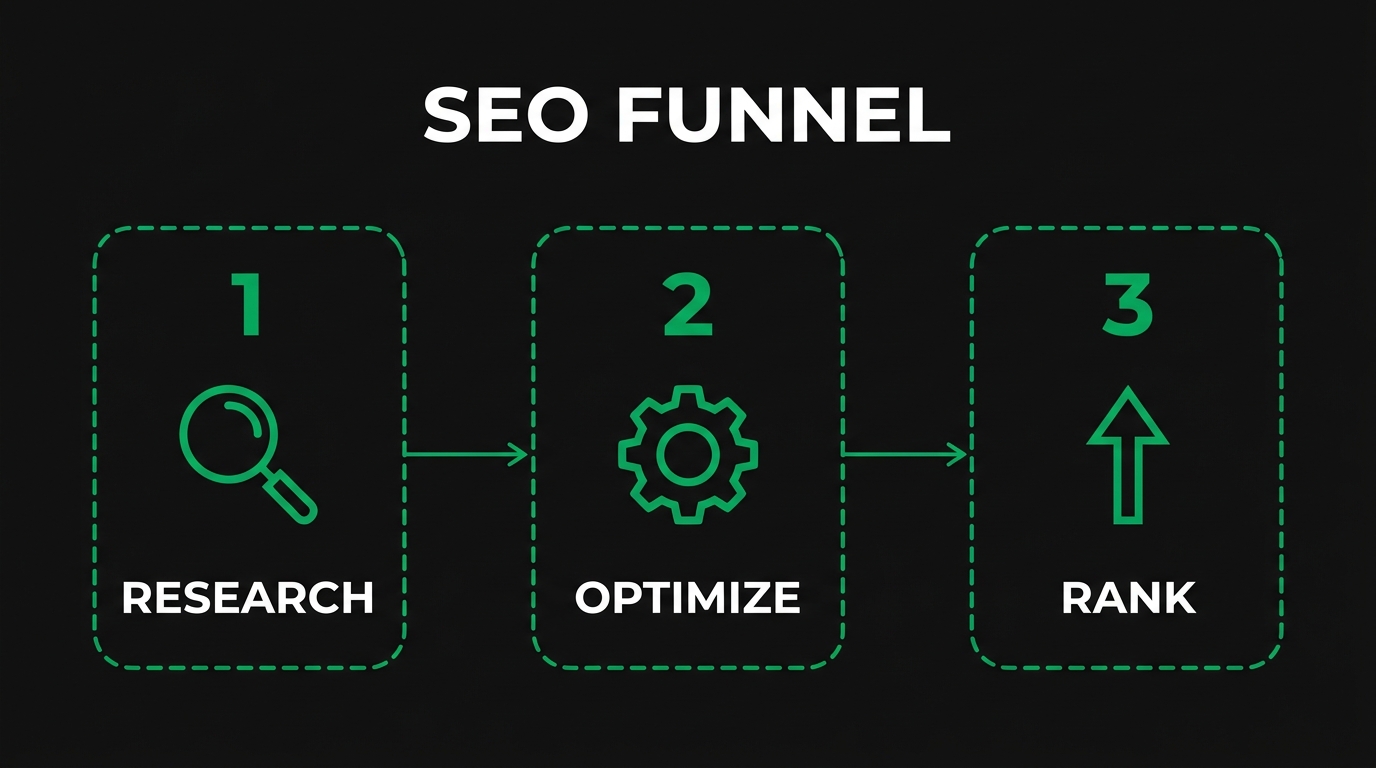
The core components of an industrial SEO program are procurement-intent keyword architecture, topical authority across process, material, and certification queries, technical SEO hygiene, and schema markup. The following sections cover each component and how they combine into a complete industrial seo strategies framework.
What Role Does Procurement-Intent Keyword Architecture Play?
Procurement-intent keyword architecture plays the role of mapping every process-material-certification-application combination a buyer might search into a clustered site structure. Each cluster supports a capability page, spec page, or industry page that answers the procurement question directly. Without this architecture, capability pages compete with each other, ranking power scatters, and buyers land on the wrong URL.
A clean competitor analysis for industrial seo exposes the keyword gaps that should shape that architecture before any content is written.
How Does Topical Authority Apply to Process, Material, and Certification Queries?
Topical authority applies to process, material, and certification queries by building complete topical coverage across every entity a procurement buyer associates with the manufacturer's capability. Certifications act as trust gates.
A manufacturer serving aerospace needs pages on AS9100, NADCAP special processes, and AMS material specifications, not a single "aerospace capabilities" page. Topical depth beats shallow breadth for procurement queries.
What Technical SEO Issues Hurt Manufacturing Websites Most?
The technical SEO issues that hurt manufacturing websites most are slow Core Web Vitals, broken internal linking across capability pages, poor mobile rendering of specification tables, orphaned PDF spec sheets, and missing canonical tags on near-duplicate product variant pages. Manufacturing sites built on aging CMS platforms routinely miss Core Web Vitals thresholds, and spec PDFs sit outside the site's internal link graph, so authority never flows to them. A structured industrial seo audit surfaces these issues in priority order so engineering teams can sequence fixes against business impact.
How Important Is Schema Markup for Industrial Pages?
Schema markup is essential for industrial pages because it feeds structured entity data directly to Google's knowledge graph and to LLMs that now cite manufacturer pages in AI answers.
Manufacturing pages benefit most from Organization, Product, Service, and FAQPage schema, plus sameAs references to industry directories, standards bodies, and Wikipedia entity pages. Schema turns a capability page into a machine-readable entity, which is the exact format AI search engines now prefer. The next section moves from program components into keyword strategy execution.
How Do You Build a Procurement-Intent Keyword Strategy?
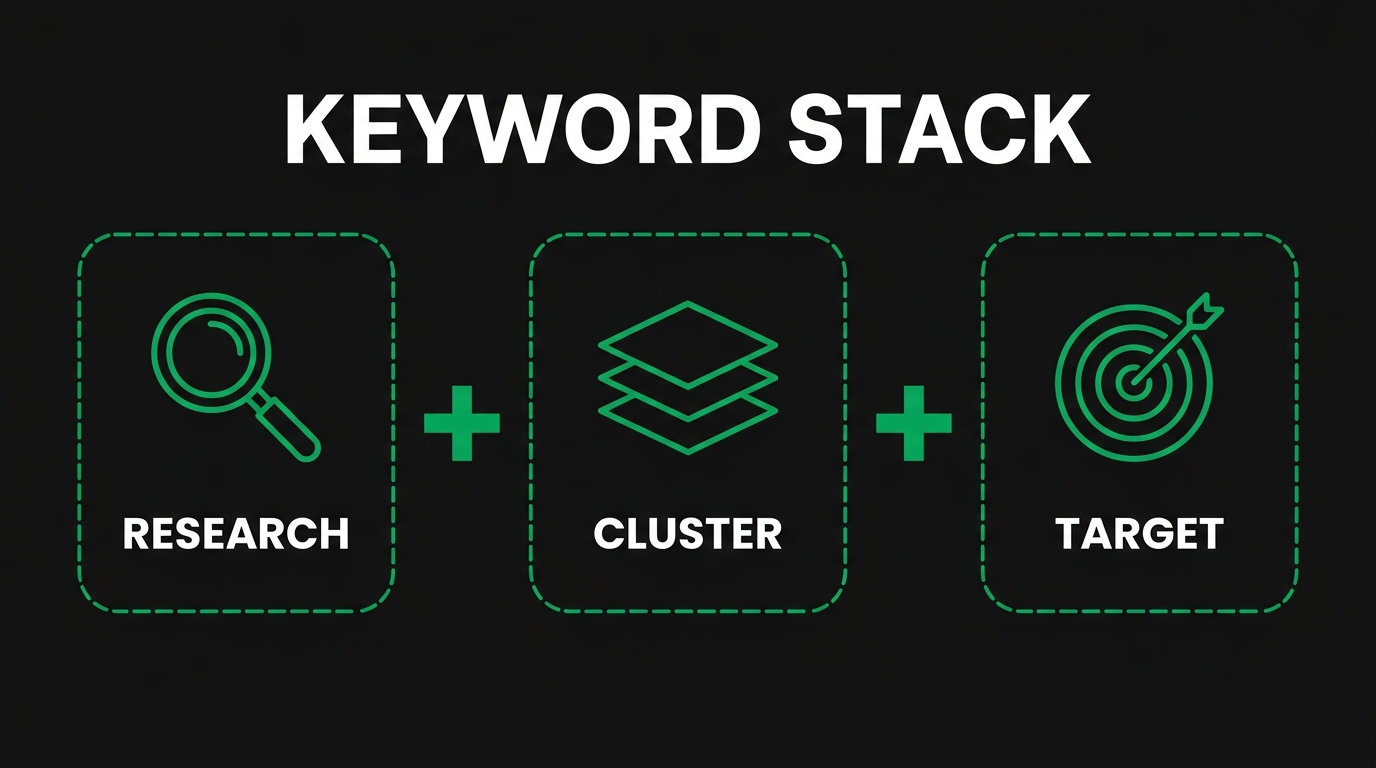
You build a procurement-intent keyword strategy by identifying the modifiers that signal RFQ intent, mapping keywords to process-material-certification combinations, and selecting the research tools that surface long-tail industrial queries. Each H3 below tightens one step of that workflow.
Which Keyword Modifiers Signal RFQ Intent?
The keyword modifiers that signal RFQ intent are sourcing verbs, certification names, material grades, tolerance callouts, quantity qualifiers, and geographic constraints. Sourcing verbs include "manufacturer," "supplier," "contract manufacturer," "vendor," and "partner." Certification modifiers include AS9100, ISO 9001, ISO 13485, IATF 16949, NADCAP, and ITAR. Material modifiers include alloy grades such as 6061-T6, Ti-6Al-4V, Inconel 718, PEEK, and Ultem. Quantity modifiers include "low-volume," "prototype," "short-run," and "high-volume production." When two or more of these modifiers stack in a single query, intent is almost always procurement.
How Should You Map Keywords to Process, Material, and Certification Combinations?
You should map keywords to process, material, and certification combinations by building a three-axis matrix where each cell represents one capability cluster. The process axis lists every manufacturing process offered (5-axis CNC, Swiss turning, injection molding, sheet metal fabrication). The material axis lists supported materials (aluminum alloys, titanium, stainless, medical-grade polymers). The certification axis lists relevant standards (AS9100, ISO 13485, IATF 16949). Each populated cell maps to one capability or spec page with its own URL, H1, and schema block. Empty cells mark keyword gaps worth closing.
What Tools Support Industrial Keyword Research?
The tools that support industrial keyword research include Google Search Console, Google Keyword Planner, Ahrefs, Semrush, SpyFu, AlsoAsked, and trade-specific databases such as the Thomas Network. For comparing the two dominant platforms side by side, see semrush vs ahrefs for industrial seo. General tools work for volume and difficulty, but industrial queries often sit below mainstream database thresholds, so manual SERP analysis of procurement strings remains essential. Buyers searching "PEEK injection molding medical ISO 13485 contract" rarely register in Keyword Planner, yet those queries close deals. For manufacturers just starting, pairing keyword tools with basic seo strategies for manufacturers produces a foundation before scaling into procurement-intent clusters. That foundation carries directly into the content production process covered next.
How Do You Develop Content That Ranks for Industrial Queries?
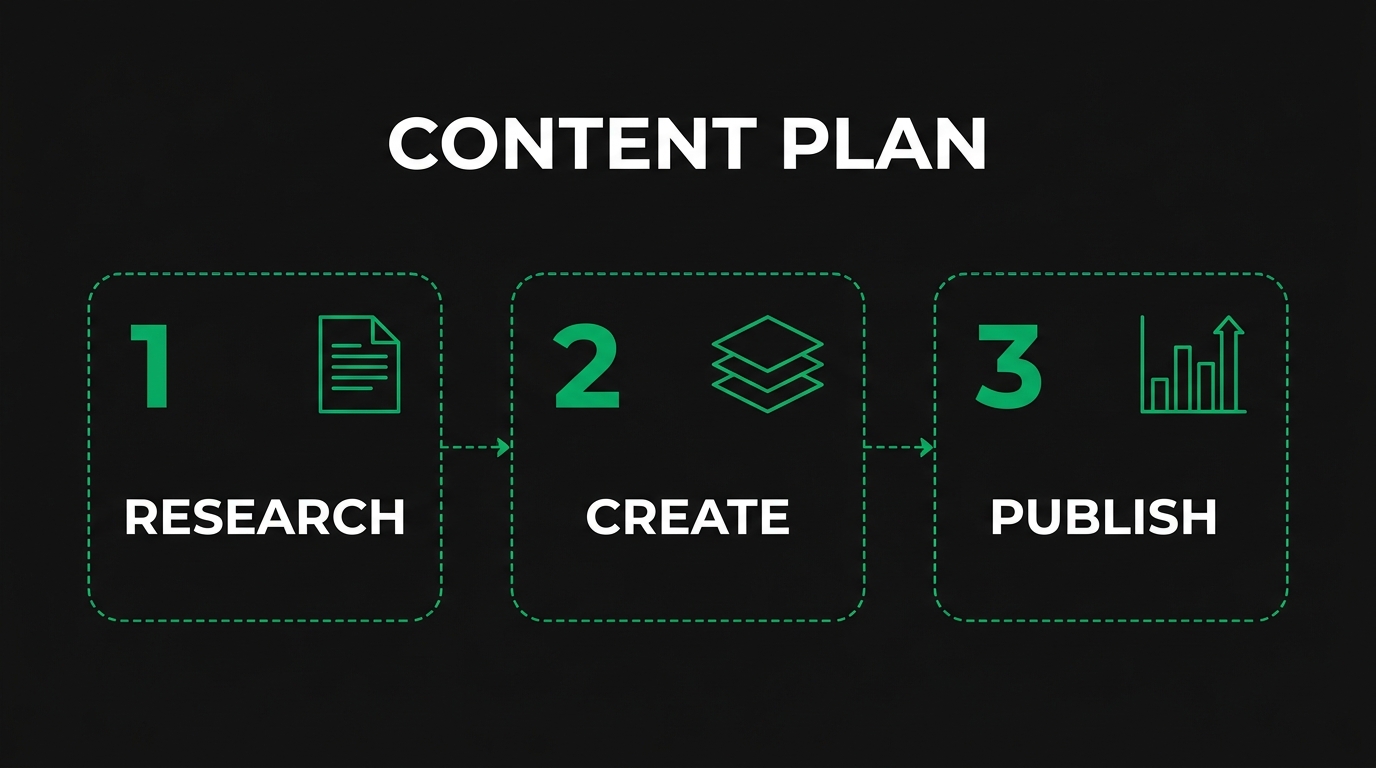
You develop content that ranks for industrial queries by matching format to buyer task, covering tolerances and certifications with engineering precision, and building capability pages that outperform generic service pages on every procurement signal. The following sections cover each element.
What Content Formats Convert Engineers and Purchasing Managers?
The content formats that convert engineers and purchasing managers are capability pages with tolerance tables, material and grade specification pages, certification-specific landing pages, process comparison pages, downloadable spec sheets, case studies with measurable outcomes, and technical FAQs. Engineers convert on precision: tolerance specs, inspection data, sample parts, and material compatibility charts. Purchasing managers convert on evidence of stability: certification numbers, audit history, lead times, minimum order quantities, and quality system documentation.
How Should You Cover Tolerances, Specifications, and Certifications in Content?
You should cover tolerances, specifications, and certifications in content by citing exact standard numbers, stating in-house inspection equipment, and linking to the governing standards body. A foundation of basic seo strategies for manufacturers covers the structural requirements before specification depth is layered in.
Manufacturers ranking for aerospace queries should name specific AMS numbers on capability pages, not write "aerospace-grade materials." Exact specifications earn trust with engineers and match the exact strings buyers type into Google.
Why Do Capability Pages Outperform Generic Service Pages?
Capability pages outperform generic service pages because they match the granularity of the procurement query. A service page titled "CNC Machining Services" competes against thousands of similar pages and ranks for broad, low-intent terms. A capability page titled "5-axis CNC Machining of Titanium Aerospace Components (AS9100, NADCAP HT)" competes against a short list of certified shops and ranks for high-intent, low-volume strings that convert. Capability pages also support richer schema: specific Product and Service entities, sameAs references to certification bodies, and FAQPage blocks tied to the exact procurement question.
Next, the article covers how industrial SEO extends into AI search and LLM citations.
How Does Industrial SEO Support AI Search and LLM Citations?
Industrial SEO supports AI search and LLM citations by grounding a manufacturer's entity in structured data, building authority signals that large language models trust, and making every capability page machine-readable. The following sections break down entity signals, schema influence, and authority factors.
What Entity Signals Help Manufacturers Appear in AI Answers?
Entity signals that help manufacturers appear in AI answers are consistent brand mentions across authoritative industry sources, Wikipedia and Wikidata entries when warranted, sameAs references across schema blocks, matching business data in Google Knowledge Graph, and co-occurrence with the processes, materials, and certifications the manufacturer actually offers. When an LLM is asked "who makes contract CNC titanium aerospace parts in the US," it answers with the entities whose profiles appear consistently across NIST, SAE, AIA, trade publications, and standards bodies.
How Do Schema and Structured Data Influence LLM Citations?
Schema and structured data influence LLM citations by converting unstructured web copy into typed, predictable, machine-readable facts that retrieval-augmented generation systems can quote directly.
Manufacturing sites should deploy Organization, Product, Service, FAQPage, and BreadcrumbList schema, plus sameAs references to standards bodies such as ISO, SAE, IAQG, and PRI Nadcap. Each sameAs pins the manufacturer to an external entity graph. Precise, connected schema is the single most underused AI visibility lever on industrial sites.
Which Authority Signals Matter Most for AI Search Visibility?
The authority signals that matter most for AI search visibility are consistent E-E-A-T markers, editorial citations from trade publications, links from non-commercial authoritative sources (.gov, .edu, standards bodies), and demonstrated first-hand manufacturing expertise in every capability page.
For manufacturers, trust is demonstrated through named certifications, named inspection equipment, named materials, and named engineers. LLMs and AI Overviews cite the sources that look most like trusted reference material, which is where industrial content should aim. The next section moves from AI visibility into measurable ROI.
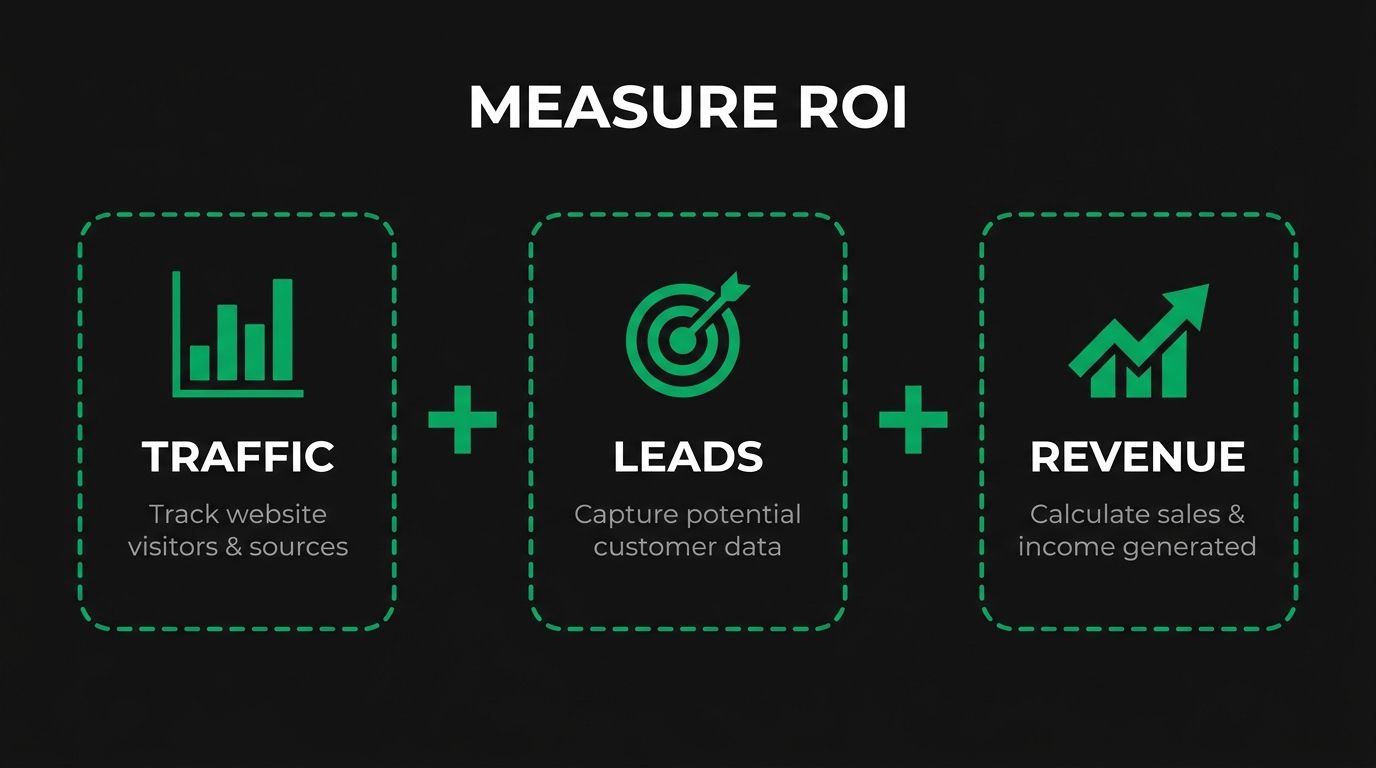
How Do You Measure ROI From Industrial SEO?
You measure ROI from industrial SEO by tying organic rankings to pipeline KPIs, attributing RFQs back to organic sessions, and reporting at a cadence manufacturer stakeholders can act on. The following sections cover KPIs, RFQ attribution, and reporting cadence. Strong measurement also supports seo for industrial lead generation programs running in parallel.
Which KPIs Tie Organic Rankings to Pipeline and Revenue?
The KPIs that tie organic rankings to pipeline and revenue are procurement-intent keyword rankings, organic RFQ volume, organic RFQ win rate, average organic deal size, organic-sourced pipeline value, and organic-sourced closed revenue. Keyword rankings matter only when filtered to procurement-intent strings; total ranking reports hide performance.
Ranking without owning SERP features now undercounts true visibility. Downstream KPIs measured in the CRM matter far more than traffic.
How Should You Attribute RFQs to Organic Search?
You should attribute RFQs to organic search using first-touch, last-touch, and multi-touch models simultaneously inside the CRM, because industrial buying cycles span weeks and involve multiple sessions. First-touch captures discovery credit. Last-touch captures the session that triggered the form fill. Multi-touch distributes credit across sessions so weekly research visits receive proportional credit. UTM parameters, session IDs, and a CRM field for the originating landing page are the minimum instrumentation.
What Reporting Cadence Works Best for Manufacturer Stakeholders?
The reporting cadence that works best for manufacturer stakeholders is monthly for pipeline and revenue metrics, weekly for ranking movement on core procurement clusters, and quarterly for full technical audits and strategy review. Monthly reports should lead with organic-sourced RFQ count, pipeline value, closed revenue, and keyword cluster performance. Weekly reports suit operations teams tracking launches. Quarterly reviews cover architecture changes, competitive movement, and certification-page expansion.
The next section covers how manufacturers can approach this discipline as a working partnership.
How Should You Approach Industrial SEO With Manufacturing SEO Agency?
You should approach industrial SEO with Manufacturing SEO Agency as a manufacturing-only engagement built around procurement reality, certification fluency, and revenue-tied reporting. The following sections cover how Manufacturing SEO Agency implements programs and the key takeaways this guide has established.
Can Manufacturing SEO Agency Help You Implement an Industrial SEO Program?
Yes, Manufacturing SEO Agency can help implement an industrial SEO program end to end. Manufacturing SEO Agency is an industrial seo agency focused exclusively on B2B manufacturers in CNC machining, injection molding, metal fabrication, aerospace, automotive, electronics, food, pharma, plastics, OEM, and contract manufacturing. Services include manufacturing audits, procurement-intent keyword architecture, topical authority buildout across process, material, and certification queries, PR-grade editorial link building, AI search visibility engineering, technical SEO remediation, and revenue-tied CRM reporting. Manufacturing SEO Agency speaks the same certification language procurement buyers use: AS9100, NADCAP, ISO 9001, ISO 13485, IATF 16949, and PRI-administered programs.
Capability pages ranking for those processes directly influence aerospace RFQ flow, and Manufacturing SEO Agency builds content and architecture that reflects the real depth of those accreditation scopes.
What Are the Key Takeaways About Industrial SEO We Covered?
The key takeaways about industrial SEO this guide covered are procurement-first targeting, vertical specificity, component discipline, and revenue measurement:
- Industrial SEO ranks manufacturers for procurement-intent queries built around process, material, and certification combinations, not vanity terms.
- Industrial SEO differs from generic B2B SEO in audience (engineers, purchasing managers, supply chain directors), query structure (long procurement strings), and commercial outcome (RFQ pipeline).
- Industrial buyers silently evaluate suppliers for weeks before vendor contact, so ranking controls shortlist membership.
- A complete industrial SEO program includes keyword architecture, topical authority, technical SEO, and schema markup designed for machine readability.
- Capability pages outperform generic service pages because they match the granularity of procurement queries.
- AI search and LLM citations reward structured data, entity grounding, and E-E-A-T signals anchored in certifications and named technical expertise.
- ROI measurement must tie organic rankings back to RFQs, pipeline value, and closed revenue inside the CRM, not to traffic volume.
Manufacturers that apply these principles win procurement shortlists before sales conversations begin.