
Industrial SEO case studies are documented accounts of manufacturers using search engine optimization to grow organic visibility, qualified RFQs, and revenue. We use them to evaluate strategies that translate engineering-grade content, technical fixes, and procurement-intent keywords into measurable pipeline.
This guide covers the foundations of industrial case studies, the patterns that drive measurable wins, the lead-quality and ROI signals worth tracking, the strategies and verticals where outcomes diverge, the failures that quietly waste budget, and how procurement teams should compare agencies and apply these lessons.
We define what an industrial SEO case study really is, why manufacturers depend on documented results to vet vendors, and what separates a procurement-grade case study from a generic B2B example.
We then surface recurring patterns across high-performing accounts, including traffic, ranking, topical authority, and procurement-intent keyword behaviors that repeat across winning manufacturers.
We examine how lead quality, attribution, and revenue tie back to organic search, including MQL-to-RFQ progression, close rates, and which metrics actually prove ROI for manufacturing operations.
We compare strategies, verticals, and failure modes side by side, drawing distinctions across CNC machining, injection molding, aerospace, and additive manufacturing case studies, and we explain how procurement teams should pressure-test agency claims when selecting a vendor.
What Is an Industrial SEO Case Study and Why Does It Matter for Manufacturers?
An industrial SEO case study is a documented account of how a manufacturer used search engine optimization to grow organic visibility, qualified RFQs, and revenue. This section breaks down its definition, why manufacturers rely on case studies, what separates them from generic B2B examples, and which procurement behaviors complicate replication.
How Is an Industrial SEO Case Study Defined Within a B2B Manufacturing Context?
An industrial SEO case study is defined as a structured record of a manufacturer's organic search program, capturing baseline rankings, technical fixes, content investments, link acquisitions, and resulting changes in traffic, lead volume, RFQ count, and pipeline value. It documents process inputs (audits, keyword architecture, schema, content publication) alongside procurement-side outputs (qualified leads, quoted pipeline, closed revenue). A defensible case study must reference the exact process names, material specifications, and certifications that gate buying decisions. For a deeper definition, see what is industrial seo.
Why Do Manufacturers Rely on Case Studies to Evaluate SEO Investment Decisions?
Manufacturers rely on case studies to evaluate SEO investment decisions because procurement teams treat marketing budgets the same way they treat capital equipment purchases: with documented proof, controlled variables, and verifiable outcomes. Case studies supply that evidence in marketing form.
Smaller shops in particular benefit from peer-validated results when planning seo for small manufacturing companies programs.
What Distinguishes Industrial SEO Case Studies From Generic B2B Marketing Examples?
Industrial SEO case studies distinguish themselves from generic B2B marketing examples by anchoring outcomes to procurement-stage keywords, supplier evaluation behavior, and certification-gated buying decisions. A generic B2B case study might celebrate "doubled traffic," but an industrial case study must demonstrate growth in queries like "5-axis CNC machining titanium aerospace parts" or "AS9100 contract manufacturer," then tie those rankings to RFQs from buyers in regulated supply chains.
Which Procurement Behaviors Make Industrial SEO Outcomes Difficult to Replicate?
Procurement behaviors that make industrial SEO outcomes difficult to replicate include long evaluation cycles, multi-stakeholder buying committees, and the prevalence of self-directed research before any vendor contact. Industrial buyers progress through definition, supplier discovery, qualification, sample/RFQ, audit, and award, and each phase has its own search behavior.
Outcomes also hinge on facility audits, NDAs, and whether the buyer's purchasing platform allows organic discovery. Case study patterns feed directly into the signals examined next.
What Patterns Appear Across the Most Successful Industrial SEO Case Studies?
Patterns that appear across the most successful industrial SEO case studies include disciplined traffic growth tied to procurement-stage queries, ranking-to-pipeline translation, deep procurement-intent keyword coverage, and topical authority architecture. The H3s below document each recurring signal.
Which Traffic Growth Benchmarks Do Top Manufacturer Case Studies Consistently Report?
Traffic growth benchmarks that top manufacturer case studies consistently report cluster around step-changes that follow technical SEO remediation, topical buildout, and editorial backlink campaigns. Strong case studies report month-over-month growth across non-brand procurement queries rather than isolated keyword wins.
The clearest playbooks are documented in proven industrial seo strategies that map content to procurement journey stages.
How Do Top Case Studies Translate Organic Rankings Into Pipeline and Revenue?
Top case studies translate organic rankings into pipeline and revenue by binding every keyword cluster to a procurement-stage outcome, then attributing RFQs and quoted dollars back to their source page. They tag organic visits in CRM, track form-fill quality, and follow each lead through MQL, SQL, RFQ, and closed deal. Strong manufacturer case studies cite revenue per ranking page, average deal size by topic cluster, and the percentage of qualified RFQs originating from organic search.
Manufacturing SEO Agency builds this closed-loop reporting into every engagement, tying organic rankings directly to RFQs, pipeline value, and closed revenue inside the client's CRM.
What Role Do Procurement-Intent Keywords Play in Documented Manufacturer Wins?
Procurement-intent keywords play a foundational role in documented manufacturer wins because they map directly to RFQ-ready buyers rather than browsers. Documented wins consistently target combinations of process, material, certification, and application: examples include "AS9100 5-axis CNC titanium machining" or "FDA-compliant injection molding medical device contract manufacturer." These queries carry low volume but high pipeline value.
Sustained competitor analysis for industrial seo reveals which procurement-intent clusters rivals already own.
Which Topical Authority Strategies Recur Across Winning Manufacturing SEO Case Studies?
Topical authority strategies that recur across winning manufacturing SEO case studies include complete coverage of every process, material, and certification a buyer searches; pillar pages anchored by hub URLs; and dense internal linking between cluster posts and capability pages. Winning programs cover every adjacent application a process serves, then internally link every page back to the relevant capability hub. They also align entity references with Wikipedia and standards bodies for clean Google NLP parsing.
Review examples of successful b2b seo to see how this authority pattern connects to ROI proof, the next theme.
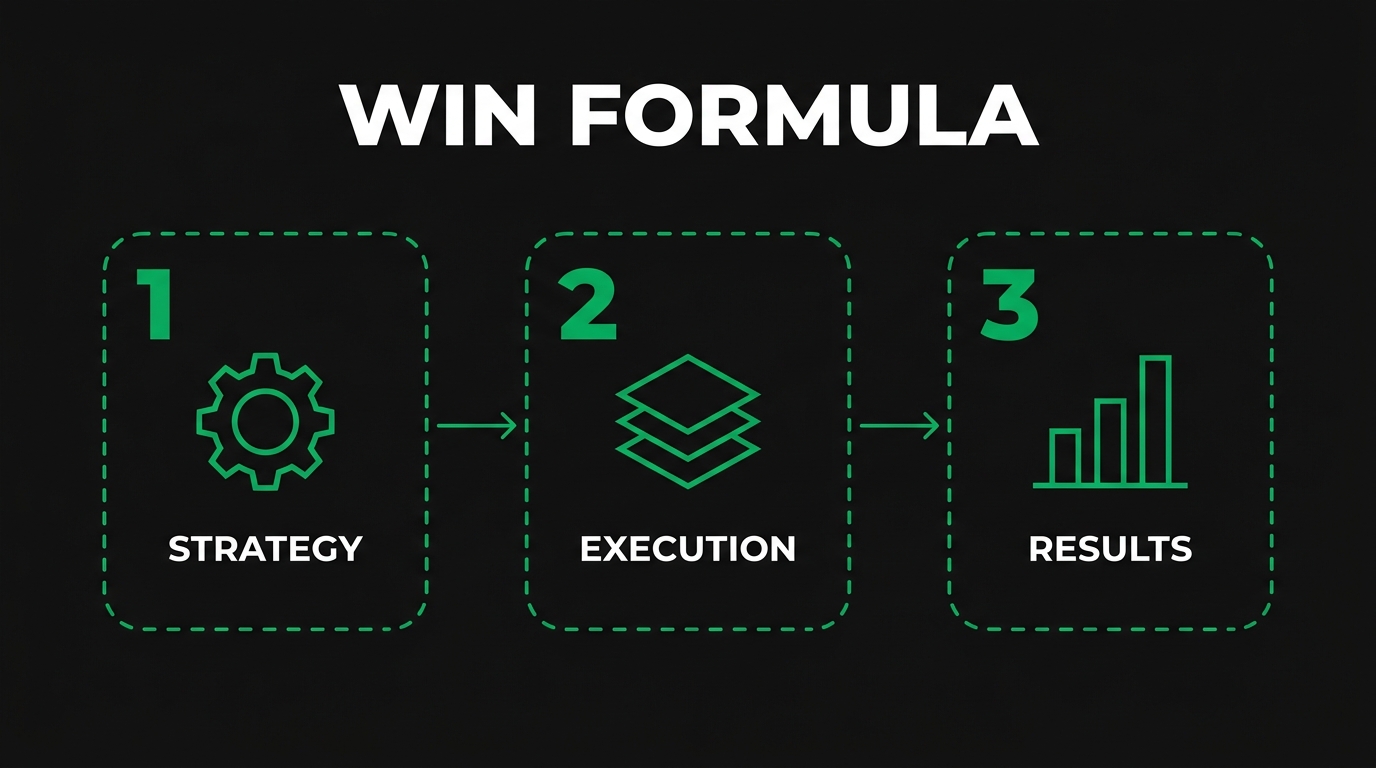
How Do Industrial SEO Case Studies Demonstrate Lead Quality and ROI?
Industrial SEO case studies demonstrate lead quality and ROI by tying organic visits to RFQs, quoted pipeline, and closed revenue, not just sessions. The H3s below detail how manufacturers measure return, separate strong leads from weak ones, attribute revenue, and pick credible models.
How Do Manufacturers Measure ROI From Organic Search in Documented Case Studies?
Manufacturers measure ROI from organic search in documented case studies by reconciling SEO investment against pipeline value created and revenue closed, not by counting impressions. Strong case studies report SEO spend as a percentage of revenue generated, payback period in months, and customer acquisition cost from organic compared with paid channels.
Buyers reading these reports want to see net new RFQ count, average quote value, and win rate, all benchmarked against pre-engagement baselines.
Which Lead Quality Metrics Separate Strong Manufacturer SEO Outcomes From Weak Ones?
Lead quality metrics that separate strong manufacturer SEO outcomes from weak ones include MQL-to-RFQ rate, RFQ-to-quote rate, quote-to-close rate, and average contract value by source page. Strong case studies break out lead quality by topic cluster: a page targeting AS9100-aerospace queries should produce buyers with the right tonnage, certification fit, and lead time tolerance.
Quality-tagged CRM workflows are the prerequisite for any defensible ROI claim.
How Do Case Studies Tie Organic Search to RFQs, Quoted Pipeline, and Closed Revenue?
Case studies tie organic search to RFQs, quoted pipeline, and closed revenue by tagging every form submission with source, medium, landing page, and topic cluster, then matching that tag to the CRM opportunity record. The buyer's journey is captured: Google session, page viewed, form completed, RFQ raised, quote issued, deal awarded.
Each transition records date, value, and stakeholders, so reporting can attribute revenue back to the original organic touch.
What Attribution Models Do Industrial Case Studies Use to Credit Organic Search Properly?
Attribution models that industrial case studies use to credit organic search properly include first-touch, last-touch, linear, time-decay, and W-shaped, with W-shaped most aligned to the long manufacturing buying journey. W-shaped credits the first interaction, the lead conversion, and the opportunity creation moments equally, reflecting how engineers and procurement leads discover, validate, and shortlist suppliers across multiple sessions.
Attribution honesty is the bridge to strategy selection.
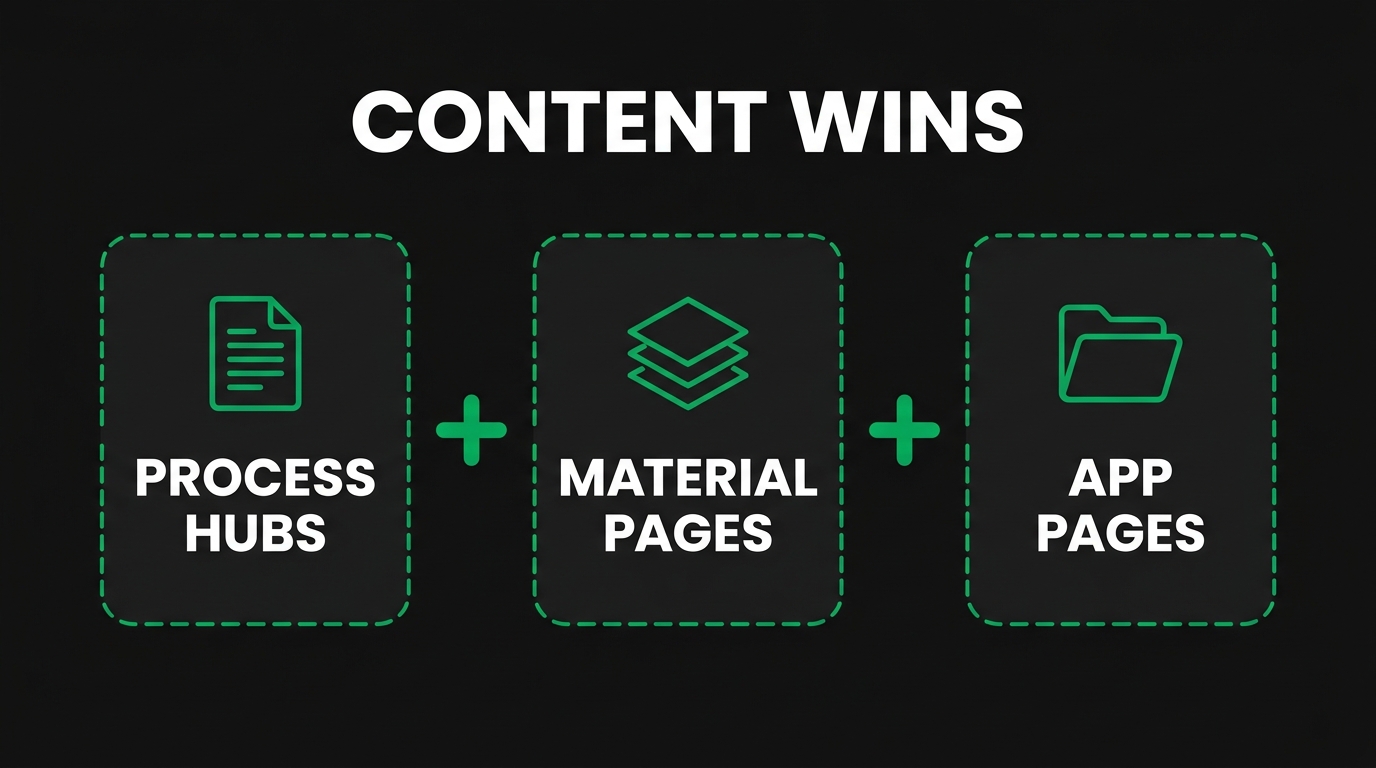
What SEO Strategies Drive Wins in Documented Manufacturing Case Studies?
SEO strategies that drive wins in documented manufacturing case studies cluster around technical foundations, procurement-intent keyword mapping, deep technical content, and editorial backlinks. The H3s below break down each lever and what successful case studies credit.
Which Technical SEO Fixes Repeatedly Appear in Winning Manufacturer Case Studies?
Technical SEO fixes that repeatedly appear in winning manufacturer case studies include schema markup for Organization, Product, and Service entities; Core Web Vitals remediation; faceted navigation cleanup; and proper canonicalization of capability pages. Site speed earns particular emphasis because manufacturer sites often carry heavy CAD imagery and PDFs.
A scoped industrial seo audit surfaces these remediation priorities before any content investment begins.
How Does Procurement-Intent Keyword Mapping Show Up in Successful Industrial Case Studies?
Procurement-intent keyword mapping shows up in successful industrial case studies as a cluster matrix of process, material, certification, and application combinations, each assigned to a specific buying-journey stage. Discovery queries seed top-of-funnel content, qualification queries map to capability pages, and RFQ-stage queries map to quote-request templates. Documented winners publish thousands of these intersections rather than chasing head terms.
What Content Strategies Do Manufacturer Case Studies Credit With Driving Growth?
Content strategies that manufacturer case studies credit with driving growth include process tutorials with engineering-grade depth, capability matrices, certification explainers, application-specific landing pages, and comparison content that addresses sourcing decisions head-on.
Manufacturer programs win when they pair this volume with subject-matter authority, hosting authored content from in-house engineers and quality directors, and grounding cluster planning in basic seo strategies for manufacturers before escalating scope.
Which Backlink and Digital PR Tactics Anchor Top Industrial SEO Case Studies?
Backlink and digital PR tactics that anchor top industrial SEO case studies include trade publication features, association memberships, supplier directory placements, conference speaking, and original data reports that earn organic citations. Editorial links from outlets like trade journals, standards bodies, and engineering publications carry far more weight than directory submissions.
Strong programs also pursue tier-2 amplification across secondary outlets, and this combined authority pattern repeats across manufacturing verticals.
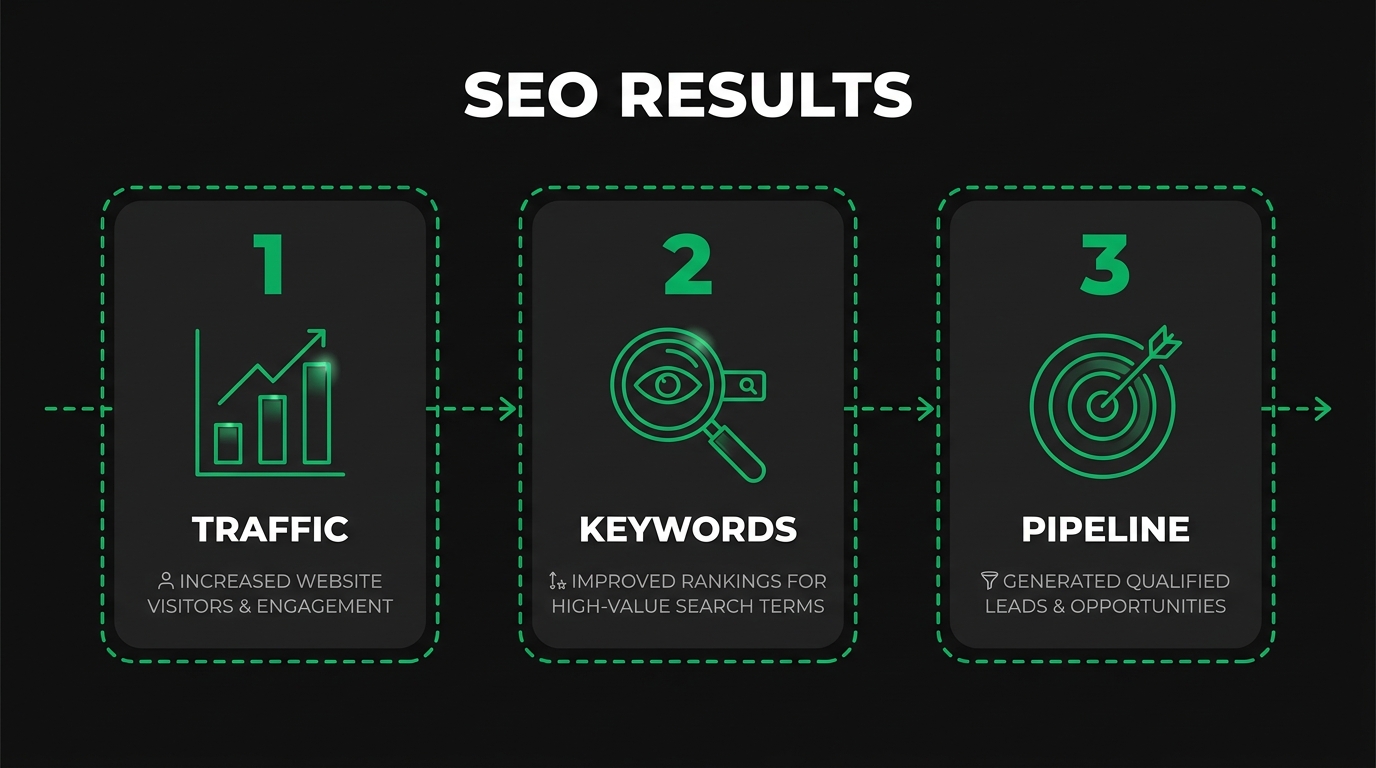
How Do Industrial SEO Case Studies Vary Across Manufacturing Verticals?
Industrial SEO case studies vary across manufacturing verticals because procurement language, certifications, buyer concentration, and technical depth differ by industry. The H3s below compare CNC machining, injection molding, aerospace and defense, and additive manufacturing case study patterns.
What Do CNC Machining and Precision Metal Case Studies Show About SEO Outcomes?
CNC machining and precision metal case studies show that SEO outcomes scale with coverage of axis count, material grade, tolerance class, and end-use certification. Winning shops rank for combinations like "5-axis CNC machining 17-4 PH stainless aerospace brackets" or "Swiss turning medical grade titanium." Documented results typically report deeper RFQ flow from prototype and low-volume production buyers, because precision metal queries cluster around engineers drafting specifications.
How Do Injection Molding and Plastics Manufacturer SEO Case Studies Compare?
Injection molding and plastics manufacturer SEO case studies compare favorably against keyword volume because procurement buyers search by resin, tonnage, cavitation, and regulatory fit. Strong case studies cover medical-grade, food-contact, and automotive plastics separately, because each has different certification gates.
Plastics programs win when they publish material-selection guides and part-design assistance content engineers consult during early sourcing decisions.
Which Patterns Emerge Specifically in Aerospace and Defense Manufacturing Case Studies?
Patterns that emerge specifically in aerospace and defense manufacturing case studies include rigorous certification coverage, ITAR-aware content handling, and narrower but higher-value RFQs. Documented aerospace case studies anchor content around AS9100, NADCAP, DFARS, and specific prime-contractor approvals.
Aerospace cases also emphasize traceability, first-article inspection, and export-control compliance, because a missing credential disqualifies a supplier before an RFQ even opens.
How Do Additive Manufacturing and 3D Printing Case Studies Differ From Traditional Verticals?
Additive manufacturing and 3D printing case studies differ from traditional verticals by emphasizing application education, process selection, and qualification pathways rather than pure capacity metrics. Documented additive case studies cover DMLS, SLS, SLA, FDM, and binder jetting with application-specific content covering aerospace brackets, medical implants, and tooling.
Buyers still research which process fits their part, so winners publish decision frameworks that feed directly into the failure patterns examined next.
What Common Mistakes Do Failed Industrial SEO Case Studies Expose?
Common mistakes that failed industrial SEO case studies expose include strategic misalignment, weak keyword targeting, reporting blind spots, and poor vendor selection. The H3s below unpack each failure mode and the procurement-side consequences manufacturers should avoid.
Which Strategic Errors Cause Manufacturers to Underperform in SEO Case Studies?
Strategic errors that cause manufacturers to underperform in SEO case studies include chasing generic head terms, publishing corporate-brochure content, ignoring technical SEO debt, and treating SEO as a one-time campaign rather than a procurement-grade program. Failed cases typically lack a clear map between process, material, certification, and application queries and the facility's actual production capabilities.
Leadership often underinvests in in-house subject matter input, so content lacks engineering credibility.
How Do Targeting and Keyword Selection Mistakes Sabotage Manufacturer SEO Outcomes?
Targeting and keyword selection mistakes that sabotage manufacturer SEO outcomes include optimizing for unqualified high-volume terms, ignoring long-tail procurement combinations, and misreading search intent. A page ranking for "metal fabrication" attracts students, tire-kickers, and overseas shops, while a page ranking for "AWS D1.1 certified structural steel fabrication Midwest" attracts buyers with live RFQs.
Mistakes compound when keywords are not mapped to capability pages, so crawlers and buyers both encounter canonical confusion.
What Reporting and Measurement Failures Hide ROI in Weak Industrial Case Studies?
Reporting and measurement failures that hide ROI in weak industrial case studies include vanity metric inflation, missing CRM integration, improper attribution windows, and silent exclusion of form-spam from conversion totals. Weak reports celebrate impressions, clicks, and keyword counts while omitting qualified RFQ volume, quoted pipeline value, and closed revenue.
Honest measurement is the single prerequisite for trustworthy SEO storytelling.
Which Vendor-Selection Mistakes Recur Across Disappointing Manufacturing SEO Case Studies?
Vendor-selection mistakes that recur across disappointing manufacturing SEO case studies include hiring generalist agencies with no manufacturing portfolio, choosing on price alone, accepting bundled digital packages that dilute focus, and skipping reference calls with prior clients. Failed programs often trust agencies that cannot speak fluently about AS9100, NADCAP, IATF 16949, or ITAR compliance.
Manufacturing SEO Agency's industrial-only focus across CNC machining, injection molding, metal fabrication, additive manufacturing, aerospace, automotive, and regulated industries reflects this priority. These avoidable failure patterns set up the vendor-comparison disciplines that follow.
How Should Manufacturers Use Industrial SEO Case Studies to Compare Agencies and Vendors?
Manufacturers should use industrial SEO case studies to compare agencies and vendors by auditing domain fluency, verifying outcome claims, stress-testing procurement mechanics, and tying results to long-term selection strategy. The H3s below outline the signals, verification steps, procurement questions, and strategic implications.
Which Case Study Signals Reveal Whether an Agency Truly Understands Manufacturing?
Case study signals that reveal whether an agency truly understands manufacturing include fluent references to process tolerances, material specifications, certification regimes, and the procurement decision tree. Agencies with manufacturing fluency cite AS9100, NADCAP, ISO 13485, IATF 16949, and RoHS correctly.
Vague references to "industrial clients" without process-specific detail signal a generalist, and a structured how to choose an industrial seo agency checklist makes these signals easier to score.
How Should Manufacturers Verify the Authenticity of Industrial SEO Case Study Claims?
Manufacturers should verify the authenticity of industrial SEO case study claims by requesting reference calls, reviewing anonymized CRM screenshots, matching claimed rankings against live Search Console data, and cross-checking traffic claims through third-party tools. Authentic case studies disclose the exact client (with permission) or anonymize with verifiable industry, revenue band, and geography.
Buyers should ask for the timeline, attribution methodology, and baseline metrics.
What Questions Should Procurement Teams Ask About Each Documented Case Study?
Questions that procurement teams should ask about each documented case study include who owned the content, which processes and materials the client sold, how RFQs were attributed, what the pre-engagement baseline was, and how long the program ran. Teams should also ask which deliverables the agency produced directly versus subcontracted, how many facilities the program covered, and what happened when results plateaued.
A reference list, including best industrial seo agency for small business candidates, helps benchmark responses.
How Do Industrial SEO Case Studies Inform Long-Term Vendor Selection Strategy?
Industrial SEO case studies inform long-term vendor selection strategy by establishing baseline expectations, revealing replicability across procurement contexts, and surfacing the agency's operating model over multi-year engagements. Case studies with three-year arcs show whether wins compound or decay, and they clarify how the agency handles Google algorithm shifts, market downturns, and client team turnover.
Disciplined case study scrutiny prepares the bridge guidance that follows.
How Can Manufacturers Apply Lessons From Industrial SEO Case Studies With Manufacturing SEO Agency?
Manufacturers can apply lessons from industrial SEO case studies with Manufacturing SEO Agency by adopting procurement-intent strategy, revenue-tied reporting, and manufacturing-only focus. The H3s below explain how Manufacturing SEO Agency replicates documented wins and recap the article's key takeaways.
Can Manufacturing SEO Agency's Procurement-Intent Strategy Replicate the Wins Seen in These Case Studies?
Yes, Manufacturing SEO Agency's procurement-intent strategy can replicate the wins seen in these case studies by mapping keyword clusters to each stage of the procurement journey, from initial material research through supplier evaluation to RFQ submission. Manufacturing SEO Agency builds architecture around process, material, certification, and application combinations rather than vanity head terms. Manufacturing SEO Agency also pairs this with revenue-tied reporting that reconciles rankings against RFQs, quoted pipeline, and closed revenue.
What Are the Key Takeaways About Industrial SEO Case Studies and Manufacturer Growth We Covered?
The key takeaways about industrial SEO case studies and manufacturer growth we covered are that documented wins share procurement-intent keyword architecture, engineering-grade content, revenue attribution, and editorial authority. Vertical patterns differ across CNC machining, injection molding, aerospace, and additive manufacturing, yet the success framework is consistent. Failure modes cluster around generic keyword targeting, vanity reporting, and generalist vendor selection.