An industrial SEO agency is a specialized marketing firm that ranks manufacturers for the process names, material specifications, and certifications that procurement managers and design engineers use when sourcing suppliers. Choosing the right partner shapes whether organic search delivers qualified RFQs or wastes budget on vanity traffic.
This checklist guides you through the agency's definition and fit, the qualifications and services a serious industrial partner must provide, how to verify results, the vetting questions and red flags to watch for, the budget and proposal review framework, and the final decision criteria that separate a strategic partner from a generic agency.
We start by explaining what distinguishes an industrial SEO agency from a general one, which sectors they serve, and the outcomes you should expect.
Qualifications and service scope come next, covering certifications the agency must understand, required manufacturing fluency, and the technical SEO, content, link building, and AI search deliverables that belong inside a modern engagement.
Verification, vetting, and pricing round out the evaluation, with case-study reviews, procurement-intent questioning, red-flag detection, monthly retainer benchmarks, and proposal-scoring frameworks that surface the best-fit partner.
A final checklist and decision framework closes the guide, laying out non-negotiable criteria, shortlisting rules, onboarding expectations, and success metrics you must define before signing a contract.
What Is an Industrial SEO Agency?
An industrial SEO agency is a search marketing firm that ranks manufacturers, industrial suppliers, and process-driven B2B companies for procurement-intent keywords. It covers process names, material specifications, and certifications that engineers and purchasers type when sourcing parts.
How Does an Industrial SEO Agency Differ From a General SEO Agency?
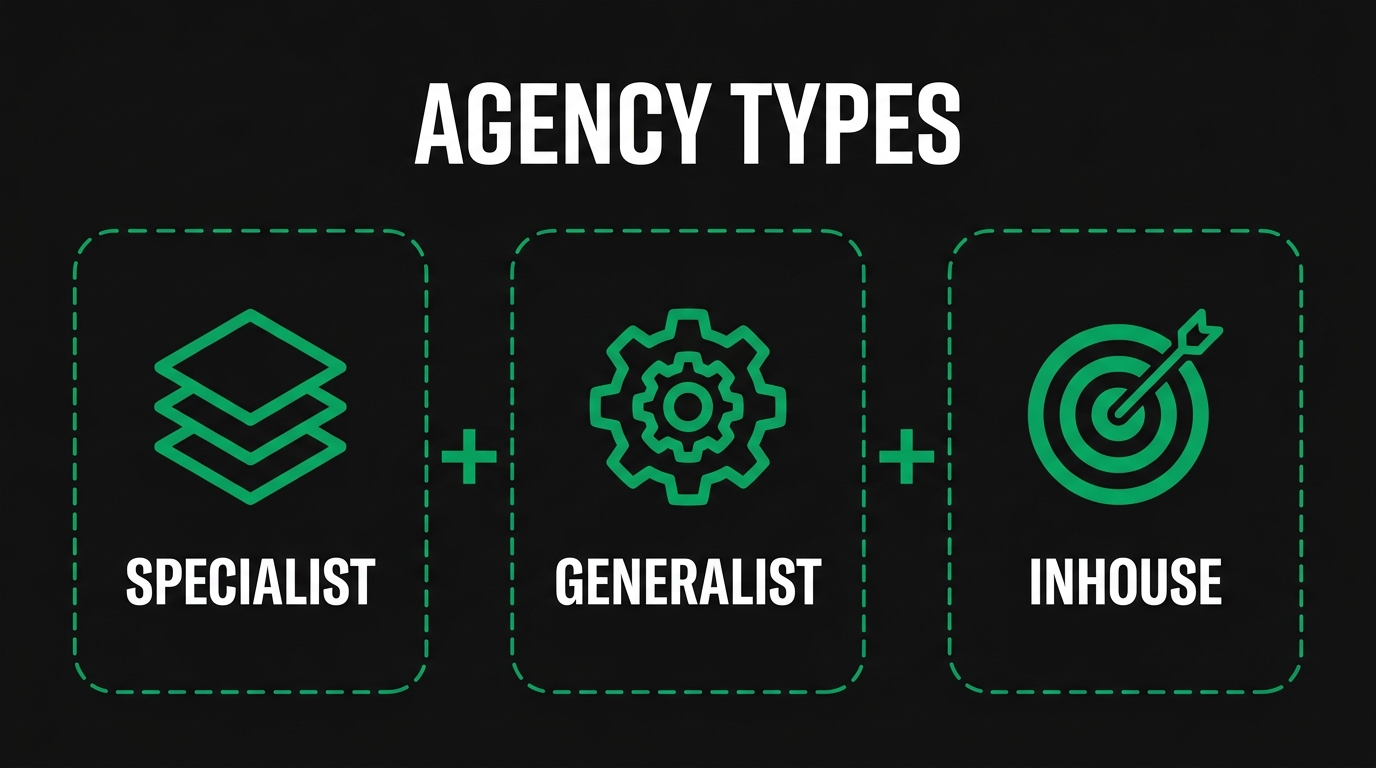
An industrial SEO agency differs from a general SEO agency in audience, keyword model, and content depth. A general agency writes for broad consumer intent. An industrial agency writes for a design engineer evaluating tolerances, a buyer comparing AS9100 suppliers, or a plant operator specifying a material grade. Content precision separates the two categories. Reading what is industrial seo clarifies the discipline before any vendor search.
Which Manufacturing Sectors Do Industrial SEO Agencies Serve?
Industrial SEO agencies serve a broad range of manufacturing sectors, such as CNC machining, injection molding, metal fabrication, additive manufacturing, aerospace, automotive, medical devices, and contract manufacturing. Some agencies serve all sectors, while others concentrate on a single vertical.
Vertical concentration usually yields stronger entity signals and faster topical authority.
What Outcomes Should You Expect From an Industrial SEO Partner?
Outcomes you should expect from an industrial SEO partner are qualified RFQs, ranked pages for procurement keywords, improved domain authority, faster crawl coverage, and revenue attribution that ties search to pipeline. Vanity metrics such as total sessions matter less than buyer-intent traffic. A strong partner reports on RFQs won, not just rankings. This shift toward pipeline-grade measurement frames why choosing the right partner matters.
Why Does Choosing the Right Industrial SEO Agency Matter for Manufacturers?
Choosing the right industrial SEO agency matters for manufacturers because the wrong partner wastes budget on non-procurement traffic and stalls pipeline growth. The decision affects RFQ volume, supplier visibility, and long-term organic compounding.
How Does SEO Influence B2B Procurement and RFQ Pipelines?
SEO influences B2B procurement and RFQ pipelines by placing a supplier's process, material, and certification pages in front of engineers and buyers during the research stage.
Pages ranking for niche procurement queries capture buyers before shortlists are set. The supplier on page one is almost always on the shortlist.
What Is the Cost of Hiring the Wrong Agency?
The cost of hiring the wrong agency is rarely just the retainer. A 12-month miss can mean a year of lost rankings, damaged domain trust, and procurement decisions that move to competitors. Many manufacturers weigh this against the outsource seo vs in-house for industrial trade-off.
Recovery costs often exceed the original fee.
How Does Industry Fluency Affect Search Performance?
Industry fluency affects search performance by shaping entity signals, on-page precision, and internal linking logic. An agency that understands the difference between 3-axis and 5-axis CNC machining, AS9100 versus ISO 13485, or NADCAP-accredited special processes writes content that Google's systems parse as authoritative.
Without fluency, rankings stagnate. With it, content compounds, setting up the qualifications an agency must have.
What Qualifications Must an Industrial SEO Agency Have?
Qualifications an industrial SEO agency must have are technical standards fluency, manufacturing process knowledge, procurement-funnel experience, and credentialed writers. Each dimension determines whether output earns rankings and trust among engineers.
Which Certifications and Technical Standards Should the Agency Understand?
Certifications and technical standards the agency should understand include ISO 9001, AS9100, IATF 16949, ISO 13485, and NADCAP, plus web standards such as WCAG. The agency must understand how certification logos, schema markup, and accreditation statements build trust.
Certification literacy is non-negotiable for procurement-grade authority.
What Manufacturing Process Knowledge Is Required?
Manufacturing process knowledge required includes machining classes, molding methods, metal-forming techniques, finishing, inspection, and quality assurance workflows. Writers must understand tolerances, material grades, heat treatment, and inspection equipment.
Process fluency also affects keyword clustering. Agencies that know the difference between turning, milling, and EDM build keyword architectures that mirror how buyers search.
How Important Is Procurement-Funnel Experience?
Procurement-funnel experience is essential for an industrial SEO agency because each buyer stage requires different content. Top-of-funnel queries cover process definitions and material selection. Mid-funnel queries cover supplier comparison, certification audits, and lead-time benchmarks. Bottom-funnel queries cover RFQ submission and pricing transparency.
Funnel-aware content mapping turns rankings into qualified RFQs.
What Writer and Editor Credentials Should You Require?
Writer and editor credentials to require include documented engineering, manufacturing, or industrial background, portfolio samples from comparable sectors, and editorial review by a subject-matter expert.
Ask for named writers with verifiable experience. Avoid agencies relying on unsupervised AI generation. Strong credentials signal a disciplined content process, which flows into examining which services the agency must offer.
What Services Should an Industrial SEO Agency Offer?
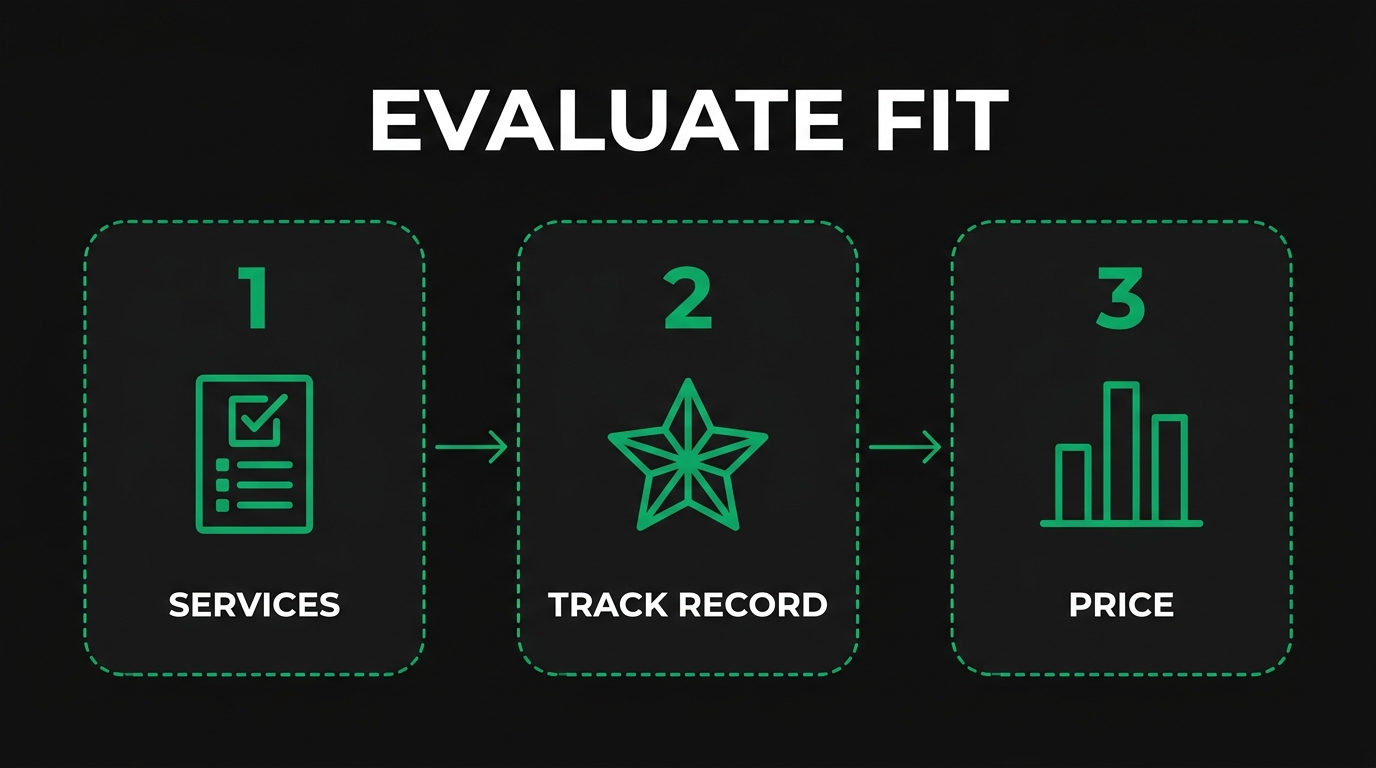
Services an industrial SEO agency should offer include technical SEO remediation, manufacturing-grade content production, authority link building, and AI search visibility engineering. The H3 questions walk through each pillar and the deliverables inside a serious engagement.
What Technical SEO Deliverables Are Essential?
Technical SEO deliverables essential to an industrial engagement include crawl audits, schema.org structured data, sitemap hygiene, canonical management, Core Web Vitals optimization, and HTTPS enforcement.
Schema for Organization, Product, Service, BreadcrumbList, and FAQPage supports entity grounding. Technical debt suppresses every downstream effort, so audits belong in month one.
What Content Services Should Be Included?
Content services included in an industrial SEO engagement are topical authority buildout, process pages, material pages, certification pages, case studies, and resource libraries written by people who understand manufacturing.
Content must cover every process, material, and certification a buyer searches. Fragmented blog posts fail to rank for competitive procurement queries.
How Should Link Building Be Approached for Manufacturers?
Link building for manufacturers should be approached through editorial placement in trade publications, technical journals, and non-competing industrial associations.
PR-grade outreach to manufacturing editors, engineering societies, and standards bodies compounds authority. Earned mentions from credible publications protect long-term rankings.
Does the Agency Provide AI Search Visibility Optimization?
AI search visibility optimization should be a named deliverable because generative engines cite brands differently than classical SERPs.
Optimization covers entity grounding, schema, topical breadth, and citation-worthy formats such as comparison tables and FAQ blocks. Manufacturing SEO Agency includes AI search visibility engineering among its named services. Agencies that ignore AI surfaces cede visibility in ChatGPT, Perplexity, and Google AI Overviews, which sets up the next question about verifying results.
How Do You Verify Agency Experience and Results?
You verify agency experience and results by reviewing case studies, confirming sector-specific outcomes, checking references, and evaluating portfolio depth. The H3 questions detail the proof artifacts worth demanding before signing any engagement.
What Case Studies and Client Proof Points Should You Request?
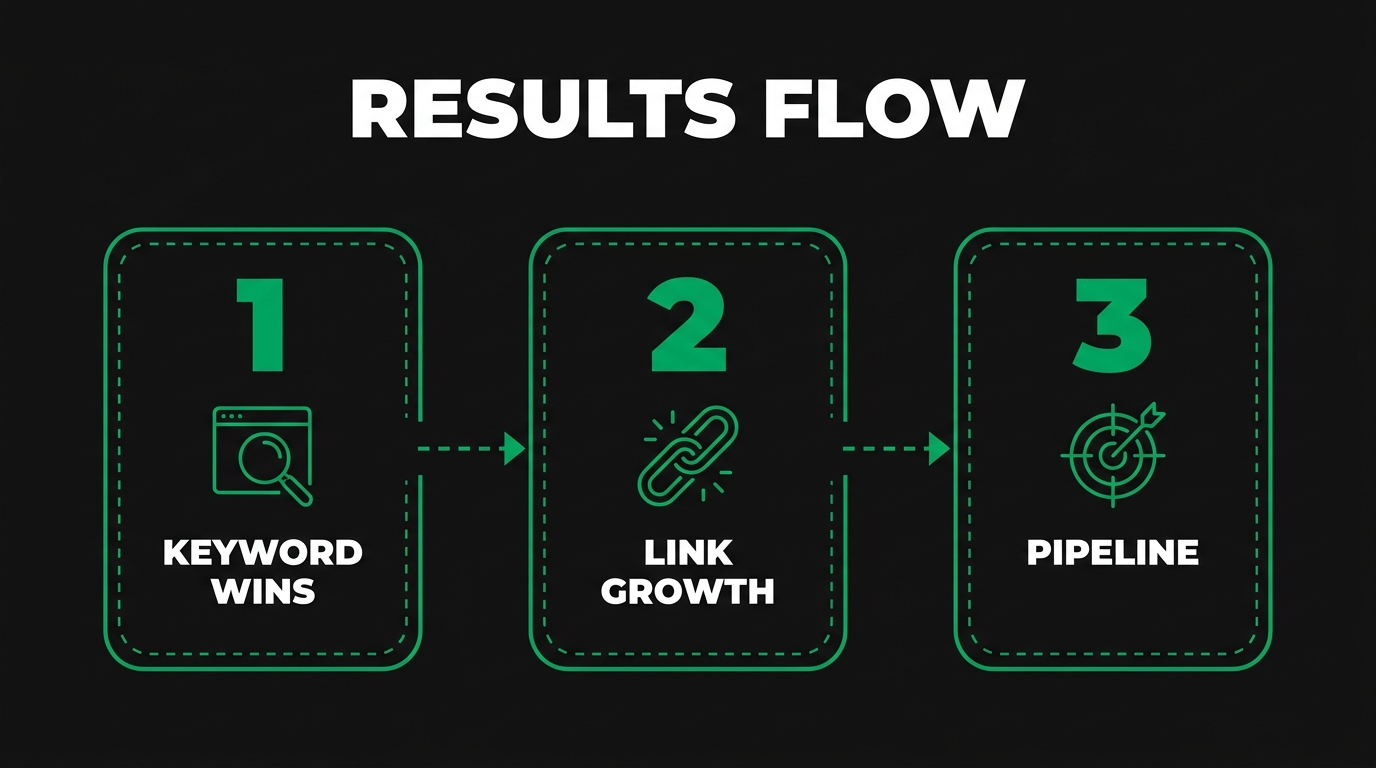
Case studies and client proof points to request include traffic growth, keyword-level wins, RFQ increases, and revenue attribution for comparable manufacturers. Browse full industrial seo agency case studies to see what depth looks like.
Ask for named clients, dated screenshots of Search Console data, and specific keyword positions. Vague "significant growth" claims without data are a red flag.
How Do You Confirm Industry-Specific Results?
You confirm industry-specific results by asking for evidence from your exact sector, not adjacent ones. A CNC shop should request machining case studies. An injection molder should request tooling and molding examples.
Ask for results in the same certification landscape your facility operates in, such as AS9100 aerospace or ISO 13485 medical, so the comparison reflects real procurement conditions.
What References and Testimonials Matter Most?
References and testimonials that matter most are direct phone conversations with current and former clients whose sector mirrors yours. Written testimonials can be edited. Live references reveal process friction, reporting cadence, and responsiveness. Ask about onboarding speed, reporting accuracy, and whether rankings translated to RFQs. Ask whether the agency delivered on the original proposal and whether the client would renew. Candid answers separate strong operators from marketing-first shops.
How Do You Evaluate Portfolio Depth?
You evaluate portfolio depth by counting named manufacturing clients, reviewing the range of sectors served, and checking tenure. An agency with 50 manufacturing clients across aerospace, automotive, and medical has broader entity knowledge than one with five. Portfolio depth also protects against concentration risk. Agencies reliant on one or two large accounts may lose attention when those accounts churn. Named long-term clients indicate retention, a strong proxy for result quality. Portfolio breadth confirms the rigor you will confirm next through vetting questions.
What Questions Should You Ask During the Vetting Process?
Questions to ask during the vetting process fall into four groups: procurement-intent strategy, manufacturing fluency, reporting and revenue attribution, and red-flag disqualifiers. The H3 questions provide the specific prompts that surface competence or expose gaps.
Which Questions Reveal Procurement-Intent Strategy?
Questions that reveal procurement-intent strategy ask how the agency maps keywords to the RFQ funnel. Ask which process, material, and certification combinations they rank clients for. Ask how they handle long-tail queries like "5-axis CNC machining titanium aerospace parts." Ask how they prioritize content against a buyer's sourcing stage. Strong answers cite how to choose an seo agency frameworks and real procurement funnel mapping.
Specific answers separate strategists from vendors.
What Technical Questions Expose Manufacturing Fluency?
Technical questions that expose manufacturing fluency include naming the difference between 3-axis and 5-axis machining, defining AS9100 versus ISO 13485, and listing NADCAP special processes. Ask the agency to describe a typical tolerance stack-up or finish callout. Ask how they would structure a page about passivation or heat treatment. Ask them to distinguish injection molding from compression molding. Fluency surfaces in specifics. Hesitation on basic terminology signals that writers will produce shallow content that fails procurement search.
How Do You Probe Reporting and Revenue Attribution?
You probe reporting and revenue attribution by asking how rankings connect to RFQs, pipeline value, and closed revenue. Ask whether reports integrate with the client's CRM. Ask how leads are attributed across multi-touch journeys. Ask how the agency handles offline RFQs from call tracking or form submissions. Ask for sample manufacturing seo reporting templates. Revenue-tied reporting separates strategic partners from agencies selling rank positions. If attribution is absent, the engagement defaults to vanity metrics.
What Red Flags Should Trigger Disqualification?
Red flags that should trigger disqualification include guaranteed first-page rankings, private link network offerings, offshore-only content production, and refusal to name current clients.
Disqualify agencies that cannot cite manufacturing clients, dodge attribution questions, or propose fixed keyword lists without analysis. These warning signs set up the pricing discussion, where budget realism becomes the next filter.
How Much Should You Budget for an Industrial SEO Agency?
You should budget for an industrial SEO agency based on site size, process coverage, competitive density, and scope of services. The H3 questions break down retainer ranges, pricing drivers, ROI measurement, and contract length expectations.
What Are Typical Monthly Retainer Ranges?
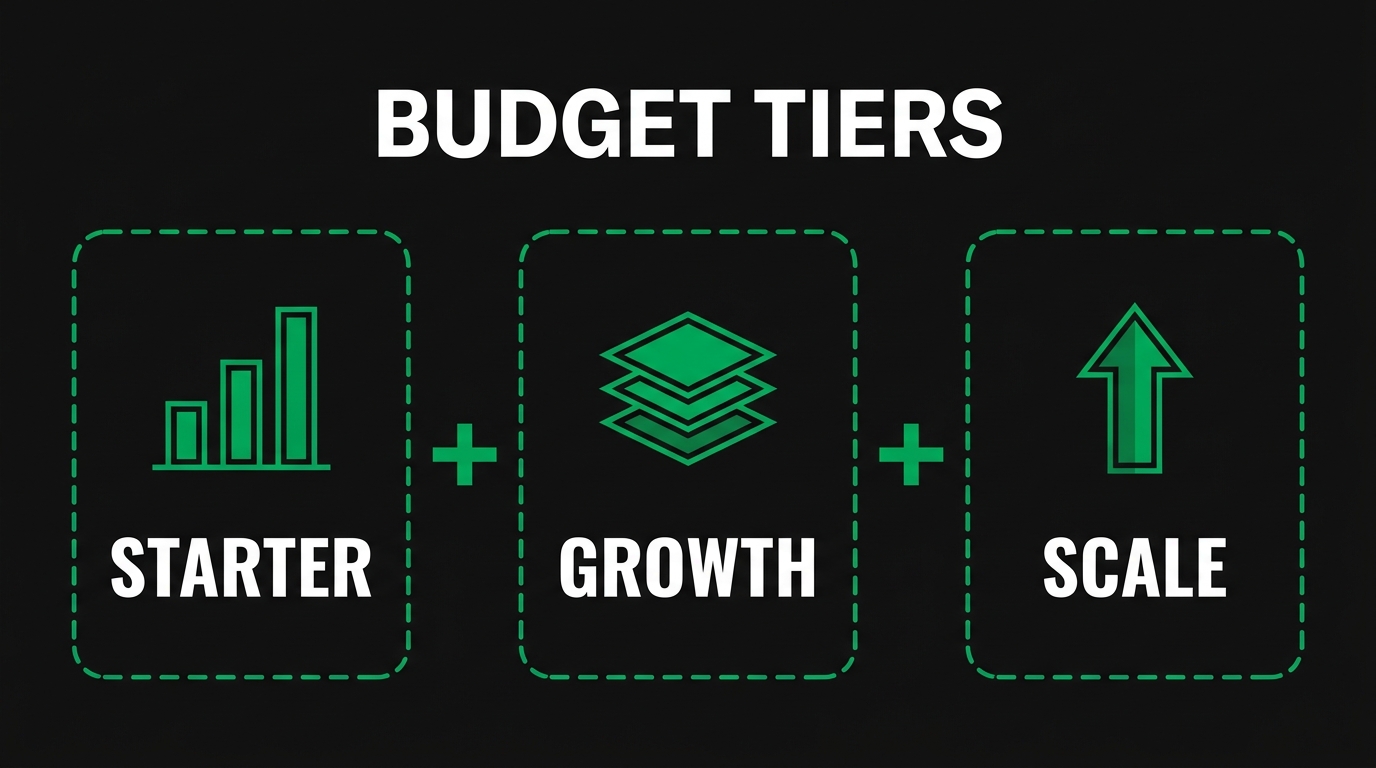
Typical monthly retainer ranges for industrial SEO engagements run from about $5,000 at entry level to $15,000 and higher for multi-facility enterprise work. Smaller single-location machine shops often sit near the floor. Enterprise OEMs with multiple plants, complex certifications, and global supply chains sit at the top. Review detailed benchmarks to compare manufacturing seo agency pricing before setting an internal budget.
Scope, not agency size, drives cost.
Which Factors Drive Pricing Differences?
Factors that drive pricing differences include total pages requiring technical work, number of processes and materials covered, volume of content produced each month, competitive density, link-building intensity, and whether AI search engineering is included.
Multi-facility operations require more content. Regulated sectors require more editorial review.
How Do You Measure Return on SEO Investment?
You measure return on SEO investment by tying organic rankings to RFQ volume, pipeline value, and closed revenue. Assign an average RFQ-to-revenue ratio for your business. Multiply ranked keyword traffic by conversion rate to forecast RFQ volume. Track CRM-closed revenue against agency spend monthly. Content compounds, so year-one ROI often lags year-two returns. A serious agency projects break-even timelines honestly and reports revenue attribution quarterly rather than leaning on session metrics.
Should You Expect Long-Term or Short-Term Contracts?
You should expect long-term rather than short-term contracts because industrial SEO compounds over 12 to 24 months. Topical authority, link acquisition, and technical remediation rarely show full impact inside six months. Contracts commonly run 12 months initially with a 90-day out clause. Shorter terms signal low agency confidence. Longer terms without review gates signal overreach. A balanced contract protects both sides and supports the proposal comparison work you will do next.
How Do You Compare Industrial SEO Agency Proposals?
You compare industrial SEO agency proposals using a structured scoring framework across content, specificity, strategic depth, agency size fit, and contract terms. The H3 questions define what a proposal must include, how to score strategy, when to weigh size versus specialization, and which terms deserve negotiation.
What Must a Proposal Include?
A proposal must include a scoped audit, keyword architecture tied to procurement stages, monthly content output, technical remediation plan, link-building strategy, reporting cadence, and clear fee schedule.
Ask for named team members and their roles. Ask for timelines tied to outcomes. Proposals listing outputs without outcomes indicate a transactional vendor, not a strategic partner.
How Do You Score Strategy Depth and Specificity?
You score strategy depth and specificity by counting sector-specific references, named keyword clusters, and documented methodologies. A generic proposal uses phrases like "SEO best practices" without industrial specifics. A specific proposal names exact process keywords, competitor analysis for industrial seo pages to displace, and editorial placements targeted in trade publications.
Specificity predicts execution quality.
How Do You Weigh Agency Size Versus Specialization?
You weigh agency size versus specialization by matching your needs to the agency's focus. Large generalist agencies offer breadth but often lack manufacturing depth. Small specialized agencies offer depth but may have capacity limits. Review the best industrial seo agency for small business shortlist for specialization logic. Mid-sized specialists often balance both. Specialization typically beats generalism in regulated manufacturing sectors. A specialist who understands your certifications outperforms a larger agency learning them.
What Contract Terms Require Negotiation?
Contract terms that require negotiation include scope flexibility, out clauses, intellectual property ownership, reporting format commitments, and deliverable definitions. Negotiate who owns keyword research, content files, and backlink reports.
Negotiate a 90-day performance review gate. Negotiated clarity prevents disputes, leading to the finalization checklist.
What Checklist Should You Follow to Finalize Your Decision?
The checklist to follow to finalize your decision covers non-negotiable qualifying criteria, shortlist construction, onboarding expectations, and success metrics set before signing. The H3 questions detail each step of the final-decision workflow.
Which Qualifying Criteria Are Non-Negotiable?
Qualifying criteria that are non-negotiable include verified manufacturing client history, named writers with technical backgrounds, revenue-tied reporting, transparent pricing, and no guaranteed-ranking promises. Agencies missing any one criterion should be cut before further consideration.
Saying no early protects against downstream regret.
How Do You Build a Final Shortlist?
You build a final shortlist by starting with six to eight vetted agencies, cutting based on non-negotiables, scoring proposals, and reducing to three finalists. Each finalist should pass sector fit, proposal quality, reference checks, and pricing fit. Interview all three finalists with the same question bank, leaning on a semrush vs ahrefs for industrial seo toolset review to compare their technical fluency. Compare scorecards side by side. A disciplined shortlist of three beats an unscored list of ten because the narrowed comparison forces clarity on what actually differentiates the remaining candidates.
What Onboarding Expectations Should You Set?
Onboarding expectations to set include a kickoff within two weeks, technical audit delivery by day 30, keyword architecture by day 45, first content drafts by day 60, and backlink activity beginning by day 90. Ask for a written onboarding timeline inside the proposal. Set reporting cadence at minimum monthly. Define escalation paths. Clear onboarding expectations prevent early-stage drift, and they give both parties concrete milestones that measure whether the engagement is starting with momentum.
How Do You Define Success Metrics Before Signing?
You define success metrics before signing by documenting target keywords, RFQ volume goals, ranked-page counts, backlink velocity, and revenue attribution thresholds.
Put metrics in the contract and tie quarterly reviews to them, setting up the final bridge to Manufacturing SEO Agency.
How Should You Approach Industrial SEO Agency Selection With Manufacturing SEO Agency?
You should approach industrial SEO agency selection with Manufacturing SEO Agency by aligning the checklist to its procurement-intent methodology, revenue-tied reporting, and manufacturing-only focus. Manufacturing SEO Agency is a manufacturing-focused seo agency built for industrial buyers, not consumer brands.
Can Manufacturing SEO Agency Support Procurement-Intent Keyword Architecture for Your Facility?
Manufacturing SEO Agency can support procurement-intent keyword architecture for your facility by mapping keyword clusters to each stage of the procurement journey, from initial material research through supplier evaluation and RFQ submission. Manufacturing SEO Agency builds clusters around process, material, and certification combinations rather than generic vanity terms. Manufacturing SEO Agency also offers topical authority buildout, PR-grade editorial link building, AI search visibility engineering, revenue-tied reporting, and a dedicated manufacturing seo competitor analysis service for industrial SERPs.
What Are the Key Takeaways About Choosing an Industrial SEO Agency We Covered?
Key takeaways about choosing an industrial SEO agency include prioritizing manufacturing specialization over generalist breadth, demanding certification and process fluency, verifying results through sector-specific case studies, and insisting on revenue-tied reporting instead of vanity metrics. Budget realistically across the $5,000 to $15,000 monthly range. Require transparent proposals with named deliverables. Disqualify guaranteed-ranking promises and undisclosed link networks. Build a three-finalist shortlist and interview with the same question bank. Define success metrics before signing. A disciplined checklist replaces guesswork and pairs your facility with an agency built for procurement reality.