Manufacturing SEO agency pricing describes the fees industrial brands pay specialized search engine optimization firms to rank for process, material, and certification queries that procurement managers and design engineers type into Google. Costs range from entry-level retainers for single-facility shops to enterprise budgets for multi-facility operations.
This guide covers pricing fundamentals, typical cost ranges, pricing models, service inclusions, tier differences, cost drivers, agency comparison criteria, ROI expectations, hidden costs, and red flags.
Pricing fundamentals explain how industrial SEO differs from general SEO because procurement-intent queries demand domain fluency, schema-level technical depth, and certification-aware content.
Typical cost ranges, models, and service inclusions clarify monthly retainers, project fees, hourly consulting, and performance-based contracts, plus the technical SEO, content, link building, and reporting deliverables packaged inside them.
Tier differences and cost drivers show how entry-level, mid-market, and premium engagements scale by site size, competitive density, certification scope, and the number of manufacturing processes covered.
Agency comparison criteria and ROI expectations frame how we evaluate specialists against generalists, review case studies, interpret reporting transparency, and tie rankings back to RFQ pipeline and closed revenue.
Hidden costs and red flags identify contract terms, warning signs, and cookie-cutter packaging patterns that inflate spend without producing procurement-intent rankings.
What Is Manufacturing SEO Agency Pricing?
Manufacturing SEO agency pricing is the fee structure industrial brands pay specialists to rank for process, material, and certification queries procurement buyers actually type into Google. The upcoming sections cover service definitions, why industrial SEO diverges from general SEO, and the cost factors that shape a full engagement.
How Do Manufacturing SEO Agencies Define Their Services?
Manufacturing SEO agencies define their services as procurement-intent optimization packages that rank industrial brands for process names, material grades, tolerances, and certification language. Core deliverables typically include technical site audits, topical authority buildout across process and material clusters, schema and entity grounding, editorial link acquisition from trade publications, and revenue-tied reporting. Agencies scope each deliverable to the client's facility count and manufacturing process mix. The buyer, not the keyword tool, sets the brief: agencies map queries to the RFQ journey so rankings move pipeline instead of vanity traffic.
Why Does Manufacturing SEO Pricing Differ From General SEO Pricing?
Manufacturing SEO pricing differs from general SEO pricing because procurement-driven queries require technical accuracy a generalist cannot produce. Writing about 5-axis CNC titanium tolerances, AS9100 compliance, or NADCAP heat-treat accreditation demands domain specialists, not content mills. Industrial engagements also need schema for complex product taxonomies, CRM-linked attribution to RFQs, and link outreach to trade publications that generalist PR lists do not cover. Forrester reports that 92% of B2B buyers start their purchasing process with at least one vendor in mind, and 41% already have a preferred vendor selected before formal evaluation begins, which makes pre-RFQ visibility far more valuable than generic traffic. Manufacturing SEO Agency builds this pre-RFQ visibility through topical authority buildout that covers every process, material, certification, and application a client's buyers search for, replacing scattered blog content with complete topical coverage.
Which Factors Shape the Total Cost of a Manufacturing SEO Engagement?
The factors shaping the total cost of a manufacturing SEO engagement include site size, technical debt, competitive density in the niche, the number of processes and materials covered, certification scope (AS9100, ISO 13485, NADCAP, IATF 16949), facility count, link acquisition targets, and the reporting stack. According to the U.S. Bureau of Labor Statistics Monthly Labor Review, industry and occupational employment projections for 2024-34 project the labor force and total employment to grow over the decade, with manufacturing expected to continue shifting toward advanced technology roles, which increases the technical depth agencies must produce. Experienced agencies price scope, not hours, because a single aerospace process cluster can outvalue fifty generic blog posts. This pricing logic carries into how agencies quote retainers next.
How Much Do Manufacturing SEO Agencies Typically Charge?
Manufacturing SEO agencies typically charge between $2,500 and $20,000 per month, with specialist industrial shops clustering around $5,000 to $15,000. The next subsections break out monthly retainers, hourly rates, project and performance fees, and what multi-facility operations pay.
What Is the Average Monthly Retainer for Manufacturing SEO?
The average monthly retainer for manufacturing SEO ranges from $3,000 at the entry level to $15,000 for specialist industrial engagements. The U.S. Small Business Administration recommends small businesses allocate 7-8% of gross revenue to marketing if annual revenues are under $5 million, which sets an outer benchmark for what mid-size manufacturers can sustainably invest across SEO, content, and paid channels. Retainers at the industrial-specialist end reflect the domain knowledge required to write about process tolerances, material grades, and certifications without ghostwriting errors. Generalist agencies quote lower but rarely hit procurement-intent rankings.
What Hourly Rates Do Manufacturing SEO Specialists Command?
Manufacturing SEO specialists command hourly rates between $150 and $300, with senior strategists at niche industrial firms billing $250 to $500. Hourly arrangements fit short diagnostic engagements, schema audits, or fractional advisory work, not continuous production. A seasoned industrial strategist will compress a week of generalist discovery into a two-hour call because they already understand AS9100, NADCAP, and the RFQ funnel. For a full program, hourly billing produces less value per dollar than a scoped retainer because the meter runs on rework and context transfer.
How Do Project-Based and Performance-Based Fees Compare?
Project-based and performance-based fees compare on risk allocation, not price. Project fees fix scope and delivery (a site migration, a topical map for injection molding, a technical audit), typically $5,000 to $50,000 per engagement. Performance fees tie payment to rankings, traffic, or RFQ volume, sometimes with a floor retainer plus upside bonus. Performance-only contracts are rare in manufacturing because buying cycles stretch six to eighteen months, and Google's algorithm changes absorb short-term wins. Most industrial agencies hybridize: a retainer for baseline work plus performance tiers for pipeline-qualified leads.
What Do Enterprise and Multi-Facility Manufacturers Pay?
Enterprise and multi-facility manufacturers pay between $10,000 and $30,000 per month for full-spectrum SEO. Scope scales with the number of facilities, process lines, certifications, and regional subsidiaries that each need dedicated topical coverage. According to Thomasnet, 40% of B2B buyers rate the quality of a manufacturer's website as an important factor when deciding whether to partner with a supplier, and 73% of millennials are involved in B2B purchasing decisions, which raises the bar for technical polish across every facility page. Expect line items for CRM integration, PR-grade link building, and quarterly revenue attribution reviews. Larger contracts also front-load audit work, so first-quarter invoices can exceed the monthly retainer. Pricing logic, however, is only half the picture; the model the agency uses shapes every invoice that follows.
Which Pricing Models Do Top Manufacturing SEO Agencies Use?
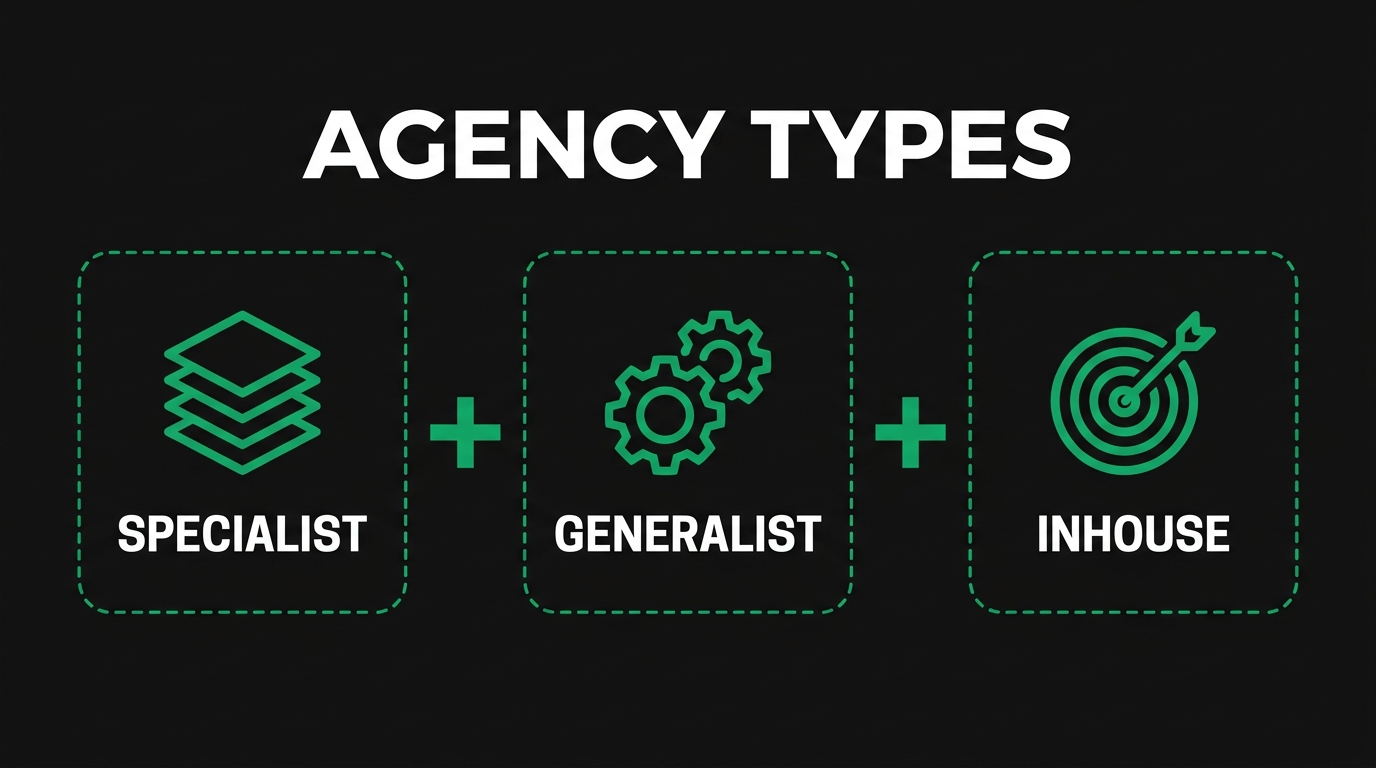
The pricing models top manufacturing SEO agencies use include monthly retainers, project fees, hourly consulting, and performance-based contracts. The next subsections explain how each model fits industrial clients, including how internal versus external resourcing shifts the math.
How Does the Monthly Retainer Model Work for Industrial Clients?
The monthly retainer model works for industrial clients by locking a fixed scope of deliverables (audits, content, links, reporting) to a predictable monthly fee over a twelve-month horizon. Retainers suit manufacturers because procurement-intent SEO compounds over quarters, not weeks. A typical retainer allocates hours across technical remediation, topical content production, editorial link outreach, schema implementation, and revenue-tied reporting. According to McKinsey, 34% of total B2B sales revenue now comes from self-service ecommerce combined with remote online sales interactions, which justifies steady investment in always-on organic visibility rather than sporadic campaign bursts. Weighing in-house hiring against an agency retainer often hinges on the outsource vs in-house SEO calculus covering payroll, tooling, and domain expertise.
When Is a Project-Based Fee the Right Choice?
A project-based fee is the right choice when the scope is finite and diagnostic, such as a technical SEO audit, a site migration, a topical map buildout for one process line, or a schema rollout. Project fees range from $5,000 for a focused audit to $50,000+ for multi-facility topical architecture. The model fits manufacturers with existing in-house marketing capacity who need specialist spikes, not ongoing production. It is not ideal for link building or continuous content because those require monthly cadence to accumulate authority. Use projects for foundations; use retainers for momentum.
How Do Hourly Consulting Arrangements Fit Manufacturers?
Hourly consulting arrangements fit manufacturers who need strategic direction without production handoff. Typical uses include reviewing an existing agency's work, advising on a site replatform, training an in-house team on procurement-intent keyword research, or sanity-checking a vendor proposal. Rates range from $150 to $500 per hour. A ten-hour consulting block can clarify whether a $150,000 annual retainer is justified. Industrial manufacturers with mature marketing teams often blend hourly advisory with in-house execution, reserving retainer engagements for brands without internal SEO expertise.
Are Performance-Based SEO Contracts Reliable for Manufacturers?
Performance-based SEO contracts are not fully reliable for manufacturers because industrial buying cycles are too long to tie vendor payment to short-horizon signals. Pure pay-per-ranking or pay-per-lead contracts incentivize agencies to chase easy keywords over procurement-intent ones, which starves the RFQ pipeline. Hybrid contracts work better: a base retainer covering production plus bonuses for tracked RFQ submissions or closed revenue at six- and twelve-month milestones. A Gartner survey of 632 B2B buyers conducted in August through September 2024 found 75% of B2B buyers prefer a rep-free sales experience, which means sales-driven performance proxies miss the actual decision path. Contract structure sets the tone for every deliverable, which leads into what services get packaged inside these models.
What Services Are Included in Manufacturing SEO Agency Packages?
The services included in manufacturing SEO agency packages fall into four pillars: technical SEO, content production, link building, and analytics or reporting. The next subsections detail each pillar and how it scales retainer pricing.
Which Technical SEO Services Do Manufacturing Agencies Deliver?
Technical SEO services manufacturing agencies deliver include crawl audits, schema markup for Product, Service, and Organization types, Core Web Vitals remediation, faceted navigation cleanup, international hreflang, sitemap segmentation, and canonical hygiene across facility and process pages. Industrial sites often run on legacy CMS stacks (custom PHP, old WordPress forks, ERP-tied catalogs), which makes technical work more invasive than agencies admit. Proper schema with Wikipedia sameAs entity references grounds the brand in Google's Knowledge Graph, a step generalist agencies skip. Expect 15-25% of a retainer to fund technical remediation in the first six months.
How Do Content Creation Services Support Procurement-Intent Queries?
Content creation services support procurement-intent queries by producing long-form pages built around process-material-certification clusters: "5-axis CNC machining titanium aerospace parts," "injection molding for medical device housings," "NADCAP heat treat for nickel alloys." Each cluster answers buyer questions at every stage of the RFQ funnel. The Content Marketing Institute reports that 67% of manufacturing marketers say their content strategy is moderately effective, while only 20% say it is very effective, which signals most content misses the procurement angle. Specialist agencies staff former engineers or process experts, not general writers, to hit the technical accuracy buyers demand.
What Link Building Tactics Do Industrial SEO Agencies Use?
Link building tactics industrial SEO agencies use include editorial placements in trade publications (Modern Machine Shop, Assembly Magazine, Packaging Digest), guest technical articles authored by brand engineers, digital PR around proprietary research, and tier-2 link amplification. Ahrefs research shows the number of referring domains to a page is the strongest correlating backlink factor, with most #1 ranking pages getting followed backlinks from new referring domains at a pace of +5% to +14.5% per month. Generic guest-post networks and PBN links have no place in industrial SEO because trade publications drive both rankings and qualified referral traffic. Expect $3,000 to $8,000 per month of a retainer allocated to link acquisition.
How Do Analytics, Reporting, and CRM Integration Affect Pricing?
Analytics, reporting, and CRM integration affect pricing by adding $1,500 to $5,000 per month in scope, depending on stack complexity. Industrial buyers convert through RFQ forms, phone calls, and trade show follow-ups, none of which a default Google Analytics setup tracks cleanly. Proper attribution connects organic landing pages to Salesforce or HubSpot opportunities, closed revenue, and pipeline velocity. BrightEdge data shows organic search accounts for 64.1% of traffic to B2B websites, and B2B companies generate 2X more revenue from organic search than any other channel, which makes accurate attribution a mandatory line item, not a luxury. Manufacturing SEO Agency's revenue-tied reporting ties every organic ranking to actual RFQs, pipeline value, and closed revenue through CRM integration, not keyword positions in a vacuum. Service scope drives the next big pricing question: how packages stratify across tiers.
How Do Manufacturing SEO Agency Pricing Tiers Differ?
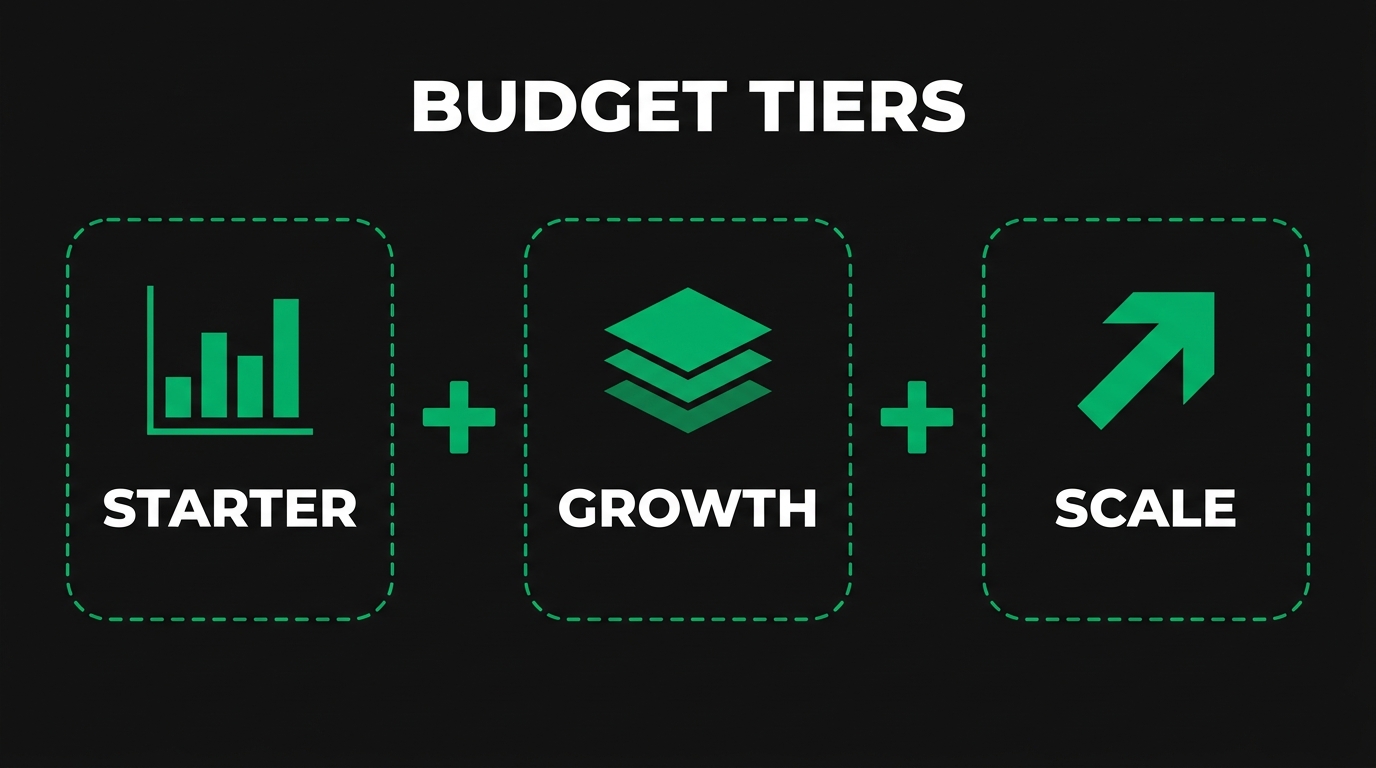
Manufacturing SEO agency pricing tiers differ by scope depth, deliverable volume, and specialist staffing. The next subsections walk through entry-level, mid-market, premium, and niche-specialist tiers and what each tier buys.
What Do Entry-Level Manufacturing SEO Packages Cover?
Entry-level manufacturing SEO packages cover core technical fixes, foundational content production, and basic link outreach at $2,500 to $5,000 per month. Deliverables typically include one monthly audit, two to four long-form process pages, light on-page optimization, and a monthly rankings report. These packages suit single-facility shops serving a limited process mix and regional buyers. For single-facility operators, pairing a lean retainer with a clear SEO for small manufacturers playbook keeps spend proportional to RFQ volume. Budget-constrained manufacturers should also vet a short best industrial SEO agencies list built for smaller programs. Expect slower authority growth, often nine to twelve months to meaningful pipeline impact.
How Do Mid-Market Manufacturing SEO Engagements Scale?
Mid-market manufacturing SEO engagements scale at $5,000 to $10,000 per month with four to eight monthly content pieces, two to four editorial link placements, quarterly technical deep-dives, and CRM-tied reporting. This tier suits multi-process manufacturers with two to five facilities and regulated-industry buyers. Mid-market packages typically ship a topical map covering the client's top three to five revenue processes, then execute cluster-by-cluster. Agencies at this tier should produce process-specific content weekly, not recycled stock blog posts. Margin for error is thinner because buyers expect comprehensive coverage of process, material, and certification combinations.
What Do Premium Industrial SEO Retainers Include?
Premium industrial SEO retainers include full topical authority buildout, PR-grade link acquisition, custom schema, LLM citation engineering, revenue attribution pipelines, and dedicated strategists at $10,000 to $25,000 per month. This tier fits enterprise manufacturers, multi-facility OEMs, and public companies whose procurement queries have high commercial value. Premium retainers commonly staff a senior strategist, a technical SEO engineer, an industrial content lead, and a PR outreach specialist per account. The Content Marketing Institute reports that 78% of manufacturing marketers surveyed work for B2B brands, while 22% work for B2B and B2C brands, which signals that premium scope almost always targets B2B procurement rather than mixed consumer channels.
How Much Should Niche Specialists Like Aerospace or Medical Manufacturers Expect to Pay?
Niche specialists like aerospace or medical manufacturers should expect to pay $10,000 to $20,000 per month because certifications dictate content depth and review cycles. Aerospace brands need AS9100 and NADCAP fluency; medical device makers need ISO 13485 and FDA-aligned language. According to Wikipedia's AS9100 entry citing the IAQG OASIS registry, there were 24,781 certified sites across the AS9100 series of standards worldwide as of May 2023, each representing a competitor or peer whose content an agency must analyze. Niche specialist retainers include compliance review cycles, SME interviews, and ITAR-aware content handling, none of which appear on a generalist's price sheet. Pricing tiers set the envelope, but several cost drivers push real invoices up or down.
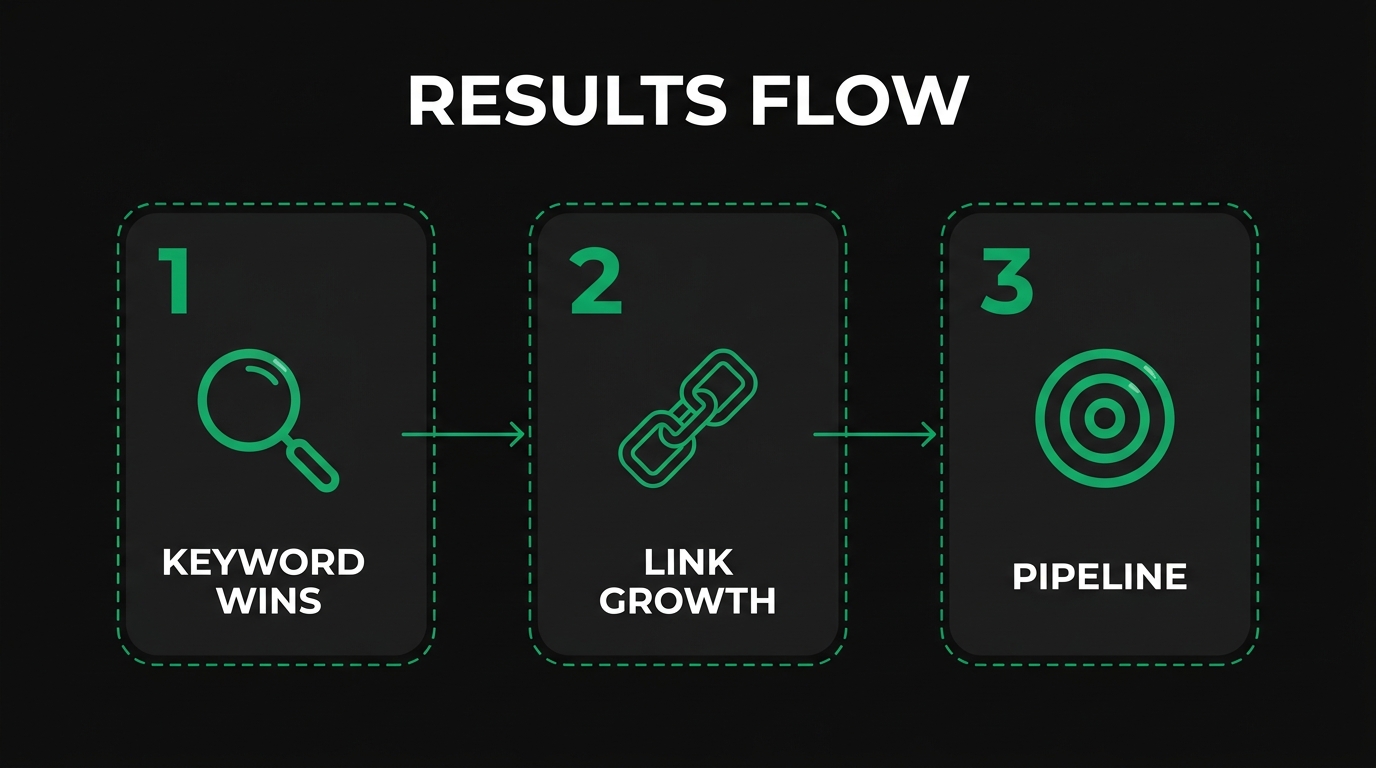
Which Factors Drive Manufacturing SEO Pricing Higher or Lower?
The factors driving manufacturing SEO pricing higher or lower include competitive density, site size, certification scope, and process coverage. The next subsections examine each cost lever and how they affect scope.
How Does Competitive Density in a Manufacturing Niche Change Cost?
Competitive density in a manufacturing niche changes cost by dictating how much content production and link acquisition is required to reach page one. A saturated niche like "CNC machining" requires multi-year retainers; a narrow niche like "titanium 6Al-4V 5-axis machining for aerospace" reaches top rankings faster with a smaller spend. Agencies price competitive density by auditing the link profiles, topical depth, and technical quality of the top ten ranking competitors. Brixon Group summarizing Gartner research notes that more buyers than ever are conducting their research online before they visit any provider's own website, meaning that marketers lack visibility into at least 50% of the buying journey, which forces agencies to produce content at every funnel stage. Denser niches translate to higher retainer floors, longer time-to-ROI, and heavier link investment.
Does Site Size and Technical Debt Raise the Retainer?
Site size and technical debt raise the retainer because remediation eats strategist hours before content and links can move the needle. A 50-page site needs minimal technical scope; a 10,000-page manufacturer catalog with ERP-synced product pages, legacy PDFs, faceted navigation, and duplicate content requires hundreds of hours of schema cleanup, canonical fixes, and crawl budget management. Manufacturers with site audits showing >500 indexable duplicates or >30% pages with Core Web Vitals failures should expect an extra $2,000 to $4,000 per month in technical scope. Technical debt is the quiet line item that doubles first-year spend.
How Do Certification and Regulatory Requirements Influence Scope?
Certification and regulatory requirements influence scope by adding compliance review cycles, controlled-content handling, and subject-matter expert interviews. Aerospace clients need AS9100 and NADCAP coverage; medical device makers need ISO 13485 content aligned to FDA language; automotive suppliers need IATF 16949 fluency. Advisera summarizes ISO data showing 29,741 active ISO 13485 certificates covering over 40,000 sites worldwide, which illustrates the scale of content competition in regulated categories. ITAR and EAR controls further restrict what an agency can publish: under the Export Administration Regulations, items subject to the EAR are those within the scope of 15 CFR Part 734. Industrial-specific fit matters more than price at this level, which is why industrial SEO agency selection should lead with certification familiarity.
Does the Number of Manufacturing Processes Covered Affect Fees?
The number of manufacturing processes covered affects fees directly because each process becomes its own topical cluster with dedicated content, schema, and links. Covering CNC machining alone is one cluster; covering CNC, injection molding, metal fabrication, and additive manufacturing is four clusters, each needing 20-40 pages of technical depth. Agencies price on a per-cluster basis, typically $2,000 to $4,000 of monthly scope per active cluster. Manufacturers who force agencies to cover processes out of scope dilute every cluster's authority, which inflates timeline without improving rankings. Cost drivers set the math; comparing agencies is how brands turn that math into a confident hiring decision.
How Do You Compare the Best Manufacturing SEO Agencies?
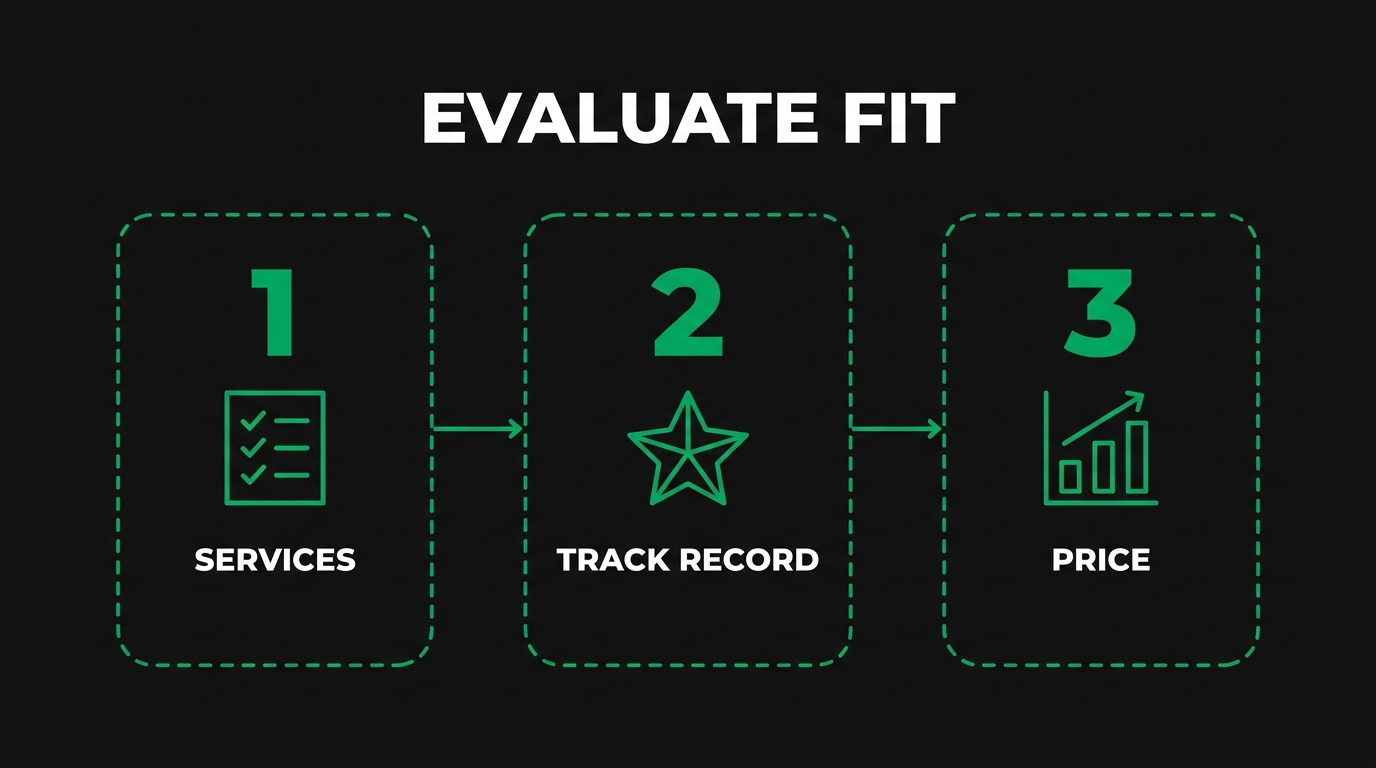
We compare the best manufacturing SEO agencies by qualifications, case studies, contract clarity, and reporting transparency. The next subsections detail each lens, including how to vet specialists, shortlists, and full-service firms.
What Qualifications Separate Top Industrial SEO Agencies From Generalists?
The qualifications separating top industrial SEO agencies from generalists are domain fluency, procurement-intent keyword research, certification awareness, and trade publication relationships. Top specialists employ former manufacturing engineers, catalog AS9100, NADCAP, ISO 13485, and IATF 16949 expertise, and publish case work tied to RFQ pipeline rather than keyword positions. A disciplined how to choose an SEO agency process covers founder experience, staffing depth, content samples, and link portfolio, all of which separate a true specialist from an agency rebranding itself industrial. MarketingProfs reports that 85% of manufacturing marketers say LinkedIn is the social media platform that delivers the best value for their organization, which hints that top agencies also manage LinkedIn thought leadership alongside SEO.
Which Case Studies and Client Results Matter Most?
The case studies and client results that matter most are those tying rankings directly to RFQ volume, pipeline value, and closed revenue, not traffic alone. Look for case data showing a specific process cluster moving from unranked to top three, then paired with RFQ counts the client's CRM recorded. Reviewing vetted industrial SEO case studies gives a calibrated benchmark for what realistic twelve-month results look like across CNC, injection molding, and contract manufacturing verticals. Reject case studies that stop at "traffic grew 200%" with no downstream metric, because traffic without RFQ correlation is a vanity line on the report.
What Questions Should You Ask Before Signing a Manufacturing SEO Contract?
The questions to ask before signing a manufacturing SEO contract are: Who writes the technical content, and do they have manufacturing backgrounds? Which trade publications have you placed links in? How do you attribute rankings to RFQs? What is the minimum contract length, and what happens at cancellation? Who specifically staffs our account? If the agency positions as full-service across digital channels, cross-check the shortlist of top manufacturing marketing firms to confirm a genuine industrial track record rather than a pivot from generalist work. Answers should be specific, not generic.
How Do You Evaluate Reporting Transparency and Revenue Attribution?
You evaluate reporting transparency and revenue attribution by requesting a sample report template before signing. Reports must tie organic landing pages to RFQ submissions, opportunity stages, and closed revenue via CRM integration (Salesforce, HubSpot, or Pipedrive). For enterprise and OEM-scale engagements, the premium specialists in the top OEM SEO agencies landscape typically ship CRM-tied dashboards rather than flat keyword exports. A transparent report also flags which clusters hit page one, which RFQs closed, and which links landed in trade publications. Reject agencies that send keyword rank exports with no revenue view. Evaluation complete, the next question is what ROI all this spend actually produces.
What ROI Should Manufacturers Expect From SEO Investment?
Manufacturers should expect SEO investment to produce measurable RFQ pipeline growth within six to twelve months, with compounding returns through year two. The next subsections walk through attribution methods, realistic timelines, KPIs, and SEO's ROI against other channels.
How Is Manufacturing SEO ROI Measured Against RFQ Pipeline?
Manufacturing SEO ROI is measured against RFQ pipeline by tracking which organic landing pages generated form submissions, phone calls, or direct sales team handoffs that converted to quoted opportunities. Attribution links the organic session to CRM opportunity records via UTM tagging, form source fields, and dynamic number insertion. A disciplined approach to measuring marketing ROI in manufacturing threads pipeline value back to the originating organic keyword cluster, so every content investment ties to revenue. Organic-sourced RFQs represent the compounding outcome of a mature program, not a first-quarter win. Rankings without CRM hooks stay as traffic; rankings tied to pipeline become revenue.
What Timeline Is Realistic for Industrial SEO Results?
The realistic timeline for industrial SEO results is three to six months for early ranking movement, six to twelve months for meaningful RFQ volume, and twelve-plus months for compounding authority. Search Engine Land's guide citing Google's own guidance notes: "Some changes might take effect in a few hours, others could take several months. In general, you likely want to wait a few weeks to assess whether your work had beneficial effects in Google Search results." Industrial sites skew longer because procurement-intent queries have fewer searches, so ranking shifts show slower signal. Patience pays: manufacturers who abandon programs at month six leave most of their ROI on the table.
Which KPIs Prove Manufacturing SEO Success?
The KPIs that prove manufacturing SEO success are organic RFQ volume, pipeline dollar value sourced from organic, cost-per-RFQ compared to paid channels, page one rankings for top procurement-intent clusters, trade publication backlinks acquired, and revenue-attributed closed-won deals. Rankings alone are not proof; they are leading indicators. Every KPI must reconcile back to the CRM. A dashboard that tracks rankings without pipeline is a vanity report. Senior manufacturing marketers should demand quarterly reviews where the agency walks through every RFQ the organic program produced and the dollar value each opportunity represented.
How Does SEO Compare to Trade Shows and Paid Channels for Manufacturers?
SEO compares to trade shows and paid channels for manufacturers as a compounding, lower-cost-per-lead alternative, not a replacement. Trade shows generate intense short bursts of RFQs at $20,000 to $100,000 per event; paid search produces consistent but expensive leads ($50 to $500 cost per click in competitive industrial keywords); SEO builds a permanent pipeline asset. Organic authority compounds as rankings strengthen over quarters, while paid spend zeroes the moment a campaign pauses. Mature manufacturers run all three in parallel: SEO for evergreen pipeline, paid for short-term fill, and trade shows for relationship acceleration. Hidden costs in SEO contracts, though, can quietly erode the ROI picture, which leads into red flags.
What Are the Hidden Costs and Red Flags in Manufacturing SEO Pricing?
The hidden costs and red flags in manufacturing SEO pricing include auto-renewal contracts, vague deliverable counts, cookie-cutter packages, and underqualified staffing. The next subsections identify each trap and how to avoid it.
Which Contract Terms Hide Additional Fees?
The contract terms that hide additional fees include automatic twelve-month renewals, per-page content surcharges, link placement "upgrades," tool licensing passthrough, and rush-work premiums on unplanned deliverables. Require itemized deliverable counts: pages per month, links per quarter, audit depth, reporting cadence. Demand clarity on what counts as in-scope versus change-order work. Watch for phrases like "up to" rather than "no fewer than" on deliverable volumes, because the floor matters, not the ceiling. Ensure the contract lists named team members, not generic "account manager" titles, so staffing continuity is enforceable.
What Warning Signs Indicate an Overpriced or Underqualified Agency?
The warning signs indicating an overpriced or underqualified agency are guaranteed page-one rankings, generic portfolios without manufacturing case studies, a refusal to share link placement samples, content written by untraceable freelancers, and reporting limited to keyword rank exports. No reputable agency guarantees rankings because Google's algorithm prohibits it. An agency that bills $12,000 per month but produces four generic blog posts and no trade publication links is overpriced. An agency whose strategist cannot distinguish AS9100 from ISO 9001 is underqualified. Budget alignment matters less than expertise alignment.
How Do You Avoid Cookie-Cutter Packages Built for Non-Industrial Clients?
You avoid cookie-cutter packages built for non-industrial clients by demanding custom scoping against your process mix, facility count, and certifications before signing. Cookie-cutter packages typically reveal themselves in fixed deliverable lists copied from dental, legal, or ecommerce templates: "X blog posts, Y backlinks, Z keyword reports" with no mention of procurement intent, RFQ tracking, or trade publications. A true industrial program starts with process-material-certification mapping, not a content calendar. Request a custom discovery workshop that maps your RFQ funnel before quoting.
Why Do Cheap Manufacturing SEO Services Often Cost More Long-Term?
Cheap manufacturing SEO services often cost more long-term because generalist agencies produce content with technical errors, links from low-quality directories, and schema that Google ignores. A $1,500 monthly retainer with inaccurate process descriptions can damage brand credibility with procurement buyers, which is harder to rebuild than rankings. Rework costs, de-indexing penalties from low-quality link schemes, and lost RFQs compound over years. According to the NIST Manufacturing Extension Partnership, nearly 1,400 trusted manufacturing advisors and experts operate at more than 450 MEP service locations, a reminder that specialist expertise scales ROI while generalist shortcuts erode it. Cheap ends up expensive when a buyer emails the sales team to flag errors on a process page. Those are the traps; the right agency partner eliminates them while aligning pricing with procurement outcomes.
How Should You Approach Manufacturing SEO Pricing With Manufacturing SEO Agency?
You should approach manufacturing SEO pricing with Manufacturing SEO Agency as a scoped investment tied to procurement-intent rankings and RFQ pipeline, not a generic retainer. The next subsections cover how Manufacturing SEO Agency's procurement-intent keyword architecture justifies the spend and recap the full pricing picture.
Can Manufacturing SEO Agency's Procurement-Intent Keyword Architecture Justify the Investment?
Manufacturing SEO Agency's procurement-intent keyword architecture justifies the investment by mapping keyword clusters to each stage of the procurement journey: initial material research, supplier evaluation, and RFQ submission. Manufacturing SEO Agency builds keyword architecture around process, material, and certification combinations that procurement managers and design engineers actually type into Google, not vanity terms. Engagements start at $5,000 per month and reach $15,000 per month for multi-facility enterprise operations, with pricing driven by site size, number of manufacturing processes covered, competitive density, and whether the scope includes content, link building, technical SEO, or all three. Every report ties organic rankings to actual RFQs, pipeline value, and closed revenue through CRM integration, so manufacturers see exactly which keyword cluster generated which quoted opportunity.
What Are the Key Takeaways About Manufacturing SEO Agency Pricing We Covered?
The key takeaways about manufacturing SEO agency pricing we covered are:
- Manufacturing SEO agencies charge $2,500 to $20,000 per month, with specialist industrial shops clustering at $5,000 to $15,000 based on scope depth.
- Pricing models include monthly retainers, project fees, hourly consulting, and hybrid performance contracts, each matching different maturity stages.
- Service packages bundle technical SEO, procurement-intent content, trade publication link building, and CRM-tied reporting into four pricing tiers from entry-level to niche specialist.
- Cost drivers include competitive density, site size, certification scope (AS9100, ISO 13485, NADCAP, IATF 16949), facility count, and the number of manufacturing processes covered.
- Compare agencies by domain fluency, RFQ-tied case studies, reporting transparency, and specialist staffing rather than retainer size.
- Realistic ROI timelines span three to twelve months for meaningful RFQ impact, with compounding returns through year two.
- Hidden costs and red flags include auto-renewal clauses, cookie-cutter packages, and agencies that guarantee rankings or lack manufacturing case work.
- Pair scoped pricing with procurement-intent strategy and revenue-tied reporting to convert SEO spend into measurable pipeline.