Measuring marketing ROI is important for manufacturers because long sales cycles, multi-stakeholder buying committees, and capital-intensive deals demand financial proof that marketing dollars convert into RFQs, pipeline, and closed revenue. We treat marketing ROI as the operating system that aligns marketing, sales, and plant leadership around the same revenue truth.
This guide covers what marketing ROI means in a manufacturing context, the metrics that matter, the calculation methods that work for industrial sales cycles, the channels that produce the highest returns, the tools and dashboards that automate measurement, and the executive reporting practices that turn data into investment decisions.
We define marketing ROI for B2B manufacturers and explain why qualified pipeline value matters more than vanity engagement metrics across long procurement journeys.
We map the top, mid, and bottom-funnel metrics that manufacturers should track, including customer acquisition cost, marketing-qualified leads, RFQ submissions, and revenue-attributed conversions.
We walk through ROI math and attribution models that work in industrial buyer journeys, covering multi-touch attribution, CRM integration, UTM discipline, and the alignment between marketing and engineering-led trade show motions.
We compare digital channel performance for manufacturers, including SEO, paid search, email, marketing automation, trade publications, and LinkedIn, and we set realistic benchmarks by sub-sector and plant size.
We review the analytics platforms, CRM systems, BI dashboards, and attribution tools that manufacturers use to operationalize ROI measurement.
We outline executive reporting cadences, visualization patterns, and the conversations that secure future marketing investment from CFOs and operations leaders.
We close with the common mistakes that distort manufacturing marketing ROI numbers and how a manufacturing-focused SEO and analytics partnership keeps measurement honest.
What Does Marketing ROI Mean for B2B Manufacturers?
Marketing ROI for B2B manufacturers means the financial return generated by every marketing dollar spent across SEO, content, paid media, trade shows, and sales enablement, measured against closed manufacturing revenue. We treat it as the bridge between brand visibility and RFQ pipeline.
How Do Manufacturers Define a Qualified Lead Versus a Vanity Metric?
Manufacturers define a qualified lead as a contact tied to a real procurement need with budget authority, project scope, and a timeline, whereas a vanity metric is a pageview, social like, or email open that lacks revenue context. A qualified industrial lead specifies process, material, certification scope, and quantity. Vanity metrics inflate dashboards but never enter the CRM as opportunities. Understanding how do manufacturers get leads online clarifies which signals indicate buying intent versus mere engagement. Expert opinion: marketing teams that report only top-of-funnel volume hide pipeline reality from sales for entire quarters, which damages trust between marketing, sales, and plant leadership.
Why Does Marketing ROI Matter More in Long Manufacturing Sales Cycles?
Marketing ROI matters more in long manufacturing sales cycles because the lag between first touch and closed revenue can stretch months, making short-term spend reviews misleading without disciplined attribution. Marketing Charts reports three-quarters (74.6%) of B2B sales to new customers take at least 4 months to close, with almost half (46.4%) taking 7 months or more. The Manufacturing Institute notes the U.S. manufacturing industry could see a net need for as many as 3.8 million jobs between 2024 and 2033, with 1.9 million potentially unfilled, intensifying competition for buyer attention. The U.S. Census Bureau Annual Survey of Manufactures classifies establishments in NAICS sector 31-33, giving marketers a taxonomy backbone for cohort analysis across long cycles.
How Does Marketing ROI Differ for OEMs Versus Contract Manufacturers?
Marketing ROI differs for OEMs versus contract manufacturers because OEMs sell branded equipment with longer customer lifetime value while contract manufacturers compete on capacity, certifications, and quote-turn speed. OEM marketing ROI ties to multi-year service contracts, parts revenue, and warranty attach. Contract manufacturer ROI hinges on RFQ volume, quote-to-order conversion, and capacity utilization. The reporting cadence, attribution windows, and KPI weighting therefore diverge between the two business models. Reviewing what is industrial seo helps both segments calibrate the upstream visibility signals that feed each ROI model. Expert view: blending OEM and contract ROI math into a single dashboard masks underperforming channels in both businesses.
Which Key Metrics Should Manufacturers Track to Measure Marketing ROI?
The key metrics manufacturers should track to measure marketing ROI are top-of-funnel reach, mid-funnel engagement, bottom-of-funnel conversions, and customer acquisition cost. Each tier connects marketing activity to RFQ pipeline and closed revenue.
What Are the Primary Top-of-Funnel Metrics for Industrial Marketing?
The primary top-of-funnel metrics for industrial marketing are organic impressions, qualified organic sessions, branded search volume, share of voice on procurement-intent keywords, and form-fill conversion rate on capability pages. These metrics indicate whether the brand is visible to engineers and procurement teams researching processes, materials, and certifications. Track them by buyer persona and topic cluster to expose coverage gaps. Expert opinion: top-of-funnel volume without procurement-intent qualification is noise; segment by query intent before celebrating session counts. Pair the top-of-funnel view with cluster-level rankings to show which content groups are pulling buyers into the pipeline.
Which Mid-Funnel Engagement Metrics Predict RFQ Pipeline Health?
The mid-funnel engagement metrics that predict RFQ pipeline health are spec-sheet downloads, capability page repeat visits, demo requests, gated content conversions, email click-through rates from procurement personas, and time spent on technical pages. Each signals that an account has moved from awareness to active evaluation. Tag every conversion event with the originating page and content cluster so the CRM connects engagement to RFQ submissions later. Expert view: the strongest mid-funnel predictor in manufacturing is the second-visit pattern from named accounts, which often precedes an RFQ within two weeks. Build alerts that fire when a target account triggers two or more mid-funnel events.
What Bottom-of-Funnel Conversion Metrics Tie Marketing to Revenue?
The bottom-of-funnel conversion metrics that tie marketing to revenue are RFQ submissions, quote-to-order conversion rate, marketing-influenced pipeline dollars, marketing-attributed closed-won revenue, and revenue per qualified lead. These metrics translate funnel activity into dollars and answer the only question that matters to plant leadership: did marketing produce orders? Track each metric by source channel, content cluster, and buyer persona. Tag the CRM with originating UTM data so revenue attribution survives long sales cycles. Expert opinion: RFQ submission volume without quote-to-order conversion data overstates marketing's contribution; always pair the two when reporting bottom-funnel results to executives.
How Do You Track Customer Acquisition Cost in Manufacturing Marketing?
You track customer acquisition cost in manufacturing marketing by summing all marketing and sales spend over a period, then dividing by the number of new customers acquired in that window, with adjustments for long sales cycles and multi-touch journeys. MarketingProfs reports manufacturing marketers say the main reasons their strategies are not as effective as they could be is because they are not tied to the customer journey (47%), are not data driven (46%), and lack clear goals (40%), which directly inflates CAC reporting. Pair CAC with customer lifetime value to judge channel health rather than treating CAC in isolation. Disciplined CAC tracking sets up the ROI calculation work covered next.
How Do You Calculate Marketing ROI for a Manufacturing Business?
You calculate marketing ROI for a manufacturing business by dividing the net profit attributable to marketing by the total marketing investment, then expressing the result as a percentage. The math must account for long sales cycles and multi-channel attribution.
What Is the Standard Marketing ROI Formula for Manufacturers?
The standard marketing ROI formula for manufacturers is (Marketing-attributed Revenue minus Marketing Cost) divided by Marketing Cost, expressed as a percentage. The Harvard Business Review notes marketing ROI analysis can help answer the question of whether marketing spending is effective, against a backdrop where global media spending is substantial, with $2.1 trillion projected for 2019. Apply the formula at the channel level, the campaign level, and the cluster level to expose which investments compound. Expert opinion: applying a single blended ROI number to all marketing activity hides the channels carrying the load and the channels bleeding budget. Always segment.
How Do You Allocate Costs Across Multi-Channel Manufacturing Campaigns?
You allocate costs across multi-channel manufacturing campaigns by tagging every spend line item with channel, content cluster, persona, and stage, then dividing shared costs proportionally based on traffic share, conversion share, or revenue share. Include media spend, agency retainers, software licenses, content production, sales enablement, and event costs. Treat headcount allocations as marketing cost when the role is exclusively marketing-funded. Expert opinion: under-allocating shared costs makes marketing look more efficient than it is; CFO trust collapses when those costs surface later in audit. Document the allocation method in the dashboard footnote so reviewers can replicate the math.
How Should Manufacturers Account for Long Sales Cycles in ROI Math?
Manufacturers should account for long sales cycles in ROI math by extending attribution windows to cover the full average deal cycle, applying lag-adjusted reporting, and modeling pipeline contribution alongside closed revenue. NIST reports the MEP National Network has worked with thousands of manufacturers, leading to an estimated $152.2 billion in new sales and $34.2 billion in cost savings, and has helped create and retain over 1.7 million jobs since 1988, illustrating why multi-year impact measurement matters in industrial sectors. Build cohort analyses by quarter of first touch so revenue maturation patterns become visible. Expert view: short-window ROI views punish high-quality marketing efforts whose payoff lands two quarters later.
What Attribution Models Work Best for Industrial Buyer Journeys?
The attribution models that work best for industrial buyer journeys are time-decay multi-touch, position-based U-shape, W-shape for committee buying, and algorithmic models that weight stages dynamically. ACM-published research shows multi-touch attribution using state-of-the-art models such as Shapley, Bayesian, and machine-learning algorithms reaches accuracy up to 84% with better ROI alignment (r = 0.78) than traditional rule-based attribution. Choose the model that matches deal size and buying-committee complexity. Single-touch models fail in industrial sales because procurement journeys span multiple stakeholders and many months. The right attribution model sets up the CRM-marketing integration work covered next.
How Do You Connect Marketing Activity to Closed Manufacturing Revenue?
You connect marketing activity to closed manufacturing revenue by integrating CRM and marketing analytics, enforcing UTM discipline, tying trade show leads to digital touchpoints, and crediting every stakeholder in the buying committee. Revenue attribution turns marketing into a profit lever.
How Do You Integrate CRM Data With Marketing Analytics?
You integrate CRM data with marketing analytics by syncing lead, opportunity, and revenue records bidirectionally between the CRM and the marketing platform, then unifying contact history into a single account view. Gartner reports marketing analytics are responsible for influencing just over half (53%) of marketing decisions, based on a survey of 377 users of marketing analytics, which highlights how often integration gaps suppress analytics influence. Map UTM parameters, lifecycle stages, and revenue fields between systems before launching campaigns. Expert opinion: weak CRM-marketing integration is the single biggest cause of distrust between marketing and sales in industrial businesses.
Which UTM and Tracking Setups Capture Procurement Intent?
The UTM and tracking setups that capture procurement intent are consistent UTM source, medium, campaign, content, and term parameters across every marketing channel, paired with hidden form fields that persist UTM data into the CRM lead record. Tag landing pages with cluster, persona, and funnel stage so attribution surfaces process, material, and certification context. Capture referring page, first-touch landing page, and last-touch conversion page in the lead profile. Expert view: most manufacturing marketing teams discover UTM gaps only when revenue attribution fails an audit; build the taxonomy before campaigns launch. Document the UTM convention in a shared style guide so every team uses the same parameters.
How Do You Tie Trade Show Leads to Digital Marketing Touchpoints?
You tie trade show leads to digital marketing touchpoints by capturing badge scans into the CRM with show-specific source tags, then merging duplicate records against existing digital contacts to surface prior anonymous touches. CEIR via IAEE reports that among Fortune 500 companies, 14% reported a 5:1 return on investment from their trade show exhibitions, and the average ROI on Trade Show Investments is 4:1, which only registers when show leads connect to digital first-touch data. Run pre-show email campaigns that prime attendees with UTM-tagged content. Expert opinion: trade show ROI looks weak only because lead-stitching to digital history is missing in most manufacturing CRMs.
How Do You Attribute Revenue Across Engineering and Procurement Stakeholders?
You attribute revenue across engineering and procurement stakeholders by crediting every contact in the buying account, weighting touches by stage and role, and using account-based attribution rather than lead-based attribution. Demand Gen Report cites SiriusDecisions research showing in the committee buying scenario, six to 10 individuals were involved in the decision to purchase across multiple departments or functions, typically associated with large buying entities (most commonly organizations with $1B or more in annual revenue). Map each contact to the decision-maker, influencer, or evaluator role, then attribute revenue at the account level. Expert view: lead-based attribution dramatically underreports content's role with engineers, who research silently long before procurement signs.
What Digital Marketing Channels Deliver the Highest ROI for Manufacturers?
The digital marketing channels that deliver the highest ROI for manufacturers are organic search, email and marketing automation, trade publication sponsorships, owned content hubs, and LinkedIn for buyer engagement. Channel performance varies by deal size and sales cycle.
How Does SEO Compare to Paid Search in Manufacturing ROI?
SEO compares to paid search in manufacturing ROI by delivering compounding long-term returns from procurement-intent rankings, while paid search produces faster but rented traffic that stops the moment spend stops. SEO captures buyers researching processes, materials, and certifications before they enter sales pipelines. Paid search excels at filling short-term capacity gaps. Comparing organic lead generation for manufacturers vs paid ads clarifies the breakeven math by deal size. Reviewing basic seo strategies for manufacturers helps marketing teams build the foundation that lifts SEO ROI beyond paid search over a 12-month window. Expert opinion: blending SEO and paid search in the same dashboard hides each channel's true contribution.
What Returns Do Email and Marketing Automation Generate for Industrial Brands?
The returns email and marketing automation generate for industrial brands are among the highest of any digital channel because nurturing engineers and procurement managers across long sales cycles compounds engagement into RFQs. Fortune Business Insights reports the global marketing automation software market, valued at approximately $7.23 billion, is projected to surge toward $20.12 billion within the decade, representing a CAGR between 12% and 15.3%, signaling broad adoption across industrial verticals. Segment lists by buyer persona, process specialization, and certification interest. Expert view: most industrial email programs underperform because they push catalog promotions instead of educating engineers; switch to spec sheets, application notes, and case studies for measurable lift.
How Do Trade Publications and Sponsored Content Perform Against Owned Media?
Trade publications and sponsored content perform against owned media by delivering brand awareness and referral traffic faster, while owned media compounds organic visibility and lead capture over time. Vertical publications such as Modern Machine Shop, Plastics Technology, or Aerospace Manufacturing and Design reach procurement-relevant audiences immediately. Owned media earns lower upfront reach but converts higher because the audience self-selects. Following a content marketing guide for manufacturers helps marketers split budget intelligently between trade sponsorships and owned content. Expert opinion: pair trade publication placements with owned-content amplification so the trade impression drives traffic to a measurable landing page rather than a brand mention that disappears in print.
Where Do Social Media and LinkedIn Fit in Manufacturing Marketing ROI?
Social media and LinkedIn fit in manufacturing marketing ROI as upper-funnel awareness and account-based engagement channels, with LinkedIn carrying disproportionate weight for B2B procurement reach. Statista notes LinkedIn generated the highest visitor-to-lead conversion rate at 2.74%, almost 3x higher than X at 0.69% and Facebook at 0.77%. Use LinkedIn for thought leadership, account targeting, and recruiting engineers; treat other social platforms as secondary brand channels for case studies and recruitment. Gartner reports 61% of CMOs reported that they lack the in-house capabilities to deliver their strategy in a survey of 405 CMOs and other marketing leaders, which often shows up first as inconsistent social ROI tracking. Channel selection sets up the benchmarking work covered next.
How Should Manufacturers Set Realistic Marketing ROI Benchmarks?
Manufacturers should set realistic marketing ROI benchmarks by anchoring targets to sub-sector averages, sales cycle length, plant size, and product complexity, then layering internal historical performance for compounding goals. Benchmarks must reflect industrial reality.
What Are Average Marketing ROI Benchmarks Across Manufacturing Sub-Sectors?
The average marketing ROI benchmarks across manufacturing sub-sectors vary by deal size, certification gating, and sales cycle length, with longer cycles requiring multi-quarter benchmark windows. Demand Gen Report finds the average B2B deal cycle lasts 6 months, according to research analyzing closed-won deals across multiple industries, which sets the minimum window for ROI evaluation. Aerospace and medical device sub-sectors benchmark differently from contract metal fabrication because regulated buying cycles extend evaluation phases. Expert opinion: sub-sector benchmarks should use rolling four-quarter windows to smooth quarterly noise and surface real channel performance trends.
How Long Should Manufacturers Wait Before Measuring Marketing ROI?
Manufacturers should wait at least one full average sales cycle before measuring marketing ROI, then add a buffer for late-stage influence and contract negotiation lag. For most industrial businesses this means six to nine months minimum for new-customer acquisition campaigns. Existing-customer expansion campaigns can be measured in shorter windows because cycle times collapse. Build a measurement calendar that maps campaign launch dates against expected revenue maturation. Expert view: pulling marketing ROI numbers monthly during the first two quarters of a campaign produces misleading conclusions and triggers premature budget reallocations. Hold the line until the cohort matures.
Which Industry Reports Provide Reliable Manufacturing Marketing Benchmarks?
The industry reports that provide reliable manufacturing marketing benchmarks are the Content Marketing Institute Manufacturing Content Marketing Research, the CMO Survey from Duke Fuqua, the National Association of Manufacturers data series, the U.S. Bureau of Labor Statistics manufacturing data, and the Census Bureau Annual Survey of Manufactures. Cross-reference vendor benchmark reports with non-commercial sources before adopting them as targets. Expert opinion: many vendor benchmarks bias high because the reporting sample skews toward customers; pair every vendor stat with a non-commercial baseline before setting goals. Audit the methodology section of every benchmark before quoting it to executives.
How Do You Adjust Benchmarks for Plant Size and Product Complexity?
You adjust benchmarks for plant size and product complexity by segmenting peer comparisons against companies of similar revenue, employee count, and process portfolio, then weighting benchmark expectations against the unique buyer journey for each product family. A high-mix low-volume custom shop should not benchmark against a high-volume single-line OEM. Document the adjustment factors so executive reporting reflects fair comparisons. Expert view: applying generic SaaS or B2B service benchmarks to capital-equipment manufacturing produces unrealistic targets that erode marketing credibility. Always tie benchmarks to industrial reality. Realistic benchmarks set up the tooling work covered next.
What Tools and Technologies Help Manufacturers Measure Marketing ROI?
The tools and technologies that help manufacturers measure marketing ROI are analytics platforms, CRM and marketing automation systems, BI dashboards, and attribution and call-tracking software. Each tier of the stack contributes a piece of the revenue picture.
Which Analytics Platforms Suit Industrial Marketing Measurement?
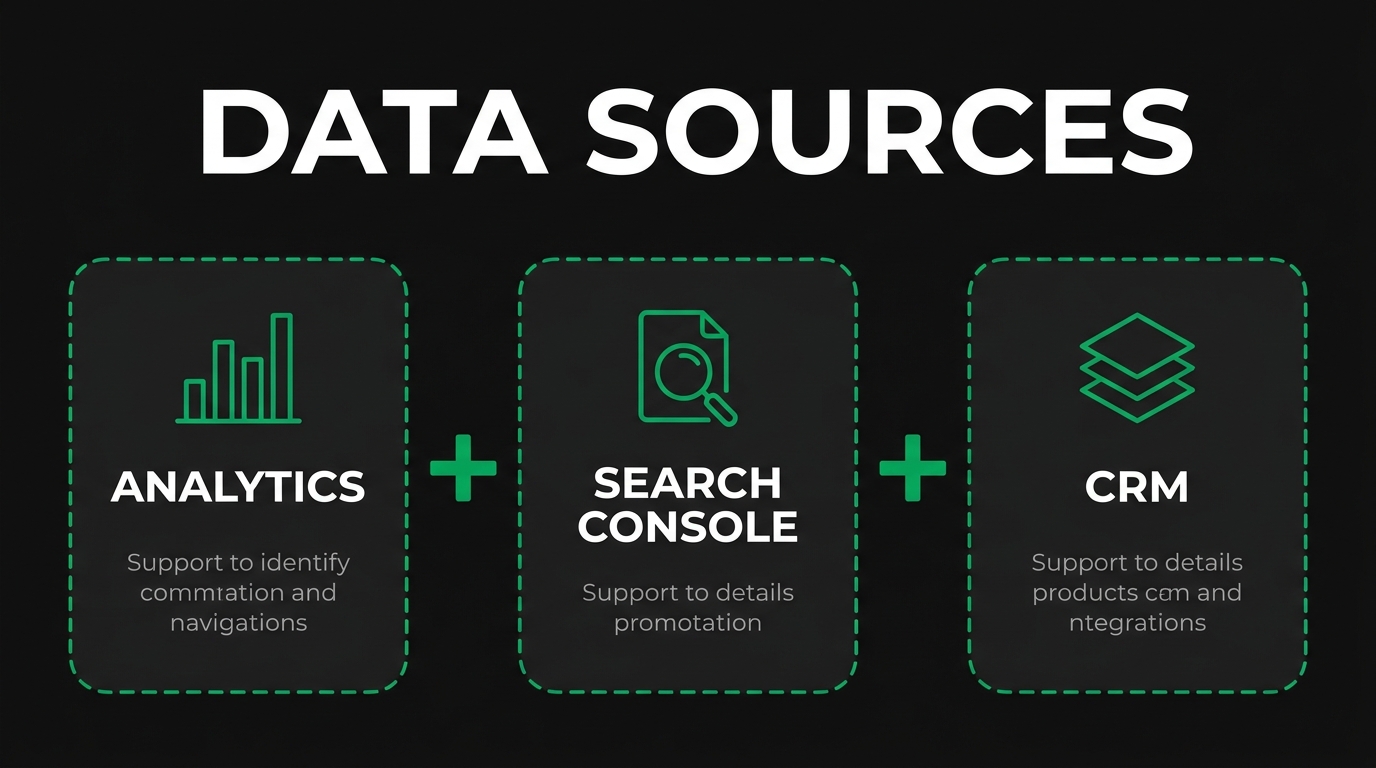
The analytics platforms that suit industrial marketing measurement are Google Analytics 4 for behavioral data, Google Search Console for organic visibility, Looker Studio or Power BI for blended reporting, and server-side analytics for first-party data resilience. Pair these with privacy-compliant tag management to maintain attribution accuracy. Expert opinion: relying solely on default GA4 reporting under-represents long-cycle manufacturing journeys; build custom event tracking around RFQ submissions, spec downloads, and capability page interactions. Pipe these events into the CRM via reverse ETL so analytics and revenue data live in one place rather than two disconnected systems.
How Do CRM and Marketing Automation Platforms Track Manufacturing ROI?
CRM and marketing automation platforms track manufacturing ROI by capturing first-touch and last-touch attribution, syncing lead and opportunity stage changes, and reporting marketing-influenced pipeline against closed revenue. CRM.org reports manufacturing has an 86% adoption rate for CRM systems, making it one of the leading industries for CRM implementation, and manufacturing firms typically see the strongest CRM returns, reporting up to 32% improvement in sales forecast accuracy. Map every revenue field, lifecycle stage, and conversion event between systems before launching campaigns. Expert view: CRMs without disciplined data hygiene produce ROI numbers that look precise but are quietly wrong; invest in monthly data audits.
What Role Do BI Dashboards Play in Manufacturing Marketing Reporting?
BI dashboards play the role of unifying marketing, sales, and finance data into a single revenue narrative for manufacturing leadership. Dashboards translate raw analytics, CRM, and ERP signals into executive-friendly visualizations that show pipeline health, channel ROI, and forecast variance side by side. Configure role-based views so plant leadership sees revenue contribution while marketing operations sees channel-level diagnostics. Working with top manufacturing marketing firms often surfaces dashboard templates already proven in industrial settings. Expert opinion: dashboards lose trust the moment a number cannot be reconciled to source; build drill-down capability into every metric tile.
How Should Manufacturers Evaluate Attribution and Call-Tracking Software?
Manufacturers should evaluate attribution and call-tracking software by checking whether the tool supports multi-touch models, integrates with the existing CRM, captures procurement-related call intent, and exports raw data for audit. Call tracking matters because procurement teams still pick up the phone for RFQ clarification, and untracked calls disappear from ROI math. Test attribution accuracy against known closed-won deals before standardizing the tool. Manufacturing SEO Agency provides manufacturing seo reporting and analytics that ties ranking data to RFQ pipeline and closed revenue across both digital and call channels. Tooling discipline sets up the executive reporting work covered next.
How Do You Report Marketing ROI to Manufacturing Executives and Stakeholders?
You report marketing ROI to manufacturing executives and stakeholders by aligning reporting cadence with sales rhythms, choosing visualizations that communicate financial impact, presenting CFO-grade math, and linking results to future investment cases. Executive trust depends on consistency.
What Reporting Cadence Aligns Marketing With Manufacturing Sales Teams?
The reporting cadence that aligns marketing with manufacturing sales teams is weekly RFQ and pipeline pulses, monthly cross-functional reviews, and quarterly strategic ROI deep dives. Weekly cadences catch ranking slippage and form-fill anomalies fast. Monthly cadences align marketing and sales on cluster-level performance and pipeline health. Quarterly reviews recalibrate budget and priorities against the topical map and channel mix. Expert view: skipping the weekly pulse hides three to four weeks of pipeline drift before sales leadership notices a slowdown. Build the calendar with the sales VP before the first quarter ends.
Which Visualizations Communicate Marketing ROI to Plant Leadership?
The visualizations that communicate marketing ROI to plant leadership are revenue waterfall charts showing channel contribution, pipeline funnel views that connect MQLs to RFQs to orders, cohort retention curves for repeat buyers, and time-lag attribution charts that show how first-touch dates map to closed revenue. Avoid heat maps and complex sankey diagrams in plant-leadership reviews; use simple bars and lines tied to dollar values. Expert opinion: plant leaders trust visualizations they can sketch from memory after one viewing; design for that test. Annotate every chart with the data source, attribution model, and time window so reviewers can audit the math.
How Do You Present Marketing ROI to CFOs and Operations Leaders?
You present marketing ROI to CFOs and operations leaders by leading with the dollar-denominated outcome, showing the marketing-attributed contribution to pipeline and closed revenue, then walking through the attribution methodology, assumptions, and sensitivity analysis. CFOs want to know what changed, why, and what it means for the next quarter's spend. Pre-empt the methodology questions with a one-page assumptions appendix. Expert view: marketing reports that lead with engagement metrics lose CFO attention in 30 seconds; lead with revenue and let the supporting metrics earn the explanation slot.
How Do You Use ROI Reports to Justify Future Marketing Investment?
You use ROI reports to justify future marketing investment by pairing historical channel performance with forward-looking scenarios, modeling conservative, base, and stretch outcomes for each spend tier. Tie each scenario to specific content clusters, link investments, and tooling upgrades so the CFO sees what the dollar buys. Reference cumulative pipeline value generated by past investment to anchor the request. Expert opinion: investment cases that name the cluster and the keyword target win approval; investment cases that ask for a generic budget line do not. Honest reporting also exposes common measurement mistakes covered next.
What Common Mistakes Distort Marketing ROI Measurement for Manufacturers?
The common mistakes that distort marketing ROI measurement for manufacturers are confusing activity metrics with outcome metrics, accepting poor lead qualification, mishandling attribution, and underreporting long-cycle pipeline value. Each mistake quietly inflates or hides true performance.
Why Do Manufacturers Confuse Activity Metrics With Outcome Metrics?
Manufacturers confuse activity metrics with outcome metrics because activity numbers like email opens, social impressions, and pageviews are easy to pull and look productive in a dashboard, while outcome metrics like RFQ submissions and closed revenue require harder data plumbing. The result: dashboards full of green check marks while pipeline stays flat. Force every metric tile to answer one question: did this number move closer to a closed order? Expert opinion: marketing teams that report activity without outcomes lose CFO trust within two quarters; switch to outcome-first reporting before that trust gap widens. Outcome reporting forces honest conversations about which channels deserve more budget.
How Does Poor Lead Qualification Inflate Marketing ROI Reporting?
Poor lead qualification inflates marketing ROI reporting by counting low-intent contacts as marketing-qualified leads, which dilutes the conversion rate metric and hides which channels actually feed the pipeline. A lead without budget authority, project scope, or timeline should not count toward the marketing-qualified pipeline figure. Tighten MQL definitions with sales and require a verified procurement signal such as a spec download paired with a job-title check before crediting the lead. Expert view: the fastest way to restore marketing credibility with a skeptical sales team is to drop the MQL count by 30% by adding two qualification fields. Quality always beats volume.
Which Attribution Errors Skew Manufacturing Marketing ROI Numbers?
The attribution errors that skew manufacturing marketing ROI numbers are last-touch over-credit, missing pre-form anonymous touches, broken UTM continuity, and ignoring offline and call-based touches. Salesforce State of Marketing Report data shows 33% of marketers still say their marketing attribution is a manual process, and 72% of high-performing marketers are able to analyze marketing performance in real-time, compared to 61% of underperforming marketers. Audit attribution monthly against a sample of closed-won deals to catch model drift. Expert opinion: attribution that cannot be reproduced from raw data should not be reported; rebuild before publishing the next quarterly review.
How Do Manufacturers Avoid Underreporting Long-Cycle Pipeline Value?
Manufacturers avoid underreporting long-cycle pipeline value by extending attribution windows to cover full average sales cycles, modeling cohort maturation by quarter of first touch, and reporting both pipeline-influenced and closed revenue alongside time-lag context. Use rolling four-quarter windows to smooth cycle volatility and show compounding effects. Tag every long-cycle deal with first-touch source so the credit survives multi-year sales motions. Expert view: marketing teams that report only same-quarter ROI consistently understate their contribution by half because the most valuable pipeline matures across multiple quarters. Avoiding these mistakes sets the stage for the agency partnership conversation next.
How Can Manufacturing SEO Agency Help You Measure and Improve Marketing ROI?
Manufacturing SEO Agency helps you measure and improve marketing ROI by combining procurement-intent SEO, CRM-integrated revenue reporting, multi-touch attribution, and AI search visibility engineering. The subsections below cover the reporting service and the key takeaways.
Can Manufacturing SEO Agency's Reporting and Analytics Service Tie SEO to Manufacturing Revenue?
Yes, Manufacturing SEO Agency's reporting and analytics service can tie SEO to manufacturing revenue by integrating ranking data, organic conversions, RFQ submissions, and CRM pipeline records into a unified attribution view. Manufacturing SEO Agency is a U.S.-based, industrial-only SEO firm covering procurement-intent keyword architecture, topical authority buildout, PR-grade editorial link building, AI search visibility engineering, technical SEO, and CRM-integrated revenue reporting. As an industrial seo agency, Manufacturing SEO Agency ties organic visibility directly to RFQs, pipeline value, and closed revenue. Engagements start at $5,000 per month and reach $15,000 per month for multi-facility enterprise operations.
What Are the Key Takeaways About Measuring Marketing ROI for Manufacturers We Covered?
The key takeaways about measuring marketing ROI for manufacturers we covered are: marketing ROI means dollars of pipeline and closed revenue, not vanity engagement; long sales cycles require extended attribution windows and cohort reporting; CAC must pair with customer lifetime value; the ROI formula needs disciplined cost allocation; CRM-marketing integration is non-negotiable; trade show and digital touches must stitch in the CRM; channel mix weights SEO, email, trade publications, owned content, and LinkedIn against deal size; benchmarks must be sub-sector and plant-size specific; analytics, CRM, BI dashboards, and call tracking each contribute a layer; executive reporting leads with revenue; common mistakes trace to activity-metric confusion, weak qualification, attribution drift, and short-window underreporting.