Content marketing for manufacturers is the disciplined publishing of technical, procurement-grade information across processes, materials, certifications, and applications so engineers, purchasing managers, and supply chain directors can evaluate a supplier without ever calling sales. It drives B2B leads by ranking for the exact specifications buyers type into Google during sourcing.
This guide covers how industrial content differs from generic B2B marketing, the audiences it must serve, the strategy and topical authority that wins procurement intent, the formats and topics that convert, the distribution channels that scale reach, the measurement frameworks that tie content to RFQs, and the pitfalls that quietly waste manufacturing marketing budget.
The first theme defines manufacturing content marketing through procurement intent and technical accuracy, and it explains why engineers reject generic copy. We connect the definition to the way industrial buyers research, compare, and shortlist suppliers long before any sales conversation begins.
The audience theme maps the four buyers who consume manufacturer content (design engineers, purchasing managers, plant operators, supply chain directors) and the very different questions each one brings. We translate those questions into content priorities a marketing team can act on.
The strategy and formats themes show how to build topical authority through clusters around processes, materials, and certifications, then which formats (long-form guides, case studies, spec sheets, webinars, whitepapers) best convert each audience.
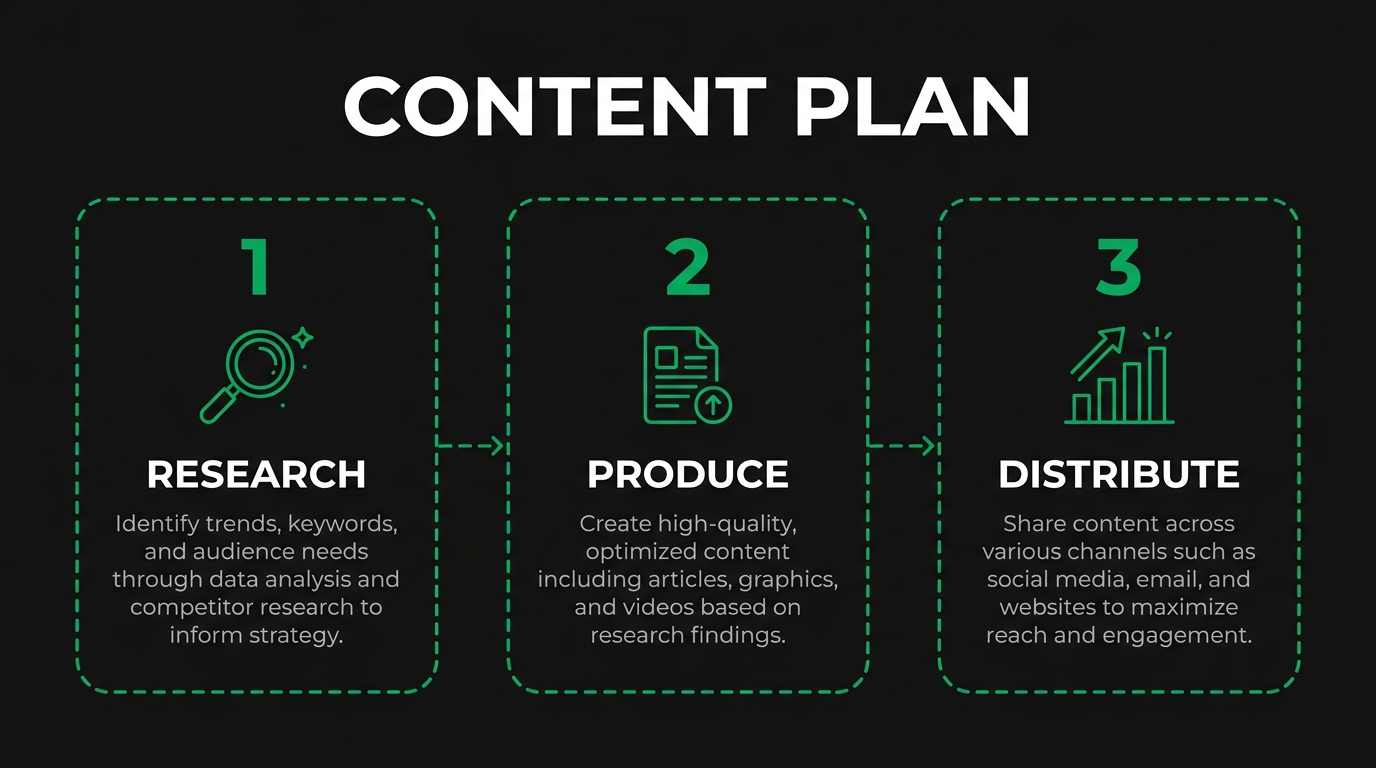
The distribution and measurement themes cover trade publications, LinkedIn, email, search, and editorial backlinks, then the KPIs and attribution methods that connect content to pipeline. The pitfalls theme closes the loop by naming the mistakes that drain budget without producing RFQs.
What Does Content Marketing Mean for B2B Manufacturers?
Content marketing for B2B manufacturers means publishing technical, procurement-grade information across processes, materials, and certifications so industrial buyers self-qualify before engaging sales. It covers how it differs from generic B2B, why procurement intent matters, and the role of technical accuracy.
How Is Manufacturing Content Marketing Different From Generic B2B Marketing?
Manufacturing content marketing is different from generic B2B marketing because the audience expects exact process names, material grades, tolerances, and certifications, not aspirational brand storytelling. A generic B2B blog ranks on emotional pain points; a manufacturer blog ranks on "5-axis CNC machining titanium AS9100" and similar procurement-intent strings.
Effective programs follow b2b manufacturing content strategy frameworks built around the procurement decision tree, not vanity traffic terms.
Why Does Procurement-Intent Content Matter for Industrial Buyers?
Procurement-intent content matters for industrial buyers because they research extensively before contacting any vendor, so the supplier whose pages appear during evaluation usually wins the shortlist.
Procurement-intent content answers the specification, qualification, and compliance questions buyers ask during evaluation, including tolerances, certifications, lead times, and defect rates. Pages built around these questions intercept buyers at the moment they shortlist suppliers, replacing cold outreach with inbound RFQs from already-qualified prospects.
What Role Does Technical Accuracy Play in Manufacturing Content?
Technical accuracy plays a gatekeeping role in manufacturing content because a single incorrect tolerance, material callout, or certification claim disqualifies the supplier in an engineer's mind.
Anchor claims in verifiable engagements drawn from examples of successful b2b seo.
Why Should Manufacturers Invest in Content Marketing to Drive B2B Leads?
Manufacturers should invest in content marketing because industrial buyers complete most of their evaluation digitally before any sales contact. The investment delivers measurable business outcomes, shortens long industrial sales cycles, and produces ROI that compounds across procurement-intent search.
What Business Outcomes Can Manufacturers Expect From Content Marketing?
Manufacturers can expect outcomes such as inbound RFQs from pre-qualified buyers, larger average deal size, shorter pre-sales conversations, and a defensible organic-search moat. Content also drives compounding domain authority, supplier shortlisting in supply chain databases, and richer first conversations with engineers who arrive informed.
Manufacturers without published technical depth rarely make that initial shortlist, regardless of how strong their actual capabilities are.
How Does Content Marketing Shorten the Industrial Sales Cycle?
Content marketing shortens the industrial sales cycle by answering specification, qualification, and compliance questions before sales engagement, removing rounds of clarifying calls and supplier surveys.
Sales then engages later, on commercial terms instead of education.
What Does Marketing ROI Look Like for Manufacturing Content Programs?
Marketing ROI for manufacturing content programs looks like organic-driven RFQs that compound month over month, with cost per qualified lead falling sharply once topical authority is established.
Track pipeline-attributed metrics and review the importance of marketing roi for manufacturers so reporting ties rankings to revenue. Disciplined programs typically reach payback within twelve to eighteen months.
Who Are the Audiences Manufacturing Content Must Reach?
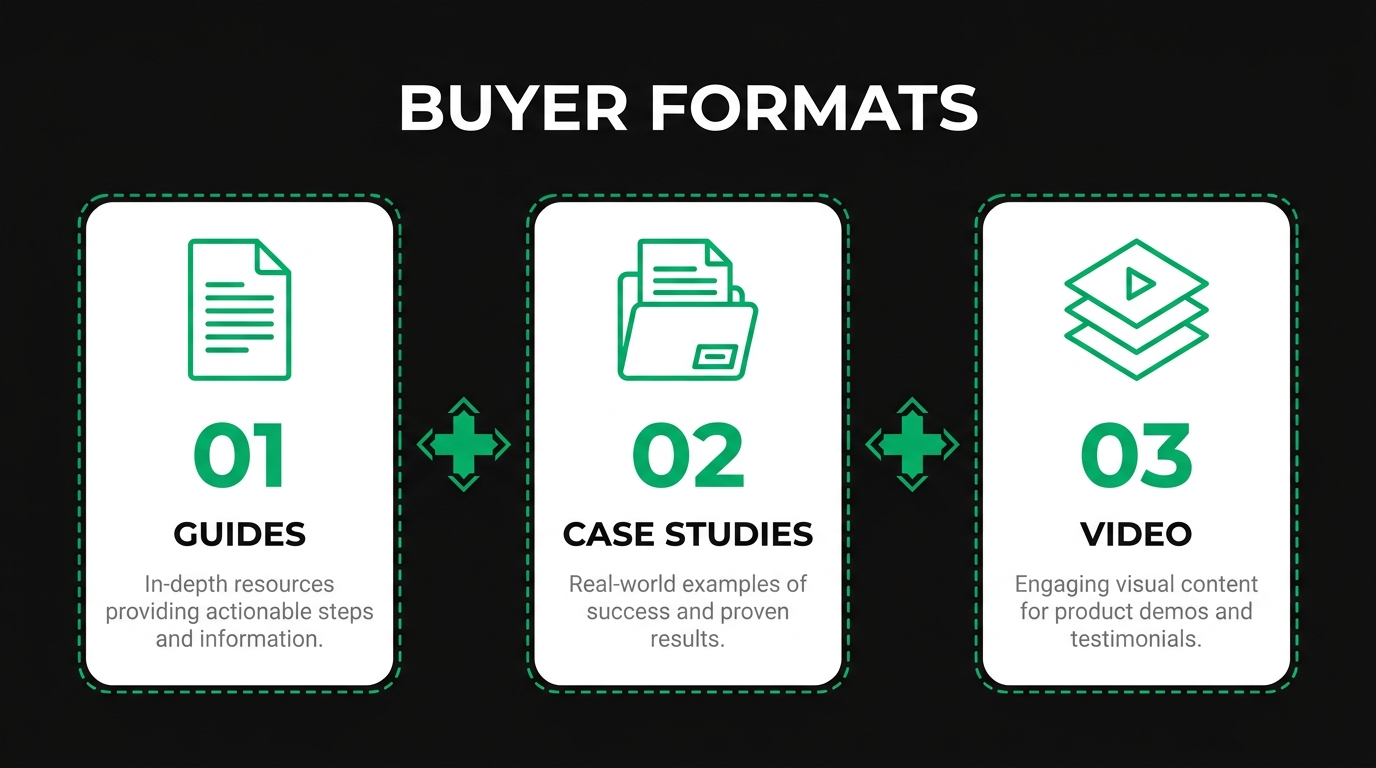
The audiences manufacturing content must reach are design engineers, purchasing managers, plant operators and maintenance teams, and supply chain directors. Each role asks different specification, commercial, operational, and strategic questions, and content must answer all four cleanly because B2B buying groups now span up to a dozen stakeholders.
What Information Do Design Engineers Need During Specification?
Design engineers need information such as material grades, geometric tolerances, surface finishes, certification scope, secondary process compatibility, and manufacturability constraints during specification. They evaluate suppliers by comparing technical content against CAD requirements before any RFQ.
Datasheets, capability matrices, design-for-manufacturing guides, and tolerance tables are the primary artifacts that convert engineering interest into shortlisting. Each engineer often advocates for the supplier whose technical pages were easiest to verify against the spec.
What Questions Do Purchasing Managers Ask During Supplier Evaluation?
Purchasing managers ask questions such as lead time, minimum order quantity, capacity, certifications, supplier financial stability, on-time delivery rate, defect PPM, and ITAR posture during supplier evaluation. They use content to pre-screen so they only invite RFQs from suppliers who already pass procurement gating.
Capability pages with concrete numbers (machines, capacity, certifications, audited quality data) outperform generic "we deliver excellence" copy and land hard when content matches the evaluation checklist.
How Do Plant Operators and Maintenance Teams Use Manufacturer Content?
Plant operators and maintenance teams use manufacturer content as troubleshooting and reorder reference, including installation manuals, replacement-part exploded diagrams, preventive-maintenance schedules, and tooling change-over guides. They influence repurchase decisions because uptime and serviceability depend on supplier documentation quality.
Plant teams still rely on official, expert-reviewed manufacturer documentation. Strong post-sale content turns a one-time order into recurring service, parts, and consumables revenue.
What Decisions Do Supply Chain Directors Make Based on Content?
Supply chain directors make decisions such as supplier consolidation, dual-sourcing strategy, tariff-driven near-shoring, certification-required vendor approvals, and risk-weighted contract terms based on content. They scan supplier pages for resilience, capacity scaling, and regulated-industry compliance.
Content that surfaces certification scope, audit dates, and traceability evidence accelerates approval and frequently determines whether a manufacturer reaches the approved-vendor list.
How Do You Build a Manufacturing Content Strategy and Topical Authority?
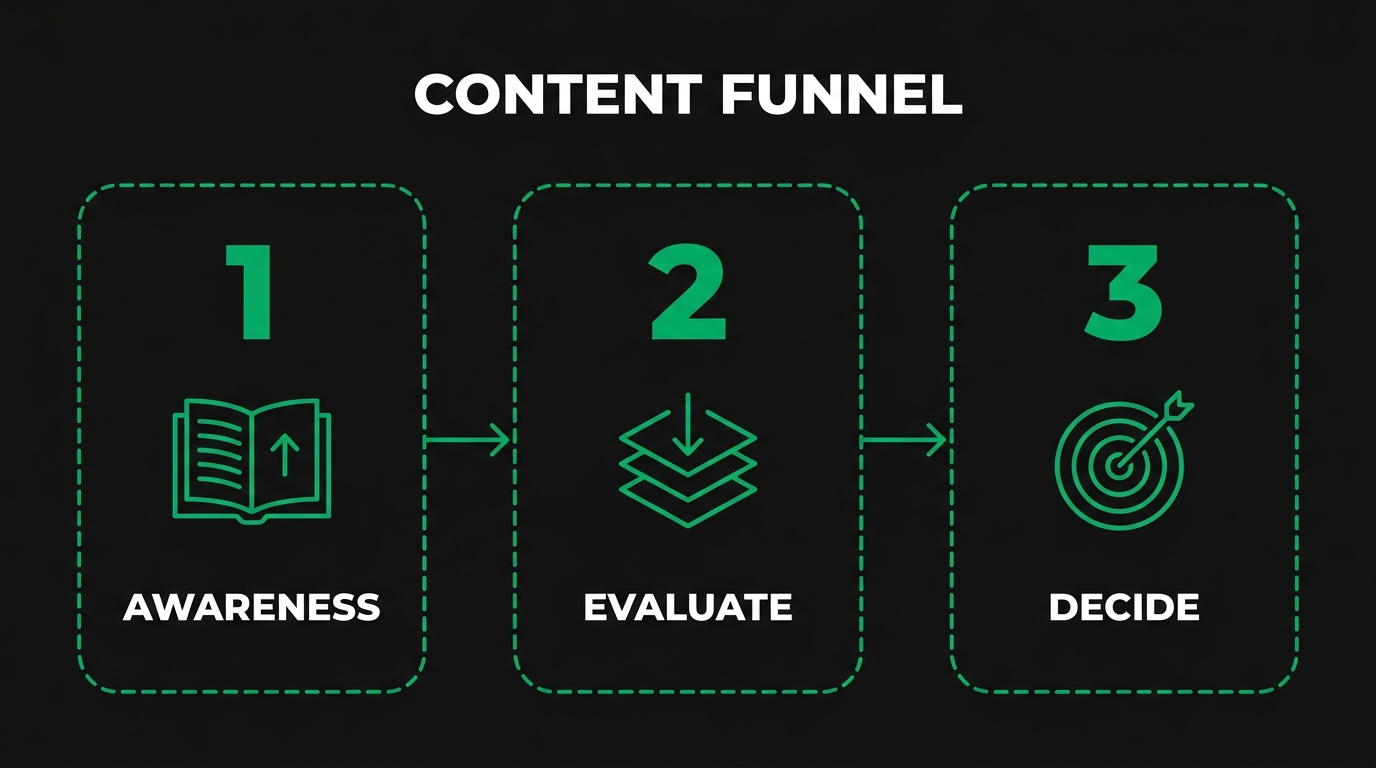
You build a manufacturing content strategy and topical authority by mapping clusters across processes, materials, and certifications, auditing existing pages for procurement gaps, setting a sustainable editorial cadence, and reinforcing the structure with disciplined internal linking. The cluster pattern wins because search engines reward complete coverage over scattered posts.
What Is Topical Authority and Why Is It Critical for Manufacturers?
Topical authority is the search engine assessment of how completely and credibly a domain covers a specific subject area, and it is critical for manufacturers because procurement queries span hundreds of process, material, and certification combinations.
Without it, a manufacturer competes one URL at a time against rivals who own the entire conversation around an industrial process.
How Do You Map Content Clusters Around Processes, Materials, and Certifications?
You map content clusters around processes, materials, and certifications by treating each capability as a pillar (5-axis CNC, injection molding, sheet-metal fabrication) and surrounding it with cluster pages covering materials run, tolerances achieved, secondary services, certifications held, industries served, and applications produced.
Vertical examples like how to market a robotics company online show how cluster mapping translates into named applications and end markets.
How Do You Audit Existing Content for Procurement-Intent Gaps?
You audit existing content for procurement-intent gaps by exporting every URL, mapping each one to a procurement-stage query (initial research, supplier evaluation, RFQ shortlist), and flagging gaps where a search exists but no page targets it.
Use manufacturing seo case studies as benchmarks for which gap categories typically yield the fastest RFQ lift once filled. The audit output should be a backlog of cluster pages prioritised by procurement value.
What Editorial Calendar Cadence Works for Industrial Content Programs?
Editorial calendar cadence that works for industrial content programs balances depth with consistency: one pillar page per quarter, two to three cluster pages per week, and a quarterly refresh of capability pages. Manufacturing content takes longer than generic blogs because it requires engineer review and verifiable data.
A steady twenty-four months of disciplined output dwarfs a single quarter of frantic posting that the engineering team cannot maintain.
Which Internal Linking Patterns Reinforce Topical Authority?
Internal linking patterns that reinforce topical authority include hub-and-spoke (pillar to clusters), cross-cluster threading (process to material to certification), funnel-forward (capability to case study to RFQ), and orphan-rescue (every page receives at least one inbound link). Anchor text should match the target page's primary procurement intent verbatim.
Strategic linking finishes the topical authority build.
What Content Formats Convert Best for Industrial and B2B Manufacturers?
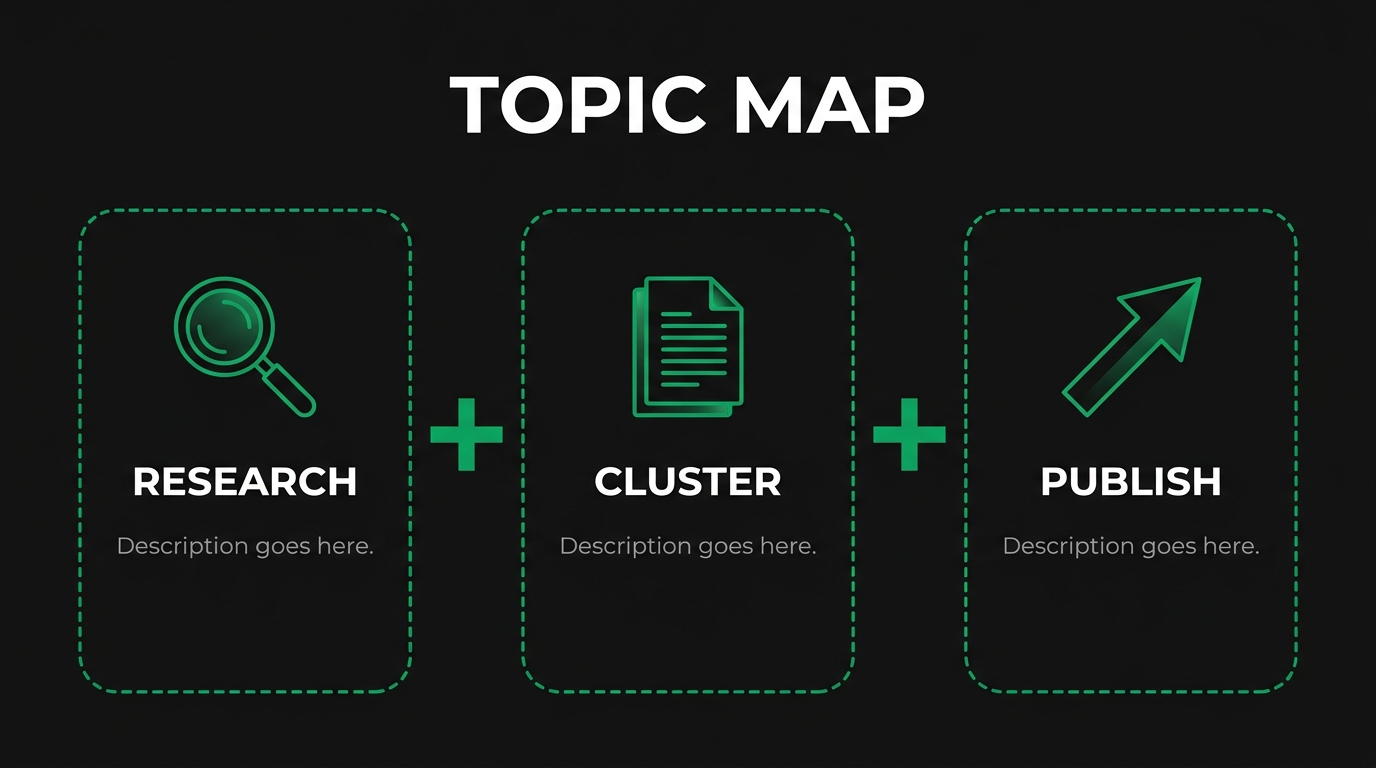
The content formats that convert best for industrial and B2B manufacturers are long-form technical guides, case studies, spec sheets and tolerance tables, webinars and demo videos, and whitepapers. Each format serves a distinct evaluation stage, and a complete program runs all five rather than over-investing in a single format.
When Should You Choose Long-Form Technical Guides Over Short Articles?
You should choose long-form technical guides over short articles when the topic requires complete coverage of a process, material, or certification, when buyers need a single authoritative reference, and when you intend to anchor a topical cluster.
Long-form also lets manufacturers embed datasheets, schemas, and FAQ blocks that satisfy multiple buyer-intent variants on one URL.
How Do Case Studies and Customer Stories Build Trust With Engineers?
Case studies and customer stories build trust with engineers by showing actual part numbers, materials, tolerances achieved, defect rates, and lead times rather than generic claims. Engineers verify supplier capability against named industries (aerospace primes, medical OEMs, automotive Tier 1) before recommending a vendor.
Case studies also serve as social proof during supplier-approval workflows, giving purchasing managers documented evidence to justify recommending a new vendor.
Why Are Spec Sheets, Material Data, and Tolerance Tables Lead Magnets?
Spec sheets, material data, and tolerance tables are lead magnets because engineers download them during active CAD work, so the gated download captures contact details at peak buying intent. They convert at higher rates than ebooks or industry reports because they are immediately useful.
Effective spec assets include material certifications, tested mechanical properties, dimensional tolerances, surface-finish specifications, and traceability lot numbers, feeding the marketing automation system with engineers actively designing parts.
How Do Webinars, Demos, and Video Walkthroughs Influence Buyers?
Webinars, demos, and video walkthroughs influence buyers by letting them watch the process in motion, which builds confidence faster than text alone.
Manufacturers who publish shop-floor walkthroughs, machine-capability demos, and recorded application webinars satisfy both the remote and self-serve thirds. Video also surfaces in Google's video carousels and YouTube search, capturing buyers who prefer watching to reading.
What Role Do Whitepapers and Application Notes Play in Lead Capture?
Whitepapers and application notes play a deep-funnel lead-capture role by addressing complex problems (material selection, regulatory compliance, design-for-assembly) that justify giving up contact information. They typically convert engineers and purchasing managers mid-evaluation, so MQLs from whitepaper downloads usually sit closer to RFQ than blog readers.
Strong application notes turn passive traffic into a working procurement pipeline.
What Topic and Content Ideas Should Manufacturers Publish to Generate Leads?
The topic and content ideas manufacturers should publish to generate leads include process and capability pages, material-specification articles, certification and compliance explainers, application and use-case stories, and comparison or buying-guide pieces. Together these themes cover every search a procurement-driven buyer makes during evaluation.
Which Process and Capability Pages Drive Procurement Searches?
Process and capability pages that drive procurement searches include exact-process pillars (5-axis CNC machining, multi-cavity injection molding, laser tube cutting), capability matrices (tonnage, build envelope, axis count), and equipment lists with brand and model. Buyers type these strings verbatim, so titles and H1s must match.
Manufacturers winning procurement search publish one capability page per machine family rather than one omnibus services page.
How Do Material-Specification Articles Capture Engineering Intent?
Material-specification articles capture engineering intent by ranking for material-grade strings (6061-T6 aluminum, PEEK, Inconel 718) paired with process verbs (machining, molding, welding, finishing). Engineers searching during specification evaluate suppliers by checking whether a vendor publishes credible content about the exact alloy or polymer in the design.
Material articles are the textbook example of that intent.
Why Do Certification and Compliance Explainers Convert Regulated Buyers?
Certification and compliance explainers convert regulated buyers because gated industries (aerospace, medical, automotive, defence) cannot purchase from non-certified suppliers, so an explainer doubles as both education and qualification proof.
Manufacturers who publish clear explainers covering scope, audit cadence, exclusions, and regulatory mapping accelerate vendor approval and pre-empt common procurement objections.
What Application and Use-Case Stories Resonate With OEM Procurement?
Application and use-case stories resonate with OEM procurement by demonstrating that the supplier has produced parts under similar conditions: same industry, similar tolerances, comparable volumes, and equivalent regulatory scope. OEM buyers reduce risk by sourcing from vendors with documented analogous experience.
These stories move a manufacturer from "unknown vendor" to "considered alternative" with a single read and double as supplier-approval social proof.
How Do Comparison and Buying-Guide Articles Move Buyers Toward RFQs?
Comparison and buying-guide articles move buyers toward RFQs by structuring the trade-offs (cost, lead time, tolerance, material compatibility) so a procurement team can justify a sourcing decision internally. Buyers searching "5-axis vs 3-axis CNC" or "injection molding vs urethane casting" are mid-evaluation and ready to shortlist.
This tightens the procurement loop.
How Do You Distribute and Promote Manufacturing Content for Maximum Reach?
You distribute and promote manufacturing content for maximum reach by targeting trade publications, activating LinkedIn and email for direct buyer reach, applying disciplined search optimisation, and earning editorial backlinks from authoritative industrial sources. Distribution multiplies the value of every article you write.
Which Trade Publications and Industry Media Should Manufacturers Target?
Trade publications and industry media manufacturers should target include Industry Week, Modern Machine Shop, Plant Engineering, Plastics News, Assembly Magazine, Automation World, Manufacturing.net, and process-specific outlets aligned with each capability. Bylines and guest articles in these publications reach engineers and procurement managers who already trust the editorial brand.
Trade-publication coverage outperforms generic PR because the audience is already procurement-relevant.
How Should Manufacturers Use LinkedIn, Email, and Sales Enablement?
Manufacturers should use LinkedIn for thought leadership and employee-driven reach, email for nurturing engineers from download to RFQ, and sales enablement to arm reps with the content buyers already engaged with.
Pair organic posts with employee advocacy because personal profiles outperform company pages. Email sequences should escalate from datasheet to webinar to capability tour, matching content depth to the prospect's stated specification activity.
What Search Optimization Practices Amplify Content Visibility?
Search optimisation practices that amplify content visibility include exact-match procurement-intent titles, schema markup (Product, FAQPage, BreadcrumbList), internal linking across the cluster, technical-SEO hygiene (Core Web Vitals, mobile, crawlability), and entity grounding through Wikipedia sameAs references.
Strong SEO multiplies content investment by ensuring every published asset can actually be discovered.
How Do You Earn Editorial Backlinks From Authoritative Industrial Sources?
You earn editorial backlinks from authoritative industrial sources by publishing original first-party data (capacity surveys, lead-time benchmarks, defect-rate studies), pitching trade-publication editors with a tight angle, contributing expert commentary to journalist queries, and partnering with non-competing industry associations on co-published research.
Sustained outreach (one or two earned placements per month) builds compounding domain authority over twelve to twenty-four months, lifting every page on the site and closing the distribution loop.
How Should Manufacturers Measure Content Marketing Lead Generation and SEO Success?
Manufacturers should measure content marketing lead generation and SEO success by tying KPIs to pipeline and revenue, attributing RFQs and closed deals back to specific content assets, using purpose-built dashboards, and diagnosing underperforming pages before deciding whether to refresh, redirect, or retire them.
Which KPIs Tie Content Performance to Pipeline and Revenue?
KPIs that tie content performance to pipeline and revenue include organic-driven RFQ count, RFQ-to-quote rate, quote-to-order rate, average order value from organic, time-to-quote, and content-influenced pipeline value. Vanity metrics (sessions, bounce rate, time on page) belong in the diagnostic layer, not the executive scorecard.
KPIs only matter if they roll up to a defendable revenue claim.
How Do You Attribute RFQs and Closed Deals to Specific Content?
You attribute RFQs and closed deals to specific content by tagging every form submission with the originating URL, capturing the multi-touch session history through marketing-automation cookies, syncing those touches into the CRM opportunity record, and reporting first-touch, last-touch, and linear attribution side by side.
Multi-touch attribution surfaces which articles assist most often, even when not the final touch before conversion, revealing the true workhorse pages.
What Tools and Dashboards Track Manufacturing Content Performance?
Tools and dashboards that track manufacturing content performance include Google Search Console for query and CTR data, Google Analytics 4 for session attribution, a CRM (HubSpot, Salesforce) for pipeline tagging, marketing automation (Pardot, Marketo, HubSpot) for sequence performance, and a rank-tracking platform for procurement-intent keyword visibility.
Strong dashboards make underperformance visible early enough to correct it before publishing budget is wasted on dead pages.
How Do You Diagnose Underperforming Content Before You Cut It?
You diagnose underperforming content before you cut it by checking ranking position, CTR versus benchmark for the position, on-page intent match, internal-link inbound count, and content depth against ranking competitors.
Cut only after refresh, redirect, and consolidation have been attempted; deletion is the last resort because it forfeits accumulated link equity.
What Pitfalls and Mistakes Should Manufacturing Content Marketers Avoid?
The pitfalls and mistakes manufacturing content marketers should avoid are publishing generic non-technical content, targeting the wrong keywords, ignoring compliance and confidentiality risks, and allowing keyword cannibalisation across overlapping process and material pages. Each pitfall quietly drains budget without producing RFQs.
Why Does Generic, Non-Technical Content Fail With Industrial Audiences?
Generic, non-technical content fails with industrial audiences because engineers and procurement managers immediately detect the absence of process specifics, certifications, tolerances, and named materials. A blog about "five tips for finding a manufacturing partner" signals the supplier has nothing technical to say, driving buyers to competitors with concrete pages.
Generic pages land invisible in search and uninspiring on click.
How Does Misaligned Keyword Targeting Waste Manufacturing Marketing Budget?
Misaligned keyword targeting wastes manufacturing marketing budget by ranking the site for traffic that will never become an RFQ, such as student research, generic industry overviews, or consumer DIY queries. Procurement-intent keywords combine process, material, certification, and sometimes industry into long-tail strings that buyers actually type.
Re-baseline the keyword list against actual RFQ language to recover budget efficiency.
What Compliance and Confidentiality Risks Need Editorial Guardrails?
Compliance and confidentiality risks that need editorial guardrails include ITAR and EAR export-control restrictions, customer NDAs, AS9100 and ISO 13485 traceability requirements, and competitive-confidentiality on proprietary processes or tooling.
Manufacturers in regulated supply chains carry direct legal exposure from careless content. Build guardrails into the editorial workflow, not bolted on after.
How Do You Avoid Cannibalization Across Process and Material Pages?
You avoid cannibalisation across process and material pages by giving each URL one primary procurement query, mapping a keyword-to-URL master document, blocking duplicate intent before the next article is commissioned, and consolidating overlapping pages with 301 redirects when overlap is discovered.
Cannibalisation drains link equity, splits ranking signals, and confuses Google. The cure is editorial discipline at commissioning, not crisis cleanup later.
How Can Manufacturing SEO Agency Help You Execute a Content Marketing Program That Drives B2B Leads?
Manufacturing SEO Agency helps manufacturers execute a content marketing program by translating procurement intent into ranked, lead-generating technical content and reporting performance against pipeline rather than vanity metrics. Manufacturing SEO Agency operates as the industrial seo agency built for B2B manufacturers, serving CNC machining, injection molding, metal fabrication, aerospace, automotive, medical, and contract manufacturing.
How Does Manufacturing SEO Agency's Content Creation Service Translate Procurement Intent Into Lead-Generating Content?
Manufacturing SEO Agency's content creation service translates procurement intent into lead-generating content by mapping keyword clusters to each stage of the procurement journey, then commissioning long-form technical content written by people who understand the difference between 3-axis and 5-axis machining, AS9100 versus ISO 13485, NADCAP, and IATF 16949.
Every article is paired with revenue-tied reporting so rankings connect back to RFQs, pipeline value, and closed revenue inside the client CRM, not keyword positions in a vacuum.
What Are the Key Takeaways From This Manufacturing Content Marketing Guide?
The key takeaways from this manufacturing content marketing guide are five operating principles. First, procurement-intent technical content beats generic B2B copy. Second, topical authority around processes and materials compounds faster than scattered blog posts. Third, multi-format programs (long-form, case studies, spec sheets, webinars, whitepapers) serve every audience in the buying group. Fourth, distribution through trade media and LinkedIn multiplies reach.