Medical device SEO is the discipline of optimizing search visibility for manufacturers selling FDA-regulated devices to procurement managers, biomedical engineers, hospital buyers, and regulatory affairs specialists. It blends procurement-intent keyword architecture, compliance-grade content, and technical on-page signals so qualified buyers find the right supplier during long capital-equipment cycles.
This guide covers foundational context for medical device SEO, buyer and keyword intelligence, content and authority frameworks, on-page and technical execution, AI search visibility, and performance measurement.
We begin with what medical device SEO is, why it differs from broader industrial SEO, and how regulatory constraints around FDA clearance, ISO 13485, and UDI shape every editorial decision.
Next we map the search audiences a device manufacturer must reach, from procurement and GPO buyers to clinical engineers and regulatory affairs specialists, along with the keyword categories and FDA classification tiers that drive qualified pipeline.
We then examine the content topics, process and material pages, clinical applications, quality evidence, and case studies that build topical authority around a device portfolio and earn procurement trust.
After that, we outline on-page structure, schema patterns, internal linking for the procurement journey, link acquisition through trade publications and clinical citations, and the technical SEO issues most common on device catalogs.
Finally, we cover how AI search visibility is reshaping LLM citations for medical brands and how manufacturers should measure SEO against RFQs, pipeline value, attribution across long sales cycles, and competitive benchmarking.
What Is Medical Device SEO and Why Does It Matter for Manufacturers?
Medical device SEO is the practice of optimizing an FDA-regulated manufacturer's website to rank for procurement-intent queries while satisfying strict compliance signals. The next subsections explain how it differs from generic industrial search, why visibility compresses long sales cycles, and which regulatory constraints shape every editorial decision.
How Does SEO Differ for Medical Device Manufacturers Compared to Other Industries?
SEO differs for medical device manufacturers compared to other industries because Google treats device content as Your-Money-Your-Life (YMYL), demanding elevated E-E-A-T, Schema.org MedicalDevice markup, and airtight factual accuracy around classification, indications, and contraindications. The Quality Management System Regulation (QMSR) now incorporates ISO 13485 into 21 CFR Part 820, aligning U.S. CGMP with the global quality standard (U.S. FDA). That regulatory posture forces tighter editorial review than you would find in general industrial seo strategies, and it borrows discipline from adjacent verticals such as what is oem seo programs where traceability and spec fidelity already dominate.
Why Is Search Visibility Critical for Medical Device Sales Cycles?
Search visibility is critical for medical device sales cycles because qualified buyers evaluate suppliers for months before a single RFQ reaches sales, and ranked content does the pre-screening. Manufacturing sales cycles average 130 days, have lengthened roughly 32 percent in recent years, and now involve 8 to 13 committee stakeholders per deal (Landbase B2B Sales Statistics). High-ranking regulatory, clinical, and specification pages become the always-on sales engineers that shape vendor shortlists long before procurement requests a quote. That asynchronous influence is why foundational what is industrial seo principles translate so directly into medical: rank early, educate the committee, compress the cycle.
What Are the Unique Compliance Constraints That Shape Medical Device SEO?
The unique compliance constraints that shape medical device SEO are FDA labeling rules, Unique Device Identification (UDI) submission requirements, ISO 13485 quality documentation, and off-label promotion risk. FDA's phased UDI rollout required Class III labelers to submit to GUDID first, followed by implantable and life-supporting devices, then Class II, and finally Class I (Wikipedia, Unique Device Identification). Every product page, claim, and schema block must mirror cleared indications exactly. Borrowing structure from proven implementing an oem seo strategy playbooks helps keep content aligned with regulated language. Compliance shapes not just what you publish but what you can optimize. That constraint set defines the audiences we target next.
Who Are the Search Audiences a Medical Device Manufacturer Must Reach?
The search audiences a medical device manufacturer must reach are procurement managers, biomedical engineers, hospital buyers and GPO contract leads, and regulatory affairs specialists. Each persona searches with a different intent and vocabulary, so content must map to their workflows, not to generic product pages.
What Are Procurement Managers Searching for When Sourcing Medical Devices?
Procurement managers are searching for sourcing medical devices using queries that combine generic device type, FDA classification tier, quality certification, and delivered cost. The FDA has established classifications for approximately 1,700 generic device types grouped into 16 medical specialties called panels, so procurement queries often include a panel descriptor plus Class I, II, or III and an ISO 13485 requirement (U.S. Food and Drug Administration). Expect terms like "Class II infusion pump ISO 13485 supplier" rather than brand names. Expert view: building category pages around those four-variable queries captures far more qualified traffic than single-product pages.
How Do Biomedical Engineers Use Search to Evaluate Device Suppliers?
Biomedical engineers use search to evaluate device suppliers by querying spec-level technical language such as bench test data, biocompatibility references, sterilization method, and integration protocols. They assume marketing prose is unreliable and look for datasheets, validation reports, white papers, and peer-reviewed citations that a website links to transparently. Expert view: publishing a downloadable specification library under a single hub URL ranks for dozens of long-tail engineering queries and signals technical depth to both search engines and hospital biomeds.
What Queries Do Hospital Buyers and Group Purchasing Organizations Use?
Hospital buyers and GPOs use queries focused on contract eligibility, total delivered cost, consolidated service levels, and clinical evidence. About 97 percent of hospitals have an affiliated GPO and 96 to 98 percent use at least one GPO contract, which accounts for roughly 70 percent of non-labor purchases (AHRMM). Their common searches include "GPO awarded supplier," "on-contract pricing tier," and specific GPO names alongside device categories. Content should name eligible contracts, list awarded SKUs, and describe implementation support so procurement can shortlist without a phone call.
How Do Regulatory Affairs Specialists Search for Compliance Information?
Regulatory affairs specialists search for compliance information using tightly scoped queries tied to submission pathways, guidance documents, predicate device records, and post-market surveillance obligations. They look for 510(k) summaries, PMA dossiers, ISO 13485 certificate scopes, EU MDR technical documentation templates, and UDI submission workflows. Content that surfaces these artifacts, plus clear version histories and last-reviewed dates, becomes a trusted reference across the committee. Those four audiences shape every keyword decision that follows.
What Keyword Categories Drive Qualified Traffic to Medical Device Sites?
The keyword categories that drive qualified traffic to medical device sites are procurement-intent terms, FDA-classification-tier queries, long-tail specification phrases, and certification modifiers. These four buckets align to how buying committees actually search across evaluation stages.
Which Procurement-Intent Keywords Convert Best for Medical Device Manufacturers?
Procurement-intent keywords that convert best for medical device manufacturers are multi-modifier phrases combining device type, regulatory class, quality certification, and application setting. Long-tail keywords convert at roughly 2.5 times the rate of head terms, peaking near 1.94 percent for six-word phrases compared with 0.17 percent for single words (Neil Patel Marketing Statistics). That curve maps directly to procurement behavior: a buyer searching "Class II single-use laparoscopic trocar ISO 13485 supplier" is vastly closer to issuing an RFQ than one searching "trocar." Expert view: prioritize four-to-six-word combinations over vanity head terms.
How Should Manufacturers Map Keywords to FDA Classification Tiers?
Manufacturers should map keywords to FDA classification tiers by grouping query clusters to Class I, Class II, and Class III pages that mirror risk, review pathway, and buyer concerns. Class I pages target ease-of-procurement language and bulk contracting. Class II pages emphasize 510(k) clearance, predicate devices, and biocompatibility. Class III pages lead with PMA approvals, clinical study summaries, and post-market surveillance. This tier-aligned architecture prevents cannibalization and signals taxonomic depth that Google rewards with Knowledge Graph associations.
What Long-Tail Specification Queries Should Be Targeted?
The long-tail specification queries that should be targeted are dimension, material, tolerance, and regulatory modifier combinations buyers type when a spec sheet is already open on their desk. Examples include "titanium grade 23 orthopedic screw 4.5mm ASTM F136" and "single-use silicone catheter 14Fr ISO 10993-5 cytotoxicity." Publishing one authoritative spec page per SKU family, mirrored into structured data, compounds long-tail capture. See complementary seo strategies for manufacturing specifications for a full taxonomy framework. Expert view: each spec page should open with a schema-ready definition.
How Do Certification Keywords (ISO 13485, FDA 510(k)) Influence Rankings?
Certification keywords like ISO 13485 and FDA 510(k) influence rankings by acting as trust-cluster modifiers that both raise topical relevance and gate inclusion on procurement shortlists. Pages that weave certificate numbers, K-numbers, audit dates, and notified body identifiers into semantic content earn richer entity associations in Google's systems. They also match how regulatory-aware searchers filter results. Expert view: pair certification keywords with device-type pages rather than hiding them on an about page. These keyword categories power the topical authority plan that follows.
What Content Topics Build Topical Authority for Medical Device Brands?
The content topics that build topical authority for medical device brands are manufacturing processes and materials, clinical application pages, regulatory and quality content, and evidence assets like case studies and white papers. Together they cover every procurement question a committee raises.
What Process and Material Topics Should a Medical Device Hub Cover?
The process and material topics a medical device hub should cover are machining methods, polymer and metal selection, sterilization pathways, coatings, and additive workflows. Hubs should explain injection molding tolerances, CNC Swiss turning for implantables, PEEK and titanium grade selection, EtO and gamma sterilization tradeoffs, and emerging processes such as what is additive manufacturing for patient-specific instruments. Each topic becomes a cluster of long-tail pages cross-linked under the device-type pillar. Expert view: process pages outrank product pages on mid-funnel searches because engineers want the "how," not the brochure.
How Should Clinical Application Pages Be Structured?
Clinical application pages should be structured around indication, patient population, procedure workflow, supporting evidence, and regulatory status. Because a PMA application can exceed thousands of pages and FDA commits to deciding 90 percent of non-panel PMAs within 180 days, clinical pages should summarize that dossier in structured, citable sections rather than burying it in PDFs (U.S. FDA, PMA Review Process). Use MedicalIndication and MedicalCondition schema, a consistent H2 pattern, and links to peer-reviewed studies. Expert view: pages that echo hospital IRB language earn clinical engagement that marketing copy cannot.
What Regulatory and Quality Content Earns Procurement Trust?
The regulatory and quality content that earns procurement trust is certificate documentation, audit history, post-market surveillance summaries, and named signer bylines from qualified professionals. Google's Search Quality Rater Guidelines explicitly state that "Trust is the most important member of the E-E-A-T family," and YMYL health content requires stronger signals from qualified professionals (Google Search Central). Publish quality manuals, CAPA overviews, ISO 13485 scope statements, and author pages for your regulatory affairs lead. Expert view: trust content should mirror what auditors, not marketers, consider complete.
How Do Case Studies and White Papers Support Topical Depth?
Case studies and white papers support topical depth by tying process, material, and clinical claims to verifiable outcomes that search engines treat as first-party evidence. Each case study should anchor a device-type page and link upward to the cluster, while white papers target specific engineering or regulatory questions that deserve longer treatment. For a foundational playbook, see basic seo strategies for manufacturers. Expert view: two well-sourced case studies outperform ten promotional blog posts. These topic clusters set up the on-page structure we tackle next.
How Should Medical Device Manufacturers Structure On-Page SEO?
Medical device manufacturers should structure on-page SEO around spec-optimized product pages, medical schema markup, procurement-aligned internal linking, and buyer-centric page experience. Each element reinforces clinical credibility while earning rich results and crawl efficiency.
How Should Product Pages Be Optimized for Device Specifications?
Product pages should be optimized for device specifications by leading with a schema-ready definition, listing cleared indications, and grouping attributes in structured tables buyers can scan in seconds. Place UDI, catalog number, classification, predicate 510(k) or PMA number, biocompatibility references, and sterilization method above the fold. Link laterally to process pages and upward to the device-type pillar. For broader patterns, review how leading industrial seo strategies handle multi-variant catalogs. Expert view: one canonical spec URL per SKU family prevents duplicate dilution.
What Schema Markup Patterns Apply to Medical Device Pages?
The schema markup patterns that apply to medical device pages are MedicalDevice, MedicalIndication, Product, Organization, and BreadcrumbList, combined with ccTLD or hreflang signals for multi-region catalogs. Google relies on country-code top-level domain names as a strong country-targeting signal and recommends hreflang or sitemaps to tie pages to locations or languages (Google Search Central). Layer FAQPage schema on buyer-question pages, and nest MedicalDevice inside Product so commerce and medical types both resolve. Expert view: clean schema outranks pretty design for AI retrieval.
How Should Internal Linking Reflect the Procurement Journey?
Internal linking should reflect the procurement journey by threading awareness content (device definitions, process explainers) down into consideration assets (spec pages, comparison pages) and finally into decision pages (RFQ forms, GPO contract pages). Use descriptive, noun-phrase anchors that mirror buyer queries rather than generic "learn more" labels. Topic hubs should link back and across at every tier so crawl equity concentrates on money pages. Expert view: map links to sales stages, not to navigation preferences.
What Page Experience Signals Matter Most for Medical Device Buyers?
The page experience signals that matter most for medical device buyers are fast LCP on spec-heavy pages, stable CLS under image-rich product shots, and responsive forms that work on hospital tablets and mobile devices. Pages must render regulatory tables without layout shift, keep primary CTAs visible without scroll on 4G, and preserve spec tables across viewports. Expert view: a decision-ready buyer will abandon a slow spec page within seconds and shortlist the next supplier. On-page precision sets up the off-page authority work that follows.
How Can Medical Device Manufacturers Earn Authoritative Backlinks?
Medical device manufacturers can earn authoritative backlinks through trade publication features, peer-reviewed clinical citations, industry association and standards-body links, and disciplined editorial press outreach. Each channel carries different trust weight and belongs on a coordinated calendar.
Which Trade Publications Drive Quality Referrals to Medical Device Sites?
The trade publications that drive quality referrals to medical device sites are specialty outlets such as Medical Device and Diagnostic Industry, MedTech Dive, Medical Design and Outsourcing, Drug Delivery Business News, and Mass Device. Editorial coverage from these titles carries both link equity and persona fit, because biomedical engineers and regulatory leads already read them. Pitches should lead with novel data, regulatory milestones, or clinical outcomes rather than product launches. Expert view: a single bylined technical article in a specialty outlet outperforms ten generic press release placements for long-term authority.
How Do Clinical Studies and Peer-Reviewed Citations Influence Authority?
Clinical studies and peer-reviewed citations influence authority by attaching academic evidence to the brand entity, strengthening E-E-A-T for YMYL pages and enriching the Knowledge Graph. Citations from PubMed-indexed journals, cooperative registry data, and IRB-approved clinical outcomes signal that the device has been examined by independent experts. Reciprocally, the brand should link to those studies from spec and application pages using proper attribution. Expert view: sponsoring rigorous post-market studies yields durable backlinks that promotional content cannot match.
What Role Do Industry Associations and Standards Bodies Play in Link Building?
Industry associations and standards bodies play an entity-authority role in link building because their domains carry recognized trust that transfers to member pages. Target association directories and standards-body member lists, such as AdvaMed, MDMA, AAMI, ISO technical committees, and specialty societies. Inclusion confirms legitimacy to procurement, engineering, and regulatory searchers at once. Expert view: pay for memberships that produce a live, indexed listing; avoid "members" lists that hide behind JavaScript or block crawlers.
How Should Press Releases and Editorial Mentions Be Pursued?
Press releases and editorial mentions should be pursued selectively around material events: 510(k) clearance, PMA approval, clinical trial milestones, CE mark, major distribution agreements, and new manufacturing investments. Write releases with schema-friendly structure, embedded quotes from named clinical or regulatory leaders, and links to underlying documentation rather than marketing pages. Expert view: one well-sourced release about a clearance outperforms a quarterly corporate cadence. These authority channels compound the technical foundation we cover next.
How Should Technical SEO Be Approached for Medical Device Websites?
Technical SEO should be approached for medical device websites by prioritizing crawl efficiency on large catalogs, disciplined internationalization, Core Web Vitals compliance, and clean canonicalization across SKU variants. Comparable rigor from heavy industry seo best practices translates directly to regulated device portfolios.
What Crawl and Indexation Issues Commonly Affect Device Manufacturers?
The crawl and indexation issues that commonly affect device manufacturers are orphaned spec PDFs, parameter-heavy filter URLs, thin variant pages, and gated regulatory documents crawlers cannot reach. Orphaned PDFs waste crawl budget and fragment authority, while faceted navigation generates near-infinite URL combinations that dilute ranking signals. Use robots controls, canonical tags, and internal links to consolidate equity onto the canonical spec URL. Expert view: run a quarterly crawl audit tied to the catalog release cycle, not to marketing campaigns.
How Should Multilingual and Multi-Region Sites Be Configured?
Multilingual and multi-region sites should be configured with consistent hreflang annotations, region-specific ccTLDs or subdirectories, and localized schema signals. Each region's content must reflect local regulatory status, such as FDA clearance in the United States versus CE mark or MDR certification in the EU, so searchers never land on a page with off-market claims. Maintain a single canonical definition per language and avoid mixing jurisdictions on one URL. Expert view: region-specific QMS and clinical references must match the local regulator's vocabulary, not translated marketing copy.
What Page Speed and Core Web Vitals Standards Apply?
The page speed and Core Web Vitals standards that apply to medical device sites are Google's thresholds for LCP, INP, and CLS, measured on the 75th percentile of real users. Analysis of roughly 3 million web pages found that only 39 percent passed Core Web Vitals metrics, while 61 percent fell below the threshold (Advanced Web Ranking). Device catalogs with heavy spec tables and imagery consistently sit in the lagging majority. Expert view: target LCP under 2.0 seconds on mobile because hospital procurement often browses on cellular.
How Should Duplicate Catalog Content Be Handled?
Duplicate catalog content should be handled with explicit canonicals, consolidated spec hubs, and noindex on near-identical variant pages that exist mainly for internal SKU tracking. Device catalogs routinely generate duplicate descriptions across size, material, and sterile-versus-bulk variants. Group truly distinct clinical differences under unique URLs and fold the rest into a single canonical page with variant tables. Expert view: one strong spec URL concentrates link equity better than a dozen thin duplicates. Technical discipline feeds directly into AI search visibility next.
How Does AI Search Visibility Change Medical Device SEO?
AI search visibility changes medical device SEO by shifting discovery from ranked URLs to LLM-cited entities, demanding stronger brand signals, cleaner schema, and citation-worthy content formats. Buyers now ask conversational assistants before they open Google, so coverage within generative answers has become its own channel.
Why Are LLM Citations Becoming a Core Visibility Channel?
LLM citations are becoming a core visibility channel because buying committees increasingly ask ChatGPT, Perplexity, and Gemini for shortlists before visiting supplier websites. Reddit leads LLM citations at 40.1 percent and Wikipedia at 26.3 percent, while brand search volume shows a 0.334 correlation with LLM citations, a stronger predictor than traditional backlinks (The Digital Bloom, AI Visibility Report). Medical device brands that never appear inside AI answers get silently deleted from the consideration set. Expert view: every traditional SEO asset should now be audited for LLM retrievability.
What Entity Signals Help Brands Appear in AI-Generated Answers?
The entity signals that help brands appear in AI-generated answers are consistent brand name usage, a clear Wikipedia or Wikidata record, sameAs links across authoritative profiles, named founders and clinical leaders, and machine-readable product catalogs. LLMs reconcile the brand across sources, so mismatched names, inconsistent taglines, or absent regulatory credentials weaken the entity. Expert view: align brand citations exactly across AdvaMed, FDA establishment registration, ISO certificate scopes, and LinkedIn company pages so language models collapse them into one confident entity.
How Should Schema and Structured Data Support AI Retrieval?
Schema and structured data should support AI retrieval by declaring entity types, relationships, and regulatory attributes in JSON-LD that generative systems can ingest without scraping ambiguous prose. Nest MedicalDevice within Product, add MedicalIndication and MedicalCondition for application pages, and use Organization with sameAs pointing to authoritative profiles. Include catalog numbers, UDI, classification, and manufacturer identity as explicit properties. Expert view: clean, exhaustive schema is effectively a machine-readable spec sheet that LLMs treat as canonical.
What Content Formats Are Most Cited by Generative Search Engines?
The content formats most cited by generative search engines are definitional explainers, question-and-answer content, comparison tables, step-by-step how-tos, and citation-rich technical briefs. Generative systems favor passages that directly answer a query in the first sentence and carry verifiable sources. Publish short definition blocks, FAQPage schema, side-by-side comparisons, and authored technical articles with author schema. Expert view: pages designed for a featured snippet are structurally the same pages LLMs prefer to quote. AI visibility makes rigorous measurement essential, as we outline next.
How Should Medical Device Manufacturers Measure SEO Performance?
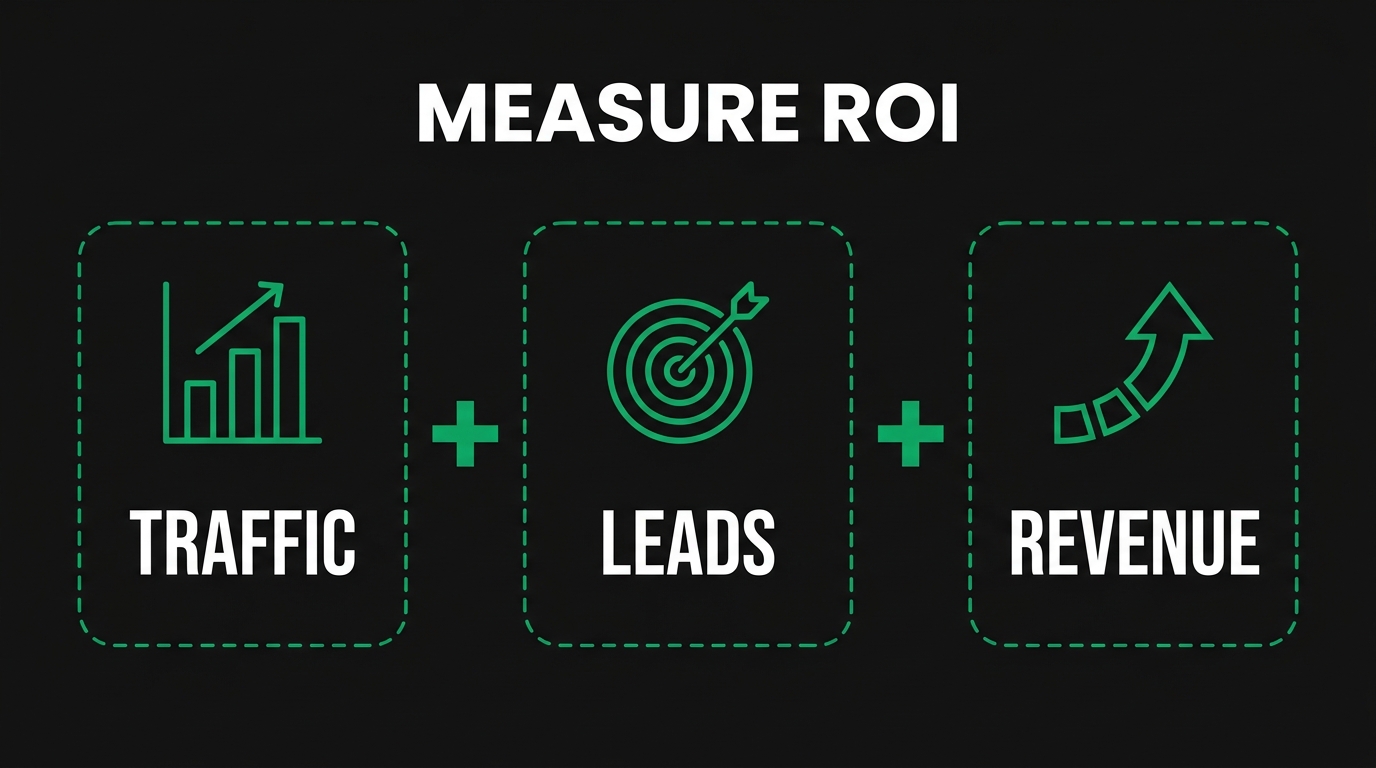
Medical device manufacturers should measure SEO performance with pipeline-aligned KPIs, procurement-focused reporting, long-cycle attribution models, and structured competitive benchmarking. Vanity rankings alone will never convince a CFO; revenue-linked metrics do.
Which KPIs Tie SEO to RFQs and Pipeline Value?
The KPIs that tie SEO to RFQs and pipeline value are organic RFQ volume, RFQ-to-opportunity conversion rate, pipeline value from organic-sourced deals, blended cost per qualified opportunity, and LLM citation share of voice. Track each by device category, FDA class, and target persona so optimization decisions can be made at the cluster level. Expert view: publishing raw ranking screenshots is a losing report format; instead, report revenue contribution by hub, then support with the ranking evidence.
How Should Reporting Link Rankings to Procurement Outcomes?
Reporting should link rankings to procurement outcomes by mapping every ranked URL to a procurement stage: awareness hubs, consideration specs, or decision contract pages. Dashboards should show the flow from keyword impressions to page sessions, to RFQ conversions, to opportunity value, to closed-won revenue. Include LLM retrieval share and AI answer citation counts in the same view. Expert view: a report that a commercial VP can act on shows pipeline movement first and ranking shifts second.
What Attribution Models Work for Long Medical Device Sales Cycles?
The attribution models that work for long medical device sales cycles are position-based (W-shaped or U-shaped) and data-driven multi-touch models with a look-back window extended to cover 180 days or longer. First-touch-only attribution undercounts SEO because it ignores committee research across months, while last-touch undervalues the early specification pages buyers actually cite. Expert view: combine platform attribution with self-reported source capture on RFQ forms so committees can name the page that sealed the shortlist.
How Should Competitive Benchmarking Be Conducted?
Competitive benchmarking should be conducted by tracking share of voice for clearly defined procurement queries, monitoring LLM citation share for those same queries, auditing competitors' schema and trust content depth, and mapping linking domains to persona relevance rather than raw counts. Benchmark quarterly against a fixed peer set per device vertical. Expert view: benchmarking should surface gaps on specific personas, not chase competitors' vanity traffic. Disciplined measurement sets up the bridge to execution partners.
How Should Medical Device Manufacturers Approach SEO With Manufacturing SEO Agency?
Medical device manufacturers should approach SEO with Manufacturing SEO Agency by treating the engagement as a procurement-intent program, not a generic content retainer. The next subsections describe exactly what Manufacturing SEO Agency delivers and summarize the takeaways from this guide.
Can Manufacturing SEO Agency Help With Medical Device SEO Content Strategy?
Yes, Manufacturing SEO Agency can help with medical device SEO content strategy. Manufacturing SEO Agency is an industrial-only SEO firm serving B2B manufacturers across regulated verticals, including medical devices, with services spanning manufacturing audits, procurement-intent keyword architecture, topical authority buildout, PR-grade editorial link building, AI search visibility engineering, technical SEO remediation, and revenue-tied reporting. Manufacturing SEO Agency works directly with engineers, purchasing managers, and supply chain directors, and ties rankings to actual RFQs, pipeline value, and closed revenue. For a broader overview of the firm's approach, see Manufacturing SEO Agency, the manufacturing seo experts behind these frameworks.
What Are the Key Takeaways About Medical Device SEO Content Ideas and Strategies We Covered?
The key takeaways about medical device SEO content ideas and strategies we covered are that compliance shapes every editorial decision, four buyer personas drive keyword strategy, and topical authority is earned through process, clinical, regulatory, and evidence content.
- Compliance and YMYL signals are non-negotiable inputs to every page.
- Procurement-intent, classification-tier, long-tail specification, and certification keywords form the core architecture.
- Process, clinical application, regulatory, and case study content build topical authority.
- Product pages, schema, internal linking, and page experience must reflect the buying journey.
- LLM citations, entity consistency, and clean structured data now rank alongside traditional SEO.
- Report revenue, not rankings, and attribute across the full 180-plus day cycle.