Heavy industry SEO is the practice of optimizing websites for manufacturers of heavy equipment, industrial machinery, construction vehicles, and large-scale production systems so that engineers, procurement managers, and supply chain directors can find them during rigorous, specification-led buying cycles. It differs from general B2B SEO because procurement intent, certification gating, and technical depth carry more weight than broad commercial keywords.
This guide covers the distinct nature of heavy industry SEO, keyword research for industrial buyers, website structure and technical performance, content strategy for topical authority, authoritative link building, AI search visibility, and revenue-tied performance measurement.
The first theme defines heavy industry SEO, identifies the buyers searching online, and explains why traditional SEO tactics fall short for heavy equipment brands. Keyword research for industrial manufacturers centers on process, material, and certification clusters, long-tail RFQ queries, and buyer-behavior tools that surface real procurement demand.
Website structure and technical SEO focus on site architecture for process, material, and application pages, schema markup, faceted navigation, Core Web Vitals, and mobile optimization for field engineers. Content strategy builds topical authority through topical maps, long-form technical formats, case studies, whitepapers, and engineering guides that earn procurement trust.
Link building and AI visibility cover trade publications, standards bodies, digital PR, entity signals, schema sameAs references, and LLM citation patterns. Performance measurement ties RFQs, pipeline value, and CRM integrations to organic rankings so SEO outcomes map directly to revenue.
What Is Heavy Industry SEO and Why Does It Differ from Standard B2B SEO?
Heavy industry SEO optimizes websites for manufacturers of heavy equipment and industrial systems. It differs from standard B2B SEO because intent centers on specs, certifications, and long procurement cycles. Sections below cover buyer identification, intent signals, and why traditional tactics underperform.
How Does Heavy Industry SEO Differ from General Manufacturing SEO?
Heavy industry SEO differs from general manufacturing SEO in three ways: target queries skew toward high-ton, high-horsepower, and load-rated equipment; page templates must carry dense specification data; and buyers evaluate capital purchases, not consumable inputs.
Layering basic seo strategies for factories and a competitive seo analysis manufacturing industry process helps teams benchmark depth against rivals before committing budget.
Who Are the Buyers Searching for Heavy Industry Suppliers Online?
The buyers searching for heavy industry suppliers online are mechanical engineers, plant managers, maintenance directors, procurement officers, and supply chain leads inside OEMs, EPC firms, mining operators, utilities, and tier-1 suppliers.
Search queries from these buyers carry strong technical vocabulary: tonnage ratings, material grades, duty cycles, ingress ratings, and certification acronyms.
What Procurement Intent Signals Define Heavy Industry Search Queries?
Procurement intent signals in heavy industry search queries include spec modifiers, RFQ phrasing, and certification qualifiers. There are four signals that reliably indicate procurement intent: capacity terms (such as "2000 ton", "500 hp", "class 8"), material qualifiers (such as "316L stainless", "AR450 plate"), compliance acronyms (such as "ASME", "API 6A", "CE"), and transactional verbs (such as "RFQ", "quote", "datasheet").
Why Do Traditional SEO Tactics Underperform for Heavy Equipment Manufacturers?
Traditional SEO tactics underperform for heavy equipment manufacturers because generic content pipelines ignore specification density, certification gating, and low-volume long-tail queries that drive RFQs. Blog-only strategies and consumer-style keyword research fail to match how engineers search. Heavy equipment buyers expect structured specification tables, datasheets, and compliance statements on the landing page itself. Underinvestment in technical templates and internal linking across process, material, and application pages is the most common gap before engagement. Manufacturing SEO Agency closes those gaps through a manufacturing audit and procurement-intent keyword architecture tailored to process, material, and certification combinations. This bridges into keyword research methods next.
What Keyword Research Methods Work Best for Heavy Industrial Manufacturers?
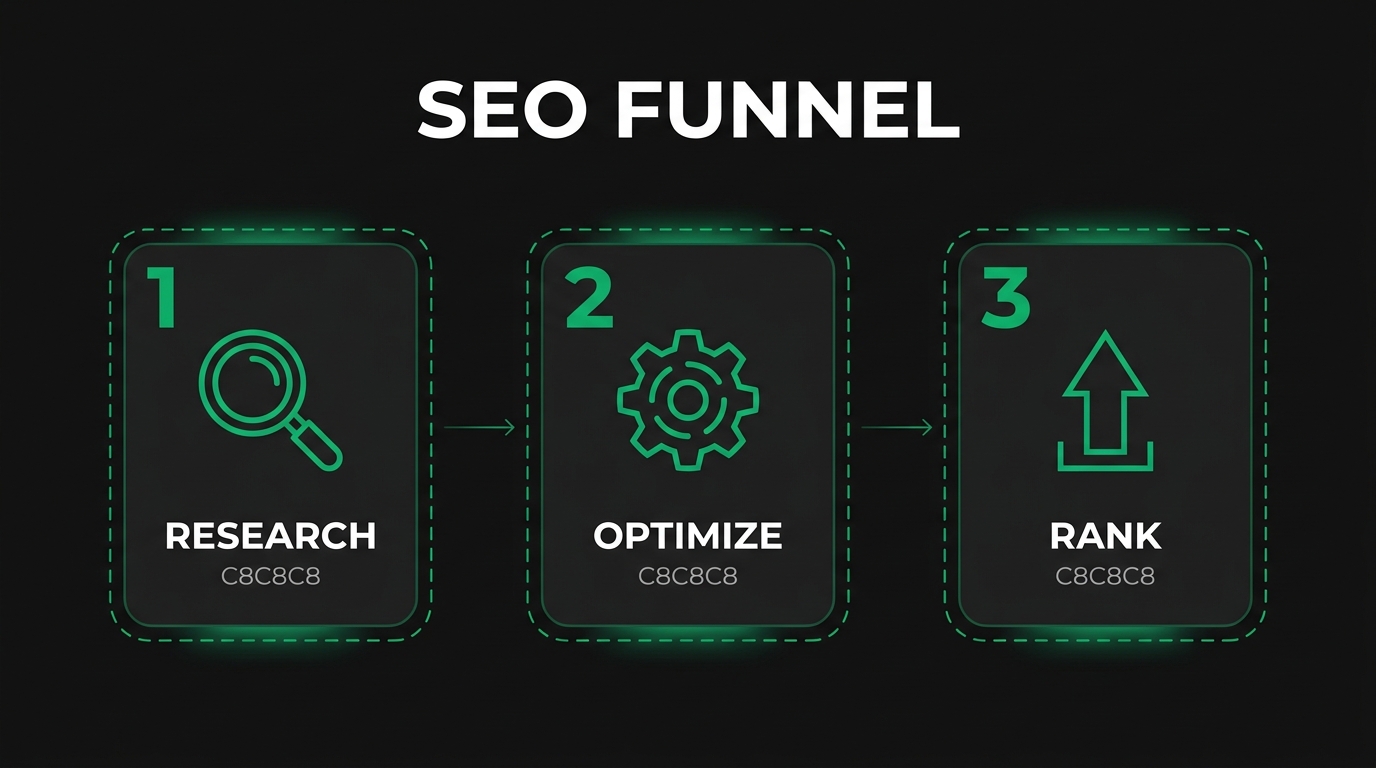
The keyword research methods that work best for heavy industrial manufacturers are cluster mapping by process, material, and certification; long-tail RFQ query mining; keyword gap analysis against domain-authoritative competitors; and buyer-behavior tool triangulation. Sections below break each method down.
How Do You Map Process, Material, and Certification Keyword Clusters?
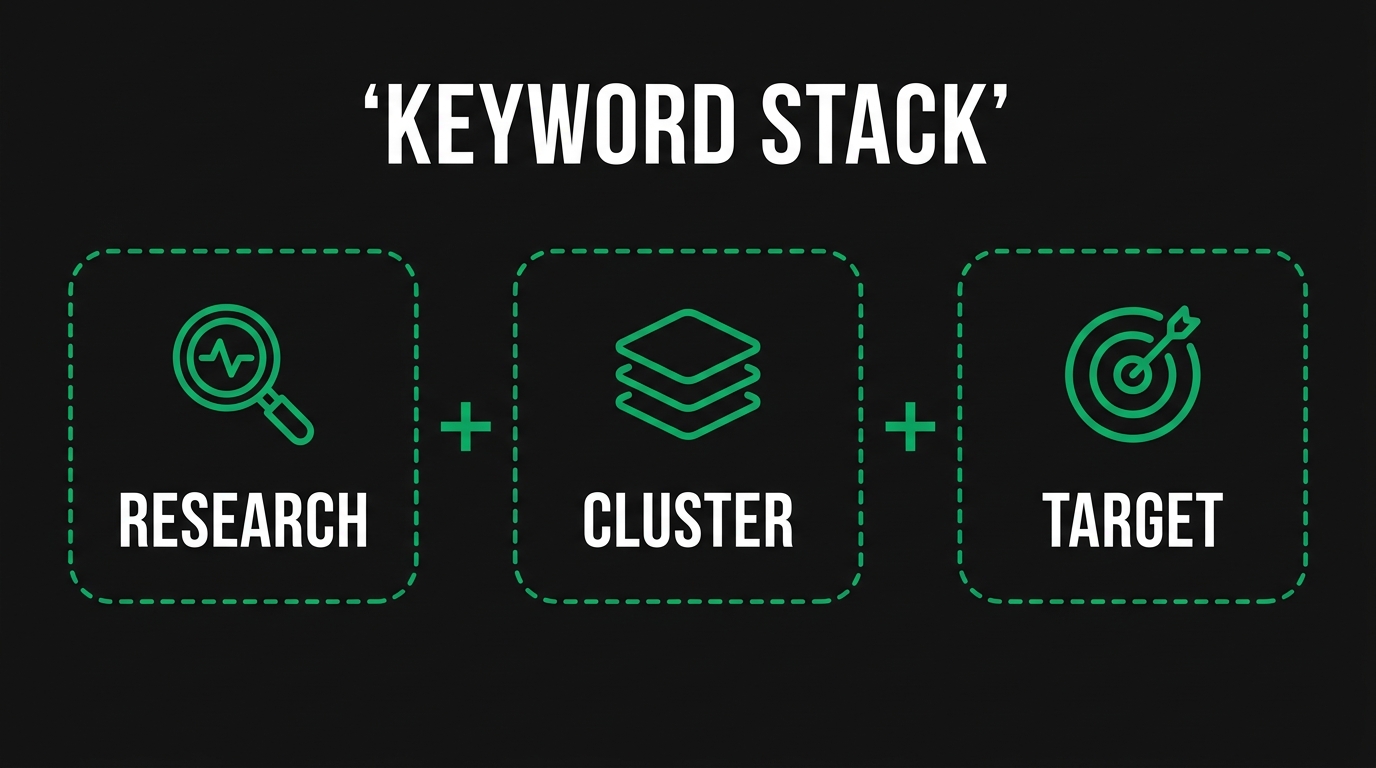
You map process, material, and certification keyword clusters by building a three-axis matrix where each row is a manufacturing process, each column is a material grade, and each cell is a qualifying certification. For a heavy equipment foundry, a single cell might be "centrifugal casting x Inconel 718 x AMS 5663". That specificity creates unique landing pages with minimal cannibalization. Process clusters anchor the hub page, material pages expand the axis, and certification pages close the procurement loop. Pair this clustering with proven industrial seo strategies to prioritize the highest-demand combinations first, since not every cell will have search volume.
Which Long-Tail Procurement Queries Drive Qualified RFQ Traffic?
The long-tail procurement queries that drive qualified RFQ traffic combine a process or product noun with a specification, a location, and a transactional verb. Examples: "2000 ton hydraulic press manufacturer Ohio RFQ", "API 6A ball valve supplier Texas datasheet", "ASME coded pressure vessel fabricator quote". These queries are low-volume and high-intent; three to five of them can produce more pipeline than a generic head term.
How Can You Identify Keyword Gaps in Heavy Equipment Niches?
You can identify keyword gaps in heavy equipment niches by running content-gap analysis against three to five direct competitors, filtering for procurement-intent modifiers, and cross-referencing the result with internal sales-enablement materials to find unaddressed buyer questions.
What Tools Surface Industrial Buyer Search Behavior Most Accurately?
The tools that surface industrial buyer search behavior most accurately combine Google Search Console with specialist platforms. Useful tools include: Google Search Console for query-level impression and position data, Ahrefs and Semrush for competitor keyword overlap, Google Trends for demand seasonality, and Thomas Network or GlobalSpec analytics for direct industrial buyer behavior.
Triangulating at least two tools avoids overweighting any single dataset. This groundwork feeds site architecture decisions covered next.
How Should You Structure a Heavy Industry Website for Maximum Search Visibility?
You should structure a heavy industry website around four interlocking hubs: processes, materials, applications, and certifications. Each hub is supported by individual spec, catalog, and case study pages. The sections below cover architecture, catalog organization, schema selection, and internal linking patterns.
What Site Architecture Supports Process, Material, and Application Pages?
The site architecture that supports process, material, and application pages is a shallow, four-hub topical structure with strict parent-child URL paths. Recommended top-level hubs are /processes, /materials, /applications, and /certifications, each with dedicated child pages for individual processes, grades, use cases, and standards. Depth should not exceed three levels from the homepage to any procurement landing page.
A well-scoped industrial seo audit will surface where the current architecture is hiding revenue-critical pages under too much depth.
How Should Product Catalogs and Spec Sheets Be Organized for Crawlers?
Product catalogs and spec sheets should be organized for crawlers as individual HTML pages, one per SKU or product family, with the specification table rendered in on-page HTML rather than gated PDF. Each page needs a descriptive URL, a unique title tag containing model number and primary spec, an above-the-fold summary table, and a downloadable datasheet as a secondary resource.
Server-render the list pages, paginate predictably, and include last-updated stamps so crawlers revisit frequently.
Which Schema Markup Types Best Serve Heavy Equipment Manufacturers?
The schema markup types that best serve heavy equipment manufacturers are Product, Organization, Manufacturer, BreadcrumbList, FAQPage, and HowTo, layered with sameAs references to standards bodies and trade associations.
For heavy equipment, Product schema should include modelNumber, material, and weight; Organization schema should include sameAs entries pointing to OEM directories, ASME, and ISO certification pages. JSON-LD is the preferred serialization and avoids conflict with visual layout.
How Do You Optimize Internal Linking for Topical Authority in Heavy Industry?
You optimize internal linking for topical authority in heavy industry by connecting every spec page to its parent process hub, sibling material page, and at least one application case study. Use exact-match spec anchors for intra-hub links, semantic variants for cross-hub links, and reserve branded anchors for the homepage.
What Technical SEO Practices Matter Most for Heavy Industry Websites?
The technical SEO practices that matter most for heavy industry websites are Core Web Vitals on image-heavy pages, crawl health across large catalogs, faceted navigation containment, and mobile performance for field users. Each topic below drills into the specific fix.
How Do You Improve Core Web Vitals on Image-Heavy Industrial Sites?
You improve Core Web Vitals on image-heavy industrial sites by compressing product photography to WebP or AVIF, serving responsive image variants, deferring below-the-fold images, and preloading the LCP hero asset.
Heavy equipment catalogs often ship 4K CAD renders at full resolution; resizing them to the rendered viewport alone typically halves LCP. Measure field data with the Chrome User Experience Report, not lab tools.
What Crawl Health Issues Plague Large Heavy Equipment Catalogs?
The crawl health issues that plague large heavy equipment catalogs are orphaned spec pages, infinite faceted URL spaces, slow server response on deep-list pages, and duplicate content from model variants.
Server response time under 600ms is the baseline for catalogs exceeding 10,000 pages; shared hosting rarely sustains that at scale.
How Should You Handle Faceted Navigation for Industrial Specifications?
You should handle faceted navigation for industrial specifications by exposing only high-value combinations to crawlers and blocking the rest. Indexable combinations are typically process plus material, process plus certification, and material plus industry; everything else should carry a noindex tag or be blocked by robots.txt. Use rel=canonical to point filtered variants at the cleanest category URL. For deeper guidance on pattern selection, pair this practice with dedicated seo strategies for manufacturing specifications that document which filter combinations deserve unique pages versus which should stay behind a user-only filter.
Why Is Mobile Optimization Critical for Field Engineers and Plant Operators?
Mobile optimization is critical for field engineers and plant operators because they search for replacement parts, spec sheets, and emergency service from the plant floor, often on constrained networks.
Mobile pages should keep spec tables readable without horizontal scroll, compress font stacks, and serve click-to-call on every service page. A slow mobile page costs a lost RFQ, not just a bounced visit. These technical fixes set up the content strategy that follows.
What Content Strategy Builds Topical Authority in Heavy Industry Niches?
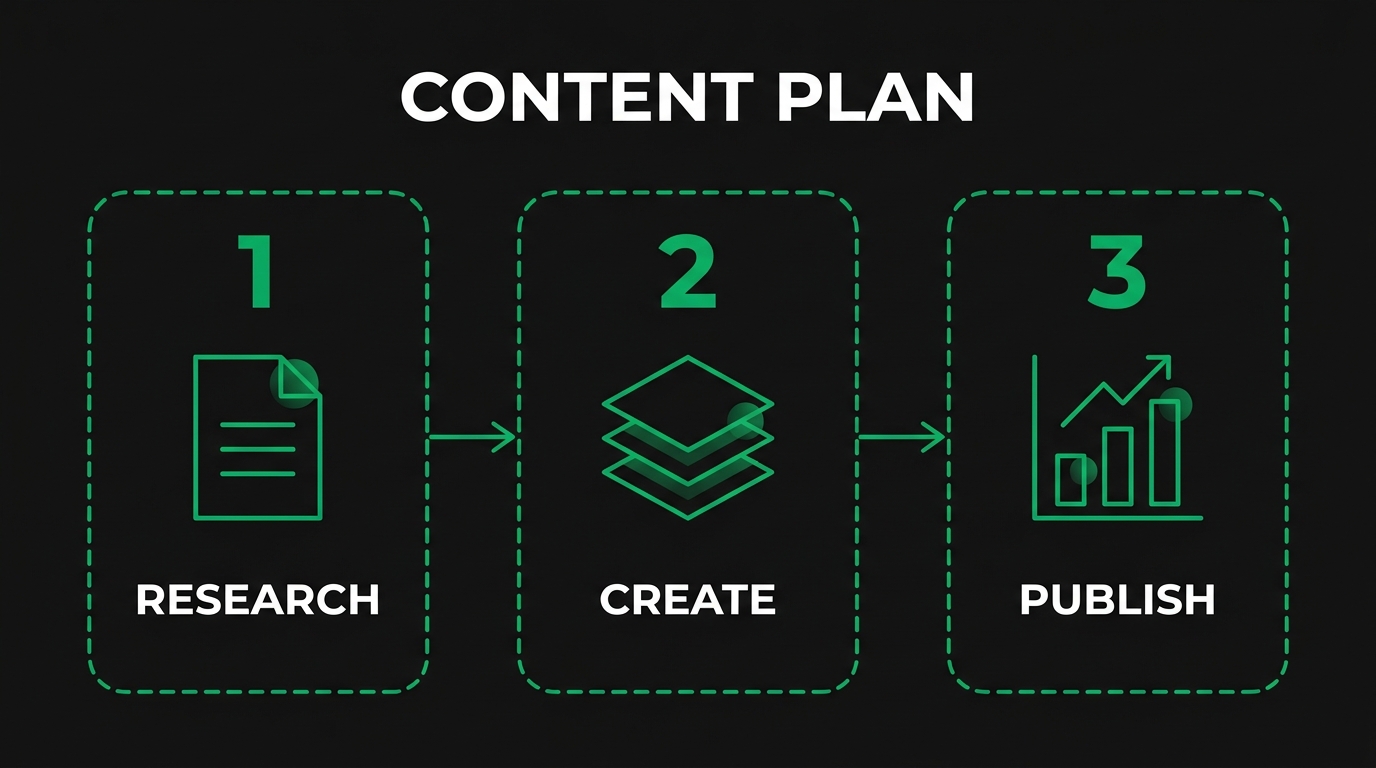
The content strategy that builds topical authority in heavy industry niches combines topical maps with long-form technical formats, application-specific case studies, and engineering-grade whitepapers. Each format plays a distinct role in procurement trust, which the following sub-sections cover.
How Do You Build Topical Maps for Processes, Materials, and Certifications?
You build topical maps for processes, materials, and certifications by starting with the highest-demand process hub, branching to every material grade it supports, and closing each branch with the certifications required for its primary applications. Map depth usually runs three to four levels: hub, sub-hub, spec, and case study.
Hub pages should carry comprehensive depth, while spec pages stay tight and machine-readable. Review the map quarterly against RFQ logs to prune dead branches and expand converting ones.
Which Long-Form Technical Content Formats Earn Procurement Trust?
The long-form technical content formats that earn procurement trust are application engineering guides, material selection matrices, failure analysis case studies, total cost of ownership comparisons, and compliance deep-dives.
For teams still building the content library, layering proven basic seo strategies for manufacturers over a heavy industry topical map keeps production efficient while depth ramps. Each format should carry a named engineering author and a last-reviewed date to satisfy E-E-A-T signals.
How Do Case Studies and Application Notes Support Heavy Industry SEO?
Case studies and application notes support heavy industry SEO by ranking for long-tail application queries, carrying strong internal link targets, and converting mid-funnel engineers who need proof before an RFQ. Each case study should include: measurable outcomes, customer industry context, specifications of the equipment deployed, and a lessons-learned section. Application notes are shorter than case studies and focus on technical edge cases, such as material behavior under extreme temperature or pressure. Together, they produce evergreen long-tail traffic and reduce sales-cycle friction. Publish both on the domain, not on a third-party platform, to capture the link equity.
What Role Do Whitepapers and Engineering Guides Play in Topical Coverage?
Whitepapers and engineering guides play an anchor role in topical coverage by consolidating multiple spec and application pages into a single authoritative document that earns editorial backlinks from trade press and academic citations. A good whitepaper answers a procurement-relevant question, cites primary standards such as ASME BPVC or ISO 9001, and includes original benchmark data where possible. Engineering guides go deeper into a specific process and function as the canonical entry point for that process hub. Both should be HTML-first with a PDF download option, not gated behind a form. Content depth here feeds the link-building tactics next.
How Do You Earn Authoritative Backlinks for Heavy Industry SEO Campaigns?
You earn authoritative backlinks for heavy industry SEO campaigns through trade publication placements, standards body citations, digital PR tied to original engineering data, and tier-2 amplification of those wins. The following sub-sections cover each channel.
Which Trade Publications Drive the Strongest Industrial Link Equity?
The trade publications that drive the strongest industrial link equity are engineering-led outlets that rank well themselves and pass contextual editorial links rather than nofollow directory mentions. Examples: ASME, Plant Engineering, Machine Design, Industry Week, Power Magazine, and Hydrocarbon Processing.
Pitch original benchmark data, engineering teardowns, or named expert commentary to earn these placements, and use a heavy industry and metal fabrication seo partner to package the data story into a format trade editors will run.
How Can You Use Industry Associations and Standards Bodies for Links?
You can use industry associations and standards bodies for links by joining as a member, submitting technical papers to their journals, sponsoring technical committees, and contributing to standards revisions. Useful bodies include: ASME, ASCE, SAE, NAM, the Manufacturing Institute, AWS, and API.
Membership also unlocks co-branded research opportunities that earn secondary press coverage.
What Digital PR Tactics Work for Heavy Equipment Manufacturers?
The digital PR tactics that work for heavy equipment manufacturers are original benchmark studies, teardown comparisons, named-expert commentary for reporters, and data-driven responses to current industry regulation. Tactics that consistently earn links include: publishing a proprietary materials performance study, commissioning a CFO survey on capital equipment spend, releasing a supply chain index, and offering named engineers as sources through HARO-style platforms.
How Should You Approach Tier-2 Link Amplification in Heavy Industry?
You should approach tier-2 link amplification in heavy industry by pointing quality backlinks at your tier-1 editorial wins, concentrating equity on the pages that already converted press attention. Tactics include: syndicating the underlying data to secondary trade outlets, pitching podcast interviews that reference the original study, republishing executive summaries on LinkedIn, and commissioning follow-up analyses that cite the tier-1 asset. The goal is compound authority on a single canonical URL rather than scattered anchor variance across low-value pages. Measure tier-2 impact through referring domain growth and target-page URL rating change. Link equity earned here feeds the AI search visibility work ahead.
How Can Heavy Industry Manufacturers Win in AI Search and LLM Citations?
Heavy industry manufacturers win in AI search and LLM citations by publishing unambiguous entity signals, structuring content for extractive answers, layering knowledge graph references, and measuring AI visibility continuously. Each practice below sharpens a different lever in the AI surface.
What Entity Signals Help LLMs Cite Heavy Equipment Brands Accurately?
The entity signals that help LLMs cite heavy equipment brands accurately are a consistent canonical company name, a clean Wikipedia or Wikidata entry, named product families with stable model numbers, and author bios on every technical page.
Maintain a single "About" page that declares the legal entity, founding date, certifications, and product families with explicit sameAs references.
How Should You Structure Content for Featured Snippets and AI Overviews?
You should structure content for featured snippets and AI Overviews by opening every H2 with a direct one-sentence answer, following with a concise paragraph or list that expands it, and echoing the heading noun phrase in the first clause.
Pair direct answers with tables of specifications where comparison is the user's goal, not decorative diagrams that LLMs cannot parse.
Which Schema and sameAs References Improve LLM Knowledge Graph Inclusion?
The schema and sameAs references that improve LLM knowledge graph inclusion are Organization schema with sameAs pointing to Wikipedia, Wikidata, LinkedIn, Crunchbase, and relevant standards bodies, plus Product schema linking to the manufacturer's Manufacturer schema entity.
How Do You Measure AI Search Visibility for Industrial Brands?
You measure AI search visibility for industrial brands by tracking AI Overview appearances, LLM citation frequency in ChatGPT, Perplexity, and Gemini, and entity accuracy in those responses.
Dedicated monitoring tools such as Profound, Peec AI, and Athena HQ surface citation share versus competitors. Treat AI visibility as a separate KPI from organic rank; the two can diverge dramatically for heavy industry brands. This measurement discipline extends naturally into full SEO performance tracking.
How Do You Measure SEO Performance and Tie Rankings to Revenue?
You measure SEO performance and tie rankings to revenue by tracking procurement-intent KPIs, attributing RFQs and pipeline value to organic search, integrating CRM data into SEO reporting, and reporting outcomes in language engineering and procurement leaders actually use. The sections below detail each.
Which KPIs Matter for Heavy Industry SEO Beyond Keyword Positions?
The KPIs that matter for heavy industry SEO beyond keyword positions are RFQ volume from organic traffic, spec-sheet downloads, time-on-page for procurement landing pages, internal search queries, returning engineer sessions, and sales-qualified lead rate from organic.
How Do You Attribute RFQs and Pipeline Value to Organic Search?
You attribute RFQs and pipeline value to organic search by setting up server-side event tracking on RFQ forms, linking GA4 session data to CRM opportunities, and using multi-touch attribution across the long heavy industry buying cycle.
Heavy equipment RFQs often touch six to ten pages before submission, so first-touch and last-touch models both miss signal. Position-based or data-driven attribution models work best for tying rankings to closed revenue.
What CRM Integrations Support Revenue-Tied SEO Reporting?
The CRM integrations that support revenue-tied SEO reporting are Salesforce plus GA4 via BigQuery, HubSpot native GA4 sync, and specialized platforms that sit between SEO tools and CRM such as Dreamdata and Segment. Integration should pass organic session ID, landing page, and query string parameters into the opportunity record so every closed deal carries its attribution trail. Pair CRM attribution with seo for industrial lead generation workflow mapping to catch the handoff moments where attribution breaks. Clean attribution is the only defensible answer to "what did SEO contribute to pipeline?".
How Should You Report SEO Outcomes to Engineering and Procurement Leadership?
You should report SEO outcomes to engineering and procurement leadership in their language: RFQs generated, specifications downloaded, qualified accounts engaged, pipeline value influenced, and time-to-RFQ reduced.
Lead with pipeline metrics, show rank improvements as the driving mechanism underneath, and close with the next quarter's priority pages. Leadership does not care about Domain Rating changes; they care whether the catalog is winning more quoted opportunities. This reporting discipline sets the stage for an engaged agency relationship.
How Should You Approach Heavy Industry SEO with Manufacturing SEO Agency?
Heavy industry SEO with Manufacturing SEO Agency should be approached as an integrated program that ties procurement-intent keyword architecture, topical authority buildout, technical remediation, and revenue-tied reporting to the RFQ pipeline. The sub-sections cover how the agency engages and what the complete strategy recaps.
Can Procurement-Intent Keyword Architecture from Manufacturing SEO Agency Help Your Heavy Equipment Brand Rank?
Yes, procurement-intent keyword architecture from Manufacturing SEO Agency can help your heavy equipment brand rank by organizing every process, material, and certification page around the exact queries engineers and procurement officers type. Manufacturing SEO Agency is a manufacturing-focused seo agency that builds manufacturing audits, topical authority maps, PR-grade editorial link campaigns, AI search visibility engineering, and technical remediation for B2B manufacturers, OEMs, and multi-facility operations.
What Are the Key Takeaways About Heavy Industry SEO Best Practices and Strategies We Covered?
The key takeaways about heavy industry SEO best practices and strategies are that procurement intent, specification density, and certification signals matter more than generic keyword volume; that site architecture should follow a process, material, application, and certification hub pattern; that technical performance and mobile optimization protect field-engineer usability; that topical authority comes from long-form engineering content and case studies; that backlinks from trade publications and standards bodies outperform generic outreach; that AI search visibility now requires clean entity signals and schema sameAs references; and that revenue-tied reporting ties rankings to RFQs and pipeline value, which is the only metric heavy industry leadership funds.