Manufacturing SEO strategies are procurement-intent search programs that rank industrial brands for the exact process names, material grades, and certifications buyers query during supplier research, converting organic visibility into RFQs and closed revenue. Capturing market share requires ranking where procurement engineers, purchasing directors, and sourcing managers actually search, not where generic SEO playbooks send traffic.
This guide covers procurement search behavior and the foundations of industrial visibility, procurement-intent keyword architecture and topical content systems, editorial backlinks and technical SEO for manufacturing websites, AI-generated search visibility, and revenue-tied reporting that closes the loop between rankings and pipeline.
We explain why procurement search behavior has shifted toward specification-level queries, why generic SEO tactics miss industrial buyers, and how foundational audits, technical crawl health, and topical authority build lasting search visibility across manufacturing verticals.
We then show how procurement-intent keyword architecture maps process, material, and certification combinations to service lines, and how content strategies built around process pages, certification coverage, and application use-cases establish topical authority that outranks scattered blog content.
We close with PR-grade editorial backlink tactics, technical SEO for schema and crawl, AI search visibility through entity building and schema.org sameAs references, and revenue-tied reporting that connects rankings to RFQs and closed revenue across long industrial sales cycles.
Why Does Manufacturing SEO Drive Market Share Growth for B2B Industrial Companies?
Manufacturing SEO drives market share growth because procurement decision-makers start supplier research in Google, evaluating vendors against exact process, material, and certification queries before any sales contact. This section covers procurement search behavior, why generic tactics fail, and where market share migrates next.
How Has Procurement Search Behavior Reshaped the Manufacturing Buyer Journey?
Procurement search behavior has reshaped the manufacturing buyer journey by moving supplier evaluation to the top of the funnel, before any vendor contact. Purchasing engineers now type specification-level queries such as "AS9100 5-axis titanium CNC machining" and build shortlists from organic results and AI answers. According to the Manufacturers Alliance, 1.7 million jobs have been filled and over 2 million announced as U.S. companies bring manufacturing closer to domestic customers, concentrating RFQ volume on suppliers visible in specification searches. The procurement journey now begins with a search query, not a phone call, and that query decides which vendors enter the RFQ shortlist. Search visibility for seo for small manufacturing companies and multi-facility operators now decides which shops get quoted.
Why Do Generic SEO Tactics Fail Manufacturers Competing for Procurement Intent?
Generic SEO tactics fail manufacturers because broad keyword targeting, retail-style content, and vanity traffic metrics ignore the procurement buyer's specification-level queries. Procurement intent lives in narrow phrases such as process plus material plus tolerance plus certification, not in head terms like "CNC machining." Agencies that optimize for "CNC services" deliver traffic but no RFQs, because buyers at the shortlisting stage search specifically. Manufacturing buyers arrive pre-educated on process physics and certifications, so thin top-of-funnel content fails to earn trust from engineers. Generic link building from low-authority directories does not move rankings for procurement-qualified phrases either. The fix is a keyword architecture built from the procurement decision tree, aligned with content that matches engineer reading patterns.
Which Manufacturing Search Trends Signal Where Market Share Is Migrating?
Manufacturing search trends signal that market share is migrating toward specification-qualified queries, AI-generated answer engines, and entity-grounded brands. According to StatCounter Global Stats, Google holds 89.62 percent global market share across all devices, keeping classical SERP rankings decisive for industrial discovery while AI platforms layer on top. Rising trends include queries for certification-plus-process combinations, application-specific searches tied to end industries, and brand-plus-capability searches from shortlisted vendors. Process adjacency matters: shops ranking for core processes are pulled into related material and certification searches. Brands that dominate adjacent procurement clusters compound visibility across the buyer's full shortlisting path. Watching query-level shifts tells you where the next quarter of RFQ demand will land.
What Foundational Manufacturing SEO Strategies Build Lasting Search Visibility?
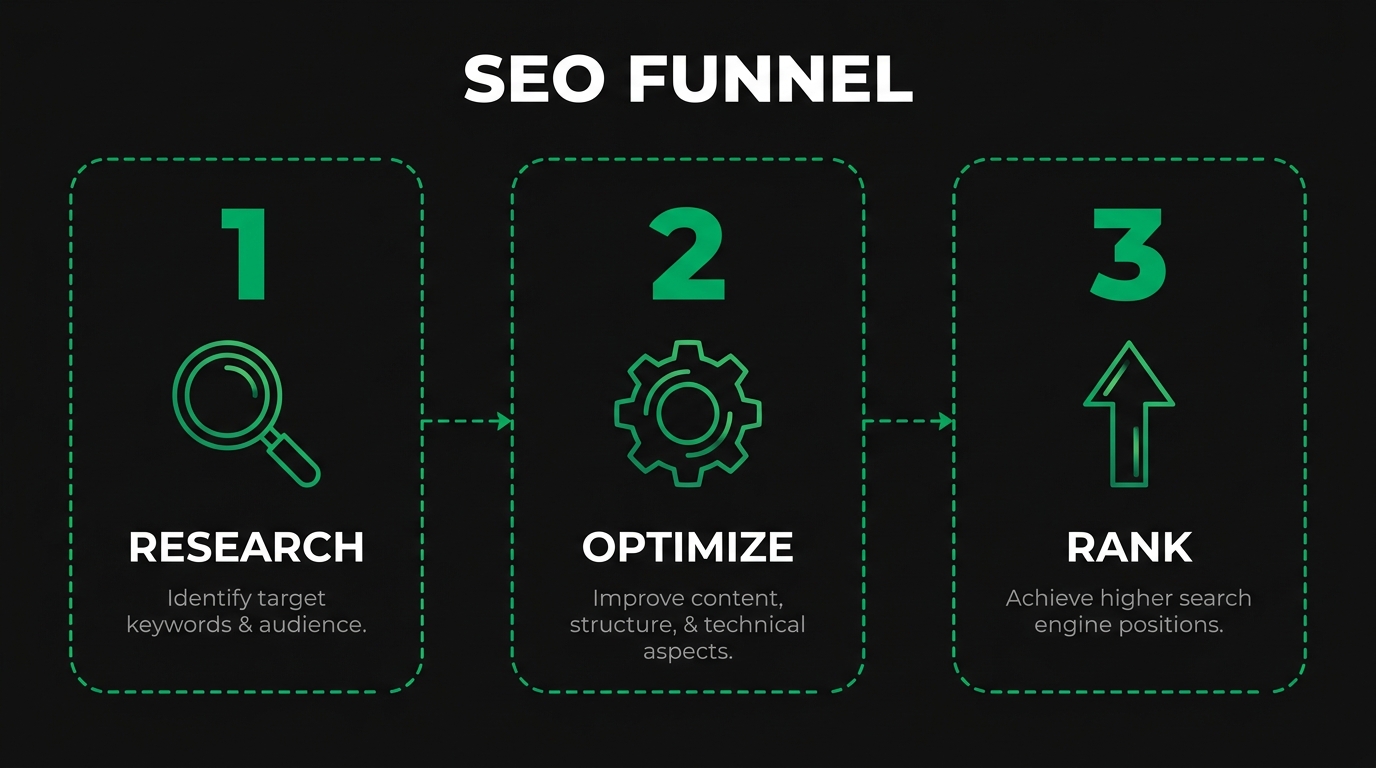
Foundational manufacturing SEO strategies that build lasting search visibility are competitor footprint audits, procurement-intent keyword mapping by buying stage, topical authority construction, and technical SEO remediation. Each foundation compounds on the others. This section walks through the audit, keyword mapping, topical authority, and technical order of operations.
How Should Manufacturers Audit Their Current Search Footprint Against Competitors?
Manufacturers should audit their current search footprint by crawling the domain, mapping every ranked keyword against the procurement decision tree, and reverse-engineering the top five competitors for each process, material, and certification cluster. A complete audit logs indexed pages, orphan pages, keyword positions, backlink quality, and schema coverage. It then compares each metric against each competitor ranking above the client to expose gaps. The deliverable lists keywords the client should rank for, pages that cannibalize each other, and technical faults throttling crawl. A structured foundation starts with a specification-level footprint map, the same discipline behind proven industrial seo strategies programs.
Which Procurement-Intent Keywords Map to Each Stage of the Industrial Buying Cycle?
Procurement-intent keywords that map to each stage of the industrial buying cycle are broad education terms at the research stage, process-plus-material combinations at the evaluation stage, and certification-plus-tolerance plus capability queries at the RFQ stage. Early-stage queries include phrases like "what is 5-axis CNC machining." Mid-stage queries include "5-axis titanium CNC machining." Late-stage queries include "AS9100 5-axis titanium CNC machining for aerospace brackets." Each stage signals different intent and should route to different page types: guides for research, service pages for evaluation, and capability plus certification pages for RFQ. Misalignment between keyword and landing page breaks the procurement path and sends shortlist-ready buyers back to search.
Why Does Topical Authority Outrank Scattered Blog Content in Manufacturing Verticals?
Topical authority outranks scattered blog content in manufacturing verticals because search engines reward complete coverage of a topic over fragmented posts. According to Search Engine Land, content grouped into clusters drives about 30 percent more organic traffic and holds rankings 2.5 times longer than standalone pieces. A topical cluster links every process, material, certification, and application into a connected semantic map that satisfies every downstream query an engineer asks. Factories that publish ten unrelated articles lose to shops that publish twenty interlinked pages covering a single process family. Topical depth is how basic seo strategies for factories compound rank gains over time.
What Technical SEO Foundations Must Manufacturing Sites Address First?
Technical SEO foundations that manufacturing sites must address first are crawl accessibility, canonical structure, schema markup for products and services, Core Web Vitals, internal linking, and HTTPS hygiene. Crawl faults such as broken internal links, orphan pages, and duplicate parameter URLs waste crawl budget and bury procurement-critical pages. Schema markup for Product, Service, and Organization exposes entity data to Google and AI engines. Core Web Vitals gate mobile visibility where procurement researchers now browse between meetings. Internal linking moves PageRank to service and capability pages. Fixing these first unlocks everything else in the program, because ranking strategies cannot compensate for pages Google cannot render or index reliably.
How Do Manufacturers Engineer Procurement-Intent Keyword Architecture That Wins RFQs?
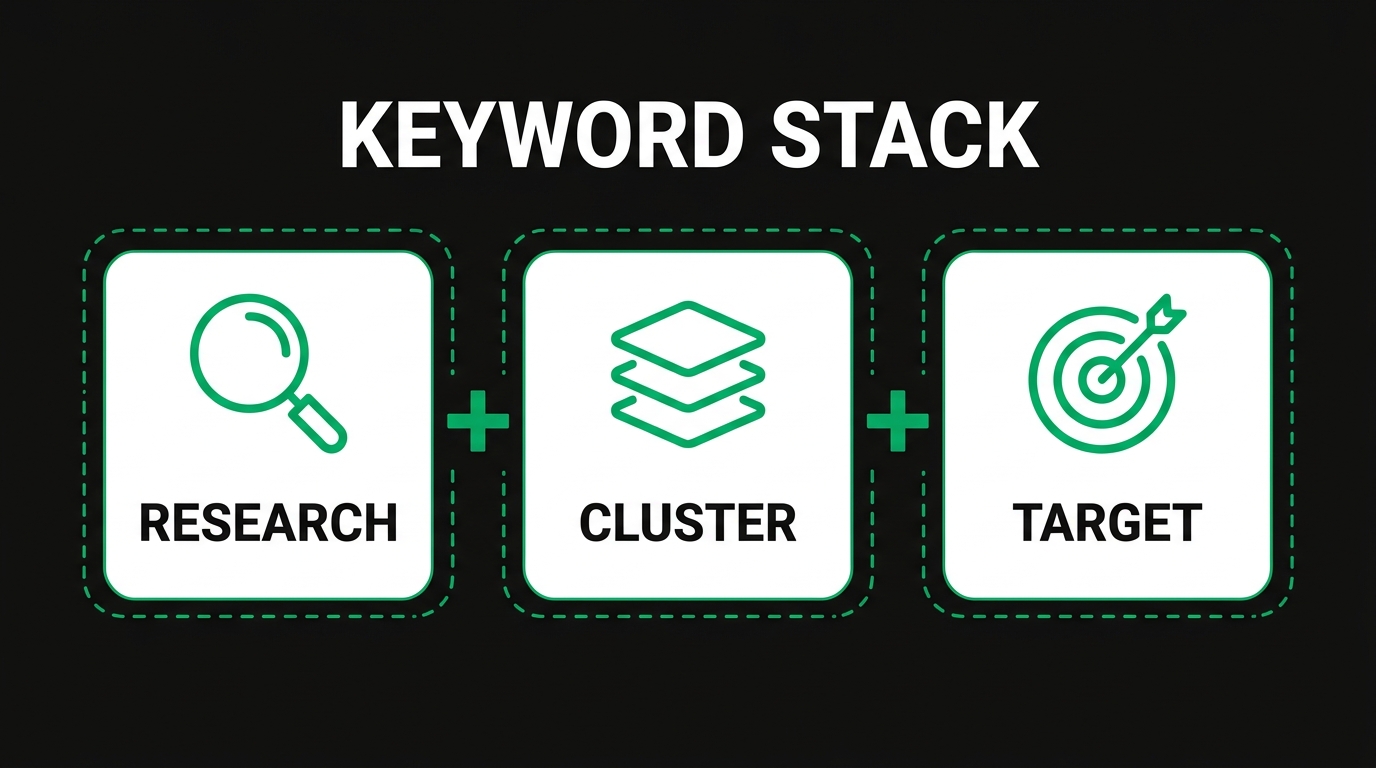
Manufacturers engineer procurement-intent keyword architecture by clustering process, material, and certification combinations, layering long-tail specification queries, and mapping each cluster to a dedicated landing page. The architecture follows procurement decision logic, not search volume. This section covers cluster anchoring, long-tail leverage, volume-versus-specificity tradeoffs, and page mapping.
Why Should Process, Material, and Certification Combinations Anchor Keyword Clusters?
Process, material, and certification combinations should anchor keyword clusters because procurement engineers search in those same three dimensions when shortlisting suppliers. A cluster anchored around "5-axis CNC machining" widens to cover titanium, Inconel, aluminum, aerospace grades, AS9100 certification, and tight-tolerance capabilities. The cluster then maps every downstream query an engineer types when narrowing the vendor list. Anchoring by process alone leaves certification queries orphaned. Anchoring by certification alone leaves process families orphaned. Clusters work because they match how buyers describe their own RFQ scope, and vendors who match that vocabulary end up in the shortlist. When comparing operational models such as contract manufacturing vs custom manufacturing seo, the cluster anchors diverge by buying stage and commitment depth.
How Can Long-Tail Industrial Queries Outperform Broad Manufacturing Terms?
Long-tail industrial queries outperform broad manufacturing terms because specificity signals RFQ-ready intent while broad terms mostly capture students, journalists, and tire-kickers. A phrase like "CNC machining" draws high volume and low conversion. A phrase like "AS9100 5-axis titanium CNC machining aerospace brackets" draws low volume and high conversion, often one query equals one qualified RFQ. Long-tail also faces thinner competition, so a well-optimized capability page can own the SERP for dozens of specification permutations with a single asset. Running keyword discovery on top procurement tools is how manufacturers surface these high-intent variations, which is where the best seo tools for b2b manufacturing earn their cost by compressing discovery cycles.
What Role Does Search Volume Play Versus Buyer Specificity in Industrial SEO?
Search volume plays a secondary role in industrial SEO because buyer specificity maps directly to RFQ conversion and revenue per visitor. Low-volume specification queries often convert at 20 to 50 times the rate of head terms. According to Responsive, 80 percent of buyers in tech use generative AI at least as much as search for vendor research, which means procurement queries are getting more specific as AI engines expand the query-to-answer loop. The tradeoff rule is simple: pick specificity over volume whenever revenue-per-visitor matters more than raw sessions. Vanity traffic never signed an RFQ, and ranking for hollow head terms steals budget from the specification-level queries that actually close.
How Should Keyword Clusters Be Mapped to Landing Pages and Service Lines?
Keyword clusters should be mapped to landing pages by giving every cluster its own dedicated page aligned with a service line or capability. One cluster, one page, one primary buyer query, and one RFQ path. Pillar pages cover the core process (example: 5-axis CNC machining), supporting pages cover material variants (titanium, Inconel), and capability pages cover certifications and applications. Internal links tie the pages together so PageRank and topical signals flow through the cluster. Misalignment, such as stuffing every material variant into a single service page, dilutes topical signals and breaks buyer navigation. A shop with ten clusters mapped properly outranks a shop with one bloated page carrying all ten topics.
What Content Strategies Establish Topical Authority Across Manufacturing Verticals?
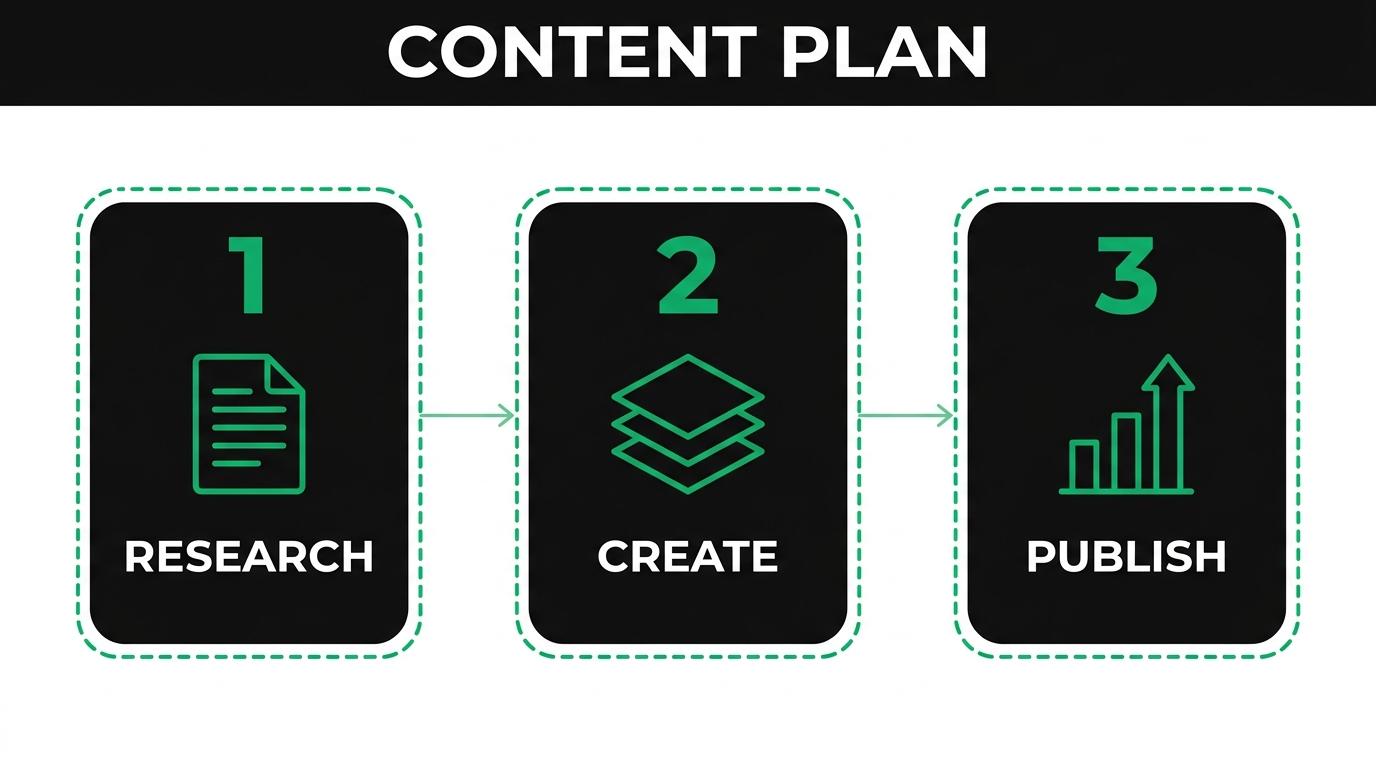
Content strategies that establish topical authority across manufacturing verticals are process pages, material pages, certification coverage, long-form technical guides, and application use-case pages structured as one connected topical map. The map proves depth to both search engines and procurement engineers. This section covers each content type and how they interlock.
How Do Process Pages Differ From Material Pages in a Topical Map?
Process pages and material pages differ in that process pages explain how parts are made while material pages explain what parts are made from, and each targets different procurement queries. A process page covers machining type, tolerances, axes, part sizes, tooling, and typical applications (example: 3-axis versus 5-axis CNC machining). A material page covers alloy families, grades, machinability, heat treatments, certifications, and typical use cases (example: titanium Ti-6Al-4V). Both connect through a topical map, so a buyer searching a material arrives at the matching process, and a buyer searching a process finds supported materials. Duplicating content across the two types signals thin expertise and breaks cluster logic. Separating them mirrors how procurement actually maps specifications.
Why Must Certification Content Cover AS9100, ISO 13485, NADCAP, and IATF 16949?
Certification content must cover AS9100, ISO 13485, NADCAP, and IATF 16949 because each certification gates a regulated buyer segment and procurement teams filter shortlists on certification first. AS9100 controls aerospace buyers, ISO 13485 controls medical device buyers, NADCAP controls special process approvals across aerospace, and IATF 16949 controls automotive tier suppliers. Missing any certification page cuts the brand out of that vertical's RFQ shortlist regardless of process capability. Certification pages should state the scope, the sites certified, the audit history, and the applicable processes, which is why scoped coverage through seo strategies for manufacturing specifications delivers far more lift than generic compliance pages.
What Long-Form Technical Content Earns Citations From Procurement Engineers?
Long-form technical content that earns citations from procurement engineers includes deep process guides with original tolerance data, material selection matrices with quantified tradeoffs, design-for-manufacturability guides tied to specific processes, and application case studies with measurable outcomes. Engineers cite content when it answers a specification question more precisely than the competing result. Original data such as first-pass yield rates, scrap rates by material, or cycle time versus tolerance benchmarks earns repeat links because no competitor can replicate the numbers. Marketing copy and generic overviews never earn citations because engineers disregard anything that reads like a brochure. Depth, data, and specificity earn the link; vagueness loses it.
How Should Manufacturers Structure Application and Use-Case Pages?
Manufacturers should structure application and use-case pages around one end industry plus one process plus one part family, with technical requirements, critical tolerances, material rationale, certification context, and measurable results. Each page targets queries such as "aerospace bracket 5-axis CNC machining titanium." The structure includes the problem statement, design requirements, chosen process and materials, certifications applied, and delivered outcome. Application pages compound topical authority because they knit process, material, and certification clusters into proof of execution. Many factories follow basic seo strategies for manufacturers to stand up application pages before scaling depth, which is why a well-built library outranks standalone service pages.
How Do PR-Grade Editorial Backlinks Compound Manufacturing Search Authority?
PR-grade editorial backlinks compound manufacturing search authority by passing trust, topical relevance, and entity signals from high-authority trade publications into the brand's cluster pages. Repeat citations from industry media multiply faster than directory links ever could. This section covers trade publications, pitch tactics, tier-2 amplification, and original-data links.
Which Trade Publications and Industry Media Move Rankings for Industrial Brands?
Trade publications and industry media that move rankings for industrial brands include vertical outlets such as Aviation Week, Modern Machine Shop, Medical Design and Outsourcing, IndustryWeek, Assembly Magazine, Plastics Today, Manufacturing Engineering, and sector-specific association journals. Links from these properties move rankings because they sit at the top of the topical graph for manufacturing, and a link from an aerospace trade outlet to an aerospace supplier compounds topical relevance Google already associates with both entities. Generic DA-chasing across unrelated blogs rarely moves needle rankings. Targeted placements in publications procurement engineers actually read do. The rule is simple: get cited by the outlets your buyers read, not the outlets SEO tools score highest.
How Should Manufacturers Pitch Editorial Coverage Tied to Process Innovation?
Manufacturers should pitch editorial coverage tied to process innovation by offering trade editors a newsworthy angle backed by original data, a named expert source, and a visual asset such as a process photo or production chart. Editors want stories with numbers, not self-congratulation. A working pitch includes the innovation (new process capability, material first, or tolerance breakthrough), the measurable outcome (yield improvement, cycle time reduction, or certification milestone), and a source willing to be interviewed on record. Avoid sending boilerplate press releases. Trade editors ignore anything that reads like marketing. Pitches written for the editor's reader, not the brand's marketer, convert far more often and earn links inside cluster pages that Google treats as topically authoritative.
What Tier-2 Link Amplification Tactics Multiply Editorial Backlink Value?
Tier-2 link amplification tactics multiply editorial backlink value by pushing additional links at the editorial coverage itself, raising the authority of the tier-1 page so the embedded link to the brand carries more weight. Common tier-2 moves include syndicating the coverage to industry associations, linking to the coverage from podcast show notes, citing the coverage in the brand's own content, placing the coverage in procurement newsletters, and sharing the coverage on LinkedIn with industry influencers. Each tier-2 link lifts the referring page's authority, which compounds the value of the link back to the brand. The technique turns one editorial placement into a compounding asset instead of a single-event link.
How Can Original Manufacturing Data Earn Repeated Citation Links?
Original manufacturing data earns repeated citation links when the data answers a question trade editors and engineers keep asking and no one else has measured. Usable datasets include first-pass yield rates by process and material, scrap rate benchmarks, cycle time versus tolerance curves, lead time distributions by order volume, and certification audit outcomes. Publish the data with clear methodology, a downloadable chart, and a permanent URL. Editors cite datasets repeatedly when they update sector reports, so one original study drives dozens of links over time. Data-driven citation assets often outperform every other backlink investment because they compound naturally and give the brand a durable authority anchor.
What Technical SEO Tactics Optimize Manufacturing Websites for Crawl, Schema, and Speed?
Technical SEO tactics that optimize manufacturing websites are schema for products, services, and certifications, clean crawl health across multi-facility architectures, fast mobile page experience, and disciplined URL patterns. This section covers schema, crawl health, page experience, and URL architecture.
How Should Manufacturing Sites Implement Schema for Products, Services, and Certifications?
Manufacturing sites should implement schema by layering Product, Service, Organization, and Certification markup across capability pages, with machine-readable attributes for process, material, tolerance, and industry certifications. Schema feeds Google's entity graph and AI engines the exact facts procurement queries ask about. According to the Federal Aviation Administration, aviation products carry three separate certifications (type, production, and airworthiness), and each category should be exposed as structured data where applicable so AI answer engines cite the brand correctly. Without schema, capability pages rely on Google inferring entity attributes from prose alone, which leaves citation opportunities on the table. Adding schema turns a capability page into a fact source that AI engines can lift verbatim into procurement-facing answers.
Which Crawl Health Issues Hurt Manufacturing Domains Most?
Crawl health issues that hurt manufacturing domains most are parameter URL bloat from facet filters, orphaned capability pages, broken internal links to product catalogs, duplicate content across facility subdomains, and thin templated pages generated for every part number. Crawl bloat wastes Googlebot time on low-value pages and buries procurement-critical capability pages. The fix includes canonical tags for parameter variants, robots directives for low-value filters, internal linking audits, and consolidation of thin duplicates into strong hub pages. Multi-facility operations face extra exposure: duplicate capability content across location subdomains signals thin expertise and triggers canonical conflicts. Shops that solve crawl hygiene before scaling content get more compounding return on every new asset they publish.
How Does Page Experience Affect Procurement Decision-Maker Trust Signals?
Page experience affects procurement decision-maker trust signals because slow-loading pages, cluttered layouts, and mobile rendering faults raise doubt about a manufacturer's execution discipline before the buyer ever reads a capability page. According to Google Search Central, E-E-A-T stands for Experience, Expertise, Authoritativeness, and Trust, with trust as the most important component, and pages that lack trust score low regardless of expertise. Procurement decision-makers infer quality from the site itself: slow pages suggest slow operations, broken mobile layouts suggest amateur execution. Core Web Vitals compliance plus clean typography plus logical navigation compound trust. Page experience is a silent RFQ filter, and fixing it lifts shortlist inclusion before a single new keyword ranks.
What URL and Site Architecture Patterns Support Multi-Facility Manufacturing Operations?
URL and site architecture patterns that support multi-facility manufacturing operations are hierarchical service-first URLs, location sub-paths instead of subdomains, canonical tags pointing facility-specific pages to the primary capability page, and consistent internal linking from every facility to shared topical hubs. A pattern such as /services/5-axis-cnc-machining/ as the hub with /locations/ohio/5-axis-cnc-machining/ as the facility variant preserves topical authority while exposing local signals. Subdomains per facility fragment authority. Deep parameter URLs break crawl. Consistent, shallow, keyword-aligned URLs scale with the business and keep cluster authority concentrated on the primary hub pages where buyer queries land. Clean architecture also survives facility rebranding and acquisitions without breaking ranking continuity.
How Are Manufacturers Capturing Visibility in AI-Generated Search Answers?
Manufacturers are capturing visibility in AI-generated search answers by building entity signals, structuring content for LLM retrieval, implementing schema and sameAs references, and targeting the AI platforms procurement researchers use. This section covers entity signals, content structure, schema, and platforms.
What Entity Building Signals Help Brands Get Cited by Large Language Models?
Entity building signals that help brands get cited by large language models are a consistent canonical name across the open web, structured data that declares the brand as an Organization, verified Wikipedia or Wikidata presence, consistent NAP citations across industry directories, and editorial mentions from high-authority trade publications. LLMs lift brands into answers when the web reliably agrees on what the brand does, where it operates, and what it is certified to do. Disjointed or conflicting mentions degrade entity confidence and cut citation frequency. Brands that control their entity footprint, down to consistent capability language and certification statements, show up far more often in AI-generated supplier shortlists than brands relying on paid media alone.
How Should Manufacturers Structure Content for LLM Citation and Retrieval?
Manufacturers should structure content for LLM citation and retrieval by writing direct answer sentences after every heading, using subject-predicate-object sentence form, grouping related entities in adjacent sentences, and providing quantified facts LLMs can lift verbatim. Each heading should be a question or noun phrase, and the first sentence should answer it directly in the same grammatical modality. Lists should carry full sentences, not fragments. Tables should hold entity-attribute-value data in clean rows. Tolerances, certifications, material grades, and process specifics should appear in consistent formats across pages so retrieval systems recognize them as canonical facts. Content written for an engineer reader also happens to be the content retrieval models prefer, so dual-purpose writing wins both audiences.
Why Do Schema, sameAs References, and Wikipedia Entities Matter for AI Visibility?
Schema, sameAs references, and Wikipedia entities matter for AI visibility because AI engines resolve entity identity before deciding which brand to cite in an answer. According to Google for Developers, the Knowledge Graph stores information from public sources like Wikipedia, licensed data, and content owners using unique identifiers to distinguish entities that share the same name. Schema.org sameAs properties linking the brand to Wikipedia, Wikidata, LinkedIn, Crunchbase, and industry association profiles feed the graph consistent identity signals. Without sameAs grounding, AI engines may conflate the brand with similarly named competitors or skip it entirely. Entity grounding is the cheapest insurance against being absent from AI procurement answers and the fastest route to new citation frequency.
Which AI Search Platforms Drive the Most Procurement Research Traffic Today?
AI search platforms that drive the most procurement research traffic today are Google AI Overviews, ChatGPT with web search, Perplexity, Microsoft Copilot, and Claude, with Google AI Overviews contributing the largest share because Google still owns the query volume baseline. Procurement engineers increasingly query Perplexity and ChatGPT for specification-level shortlists, pasting full RFQ requirements and asking for qualified vendor suggestions. Each platform retrieves from different corpora, but all reward entity-grounded, schema-tagged, factually dense content. Shops building clean entity maps now are locking in citation frequency before the rest of the market catches up. Revenue-tied reporting is the next discipline that connects this visibility to closed business.
How Should Manufacturers Tie SEO Reporting to Pipeline, RFQs, and Closed Revenue?
Manufacturers should tie SEO reporting to pipeline by tracking procurement-intent keyword rankings, attaching CRM data to organic sessions, modeling attribution across long cycles, and reviewing revenue-tied reports at a matched cadence. This section covers KPIs, CRM integration, attribution models, and review cadence.
Which Manufacturing SEO KPIs Connect Rankings to Procurement Outcomes?
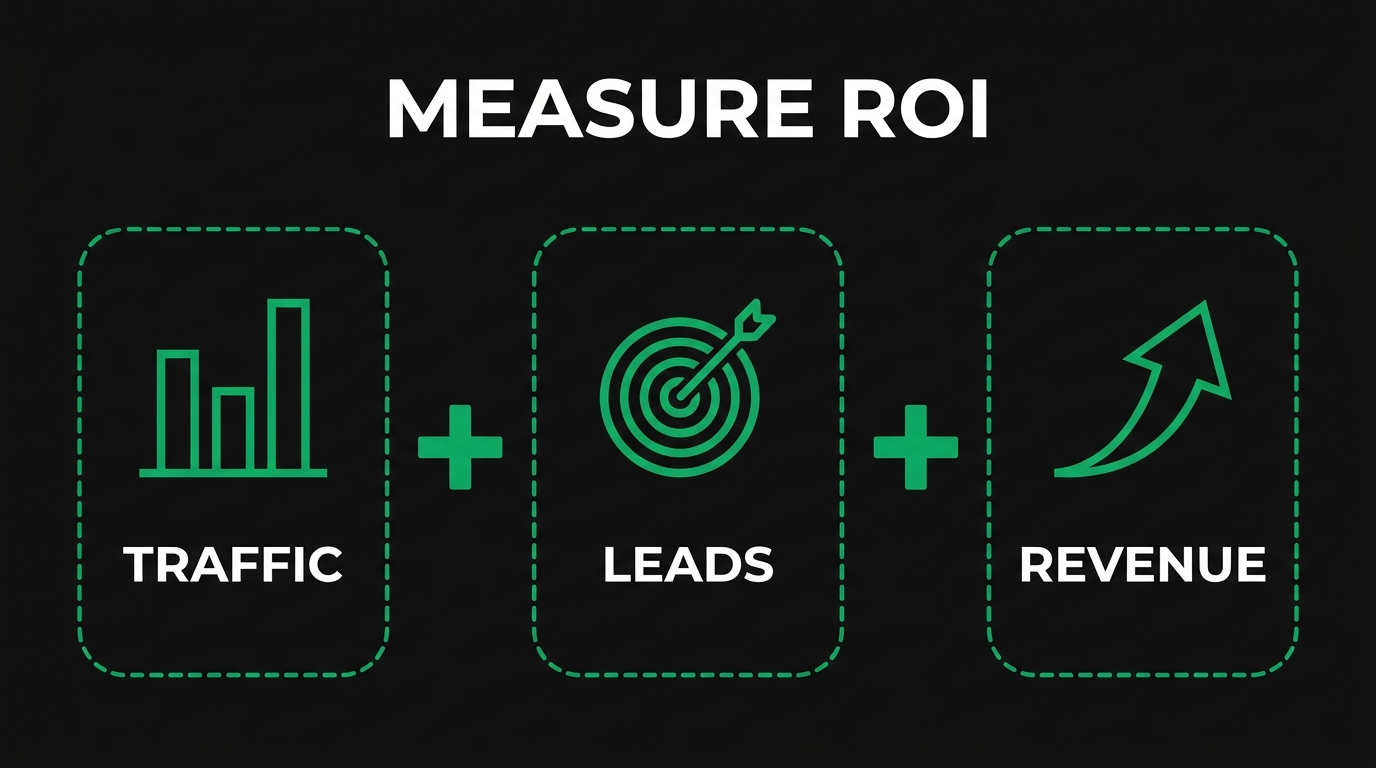
Manufacturing SEO KPIs that connect rankings to procurement outcomes are procurement-intent keyword rank distribution, capability page RFQ conversion rate, cost-per-RFQ from organic, cluster-level pipeline value, and closed revenue per topical cluster. According to the Gartner CMO Spend Survey, B2B product manufacturers spent 9.4 percent of annual revenue on marketing budgets, which makes RFQ yield per SEO dollar the decisive metric for continued investment. Vanity KPIs such as total sessions and bounce rate describe activity without proving outcome. RFQ conversion, pipeline attribution, and closed revenue describe outcome directly. Reporting built on outcome KPIs protects budget when finance asks hard questions, and surfaces the topical clusters producing the most revenue so investment compounds in the right places.
How Do CRM Integrations Translate Organic Sessions Into Pipeline Value?
CRM integrations translate organic sessions into pipeline value by stitching a session identifier to the RFQ or contact record created at form submission, then passing the record through CRM stages to pipeline dollars and closed revenue. The integration requires UTM tagging on organic landings, a session-to-lead handshake at form submission, and CRM fields that preserve the originating keyword cluster, landing page, and campaign. With that in place, every keyword cluster reports back a pipeline number and a closed-revenue number. Without integration, SEO sits in a separate dashboard from revenue, and every conversation with finance starts from a defensive position. Integrated reporting is how SEO stops being a cost center and becomes a forecastable growth channel.
What Attribution Models Work Best for Long Industrial Sales Cycles?
Attribution models that work best for long industrial sales cycles are multi-touch attribution with first-touch weighting on organic, position-based models that credit the discovery and shortlist touches, and time-decay models that lift the final touches before RFQ submission. Industrial cycles span six to eighteen months, so last-click models massively undercount SEO's contribution, while first-click models overstate it. The most defensible approach blends first-touch, mid-cycle nurture touches, and final-touch contact, with the weighting tuned to the sales cycle length. Attribution should match actual buyer behavior, not dashboard defaults. Manufacturers that invest in attribution calibration recover SEO budget credibility and fund the clusters producing real pipeline.
How Often Should Manufacturers Review Revenue-Tied SEO Reports?
Manufacturers should review revenue-tied SEO reports monthly for rank and RFQ volume, quarterly for pipeline and cluster-level contribution, and semi-annually for full attribution reconciliation against closed revenue. Monthly cadence catches operational drift such as ranking drops and conversion faults. Quarterly cadence aligns with sales pipeline reviews and surfaces cluster-level investment decisions. Semi-annual reconciliation matches the long procurement cycle and allows closed revenue to finish flowing through CRM stages. Reviewing too frequently creates noise; reviewing too infrequently misses remediation windows. Cadence that matches pipeline reality produces the cleanest signal and the most defensible investment case. Revenue-tied reporting closes the loop between rankings and the pipeline, and that clarity is what engagement with a manufacturing-only SEO partner unlocks next.
How Should You Approach Manufacturing SEO Strategies With Manufacturing SEO Agency?
You should approach manufacturing SEO strategies with Manufacturing SEO Agency by engaging a manufacturing-only firm that builds procurement-intent keyword architecture, topical authority, editorial backlinks, AI visibility, and revenue-tied reporting as one integrated program. This section covers how the engagement works and recaps the takeaways from the guide.
Can Manufacturing SEO Agency Help Manufacturers Capture Market Share Through Procurement-Intent SEO?
Manufacturing SEO Agency can help manufacturers capture market share through procurement-intent SEO by ranking clients for the exact process names, material grades, and certifications procurement engineers query during RFQ research. According to the National Association of Manufacturers, manufacturing accounts for 9.5 percent of U.S. GDP, which means procurement demand is concentrated and growing. Manufacturing SEO Agency serves B2B manufacturers across CNC machining, injection molding, metal fabrication, aerospace, medical, and automotive sectors, with engagements built from procurement-intent keyword architecture, topical authority buildout, AI search visibility engineering, PR-grade editorial link building, and CRM-integrated reporting. As Manufacturing SEO Agency deploys the program, every campaign ties rankings to RFQs, pipeline value, and closed revenue.
What Are the Key Takeaways About Manufacturing SEO Strategies for Capturing Market Share We Covered?
The key takeaways about manufacturing SEO strategies for capturing market share are that procurement search behavior now gates vendor shortlists, foundational audits and topical authority build lasting visibility, procurement-intent keyword architecture wins RFQs, content strategies anchored in process, material, and certification coverage establish topical authority, PR-grade editorial backlinks compound trust, technical SEO and schema expose capability to search engines and AI answers, AI visibility requires entity grounding and sameAs references, and revenue-tied reporting translates organic visibility into closed revenue. Manufacturers that execute these strategies as one connected program outrank scattered competitors and capture pipeline procurement teams never see elsewhere. The discipline is simple to describe and hard to execute without manufacturing domain fluency, which is why specialization matters.