
Manufacturing SEO case studies are documented engagements that show how industrial brands grew organic visibility, qualified RFQs, and pipeline value through search-led programs. Each study connects specific tactics to measurable outcomes for a CNC, molding, fabrication, additive, aerospace, automotive, electronics, or regulated-industry manufacturer.
This guide covers what makes a case study credible, the traffic and revenue patterns that repeat across winning programs, the topical authority and technical SEO foundations behind them, the backlink and AI-search visibility plays they used, the reporting frameworks that tied search to pipeline, the pitfalls that sank failed efforts, and a practical way to apply the lessons inside your own program.
We open with the credibility checklist procurement-minded readers expect, then move into the traffic-growth case studies that scaled organic sessions across CNC machining, injection molding, metal fabrication, aerospace, and medical manufacturing.
The lead and revenue section pulls out the studies that converted organic traffic into qualified RFQs, tied rankings to closed pipeline value, and reduced cost per lead inside long industrial sales cycles.
We then unpack the topical authority frameworks the studies used, the technical SEO fixes that powered measurable lifts, the backlink strategies that compounded equity from trade publications and original data, and the AI search and LLM visibility moves that earned brand citations.
The closing themes show how winning programs reported SEO impact to CFOs, where failed studies broke down, and how to translate every lesson into a phased roadmap, an audit checklist, and a stakeholder briefing for your own manufacturing SEO program.
What Defines a Credible Manufacturing SEO Case Study?
A credible manufacturing SEO case study documents a real industrial engagement with named scope, baseline metrics, the SEO interventions applied, and verifiable outcomes. The sections below cover the proof metrics, procurement-intent keyword wins, RFQ and revenue evidence, and why high-DA manufacturer sites recur.
Which Metrics Should a Manufacturing SEO Case Study Prove?
The metrics a manufacturing SEO case study should prove are organic sessions to commercial pages, indexed coverage of procurement-intent queries, qualified RFQ volume, sales-accepted opportunities, and pipeline value tied to organic touch. Strong studies report all four together rather than vanity traffic alone, because B2B manufacturing buyers convert through long, multi-stakeholder sales motions where lead quality matters more than session counts. Useful supplements include average position movements on the priority query set, click-through rate on commercial templates, and a direct comparison against the pre-engagement baseline so a CFO can read the deltas without ambiguity. Studies that surface only one number rarely survive procurement diligence. You can also benchmark these case studies against a broader set of industrial seo agency case studies to see which result categories recur across vendors.
How Should a Case Study Document Procurement-Intent Keyword Wins?
A case study documents procurement-intent keyword wins by listing the exact queries a buyer types when ready to source, the page that captured each query, the position movement, and the downstream RFQ each query produced. Procurement-intent queries cluster around process plus material plus tolerance plus certification, such as "AS9100 5-axis CNC titanium supplier," and the strongest studies group them by funnel stage so reviewers can trace awareness to consideration to RFQ. Including before-and-after SERP screenshots, the canonical landing template, and the lead-form submissions per query gives the proof a procurement panel needs.
What Evidence Confirms Revenue and RFQ Impact in a Case Study?
The evidence that confirms revenue and RFQ impact in a case study is CRM-attributed pipeline data showing organic-sourced opportunities, won deal counts, and dollar value matched to first-touch or multi-touch attribution. Sopro reports that the average cost per lead for manufacturing companies is $553, driven by the complexity of the sales cycle and lower lead volumes. Strong studies pair that benchmark with their own CRM exports, RFQ-to-quote ratios, and quote-to-close rates so the SEO program reads as a revenue engine, not a marketing line item. Anonymized pipeline screenshots and finance sign-off statements add credibility.
Why Are High-DA Manufacturing Websites Featured in the Best Case Studies?
High-DA manufacturing websites are featured in the best case studies because authority compounds the impact of every other lever, letting technical fixes, content, and links convert into rankings faster than on a low-authority domain. GrowLeads notes that 80% of B2B buyers use case studies during their research, and 73% consider case studies a key factor in their purchasing decisions, which means buyers cross-check the publishing site's authority before they trust the numbers. A high-DA manufacturer publisher signals that backlinks, brand mentions, and editorial coverage have already aligned, so the documented gains are repeatable inside a similar authority profile rather than artifacts of a one-off launch. These foundations set up the traffic-growth comparisons that come next.
Which Manufacturing SEO Case Studies Show the Strongest Traffic Growth?
The manufacturing SEO case studies showing the strongest traffic growth are programs that scaled organic sessions on commercial process pages across CNC machining, injection molding and metal fabrication, aerospace and medical, and templated procurement-intent landing systems. The H3s below break down each pattern.
How Did CNC Machining Brands Multiply Organic Sessions?
CNC machining brands multiplied organic sessions by mapping every process plus material plus tolerance combination to its own canonical page, then layering AI-search-ready entity markup that earned brand mentions inside generative answers. Seer Interactive reports that brands cited in AI Overviews earn 35% more organic clicks and 91% more paid clicks compared to not being cited, a lift that compounds when a CNC brand is the named source for queries like "5-axis aluminum prototype tolerance." The pattern that recurs is content depth on process pages, schema-driven product entities, and a steady cadence of editorial mentions that keep the brand inside generative training and retrieval pools.
What Drove Traffic Gains for Injection Molding and Metal Fabrication Sites?
Traffic gains for injection molding and metal fabrication sites were driven by category architecture cleanup, a complete capabilities taxonomy, and disciplined redirect mapping during platform migrations. Search Engine Journal's analysis of 892 migrations found an average recovery time of 523 days, with 17% of sites never recovering traffic even after 1,000 days, which means the molders and fabricators that grew were precisely the ones who avoided migration disasters. Their case studies repeat three moves: pre-migration crawl baselines, line-by-line redirect QA, and post-launch monitoring of indexation against the priority query set so any drop is caught inside the first week.
How Did Aerospace and Medical Manufacturers Scale Niche Keyword Visibility?
Aerospace and medical manufacturers scaled niche keyword visibility by building deep clusters around regulated certifications such as AS9100, NADCAP, ISO 13485, and FDA quality system requirements, with one canonical page per certification crossed by alloy and process. The case studies show that procurement teams in regulated industries search certification first and process second, so winning programs published certification overviews, audit explainers, supplier qualification checklists, and material traceability pages. Each cluster fed internal links into commercial RFQ templates, lifting the niche queries that actually trigger sourcing inquiries inside aerospace and medical buying teams.
Which On-Page Patterns Repeat Across the Top-Performing Studies?
The on-page patterns that repeat across the top-performing studies are SPO-structured first sentences, descriptive H2 and H3 headings tied to procurement-intent queries, entity-rich opening paragraphs, schema markup on every commercial template, and a consistent internal linking spine from process pages to material pages to certification pages. Most studies also document table-driven specs (tolerance ranges, material grades, lead times) below the answer paragraph because procurement readers scan for numbers before they read prose. A fuller picture of cross-vertical results is captured in additive manufacturing seo case studies. These traffic patterns set up the lead and revenue outcomes the next section unpacks.
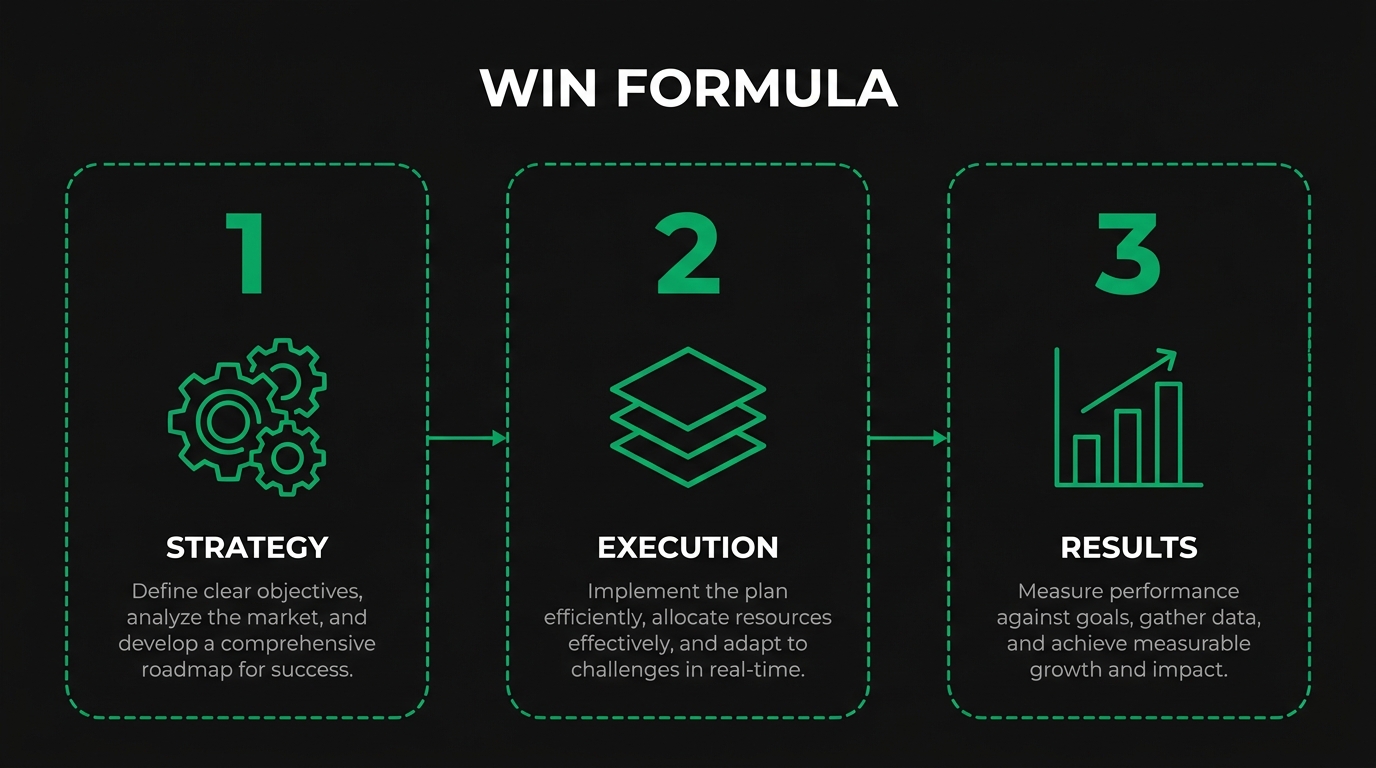
What Lead and Revenue Outcomes Have Manufacturing SEO Case Studies Proven?
The lead and revenue outcomes manufacturing SEO case studies have proven include qualified RFQ growth from organic landing pages, closed pipeline value attributed to organic touch, measurable cost-per-lead reduction, and shorter sales cycles. The H3s break down each outcome category.
How Did Manufacturers Convert Organic Traffic Into Qualified RFQs?
Manufacturers converted organic traffic into qualified RFQs by aligning each landing page to a single procurement-intent query, embedding a structured RFQ form above the fold, and answering the buyer's spec questions on the page so the form submission arrives with full context. Winning case studies document tighter intent matching, technical spec tables, certification badges in the hero, and short forms tied to CRM stages, which keeps the lead-to-RFQ conversion rate high without demanding more sessions. The studies that scaled fastest also added quote-builder configurators that let engineers pre-validate fit, reducing back-and-forth and the resulting RFQ-to-quote turnaround.
Which Case Studies Tie SEO to Closed Pipeline Value?
The case studies that tie SEO to closed pipeline value are those that integrate first-touch and multi-touch attribution directly into the CRM, then export won-deal value by source, query, and landing page. Strong programs publish quarterly pipeline reports showing organic-sourced opportunities, won counts, and dollar value alongside the priority query set, so finance can read the SEO program as a revenue line. The case studies that hold up under audit show a clear path from a query to a session to a form fill to a quoted opportunity to a closed-won record, with the same opportunity ID traceable through every step. That auditable chain is what keeps the budget renewed.
How Do Manufacturers Measure Cost-Per-Lead Reduction From SEO?
Manufacturers measure cost-per-lead reduction from SEO by dividing the fully loaded program cost by qualified leads sourced through organic, then comparing that figure against paid channels and pre-engagement baselines. Martal Group reports that SEO and retargeting boast the lowest CPL of around $31, making them foundational elements of cost-effective campaigns, with SEO delivering long-term traffic with no recurring ad spend. Manufacturer studies replicate that gap, often showing organic CPL at a fraction of paid search and trade publication leads. For a deeper look at this lever, see these case studies: manufacturing companies reducing cpl with seo.
What Sales-Cycle Improvements Have Industrial Brands Documented?
The sales-cycle improvements industrial brands have documented include shorter time from first organic touch to first sales meeting, fewer outbound touches needed before a quote request, and faster RFQ-to-quote turnaround. The pattern is consistent: the more procurement-intent content a brand publishes, the more the buyer self-qualifies before contact, which compresses the front half of the funnel. Some case studies report meaningful reductions in average days-to-close because organic-sourced opportunities arrive higher-intent and better-informed. These outcomes set the stage for the topical authority work that powered them.
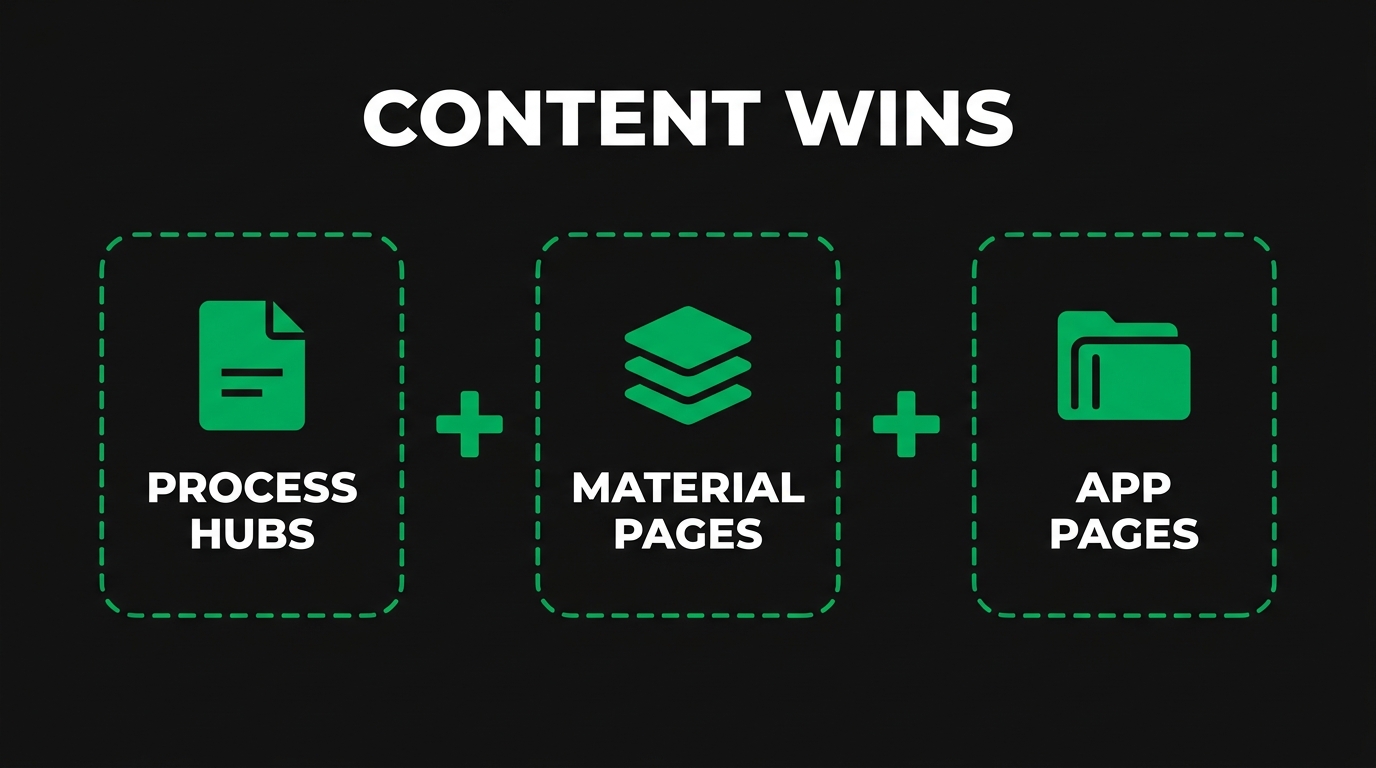
How Did Top Case Studies Build Topical Authority for Manufacturing Buyers?
Top case studies built topical authority for manufacturing buyers by mapping the full process, material, and certification topic space, then publishing pillar-and-cluster pages that earned trust through depth and disciplined internal linking. The H3s walk through the topic map, framework, content depth, and link patterns.
How Should Manufacturers Map Process, Material, and Certification Topics?
Manufacturers should map process, material, and certification topics by building a three-axis matrix where every process intersects every relevant material and every governing certification, then prioritizing the cells where buyer demand and competitive gaps overlap. The case studies that compounded fastest catalogued processes such as CNC machining, injection molding, sheet metal fabrication, additive, and stamping, then crossed each with relevant alloys, polymers, and grades, then layered AS9100, ISO 9001, ISO 13485, NADCAP, and IATF 16949 where they applied. That matrix becomes the master topic plan, and a content marketing guide for manufacturers walks through the full mapping discipline. The result is a defensible topic footprint that mirrors how procurement teams actually search.
Which Pillar-and-Cluster Frameworks Worked for Industrial Brands?
The pillar-and-cluster frameworks that worked for industrial brands are those organizing one pillar page per process, surrounded by clusters for materials, tolerances, certifications, finishing, and verticals, all linked through descriptive anchor text. The framework that recurs across winning studies puts the commercial RFQ template at the pillar, with informational clusters routing equity inward through topical, not generic, anchors. The pillars stay short and decision-focused, while the clusters carry the depth, which keeps both intent profiles served by the same architecture. Comparing approaches across examples of successful b2b seo shows how the framework holds across industrial verticals.
How Did Case Studies Use Long-Form Technical Content to Earn Trust?
Case studies used long-form technical content to earn trust by publishing articles that match the depth of an engineering spec sheet rather than a marketing brochure, with tolerances, surface finishes, lead-time bands, and DFM guidance written in the language a procurement engineer expects. Backlinko reports that the average word count of a first-page result in Google was found to be 1,447 words, which roughly tracks the depth required to cover a manufacturing topic completely. Studies that hit and exceeded that depth built durable rankings because they answered the long tail of follow-up questions on a single page, removing the need for a buyer to leave the site to verify a detail.
What Internal Linking Patterns Lifted Keyword Coverage in the Studies?
The internal linking patterns that lifted keyword coverage in the studies were tight topical clusters with descriptive anchors, hub-and-spoke routing into commercial RFQ pages, and breadcrumb-style trails from material pages to process pages to certification pages. Winning studies treated internal links as semantic infrastructure, using the linked anchor to declare the destination's primary entity, which helped Google index commercial templates faster and lifted the long-tail queries each cluster targeted. Cross-vertical comparisons across case studies: successful manufacturing e-commerce show similar linking discipline in product-catalog architectures. Topical authority built this way feeds the technical SEO fixes the next section unpacks.
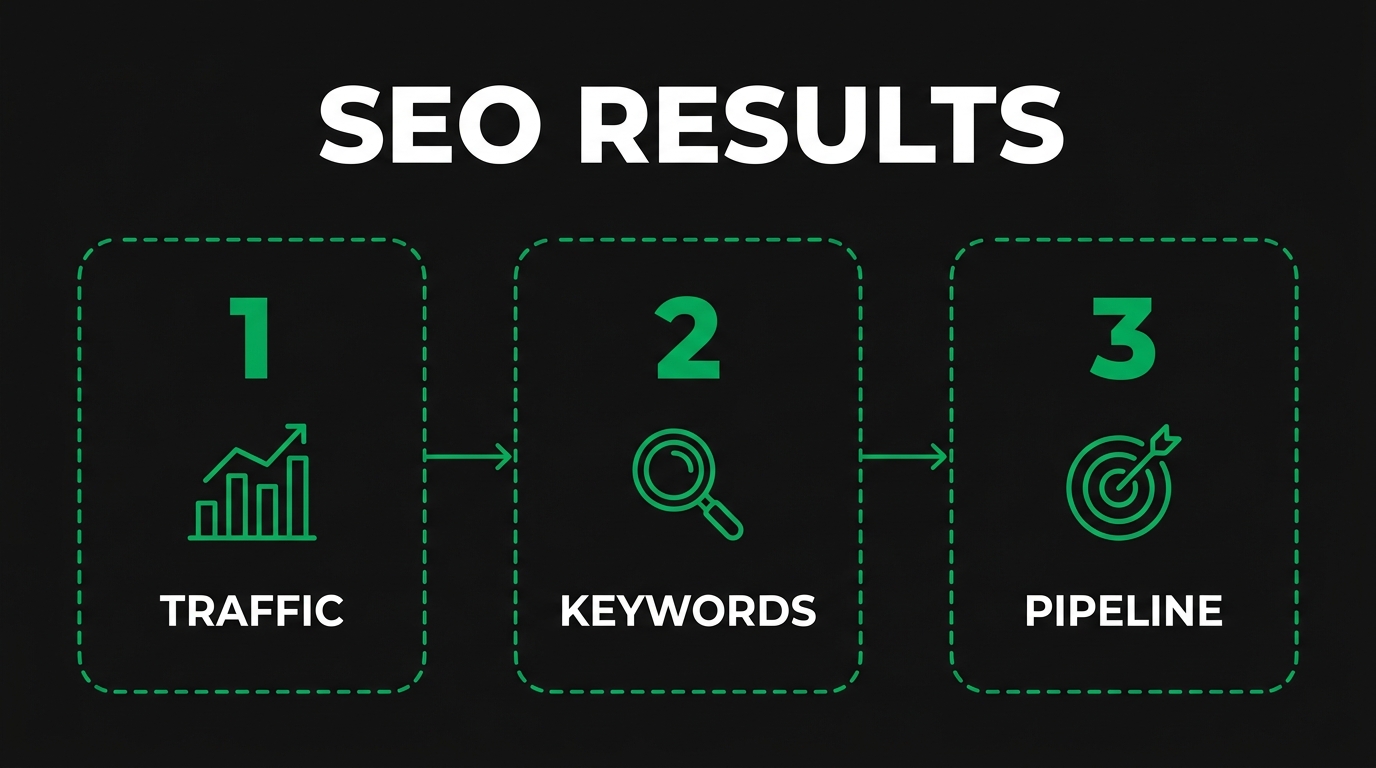
Which Technical SEO Fixes Powered the Best Manufacturing Case Studies?
The technical SEO fixes that powered the best manufacturing case studies are structured data on commercial templates, crawl and index hygiene, mobile and Core Web Vitals work, and clean faceted navigation. The H3s walk through each fix and the lift it produced.
How Did Schema and Structured Data Improve Industrial Search Visibility?
Schema and structured data improved industrial search visibility by giving search engines explicit entity declarations for products, manufacturers, certifications, and FAQs on every commercial page. Google Search Central reports that Rotten Tomatoes added structured data to 100,000 unique pages and measured a 25% higher click-through rate for pages enhanced with structured data, compared to pages without structured data, an outcome that scales when manufacturers mark up product, manufacturer, organization, and BreadcrumbList types across deep catalogs. Schema.org notes that when marking up products, it is recommended to provide identifiers (gtin13, gtin14, gtin8, mpn properties) and link to the manufacturer property so search engines can enrich offers found elsewhere. Studies show this discipline lifts both rich-result eligibility and AI citation frequency.
Which Crawl, Index, and Site-Speed Fixes Delivered Measurable Lifts?
The crawl, index, and site-speed fixes that delivered measurable lifts include consolidating duplicate parameter URLs, removing soft-404 product templates, fixing canonical drift on faceted listings, and compressing render-blocking assets on hero templates. Winning case studies pair an XML sitemap rebuild with internal-link audits so the priority commercial pages receive enough crawl budget. Google Search Central documents that search raters have no control over how pages rank; rater data is not used directly in ranking algorithms but is used to measure effectiveness and to provide concrete examples for machine learning models. That confirms why infrastructure quality matters: it shapes the signals the ranking systems learn from at scale.
How Did Mobile and Core Web Vitals Work Influence B2B Rankings?
Mobile and Core Web Vitals work influenced B2B rankings by raising commercial templates above the threshold Google uses as a tiebreaker between similarly relevant pages. The targets that case studies optimized against are well documented: Largest Contentful Paint at or under 2.5 seconds, Interaction to Next Paint under 200 milliseconds, and Cumulative Layout Shift under 0.1, with the mobile profile prioritized because Google indexes the mobile version of a site for ranking. Manufacturers that hit those thresholds on RFQ landers reported lift on competitive procurement queries where competitors lagged on mobile, an edge that compounded as the buyer audience shifted toward phone-first research.
What Role Did Faceted Navigation and Product Taxonomy Play?
Faceted navigation and product taxonomy played the role of organizing thousands of process, material, and certification combinations into crawlable, indexable, intent-aligned URLs. The case studies that performed best canonicalized facet combinations to the most valuable variant, blocked low-value parameter URLs from indexing, and kept the breadcrumb hierarchy aligned with the topic map. Clean taxonomy made every facet page a viable landing target, while the master category protected pillar equity. These technical foundations set up the backlink strategies the next section covers.
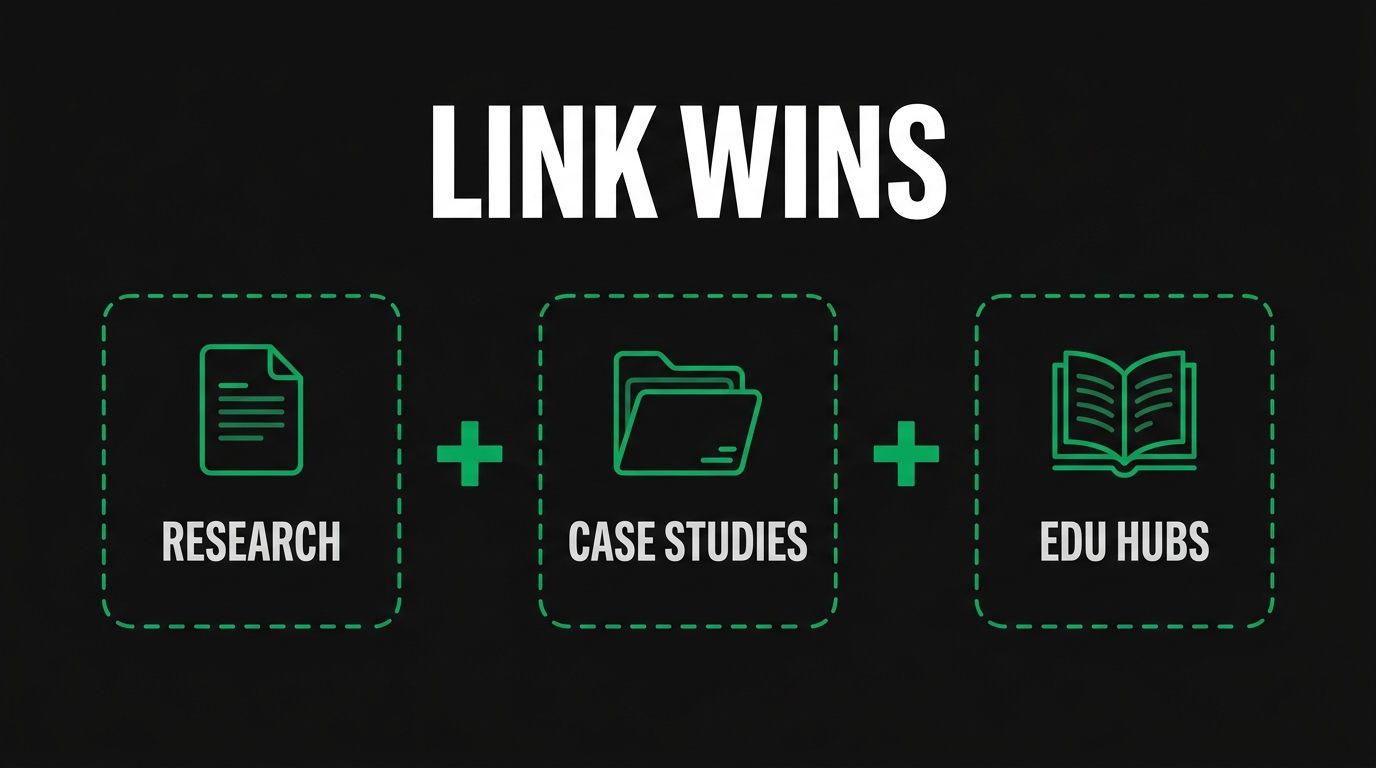
What Backlink Strategies Recurred Across Successful Manufacturing Case Studies?
The backlink strategies that recurred across successful manufacturing case studies are trade publication editorial coverage, original-data PR, tier-2 amplification, and procurement-intent anchor diversification. The H3s detail each play.
Which Trade Publications and Industry Outlets Drove the Strongest Links?
The trade publications and industry outlets that drove the strongest links are vertical engineering and procurement titles read by the buyer set, including outlets that cover manufacturing engineering, design, additive, and supply chain procurement. Backlinko reports that pages with lots of backlinks rank above pages that don't have as many backlinks, with the #1 result in Google having an average of 3.8x more backlinks than positions #2-#10. Manufacturers that earned coverage from a small number of high-authority trade outlets typically outranked competitors carrying broader but lower-quality link profiles, because trade-press anchors are topical, contextual, and procurement-aligned in a way directory links never are.
How Did Manufacturers Earn Editorial Coverage Through Original Data?
Manufacturers earned editorial coverage through original data by publishing first-party datasets such as lead-time benchmarks by process, material price indices, capacity surveys, and DFM defect-rate studies. Editors covered those reports because they answered questions trade journalists already wanted to ask but lacked numbers for. The case studies show a recurring pattern: anonymize, aggregate, and visualize internal operational data, then pitch it under embargo to a short list of trade outlets, then republish the methodology and full dataset on the brand site so the inbound links land on a primary source page rather than a press release.
Which Tier-2 Amplification Tactics Compounded Link Equity?
The tier-2 amplification tactics that compounded link equity were syndication to engineering communities, expert roundup contributions, association newsletter mentions, and internal links from earned coverage back to the brand's original report. Tier-2 work raises the authority of the page receiving the original tier-1 link, which then routes equity into commercial pages through the internal linking spine. Winning studies treated every editorial mention as an asset to amplify rather than a one-off win, and the cumulative effect lifted the entire pillar over time without forcing aggressive outreach to the same outlets twice.
How Was Anchor Text Distributed for Procurement-Intent Queries?
Anchor text was distributed for procurement-intent queries with a heavy emphasis on branded and naked-URL anchors at the homepage and brand level, partial-match anchors on category and process pages, and exact-match anchors used sparingly on deep procurement landers. The distribution kept the profile defensible against link spam audits while still signaling topical specialization on the procurement queries the brand wanted to own. The case studies that drew penalties almost always over-optimized one anchor template; the ones that scaled cleanly varied anchor language across hundreds of referring domains. These backlink patterns set up the AI search and LLM visibility moves the next section covers.
How Did Case Studies Engineer AI Search and LLM Visibility for Manufacturers?
Case studies engineered AI search and LLM visibility for manufacturers by aligning entity signals, schema and sameAs declarations, citation-friendly content structures, and AI-aware reporting. The H3s walk through each lever.
Which Entity Signals Increased Brand Citations in AI Answers?
The entity signals that increased brand citations in AI answers are consistent organization markup, named-entity reinforcement across owned and earned media, Wikipedia-grade external corroboration, and clean Knowledge Panel data. ALM Corp documents that only 38% of Google AI Overview citations come from top-10 pages, down from 76%, indicating AI Overviews pull from a much wider source pool than organic results. Manufacturers that became frequently cited entities did so by being mentioned alongside their core processes, certifications, and verticals across high-authority sources, which trained generative systems to associate the brand with those topics regardless of where the page sat in classic SERPs.
How Did Schema and Sameas References Strengthen Knowledge Graph Presence?
Schema and sameAs references strengthened Knowledge Graph presence by giving Google explicit, machine-readable links between the brand's website and its profiles on Crunchbase, LinkedIn, industry directories, association membership pages, and Wikipedia. Case studies show that adding Organization schema with a complete sameAs array, plus consistent NAP (name, address, phone) and corporate identifiers across profiles, accelerated Knowledge Panel formation and stabilized brand entity recognition. Once the entity is consolidated, every new mention reinforces the same node rather than fragmenting across duplicate identities, which is what makes the brand reliably citable in AI answers.
What Content Structures Earn LLM Citations for Industrial Queries?
The content structures that earn LLM citations for industrial queries are descriptive question-format headings, direct-answer first sentences that echo the heading noun phrase, short citable paragraphs that fit a generative answer window, and structured spec data in tables. LLMs prefer passages that resolve a question completely in 60 to 120 words, which mirrors the structure that also wins featured snippets. Manufacturers that rewrote process pages into clean question-and-answer blocks reported faster pickup inside generative answer engines because the passages were extractable without paraphrase, a quality that pre-trained retrieval systems consistently reward.
How Are Manufacturers Tracking AI-Driven Discovery in Reporting?
Manufacturers are tracking AI-driven discovery in reporting by measuring AI Overview presence on the priority query set, monitoring brand mention frequency inside generative answers, and adding referrer tracking for traffic from ChatGPT, Perplexity, and similar engines. Reporting that proves AI lift compares pre-and-post citation rates per query cluster, ties any traffic delta to the citation event, and surfaces share-of-voice against named industrial competitors inside generative answers. Case studies treat this as a parallel reporting layer alongside organic, because the buyer behavior it captures is increasingly upstream of the classic click. These visibility patterns set up the pipeline-tied reporting the next section covers.
How Did Manufacturers Build Reporting That Tied SEO to Pipeline Value?
Manufacturers built reporting that tied SEO to pipeline value by linking keyword rankings to RFQ volume, integrating CRM attribution, designing CFO-grade dashboards, and standardizing vendor comparisons. The H3s walk through each report layer.
How Should Reports Connect Keyword Rankings to RFQ Volume?
Reports should connect keyword rankings to RFQ volume by tagging each priority query to its commercial landing page, joining Google Search Console clicks to form-fill events on that page, and routing every form fill to a CRM stage with a query attribute. The reports that hold up under audit show a single table that lists each tracked query, its current and prior position, the landing page, sessions, form fills, and the RFQs accepted by sales. That table makes the cause-and-effect chain visible to anyone reading the dashboard. Studies show this format converts skeptical revenue leaders faster than chart-heavy decks.
Which CRM Integrations Made Revenue Attribution Possible?
The CRM integrations that made revenue attribution possible are server-side conversion tracking pushed into Salesforce, HubSpot, or Microsoft Dynamics with a hidden first-touch source field, multi-touch session stitching from a unified marketing data layer, and bidirectional sync that returns won-deal value back to the analytics layer. Factors.ai notes that 56% of B2B marketers now rely on multi-touch attribution, up from 31%, and 58% of B2B companies use multi-touch attribution to measure marketing's pipeline contribution. Manufacturer case studies that earned CFO trust used multi-touch by default, treating first-touch as a directional view rather than the primary attribution model.
What Dashboards Convinced CFOs to Renew Manufacturing SEO Budgets?
The dashboards that convinced CFOs to renew manufacturing SEO budgets were single-page boards showing organic-sourced pipeline dollars, won-deal value, cost per qualified lead, and trailing-twelve-month trend lines, all reconcilable against the CRM. CFOs renewed when the dashboard let them trace any number to its source record, and when the SEO line read in the same units as the rest of the revenue stack. Studies show that adding a quarterly variance commentary, written in the same plain language a finance team uses, removed the last objection. Color-coded stoplights on KPI movements made the board scannable in under a minute.
How Should You Compare Vendor Reporting When Vetting an Agency?
You should compare vendor reporting when vetting an agency by asking each vendor for a sample monthly report tied to a real client, then scoring it against a fixed rubric covering pipeline attribution, query-level reporting, AI-search coverage, and CFO-grade summaries. Side-by-side comparison surfaces which vendors report on outcomes versus activity. A complementary view of the tooling layer is captured in the best seo tools for b2b manufacturing breakdown, which helps gauge whether a vendor's reporting depth matches what their stack can actually produce. These reporting standards close the gap before the pitfalls section reveals where weaker programs broke.
What Common Pitfalls Did Failed Manufacturing SEO Case Studies Reveal?
The common pitfalls failed manufacturing SEO case studies revealed are vanity-keyword targeting, thin product templates, mishandled site migrations, and low-quality link schemes. The H3s walk through each failure pattern and how to avoid it.
Why Do Generic Vanity Keywords Stall Manufacturer Pipelines?
Generic vanity keywords stall manufacturer pipelines because the queries pull broad, low-intent audiences who never become RFQs, while consuming the budget that could have funded procurement-intent content. Failed case studies repeat the same mistake: chasing high-volume head terms such as "manufacturing services" instead of mid-tail procurement queries that include process, material, tolerance, and certification modifiers. The traffic looks impressive on a slide, but the CRM stays empty. The fix is brutal prioritization toward query patterns that procurement teams actually type when ready to source, even when monthly search volume per query is small.
How Do Thin Product Pages Suppress Procurement-Intent Rankings?
Thin product pages suppress procurement-intent rankings because they fail to satisfy the buyer's spec questions, miss schema and entity signals, and leave Google without enough context to rank the page against richer competitor templates. Failed case studies show product pages built for a paid-ad landing experience, with a hero image and a contact form but no tolerance ranges, finishes, lead times, or certification badges. Buyers bounce, dwell-time metrics drop, and the page stays buried. The fix is to publish full spec content, FAQs, and DFM guidance on the same URL, treating each product page as a primary research destination, not a campaign landing page.
Which Site Migrations Damaged Industrial Organic Performance?
The site migrations that damaged industrial organic performance were those executed without crawl baselines, without a complete redirect map, and without post-launch monitoring on the priority query set. Search Engine Land documents that a classifieds website lost nearly 40% of their SEO market share after simplifying its category tree during a platform migration without realizing it was a primary driver of organic traffic and have not yet recovered. Manufacturer migrations show the same pattern when category architecture is collapsed, when faceted URLs are dropped, or when 301s are routed to a generic landing page instead of the specific replacement. The recovery cost dwarfs the migration's nominal savings.
How Should Manufacturers Avoid Penalties From Low-Quality Link Schemes?
Manufacturers should avoid penalties from low-quality link schemes by refusing private blog networks, paid directory bundles, sponsored-post farms, and any program that promises a fixed monthly link count regardless of relevance or authority. The failed studies that drew manual actions all share a tell: a sudden anchor-text spike on commercial pages from low-trust referring domains. The fix is editorial-grade outreach through trade publications, association mentions, and original-data PR, paired with a quarterly disavow review for any toxic links that slip through. These pitfalls set up the practical roadmap the next section lays out.
How Should Manufacturers Apply These Case Studies to Their Own SEO Programs?
Manufacturers should apply these case studies to their own SEO programs by auditing against the benchmarks, importing the cross-industry quick wins, planning a phased roadmap, and briefing internal stakeholders on what to expect. The H3s walk through each step.
How Should You Audit Your Site Against Case-Study Benchmarks?
You should audit your site against case-study benchmarks by scoring four pillars against the patterns the winning studies share: topic coverage versus the process-material-certification matrix, technical SEO against Core Web Vitals and schema completeness, backlink quality against trade-press authority, and reporting maturity against CRM-tied pipeline attribution. The audit produces a gap list, prioritized by revenue potential and effort, that becomes the roadmap input. Compare your scoring approach with contract manufacturing vs custom manufacturing seo to see how delivery model shifts the audit weighting. The audit is the cheapest part of the program and the highest-leverage step to take first.
Which Quick Wins From the Studies Translate Across Industries?
The quick wins from the studies that translate across industries are schema deployment on commercial templates, internal-link cleanup from informational clusters into RFQ pages, FAQ blocks on the top ten priority pages, and a redirect-map review for any migration in the past two years. These wins typically ship inside a month and produce visible movement on the priority query set within a quarter, which builds internal momentum for the deeper structural work. They also serve as proof points to executives that the broader program will compound, justifying the larger investment to follow.
How Do You Plan a Phased SEO Roadmap Inspired by Proven Wins?
You plan a phased SEO roadmap inspired by proven wins by sequencing technical foundations first, topical authority second, link earning third, and AI-search engineering as a continuous overlay across all phases. Phase one delivers crawl, schema, and Core Web Vitals fixes alongside the audit-driven quick wins. Phase two builds out the process-material-certification clusters and the internal linking spine. Phase three layers original-data PR and trade-press outreach. Phase four standardizes CRM attribution and CFO-grade reporting, and AI-search work runs throughout to compound entity recognition.
How Should You Brief Stakeholders on Case-Study Lessons Internally?
You should brief stakeholders on case-study lessons internally by translating the technical work into pipeline language, showing the realistic time-to-impact bands, and naming the specific outcomes finance, sales, and operations should expect to see. The brief works best as a single page with three blocks: what changes for buyers, what changes for sales, and what changes on the P&L. Include a milestone calendar so each function knows when to expect impact in their own metrics. That alignment shortens the internal sales cycle for budget and resource asks. The next section closes with how Manufacturing SEO Agency approaches case-study lessons.
How Should You Approach Case-Study Lessons With Manufacturing SEO Agency?
You should approach case-study lessons with Manufacturing SEO Agency as a procurement-intent operating playbook, then translate the patterns into a phased program scoped to your processes, materials, and certifications. The H3s below explain how the content marketing service replicates these outcomes and recap the key takeaways.
Can Manufacturing SEO Agency's Content Marketing Service Replicate These Case-Study Outcomes?
Manufacturing SEO Agency's content marketing service can replicate these case-study outcomes by building the same ingredients the winning programs share: complete topical maps across processes, materials, certifications, and applications, paired with long-form technical content written by people who know the difference between 3-axis and 5-axis machining, AS9100 and ISO 13485, NADCAP, and IATF 16949. The OECD Digital Economy Outlook notes that adoption is above average in sectors that produce and move physical objects (transport and storage, manufacturing, wholesale and retail trade) and below-average in white-collar service sectors. That tailwind favors manufacturers who publish credible technical content first. Manufacturing SEO Agency's manufacturing content marketing services deliver the topical authority buildout, technical content, and procurement-intent architecture documented across the case studies in this guide.
What Are the Key Takeaways About Manufacturing SEO Case Studies We Covered?
The key takeaways about manufacturing SEO case studies covered here are practical patterns you can apply this quarter:
- Credible studies report sessions, RFQs, pipeline value, and CRM-attributed revenue together, not isolated traffic numbers.
- Traffic growth across CNC, molding, fabrication, aerospace, and medical comes from process-material-certification matrices, schema, and disciplined migrations.
- Lead and revenue lifts depend on intent-aligned landing templates, structured RFQ forms, and CPL benchmarking against paid channels.
- Topical authority compounds when pillar-and-cluster frameworks route equity into commercial pages through descriptive internal anchors.
- Technical SEO wins come from schema, crawl hygiene, Core Web Vitals, and clean faceted taxonomy.
- Backlink scale comes from trade publications, original-data PR, tier-2 amplification, and varied anchor profiles.
- AI search visibility requires consistent entity signals, sameAs declarations, citable passage structures, and parallel reporting.
- Reporting maturity ties keyword rankings to RFQ volume, integrates CRM attribution, and converts CFOs through single-page dashboards.
- The pitfalls to avoid are vanity keywords, thin product pages, careless migrations, and low-quality link schemes.
- The roadmap to apply these lessons is audit, quick wins, phased execution, and a stakeholder brief that names the pipeline impact each function should expect.