
Additive manufacturing SEO case studies document how 3D printing companies, service bureaus, and metal AM service providers have grown organic visibility, ranked for procurement-intent queries, and converted engineer traffic into qualified RFQs. We analyze the patterns that produced measurable wins, the technical decisions that compounded those gains, and the mistakes that stalled growth for competitors that tried to copy the playbook without adapting it to additive workflows.
This guide covers what defines a credible AM SEO case study, which additive manufacturers have documented organic wins, how those brands built topical authority around processes and materials, the technical SEO decisions that powered ranking gains, the procurement-intent keyword strategies that generated qualified pipeline, the content formats that earned editorial backlinks, the entity-building tactics that surfaced brands inside AI-generated answers, the conversion lessons that lifted RFQ submissions, the reporting models that tied organic sessions to closed revenue, and the common mistakes that sank attempts to replicate these results.
Credibility hinges on verifiable metrics, search intent fit, and source provenance.
Documented winners share consistent patterns across process pages, material pages, application galleries, and certification content.
Topical authority emerged from complete process and material coverage, not scattered blog posts.
Technical SEO investments in schema, site architecture, and Core Web Vitals compounded into ranking gains and conversion lifts.
Procurement-intent keyword strategy filtered traffic toward engineers and purchasing managers ready to submit specifications.
Content formats anchored in original research, application data, and educational depth attracted editorial citations from trade publications and academic sources.
AI search visibility rewarded brands that aligned with knowledge-graph entities and structured factual content.
Conversion optimization, revenue-tied reporting, and disciplined avoidance of generic content separated the winners from the imitators.
What Defines a Credible Additive Manufacturing SEO Case Study?
A credible additive manufacturing SEO case study documents a verifiable organic outcome tied to a specific AM process, material, or application page, with before-and-after metrics, search intent alignment, and a traceable source. Below, we cover performance metrics, search intent categories, and verification steps that separate real wins from marketing theatre.
Which Performance Metrics Prove an Additive Manufacturing SEO Win?
The performance metrics that prove an additive manufacturing SEO win are qualified organic sessions, ranked procurement queries, RFQ submissions from organic traffic, pipeline value attributed to organic channels, and revenue closed from AM-specific landing pages. Winners pair session data with part-count, weight, and cost-reduction claims drawn from validated engineering outcomes, as seen when NASA's Marshall Space Flight Center reported a 45% part-count reduction on a 3D-printed liquid hydrogen turbopump, proving that engineer-relevant proof must sit behind every ranking claim.
What Search Intent Categories Drive Additive Manufacturing Buyers?
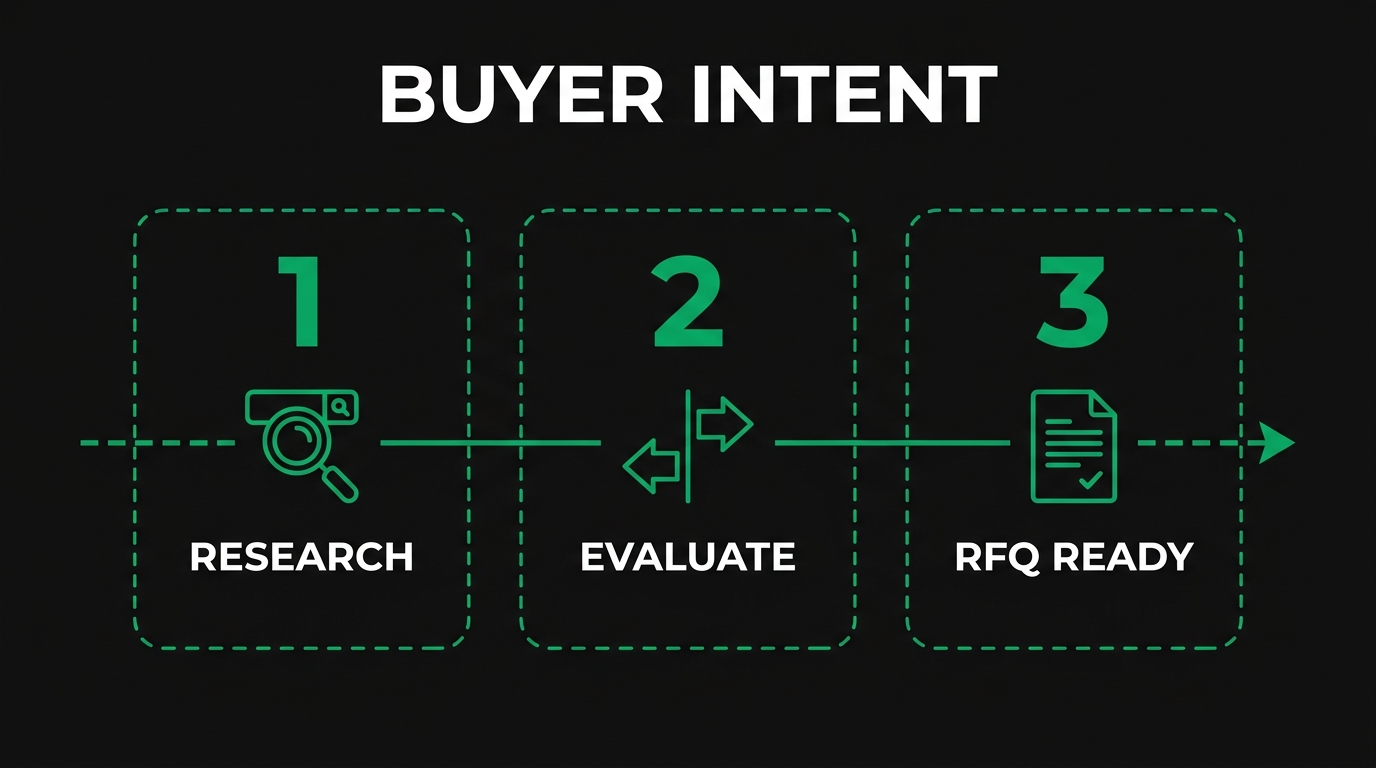
The search intent categories that drive additive manufacturing buyers are informational research, process evaluation, material qualification, certification verification, and procurement-ready RFQ intent. Buyers progress from "what is SLS" through "titanium DMLS tolerances" to "AS9100 metal AM supplier," with each tier narrowing the audience to higher-value engineers and purchasing managers.
A credible case study maps every ranking gain to a specific intent tier, proving the traffic aligns with buyer behaviour rather than hobbyist curiosity.
How Should You Verify the Claims Inside an AM SEO Case Study?
You should verify the claims inside an AM SEO case study by cross-checking three evidence layers: the traffic source (Google Search Console or a verifiable analytics snapshot), the ranking source (third-party rank trackers such as Ahrefs or Semrush), and the revenue source (CRM attribution tied to organic sessions). Ask for timestamped screenshots, the exact query set, and the landing URLs. Reject claims that lack source provenance or that conflate branded traffic with procurement-intent wins. A trustworthy case study names the AM process, material, and application so its results can be replicated in comparable verticals. The next question is which companies have produced verifiable wins.
Which Additive Manufacturing Companies Have Documented SEO Wins?
Additive manufacturing companies with documented SEO wins include industrial OEMs, service bureaus, and contract AM providers that built deep process, material, and application pages. Below, we examine the tactics used by Stratasys, EOS, 3D Systems, Protolabs, Xometry, and the patterns that recur across the winners.
What Did Stratasys, EOS, and 3D Systems Do to Capture Industrial Queries?
Stratasys, EOS, and 3D Systems captured industrial queries by building process-by-process technology hubs, material data sheets, and vertical landing pages aligned with engineer-intent keywords. Each brand consolidated content around its proprietary technologies, such as Stratasys FDM and PolyJet, EOS direct metal laser sintering, and 3D Systems SLA and MultiJet Printing. Application pages for aerospace, medical, automotive, and tooling linked every process to a verifiable engineer use case.
How Did Service Bureaus Like Protolabs and Xometry Scale Organic Traffic?
Service bureaus like Protolabs and Xometry scaled organic traffic by indexing thousands of material and process combinations and by publishing engineer-grade design guides that answered pre-RFQ questions. Protolabs layered design-for-manufacturing articles over material-grade pages. Xometry indexed certification-filtered and pricing-driven pages alongside instant-quote widgets. Both built programmatic templates so a single content system scaled across the long tail of procurement queries without diluting topical focus.
What Patterns Emerge Across Successful Additive Manufacturing Brands?
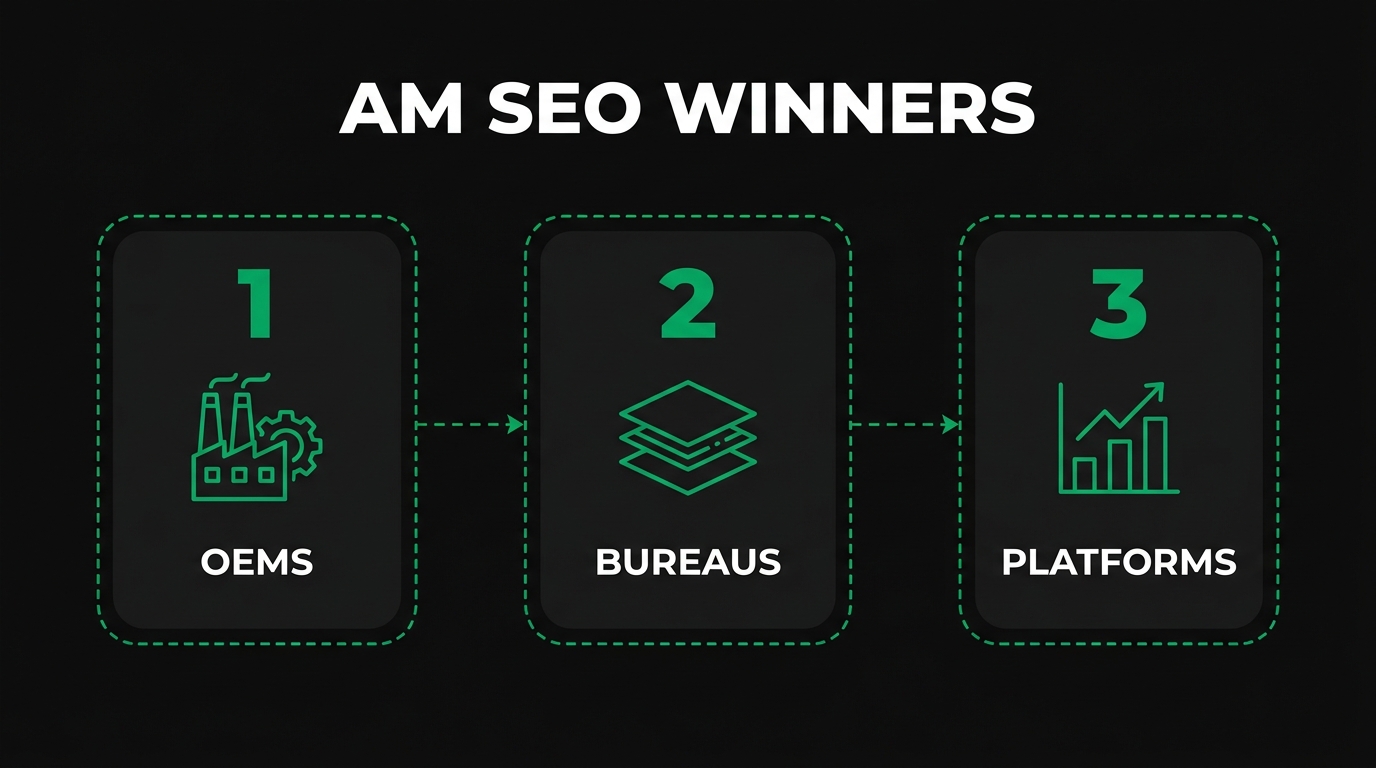
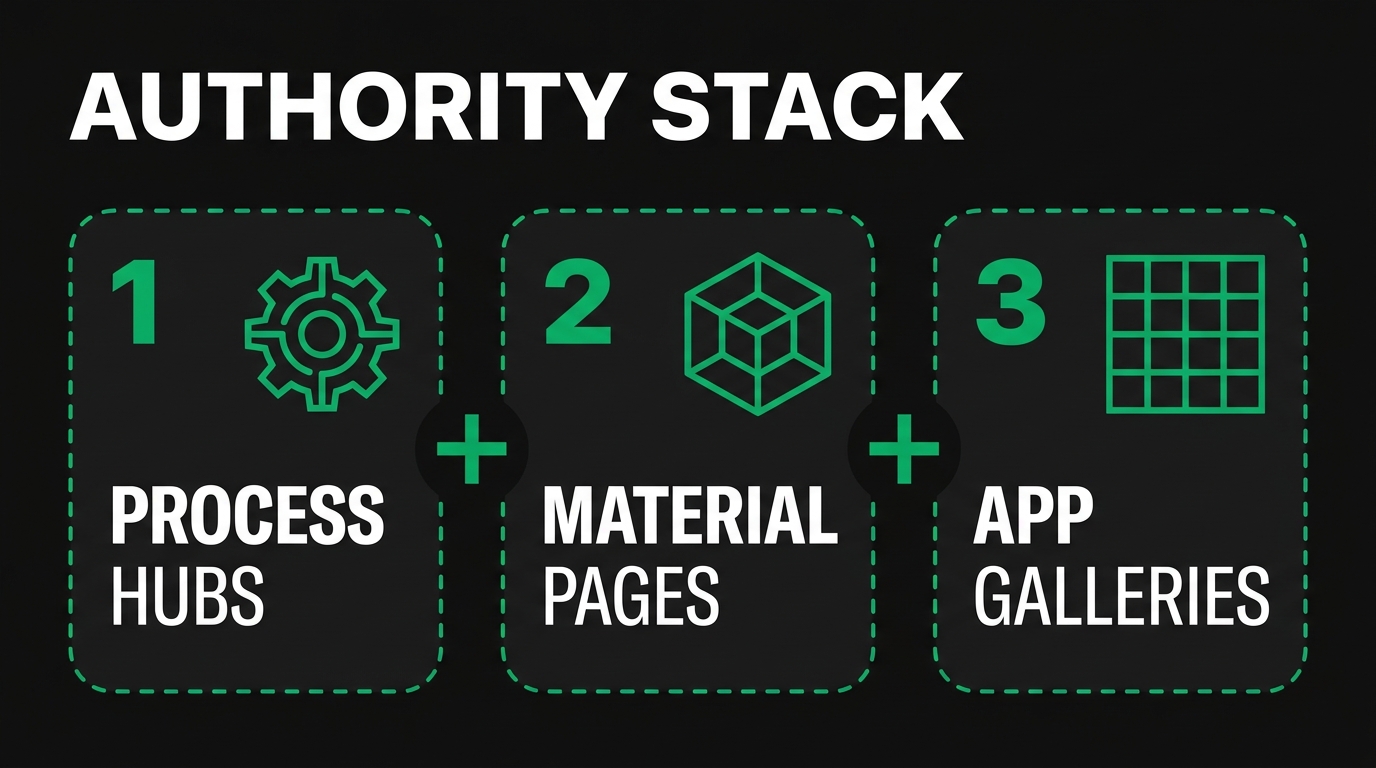
The patterns that emerge across successful additive manufacturing brands are four repeatable structures: process hubs, material pages, application galleries, and certification content. Each winner built topical depth before chasing backlinks, tied every page to a procurement-stage intent, embedded schema for rich results, and reported on pipeline value rather than impressions. Parallel pattern evidence appears in examples of successful b2b seo across industrial verticals. These patterns guide the process-authority, technical, and procurement-intent sections that follow.
How Did These Companies Build Topical Authority Around AM Processes?
These companies built topical authority around AM processes by publishing complete coverage of every process, material, and application their buyers searched for. Below, we cover process pages, material architectures, and application galleries, and how each drove compounding rankings.
What Process-Specific Pages Drive Rankings for SLS, FDM, SLA, and DMLS?
Process-specific pages that drive rankings for SLS, FDM, SLA, and DMLS cover fundamentals, tolerances, surface finishes, build volumes, and typical applications for each process, one page per process. Winners publish a dedicated hub for selective laser sintering, a separate hub for fused deposition modelling, another for stereolithography, and a fourth for direct metal laser sintering rather than a single "3D printing services" page. The playbook mirrors the step-by-step approach in how to improve website visibility for additive manufacturing.
How Did Material-Page Architecture (Titanium, Inconel, PEEK) Compound Traffic?
Material-page architecture for titanium, Inconel, and PEEK compounded traffic because engineers search "Ti-6Al-4V DMLS tolerances" before they search "3D printing services." Winners built one indexable page per alloy and polymer, each covering grade specification, post-processing, tested mechanical properties, and target applications. Linked to parent process hubs and child application galleries, these pages formed a three-tier architecture that spread internal authority across hundreds of long-tail queries, a pattern documented across manufacturing seo case studies. Material pages also host schema for Product and MaterialProperty nodes to reinforce entity signals.
Why Do Application Pages (Aerospace Brackets, Dental Aligners, Medical Implants) Convert?
Application pages for aerospace brackets, dental aligners, and medical implants convert because they match buyer language at the moment of vendor evaluation. Application pages show the buyer the exact part family in production, the process used, and the regulatory pathway, which collapses evaluation time and signals domain proof.
These topical patterns enable the technical SEO decisions covered next.
What Technical SEO Decisions Powered the Biggest Organic Gains?
The technical SEO decisions that powered the biggest organic gains were product and service schema, clean site architecture, and Core Web Vitals investment on engineer-facing pages. Below, we cover schema patterns, crawl architecture, and page-speed tactics that converted technical hygiene into rankings and conversion lift.
How Did Schema Markup for Products and Services Boost Visibility?
Schema markup for products and services boosted visibility by making process, material, and certification pages machine-readable for search engines. Winners deployed Product schema on material pages, Service schema on process hubs, FAQPage schema on engineer FAQs, and Organization schema with Wikipedia `sameAs` references for entity grounding. Detailed technical blueprints appear in our guide to seo strategies for manufacturing specifications.
Which Site Architecture Choices Reduced Crawl Waste on Large AM Catalogs?
Site architecture choices that reduced crawl waste on large AM catalogs were flat hub-and-spoke hierarchies, canonical consolidation, parameter handling, and pruning of low-value pages. Winners with catalogs above the large-site threshold consolidated faceted filter URLs, blocked crawl traps in robots.txt, and placed every process and material page within three clicks of the home page.
Clean architecture directs crawl capacity to the pages that convert.
How Did Page Speed and Core Web Vitals Lift Conversion on Engineer-Facing Pages?
Page speed and Core Web Vitals lifted conversion on engineer-facing pages because technical buyers abandon slow pages while evaluating multiple suppliers. Winners compressed CAD thumbnails, lazy-loaded application galleries, preloaded critical fonts, and self-hosted analytics scripts.
These technical foundations enable the procurement-intent keyword strategy next.
How Did Procurement-Intent Keyword Strategy Generate Qualified RFQs?
Procurement-intent keyword strategy generated qualified RFQs by filtering organic traffic toward engineers and purchasing managers who were already scoping suppliers. Below, we cover long-tail process and tolerance queries, certification keywords, and comparison queries that consistently closed more pipeline than generic service terms.
What Long-Tail Process and Tolerance Queries Closed the Most Pipeline?
The long-tail process and tolerance queries that closed the most pipeline were specification-level searches, such as "Ti-6Al-4V DMLS aerospace bracket tolerance," "PA12 SLS minimum wall thickness," and "Inconel 718 LPBF post-processing." These queries signalled a buyer who already knew the process, material, and design constraint. Winners built pages that answered each tolerance question with numeric ranges, test data, and a clear RFQ call to action, using the best seo tools for b2b manufacturing to surface the exact spec-level terms buyers typed.
How Did Certification Keywords (AS9100, ISO 13485, NADCAP) Filter High-Value Traffic?
Certification keywords such as AS9100, ISO 13485, and NADCAP filtered high-value traffic because only regulated-industry buyers type them. A search for "AS9100 metal AM supplier" surfaces aerospace procurement teams scoping qualified vendors; "ISO 13485 3D printed medical device" surfaces medical-device engineers. Winners built dedicated certification pages listing audit scope, applicable processes, and certificate numbers, then linked each certification page to the relevant application gallery.
The result is fewer visits, higher RFQ conversion, and shorter sales cycles.
Why Did Comparison Queries Outperform Generic Service Pages?
Comparison queries outperformed generic service pages because buyers in active evaluation search "SLS vs MJF surface finish," "Inconel 718 vs 625 post-processing," or "DMLS vs binder jetting" to narrow options rather than open them. Winners published side-by-side comparisons with test data, cost ranges, and application fit. Comparison pages rank because they match the exact modality of a late-funnel buyer query and earn time-on-page from engineers validating a shortlist.
These procurement-intent patterns set up the content formats that earn backlinks next.
What Content Formats Earned the Strongest Backlinks for AM Brands?
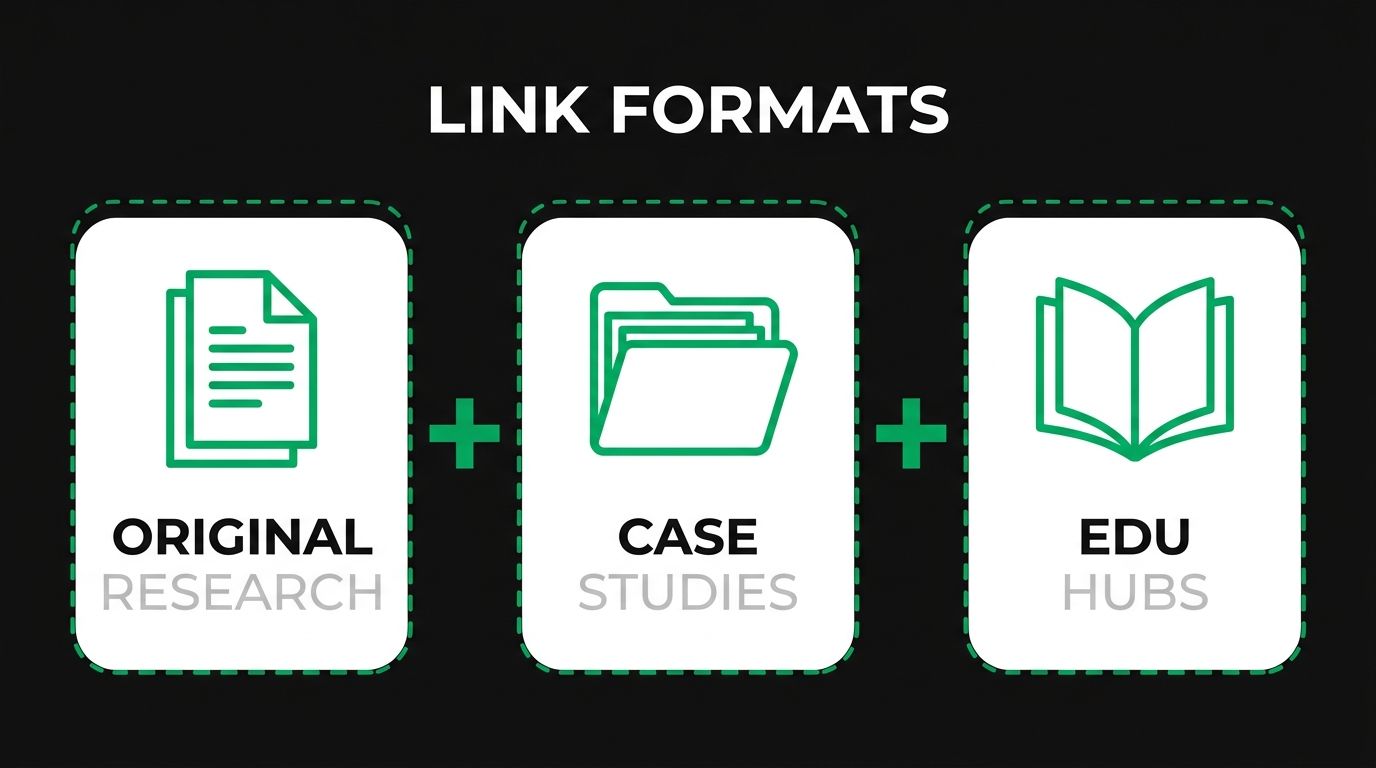
The content formats that earned the strongest backlinks for AM brands were original research, application case studies, and educational hubs. Below, we cover print studies, application galleries, and .edu-grade resources that repeatedly attracted editorial citations from trade publications, academic sources, and industry bodies.
How Did Original Research and Print Studies Attract Trade Publication Links?
Original research and print studies attracted trade publication links by producing citation-worthy data journalists and analysts could not source elsewhere. Winners published annual state-of-AM surveys, mechanical property datasets, and printed-part benchmarking studies with named authors and methodology appendices. Similar link-earning mechanics are documented in case studies: successful manufacturing e-commerce.
What Role Did Application Galleries and Case Studies Play in Link Acquisition?
Application galleries and case studies played a role in link acquisition by giving editors, analysts, and engineering educators concrete proof points to reference. Winners documented customer projects with part photos, process specifications, test results, and deployment outcomes. Galleries also seeded media mentions when customers were named in industry awards, creating natural link pathways that compounded domain authority across the AM content footprint.
Which Educational Hubs Captured Citations From .edu and Industry Bodies?
Educational hubs that captured citations from .edu and industry bodies were process-fundamentals guides, material property databases, and design-for-additive-manufacturing reference sites. Winners built glossaries, courseware, and calculator tools that faculty linked from syllabi and that standards bodies referenced in working-group papers.
These backlink foundations enable the AI and LLM citation section next.
How Did Additive Manufacturing Brands Win in AI Search and LLM Citations?
Additive manufacturing brands won in AI search and LLM citations by aligning content with knowledge-graph entities, publishing structured factual FAQs, and reinforcing brand identity across Wikipedia and authoritative directories. Below, we cover entity-building tactics, FAQ structuring, and Wikipedia alignment.
What Entity-Building Tactics Earned Citations Inside AI-Generated Answers?
The entity-building tactics that earned citations inside AI-generated answers were consistent NAP data, Organization schema with `sameAs` references, named executive bios linked to verifiable profiles, and dedicated pages for proprietary technologies. Winners published a crisp "About" page, linked their process names to Wikipedia anchors where they existed, and maintained a fact-dense homepage that LLMs could parse as the canonical source for brand-level claims.
How Did Structured FAQ Content Surface in Generative Search Engines?
Structured FAQ content surfaced in generative search engines because well-marked question-answer pairs match how LLMs retrieve and cite factual snippets. Winners authored FAQs that directly echoed engineer queries, kept answers concise and self-contained, and marked them with FAQPage schema. Each answer stood alone without surrounding context, which matched the retrieval chunking behaviour of generative systems and increased the odds of LLM citation.
Why Did Wikipedia and Knowledge Graph Alignment Strengthen Brand Authority?
Wikipedia and knowledge graph alignment strengthened brand authority because LLMs and classical SERPs both lean on canonical entity graphs when disambiguating brand mentions. Winners ensured their AM brand appeared on Wikipedia or Wikidata where notability permitted, referenced Wikipedia entries for processes and materials they served, and linked Organization schema `sameAs` values to the relevant entries.
These entity foundations enable the conversion lessons next.
What Conversion Optimization Lessons Emerged From AM SEO Case Studies?
The conversion optimization lessons that emerged from AM SEO case studies were disciplined RFQ form design, credible trust signals, and nurture sequences that connect organic sessions to closed revenue. Below, we cover form-field discipline, trust signal selection, and post-visit nurture patterns.
How Did RFQ Form Design Affect Qualified Lead Volume?
RFQ form design affected qualified lead volume because every additional field reduced completion and every ambiguous field invited low-quality submissions. Winners tightened RFQ forms to essential procurement fields: part volume, target material, required certification, timeline, and file upload.
Which Trust Signals Convinced Procurement Managers to Submit Specs?
The trust signals that convinced procurement managers to submit specs were visible certifications, named engineers, part-level photos, named customers, and transparent capability statements. AS9100, ISO 13485, IATF 16949, and NADCAP badges surfaced near the RFQ form to pre-qualify the supplier. Named engineers with verifiable LinkedIn profiles defused evaluation risk, and part photos with customer logos reinforced the supplier's fit for the exact part family.
What Post-Visit Nurture Sequences Tied Organic Sessions to Closed Revenue?
The post-visit nurture sequences that tied organic sessions to closed revenue were UTM-tagged landing paths, CRM-captured first-touch attribution, engineering-grade follow-up assets, and multi-touch nurture tracks segmented by process and material. Winners sent a technical design-for-additive checklist within 24 hours of form submission, followed by a case study aligned with the submitted part family.
These lessons enable the measurement framework next.
How Should Additive Manufacturers Measure SEO Performance Beyond Rankings?
Additive manufacturers should measure SEO performance beyond rankings by tying organic traffic to pipeline value, revenue attribution, and CRM-integrated closed-deal reporting. Below, we cover revenue-tied reporting models, pipeline attribution, and CRM integrations that connect search sessions to closed deals.
What Revenue-Tied Reporting Models Did Successful AM Companies Adopt?
The revenue-tied reporting models that successful AM companies adopted were RFQ-to-revenue attribution, per-process ROI dashboards, and first-touch plus multi-touch organic reporting. Winners reported monthly on organic sessions by process, RFQs generated, pipeline value created, and revenue closed, all traceable to the original landing page. For comparative tool context, review best seo tools for b2b manufacturing.
How Did Pipeline Attribution Reveal the True Value of Organic Channels?
Pipeline attribution revealed the true value of organic channels by exposing how much qualified pipeline originated from a specific process page, material page, or application gallery. Without attribution, finance teams saw organic as a cost centre and underfunded it. Winners mapped every RFQ submission to its entry URL, then tied that URL to pipeline stage progression so that executives saw which content assets moved deals forward, not just which attracted clicks.
Which CRM Integrations Connected Search Sessions to Closed Deals?
CRM integrations that connected search sessions to closed deals included HubSpot, Salesforce, Pipedrive, and Microsoft Dynamics, each with organic-channel fields populated at form submission and propagated through opportunity, proposal, and closed-won stages. Winners pushed UTM data, landing URL, keyword (where available), and session ID into the lead record so the sales team could reference the original procurement query during qualification calls.
These measurement foundations enable the common-mistakes review next.
What Common Mistakes Sank AM Companies That Failed to Replicate These Wins?
The common mistakes that sank AM companies that failed to replicate these wins were generic content, thin service pages, and risky backlink tactics. Below, we cover why generic manufacturing content failed to rank, how thin service pages blocked topical authority, and which link-building tactics triggered manual actions instead of growth.
Why Did Generic Manufacturing Content Fail to Rank for AM-Specific Queries?
Generic manufacturing content failed to rank for AM-specific queries because search engines reward specificity aligned with buyer language, and engineers searching "DMLS Inconel 718 aerospace bracket" do not click pages titled "manufacturing services." Losers wrote about "advanced manufacturing" in the abstract; winners wrote about one process, one material, and one application per page.
How Did Thin Service Pages Block Topical Authority?
Thin service pages blocked topical authority because a single 300-word "3D printing services" page cannot cover seven process categories, dozens of materials, and hundreds of applications with the depth needed to earn trust. Losers consolidated to one thin page; winners fragmented to dozens of focused pages, matching page count to buyer vocabulary rather than sales-slide simplicity.
What Backlink Tactics Triggered Manual Actions Instead of Growth?
The backlink tactics that triggered manual actions instead of growth were paid link schemes, private blog networks, low-quality guest-post farms, reciprocal link exchanges, and footer sitewide links from unrelated domains. Google's Search Quality team treats these patterns as link spam under its link-spam policy, and sites hit with manual actions experienced abrupt ranking collapses that took months of disavows and clean-up to recover. Winners invested instead in PR-grade editorial links, .edu citations, and trade publication features that survived algorithm updates.
These cautionary patterns set up the actionable brand bridge next.
How Should You Apply These Additive Manufacturing SEO Lessons With Manufacturing SEO Agency?
You should apply these additive manufacturing SEO lessons with manufacturing seo agency by mapping procurement-intent queries to process, material, and certification pages, then tying every ranking to pipeline value. Below, we cover how the agency's keyword architecture replicates documented AM wins and the key takeaways we have covered, including curated vertical manufacturing seo content and vertical-specific additive manufacturing seo programmes.
Can Manufacturing SEO Agency's Procurement-Intent Keyword Architecture Replicate These AM Case Study Results?
Yes, Manufacturing SEO Agency's procurement-intent keyword architecture can replicate these AM case study results by applying the same process-material-certification framework that documented winners used. Manufacturing SEO Agency builds procurement-intent keyword clusters mapped to each stage of the procurement journey, from initial material research through supplier evaluation to RFQ submission. Manufacturing SEO Agency focuses exclusively on industrial clients across CNC machining, injection molding, metal fabrication, and additive manufacturing, which means every keyword cluster reflects the language engineers and purchasing managers actually type. Manufacturing SEO Agency also ties rankings to RFQs, pipeline value, and closed revenue through CRM-integrated reporting, ensuring replicable outcomes rather than vanity metrics.
What Are the Key Takeaways About Additive Manufacturing SEO Case Studies We Covered?
The key takeaways about additive manufacturing SEO case studies we covered are five actionable points. First, credibility depends on verifiable metrics, intent fit, and source provenance. Second, documented winners built process, material, application, and certification pages rather than scattered blog posts. Third, technical SEO investments in schema, architecture, and Core Web Vitals compounded rankings and conversion. Fourth, procurement-intent keywords, long-tail tolerance queries, and certification terms filtered traffic toward qualified buyers. Fifth, revenue-tied reporting and CRM attribution separated winners from imitators. Applying these patterns with a manufacturing-only partner ensures the strategy reflects real procurement behaviour.