Improving website visibility for additive manufacturing means increasing how often, how prominently, and how credibly an additive manufacturing supplier's pages appear across organic search, vertical sourcing platforms, and AI answer engines for the process, material, certification, and application queries that engineers and procurement managers actually type.
This guide covers what visibility means in the additive manufacturing context, why visibility shapes RFQ volume and pipeline value, the technical SEO foundations that earn crawl and ranking trust, the keyword research that maps procurement intent, the content strategy that builds topical authority, the role of backlinks and digital PR, the rules of AI search and LLM citations, and the measurement framework that ties visibility back to revenue.
We define visibility in terms of process, material, and certification specificity, not generic traffic. Pages that surface for "selective laser melting titanium aerospace" do far more pipeline work than pages ranking for broad "3D printing" queries.
We treat low visibility as a direct constraint on RFQ volume, since procurement journeys begin in search and end on a supplier shortlist that buyers build before any sales contact.
We anchor technical SEO around crawlable process and material pages, schema markup that exposes capabilities to engines and large language models, Core Web Vitals on spec-heavy pages, and remediation of the recurring crawl, indexing, and rendering errors common to industrial sites.
We frame keyword research as a procurement-funnel exercise that prioritizes process-material-application combinations and certification qualifiers over vanity terms.
We build topical authority through pillar-and-cluster maps that cover every additive process, material family, certification, and application domain a buyer might evaluate.
We extend coverage into AI search surfaces, where entity grounding, schema, and citation-friendly content structure determine whether an additive brand appears in generative answers.
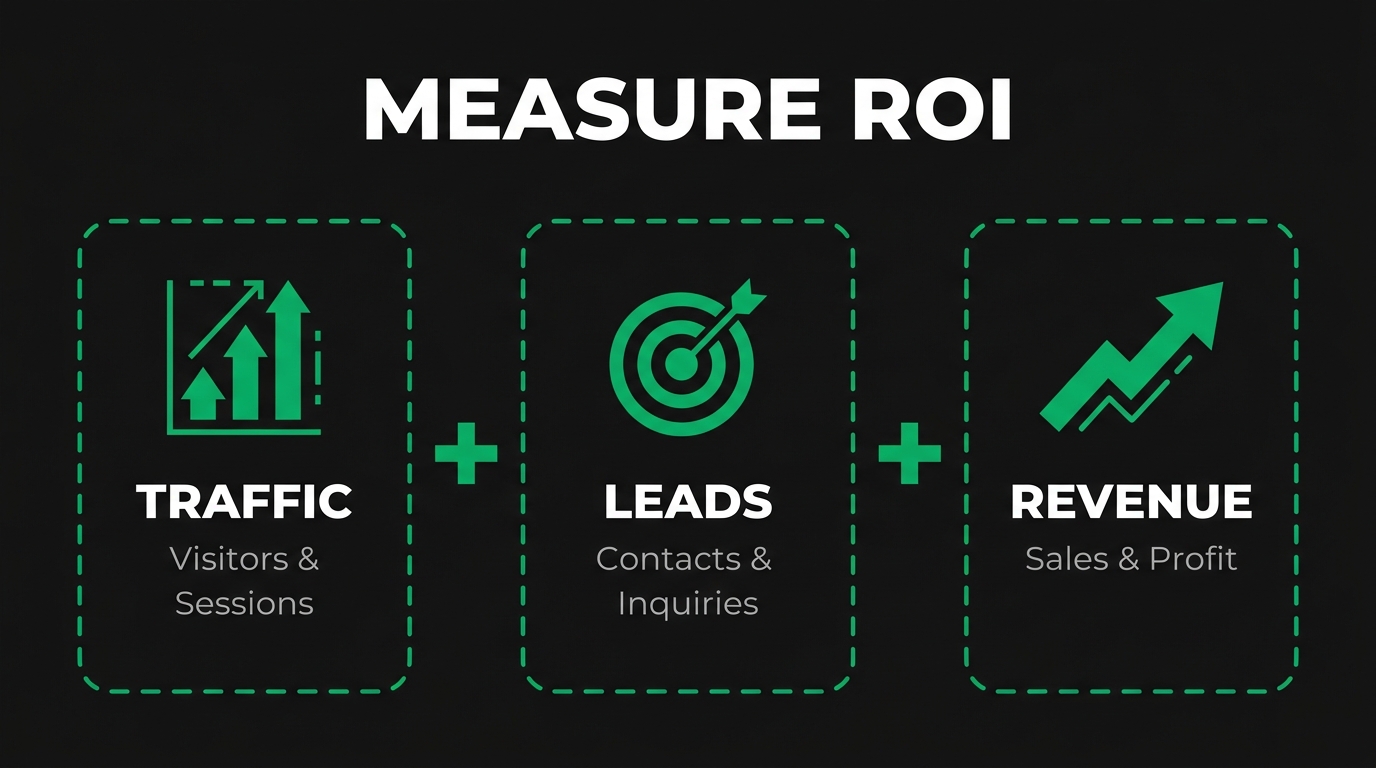
We close with a measurement framework that translates rankings, sessions, and impressions into RFQs, pipeline, and closed revenue, the only visibility metrics that matter to manufacturing leadership.
What Is Website Visibility for an Additive Manufacturing Company?
Website visibility for an additive manufacturing company is the measurable presence of its pages across organic search, vertical sourcing platforms, and AI answer engines for process, material, and certification queries buyers run. The next subsections explain how it differs, what behaviors define it, and which components compose it.
How Does Search Visibility Differ for Additive Manufacturing Versus Other Industrial Sectors?
Search visibility differs for additive manufacturing because buyers query specific processes, materials, and certifications rather than broad service terms. Engineers search using exact ISO/ASTM category names, so a page targeting "powder bed fusion Inconel 718" outperforms one targeting "3D printing services." Foundational reading like what is additive manufacturing helps editorial teams calibrate the vocabulary buyers actually type.
Which Procurement-Intent Search Behaviors Define Additive Manufacturing Buyers?
Procurement-intent search behaviors that define additive manufacturing buyers include process-specific queries, material grade combinations, certification qualifiers, tolerance and build-volume filters, and supplier-shortlist research. Buyers stack qualifiers in a single query, such as "DMLS titanium AS9100 supplier," to cut through generic results. They also alternate between web search and vertical sourcing platforms during evaluation.
What Are the Core Components That Make Up Visibility for an Additive Manufacturing Website?
The core components that make up visibility for an additive manufacturing website are crawlable process and material pages, schema-marked capability data, certification and quality-system signals, technical content depth, authoritative backlinks, and AI-citation-friendly structure. Each component compounds: schema feeds entity recognition, entity recognition feeds AI citations, citations feed brand search, and brand search feeds direct RFQs.
Why Is Improving Website Visibility Critical for Additive Manufacturing Businesses?
Improving website visibility is critical for additive manufacturing businesses because procurement journeys start in search, and a supplier invisible on page one is absent from the buyer's shortlist. The next subsections explain RFQ and pipeline effects, organic search's funnel role, and how engineers and procurement managers discover suppliers.
How Does Low Visibility Affect RFQ Volume and Pipeline Value for Additive Manufacturers?
Low visibility affects RFQ volume and pipeline value for additive manufacturers by removing the supplier from consideration before a conversation ever happens. Procurement teams build shortlists during the research stage, and suppliers that do not rank on queries tied to process, material, and certification never appear on that list. Each missing ranking represents lost RFQs, not lost impressions. Smaller shops evaluating this gap often benefit from seo for small manufacturing companies guidance.
What Role Does Organic Search Play in the Additive Manufacturing Sales Funnel?
Organic search plays a primary role in the additive manufacturing sales funnel by sourcing the awareness, evaluation, and supplier-validation queries that precede any RFQ. Pages at positions one through three capture the majority of engineer and procurement traffic for process-specific queries, and higher positions also correlate with higher brand recall during vendor evaluation. Ranking at the top of page one for RFQ-adjacent queries is, in effect, a position on the buyer's shortlist.
How Do Engineers and Procurement Managers Discover Additive Manufacturing Suppliers Online?
Engineers and procurement managers discover additive manufacturing suppliers online through a combination of process-specific Google searches, vertical sourcing platforms, trade publication roundups, and AI answer engines. Buyers typically start on Google for definitional and comparison queries, move to sourcing platforms for shortlist construction, then return to the supplier's website to validate certifications and capabilities. Visibility must cover every stage of this path for the shortlist to include your brand.
Which Technical SEO Foundations Must Additive Manufacturing Websites Get Right?
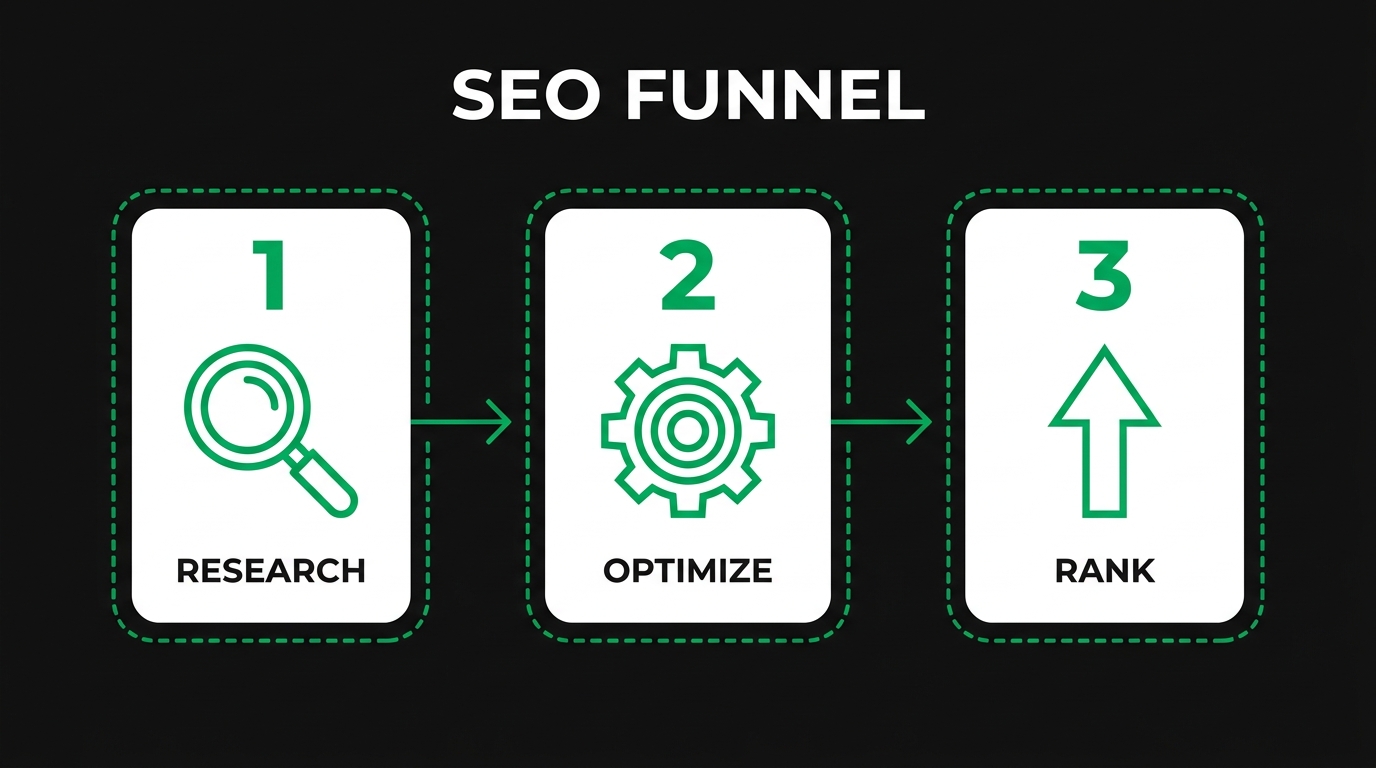
The technical SEO foundations additive manufacturing websites must get right are crawlable process and material pages, capability-exposing schema, page-experience tuning on spec-heavy pages, and remediation of recurring crawl and indexing errors. The next subsections cover page structure, schema, Core Web Vitals, and common technical errors.
How Should Additive Manufacturing Sites Structure Crawlable Process and Material Pages?
Additive manufacturing sites should structure crawlable process and material pages with dedicated URLs per ISO/ASTM process category, material grade landing pages linked from each process, and internal linking that mirrors how engineers narrow from process to material to application. Each process page should carry a unique H1 matching the category name, a capability summary, tolerance and build-volume specs, and outbound links to compatible materials. Practical guidance appears in how to improve industrial website ranking and specification-level structure in seo strategies for manufacturing specifications.
What Schema Markup Best Supports Additive Manufacturing Product and Service Pages?
The schema markup that best supports additive manufacturing product and service pages is a combined Organization, Service, Product, and FAQPage graph, plus BreadcrumbList on process and material hubs. Organization schema grounds the brand as an entity; Service schema exposes capabilities, areas served, and certifications; Product schema covers printed parts when listed as catalog items; FAQPage earns rich-result CTR on buyer-question pages.
How Can Core Web Vitals Be Optimized for Spec-Heavy Additive Manufacturing Pages?
Core Web Vitals can be optimized for spec-heavy additive manufacturing pages by compressing process and part imagery, deferring non-critical scripts, lazy-loading specification tables below the fold, and server-rendering content that buyers need above the fold. Spec-heavy pages tend to fail on Largest Contentful Paint because of hero renders and on Cumulative Layout Shift because of late-loading tables.
What Are the Most Common Technical SEO Errors on Additive Manufacturing Websites?
The most common technical SEO errors on additive manufacturing websites are orphaned process pages, duplicated material descriptions across service children, missing or malformed schema on capability pages, broken internal links after rebuilds, and slow server responses on PDF-heavy spec libraries. Crawl budget suffers when certification PDFs are indexed instead of HTML pages, and indexing suffers when each material variant sits on a parameterized URL without canonicalization.
How Should You Conduct Keyword Research for Additive Manufacturing Visibility?
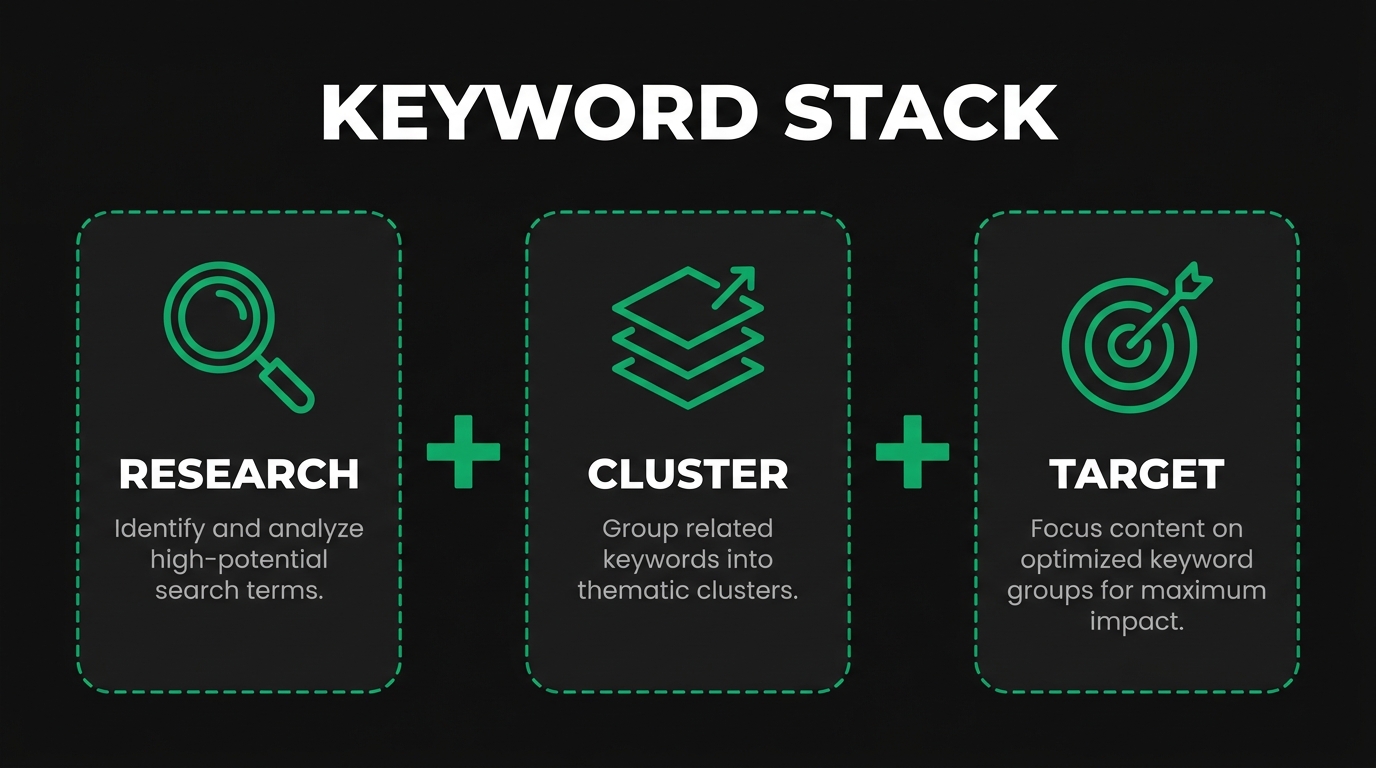
Conducting keyword research for additive manufacturing visibility means building the query universe from process, material, application, and certification combinations, then mapping each query to a procurement-funnel stage and sorting by commercial value and difficulty. The next subsections cover combinations, funnel mapping, tools, and prioritization.
Which Process, Material, and Application Keyword Combinations Drive Buyer Intent?
The process, material, and application keyword combinations that drive buyer intent are queries that stack three qualifiers at once, such as "selective laser melting Inconel 718 aerospace bracket" or "HP MJF nylon 12 functional prototype housing." These three-qualifier queries signal an active RFQ stage because no researcher types all three unless a specification is in hand. Two-qualifier queries capture evaluation-stage buyers, and single-qualifier queries capture awareness traffic.
How Can You Map Additive Manufacturing Keywords to the Procurement Funnel?
Additive manufacturing keywords map to the procurement funnel by assigning each query to awareness, evaluation, or RFQ-intent stages and tying that stage to a content format and page template. Awareness queries (process definitions, material overviews) map to pillar educational pages. Evaluation queries (process comparisons, material selection, tolerances) map to cluster comparison pages. RFQ-intent queries (three-qualifier specifications, certification plus region) map to capability hubs and contact-adjacent pages. This mapping prevents the common mistake of dropping buyer-intent content on blog pages with no conversion path.
What Tools Help Identify High-Intent Additive Manufacturing Search Queries?
The tools that help identify high-intent additive manufacturing search queries are Ahrefs and Semrush for seed expansion and SERP analysis, Google Search Console for zero-click and impression data on existing pages, AlsoAsked and AnswerThePublic for question clusters, and specification catalogs from material suppliers for qualifier mining. A concise comparison of platforms suitable to industrial use cases appears in best seo tools for b2b manufacturing.
How Do You Prioritize Keywords by Commercial Value and Competitive Difficulty?
Prioritize keywords by commercial value and competitive difficulty using a two-axis model: RFQ-value proxy (certification-gated, three-qualifier, or named-application queries rank highest) versus keyword difficulty (domain rating of top-ten results and content-depth threshold). Start with high-value, moderate-difficulty clusters where the SERP still includes directories rather than entrenched competitors. Segmentation discipline matters, since OEM and B2B contract work rank under different query patterns, as detailed in oem seo vs b2b manufacturing seo.
What Content Strategy Builds Topical Authority for Additive Manufacturing?
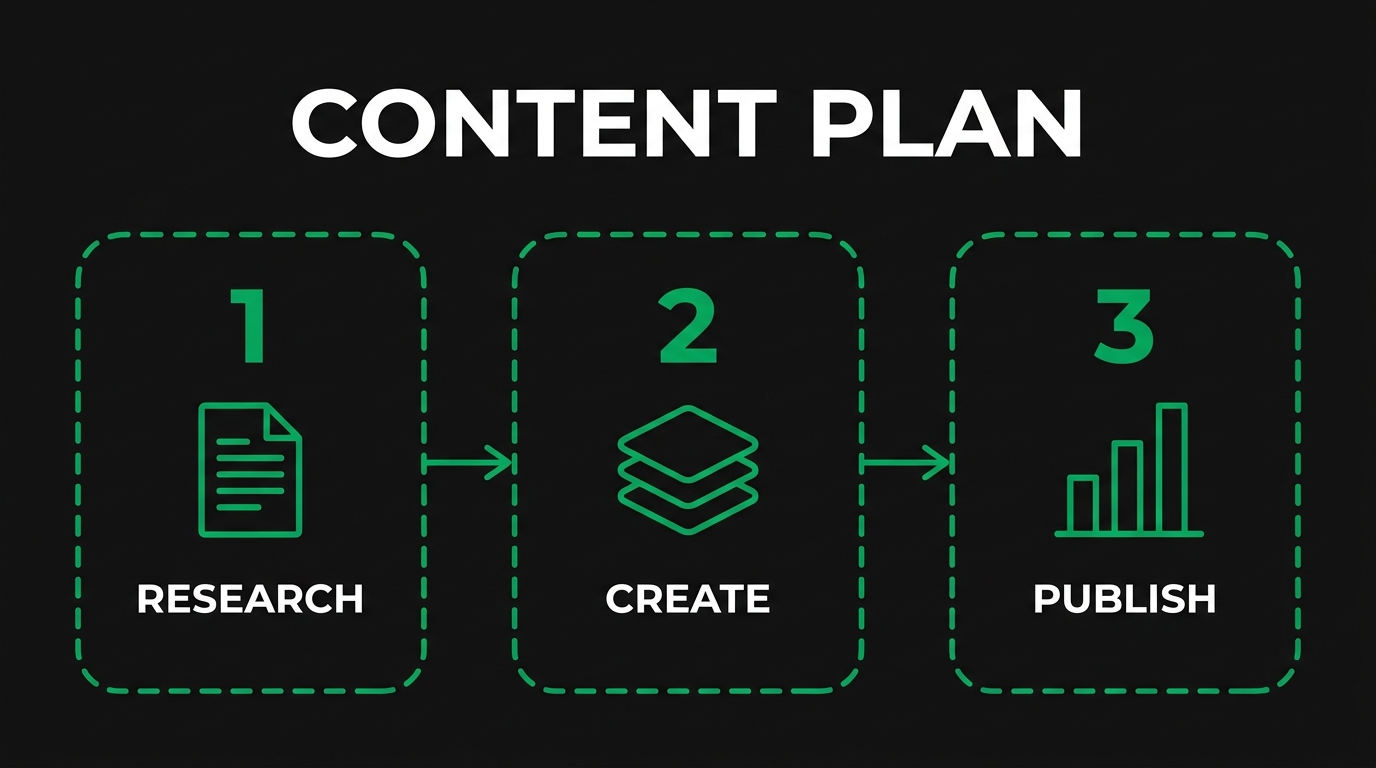
The content strategy that builds topical authority for additive manufacturing is a pillar-and-cluster topical map covering every process category, material family, certification, and application, executed through formats engineers actually read. The next subsections cover topical mapping, formats, comparisons and guides, and case studies.
How Do You Build a Topical Map Covering Additive Processes, Materials, and Certifications?
Build a topical map covering additive processes, materials, and certifications by creating a parent pillar per ISO/ASTM process category, child clusters per material family printable on that process, and cross-linked certification pages (AS9100, ISO 13485, ITAR) tied to the processes and materials that require them. Application pages (aerospace brackets, orthopedic implants, tooling inserts) sit as a third layer referencing the process and material parents.
Which Content Formats Earn Visibility for Additive Manufacturing Topics?
The content formats that earn visibility for additive manufacturing topics are long-form process and material guides, side-by-side comparison articles, technical FAQs, benchmark tables, video build-demonstrations, and downloadable specification sheets. Long-form guides carry the pillar ranking weight and anchor internal linking; comparisons capture evaluation-stage intent; FAQs earn rich-result snippets; tables feed AI answer engines; videos extend dwell time on spec-heavy pages.
How Should You Cover Process Comparisons, Material Selection, and Application Guides?
Cover process comparisons, material selection, and application guides with explicit head-to-head frameworks that list tolerances, surface finish, build volume, typical cost per part, certification fit, and failure modes side by side. Material selection guides should order candidates by mechanical properties, thermal performance, biocompatibility or aerospace qualification, and post-processing requirements. Application guides should start with the part function, then work backward through material and process candidates. Contract shops often compare differently than custom shops, a distinction unpacked in contract manufacturing vs custom manufacturing seo.
How Can Case Studies and Technical White Papers Increase Additive Manufacturing Visibility?
Case studies and technical white papers increase additive manufacturing visibility by supplying the original, first-party evidence that search engines and LLMs prioritize, while also feeding natural backlinks from trade publications. Each case study should document part function, process and material selected, build parameters, qualification testing, and measured outcomes, written with enough specificity that it cannot be confused with a template. Readers looking for documented performance evidence find real numbers in additive manufacturing seo case studies.
How Do Backlinks and Digital PR Improve Additive Manufacturing Search Visibility?
Backlinks and digital PR improve additive manufacturing search visibility by supplying the external trust signals that rankings and AI citations depend on, with trade-publication links carrying the strongest weight. The next subsections cover authoritative sources, link-building tactics, conferences and standards bodies, and backlink impact measurement.
Which Trade Publications and Industry Sources Are Most Authoritative for Additive Manufacturing?
The most authoritative trade publications and industry sources for additive manufacturing are TCT Magazine, 3D Printing Industry, Additive Manufacturing Media, Metal AM, The Voice of 3D Printing (3DPrint.com), ASME, SME publications, and standards bodies such as ISO and ASTM International. Links from these outlets carry topical relevance that generic PR links cannot match, because their readership and outbound citations are already aligned with the buyer's query graph. Agencies delivering additive manufacturing seo work prioritize these outlets first.
What Link-Building Tactics Work for Additive Manufacturing Companies?
The link-building tactics that work for additive manufacturing companies are original data releases, qualification and benchmark studies, expert-contributed feature articles in trade publications, part-of-the-month or build-of-the-month features, standards-committee participation, and co-authored technical pieces with material suppliers. Submit proprietary test data, qualification milestones, or material development work to editors who cover the relevant process category.
How Can Industry Conferences and Standards Bodies Support a Backlink Strategy?
Industry conferences and standards bodies support a backlink strategy by providing participant pages, speaker profiles, program listings, and committee rosters that become high-authority sources. Events such as RAPID + TCT, Formnext, AMUG, and IMTS publish sponsor and speaker pages that index and earn re-citations from the press covering the show. Standards bodies (ASTM F42, ISO/TC 261) list committee members on high-authority domains, which also feed entity recognition.
How Do You Measure the Visibility Impact of New Backlinks?
Measure the visibility impact of new backlinks by tracking referring-domain growth against ranking deltas on target clusters, isolating pages that receive new links, and segmenting ranking changes by query type. Monitor four signals per month: referring-domain count, linked-anchor text distribution, rankings on target pages linked to by new domains, and organic impressions on those pages from Search Console. Attribution windows of 30 to 90 days match Google's indexing and ranking refresh cycles, so avoid evaluating a link campaign at two-week intervals. The measurement loop closes into the authority work that feeds AI search visibility next.
How Can Additive Manufacturing Websites Win in AI Search and LLM Citations?
Additive manufacturing websites win in AI search and LLM citations by grounding the brand as a recognized entity, structuring content so answer engines extract clean responses, and applying rules that differ from classical SERPs. The next subsections cover entity and schema signals, citation-friendly structure, and classical-versus-AI differences.
Which Entity and Schema Signals Help LLMs Cite Additive Manufacturing Brands?
The entity and schema signals that help LLMs cite additive manufacturing brands are a consistent Organization node with sameAs references to Wikipedia, Wikidata, Crunchbase, and industry directories; Service and Product schema on capability pages; author schema on technical content; and consistent name, address, and certification data across sources. Incomplete or inconsistent entity data is the single most common reason a qualified additive brand gets bypassed in AI answers.
How Should You Structure Content to Be Quoted in AI-Generated Answers?
Structure content to be quoted in AI-generated answers by leading each section with a direct one-sentence answer that echoes the query, placing key facts in the first 30 percent of the page, using question-form H2 and H3 headings that mirror buyer language, and supporting claims with named sources inline.
What Optimization Practices Differ Between Classical SERPs and AI Search Surfaces?
The optimization practices that differ between classical SERPs and AI search surfaces are keyword density versus semantic completeness, link authority versus entity authority, rich-snippet targeting versus passage-level extractability, and meta-tag tuning versus structured-data exposure. Classical SERPs reward breadth of anchor text and on-page keyword coverage; AI surfaces reward definitional clarity, named entities, and extractable answer blocks.
How Do You Measure and Report Visibility Gains for Additive Manufacturing Sites?
Measure and report visibility gains for additive manufacturing sites using metrics tied to real buyer behavior, attribution that connects organic outcomes to RFQs and revenue, and reporting cadences calibrated to manufacturing decision rhythms. The next subsections cover meaningful metrics, revenue attribution, and reporting cadence.
Which Metrics Best Reflect Real Visibility for Additive Manufacturing Brands?
The metrics that best reflect real visibility for additive manufacturing brands are rankings on procurement-intent clusters, AI citation share on target queries, share of voice against named competitors, capture of three-qualifier long-tail impressions, and RFQ-page entry rate from organic sessions. Vanity impressions on broad queries inflate dashboards without reflecting buyer contact.
How Do You Tie Organic Visibility to RFQ Volume and Closed Revenue?
Tie organic visibility to RFQ volume and closed revenue by instrumenting first-touch and multi-touch attribution, passing organic landing-page context into the CRM, and reconciling closed-won deals back to their original organic entry point. Configure organic attribution via referrer capture, enrich lead records with landing-page process and material context, then pipe that context into RFQ workflows. Quarterly reconciliation matches closed revenue to organic cohorts.
Which Reporting Cadence and Dashboards Work for Manufacturing Stakeholders?
The reporting cadence and dashboards that work for manufacturing stakeholders are weekly operational dashboards for the SEO team, monthly executive summaries tying rankings to RFQs and pipeline, and quarterly business reviews that report closed-won revenue and cohort behavior. Operational dashboards cover rankings, indexing, crawl errors, and page-experience scores. Executive summaries surface only the metrics that influence budget decisions: RFQ volume, pipeline value, share of voice, and cost per RFQ. Quarterly reviews tie revenue back to the original content, link, and technical investments. Reporting discipline at these three tempos prevents both over-communication to executives and under-visibility for operators. Measurement closes the loop between strategy and sustained additive manufacturing visibility.
How Should You Approach Improving Additive Manufacturing Visibility With Manufacturing SEO Agency?
You should approach improving additive manufacturing visibility with Manufacturing SEO Agency by starting with a procurement-intent audit, following with topical authority buildout tied to process, material, and certification coverage, and closing with revenue-tied reporting. The next subsections cover the topical authority service and the article's key takeaways.
Can Manufacturing SEO Agency's Topical Authority Buildout Service Improve Additive Manufacturing Website Visibility?
Yes, Manufacturing SEO Agency's Topical Authority Buildout service can improve additive manufacturing website visibility by constructing the full topical map a buyer traverses during evaluation. Manufacturing SEO Agency maps every relevant process, material, certification, and application into a pillar-and-cluster structure, then produces the technical long-form content, schema, and internal linking that earn ranking trust across classical and AI surfaces. As a manufacturing seo agency focused only on industrial clients, the work compounds across every additive process a buyer evaluates, and pairs with editorial execution informed by vertical manufacturing seo content planning.
What Are the Key Takeaways About Improving Website Visibility for Additive Manufacturing We Covered?
The key takeaways about improving website visibility for additive manufacturing are that visibility must be defined at the process, material, and certification level; that technical foundations, topical coverage, and authority signals compound; and that revenue attribution is the only metric that proves the program works. Front-load direct answers, structure pages for both classical and AI surfaces, earn links from trade and standards sources, and report against RFQs and closed revenue instead of vanity traffic. Additive visibility is built through topical depth across the full procurement query graph, not through isolated blog posts. Executed against the procurement funnel, the same program that ranks pages also produces shortlist placements, RFQs, and measurable pipeline.