Improving industrial website ranking on Google means aligning your manufacturing site with procurement-intent signals, technical health standards, and authority metrics that Google uses to surface the best supplier answers. We approach this as a disciplined process that connects engineer queries, capability content, and measurable pipeline outcomes.
This guide covers why industrial rankings matter for manufacturers, the foundational SEO strategies that move the needle, topical authority buildout, technical and on-page optimization, authoritative backlink acquisition, local and multi-facility search, AI search visibility, measurement and reporting, common ranking mistakes, and how to execute improvements alongside Manufacturing SEO Agency.
Industrial ranking matters because B2B buyers increasingly self-serve online before contacting sales, and visibility inside Google and AI surfaces decides whether an RFQ lands with you or a competitor.
Foundational strategies include site audits, procurement-intent keyword architecture, process and material mapping, and competitor gap analysis that exposes where rival manufacturers outrank you.
Topical authority, technical SEO, and on-page optimization work together to make Google confident that your domain is the best answer for specific processes, materials, tolerances, and certifications.
Authoritative backlinks, local and multi-facility optimization, and AI search preparation compound that authority across trade media, Google Business Profile, and LLM citation surfaces.
Measurement, common mistakes, and the bridge to Manufacturing SEO Agency close the loop by tying ranking movement to RFQs, pipeline, and closed revenue.
Why Does Industrial Website Ranking on Google Matter for Manufacturers?
Industrial website ranking on Google matters for manufacturers because engineers and purchasing managers now research, shortlist, and sometimes specify suppliers before a sales conversation, so invisible catalogs lose RFQs to ranked competitors. The sub-sections below examine ranking differences, procurement-stage queries, and how technical buyers actually search.
How Does Google Rank Manufacturing and Industrial Websites Differently from Consumer Sites?
Google ranks manufacturing and industrial websites differently from consumer sites by weighting supplier-specific signals more heavily: certifications, capability depth, facility proximity, and technical specification accuracy.
Industrial sites have fewer but more commercially critical pages, so internal linking and anchor discipline move rankings faster on capability and service URLs than on consumer blog networks. Foundational context on what is industrial seo explains the full ranking model.
What Procurement-Stage Queries Should an Industrial Website Capture?
An industrial website should capture procurement-stage queries spanning problem identification, solution exploration, requirements definition, supplier comparison, and validation. There are five query families to cover: process queries (such as "5-axis CNC machining service"), material queries (such as "Inconel 718 fabrication"), certification queries (such as "AS9100 CNC supplier"), tolerance or specification queries, and comparison queries. Capture each family with dedicated capability pages, material landing pages, and certification proof pages.
Long-tail procurement queries often have low volume but carry high RFQ intent, which is why hitting page one on dozens of specific supplier searches compounds pipeline faster than one generic head term.
How Do Engineers and Purchasing Managers Search for Suppliers on Google?
Engineers and purchasing managers search for suppliers on Google by using precise, technical strings that combine process, material, tolerance, certification, and location modifiers.
Engineers favor specification-first queries, while purchasing managers lean on quote-readiness cues like "ISO 9001" or "RFQ" attached to capability terms. Suppliers who match this specificity in titles, headings, and body copy rank consistently for the queries that actually produce RFQs.
What Are the Foundational Manufacturing SEO Strategies That Move Industrial Rankings?
The foundational manufacturing SEO strategies that move industrial rankings are the audit, procurement-intent keyword architecture, process and material funnel mapping, and competitor gap analysis. Together these industrial seo strategies form the baseline that every later tactic depends on.
How Do You Audit an Industrial Website Before Optimizing for Google?
You audit an industrial website before optimizing for Google by inventorying every capability, service, location, and product page, then checking each for crawlability, indexation, intent match, specification depth, and internal link equity. Begin with a crawl using a tool like Screaming Frog, export the URL list, and map each page to a primary procurement query. Flag thin pages, duplicated capability copy, and pages missing certifications or tolerances.
What Procurement-Intent Keyword Architecture Should You Build?
The procurement-intent keyword architecture you should build is a tiered map of head terms, mid-tail process and material combinations, and long-tail specification queries, with each tier assigned to a specific page type. There are four architecture tiers to plan: capability pillar pages, process and material spokes, certification proof pages, and RFQ-ready service pages. Each URL targets one primary intent and supports siblings through internal links. Deep coverage beats breadth.
Review our companion guide on industrial keywords? ultimate guide for taxonomy detail.
How Do You Map Process, Material, and Certification Keywords to Each Funnel Stage?
You map process, material, and certification keywords to each funnel stage by matching query intent to buyer job: awareness queries target educational content, consideration queries target capability and comparison pages, and decision queries target RFQ, pricing, and proof pages. Use a spreadsheet with columns for query, modality, primary process, material, certification, funnel stage, and target URL. Process queries like "Swiss CNC turning" map to capability pages. Material queries like "titanium grade 5" map to material hubs. Certification queries like "AS9100D supplier" map to proof pages that show scope, audit history, and customer verticals.
How Do You Run a Competitor Analysis That Surfaces Industrial Ranking Gaps?
You run a competitor analysis that surfaces industrial ranking gaps by identifying three to five direct supplier competitors, exporting their ranking keywords, and filtering for terms where they rank in the top ten and you do not.
Build a prioritized gap sheet, then fill it. See our step-by-step competitor analysis for industrial seo for the full workflow.
How Do You Build Topical Authority for an Industrial Website on Google?
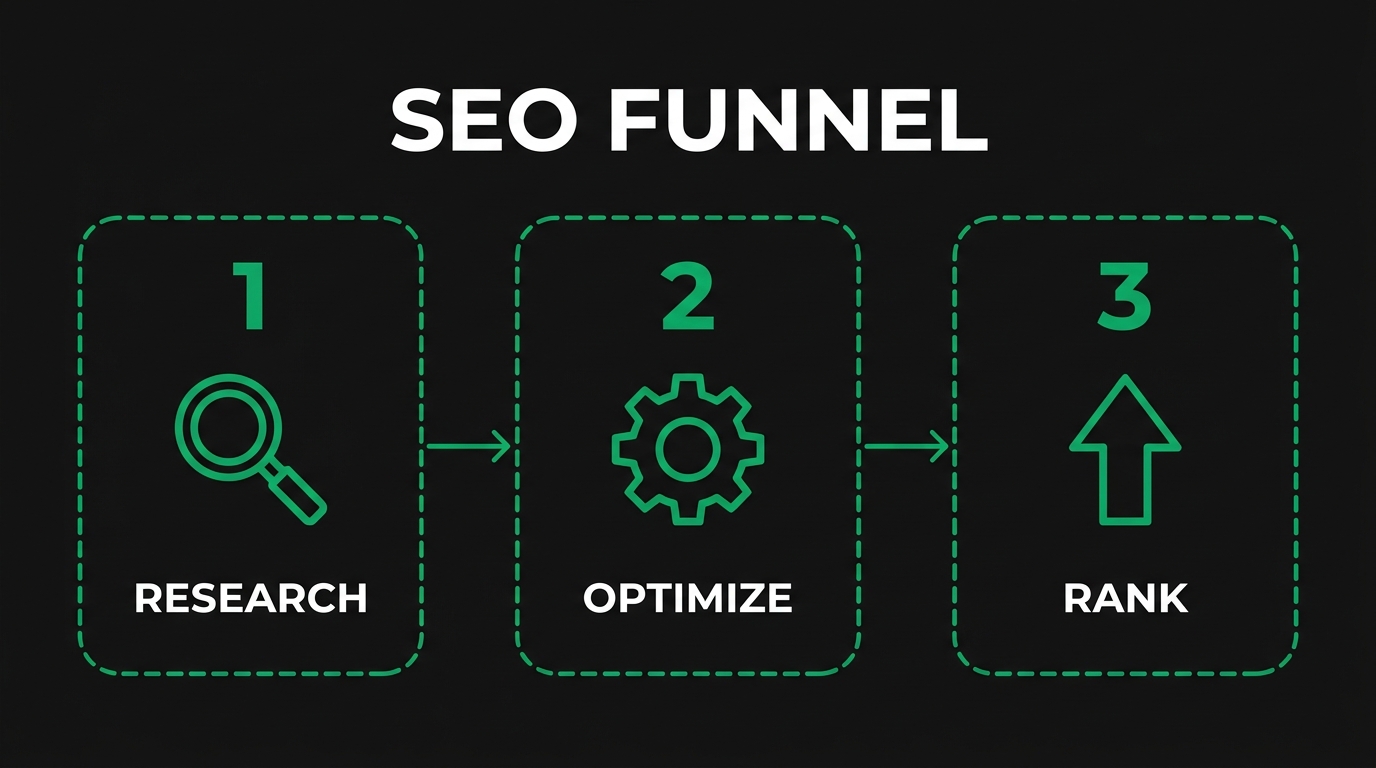
You build topical authority for an industrial website on Google by covering every process, material, certification, and vertical you serve with dense, linked content forming a coherent topical map. The sub-sections below detail the map, clustering, internal links, and cannibalization controls.
What Topical Maps Should an Industrial Manufacturer Cover Across Processes and Materials?
The topical maps an industrial manufacturer should cover across processes and materials are organized around four intersecting axes: processes, materials, certifications, and end-use verticals. For a CNC shop, that means process pages (milling, turning, Swiss, EDM), material pages (aluminum, stainless, Inconel, titanium), certification pages (ISO 9001, AS9100, ITAR), and vertical pages (aerospace, medical, defense). Every intersection that produces real RFQs deserves its own page. Adjacent verticals deserve their own maps; additive manufacturers can model this with how to improve website visibility for additive manufacturing.
How Do You Cluster Industrial Content So Google Understands Your Manufacturing Domain?
You cluster industrial content so Google understands your manufacturing domain by grouping related pages under a pillar, linking siblings horizontally, and using consistent anchor language tied to entity vocabulary. Each cluster has one pillar URL targeting the head term, spokes targeting mid-tail process or material terms, and leaves targeting specification queries. Anchor text should use the canonical entity name rather than generic phrases like "click here."
Clustering also signals expertise to reviewers and vendor researchers, including teams evaluating top manufacturing marketing firms when sourcing help.
How Do Internal Links and Pillar-Cluster Models Reinforce Industrial Topical Authority?
Internal links and pillar-cluster models reinforce industrial topical authority by passing link equity from strong pages to supporting pages and giving Google clear co-occurrence signals.
Place contextual links inside capability paragraphs, not footers. Use descriptive anchors matching the target page's primary procurement query. Build three to five internal links to every new capability page within its first month. Many manufacturers model this using industrial seo agency case studies that document real cluster buildouts.
How Do You Avoid Cannibalization Across Industrial Service and Capability Pages?
You avoid cannibalization across industrial service and capability pages by assigning one primary query to one URL, differentiating secondary coverage, and consolidating overlapping pages with 301 redirects. Running a query-to-URL mapping sheet exposes duplicates early.
Fix alt coverage during consolidation so merged pages ship accessible and crawl-complete. Robust topical authority begins with clean taxonomy, not just more content.
What Technical SEO Fixes Most Improve Industrial Website Ranking?
The technical SEO fixes that most improve industrial website ranking are Core Web Vitals remediation, schema markup, crawl and rendering fixes on catalog pages, and mobile plus HTTPS architecture hygiene. A disciplined industrial seo audit uncovers the highest-leverage fixes before you touch content. The sub-sections below walk through each in order of ranking impact.
How Do Core Web Vitals and Page Experience Affect Industrial Site Rankings?
Core Web Vitals and page experience affect industrial site rankings by acting as tie-breakers among otherwise comparable results and by influencing user engagement metrics Google weighs heavily.
For industrial catalogs with large images, CAD previews, and technical drawings, LCP improvement usually comes from image compression, modern formats like WebP, and CDN edge caching. Shops that ship faster capability pages consistently outrank slower rivals on identical intent.
What Schema Markup Should an Industrial Website Use to Help Google Understand Its Catalog?
The schema markup an industrial website should use to help Google understand its catalog includes Organization, LocalBusiness for each facility, Product for catalog items, Service for capabilities, BreadcrumbList, and FAQPage on Q&A blocks. Structured data gives Google a standardized format that classifies page content and enables special search result features. Add Product schema to parts pages, Service schema to process pages, and Organization schema sitewide with verified sameAs links to LinkedIn, Wikipedia, and trade directories. Validate every schema in Google's Rich Results Test before deployment.
How Do You Fix Crawl, Indexing, and JavaScript Rendering Issues on Industrial Catalogs?
You fix crawl, indexing, and JavaScript rendering issues on industrial catalogs by auditing logs, comparing rendered versus raw HTML, and pre-rendering critical content.
For catalogs that update specifications frequently, that lag can keep price, tolerance, or availability changes out of results for days. Server-side rendering, static generation, or hydration fixes the lag and ensures Googlebot indexes the authoritative spec.
How Should an Industrial Website Handle Mobile, HTTPS, and Site Architecture?
An industrial website should handle mobile, HTTPS, and site architecture by treating them as ranking baselines rather than optimizations.
Manufacturers see similar RFQ-form lift. Enforce HTTPS sitewide, ship a responsive layout, and flatten architecture so every capability page is within three clicks of the homepage. Industrial sites that skip these basics lose rank to competitors who meet them.
What On-Page Optimizations Move Industrial Pages Up the SERP?
The on-page optimizations that move industrial pages up the SERP are disciplined title tags and meta descriptions, procurement-intent heading structure, adequate specification content length, and high-quality images, CAD files, and video. The sub-sections below detail each lever.
How Should You Write Title Tags and Meta Descriptions for Industrial Service Pages?
You should write title tags and meta descriptions for industrial service pages by leading with the primary procurement query, including a differentiator or certification, and keeping length inside the displayed SERP window.
Format as "Primary Query | Key Modifier | Brand." Meta descriptions should expand the value in one sentence and end with a clear action, such as "Request an RFQ." Avoid keyword stuffing; Google rewrites stuffed titles.
How Do You Structure H1, H2, and H3 Headings for Procurement-Intent Queries?
You structure H1, H2, and H3 headings for procurement-intent queries by putting the primary query in the H1, mapping buyer sub-questions to H2s, and answering specification or comparison questions in H3s. There are three structural rules to follow: one H1 per page using the primary query verbatim or near-verbatim, H2s phrased as the actual questions engineers type, and H3s drilling into tolerances, materials, certifications, or timelines.
Heading hierarchy should mirror the way a procurement team evaluates a supplier, not the way marketing wants to sell.
What Content Length and Specification Detail Do Industrial Service Pages Need?
The content length and specification detail industrial service pages need depend on buyer stage, but shortlist and selection pages require long-form depth.
For capability pages, that typically means 1,200 to 2,500 words covering process parameters, tolerances, materials, certifications, QA, lead time, and example applications. Do not pad; specification tables, application photos, and verified certifications carry more ranking weight than filler prose.
How Do You Use Images, CAD Files, and Video to Improve Industrial Page Quality?
You use images, CAD files, and video to improve industrial page quality by producing original process photos, exploded CAD renderings, and short capability videos, each with descriptive filenames, alt text, and structured data. Compress images to WebP or AVIF for Core Web Vitals, host CAD previews with lightweight viewers, and embed video with VideoObject schema. Original media also builds E-E-A-T signals by proving first-hand experience, which is critical for industrial queries where stock photography signals inauthenticity. Shops that publish real shop-floor media consistently outrank aggregators relying on generic imagery.
How Do You Earn Authoritative Backlinks for an Industrial Website?
You earn authoritative backlinks for an industrial website by publishing linkable assets, pitching trade publications, pursuing editorial digital PR, and amplifying placements with tier-2 links. The sub-sections below cover each tactic plus toxic link avoidance.
What Trade Publications and Industry Media Pass the Strongest Link Equity to Manufacturers?
The trade publications and industry media that pass the strongest link equity to manufacturers are verticals that editorially curate suppliers and report sector news. There are four tiers that earn the strongest equity: Tier 1 national trade media (such as IndustryWeek, Modern Machine Shop, Assembly Magazine, Manufacturing.net), Tier 2 vertical-specific outlets (such as Aerospace Manufacturing, Medical Design & Outsourcing), Tier 3 regional manufacturing councils and associations, and Tier 4 engineering-community forums with editorial review. Pitch data, case outcomes, or expert commentary rather than product news.
Editorial placements with contextual links inside feature stories pass more equity than press-release syndications.
How Do You Run Digital PR and Editorial Link Building for Industrial Brands?
You run digital PR and editorial link building for industrial brands by packaging first-party data, expert commentary, and original research that trade reporters actually want to cite. Survey your customer base on reshoring, supply chain, lead times, or adoption of advanced processes, then publish results as a data-rich asset. Pitch exclusives to top-tier outlets, then syndicate broadly. Quotes from your engineering leaders on emerging standards or certifications earn placements that stuffier product pitches never will. Track every placement in a sheet with referring domain authority, anchor, and link type so you can reproduce tactics that work.
What Tier-2 Link Amplification Tactics Work for Manufacturing Sites?
The tier-2 link amplification tactics that work for manufacturing sites are syndication to supplier directories, podcast appearances with show-note links, SlideShare or Scribd republication of case studies, curated newsletter placements, and credible guest contributions. Amplify each earned tier-1 placement by building three to five tier-2 links pointing at that placement, not at your own site. This passes authority through the tier-1 page back to your domain via its existing link. Tier-2 work takes a fraction of the time of cold outreach yet compounds the equity of assets you already earned.
How Do You Avoid Toxic and Low-Quality Links That Hurt Industrial Rankings?
You avoid toxic and low-quality links that hurt industrial rankings by vetting every link source against clear quality criteria and disavowing patterns that look manipulative. There are five red flags to watch: off-topic directories, link farms with hundreds of outbound links per page, foreign-language sites irrelevant to your vertical, sites with thin or duplicated content, and anchor-stuffed paid placements. Review Search Console's external links report quarterly, disavow at the domain level for clear spam, and never buy links from private blog networks. Clean link profiles recover faster from algorithm updates and age into compounding authority.
How Do You Win Local and Multi-Facility Industrial Search Rankings?
You win local and multi-facility industrial search rankings by optimizing location pages, Google Business Profile entries, local schema, and NAP consistency. The sub-sections below cover facility page structure, GBP tuning, schema and NAP, and near-me query capture.
How Should a Multi-Facility Manufacturer Structure Location Pages for Google?
A multi-facility manufacturer should structure location pages for Google by creating one unique page per facility, each with physical address, phone, hours, driving directions, verified photos, and facility-specific capability descriptions. Avoid template-cloned copy; Google's spam systems flag near-duplicate location pages. Include the list of certifications held at that facility, equipment inventory, and the customer verticals served. Link every location page from a master facilities hub and from the homepage footer. Internal links from capability pages to the relevant facility page also reinforce geographic relevance when a buyer is sourcing within a specific region.
How Do You Optimize Google Business Profiles for Industrial Manufacturers?
You optimize Google Business Profiles for industrial manufacturers by selecting the most specific primary category, listing every capability as a service, adding real facility photos, and soliciting reviews.
Choose a category such as "CNC machining service" rather than generic "manufacturer." Add secondary categories for adjacent capabilities. Use the description to cover certifications, materials, and industries served. Post updates monthly with project highlights or new equipment.
What Local Schema and NAP Consistency Issues Affect Industrial Ranking?
The local schema and NAP consistency issues that affect industrial ranking are inconsistent name, address, or phone citations across directories, missing LocalBusiness schema on facility pages, and mismatched hours between Google Business Profile and on-site markup. Google compares on-page LocalBusiness schema, GBP data, and third-party citations; any inconsistency weakens confidence in which entity to rank. Audit with tools like Moz Local or Whitespark, fix the canonical NAP format, and push updates to primary aggregators. Every facility page should carry LocalBusiness schema with the exact NAP, geo-coordinates, and opening hours that mirror GBP.
How Do You Capture "Manufacturer Near Me" Procurement Searches?
You capture "manufacturer near me" procurement searches by optimizing for proximity, prominence, and relevance signals tied to each facility. Near-me queries resolve based on the searcher's location, so ranking requires strong GBP signals, accurate facility NAP, and on-page geography cues. Add service-area radius language to capability pages, publish case studies mentioning regional customers, and earn citations on local chamber, council, and regional manufacturing consortium sites.
Manufacturers that treat each facility as its own local SEO project dominate near-me RFQs from regional engineers and purchasing teams.
How Do You Optimize an Industrial Website for AI Search and LLM Citations?
You optimize an industrial website for AI search and LLM citations by strengthening entity signals, connecting your brand to Wikipedia and Knowledge Graph, writing content for snippet extraction, and understanding where AI answers diverge from SERP rankings. The sub-sections below detail each lever.
What Entity Signals Help LLMs Cite an Industrial Brand in AI Answers?
The entity signals that help LLMs cite an industrial brand in AI answers are consistent name usage, structured data that identifies the organization, high-authority external mentions, and clearly attributed original data. There are four signals LLMs weigh heavily: a canonical brand name used consistently across the web, Organization schema with sameAs links to LinkedIn, Crunchbase, and industry directories, citations from trade publications that models see during training and retrieval, and first-party data that is unique enough to be worth quoting.
Brands that publish quotable statistics and expert commentary with a named author earn LLM citations at dramatically higher rates than those that do not.
How Do You Use Schema, Wikipedia sameAs, and Knowledge Graph Grounding for AI Visibility?
You use schema, Wikipedia sameAs, and Knowledge Graph grounding for AI visibility by adding Organization schema sitewide with sameAs links pointing at every verified entity profile and earning a Wikipedia entry when scale and notability justify it.
Claim and update every relevant entity profile: LinkedIn company page, Crunchbase, Bloomberg, industry association directories. Then reference those URLs in schema sameAs arrays so machines confirm the same entity across sources.
How Should Industrial Content Be Written for AI Snippet Extraction?
Industrial content should be written for AI snippet extraction by leading each section with a direct answer sentence, keeping paragraphs under 100 words, using clear subject-predicate-object structure, and including quantifiable specifications that can be quoted verbatim. Format content in question-and-answer patterns where reasonable, because LLMs chunk and retrieve Q&A pairs efficiently. Publish tolerances, material grades, and certification scopes as structured facts rather than marketing narrative. AI models extract confident answers from content that already reads like a confident answer, not content that buries the fact inside hedging, storytelling, or sales copy.
What Are the Differences Between Ranking on Google SERPs and Appearing in AI Answers?
The differences between ranking on Google SERPs and appearing in AI answers are that SERP ranking weighs backlinks, on-page relevance, and user engagement, while AI citation weighs entity authority, structured facts, and retrieval-ready formatting.
AI surfaces sidestep titles entirely and pull from body text. A top-three SERP page can still be invisible in AI answers if the content is not retrieval-formatted. Industrial brands need both strategies in parallel.
How Do You Measure and Report Industrial SEO Ranking Improvements?
You measure and report industrial SEO ranking improvements by tracking a focused metric stack, tying organic visibility to pipeline, selecting tools that fit industrial use cases, and re-auditing on a fixed cadence. The sub-sections below break down each requirement.
What Ranking, Traffic, and RFQ Metrics Should Industrial Marketers Track?
The ranking, traffic, and RFQ metrics that industrial marketers should track are target-keyword rank position, Search Console impressions and clicks, landing page sessions by intent tier, RFQ form submissions, and RFQ-to-opportunity conversion rate. There are five metrics that matter most: primary procurement keyword positions, non-branded organic clicks, capability-page landing sessions, RFQ form completions, and sales-qualified opportunities sourced from organic. Vanity metrics distract from pipeline outcomes. Track each weekly for rank, monthly for pipeline. Teams often benchmark this against how to improve manufacturing website conversion rate for funnel context.
How Do You Tie Organic Rankings to Pipeline Value and Closed Revenue?
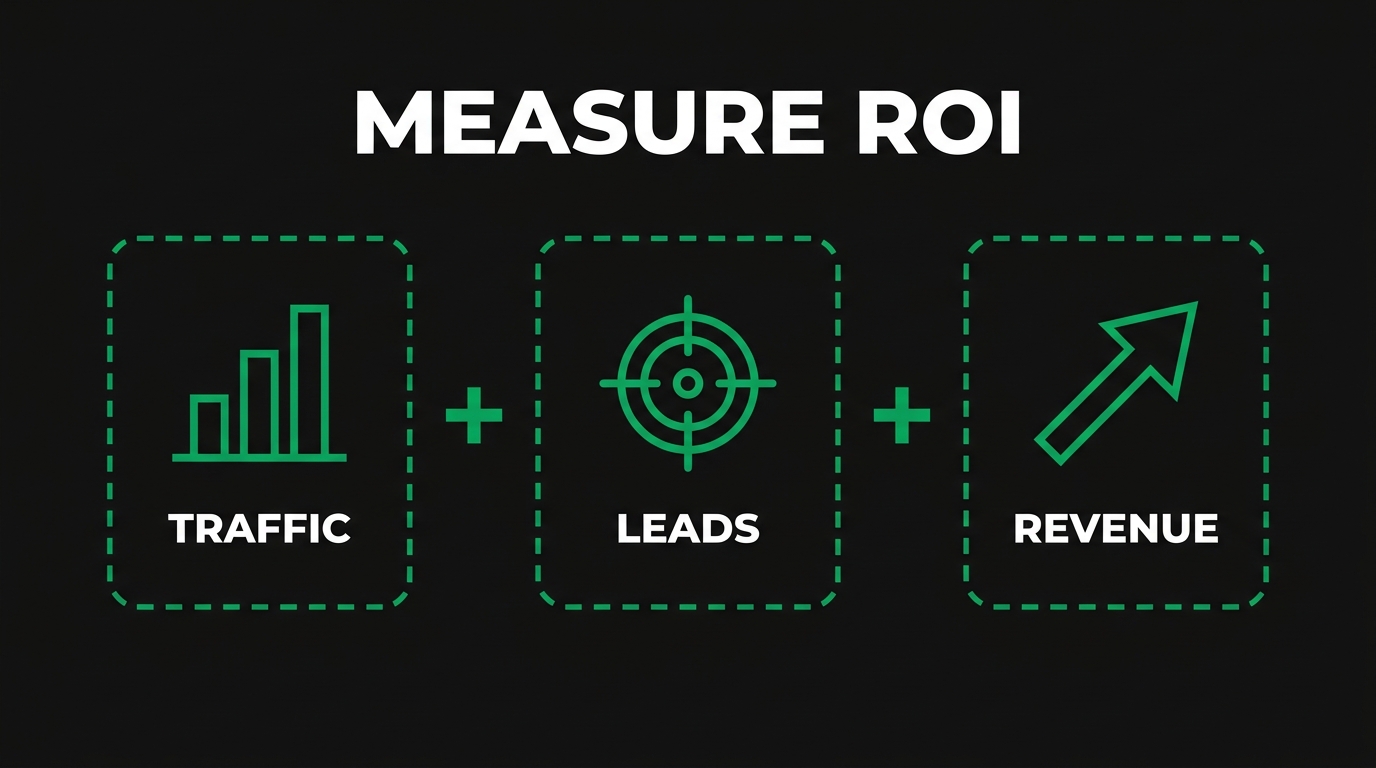
You tie organic rankings to pipeline value and closed revenue by passing organic session attribution through your CRM, tagging RFQs with landing page and referring keyword, and reporting opportunity and closed-won revenue by source. Connect Google Search Console, GA4, and your CRM (such as HubSpot, Salesforce, or a manufacturing ERP) with consistent UTM and source fields. Build a dashboard that shows, for each target keyword, the chain from ranking to impressions to clicks to RFQs to pipeline to closed revenue.
This closes the loop that most industrial marketers cannot currently close and justifies continued SEO investment.
Which Tools and Dashboards Best Fit Industrial SEO Measurement?
The tools and dashboards that best fit industrial SEO measurement are Google Search Console for query-level truth, GA4 for behavior, a rank tracker (Ahrefs, Semrush, or Stat) for position history, Screaming Frog for crawl diagnostics, and a CRM-connected BI layer for pipeline reporting. Use Looker Studio or a lightweight warehouse to blend Search Console, GA4, and CRM into a single industrial SEO dashboard. Track the handful of procurement keywords that actually drive RFQs rather than thousands of secondary terms. Dashboards should answer one question: which ranked pages produced pipeline last month?
How Often Should an Industrial Website Be Re-Audited for Ranking Decay?
An industrial website should be re-audited for ranking decay quarterly for full technical audits, monthly for core ranking and indexation checks, and immediately after any Google core update. There are four triggers that force an ad-hoc re-audit: a confirmed core update, a capability-page ranking drop of 3 positions or more, a Search Console manual action, and a site migration or redesign. Maintain an audit log with findings and remediation timestamps, which makes pattern recognition across updates much easier. Disciplined audit cadence prevents small indexation bugs from compounding into quarter-over-quarter pipeline loss. Documented case patterns consistently show that audit-driven fixes stabilize ranking within one to two update cycles.
What Common Mistakes Hurt Industrial Website Rankings on Google?
The common mistakes that hurt industrial website rankings on Google are chasing generic vanity keywords, publishing thin or sales-heavy pages, botching site migrations, and mishandling algorithm-update recoveries. The sub-sections below explain each failure pattern and how to avoid or reverse it.
Why Do Generic Vanity Keywords Fail Industrial Manufacturers?
Generic vanity keywords fail industrial manufacturers because broad head terms attract low-intent traffic and almost never convert to RFQs. A search for "manufacturer" or "CNC shop" captures students, analysts, and curious browsers far more often than procurement teams ready to source. Engineers use specification-loaded strings that include process, material, certification, and tolerance modifiers.
Pursuing head terms wastes content budget on pages that rank for impressions but not pipeline. Focus instead on the mid-tail and long-tail queries buyers type at the shortlist and selection stages, and measure success in RFQs rather than raw organic sessions.
How Does Thin or Sales-Heavy Content Damage Industrial Page Authority?
Thin or sales-heavy content damages industrial page authority by failing the helpful content bar Google uses to demote low-value pages and by signaling untrustworthiness to procurement buyers. A capability page that runs 300 words of promotional copy without tolerances, materials, certifications, or process detail will not rank and will not convert. Replace marketing platitudes with verifiable specifications: machine inventory with make and travel, certified scopes with issue dates, tolerances with numeric values, and applications with customer verticals. Substantive content serves both Google's quality signals and the engineer's practical need to qualify a supplier quickly.
What Site Migrations and Redesigns Most Often Tank Industrial Rankings?
The site migrations and redesigns that most often tank industrial rankings are launches that drop pages without redirects, change URL structures without 301 mapping, rebuild navigation in JavaScript that Googlebot cannot crawl, or consolidate distinct capability pages into generic service tiles. Before any migration, export the full URL list, map each old URL to a new canonical, set 301 redirects, and keep the legacy sitemap live for a transition window. Test the staging site with an SEO crawl, verify schema, and monitor Search Console daily for the first 30 days post-launch. Most migration disasters stem from skipping the URL map.
How Do You Recover an Industrial Website After a Google Algorithm Update?
You recover an industrial website after a Google algorithm update by diagnosing the affected pages, improving content quality, reinforcing E-E-A-T, and waiting for the next update cycle.
Improve first-hand experience signals, author credentials, factual depth, and internal linking. Resist thin content cuts; expand quality on the pages that dropped, then monitor through the next cycle.
How Should You Approach Industrial Website Ranking Improvements with Manufacturing SEO Agency?
You should approach industrial website ranking improvements with Manufacturing SEO Agency by pairing procurement-intent keyword architecture with revenue-tied measurement so every ranking gain maps to RFQ and pipeline outcomes. The sub-sections below cover how that plays out in practice and summarize the key takeaways from this guide.
Can Manufacturing SEO Agency's Procurement-Intent Keyword Architecture Lift Your Industrial Rankings?
Yes, Manufacturing SEO Agency's procurement-intent keyword architecture can lift your industrial rankings by ranking your manufacturing site for the exact processes, materials, certifications, and tolerances engineers and purchasing managers type into Google when sourcing suppliers. Manufacturing SEO Agency serves U.S.-based B2B manufacturers in CNC machining, injection molding, metal fabrication, additive, aerospace, automotive, medical, and other regulated verticals. Manufacturing SEO Agency combines audits, keyword architecture, topical authority buildout, technical remediation, PR-grade editorial links, AI search visibility, and revenue-tied reporting into one program.
What Are the Key Takeaways About Improving Industrial Website Ranking on Google We Covered?
The key takeaways about improving industrial website ranking on Google we covered are listed below:
- Rank for procurement-intent queries spanning process, material, certification, and tolerance rather than generic vanity terms that never convert to RFQs.
- Audit before optimizing, and build keyword architecture tiered from capability pillars to specification long-tails.
- Build topical authority by covering every relevant process, material, certification, and vertical intersection with deeply linked content.
- Fix Core Web Vitals, schema, JavaScript rendering, mobile, and HTTPS as ranking baselines, not nice-to-haves.
- Use disciplined on-page tactics: concise title tags, procurement-intent headings, adequate specification depth, and original shop-floor media.
- Earn authoritative backlinks from trade media, editorial digital PR, and tier-2 amplification while avoiding toxic link patterns.
- Win local and multi-facility rankings by optimizing Google Business Profiles, location pages, and local schema per facility.
- Prepare for AI search by strengthening entity signals, Wikipedia grounding, and retrieval-ready content formatting.
- Measure what matters: rank, RFQs, pipeline, and closed revenue, and re-audit on a fixed cadence to prevent decay.