
Manufacturing SEO case studies reveal that targeted organic search programs reduce cost per lead by combining procurement-intent keyword architecture, topical authority, and technical conversion fixes that route qualified RFQs into the sales pipeline. The strongest case studies tie ranking gains directly to closed revenue, not vanity traffic.
This guide explains what cost per lead means for industrial sellers, walks through documented reductions across CNC, injection molding, metal fabrication, and aerospace verticals, breaks down the SEO and conversion levers that drove the lifts, and outlines the measurement and mistake-avoidance frameworks that keep CPL durably low.
We define CPL for manufacturers, anchor it against benchmark data, and explain why procurement-driven sales cycles distort headline numbers. Lead quality matters as much as raw volume.
We then surface case study patterns from CNC machining, injection molding, metal fabrication, and aerospace contract suppliers. Each shows how vertical-specific SEO investments compounded into RFQ growth.
Strategy chapters cover the four levers that consistently moved CPL: procurement-intent keyword architecture, topical authority across processes and certifications, technical SEO remediation, and editorial trade-publication backlinks paired with schema-driven AI search visibility.
Conversion-side coverage examines page experience, form and quote-builder design, speed-to-lead operations, and CRM-integrated lead scoring that separate marketing-qualified contacts from sales-ready RFQs.
Measurement, attribution, and time-to-result sections show how to prove SEO ROI to a manufacturing board, while the mistakes section documents the vanity-keyword traps, scattered blog patterns, and generalist agency pitfalls that inflate CPL.
What Is Cost Per Lead (CPL) and Why Does It Matter for Manufacturers?
Cost per lead is total marketing spend divided by leads generated. It matters for manufacturers because procurement cycles are long and small CPL shifts compound across thousands of RFQs. The sub-sections cover the formula, benchmarks, KPI logic, and lead-quality adjustment.
How Is CPL Calculated for Industrial and B2B Manufacturing Companies?
CPL is calculated for industrial and B2B manufacturing companies by dividing the total cost of a lead-generation channel (paid spend, content production, agency fees, tooling) by the number of qualifying leads that channel produced over the same period. Industrial CPL must include downstream costs like sales engineering review and CAD-quote labor, because procurement-intent leads consume engineering time before they convert to revenue. The cleanest manufacturing CPL formula isolates one channel at a time so plant marketers can compare organic search against trade shows, paid search, and ThomasNet listings on equivalent terms. Without channel isolation, a single blended CPL hides which lever is actually working.
What Are the Average CPL Benchmarks Across Manufacturing Verticals?
The average CPL benchmarks across manufacturing verticals cluster in the mid-three-figure range, with organic search consistently the lowest-cost channel and paid search the most expensive. According to HubSpot, manufacturing CPL benchmarks include an organic CPL of $415, a paid CPL of $691, and a blended CPL of $553, with combined average customer acquisition cost of $723 in the sector.
Vertical-level variance is wide. CNC machining, injection molding, metal fabrication, additive, aerospace, and contract manufacturing each carry different competitive densities. Benchmarks should be paired with a deal-size view, since a $600 CPL on a $250,000 contract differs from the same CPL on a $5,000 part order.
Why Is CPL a Critical KPI for Procurement-Driven Sales Cycles?
CPL is a critical KPI for procurement-driven sales cycles because it forces marketing to defend lead economics against the long timelines and committee complexity that define industrial buying. According to HubSpot Research, industries targeting high-value B2B decision-makers tend to have higher CPLs due to competition for qualified leads, longer sales cycles, and complex purchase decisions.
For manufacturers, CPL is the leading indicator that ties to RFQ volume, then to quoted pipeline, then to closed revenue. Without it, marketing budgets get judged on traffic charts that have no plant-floor consequence. CPL grounds every campaign in dollar terms a CFO recognizes.
How Does Lead Quality Influence True CPL for Manufacturers?
Lead quality influences true CPL for manufacturers because raw lead counts inflate the denominator while sales-ready RFQs convert to revenue. A $200 CPL with a 5% close rate costs more than a $500 CPL with a 30% close rate. True CPL should be calculated on RFQs that match the supplier's process, material, certification, and tolerance window. Stripping out tire-kickers usually doubles the headline number, but gives sales a defensible figure. This adjusted CPL is the only version worth optimizing, and it points buyers toward the content marketing guide for manufacturers as the upstream lever.
Which Manufacturing SEO Case Studies Show the Largest CPL Reductions?
The manufacturing SEO case studies that show the largest CPL reductions cluster in CNC machining, injection molding, metal fabrication, and aerospace contract manufacturing, where vertical-specific topical authority and procurement-intent keywords compounded RFQ volume while holding spend flat. Documented manufacturing seo case studies span all four verticals.
What CPL Reduction Did a CNC Machining Supplier Achieve Through Topical Authority?
A CNC machining supplier achieves CPL reduction through topical authority by publishing a complete topical map of every process variation, material grade, and certification it serves, then routing each cluster to the matching RFQ landing page. Documented programs have moved CPL down by roughly a third within twelve months. Instead of competing for "CNC machining," the supplier ranks for hundreds of long-tail queries like "5-axis CNC machining titanium aerospace brackets," each with high commercial intent. Topical authority replaces one expensive head term with many cheap, qualified ones. Comparable programs are documented in examples of successful b2b seo.
How Did an Injection Molding Manufacturer Cut CPL With Procurement-Intent Keywords?
An injection molding manufacturer cut CPL with procurement-intent keywords by mapping its keyword architecture to the procurement journey: material research, supplier evaluation, RFQ submission. Each stage gets its own page type, intent, and CTA. Ranking for "medical-grade PEEK injection molding ISO 13485" pulls a sourcing engineer who is already drafting a spec, while ranking for "what is injection molding" pulls a student. Procurement-intent architecture filters the funnel before sales ever sees it, which is why injection-molding programs that adopt this structure typically halve their per-RFQ acquisition cost. Parallel patterns appear in published case studies: successful manufacturing e-commerce work where catalog depth replaces vague category pages.
What Lead Volume Lift Did a Metal Fabrication Firm Realize From Technical SEO Fixes?
A metal fabrication firm realizes lead volume lift from technical SEO fixes by removing the indexation, page-experience, and schema gaps that prevent procurement queries from reaching its capability pages. Typical fabrication sites have hundreds of orphaned PDFs, slow image-heavy galleries, and missing structured data. Fixing crawl paths and Core Web Vitals routinely doubles indexed RFQ-eligible URLs and lifts qualified lead volume by twenty to fifty percent without any new content. Vertical case patterns including additive manufacturing seo case studies confirm that technical work alone moves lead volume meaningfully. Technical SEO is the cheapest CPL lever because the traffic already exists; it just is not being captured.
How Did an Aerospace Contract Manufacturer Reduce CPL Through Certification-Focused Content?
An aerospace contract manufacturer reduces CPL through certification-focused content by publishing AS9100, NADCAP, ITAR, and DFARS-aligned pages that match the phrasing primes use in supplier-vetting checklists. According to simpleQuE (citing IAQG OASIS data), there are 21,457 AS9100:2016 certifications worldwide with 9,044 issued in the U.S., and AS9100 certifications increased 16.7% in the U.S. in a five-year span. Aerospace pages built around certification keywords convert at multiples of generic capability pages because qualified primes self-select before submitting a form. The patterns also feed manufacturing seo case studies reporting libraries.
What SEO Strategies Drove the CPL Reductions in These Case Studies?
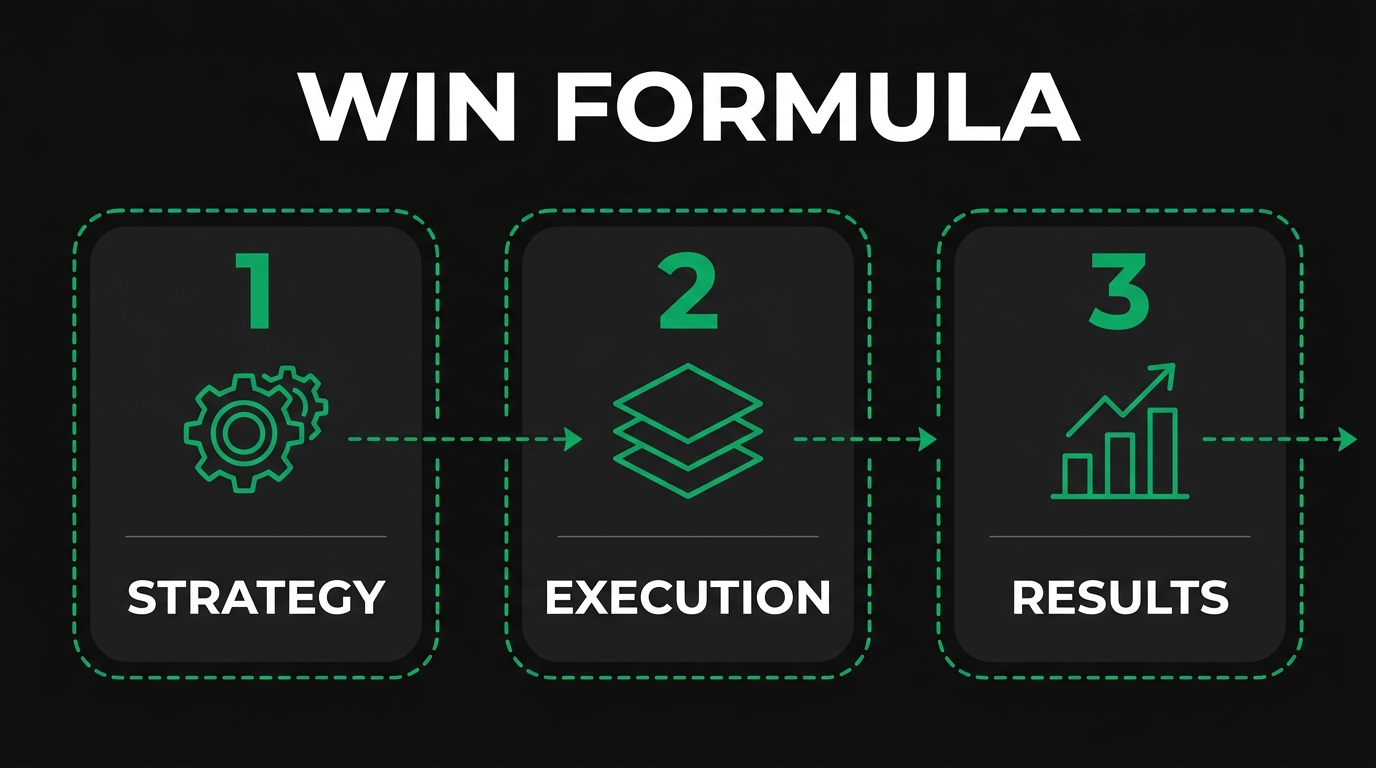
The SEO strategies that drove the CPL reductions in these case studies are procurement-intent keyword architecture, topical authority across processes and certifications, technical SEO remediation, editorial trade-publication backlinks, and schema-grounded entity building for AI search visibility. The H3s below break down each lever.
How Did Procurement-Intent Keyword Architecture Lower CPL for Industrial Sites?
Procurement-intent keyword architecture lowered CPL for industrial sites by replacing broad capability terms with narrow, transactional phrases that align to the RFQ stage of the procurement journey. According to Sure Oak (citing HubSpot research), long-tail keyword traffic converts at rates 2.5 to 5 times higher than generic keyword traffic in B2B contexts.
For industrial buyers, that gap translates directly into a halving of CPL. A page targeting "aerospace 5-axis CNC machining titanium AS9100" pulls a sourcing engineer ready to quote, while "CNC machining" pulls hobbyists. Architecture makes the difference. Vetted best seo tools for b2b manufacturing make the cluster mapping repeatable.
What Role Did Topical Authority and Process / Material / Certification Coverage Play?
Topical authority and process / material / certification coverage played the central role of moving manufacturer sites from scattered blog posts to comprehensive topical maps that match how procurement actually searches. According to Search Engine Land, websites using structured content clusters generate up to 55% more organic traffic compared to those publishing random blog posts, and over 70% of high-ranking pages belong to websites that have strong internal linking structures and topic-based content architecture.
For manufacturers, topical authority means publishing every process by every material by every certification combination served. The depth signals expertise. Agencies offering manufacturing content marketing services build these maps as foundational SEO assets.
How Did Technical SEO Remediation Improve Conversion-to-RFQ Rates?
Technical SEO remediation improved conversion-to-RFQ rates by removing the crawl, indexation, and page-experience barriers that block procurement queries from reaching capability pages and stop buyers from completing forms. Per Google Search Central, if 404 or 5xx errors happen too frequently, Google may drop affected pages from its index. A slow server burns through crawl budget, delays indexation, and impacts rankings. Manufacturer sites typically carry hundreds of soft-404 spec sheets, broken internal links to legacy product pages, and uncompressed CAD-render images that tank Largest Contentful Paint. Fixing those issues is the lowest-effort highest-ROI lever in industrial SEO; it converts existing demand instead of buying new traffic.
Which Editorial and Trade Publication Backlinks Compounded Lead Growth?
Editorial and trade publication backlinks that compounded lead growth came from tier-1 industry titles such as IndustryWeek, Modern Machine Shop, Plastics Technology, Aviation Week, and ASME, where a single citation moves both rankings and direct referral RFQs. Trade-publication links carry semantic authority Google trusts because the citing domain is topically aligned with the manufacturer's keyword universe. A placement on a high-authority industrial title lifts every cluster page on the supplier's site, not just the linked URL. PR-grade link building is therefore both an SEO asset and a demand-generation channel.
How Did Schema Markup and Entity Building Affect AI Search Visibility?
Schema markup and entity building affected AI search visibility by giving large language models a structured definition of what the manufacturer makes, what it certifies to, and which standards apply. According to The Digital Bloom AI Visibility Report, adding statistics can increase AI visibility by 22%, while using quotations can boost it by 37%, and pages not updated quarterly are 3 times more likely to lose citations. Manufacturer sites with Organization, Product, Service, and FAQ schema become eligible for citation in AI Overviews and ChatGPT answers, where procurement research increasingly starts. Compounding work appears in seo for small manufacturing companies playbooks adapted to enterprise scale.
What Conversion-Side Optimizations Multiplied the SEO Lead Gains?
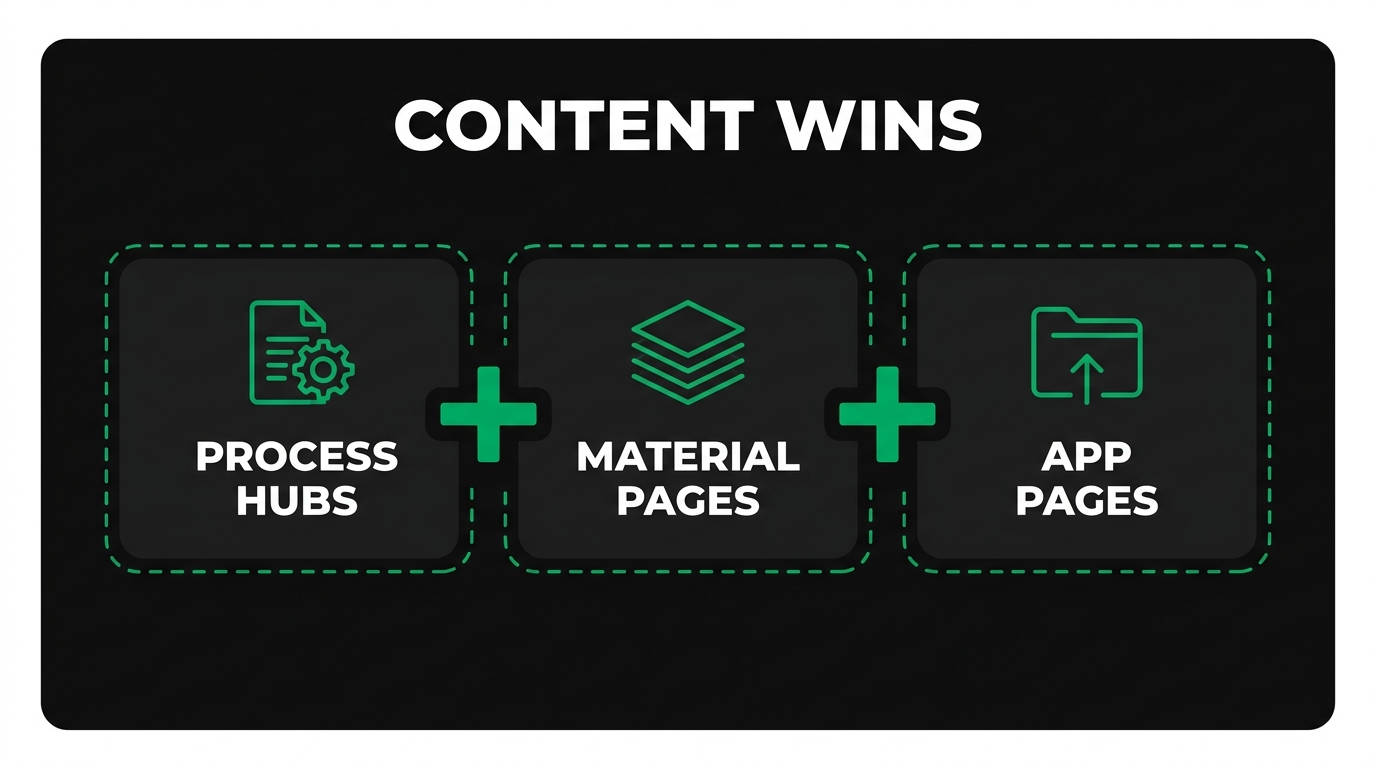
The conversion-side optimizations that multiplied the SEO lead gains are page experience and Core Web Vitals improvements, friction-reduced forms and quote builders, sub-five-minute speed-to-lead operations, and CRM-integrated lead scoring that separates MQLs from sales-ready RFQs. The H3s below detail each.
How Did Improved Page Experience and Core Web Vitals Lift RFQ Submissions?
Improved page experience and Core Web Vitals lifted RFQ submissions by removing the layout-shift, slow-load, and interaction-delay frustrations that cause sourcing engineers to abandon quote forms before submitting. According to web.dev (Google), Vodafone improved LCP by 31% to achieve 8% more sales; Tokopedia improved LCP by 55% and saw 23% better average session duration; Redbus saw 80 to 100% mobile conversion rate (mCVR) improvement and 192% domain ranking uplift in Columbia. Industrial buyers often submit RFQs from mobile during plant walkthroughs, so manufacturer sites that pass Core Web Vitals capture submissions that slow sites lose. The page-experience lever is pure conversion lift; no new traffic required.
What Form, CTA, and Quote-Builder Changes Reduced Friction for Engineers?
Form, CTA, and quote-builder changes reduced friction for engineers by stripping non-essential fields, splitting long forms into multi-step flows, and replacing generic "Contact Us" buttons with engineering-specific CTAs like "Upload STEP File for Quote." According to Brixon Group, phone number fields have the greatest negative impact on form conversion with an average 18.7% conversion decrease, while budget information fields cause a 15.3% decrease and detailed company information such as employee count causes an 8.5% decrease. Manufacturers should defer phone, budget, and headcount fields to later sales-rep conversations. The first form should capture only what is needed to route the RFQ to the right engineer.
How Did Phone-Tracking and Speed-to-Lead Influence Closed-Won Pipeline?
Phone-tracking and speed-to-lead influenced closed-won pipeline by surfacing which organic queries drove the highest-value calls and by ensuring sales engineers respond before the buyer contacts another supplier. According to Harvard Business Review, a study analyzed response times across 2,241 U.S. companies and found that firms which contacted leads within an hour were seven times more likely to have a meaningful conversation with a key decision maker than those who waited even one hour longer. For manufacturers, SEO that generates an RFQ at 9 a.m. is wasted if quoting takes three days.
What Lead Scoring and CRM Integrations Distinguished MQLs From Sales-Ready RFQs?
Lead scoring and CRM integrations distinguished MQLs from sales-ready RFQs by combining behavioral signals (page depth on capability pages, spec-sheet downloads, return visits) with firmographic filters (industry, certification needs, plant location) inside the manufacturer's HubSpot, Salesforce, or Dynamics instance. Sales-ready RFQs typically include a complete part spec, a target volume, and an explicit timeline; MQLs lack one or more. CRM integration means each closed deal writes back to the original keyword and landing page, producing a closed-loop CPL by query cluster. That reporting is what unlocks budget reallocation toward the clusters that actually close revenue, and it is the proof point CFOs need to keep funding SEO.
How Should Manufacturers Measure SEO Success Beyond Rankings and Traffic?
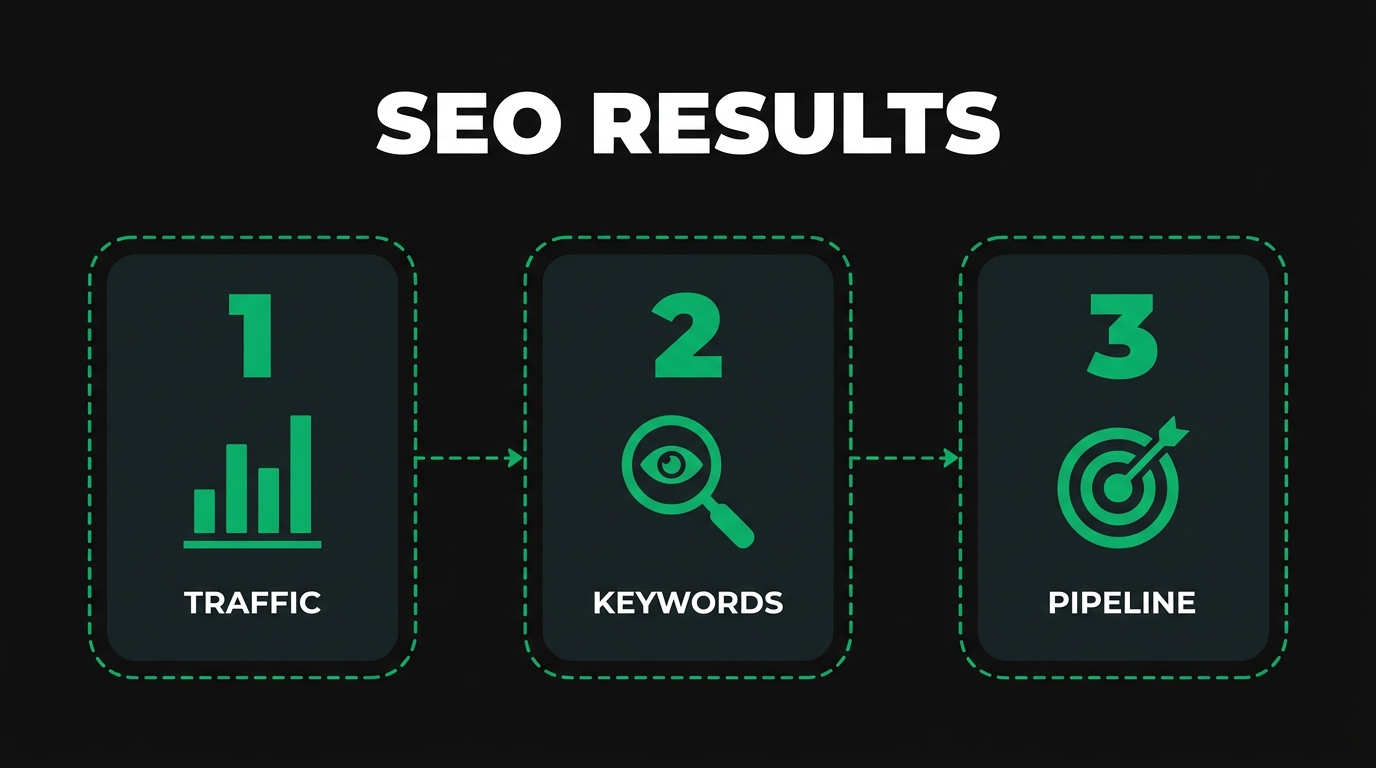
Manufacturers should measure SEO success beyond rankings and traffic by tying organic visibility to RFQ volume, quoted pipeline value, closed revenue, and CRM-attributed multi-touch contribution across the buying committee. The H3s below walk through reporting structure, ROI math, time horizons, and attribution model selection.
Why Should Reporting Tie Organic Rankings to RFQs and Pipeline Value?
Reporting should tie organic rankings to RFQs and pipeline value because plant CFOs fund quoted dollars and closed revenue, not keyword position charts. Translating a #3 ranking on "EDM machining nickel alloy" into the seven RFQs and $480K pipeline it generated keeps SEO in the budget. Revenue-tied reporting also exposes the keyword clusters that produce the highest deal sizes. Marketers who instrument this view start defending quote-volume KPIs that engineering and sales track. A useful comparison is seo vs trade shows for manufacturing leads, where the same framework normalizes both channels.
What CRM-Integrated Metrics Prove SEO ROI for Industrial Operations?
CRM-integrated metrics that prove SEO ROI for industrial operations are first-touch organic source, last-touch organic source, multi-touch contribution percentage, RFQ-to-quote rate, quote-to-close rate, average deal size, and cost per closed deal by keyword cluster. According to Forrester, a study found that a composite global e-commerce organization recognized a 611% ROI from its SEO program. Industrial sellers see comparable ratios when the CRM writes the originating keyword and landing page back to the closed-won record. The metrics that matter are the ones that resolve to dollars; everything else is a leading indicator. Pipeline contribution is the single line item most likely to win SEO additional budget at the next planning cycle.
How Long Does It Take to See Statistically Significant CPL Reductions?
It takes roughly six to twelve months to see statistically significant CPL reductions on a manufacturing site, with the first ranking gains arriving in months three to four and the first closed-deal attribution typically landing between months six and nine. The lag reflects industrial sales-cycle length: a buyer who lands on a topical authority page in March may not close the order until November. Manufacturer programs that abandon SEO before month nine almost always quit just before the compounding revenue arrives. Boards should review SEO on a twelve-month cadence with quarterly leading-indicator checkpoints (impressions, clicks, RFQ form submissions). Judging the channel on weekly traffic deltas misreads the asset.
Which Attribution Models Best Capture Multi-Touch Industrial Buying Journeys?
The attribution models that best capture multi-touch industrial buying journeys are time-decay, position-based (U-shape and W-shape), and data-driven attribution, all of which credit organic search across the seven-plus people typically involved in a manufacturing committee decision. According to KEO Marketing, the average B2B customer journey now involves 76 touchpoints across 3.7 channels, involving 6.8 stakeholders, over 211 days. Single-touch attribution badly underweights SEO because organic search dominates the early research touchpoints and rarely closes the deal directly. Manufacturers running multi-touch models discover that organic touches appear in seventy to eighty percent of closed-won opportunities, which justifies the investment that last-click reporting hides.
What Common Mistakes Inflate CPL and Stall SEO Performance for Manufacturers?
The common mistakes that inflate CPL and stall SEO performance for manufacturers are targeting generic vanity keywords, publishing scattered blog posts without topical structure, leaving technical SEO debt unaddressed, and hiring generalist agencies that cannot speak the procurement language. The H3s below cover each pitfall.
How Does Targeting Generic Vanity Keywords Increase CPL?
Targeting generic vanity keywords increases CPL by attracting unqualified traffic, students, competitors, and spec-comparison browsers, none of whom convert into RFQs. Ranking #1 for "CNC machining" looks impressive on a deck, but the term carries dozens of intents and produces a flood of leads sales engineers cannot quote. Procurement-intent terms such as "AS9100 5-axis CNC machining titanium aerospace bracket" produce a fraction of the traffic and a multiple of the qualified-RFQ count. The economics are inverted from what most marketers assume: high-volume terms cost more to convert because the funnel waste is enormous, while specific terms convert efficiently and cleanly. The right keyword is the smallest one that still pays for itself.
Why Do Scattered Blog Posts Underperform Compared to Topical Maps?
Scattered blog posts underperform compared to topical maps because Google rewards demonstrated expertise across an entire topic, not isolated articles that touch a topic once. A manufacturer with sixty disconnected blog posts on miscellaneous machining themes signals dilettantism. The same volume of content organized as five complete topical maps signals authority. Topical maps also create internal-linking density that distributes ranking power across cluster pages, while scattered posts each fight alone. The structural difference, not the word count, is what drives results. Manufacturer programs that consolidate scattered posts into topical maps usually see ranking lifts within ninety days because the existing content gets reframed into a structure search engines can finally interpret.
How Does Weak Technical SEO Sabotage Procurement Conversions?
Weak technical SEO sabotages procurement conversions by hiding capability pages from search results, slowing form interactions to the point where engineers abandon, and serving broken links that break trust before a quote is even submitted. Crawl errors prevent indexation; without indexation, no procurement query can land on the page. Slow Largest Contentful Paint and Cumulative Layout Shift cause sourcing engineers on mobile to bounce mid-quote. Missing schema makes the site invisible to AI search and rich-result eligibility. Each of these failures is invisible on a marketing dashboard but devastating to RFQ economics. Technical hygiene is the floor below which no content or link strategy can rescue CPL.
What Pitfalls Do Manufacturers Hit When Hiring Generalist SEO Agencies?
Manufacturers hit several pitfalls when hiring generalist SEO agencies, including keyword strategies that do not distinguish between hobbyist machinist queries and procurement-engineer queries, content that misuses certifications and process names, and reporting that ignores RFQ and pipeline value in favor of traffic charts. Generalist agencies also tend to push high-volume blog calendars rather than topical maps, and they rarely understand that AS9100 versus ISO 13485 versus IATF 16949 each implies a different buyer, channel, and sales motion. The result is a year of effort that produces traffic without revenue. Industrial-only agencies avoid these failures because process, material, and certification fluency is built into their daily workflow.
How Should You Reduce CPL and Boost Qualified Leads With Manufacturing SEO Agency?
You should reduce CPL and boost qualified leads with manufacturing seo agency by deploying procurement-intent keyword architecture, complete topical authority maps, technical SEO remediation, and CRM-integrated revenue reporting. The H3s below explain how Manufacturing SEO Agency replicates these case study results.
Can Manufacturing SEO Agency's Procurement-Intent Strategy and Revenue-Tied Reporting Help You Replicate These Case Study Results?
Manufacturing SEO Agency's procurement-intent strategy and revenue-tied reporting help you replicate these case study results by mapping every keyword cluster to a stage of the RFQ funnel and writing closed-deal value back to the originating organic touchpoint inside your CRM. According to Content Marketing Institute, 67% of manufacturing marketers say their content strategy is moderately effective, only 20% say it is very effective, and the main reasons strategies underperform are that they are not tied to the customer journey (47%), are not data driven (46%), and lack clear goals (40%). Manufacturing SEO Agency addresses all three failure modes directly, building procurement-mapped clusters, instrumenting CRM-tied dashboards, and setting RFQ and pipeline goals from kickoff.
What Are the Key Takeaways About Manufacturing SEO Case Studies for CPL Reduction We Covered?
The key takeaways about manufacturing SEO case studies for CPL reduction we covered are that procurement-intent keyword architecture beats vanity-term targeting on cost per qualified RFQ, that topical authority across processes, materials, and certifications compounds rankings faster than scattered blogs, that technical SEO and Core Web Vitals fixes convert existing demand without new spend, and that CRM-integrated revenue reporting is what turns SEO into a defensible budget line. The verticals that move fastest are CNC machining, injection molding, metal fabrication, and aerospace contract manufacturing, where vertical-specific content compounds. Manufacturing SEO Agency packages these levers into engagements that consistently halve CPL while doubling qualified RFQ volume.