A B2B manufacturing content strategy is a documented program that maps technical content (process pages, material guides, certification explainers, case studies, spec sheets, videos) to every stage of the procurement journey, from initial supplier discovery through RFQ submission and final supplier selection. We treat content as the primary trust-and-evidence layer that engineers, purchasing managers, and supply chain directors consume before they ever pick up the phone.
This guide covers strategy foundations, the business case for documentation, audience and persona work, keyword and topical-authority research, content formats that convert industrial buyers, planning and editorial workflow, distribution and amplification, performance measurement, and how Manufacturing SEO Agency engages on this work.
Strategy foundations and the business case explain what makes industrial content distinct from generic B2B content marketing and quantify the revenue, RFQ, and pipeline outcomes that documented programs produce.
Audience, keyword research, and topical-authority sections show how to build personas for engineering and procurement buyers, identify process / material / certification queries, and architect pillar-and-cluster maps that cover every spec a buyer might search.
Content formats, planning, and editorial workflow walk through which assets convert technical buyers, how to staff and approve content with engineering accuracy, and what publishing cadence sustains topical depth.
Distribution, measurement, and the agency partnership section close with channel amplification through trade media and LinkedIn, KPIs that tie rankings to closed manufacturing revenue, and how to operationalize the program with a manufacturing-only specialist.
What Is a B2B Manufacturing Content Strategy?
A B2B manufacturing content strategy is a documented program that maps process, material, and certification content to every stage of the procurement journey. The sub-sections below define how it differs from generic B2B marketing, the procurement-funnel stages it covers, and the formats engineers and purchasing managers actually consume.
How Does a Manufacturing Content Strategy Differ From Generic B2B Content Marketing?
A manufacturing content strategy differs from generic B2B content marketing because it is built around specific industrial entities (process names, material grades, tolerances, and certifications) rather than persona-led storytelling. Industrial buyers want spec-grade evidence, not brand storytelling.
Industrial programs close that gap by writing for one query intent at a time and treating each process page as a permanent reference asset. A useful neighboring framework is our content strategy for oem vs fabrication breakdown, which shows how scope shifts by manufacturing model.
What Procurement-Funnel Stages Should Industrial Content Map To?
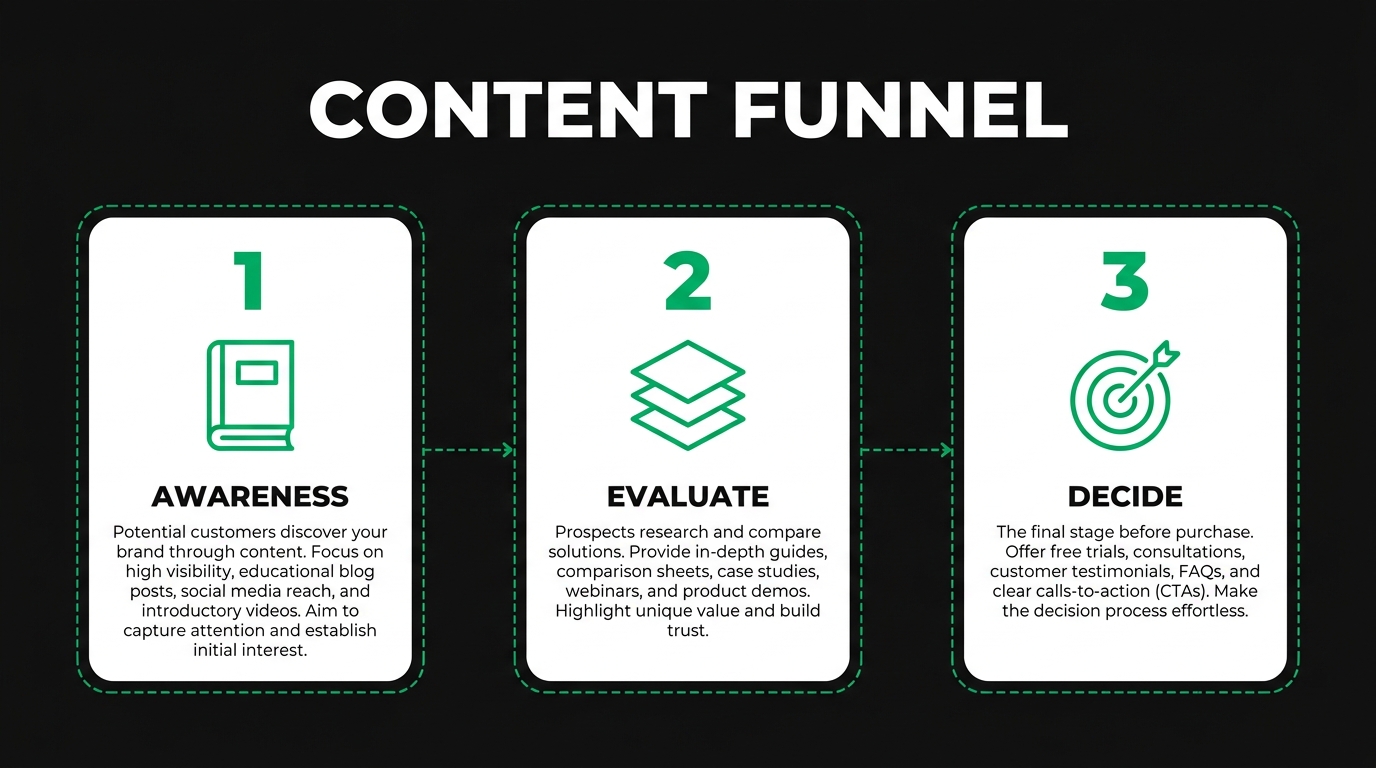
Industrial content should map to four procurement-funnel stages: problem identification, solution exploration, requirements building, and supplier selection. Problem identification content addresses symptoms ("why is my injection-molded part warping"). Solution exploration covers process and material comparisons. Requirements building covers tolerances, certifications, and capacity questions. Supplier selection includes case studies, capability sheets, and quote-readiness assets.
Which Content Formats Work Best for Engineers and Purchasing Managers?
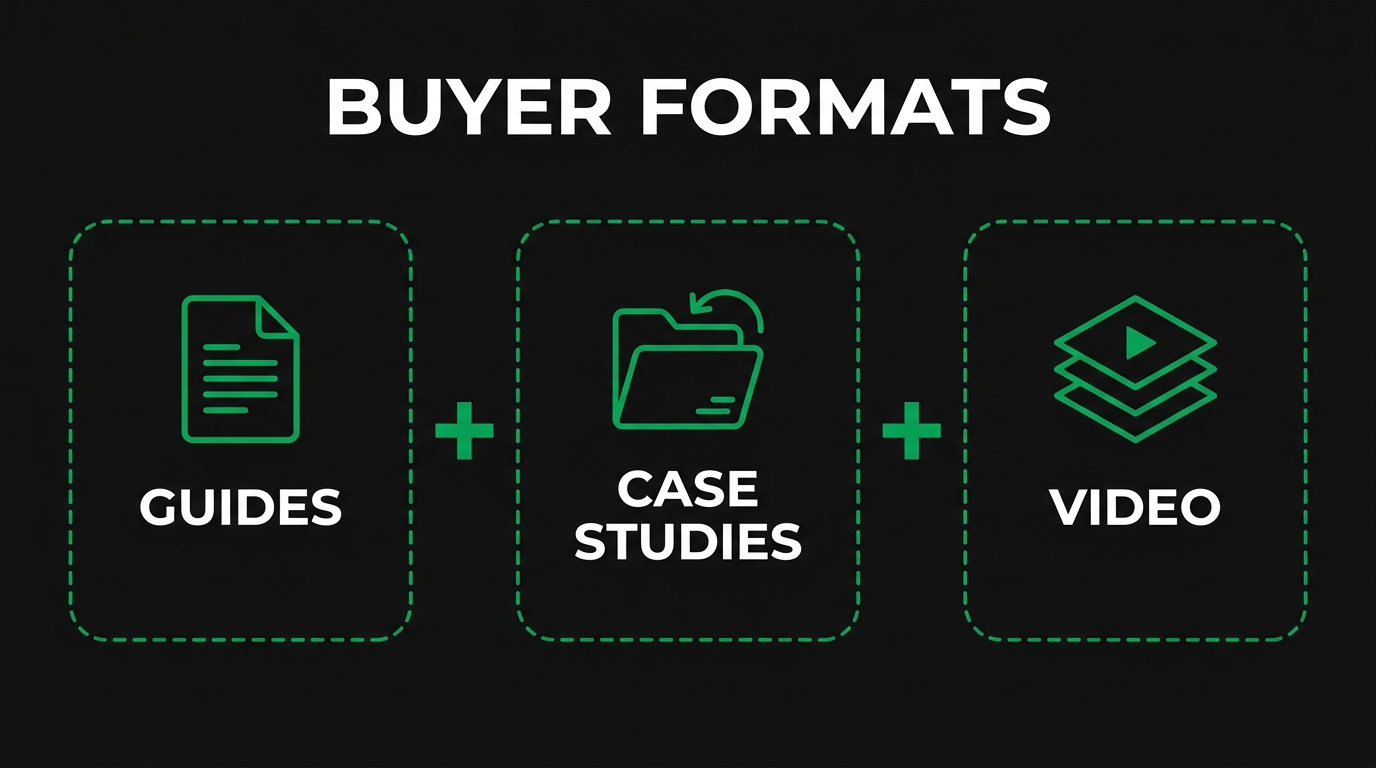
The content formats that work best for engineers and purchasing managers are short technical articles, video walkthroughs, case studies, infographics, and white papers.
Effective programs lead with a short, structured technical article on each process or material query, then layer video and case-study assets behind the same URL to deepen engagement. Format choice should follow the buyer's stage, not the publisher's preference. The next section covers why documenting this strategy produces measurable revenue outcomes.
Why Do B2B Manufacturers Need a Documented Content Strategy?
B2B manufacturers need a documented content strategy because industrial buying journeys are long, multi-stakeholder, and largely self-directed. The sub-sections below explain how content shapes the RFQ journey, the revenue outcomes a disciplined program produces, and how it compounds topical authority over time.
How Does Content Influence the Industrial RFQ and Supplier-Selection Journey?
Content influences the industrial RFQ and supplier-selection journey by serving as the primary trust-and-evidence layer buyers consume before engaging suppliers. Industrial buyers validate process capability, certification scope, tolerance ranges, and material handling entirely through self-directed research before any sales conversation occurs.
Comparing the buyer journey across manufacturing models helps scope the right funnel content; our content strategy for oem vs fabrication guide shows how RFQ triggers differ by vendor type.
What Revenue Outcomes Does a Disciplined Content Program Produce for Manufacturers?
The revenue outcomes a disciplined content program produces for manufacturers include higher win rates, larger average deal values, and shorter time-to-RFQ on covered queries.
In manufacturing, that translates into more qualified RFQs landing pre-educated on capability scope, which raises quote-to-close rates and reduces the engineering-time tax of educating prospects late in the cycle. Revenue compounds because every published process page continues acquiring qualified traffic month after month.
How Does Content Strategy Compound Topical Authority for Industrial Brands?
Content strategy compounds topical authority for industrial brands by accumulating semantic depth across every process, material, certification, and application a buyer might search. Each new on-topic page reinforces the entity relationships search engines associate with the brand domain, so newly published pages rank faster and adjacent queries lift sitewide.
The next section pivots to the audience that consumes this body of work.
Who Is the Target Audience for B2B Manufacturing Content?
The target audience for B2B manufacturing content is a buying committee that typically includes design and process engineers, plant managers, quality leads, purchasing managers, and supply-chain directors. The sub-sections below cover persona construction, what each role expects in your content, and how to map assets to every committee member.
How Should You Build Buyer Personas for Engineers, Plant Managers, and Procurement Directors?
You should build buyer personas for engineers, plant managers, and procurement directors by anchoring each persona to the specific decisions they own, the specifications they evaluate, and the failure modes they fear. Engineers care about tolerances, repeatability, and material properties. Plant managers care about capacity, lead time, and process stability. Procurement directors care about total landed cost, second-source coverage, and contract terms.
What Information Do Technical Buyers Expect From a Supplier's Content?
Technical buyers expect spec-grade information from a supplier's content, including process tolerances, material grades handled, certifications held, capacity figures, and verified case examples.
Suppliers who omit hard specifications lose the shortlist by silence. Content must answer a buyer's question completely, cite third-party data where credibility matters, and present capability information in a structured, scannable format that supports both human readers and procurement-side AI assistants.
How Do You Map Content to Each Buying Committee Member?
You map content to each buying committee member by tagging every asset to one primary persona, one funnel stage, and one decision the asset is meant to advance. Engineering content lives in process pages, material guides, and tolerance studies. Plant-management content lives in capacity overviews, lead-time benchmarks, and process-control case studies. Procurement content lives in capability sheets, certification matrices, and total-cost analyses.
The next section explains how to research the queries each role types into Google.
How Do You Conduct Audience and Keyword Research for Industrial Topics?
You conduct audience and keyword research for industrial topics by mining procurement-intent queries that combine process names, material grades, and certifications. The sub-sections below cover identifying those keyword classes, the data sources that reveal procurement search intent, and how to validate demand for niche manufacturing queries.
How Do You Identify Process, Material, and Certification Keywords?
You identify process, material, and certification keywords by enumerating every operation your facility performs, every alloy or polymer it handles, and every standard it holds, then combining them in modifier-rich query patterns. Examples include "5-axis CNC machining titanium aerospace parts," "AS9100 medical injection molding," and "NADCAP heat treating Inconel."
The output becomes the seed list for cluster mapping across the site. For a deeper walkthrough of this enumeration pattern, see our content marketing guide for manufacturers, which breaks the process into repeatable steps.
What Tools and Data Sources Reveal Procurement Search Intent?
The tools and data sources that reveal procurement search intent include Google Search Console, keyword volume databases, SERP-feature analyzers, trade-publication query logs, and B2B intent-data platforms.
Those preferences shape the queries buyers issue and the answers that earn engagement. Pair commercial keyword tools with our coverage of the best seo tools for b2b manufacturing so the dataset reflects industrial query patterns rather than generic B2B lists.
How Do You Validate Keyword Demand for Niche Manufacturing Queries?
You validate keyword demand for niche manufacturing queries by triangulating low-volume keyword data with internal sales-call evidence and trade-publication reader behavior. Many high-value industrial queries return single-digit monthly searches, yet each search may represent a five- to seven-figure RFQ.
The next section turns this validated keyword set into a topical-authority map.
How Do You Build a Topical Authority Map for a Manufacturing Website?
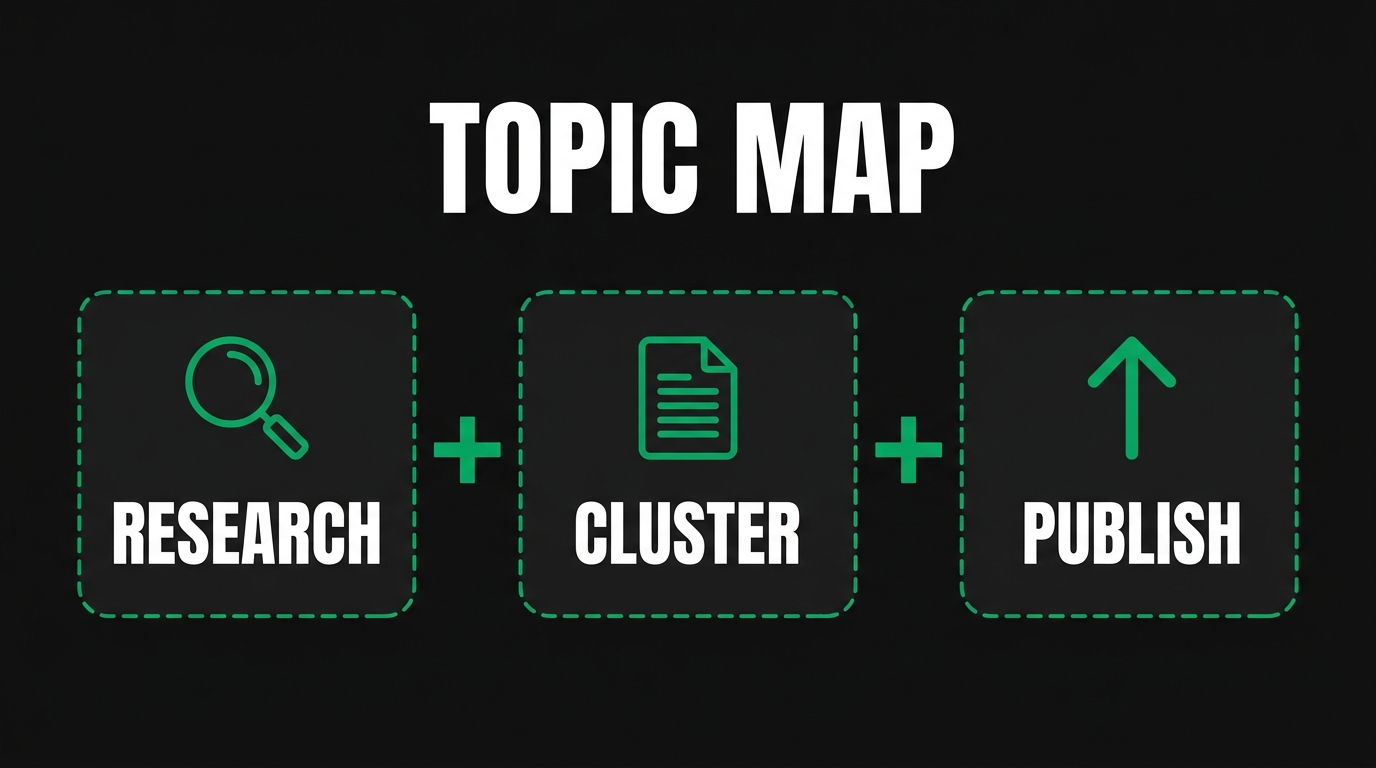
You build a topical authority map for a manufacturing website by structuring pillar pages around top-level disciplines and supporting them with cluster pages that cover every process, material, certification, and application. The sub-sections below cover the architecture, the coverage mandate, and the role of internal linking.
What Pillar and Cluster Architecture Works Best for Industrial Sites?
The pillar and cluster architecture that works best for industrial sites organizes a top-level pillar per discipline (CNC machining, injection molding, metal fabrication, additive manufacturing) with cluster pages dedicated to each process variant, material handled, certification scope, industry served, and tolerance class. Pillar pages sit at the root of the discipline and link down to every cluster; cluster pages link laterally to siblings and back up to the pillar.
How Do You Cover Every Process, Material, and Certification a Buyer Searches?
You cover every process, material, and certification a buyer searches by inventorying internal capability data and then publishing one URL per granular query intent. A 5-axis CNC shop holding AS9100 and ISO 13485 with titanium and Inconel capability needs separate URLs for "5-axis CNC machining titanium aerospace," "AS9100 5-axis machining," and "Inconel 718 CNC machining tolerances." The mandate is full enumeration, not selective publishing.
Inventory the matrix once, then schedule the cluster build over six to twelve months.
How Do Internal Links Reinforce Manufacturing Topical Coverage?
Internal links reinforce manufacturing topical coverage by binding cluster pages to their pillar and to semantically adjacent siblings, so search engines read the site as a coherent topical graph rather than isolated articles. Anchor text should match the target page's primary noun phrase ("5-axis cnc machining titanium," not "click here").
Each cluster page should carry three to seven internal links: one upward to the pillar, one or two laterally to adjacent processes, and one or two downward to related case studies. The next section pivots to which content formats convert that traffic.
What Content Formats Convert Industrial Buyers Into Qualified Leads?
The content formats that convert industrial buyers into qualified leads include long-form technical guides, case studies, spec sheets, video walkthroughs, webinars, and interactive tools. The sub-sections below cover why long-form beats short blogs, how case studies move buyers toward an RFQ, and when to invest in video and interactive media.
Why Do Long-Form Technical Guides Outperform Short Blog Posts in Manufacturing?
Long-form technical guides outperform short blog posts in manufacturing because industrial queries demand complete answers that include process parameters, material handling notes, tolerance ranges, certifications, and case evidence.
Short posts attract topline traffic but rarely convert because they leave technical questions open. Long guides answer the full query, earn dwell time, and pull internal links from cluster siblings, which lifts ranking and qualified RFQs together.
How Do Case Studies and Spec Sheets Move Buyers Toward an RFQ?
Case studies and spec sheets move buyers toward an RFQ by providing the verification evidence procurement requires before adding a supplier to the shortlist. A case study should document the customer industry, the part geometry, the material, the tolerance achieved, the certification scope, the lead time, and a quantified outcome. Spec sheets should list every variant of every process available, the material grades handled, and the certifications held.
For more pattern examples that convert buyers in adjacent verticals, see our case studies: successful manufacturing e-commerce breakdown.
When Should Manufacturers Invest in Video, Webinars, or Interactive Tools?
Manufacturers should invest in video, webinars, and interactive tools once foundational text content covers every priority query, because those formats amplify trust on already-ranked pages rather than substitute for the underlying SEO foundation.
Embed shop-floor video on process pages, host webinars on niche compliance topics, and build calculators (cycle time, material yield, cost-per-part) on high-intent landing pages. Each format multiplies engagement on traffic the text foundation already earns. The next section covers how to plan and produce the calendar that sequences all of this work.
How Do You Plan and Produce a Content Calendar for a Manufacturing Brand?
You plan and produce a content calendar for a manufacturing brand by sequencing topics by procurement intent and competitive gap, then assigning each piece a writer, a reviewer, and a publishing slot. The sub-sections below cover prioritization, staffing the writer-review chain, and the editorial workflow that protects engineering accuracy.
How Do You Prioritize Topics by Procurement Intent and Competitive Gap?
You prioritize topics by procurement intent and competitive gap by scoring each candidate query on three dimensions: revenue potential per RFQ, current SERP coverage by competitors, and time-to-rank given internal authority. High-revenue queries with thin competitor coverage and strong topical fit publish first. Mid-tier queries publish in clusters that reinforce a pillar already gaining traction. Long-tail queries publish in batches once a pillar reaches stable rankings.
For organizations evaluating outside support, our breakdown of contract manufacturing vs custom manufacturing seo explains how scope choices change the calendar's shape.
Who Should Write, Review, and Approve Industrial Technical Content?
Writers, reviewers, and approvers for industrial technical content should include a writer with manufacturing fluency, a subject-matter engineer for accuracy, an export-compliance reviewer where ITAR or EAR scope applies, and a marketing approver who owns brand voice.
That makes a compliance gate non-optional for aerospace and defense suppliers. Many shops outsource the writer role; our overview of top manufacturing marketing firms compares structural fit.
What Editorial Workflow Keeps Engineering Accuracy and Publishing Velocity High?
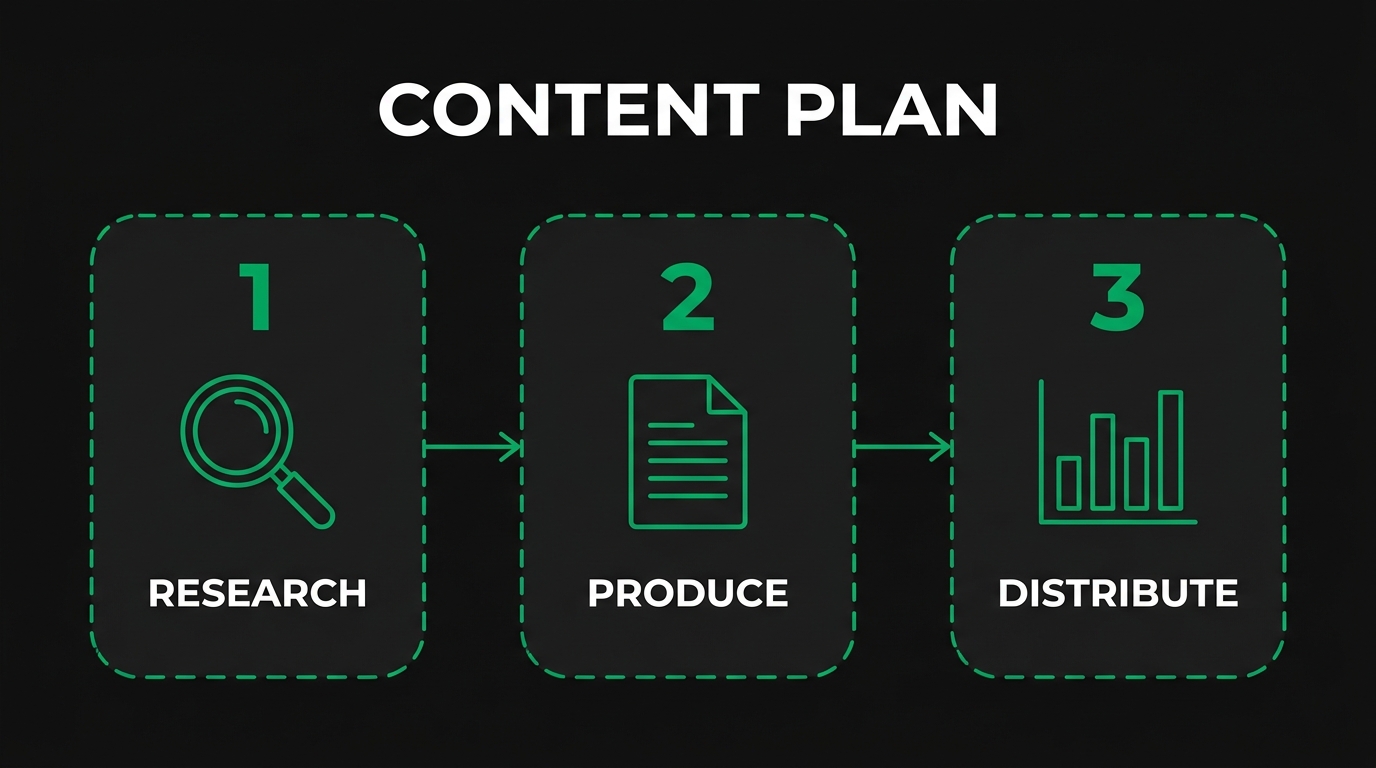
The editorial workflow that keeps engineering accuracy and publishing velocity high is a four-stage pipeline: brief, draft, technical review, and publish, with strict deadlines at each stage. The brief locks scope, target query, and required entities. The draft is produced against that brief in three to five business days. Technical review by an engineer takes one or two days and corrects every spec, tolerance, certification, or material claim. Publish includes schema markup, internal-link insertion, and analytics tagging.
For OEM-specific staffing patterns, our top seo agencies for oem breakdown documents reviewer workflows in regulated supply chains.
How Do You Distribute and Promote B2B Manufacturing Content?
You distribute and promote B2B manufacturing content by combining trade-publication amplification, LinkedIn distribution, email and sales enablement, and selective paid placement. The sub-sections below cover trade media, LinkedIn's specific role in industrial distribution, and how email and sales-enablement channels extend the reach of every published asset.
How Do Trade Publications and Industry Media Amplify Manufacturing Content?
Trade publications and industry media amplify manufacturing content by placing technical articles, contributed commentary, and product news in front of audiences that already trust the publication's editorial filter.
That talent backdrop makes trade media's reach into experienced engineers especially valuable. Outreach should target one publication per discipline. Our list of top manufacturing trade publications for content submission ranks the highest-leverage outlets.
What Role Does LinkedIn Play in Industrial Content Distribution?
LinkedIn plays the dominant social-distribution role in industrial content distribution, serving as the primary platform where engineers, plant managers, and procurement leaders consume professional content and discover suppliers. Effective programs publish three asset types on LinkedIn: short native posts that summarize a published article and link to it, long-form articles that establish executive thought leadership, and document carousels that extract data from longer pieces.
Cadence matters more than volume.
How Do Email and Sales Enablement Channels Extend Content Reach?
Email and sales enablement channels extend content reach by delivering the right asset to the right buyer at the right moment in the cycle.
Translate that into practice with segmented newsletter sends to engineers, procurement, and operations roles, plus sales-enablement playbooks that hand reps the right case study, spec sheet, or capability document at every funnel stage. Reuse one asset across many channels rather than producing one-off pieces. The next section pivots to how you measure every published asset's contribution to revenue.
How Do You Measure the Performance of a B2B Manufacturing Content Program?
You measure the performance of a B2B manufacturing content program by tying every published asset to pipeline value, RFQ volume, and closed manufacturing revenue, not just to traffic or rankings. The sub-sections below cover the KPIs that matter, attribution in long sales cycles, and the refresh-or-retire decision for underperforming content.
Which KPIs Tie Content to Pipeline, RFQs, and Closed Manufacturing Revenue?
The KPIs that tie content to pipeline, RFQs, and closed manufacturing revenue include qualified RFQ volume per page, RFQ-to-quote conversion rate, quote-to-close rate, average closed-deal value by source page, and pipeline-influence percentage across multi-touch journeys.
Track every KPI by URL, not just by channel, so the program can identify which exact pages produced revenue and double down on the patterns that worked. Vanity metrics like raw sessions or aggregate keyword counts do not survive a CFO review.
How Do You Attribute Multi-Touch Content Influence in Long Industrial Sales Cycles?
You attribute multi-touch content influence in long industrial sales cycles by combining first-touch, last-touch, and influence-weighted models with CRM-side opportunity tagging that records every content interaction across the buyer's journey. Manufacturing sales cycles routinely run four to six months, with multiple stakeholders consuming content asynchronously, so single-touch attribution underweights the foundational top-of-funnel pages that originated the relationship.
How Do You Refresh and Retire Underperforming Manufacturing Content?
You refresh and retire underperforming manufacturing content by auditing every URL on a quarterly cadence against three signals: traffic trend, ranking trend, and downstream RFQ contribution. Refresh URLs that rank in positions four to twenty for high-intent queries by adding missing entities, expanding to long-form depth, embedding new case evidence, and tightening internal-link structure. Consolidate near-duplicate URLs into a single canonical asset and 301-redirect the rest. Retire URLs that no longer match a covered query or attract zero qualified traffic after a refresh attempt; redirect them to the closest topical neighbor.
The next section pivots to the agency relationship that operationalizes this work.
How Should You Approach a B2B Manufacturing Content Strategy With Manufacturing SEO Agency?
You should approach a B2B manufacturing content strategy with Manufacturing SEO Agency by treating content as a procurement-funnel asset class, not a marketing campaign. The two sub-sections below cover what a working engagement looks like and the key takeaways from this guide.
Can Manufacturing SEO Agency's Content Marketing and Topical Authority Services Accelerate B2B Manufacturing Growth?
Manufacturing SEO Agency's content marketing and topical authority services can accelerate B2B manufacturing growth by combining procurement-intent keyword architecture, topical-authority buildout, and revenue-tied reporting that maps every published page to RFQs and closed revenue.
Manufacturing SEO Agency offers manufacturing content marketing services that include process-page production, case-study development, and editorial workflows tuned for engineering accuracy. Buyers shopping the category should validate scope fit with the manufacturing seo experts team before engaging.
What Are the Key Takeaways About Building a B2B Manufacturing Content Strategy We Covered?
The key takeaways about building a B2B manufacturing content strategy we covered are five operating principles. First, document the strategy and map every asset to a procurement-funnel stage. Second, build personas as decision grids for engineers, plant managers, and procurement directors, not demographic sketches. Third, architect topical authority through pillar-and-cluster coverage of every process, material, and certification a buyer searches. Fourth, lead with long-form technical content, then layer video, case studies, and interactive tools on top. Fifth, measure performance against RFQ volume, pipeline value, and closed manufacturing revenue, not vanity traffic.