A content strategy for OEM versus fabrication manufacturers is a documented plan that maps two different industrial buyer journeys to two distinct topical maps, keyword architectures, formats, and distribution channels. We built this guide to separate the strategies because OEMs sell production parts to procurement teams while fabrication shops sell project work to engineers, plant managers, and contractors, and one playbook cannot serve both audiences.
This guide compares audience differences, topic priorities for each manufacturer type, keyword architectures, content formats, topical authority structures, distribution channels, and measurement frameworks tied to pipeline.
Audience differences explain why design engineers, purchasing managers, and supply chain directors searching for OEM production capacity behave differently from fabrication buyers searching for custom job shops by service, material, and geography.
Topic priorities split along process and certification depth for OEMs versus service, material thickness, and project galleries for fabrication shops, with each topic tier feeding a different RFQ or quote pathway.
Keyword architecture and content format choices follow the audience: OEMs cluster keywords around process, material, and certification combinations and lean on long-form technical content, while fabrication shops cluster around service, material, and geography and lean on visual, project-based formats.
Topical authority maps, distribution channels, and measurement frameworks then operationalize each strategy, with OEMs prioritizing trade publications and pipeline-tied reporting and fabrication shops prioritizing local directories, gallery content, and quote-volume reporting.
How Do OEM and Fabrication Audiences Differ for Content Strategy?
OEM and fabrication audiences differ for content strategy because OEM buyers procure repeatable production parts to spec while fabrication buyers commission custom one-off or short-run jobs. The next subsections cover reader profiles, buying stages, search intents, and why two strategies are required.
Who Reads OEM Content Versus Fabrication Content?
The readers of OEM content versus fabrication content are different procurement personas. OEM content reaches design engineers, purchasing managers, supply chain directors, and plant operators sourcing production volume. Fabrication content reaches mechanical engineers, project managers, contractors, plant maintenance leads, and small-shop owners commissioning custom work. Each persona reads with a different vocabulary: OEM readers scan for tolerances, certifications, and PPAP readiness, while fabrication readers scan for service breadth, material thickness limits, and turnaround. A single article cannot satisfy both. For deeper context on the shared parent strategy, see this b2b manufacturing content strategy guide.
What Buying Stages Do OEM and Fabrication Buyers Move Through?
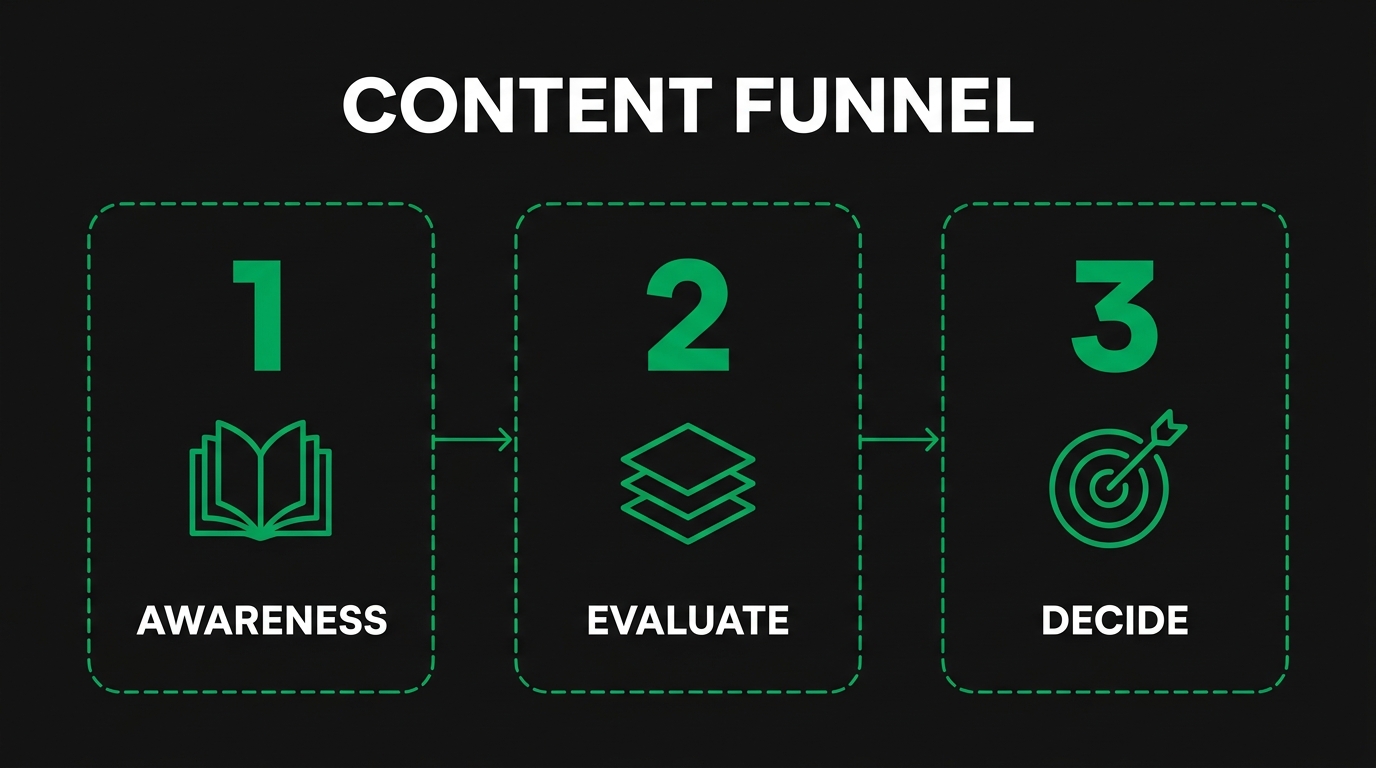
The buying stages OEM and fabrication buyers move through are awareness, evaluation, RFQ or quote, and post-award validation. OEM buyers cycle through longer evaluation windows tied to qualification audits, while fabrication buyers compress all four stages into days when a job hits the floor.
Map every cluster to one stage so readers find the asset they need at the moment they need it.
Which Search Intents Separate OEM Queries From Fabrication Queries?
The search intents that separate OEM queries from fabrication queries are repeatability, certification, and service-area scope. OEM queries embed process plus material plus certification (for example, "AS9100 5-axis CNC titanium aerospace bracket supplier"). Fabrication queries embed service plus material plus geography (for example, "stainless steel sheet metal fabrication near me"). The first intent expects a capability page with tolerances. The second expects a service page with project galleries and a quote form. Mismatching the page format to the intent tanks both rankings and conversion.
Why Does Audience Difference Drive Two Separate Content Strategies?
Audience difference drives two separate content strategies because the asset, the conversion event, and the proof signals all change.
This separation sets up the topic priorities the next two sections detail.
What Content Topics Should an OEM Manufacturer Prioritize?
The content topics an OEM manufacturer should prioritize are process and capability pages, material and certification topics, application and industry topics, and spec, tolerance, and datasheet pages. Each topic tier feeds a different stage of the procurement journey.
Which Process and Capability Topics Earn OEM Procurement Traffic?
The process and capability topics that earn OEM procurement traffic are the manufacturing processes the shop floor actually runs, paired with the capability boundaries each process supports. Examples include 5-axis CNC milling, Swiss-style turning, micro-injection molding, and laser sintering. Each process anchors a pillar page that lists machine envelopes, tolerance ranges, lot-size sweet spots, and sample part galleries. Procurement queries like "Swiss CNC machining shop 12 mm bar capacity" return capability pages first, not blog posts. For a deeper checklist of OEM-specific topics, see this oem seo strategy checklist.
How Do Material and Certification Topics Support OEM Authority?
Material and certification topics support OEM authority by signaling fit to gated procurement requirements. Aerospace OEMs publish topics around AS9100, NADCAP, titanium grade 5, Inconel 718, and DFARS-compliant material flow. Medical OEMs publish topics around ISO 13485, 316L stainless, PEEK, and cleanroom assembly.
Each material plus certification combination earns its own cluster page, complete with documented quality flow.
What Application and Industry Topics Feed OEM Pipeline?
The application and industry topics that feed OEM pipeline are vertical-specific use cases that translate process and material capability into a buyer's job-to-be-done. Aerospace applications include fatigue-critical brackets, hydraulic manifolds, and structural ribs. Medical applications include surgical instruments, orthopedic implants, and diagnostic enclosures. Automotive applications include high-volume die-cast housings, transmission components, and IATF-compliant assemblies. Each application page links upward to the parent material and certification cluster and downward to a specific RFQ-ready capability page, so the procurement reader can move from "I need this part" to "this supplier can make it" in one click. For OEM-vertical specifics, see this guide to oem seo.
How Do Spec, Tolerance, and Datasheet Pages Convert OEM Buyers?
Spec, tolerance, and datasheet pages convert OEM buyers by giving the design engineer the exact technical answer needed to qualify the supplier.
Apply ProductModel schema to every spec page, surface tolerance tables above the fold, and link each datasheet to the parent capability cluster. This pattern carries over directly to the keyword architecture work that follows.
What Content Topics Should a Fabrication Shop Prioritize?
The content topics a fabrication shop should prioritize are custom fabrication process pages, material plus thickness plus finish pages, local and regional service pages, and project, gallery, and case study pages. Each topic tier feeds a different stage of the quote journey.
Which Custom Fabrication Process Topics Drive Job Inquiries?
The custom fabrication process topics that drive job inquiries are the welding, cutting, forming, and finishing services the shop actually delivers. Examples include MIG and TIG welding, plasma and laser cutting, press brake forming, structural steel fabrication, and powder coating. Each process anchors a service page that lists material types accepted, thickness ranges, equipment specs, and typical project scopes.
How Do Material, Thickness, and Finish Topics Earn Fabrication Traffic?
Material, thickness, and finish topics earn fabrication traffic by matching the searcher's exact job spec. Buyers search "1/4 inch carbon steel laser cutting service," "16 gauge stainless press brake bend," or "powder coated aluminum railing fabrication," not generic terms. Build a matrix where each row is a material (carbon steel, stainless 304, aluminum 6061), each column is a thickness range, and each cell anchors a service page or sub-section. Add a finish layer (mill, brushed, powder coated, galvanized) so every realistic combination has a landing point. This tight specificity converts the long-tail quote query into a form fill.
What Local and Regional Topics Support Fabrication Visibility?
Local and regional topics support fabrication visibility because most fabrication work is constrained by truck-haul radius. Schema.org defines LocalBusiness as "a particular physical business or branch of an organization," which signals service-area scope to Google. Build city, county, and metro pages for every service the shop delivers within a realistic delivery radius. Pair each location page with a verified Google Business Profile, since Google states verifying your business with Google Business Profile is one of the best ways to engage your audience on Google. Locations without page coverage cede the entire local pack to competitors.
Which Project, Gallery, and Case Topics Convert Fabrication Buyers?
Project, gallery, and case topics convert fabrication buyers by replacing abstract capability claims with photographed proof. A gallery page shows the actual welds, the actual finishes, and the actual installed result, which lets the buyer pattern-match to the job in hand. Case study pages document the engineering brief, the materials used, the timeline, and the install.
How Do Keyword Architectures Differ Between OEM and Fabrication?
Keyword architectures differ between OEM and fabrication because the cluster axes change. OEMs cluster on process, material, and certification. Fabrication shops cluster on service, material, and geography. The next four subsections detail each cluster pattern and the modifiers that win each query type.
How Do You Cluster OEM Keywords by Process, Material, and Certification?
You cluster OEM keywords by process, material, and certification by building a three-axis matrix where each row is a manufacturing process, each column is a material grade, and each cell anchors a certification layer. Example cell: "AS9100 5-axis CNC milled Inconel 718 aerospace bracket." Each cell becomes a candidate cluster head. Tag every cluster with its pillar parent so internal links stay consistent with the topical map. For a comparison of the two industrial verticals at the keyword level, see this guide on oem seo vs b2b manufacturing seo. Aim for 200 to 800 cluster cells depending on capability breadth.
How Do You Cluster Fabrication Keywords by Service, Material, and Geography?
You cluster fabrication keywords by service, material, and geography by building a three-axis matrix where each row is a service (laser cutting, MIG welding, press brake forming), each column is a material (carbon steel, 304 stainless, 6061 aluminum), and each cell branches by city or metro. Example cell: "stainless steel laser cutting service Houston." This cluster shape produces hundreds of low-competition long-tail pages, each tied to a specific service area. Map every page to a Google Business Profile category for local pack alignment. Avoid duplication by templating the city section instead of writing identical bodies.
Which Long-Tail Modifiers Capture OEM RFQ Intent?
The long-tail modifiers that capture OEM RFQ intent are tolerance values, material grades, certification codes, industry applications, and lot-size qualifiers. Examples include "+/-0.0005 tolerance," "6061-T6 aluminum," "ITAR registered," "medical device housing," and "low-volume prototype."
The single RFQ query a procurement buyer types has therefore already absorbed all the upstream research, and pages that match the exact modifier combination win the contact.
Which Long-Tail Modifiers Capture Fabrication Quote Intent?
The long-tail modifiers that capture fabrication quote intent are dimensional ranges, material gauges, finish callouts, geographic qualifiers, and turnaround terms. Examples include "12 ft long," "16 gauge," "powder coated black," "near me," "Houston TX," "next-day quote," and "rush fabrication." A page titled "16 gauge stainless steel laser cutting Houston" outperforms a generic "metal fabrication services" page on conversion, because the modifier set already pre-qualifies the visitor. Keep the modifier inventory in a spreadsheet sorted by monthly search volume, then build pages top-down. This sets up the format question the next section addresses.
What Content Formats Work Best for OEM Versus Fabrication Audiences?
The content formats that work best for OEM versus fabrication audiences split along reader expectation. OEM engineers expect long-form technical depth. Fabrication buyers expect visual project proof. The next four subsections detail each format class, video and interactive options, and pillar investment timing.
Which Long-Form Technical Formats Earn OEM Engineer Attention?
The long-form technical formats that earn OEM engineer attention are capability deep-dives, material selection guides, certification compliance walkthroughs, application case studies, and process white papers. Each runs 2,000 to 5,000 words and embeds tolerance tables, certification badges, and spec PDFs.
Engineers download, save, and revisit long-form assets across the procurement cycle, which is why they consistently outperform short blog posts on RFQ attribution.
Which Visual and Project-Based Formats Drive Fabrication Engagement?
The visual and project-based formats that drive fabrication engagement are project galleries, before-and-after photo sets, weld and finish close-ups, install videos, and short case write-ups. Fabrication buyers vet shops by inspecting work quality, not by reading capability copy. A 12-image gallery of a recent stainless handrail job converts faster than a 1,500-word service description. Pair every gallery with EXIF-stripped, alt-tagged, and Schema-marked images so search engines surface them in image and visual results. For an adjacent body of evidence on visual conversion patterns, see case studies: successful manufacturing e-commerce.
How Do Video and Interactive Formats Compare Across the Two?
Video and interactive formats compare across the two by serving different reader needs. OEM video lives on YouTube and capability pages as factory walkthroughs, machine envelope demos, and inspection process explainers.
Fabrication video lives on the homepage and project pages as 30-to-90-second job clips. Interactive formats split the same way: OEMs benefit from configurators and spec lookups, while fabrication shops benefit from instant-quote calculators and material selectors. Match the tool to the buyer's decision moment.
When Should Each Manufacturer Type Invest in Pillar Content?
Each manufacturer type should invest in pillar content when the keyword cluster volume justifies a dedicated 3,000-plus-word hub. OEMs invest first in pillars covering top processes, top materials, and top regulated industries served. Fabrication shops invest first in pillars covering top services and top metro service areas.
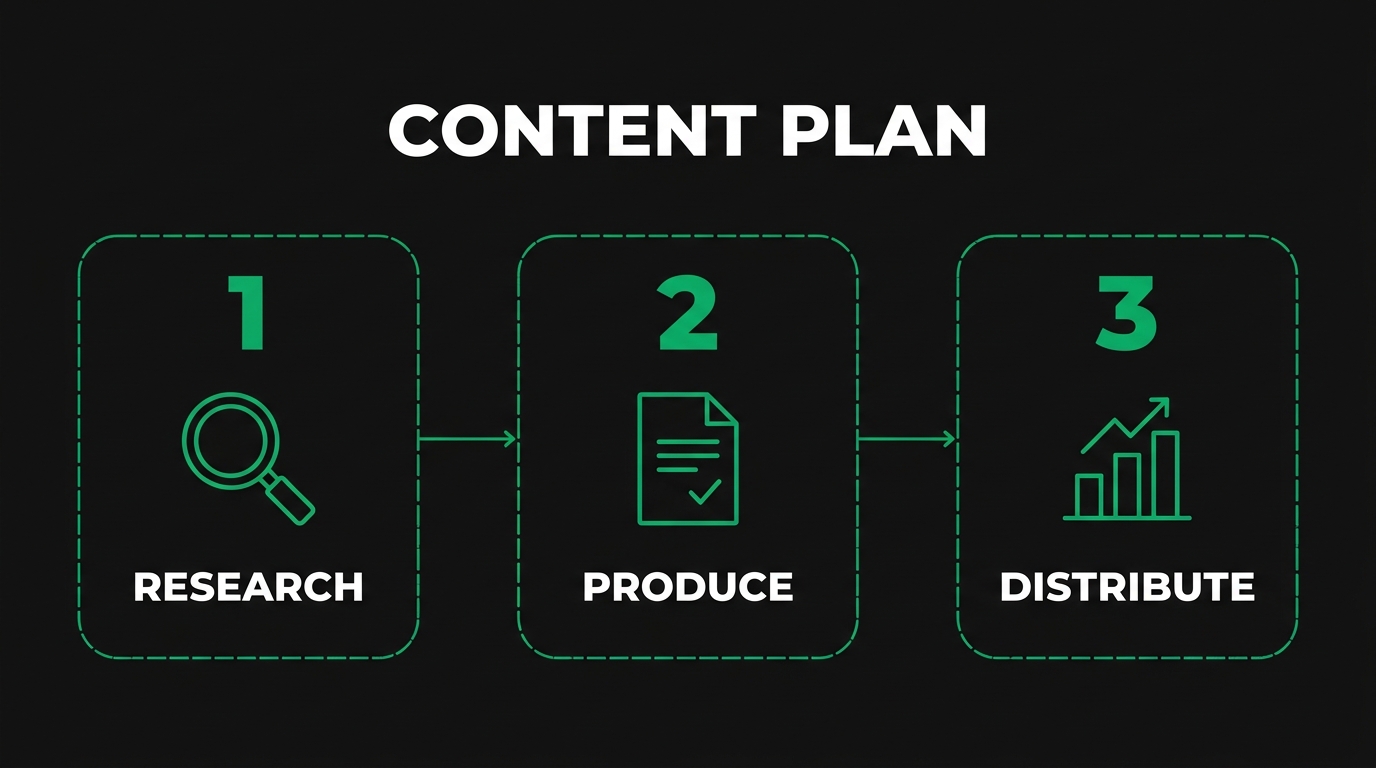
This format discipline carries directly into topical authority planning next.
How Should Topical Authority Maps Differ Between OEM and Fabrication?
Topical authority maps should differ between OEM and fabrication because the cluster axes, refresh cadence, and gap analysis sources change. OEMs map process plus material plus certification. Fabrication shops map service plus material plus geography. The next four subsections detail each structure and gap-discovery method.
What Pillar and Cluster Structure Fits an OEM Topical Map?
The pillar and cluster structure that fits an OEM topical map is a three-tier hierarchy: process pillars at the top, material or industry clusters in the middle, and capability or certification leaves at the bottom. Each leaf links upward to its parent cluster and pillar through breadcrumb and contextual links.
For an end-to-end view of how topical authority underpins manufacturing content, see this content marketing guide for manufacturers.
What Pillar and Cluster Structure Fits a Fabrication Topical Map?
The pillar and cluster structure that fits a fabrication topical map is a service-first, geography-second hierarchy. The top tier is service pillars (laser cutting, MIG welding, structural fabrication). The middle tier is material clusters under each service. The bottom tier is geographic landing pages (city, county, metro) under each material cluster. Each location page reuses the service description templated for that material, plus local proof (project photos, regional references, service-area map). This structure scales hundreds of pages without thin-content penalty, because every page is materially different on intent, geography, and proof.
How Do You Identify Topical Gaps Against OEM Competitors?
You identify topical gaps against OEM competitors by crawling their sitemaps, exporting H1s and URL slugs, and subtracting your own published topics. The remainder is the gap list. Sort by competitor count: topics three or more competitors cover are table stakes, and topics only one competitor covers may be differentiation opportunities. Publish the table-stakes topics first to close the qualification gate, then pick one differentiation topic per quarter for deep, original coverage. Crawl quarterly to keep the gap list current as competitors expand or refresh their topical maps.
How Do You Identify Topical Gaps Against Fabrication Competitors?
You identify topical gaps against fabrication competitors by combining sitemap crawls with local SERP audits. Pull every ranking page for the shop's top 10 service-plus-city queries, list the competitor URLs, and crawl each to extract their service and location coverage. Add a Google Business Profile audit of competing categories and service descriptions so the gap list captures both web and local pack opportunities.
How Do Content Distribution Channels Differ for OEM and Fabrication?
Content distribution channels differ for OEM and fabrication because OEM content travels through trade publications and engineering communities while fabrication content travels through local directories, regional networks, and proximity-driven search. The next four subsections detail each channel and the AI-search overlay.
Which Trade Publications Amplify OEM Content?
The trade publications that amplify OEM content are vertical-specific engineering magazines, association journals, and supply-chain news outlets. Aerospace OEMs publish in Aviation Week, SAE International, and Aerospace Manufacturing. Medical OEMs publish in MD+DI and Medical Design Briefs. Automotive OEMs publish in Automotive Manufacturing Solutions and SAE Update. Each placement earns referral traffic plus an editorial backlink that lifts domain authority on procurement queries. For a curated list of where to submit, see the top manufacturing trade publications for content submission overview, then pitch contributed articles tied to each publication's editorial calendar.
Which Local Directories and Networks Amplify Fabrication Content?
The local directories and networks that amplify fabrication content are Google Business Profile, Yelp, BBB, Manta, Thomas, regional manufacturing associations, and city or county economic development directories. Each listing carries a NAP (name, address, phone) signal that consolidates local pack visibility.
Build directory coverage early because it is the cheapest visibility lever a fabrication shop has.
How Should Each Use Email, LinkedIn, and Industry Communities?
Each manufacturer type should use email, LinkedIn, and industry communities differently based on buyer cycle length. OEMs run multi-touch nurture sequences against engineering and procurement contacts, syndicate long-form content on LinkedIn, and participate in Reddit r/manufacturing and Practical Machinist. Fabrication shops run lighter monthly newsletters to past quote requesters, post project photos to LinkedIn and Instagram, and join regional contractor and supply-chain Slack or Facebook groups.
How Do AI Search Engines Surface OEM and Fabrication Content?
AI search engines surface OEM and fabrication content by extracting entity-rich passages from authoritative pages and citing the source domain inside generated answers.
AI engines crawl the same indexed corpus, so mobile parity is non-negotiable. OEMs win citations by publishing structured spec pages with schema. Fabrication shops win by publishing service-plus-geography pages with LocalBusiness schema. This sets up the measurement layer next.
How Do You Measure Content Strategy Performance for OEM vs. Fabrication?
You measure content strategy performance for OEM versus fabrication with different KPI sets because the conversion event differs. OEMs measure pipeline and revenue contribution. Fabrication shops measure quote volume and local lead density. The next four subsections detail each KPI set, attribution method, and reporting cadence.
Which KPIs Tie OEM Content to Pipeline and Revenue?
The KPIs that tie OEM content to pipeline and revenue are RFQ submissions per cluster, qualified-RFQ rate, average quote value, pipeline value generated, closed-won revenue, and content-assisted deal velocity. Tag every form fill with the originating cluster URL using UTM parameters and CRM mapping.
Report monthly to the executive team with revenue, not impressions.
Which KPIs Tie Fabrication Content to Quote Volume and Local Leads?
The KPIs that tie fabrication content to quote volume and local leads are quote requests per service page, quote-to-job conversion rate, local pack impression share, Google Business Profile actions (calls, direction requests, website clicks), and average job value. Each service-plus-city page should report its own quote count so the team can prune underperformers and double down on winners.
How Do You Attribute Organic Traffic to RFQ and Job Wins?
You attribute organic traffic to RFQ and job wins by combining first-touch and last-touch tracking through CRM-integrated form submissions. Capture the landing page, organic query (where available from GSC), and session source on every quote form, then sync to the deal record in HubSpot, Salesforce, or the CRM of choice. Run a weighted multi-touch model after a quarter of data accumulates.
What Reporting Cadence Works Best for Each Manufacturer Type?
The reporting cadence that works best for each manufacturer type aligns with sales-cycle length. OEMs report monthly on rankings, RFQs, and pipeline, then quarterly on closed-won revenue and content ROI by cluster. Fabrication shops report weekly on quote volume, monthly on closed jobs, and quarterly on local-pack share by service area. Both should include a 12-month rolling trend chart so executives see compounding returns rather than monthly noise. Replace any vanity metric (sessions, bounce rate) with a revenue-tied counterpart. This measurement discipline is the bridge into agency partnership planning next.
How Should You Approach OEM and Fabrication Content Strategy With a Manufacturing SEO Agency?
You should approach OEM and fabrication content strategy with a manufacturing SEO agency by selecting a partner that already runs both playbooks separately and ties every cluster to RFQ or quote pipeline. The next two subsections cover how Manufacturing SEO Agency supports the work and recap the article.
Can Manufacturing SEO Agency Help Build an OEM and Fabrication Content Strategy?
Yes, Manufacturing SEO Agency can help build an OEM and fabrication content strategy as an industrial seo agency focused exclusively on manufacturing. Manufacturing SEO Agency offers manufacturing content marketing services covering procurement-intent keyword architecture, topical authority buildout, and long-form technical content written by people who understand the difference between 3-axis and 5-axis machining, AS9100 versus ISO 13485, NADCAP, and IATF 16949. Engagements include manufacturing audits, PR-grade editorial link building, AI search visibility engineering, and revenue-tied reporting that maps every ranking to RFQs and closed pipeline. For a comparison set of agency options, see this list of top manufacturing marketing firms.
What Are the Key Takeaways About Content Strategy for OEM vs. Fabrication We Covered?
The key takeaways about content strategy for OEM vs. fabrication we covered are that the two require separate playbooks driven by different audiences, topic priorities, keyword axes, formats, topical maps, distribution channels, and KPIs. OEM strategy clusters on process, material, and certification, leans on long-form technical depth, and reports on pipeline. Fabrication strategy clusters on service, material, and geography, leans on visual project proof, and reports on quote volume and local pack share. Build, measure, and refresh each program on its own cadence, and never blend the two into a single editorial calendar.