Ahrefs and Semrush are the two dominant SEO research platforms used by industrial marketers, and the right choice for a manufacturer depends on how each tool indexes procurement-intent queries, technical buyer language, and trade-publication backlinks.
This guide covers what makes industrial SEO distinct, how each platform is built, where they diverge on manufacturing keyword research, backlink discovery, competitive analysis, technical audits, rank tracking, content workflows, AI search visibility, pricing, reporting, and how a manufacturing-focused agency layers strategy on top of either tool.
Industrial SEO differs from consumer SEO because procurement queries are low-volume, high-intent, and built around process, material, and certification combinations that generic tools often dismiss. Tool selection has to account for these patterns rather than chasing vanity volume.
Ahrefs and Semrush were built around different strengths. Ahrefs grew up as a backlink intelligence engine and expanded into keywords, while Semrush started as a paid-search competitive intelligence platform and scaled into organic, content, and AI-search modules. Each platform reflects that history.
The platforms diverge most visibly on backlink index size, long-tail keyword coverage, technical site audit depth, content workflow tooling, and how they track AI search visibility for branded and unbranded queries.
Pricing, seat models, and integrations matter for industrial agencies and in-house teams because manufacturing engagements often require revenue-tied reporting, CRM connections, and white-label deliverables that map to RFQs and pipeline value rather than ranking positions in isolation.
A manufacturing-focused approach pairs the right tool with procurement-intent strategy so that rankings translate into supplier inquiries from real engineers and purchasing managers.
What Is Industrial SEO and Why Does Tool Choice Matter?
Industrial SEO is search optimization tuned for procurement-driven buyer journeys across manufacturing, where tool choice matters because generic SEO platforms miss the low-volume, high-intent queries engineers use. The sub-sections below explain how industrial search differs from consumer search, why procurement patterns demand specialized data, and where generic tools fall short.
How Does Industrial SEO Differ From Consumer SEO?
Industrial SEO differs from consumer SEO in audience, intent, and measurement. The audience is engineers, procurement leads, and plant managers rather than end consumers, and the intent is sourcing a qualified supplier, not checking out. Query length skews longer because searches encode process, material, tolerance, certification, and geography at once. Volume per keyword is small, but each lead can be worth tens or hundreds of thousands of dollars. Measurement shifts from ecommerce conversion rate to RFQs and pipeline value, which means dashboards must connect to CRM stages. Learn more in what is industrial seo, or study proven industrial seo strategies for execution patterns.
Why Do Procurement-Driven Search Patterns Demand Specialized Tools?
Procurement-driven search patterns demand specialized tools because most useful queries sit in the long tail where generic databases thin out. Most procurement queries pair process with material, tolerance, and certification, and generic platforms either miss them or report inaccurate volumes.
What Data Gaps Cause Generic Tools to Fail Manufacturers?
Data gaps cause generic tools to fail manufacturers in three ways: missing process-specific vocabulary, stale regulatory terms, and absent workforce-driven demand signals. Generic crawlers under-index engineering glossaries, compliance documents, and distributor catalogs, so vocabularies like TSCA reporting thresholds, AMS specs, and ITAR-restricted parts rarely surface.
Tool selection ultimately decides whether a manufacturer ranks for real buyer queries or chases consumer-style vanity volume.
What Are Ahrefs and Semrush at Their Core?
Ahrefs and Semrush at their core are two different platform philosophies. Ahrefs is a backlink-first SEO suite that expanded into keywords, content, and rank tracking. Semrush is a paid-search competitive intelligence platform that expanded into organic research, content, and AI visibility.
What Is Ahrefs Built to Do Best?
Ahrefs is built to do backlink intelligence and organic keyword research at very large scale. The product reflects that heritage: Site Explorer, Keywords Explorer, and Content Explorer all draw from a deep link graph that makes referring-domain quality, tier-2 amplification, and anchor distribution easy to inspect.
What Is Semrush Built to Do Best?
Semrush is built to do paid-search competitive intelligence and full-funnel marketing visibility. The platform's strongest modules are Advertising Research, Traffic Analytics, Market Explorer, and the ContentShake and Position Tracking tools, bundling paid and organic data so one dashboard shows competitors' PPC spend, display creatives, and organic rankings side by side.
How Did Each Platform Evolve Toward B2B Use Cases?
Each platform evolved toward B2B use cases through different revenue models and capital strategies. Semrush used public-market capital to build enterprise features like the Agency Growth Kit, ImpactHero, and an AI Toolkit, while Ahrefs invested in crawler scale, clickstream expansion, and the Brand Radar AI module.
Those histories define which platform handles enterprise B2B workflows and which handles deep link and keyword research.
How Do Ahrefs and Semrush Compare on Manufacturing Keyword Research?
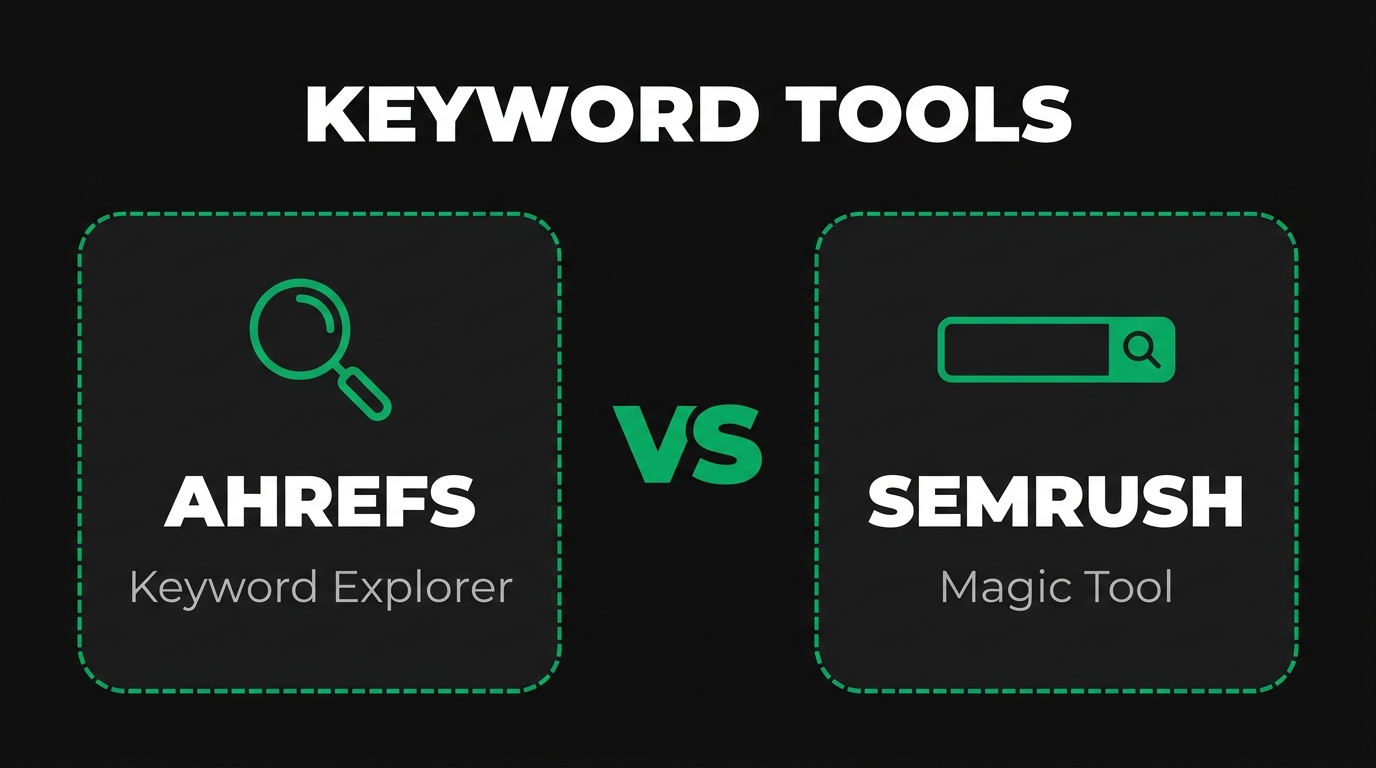
Ahrefs and Semrush compare on manufacturing keyword research along four dimensions: long-tail coverage, low-volume handling, procurement-funnel mapping, and niche-term volume accuracy. Ahrefs tends to surface deeper long-tail combinations; Semrush tends to offer cleaner intent clustering.
Which Tool Surfaces Long-Tail Process and Material Queries Better?
Ahrefs surfaces long-tail process and material queries better because its keyword database spans a huge corpus of geographic regions and discovers millions of new pages every 24 hours. That scale matters for combinations such as "Inconel 718 wire EDM aerospace" or "medical-grade PEEK injection molding." Semrush's Keyword Magic Tool is strong on broader filters and intent tagging but thins out on the deepest long-tail combinations. For foundational grounding, read this industrial keywords? ultimate guide and complement it with curated references to high value terms.
For a broader cross-section of platforms, see the best keyword research tools for b2b industrial work.
How Do They Handle Low-Volume High-Intent Industrial Keywords?
Ahrefs and Semrush handle low-volume high-intent industrial keywords differently: Ahrefs reports search volumes down to single digits with clickstream-informed estimates, while Semrush shows "N/A" or zero more often for the same phrases. For sourcing queries such as "AS9100 CNC machining Tennessee," Ahrefs tends to return a volume estimate and parent topic; Semrush may return no data, which misleads buyers about whether to pursue the term.
Which Platform Better Maps Procurement Funnel Stages?
Semrush better maps procurement funnel stages because its Keyword Magic Tool assigns intent labels across informational, navigational, commercial, and transactional buckets, which aligns cleanly with research, evaluation, RFQ, and purchase stages. Ahrefs handles the same mapping manually through parent topics and SERP analysis. For an adjacent discipline where funnel mapping translates directly, see how to implement seo for robotics within industrial sub-verticals.
How Accurate Are Search Volumes for Niche Manufacturing Terms?
Search volumes for niche manufacturing terms are directionally accurate but not precise on either platform, and they diverge most on low-volume queries. Both platforms blend Google Keyword Planner data with clickstream sampling, which leaves a margin of error for terms under 50 monthly searches. Ahrefs generally reports higher volumes for long-tail industrial combinations because of its larger keyword corpus; Semrush reports narrower, cleaner numbers tied to stricter sampling.
This platform-level view sets up how the two tools then differ on backlink intelligence.
How Do Their Backlink Indexes Compare for Industrial Sites?
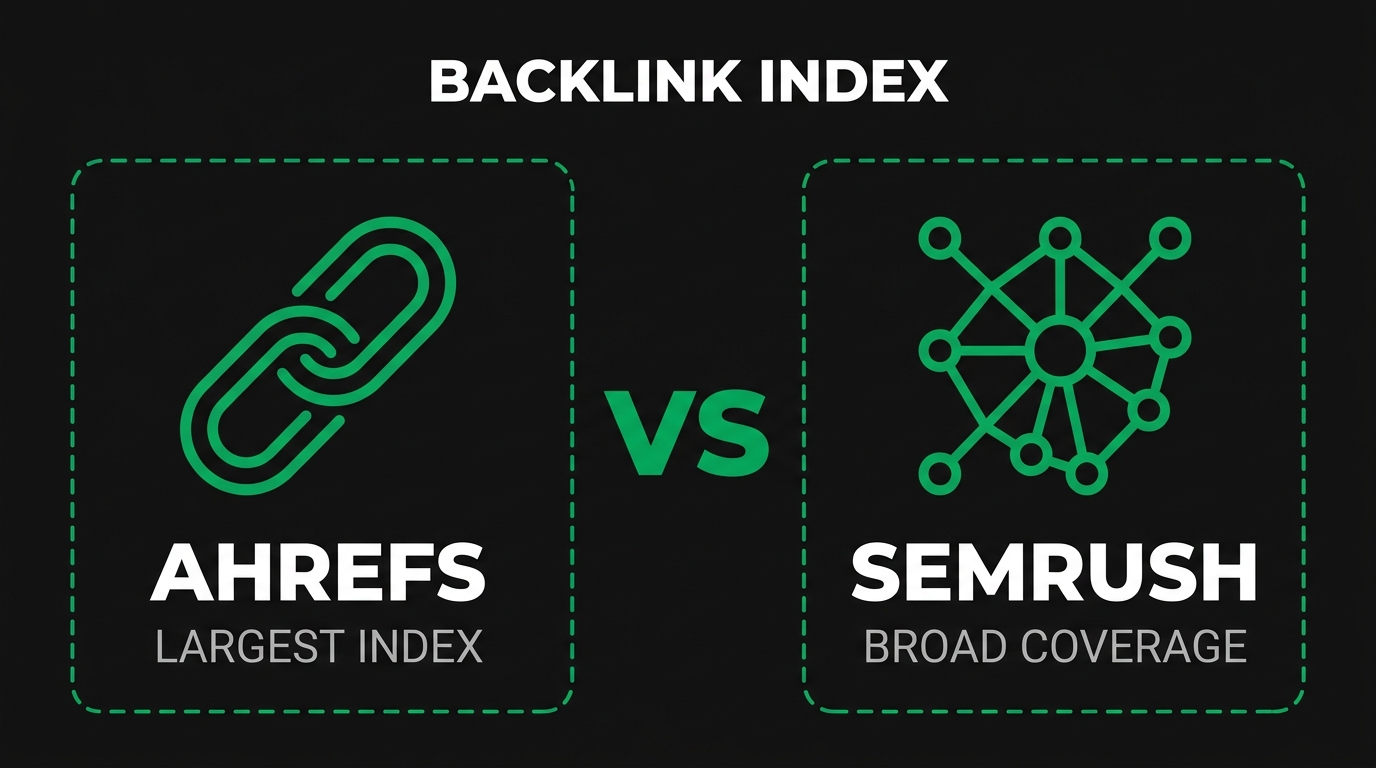
Their backlink indexes compare on three industrial dimensions: crawl recency for trade publications, tier-2 and editorial link discovery, and anchor-text precision for process and certification terms. Ahrefs leads on raw index size; Semrush leads on integrated link plus content signals.
Whose Crawler Discovers Trade Publication Backlinks Faster?
Ahrefs's crawler discovers trade publication backlinks faster because AhrefsBot refreshes its index every 15 to 30 minutes, which matters for fast-moving coverage on sites such as IndustryWeek, Modern Machine Shop, and Assembly Magazine. Semrush's crawler is thorough but slower to index niche B2B media. For a structured companion workflow, read how to use moz link explorer for industrial audits alongside Ahrefs outputs.
Which Tool Better Tracks Tier-2 and Editorial Link Patterns?
Ahrefs better tracks tier-2 and editorial link patterns because Site Explorer exposes the complete referring-domain chain, including links pointing to the pages that link to the client. Semrush's Backlink Analytics surfaces the first tier cleanly but is thinner on second-order amplification data. For industrial brands, tier-2 patterns matter because a single editorial placement in ASME or SME often cascades into dozens of syndicated and aggregator links that carry procurement authority.
How Do They Handle Anchor Text Analysis for Process and Certification Terms?
Ahrefs and Semrush handle anchor text analysis for process and certification terms with different precision. Ahrefs's Anchors report clusters exact-match, partial-match, branded, and naked URL anchors, and supports filtering on phrases such as "5-axis machining," "AS9100," or "NADCAP coating." Semrush's Backlink Analytics anchor view groups anchors into broader buckets and is less granular on technical phrase filtering.
These index differences also shape competitive analysis, covered next.
How Do Ahrefs and Semrush Compare on Competitive Analysis?
Ahrefs and Semrush compare on competitive analysis across reverse-engineering depth, content-gap precision, and RFQ-driving page surfacing. Each platform exposes a different slice of the competitor footprint that manufacturers actually care about.
Which Tool Better Reverse-Engineers Manufacturer Competitors?
Ahrefs better reverse-engineers manufacturer competitors because Site Explorer combines organic keywords, paid keywords, top pages, and the complete backlink graph in one view for any competitor URL. Semrush's Organic Research and Advertising Research are strong individually but sit in separate dashboards. For a manufacturer evaluating a direct competitor such as another CNC shop or injection molder, Ahrefs collapses the entire visibility picture into a single URL-centered workflow. For a structured walkthrough, study competitor analysis for industrial seo patterns.
How Do They Compare on Content Gap Analysis for Industrial Topics?
Ahrefs and Semrush compare closely on content gap analysis for industrial topics, with meaningful differences in granularity. Ahrefs's Content Gap tool accepts up to 10 competitor domains simultaneously and returns shared-intersection keywords with full SERP metrics. Semrush's Keyword Gap tool caps at five domains but includes CPC and intent labels in the same view. For manufacturing topics spanning processes, materials, certifications, and applications, the 10-domain ceiling on Ahrefs scales better.
Which Platform Surfaces Competitor RFQ-Driving Pages More Reliably?
Ahrefs surfaces competitor RFQ-driving pages more reliably because its Top Pages report ranks pages by organic traffic and value, then shows the exact queries driving that traffic. Semrush's Pages report is similar but estimates traffic more conservatively, which can hide high-intent low-volume sourcing pages. For RFQ-driving content such as capability pages on tolerances, certifications, or material specifications, Ahrefs's approach surfaces the winning formats faster.
The same rigor carries into technical audits, the next comparison.
How Do Their Technical SEO Audits Stack Up for Manufacturing Sites?
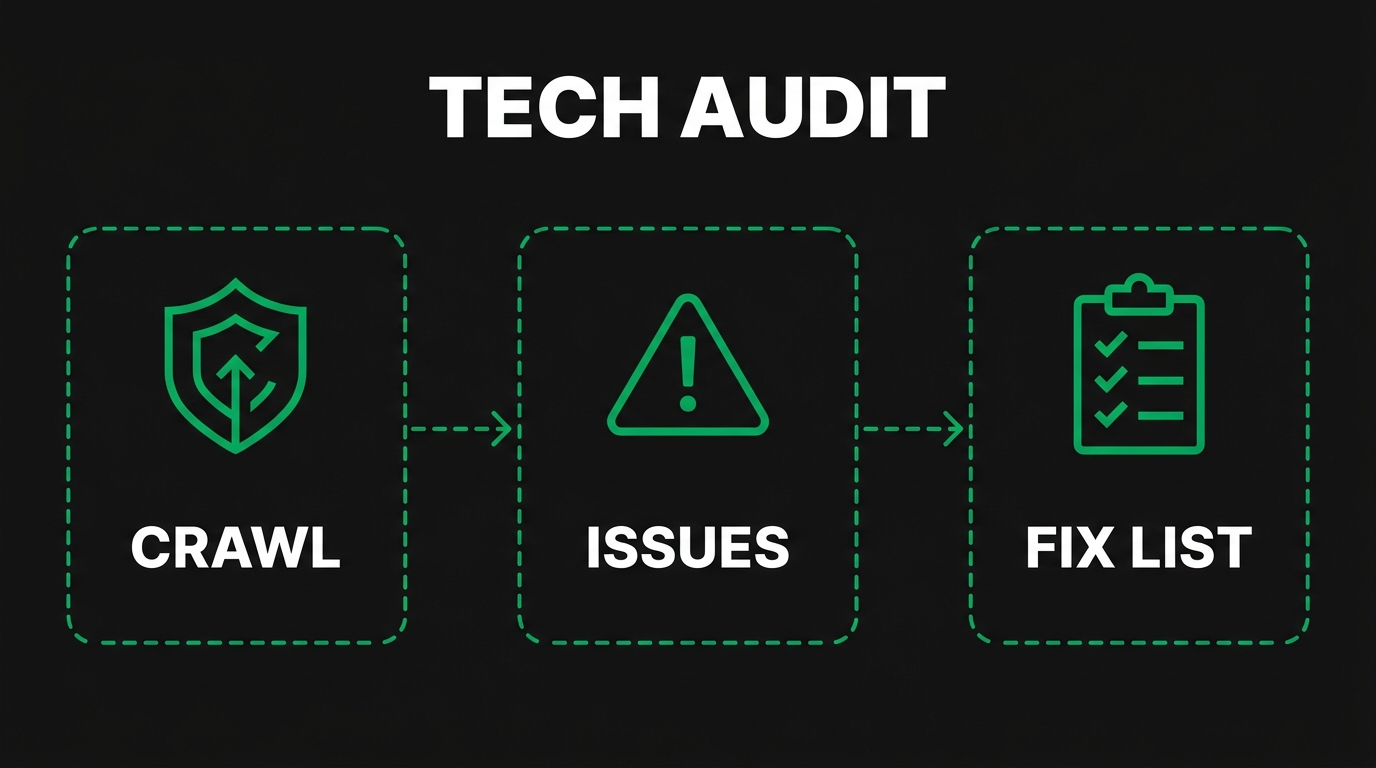
Their technical SEO audits stack up along three axes that matter to manufacturers: large catalog crawl capacity, schema validation for products and manufacturers, and JavaScript rendering detection. Site size and product depth drive which audit engine fits.
Which Crawler Handles Large Product and Catalog Architectures Better?
Ahrefs's Site Audit crawler handles large product and catalog architectures better in raw throughput, processing sites with more than 100,000 URLs without the preset slowdowns Semrush imposes at similar scale. Manufacturing catalogs with extensive part-number taxonomies, certification filters, and material variant pages stress both crawlers, but Ahrefs's distributed infrastructure completes audits faster. Semrush's Site Audit is tightly integrated with Position Tracking and Organic Research, which helps when audits need immediate context.
How Do They Handle Schema Validation for Manufacturer and Product Markup?
Ahrefs and Semrush handle schema validation for manufacturer and product markup with different emphases. Ahrefs's Site Audit flags invalid JSON-LD, missing required properties, and duplicate schema types across pages. Semrush's Site Audit similarly validates structured data but offers stronger alerting on Product, Organization, and BreadcrumbList schema variants.
Which Tool Surfaces JavaScript Rendering Issues Faster?
Semrush surfaces JavaScript rendering issues faster in default audit configurations because its crawler renders pages with a headless Chrome instance by default and flags content visible only after JavaScript execution. Ahrefs supports JavaScript rendering but requires enabling it explicitly in crawl settings, which some teams forget. For manufacturing sites built on Shopify, BigCommerce, or modern React frameworks where product specs render client-side, that default matters.
These audit differences set up the rank-tracking comparison next.
How Do Ahrefs and Semrush Compare on Rank Tracking for Industrial Queries?
Ahrefs and Semrush compare on rank tracking for industrial queries across local pack precision, SERP feature coverage, and long-tail ranking stability. Multi-facility manufacturers and national-scope suppliers each need different strengths from a tracker.
Which Tool Tracks Local Pack Rankings for Plant Locations Better?
Semrush tracks local pack rankings for plant locations better because Position Tracking supports ZIP-code level targeting and renders the local pack, map pack, and organic positions independently. Ahrefs's Rank Tracker supports city-level targeting but does not isolate local pack from organic results as cleanly. For multi-facility manufacturers tracking visibility across 20-plus plant ZIP codes in states such as Ohio, Michigan, and Texas, Semrush gives sharper location-level reporting.
How Do They Handle SERP Feature Tracking for Buyer-Intent Queries?
Ahrefs and Semrush handle SERP feature tracking for buyer-intent queries with broad overlap and a few meaningful differences. Both tools detect featured snippets, People Also Ask, image packs, video carousels, and knowledge panels. Ahrefs shows SERP feature presence in the keyword overview and tracks ownership over time. Semrush detects the same features plus AI Overviews coverage with more detail in the rank tracker.
Which Platform Reports Ranking Movement on Long-Tail Industrial Terms More Cleanly?
Ahrefs reports ranking movement on long-tail industrial terms more cleanly because Rank Tracker samples positions twice per week by default and visualizes movement in a compact grid with minimal noise on low-volume queries. Semrush tracks daily, which is useful for volatile terms but adds visual clutter on stable long-tails.
These rank-tracking patterns carry into content and topical authority tooling next.
How Do Their Content and Topical Authority Tools Compare?
Their content and topical authority tools compare across three jobs: mapping topical coverage for process and material categories, identifying content gaps across industrial verticals, and generating writer-friendly briefs. Each platform wins a different job.
Which Tool Better Maps Topical Coverage for Process or Material Categories?
Ahrefs better maps topical coverage for process or material categories because Keywords Explorer groups keywords into parent topics automatically, which aligns with how manufacturing topical maps are structured by process, material, certification, and application. Semrush's Topic Research tool generates idea clusters but leans toward editorial blog topics rather than structured capability trees. For a CNC shop mapping topical coverage across titanium machining, aluminum machining, stainless steel machining, and their certification overlays, Ahrefs's parent-topic clustering provides a stronger skeleton.
How Do They Help Identify Content Gaps Across Industrial Verticals?
Ahrefs and Semrush help identify content gaps across industrial verticals through different comparison models. Ahrefs's Content Gap tool compares up to 10 competitor domains at once and returns shared-intersection queries with volume, keyword difficulty, and parent topic metadata. Semrush's Keyword Gap is shallower on domain count but layers intent labels on top of the gap. For industrial verticals such as aerospace components, medical device contract manufacturing, or food-grade packaging, Ahrefs's wider comparison surface exposes shared gaps across larger competitor sets.
Which Platform's Content Brief Workflow Suits Technical Writers Better?
Semrush's content brief workflow suits technical writers better because ContentShake AI and the SEO Content Template generate structured briefs with H2 suggestions, target word counts, semantic terms, and readability targets in a single document. Ahrefs's Content Explorer is strong on idea validation but lacks a native brief generator. For agencies managing writers who need to understand the difference between 3-axis and 5-axis machining, AS9100 versus ISO 13485, and NADCAP, a Semrush brief gives more usable structure before writing.
These differences reshape again around AI search visibility, covered next.
How Do Ahrefs and Semrush Compare on AI Search Visibility?
Ahrefs and Semrush compare on AI search visibility through three emerging capabilities: LLM citation tracking, generative-surface coverage, and entity and knowledge-graph insights. Both platforms moved fast here, and the differences matter for manufacturers entering LLM-dominant sourcing.
Which Tool Tracks LLM Citations and Brand Mentions More Accurately?
Ahrefs tracks LLM citations and brand mentions more accurately through Brand Radar, which monitors citations and impressions across ChatGPT, Google AI Overviews, Perplexity, and other generative surfaces. Semrush's AI Toolkit offers similar citation tracking through Position Tracking and a newer AI visibility module.
How Do They Measure Visibility Across Generative Search Surfaces?
Ahrefs and Semrush measure visibility across generative search surfaces using share-of-voice-style metrics with different source coverage. Ahrefs measures impressions and mentions across ChatGPT, Google AI Overviews, Perplexity, Claude, and Gemini. Semrush tracks AI Overviews within Position Tracking and adds dedicated AI-visibility reports. Both platforms aggregate citation frequency, sentiment, and competitor share. For manufacturers, what matters is whether the brand is cited when a buyer asks "who are the top suppliers of X" in ChatGPT.
Which Platform Provides Better Entity and Knowledge-Graph Insights?
Ahrefs provides better entity and knowledge-graph insights because Brand Radar explicitly tracks brand entity co-occurrence with topic entities in LLM answers and Google Knowledge Graph panels. Semrush's entity features are thinner, focused on schema validation and branded search volume. For manufacturers investing in entity grounding through exact-match domains, Wikipedia `sameAs` references, and Schema.org structured data, Ahrefs's co-occurrence view maps directly onto that strategy.
These AI capabilities then raise a harder question: cost.
How Do Their Pricing and Seat Models Compare for Agencies and In-House Teams?
Their pricing and seat models compare across tier costs, credit limits, and cost per RFQ-driving insight. Agencies running multi-brand portfolios and in-house manufacturing teams running a single brand face very different economics.
What Does Each Tool Cost at Standard and Enterprise Tiers?
Each tool costs differently at standard and enterprise tiers. Ahrefs lists Lite at $129 monthly, Standard at $249 monthly, Advanced at $449 monthly, and Enterprise starting at $14,990 annually. Semrush lists Pro at $139.95 monthly, Guru at $249.95 monthly, Business at $499.95 monthly, and Enterprise priced via custom quote. Both platforms offer annual discounts and credits that affect effective cost.
How Do Their Credit, Project, and User-Seat Limits Affect Manufacturing Agencies?
Ahrefs and Semrush credit, project, and user-seat limits affect manufacturing agencies because agencies manage 10-to-50 client projects with multiple staff per project. Ahrefs bundles unlimited users on higher tiers and caps projects and credit usage by plan. Semrush charges per user seat on most tiers and caps projects and report exports per plan. For agencies, Semrush's per-seat model grows costs linearly with team size, while Ahrefs's unlimited-seat tiers absorb team growth without plan upgrades.
Which Tool Delivers Better Cost Per RFQ-Driving Insight?
Ahrefs delivers better cost per RFQ-driving insight for manufacturing teams because its long-tail keyword depth and tighter backlink graph surface more procurement-relevant opportunities per dollar spent on the platform. Semrush delivers better cost per insight for integrated paid-plus-organic engagements.
These cost patterns carry into reporting and integrations, covered next.
How Do Their Reporting and Integrations Suit Revenue-Tied Manufacturing SEO?
Their reporting and integrations suit revenue-tied manufacturing SEO differently. The comparison spans CRM and pipeline integrations, white-label reporting for industrial clients, and clean data export for custom revenue models that tie rankings to RFQs and pipeline value.
Which Tool Integrates Better With CRMs and Pipeline Systems?
Semrush integrates better with CRMs and pipeline systems because native Salesforce, HubSpot, and Zapier connectors push organic performance data directly into pipeline dashboards. Ahrefs relies on the API plus Zapier for similar workflows, which adds setup cost.
How Do They Handle White-Label Reporting for Industrial Clients?
Semrush handles white-label reporting for industrial clients more fully through My Reports, which supports custom branding, scheduled delivery, and client portal access in the Agency Growth Kit. Ahrefs's Looker Studio connector plus the API supports equivalent reporting but requires more configuration.
Which Platform Offers Cleaner Data Export for Custom Revenue Models?
Ahrefs offers cleaner data export for custom revenue models because its API returns structured JSON with consistent field naming across Site Explorer, Keywords Explorer, and Rank Tracker endpoints. Semrush's API is comprehensive but field-level consistency varies across modules. For agencies building custom revenue attribution models that tie every ranked keyword to an RFQ probability, clean JSON shapes matter.
These infrastructure differences set up the final strengths-and-weaknesses pass.
What Are the Real Strengths and Weaknesses of Each Tool for Manufacturers?
The real strengths and weaknesses of each tool for manufacturers cluster around three questions: where Ahrefs outperforms Semrush, where Semrush outperforms Ahrefs, and when manufacturers should run both platforms together.
Where Does Ahrefs Outperform Semrush for Industrial SEO?
Ahrefs outperforms Semrush for industrial SEO in five areas critical to manufacturing workflows:
- Backlink depth and crawl recency, with a reported 35 trillion external link records and 15-to-30-minute refresh cycles.
- Long-tail keyword coverage, with a 28.7 billion keyword database that surfaces process-plus-material combinations other tools skip.
- Content Gap analysis, supporting up to 10 competitor domains per comparison.
- Agency-friendly seat model, bundling unlimited users on higher tiers.
- Brand Radar AI citation tracking with cleaner source attribution across generative surfaces.
Where Does Semrush Outperform Ahrefs for Industrial SEO?
Semrush outperforms Ahrefs for industrial SEO in five areas critical to multi-channel manufacturing workflows:
- Paid search plus competitive intelligence, with richer PPC, display, and ad copy data.
- Local pack tracking with ZIP-code level precision for multi-facility manufacturers.
- Native CRM and pipeline integrations with Salesforce and HubSpot.
- White-label reporting through the Agency Growth Kit and My Reports.
- Content brief workflows through ContentShake and the SEO Content Template.
When Should a Manufacturer Use Both Platforms Together?
A manufacturer should use both platforms together when the engagement spans large-scale backlink work, paid plus organic reporting, multi-facility local SEO, and enterprise CRM reconciliation. Dual-tool stacks make sense for manufacturers with more than $25 million in annual revenue where the combined subscription cost is a rounding error on pipeline value. Use Ahrefs for keyword and backlink research, competitor reverse-engineering, and AI citation tracking. Use Semrush for PPC intelligence, local pack tracking, CRM reporting, and white-label client decks.
These trade-offs close the comparison and set up a final question about strategy fit.
How Should Manufacturers Choose Between Ahrefs and Semrush With a Manufacturing-Focused SEO Agency?
Manufacturers should choose between Ahrefs and Semrush with a manufacturing-focused seo agency by matching platform strengths to procurement-intent strategy, not to feature checklists. The right pairing turns a tool subscription into RFQs and pipeline value rather than ranking charts in a vacuum.
Can Manufacturing SEO Agency's Procurement-Intent Keyword Research Services Help You Get More From Either Tool?
Manufacturing SEO Agency's procurement-intent keyword research services can help you get more from either tool by translating raw platform data into process, material, and certification clusters that match buyer behavior. Manufacturing SEO Agency builds keyword architectures around the full RFQ funnel, from initial material research through supplier evaluation to RFQ submission. Learn more about Manufacturing SEO Agency's industrial keyword research services for context on methodology.
What Are the Key Takeaways About Ahrefs vs Semrush for Industrial SEO?
The key takeaways about Ahrefs vs Semrush for industrial SEO are practical:
- Pick Ahrefs when the core workflow is backlink research, long-tail keyword discovery, and AI citation tracking.
- Pick Semrush when the core workflow is paid plus organic intelligence, multi-facility local tracking, and white-label client reporting.
- Run both platforms when the engagement spans enterprise CRM reporting, dual-channel campaigns, and large-scale technical audits.
- Treat platform choice as secondary to procurement-intent strategy; neither tool substitutes for domain fluency across 3-axis versus 5-axis machining, AS9100 versus ISO 13485, NADCAP, or IATF 16949.
- Validate every report with Google Search Console and CRM data before decisions.