High-value industrial keywords are search queries that procurement managers, design engineers, and supply chain buyers use during active sourcing decisions, where each ranking position can connect a manufacturer to qualified RFQs and large-ticket contracts. They combine process names, material grades, certifications, tolerances, and application contexts that signal commercial readiness rather than casual research.
This guide covers definition fundamentals, the contrast with consumer keywords, the categories that drive RFQs, identification and validation methods, the most expensive industrial CPCs, and the connection between keyword rankings and pipeline revenue.
We start by defining what makes an industrial keyword "high-value," looking at procurement intent, modifier density, search volume thresholds, and long-tail behavior unique to manufacturing buyers.
We then explain how industrial keywords differ from consumer terms, focusing on B2B buyer behavior, the limits of search volume as a metric, average order value impact, and the role of engineers and purchasing managers in query construction.
We examine the categories that carry the most commercial value for manufacturers, including process keywords, material-specific keywords, certification terms, end-use applications, and tolerance modifiers.
We walk through identification and validation, covering tool selection, competitor analysis, SERP feature signals, CPC validation, and procurement funnel mapping.
We analyze the most expensive industrial CPCs, including which verticals command the highest bids, what high CPC reveals about RFQ probability, vertical comparisons, and why low-volume terms can outperform high-volume ones.
We close by connecting keyword choices to lead generation and revenue, covering RFQ-intent translation, conversion benchmarks, ranking-to-revenue attribution, and reporting frameworks that prove keyword ROI.
What Defines a High-Value Industrial Keyword?
A high-value industrial keyword is a search query a procurement manager or engineer types when actively sourcing suppliers, where ranking position translates into qualified RFQs. The sub-sections cover procurement intent, volume and CPC thresholds, modifiers, and long-tail queries. See the foundational industrial keywords? ultimate guide.
How Do Procurement Intent and Buyer Stage Determine Value?
Procurement intent and buyer stage determine value by signaling how close a searcher is to issuing a purchase order. A query like "5-axis CNC titanium aerospace bracket manufacturer" carries RFQ-stage intent, while "what is CNC machining" indicates early research.
Value rises as the buyer advances from problem identification to supplier selection, because each stage narrows vocabulary to process, material, and certification specifics that only committed buyers type.
Which Search Volume, CPC, and Difficulty Thresholds Signal High Value?
High value in industrial keywords is signaled by moderate search volume (roughly 50 to 1,500 monthly searches), elevated cost-per-click ($4 or higher), and a keyword difficulty score where paid competition clusters around specific suppliers rather than content farms. Low absolute volume is acceptable because each click can represent a $50,000 to $2 million contract. Expect long-tail RFQ queries to show fewer than 200 searches monthly yet produce the bulk of qualified pipeline.
Why Do Process, Material, and Certification Modifiers Increase Keyword Value?
Process, material, and certification modifiers increase keyword value because each modifier eliminates unqualified searchers and narrows the query to active buyers. A keyword such as "AS9100 certified 5-axis CNC machining Inconel 718" identifies the exact buyer persona, while "CNC machining" attracts students, hobbyists, and tangential traffic. Modifiers compress the funnel, raising conversion probability and CPC simultaneously. Engineers search with specification language, so layering process (grinding, EDM, Swiss turning), material (6061-T6, PEEK, 17-4 PH), and certification (ISO 13485, NADCAP, IATF 16949) transforms a generic term into a commercial-grade keyword with predictable procurement intent.
How Do Long-Tail Industrial Queries Outperform Generic Manufacturing Terms?
Long-tail industrial queries outperform generic manufacturing terms because they match the specific vocabulary of qualified buyers and carry superior economic yield per click.
Generic terms draw researchers and competitors, while long-tail strings draw sourcing decisions.
Why Are High-Value Industrial Keywords Different from Consumer Keywords?
High-value industrial keywords differ from consumer keywords because they serve a buying committee, encode specification language, and tie to contract-sized order values. Upcoming sub-sections examine B2B buyer behavior, why search volume misleads, how average order value redefines "value," and how engineers and purchasing managers construct queries.
How Does B2B Manufacturing Buyer Behavior Shape Keyword Intent?
B2B manufacturing buyer behavior shapes keyword intent by concentrating searches around problem identification, supplier qualification, and RFQ submission rather than impulse discovery.
Each role searches differently: engineers hunt specification strings, quality leads hunt certifications, purchasing hunts lead times and MOQs. The keyword universe mirrors that committee structure, producing distinct clusters rather than the single-searcher pattern of consumer SEO. For the foundational framing, see what is industrial seo.
Why Is Search Volume a Misleading Metric for Industrial Keywords?
Search volume is a misleading metric for industrial keywords because absolute counts ignore buyer concentration and contract value. A term returning 40 monthly searches can support an eight-figure pipeline when every searcher is a qualified engineer at a Tier 1 aerospace supplier.
Industrial marketers should weight revenue per click over raw impressions, because buyer rarity, not buyer frequency, defines industrial keyword value.
How Does Average Order Value Change the Definition of "Value"?
Average order value changes the definition of "value" by reframing a keyword's worth as expected pipeline contribution rather than click volume. A consumer site valuing a $40 conversion measures keywords differently than a CNC shop valuing a $480,000 multi-year supply contract, so the same CPC has radically different ROI. When AOV ranges from $10,000 to $2 million, a single converted search can justify thousands of dollars of acquisition cost.
What Role Do Engineers and Purchasing Managers Play in Query Construction?
Engineers and purchasing managers play complementary roles in query construction, with engineers typing process and specification language and purchasing managers typing sourcing, capacity, and certification language.
Engineers query "6061-T6 aluminum Swiss machining ±0.0005 tolerance," while purchasing types "AS9100 CNC supplier Ohio lead time 4 weeks."
This committee split drives category selection in the next section.
Which Categories of Industrial Keywords Carry the Highest Commercial Value?
The categories of industrial keywords that carry the highest commercial value are process-based, material-specific, certification, application or end-use, and tolerance or specification keywords. These five clusters align with how engineers and purchasing teams filter suppliers during RFQ cycles.
What Are Process-Based Keywords and Why Do They Convert?
Process-based keywords are queries naming a specific manufacturing process, such as "5-axis CNC machining," "wire EDM," "Swiss turning," "laser cutting," "MIG welding," or "metal injection molding." Process-based keywords convert because they match the exact filter buyers apply when shortlisting suppliers: can this shop perform the required operation.
The same pattern holds in manufacturing, where process terms anchor paid and organic competition by eliminating suppliers lacking that capability.
How Do Material-Specific Keywords Drive RFQ-Ready Traffic?
Material-specific keywords drive RFQ-ready traffic by signaling material certification, grade selection, and supply chain commitment. Examples include "Inconel 718 machining," "PEEK injection molding," "6061-T6 aluminum extrusion," and "medical-grade titanium Ti-6Al-4V." Material grade strings eliminate hobbyist and academic searches because casual users do not type grade codes. When an engineer searches "17-4 PH stainless steel heat-treated machining," the query is effectively a qualified RFQ wrapped in SEO syntax.
Why Are Certification Keywords Like AS9100 and ISO 13485 So Profitable?
Certification keywords like AS9100 and ISO 13485 are profitable because certifications gate entire buying decisions in regulated industries.
Aerospace, medical, automotive, and defense buyers cannot source from uncertified suppliers, so every certification search is transactional. Ranking for "AS9100 certified machine shop" or "ISO 13485 contract manufacturer" attracts buyers whose procurement forms already require that badge.
What Are Application or End-Use Keywords in Manufacturing SEO?
Application or end-use keywords in manufacturing SEO are queries naming the finished product, industry, or deployment context rather than the process itself. Examples include "aerospace bracket machining," "medical device injection molding," "EV battery enclosure stamping," "semiconductor wafer handling trays," and "food-grade stainless tanks." Application keywords capture buyers who understand their product but not every process required to build it, so they search by outcome. Ranking for end-use terms positions a manufacturer as a solution provider rather than a commodity vendor, and it pulls in RFQs from cross-functional teams including design, quality, and purchasing simultaneously.
How Do Tolerance and Specification Modifiers Refine Keyword Value?
Tolerance and specification modifiers refine keyword value by flagging precision requirements that only capable suppliers can fulfill. Strings like "±0.0002 inch tolerance CNC machining," "Ra 0.4 surface finish grinding," and "Cpk 1.67 statistical process control" filter out shops without the metrology, fixturing, or process discipline to meet the spec.
These five category types set the stage for identification and validation techniques in the next section.
How Do You Identify and Validate High-Value Industrial Keywords?
You identify and validate high-value industrial keywords by combining specialized research tools, competitor gap analysis, SERP feature inspection, CPC signal validation, and procurement funnel mapping. The sub-sections walk through each step in the order a manufacturing SEO program should run them.
Which Keyword Research Tools Work Best for Manufacturing Niches?
The keyword research tools that work best for manufacturing niches are Ahrefs, Semrush, Google Keyword Planner, and Thomasnet insights reports. Each tool surfaces different signals: Ahrefs excels at long-tail process strings, Semrush at competitive gap analysis, Keyword Planner at commercial-intent CPC, and Thomasnet at buyer-vocabulary discovery.
The keyword list must mirror supplier-directory vocabulary. For a direct side-by-side, see semrush vs ahrefs for industrial seo.
How Do You Use Competitor Keyword Analysis to Surface Hidden Gems?
You use competitor keyword analysis to surface hidden gems by reverse-engineering the organic footprint of competitors ranking above you, filtering for commercial intent, and isolating terms they rank for but you do not. The process pulls a competitor's top pages, extracts every ranking query, removes low-intent informational terms, and cross-references remaining keywords against your existing coverage. Hidden gems typically cluster around obscure material grades, niche certifications, or regional process combinations competitors serve accidentally. The full workflow is documented in how to find competitor keywords.
What SERP Features and Signals Indicate Buyer Intent?
SERP features and signals that indicate buyer intent include paid shopping listings, four or more paid text ads, supplier-directory domains ranking in the top ten, FAQ snippets referencing specifications, and local pack results when location matters. A SERP populated with Thomasnet, GlobalSpec, IQS Directory, and MFG.com signals a validated commercial query. Conversely, a SERP dominated by Wikipedia, YouTube, and general publishers indicates informational intent unsuitable for RFQ targeting. Inspecting SERP composition is faster than running CPC analysis for bulk validation. Ranking tracking discipline is covered in how to track industrial keyword rankings.
How Do You Validate Commercial Intent Through CPC and Bidder Behavior?
You validate commercial intent through CPC and bidder behavior by confirming that advertisers bid consistently on the term and that the bidders are suppliers rather than content publishers. A CPC above $4 with three or more supplier domains competing signals a validated commercial query, because suppliers only bid when the term converts to RFQs. If CPC is high but bidders are directories or media sites, the query attracts research traffic, not procurement.
Why Should You Map Keywords to the Procurement Funnel Stages?
You should map keywords to the procurement funnel stages because buyer language changes at each stage and mis-mapped content loses the searcher.
Mapping ensures early-stage queries reach educational pages and late-stage queries reach capability, certification, and RFQ pages.
This prepares the foundation for CPC analysis in the next section.
What Are the Most Expensive Industrial CPCs and What Do They Reveal?
The most expensive industrial CPCs reveal which verticals treat each click as a high-value RFQ and where supplier competition is most concentrated. Upcoming sub-sections cover top-bid verticals, RFQ probability signals, aerospace and medical comparisons, and why low-volume keywords win on revenue.
Which Manufacturing Verticals Command the Highest CPC Bids?
The manufacturing verticals that command the highest CPC bids are aerospace, medical device, semiconductor, defense, and automotive, with certification-gated process queries inside those verticals clearing the top of the range.
Within manufacturing, aerospace contract machining and medical injection molding repeatedly set the pace on paid CPC because contract sizes justify aggressive bidding. Regional suppliers in regulated verticals often pay more than national averages because local capacity is scarce.
What Does High CPC Tell You About RFQ Conversion Probability?
High CPC tells you that RFQ conversion probability is elevated because multiple suppliers have independently verified the keyword converts. Advertisers rarely sustain $10-plus CPCs unless the post-click economics close, so sustained bidding serves as third-party validation.
Conversely, low CPC on a commercial-sounding term usually means the keyword fails to convert at paid scale, making it a poor organic target despite apparent relevance.
How Do Aerospace, Medical, and Automotive Keywords Compare on Cost?
Aerospace, medical, and automotive keywords compare on cost along a tiered pattern: aerospace and medical clear the top of the range, automotive sits mid-range, and general industrial trails below. Aerospace keywords carry premium CPCs due to AS9100 certification gating and high contract values per part, while medical device queries sustain similar bids driven by ISO 13485 and FDA compliance requirements. Automotive keywords, though larger in volume, distribute bidding across more suppliers, compressing CPCs. Vertical comparison shows that certification density and contract size, not search volume, drive CPC. Manufacturers should benchmark their vertical's CPC band before setting priority targets.
Why Do Some Low-Volume Keywords Outperform High-Volume Ones in Revenue?
Some low-volume keywords outperform high-volume ones in revenue because buyer concentration, not click count, drives pipeline contribution in manufacturing. A keyword returning 25 monthly searches where each searcher is a qualified aerospace buyer can produce more pipeline than a 10,000-volume generic term dominated by students and hobbyists. Modifiers, materials, and certifications increase rarity, and rarity increases dollar value per click.
This inversion leads directly to the lead generation and revenue connection covered next.
How Do High-Value Industrial Keywords Connect to Lead Generation and Revenue?
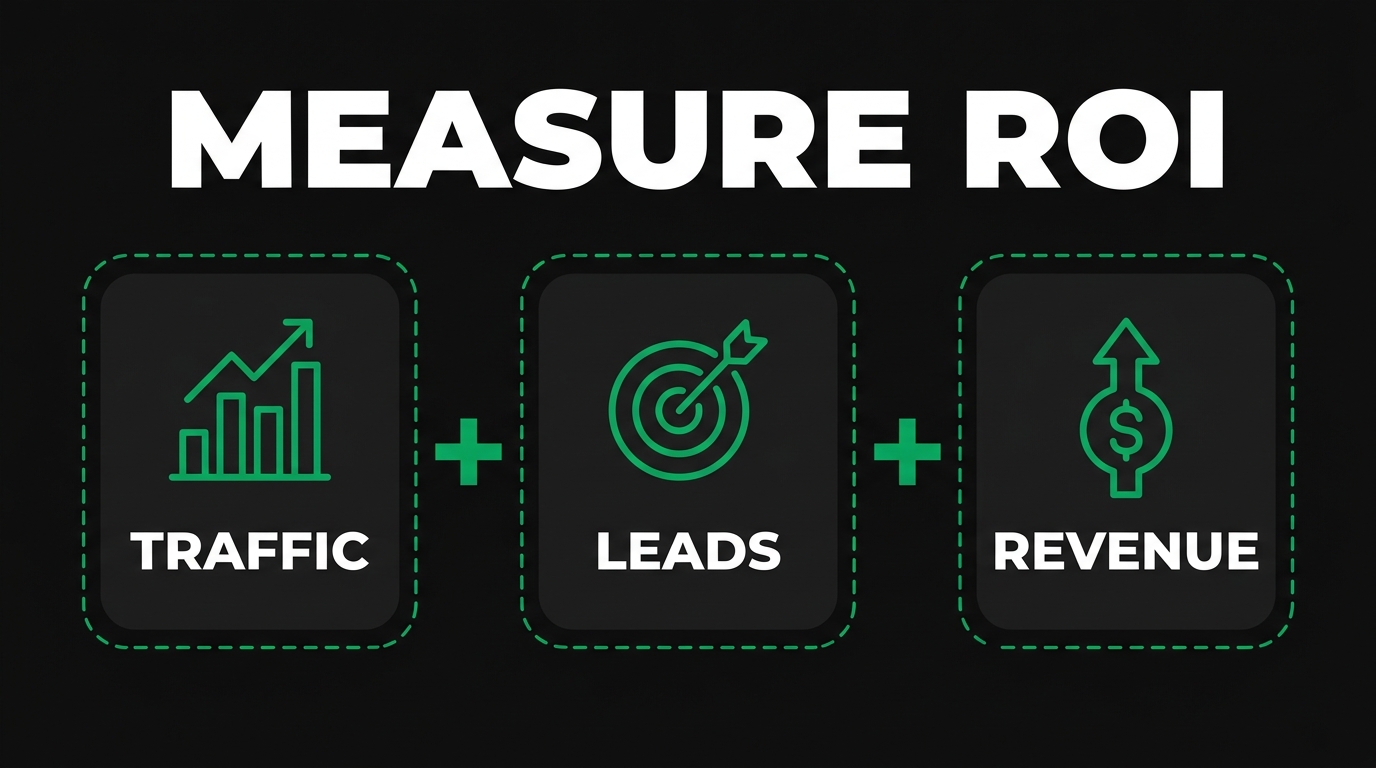
High-value industrial keywords connect to lead generation and revenue by translating specific buyer queries into RFQs, closed contracts, and measurable ROI. The sub-sections cover how RFQ-intent keywords feed pipeline value, expected conversion rates, ranking-to-revenue attribution, and reporting frameworks that prove keyword ROI.
How Do RFQ-Intent Keywords Translate to Pipeline Value?
RFQ-intent keywords translate to pipeline value by funneling specification-aligned searchers directly into quote requests, capability inquiries, and signed NDAs. A searcher typing "AS9100 CNC machining titanium aerospace brackets Ohio" arrives ready to submit part drawings, so the click has immediate pipeline impact.
Understanding how do manufacturers get leads online clarifies why RFQ-intent keyword selection sits at the center of the industrial lead generation funnel.
What Conversion Rates Should Manufacturers Expect from These Keywords?
Manufacturers should expect these keywords to produce conversion rates near the upper range of B2B benchmarks because industrial search intent concentrates buyer-ready traffic.
High-value industrial keywords often exceed the 2.6% organic baseline because the query itself pre-qualifies the searcher.
How Do You Tie Keyword Rankings to Closed Revenue?
You tie keyword rankings to closed revenue by connecting CRM opportunity records to the landing page and keyword that first captured the lead, then tracking each opportunity through to contract value. The stack uses UTM-tagged inbound forms, server-side attribution, and a CRM field that records originating keyword. Every RFQ gains a keyword source, every quote inherits it, and every closed deal rolls revenue back to the originating term. Manufacturers applying disciplined manufacturing lead generation strategies can then calculate revenue per ranking, making keyword investment decisions based on dollars closed rather than estimated traffic value.
Which Reporting Frameworks Prove Keyword ROI for Manufacturers?
The reporting frameworks that prove keyword ROI for manufacturers are keyword-to-pipeline attribution, cohort-based ranking-to-revenue tracking, share-of-search benchmarking, and the RFQ influence model. Each framework rolls rankings into dollar outcomes rather than traffic estimates.
Evaluating top manufacturing marketing firms against framework output rather than vanity dashboards separates credible vendors from the rest.
This keyword-to-revenue lens leads directly into how to approach the research discipline in the next section.
How Should You Approach High-Value Industrial Keyword Research with Manufacturing SEO Agency?
You should approach high-value industrial keyword research with Manufacturing SEO Agency by pairing procurement-intent architecture with revenue-tied reporting, using a manufacturing-focused seo agency that speaks the buyer's technical language. The sub-sections explain the agency's service fit and summarize the key takeaways.
Can Manufacturing SEO Agency's Procurement-Intent Keyword Architecture Service Help You Uncover High-Value Industrial Keywords?
Yes, Manufacturing SEO Agency's procurement-intent keyword architecture service can help you uncover high-value industrial keywords by mapping clusters to each stage of the procurement journey, from material research through RFQ submission. Manufacturing SEO Agency builds the architecture around process, material, and certification combinations rather than vanity terms, which is why the firm's industrial keyword research services focus on AS9100, ISO 13485, NADCAP, and IATF 16949 vocabularies alongside process and tolerance modifiers. Manufacturing SEO Agency serves B2B manufacturers across CNC machining, injection molding, metal fabrication, additive, aerospace, automotive, medical, and contract manufacturing, ranking sites for queries that convert to RFQs rather than informational traffic.
What Are the Key Takeaways About High-Value Industrial Keywords We Covered?
The key takeaways about high-value industrial keywords are straightforward. Value is driven by procurement intent, modifier density, and contract size rather than search volume. Process, material, certification, application, and tolerance categories anchor the most commercial queries. Validation pairs CPC signals with SERP feature inspection and procurement funnel mapping. Aerospace, medical, semiconductor, and automotive verticals command the highest CPCs because certifications gate buying. Low-volume keywords routinely outperform high-volume ones in revenue because buyer concentration, not click count, defines industrial ROI. Reporting frameworks must connect rankings to RFQs and closed revenue, turning keyword selection into a pipeline decision rather than a traffic estimate.