Industrial keyword ranking tracking is the disciplined measurement of where a manufacturing website appears in search results for procurement-intent queries built around process names, material grades, certifications, and supplier modifiers. We treat each tracked term as a leading indicator of pipeline rather than a vanity metric.
This guide covers what industrial rankings are and why they matter, the metrics worth monitoring, how to build a procurement-intent keyword list, the tools that fit manufacturing workflows, system setup, reporting practices, and the common mistakes that distort decisions.
We open with definitions and buyer behavior so the rest of the playbook ties every position to an engineer, plant manager, or purchasing lead actively sourcing a supplier. Procurement search is structurally different from consumer search, and the tracked-keyword strategy must reflect that.
We then walk through ranking metrics, including average position, impressions, click-through rate, share of voice, featured snippets, and AI Overviews. Each metric tells a different story about visibility, and reading them together prevents misdiagnosis.
Building the right keyword list comes next. We map process, material, and certification modifiers into seed terms, cluster by funnel stage, validate intent, and prioritize keywords that map to high-value request-for-quote opportunities.
Tool selection and system setup follow. We compare Google Search Console, paid platforms, and AI search trackers, then explain how to configure geo, device, refresh cadence, and CRM integration so ranking data feeds revenue reporting.
Reporting and analysis turn raw movements into stakeholder language. We close with the common tracking mistakes manufacturers make and how to avoid them.
What Are Industrial Keyword Rankings and Why Do They Matter for Manufacturers?
Industrial keyword rankings are the recorded positions a manufacturing site holds in search engines for procurement-intent queries. They matter because each tracked term maps to a specific buyer behavior, and movement on those terms predicts pipeline before a single form fill.
What Defines an Industrial Keyword in B2B Manufacturing Search?
An industrial keyword in B2B manufacturing search is a query built from process, material, certification, tolerance, and application modifiers that procurement teams type when sourcing suppliers. Examples include "5-axis CNC machining titanium aerospace," "AS9100 injection molding contract manufacturer," and "NADCAP heat treat aluminum 7075." Foundational coverage of the term family is laid out in our industrial keywords? ultimate guide.
How Do Industrial Keyword Rankings Differ from Consumer SERP Rankings?
Industrial keyword rankings differ from consumer SERP rankings in volume, intent, and SERP composition. Industrial queries have lower monthly volume but far higher commercial value per click because the searcher is a buyer, not a browser. Consumer SERPs surface shopping carousels, reviews, and influencer content; industrial SERPs surface PDF spec sheets, supplier directories, ISO-listed manufacturers, and trade publications. A separate breakdown of which terms carry real procurement intent appears in our high value keyword guide.
Why Do Procurement Buyers Rely on Search When Sourcing Suppliers?
Procurement buyers rely on search because supplier discovery has moved almost entirely online. Buyers qualify vendors through search before any rep contact, then shortlist based on capability pages, certifications, and spec documentation. Our pillar overview of what is industrial seo explains how search systems index manufacturing capability pages, certifications, and process taxonomies for these buyers.
Why Do Tracked Rankings Predict RFQ Volume and Pipeline Value?
Tracked rankings predict RFQ volume because position movement on commercial-intent terms changes how often a capability page enters a buyer's shortlist. The relationship is mechanical: higher position raises impressions, raises clicks, raises form starts, and raises RFQs. We treat each cluster as a leading indicator with a 30 to 60 day lag to closed pipeline.
Which Metrics Should You Monitor When Tracking Industrial Keyword Rankings?
The metrics worth monitoring are average position, impressions, clicks, click-through rate, share of voice, and SERP feature presence. Together they expose visibility, demand, and conversion friction across the procurement funnel.
What Is the Difference Between Average Position and Top-10 Share of Voice?
Average position and top-10 share of voice measure different things. Average position tells you a single page's slot; share of voice tells you category dominance. Share of voice aggregates the percentage of clicks a domain captures across a defined keyword set, weighted by position-specific CTR, while average position reports only the topmost slot a link holds across queries.
How Do Click-Through Rate and Impressions Inform Ranking Health?
Click-through rate and impressions inform ranking health by showing whether a position actually earns attention. Impressions confirm a query produced a SERP appearance; CTR confirms the title and snippet earned a click. A page can rank position three with low CTR if the title is generic, the snippet is boilerplate, or AI Overviews suppress the click.
Why Should You Track Featured Snippets, People-Also-Ask, and AI Overviews?
Featured snippets, People-Also-Ask, and AI Overviews must be tracked because they reshape the click curve above your organic listing. Manufacturers who do not measure SERP feature presence cannot explain why impressions held steady while organic clicks fell. Snippet capture and PAA inclusion become first-page-equivalent visibility worth defending, especially as generative summaries absorb top-of-page attention.
How Do SERP Features Like Local Pack and Sitelinks Affect Industrial Visibility?
SERP features like local pack and sitelinks shift industrial visibility by occupying screen real estate above and around the standard organic block. Local pack appears for searches with a city or state modifier and pushes organic listings down two to three slots. Sitelinks attach to brand and high-authority capability pages, multiplying visible anchor text. Knowledge panels and image packs further fragment the SERP. Tracking SERP feature presence per query lets reporting separate position drift from layout drift.
How Do You Build a Procurement-Intent Keyword List Worth Tracking?
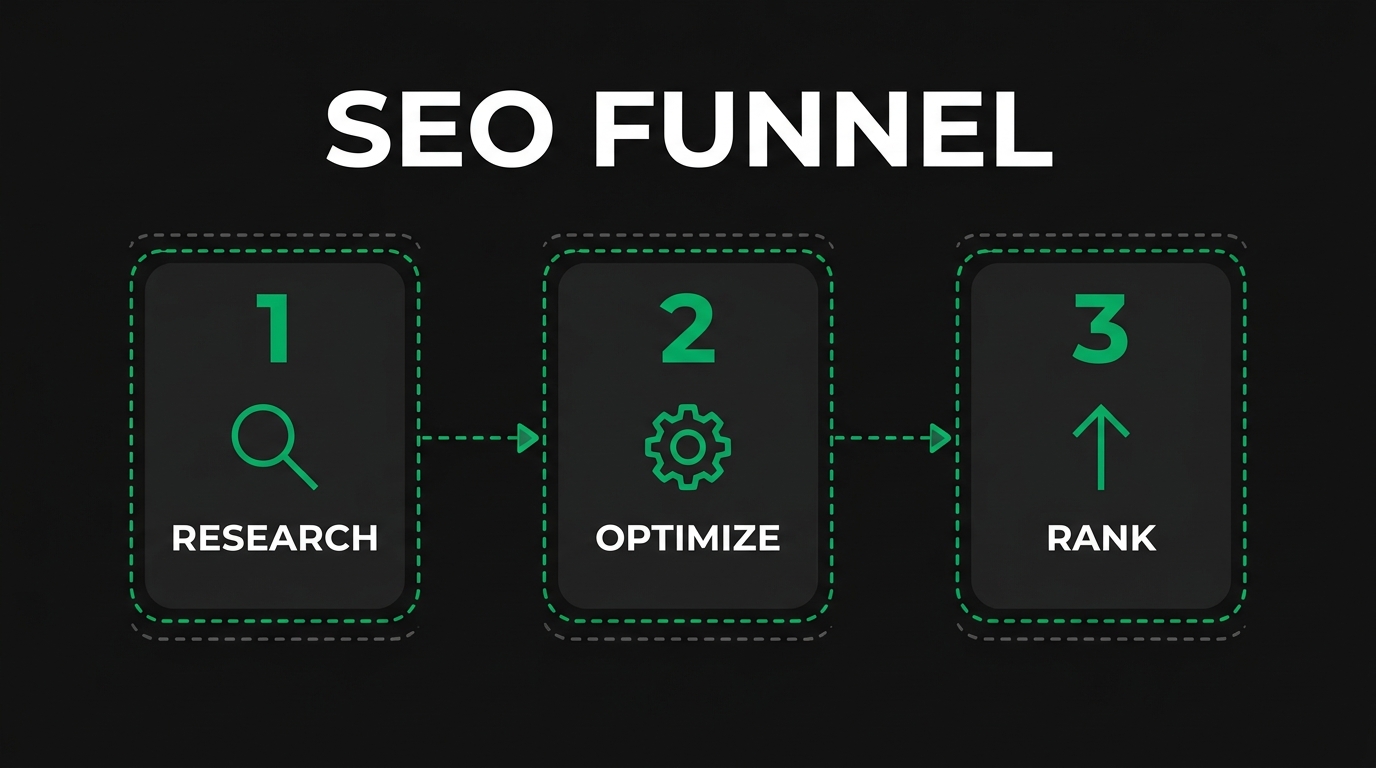
Building a procurement-intent keyword list begins with seeding from process, material, and certification modifiers, clustering by funnel stage, validating intent, and prioritizing terms that map to RFQ-bearing capability pages.
How Do You Map Process, Material, and Certification Modifiers into Seed Keywords?
Process, material, and certification modifiers map into seed keywords by combining the three axes against application or industry. The matrix is process (5-axis CNC, swiss turning, MIM injection molding) by material (aluminum 7075, titanium grade 5, PEEK) by certification (AS9100, ISO 13485, NADCAP, IATF 16949). Each combination becomes a candidate seed. Our broader playbook on industrial seo strategies walks through the modifier framework in more depth.
What Is the Right Way to Cluster Keywords by Procurement Funnel Stage?
The right way to cluster keywords by procurement funnel stage is to bucket by intent verb and modifier density. Awareness terms ask "what is" or "how does" and define a process or material. Consideration terms compare ("AS9100 vs ISO 9001," "swiss vs CNC turning") or qualify ("aerospace contract manufacturer Texas"). Decision terms include capability plus location plus certification ("NADCAP heat treat supplier Ohio") or RFQ-explicit modifiers ("get a quote," "supplier"). Clustering this way lets reporting attribute pipeline to funnel layer.
How Do You Validate Search Volume and Commercial Intent for Niche Industrial Terms?
Validating search volume and commercial intent for niche industrial terms requires three checks: cross-tool volume comparison, SERP composition review, and click-history sanity check. Confirm intent by inspecting the live SERP: if it returns supplier listings, capability pages, and quote forms, the intent is commercial. Most procurement terms will register as low-volume in classical tools yet still drive qualified pipeline.
How Do You Prioritize Keywords That Map to High-Value RFQ Opportunities?
Keywords that map to high-value RFQ opportunities get prioritized by closed-deal value, not search volume. Score each term on three axes: average deal size when that capability is requested, current rank gap to position five, and SERP feature feasibility. Terms with $50,000-plus average deal size, position 6 to 15, and a snippet opportunity earn the top of the tracking list.
Which Tools Should You Use to Track Industrial Keyword Rankings Accurately?
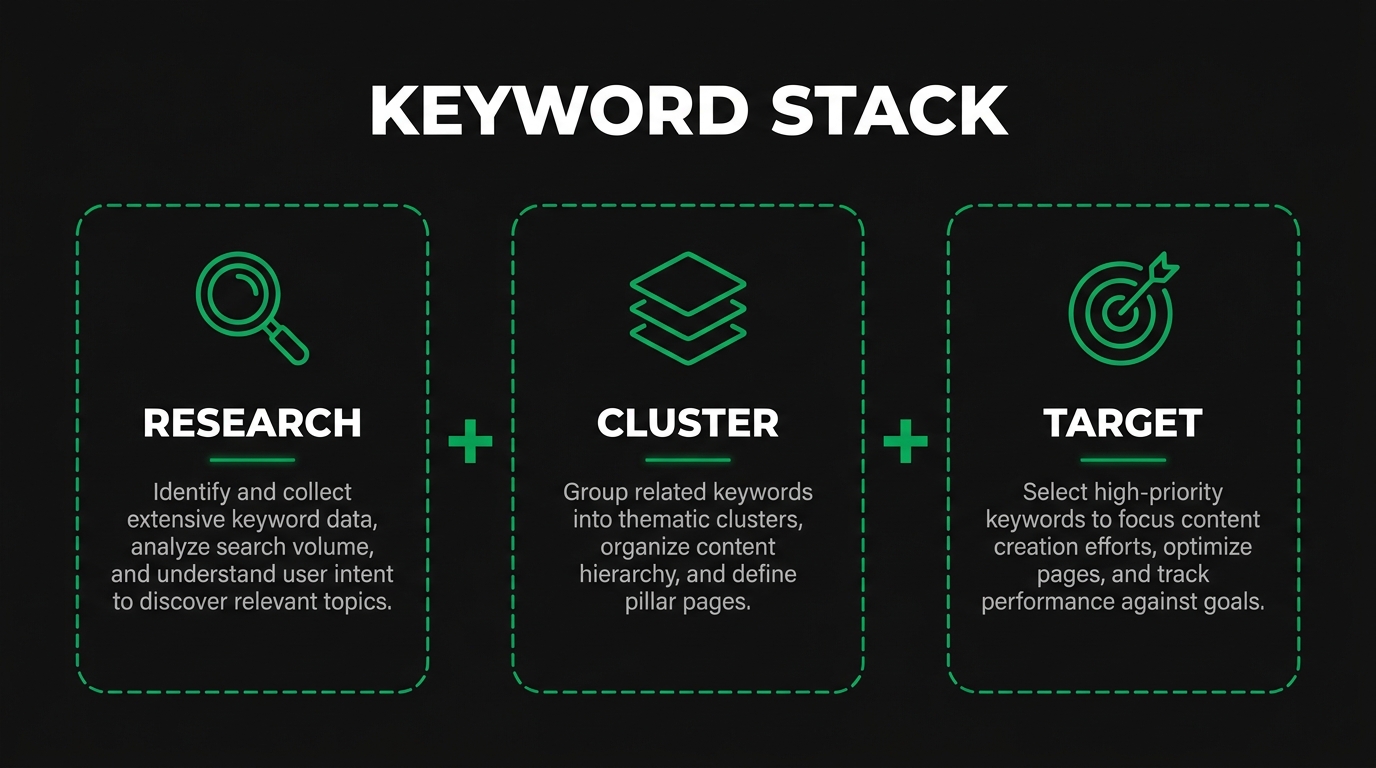
The tools to use are Google Search Console for source-of-truth query data, a paid rank tracker like Ahrefs, Semrush, or SE Ranking for daily position tracking and SERP feature detection, and an AI search tracker for LLM-cited visibility. Each layer answers a different question.
How Does Google Search Console Surface Real Manufacturing Query Data?
Google Search Console surfaces real manufacturing query data by exposing the exact terms that produced impressions, clicks, average position, and CTR over the prior 16 months. Coverage is filtered by anonymization on long-tail queries with very few impressions, but the visible set still surfaces capability terms, certification searches, and competitor brand mismatches that no third-party tool can replicate at the same fidelity.
What Are the Strengths of Ahrefs, Semrush, and SE Ranking for Industrial Keyword Tracking?
Ahrefs, Semrush, and SE Ranking each contribute distinct strengths for industrial keyword tracking. Ahrefs leads on backlink data and SERP history depth. Semrush leads on local position granularity. SE Ranking competes on price and white-label client reports. A direct breakdown of semrush vs ahrefs for industrial seo walks through the tradeoffs. For broader coverage see the best keyword research tools for b2b and the curated list of top keyword research tools b2b manufacturing.
How Do AI Search Tracking Tools Like Profound and Otterly Fit the Manufacturing Workflow?
AI search tracking tools like Profound and Otterly fit the manufacturing workflow by measuring brand presence inside generative answers from ChatGPT, Perplexity, Google AI Overviews, and Claude. They run prompt sets daily, capture which sources the LLM cited, and flag whether the manufacturer's domain, brand, or competitor appeared in the response.
What Should Manufacturers Look for When Comparing Rank-Tracking Vendors?
Manufacturers should look for five things when comparing rank-tracking vendors: granular geo targeting, daily refresh on commercial keywords, SERP feature detection, AI Overview tracking, and clean export to BI tools. Bonus criteria include white-label reporting, share-of-voice math, and historical SERP screenshots. Avoid vendors that bundle keyword count caps with country caps because industrial portfolios cross states quickly. Vendor selection should follow the keyword list, not the other way around.
How Do You Set Up an Accurate Industrial Keyword Rank Tracking System?
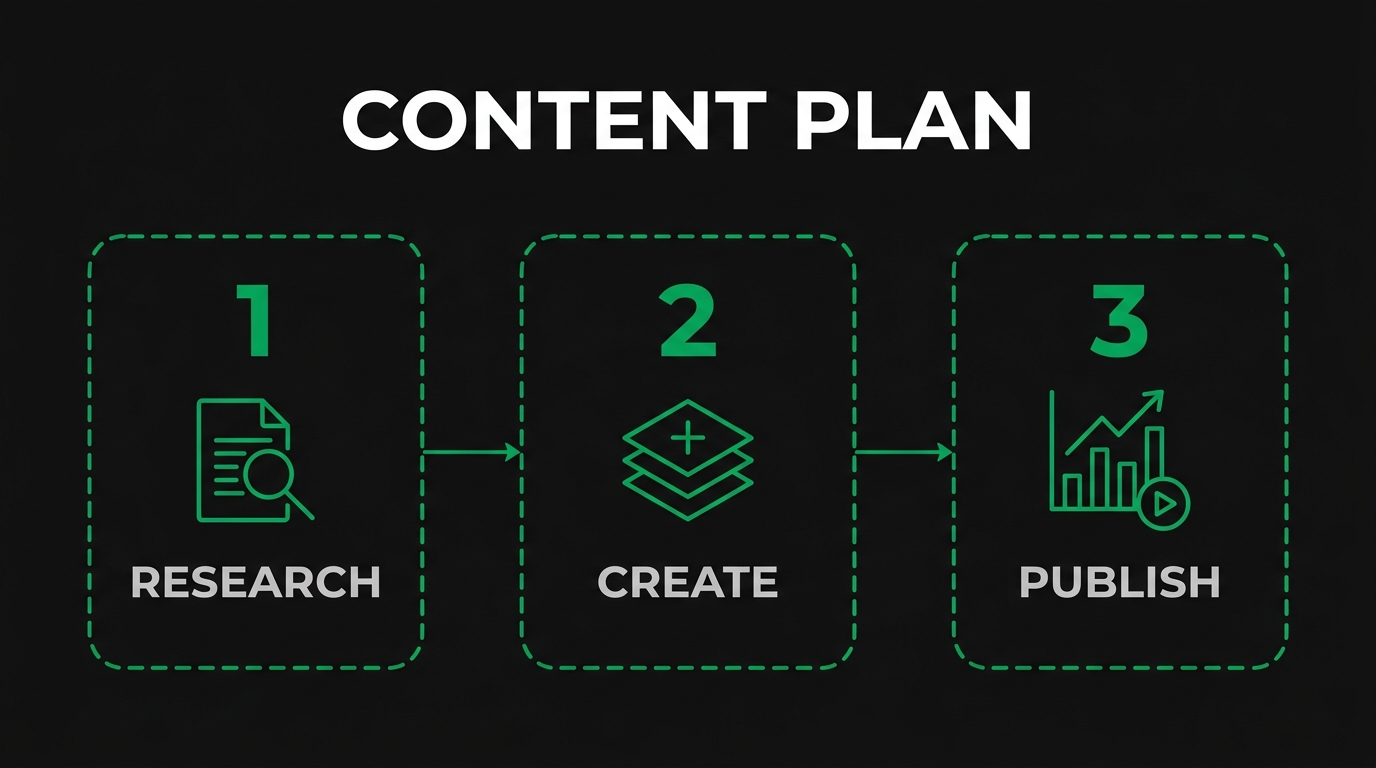
Setting up an accurate industrial keyword rank tracking system means configuring geo and device, grouping keywords into landing-page sets, defining refresh cadence, and connecting tracking output to the CRM so ranking moves trigger pipeline review.
How Do You Configure Geo, Device, and Language Settings for Industrial Tracking?
Geo, device, and language settings get configured by mapping each keyword to the buyer it represents. Most U.S. industrial procurement runs on desktop English at the national level, so a national U.S. desktop project covers the bulk of capability terms. Add mobile tracking for HMI, MRO, and field-service queries where on-floor searches dominate. Add city or ZIP-level projects for capability plus location terms in regulated industries. Language settings stay English unless the manufacturer serves Quebec, Mexico, or EU subsidiaries.
How Do You Group Keywords into Tags, Clusters, and Landing-Page Sets?
Keywords get grouped into tags, clusters, and landing-page sets by attaching three labels per term: process tag, intent tag, and target URL. Process tags include the manufacturing process or material. Intent tags mark awareness, consideration, decision, or RFQ. Target URL ties the term to the single capability page it should rank for, exposing cannibalization when two pages share a target.
How Often Should You Refresh Rankings for Low-Volume Industrial Terms?
Low-volume industrial terms should refresh weekly, not daily. The signal-to-cost ratio of daily checks on a 50-volume capability term is poor: position fluctuates within a normal SERP-volatility band, and daily noise drowns the trend. Weekly refresh on long-tail commercial terms plus daily refresh on the top 50 revenue keywords yields cleaner trend lines and lower tool spend. Reserve daily refresh for active campaigns, recent publishes, and competitor monitoring.
How Do You Connect Tracking Data to Your CRM and RFQ Pipeline?
Tracking data connects to the CRM and RFQ pipeline through three integrations: a daily export of position and clicks per landing-page set, a UTM-tagged form submission stream that ties first-touch organic keyword to the lead record, and a deal-stage view that aggregates ranking-driven RFQs by funnel layer.
How Do You Analyze and Report Industrial Keyword Ranking Data to Stakeholders?
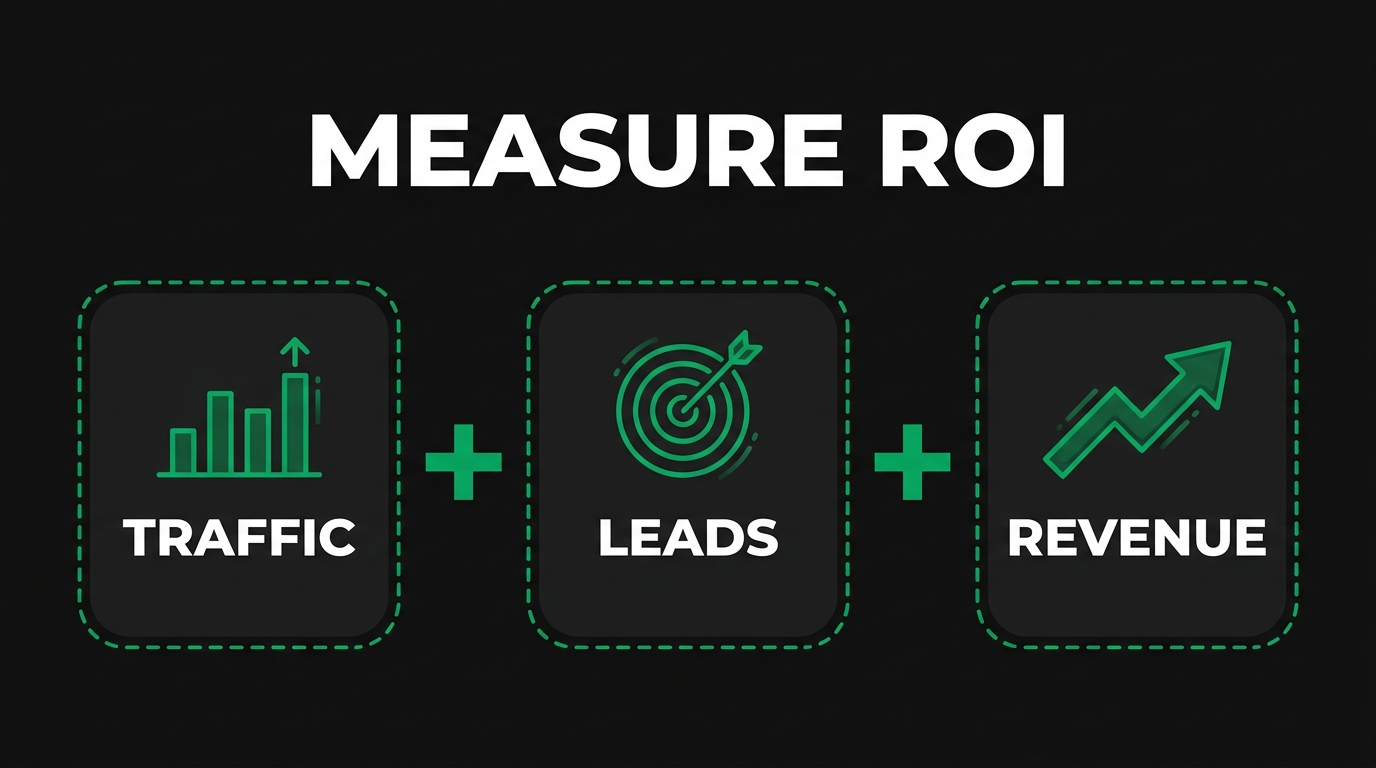
Analyzing and reporting industrial keyword ranking data to stakeholders means translating position changes into pipeline impact, selecting visualizations executives can scan in seconds, and surfacing cannibalization, drift, and competitor benchmarks in the same view.
How Do You Translate Ranking Movements into Revenue and Pipeline Impact?
Ranking movements translate into revenue and pipeline impact through a four-step model: impression delta, CTR curve, session delta, and RFQ conversion rate applied to average deal size. A five-position gain on a commercial term with 400 monthly searches and 4% RFQ conversion produces a measurable pipeline figure, not a trend line. Attributing ranking wins to qualified pipeline, not raw traffic, keeps reporting honest.
Which Visualizations Best Communicate Industrial SEO Performance to Non-SEO Executives?
The visualizations that best communicate industrial SEO performance to non-SEO executives are compact and revenue-anchored. Use four formats: a stacked bar of top-10 share of voice by capability cluster, a funnel chart from impression to RFQ, a heatmap of position movement by landing-page set, and a paired-line chart of organic sessions against pipeline value. Skip keyword tables, cumulative rank averages, and any chart that requires a legend to interpret. Executive attention window is roughly 90 seconds per report.
How Do You Identify Cannibalization, Drift, and Topical Authority Gaps?
Cannibalization, drift, and topical authority gaps are identified by crossing ranking data with URL-level attribution and topical-map coverage. Cannibalization appears when two URLs oscillate for the same term, each losing 30 to 60 percent of the clicks a consolidated page would earn. Drift appears when a page's ranking query set slowly shifts away from its intended cluster, usually after thin updates. Topical authority gaps appear as clusters where the manufacturer ranks positions 11 to 25 across a full set of sibling terms, signaling missing supporting pages rather than a single-URL optimization problem.
How Do You Benchmark Your Rankings Against Direct Manufacturing Competitors?
Rankings benchmark against direct manufacturing competitors through a fixed comparison set and a consistent keyword universe. Pick four to six competitors with overlapping capability and certification coverage, then track weekly share of voice across the same 300 to 600 term list. Compare gap-closed terms, new-page-ranked terms, and SERP feature wins month over month. For a broader read on how specialized agencies approach this layer, see our breakdown of the top manufacturing marketing firms serving industrial brands.
What Common Mistakes Should You Avoid When Tracking Industrial Keyword Rankings?
The common mistakes to avoid are tracking vanity keywords, ignoring sampling and personalization errors, mixing brand and non-brand data in one view, and running aggressive refresh schedules that inflate tool costs without sharpening insight.
Why Is Tracking Vanity Keywords a Costly Distraction for Manufacturers?
Tracking vanity keywords is a costly distraction for manufacturers because high-volume head terms rarely produce procurement-qualified traffic. A position-one ranking for "CNC machining" might deliver 8,000 monthly sessions and zero RFQs because the query pool is saturated with students, hobbyists, and general researchers. A position-four ranking for "5-axis CNC machining titanium aerospace parts AS9100" delivers 120 sessions and two qualified RFQs.
How Do Sampling Errors and Personalization Skew Position Data?
Sampling errors and personalization skew position data by reporting a single query's rank from a location, device, and history profile that no buyer shares. Google personalizes results by prior search behavior, logged-in account, cookie state, and physical location. Rank trackers neutralize personalization by querying from clean IPs and scheduled geo buckets, but sampling error remains: daily checks on a 30-volume term can show position 4 one day and position 11 the next from a single SERP refresh. Use weekly medians, not daily peaks, for low-volume commercial terms.
Why Should You Avoid Mixing Brand and Non-Brand Queries in the Same Report?
Mixing brand and non-brand queries in the same report should be avoided because brand queries inflate aggregate CTR and average position, masking true organic acquisition performance. Brand queries sit at position one with 40 to 60 percent CTR by default; non-brand commercial terms sit at position six with 4 to 8 percent CTR. Averaging the two flatters the report and hides decline.
How Do Aggressive Refresh Schedules Inflate Tool Costs Without Adding Insight?
Aggressive refresh schedules inflate tool costs without adding insight because daily checks on low-volume commercial terms produce noise, not signal. A 50-volume term polled daily over a month generates 30 data points that move inside normal SERP volatility, yet the tool bill scales linearly with refresh frequency across thousands of keywords. Reserve daily refresh for the top 50 revenue terms, active campaign targets, and competitor-watch queries. Weekly refresh handles the long tail. The savings typically free budget for AI search tracking or additional competitor benchmarking.
How Should You Approach Industrial Keyword Rank Tracking with Manufacturing SEO Agency?
You should approach industrial keyword rank tracking with Manufacturing SEO Agency by pairing procurement-intent keyword architecture with revenue-tied reporting so every tracked term maps to a real RFQ opportunity. Manufacturing SEO Agency is a manufacturing-focused seo agency that builds tracking systems around pipeline, not vanity positions.
Can Manufacturing SEO Agency's Procurement-Intent Keyword Architecture Service Improve Rank Tracking Outcomes?
Yes, Manufacturing SEO Agency's procurement-intent keyword architecture service improves rank tracking outcomes by grounding the tracked universe in the exact process, material, and certification combinations buyers type during supplier discovery. Manufacturing SEO Agency structures keyword clusters across the procurement journey, from initial material research through supplier evaluation to RFQ submission, then attaches each cluster to a capability page and a CRM field. Teams evaluating dedicated support can review the industrial keyword research services built for manufacturing portfolios.
What Are the Key Takeaways About Tracking Industrial Keyword Rankings We Covered?
The key takeaways are simple: treat tracked rankings as leading indicators of pipeline, not vanity scorecards; build the list from procurement-intent modifiers covering process, material, and certification combinations; layer Google Search Console with a paid rank tracker and an AI search tracker; configure geo, device, and refresh cadence to match buyer reality; and report in pipeline language with share of voice, cannibalization, and competitor benchmarks in one view. Avoid vanity terms, aggressive refresh on low-volume queries, and mixed brand and non-brand reports. Manufacturing SEO Agency brings this playbook to manufacturers who want tracking that ties directly to revenue.