The best keyword research tools for manufacturing SEO are platforms that surface procurement-stage queries, industrial process and material modifiers, and certification-qualified searches that buyers actually use to find suppliers. These tools combine search volume data, competitor intelligence, SERP analysis, and entity mapping so manufacturers can target queries tied to quoting, sourcing, and engineering decisions rather than vanity traffic.
This guide covers what keyword research means inside an industrial context, the free options that every manufacturer should use first, the paid platforms that scale industrial discovery, the specialized and niche tools that fill procurement-specific gaps, how to compare and evaluate tools before committing budget, how to build a repeatable workflow from seed list to RFQ-mapped keyword clusters, and how specialist industrial keyword research services extend tool output into revenue.
Manufacturing keyword research is the discipline of identifying the exact process, material, tolerance, and certification queries that procurement teams and design engineers use to shortlist suppliers. It differs from generic B2B keyword research because buying groups are larger, search intent maps to RFQ stages, and long-tail modifiers such as alloy grade, NAICS code, or AS9100 status carry most of the revenue value.
Free tools include Google Keyword Planner, Google Search Console, Google Trends, AnswerThePublic, and browser extensions that layer quick volume and difficulty data onto SERPs. Each has methodology quirks manufacturers should understand before relying on the numbers.
Paid tools include Ahrefs, Semrush, Moz Pro, SE Ranking, and Keywords Everywhere. These platforms offer deeper indexes, backlink overlap views, ranking trackers, and SERP feature coverage that matter when industrial buyers are validating technical suppliers.
Specialized and niche tools cover audience research, entity and schema optimization, AI-powered clustering, and question mining. They complement mainstream platforms by exposing content gaps that competitors miss in technical, regulated, and low-volume industrial niches.
Evaluating tools involves pricing transparency, credit and seat limits, data accuracy benchmarks against Search Console truth, and how cleanly the platform integrates with CMS, CRM, and analytics stacks that manufacturers already operate.
Workflow design maps procurement-stage intent to keyword clusters, combines process, material, and certification modifiers into seed lists, validates ideas through SERP and competitor analysis, and prioritizes keywords by RFQ potential instead of raw search volume.
What Is Keyword Research in the Manufacturing SEO Context?
Keyword research in the manufacturing SEO context is the practice of identifying process, material, tolerance, and certification queries that procurement teams and design engineers use to shortlist industrial suppliers. The sections below compare it to generic B2B research, unpack procurement-intent signals, and explain why technical modifiers drive RFQ value.
How Does Manufacturing Keyword Research Differ From Generic B2B Keyword Research?
Manufacturing keyword research differs from generic B2B keyword research because the target entity is a physical process or part, not a software seat, and because buying groups include engineers and procurement officers rather than marketing buyers.
Generic B2B research targets broad software categories. Manufacturing research narrows to exact processes, alloys, tolerances, and certifications engineers specify on drawings. For the definitional view, the industrial keywords? ultimate guide walks through classification.
What Procurement-Intent Signals Should a Manufacturing Keyword Tool Surface?
Procurement-intent signals a manufacturing keyword tool should surface are RFQ-stage modifiers, capability qualifiers, certification filters, and supplier-shortlist verbs that indicate a buying committee is near decision. Tools should expose queries combining process, material, tolerance, industry, and location so each keyword maps to a buying stage rather than a browsing stage.
Useful signals include "near me" and "manufacturer" suffixes, alloy or grade qualifiers, ISO or AS9100 mentions, tolerance inputs, and verbs such as "quote," "source," or "supplier." For small operations building initial pipelines, the fundamentals are covered in seo for small manufacturing companies.
Why Do Process, Material, and Certification Modifiers Matter for Industrial Search?
Process, material, and certification modifiers matter for industrial search because they separate serious buyers from casual researchers and map to supplier qualification criteria.
Process modifiers such as "Swiss turning" or "5-axis milling" qualify capability. Material modifiers such as "Inconel 718" or "PEEK" qualify compatibility. Certification modifiers such as "ITAR" or "AS9100" qualify regulatory fit. A query missing these modifiers is almost never a live RFQ. Specification-driven discovery is the foundation for every downstream tool choice.
Which Free Keyword Research Tools Work Best for Manufacturing SEO?
The free keyword research tools that work best for manufacturing SEO are Google Keyword Planner, Google Search Console, Google Trends, AnswerThePublic, and a short list of free browser extensions. Each covers a different stage: discovery, validation, demand-mapping, or quick on-SERP insights.
How Useful Is Google Keyword Planner for Industrial Buyer Queries?
Google Keyword Planner is useful for industrial buyer queries as a starting seed generator, but it is imprecise on volume.
Rounding is the single biggest limitation. An industrial long-tail query pulling twelve true monthly searches and one pulling eighty can fall into the same bucket. Keyword Planner remains valuable for generating ideas across process, material, and certification modifiers, but manufacturers should never prioritize budget purely on its volume numbers.
What Can Google Search Console Reveal About Existing Manufacturing Keywords?
Google Search Console reveals existing manufacturing keywords through the Performance report, which ties real queries to real impressions, clicks, and positions.
For developers, the Search Console API exposes the same data through the `searchanalytics.query()` method with page, query, country, and device dimensions. Search Console data is Google first-party truth and should anchor every keyword prioritization decision a manufacturer makes.
How Do Google Trends and AnswerThePublic Help Map Industrial Demand?
Google Trends and AnswerThePublic help map industrial demand by showing relative interest over time and surfacing question-form variations that pure volume tools miss.
Trends is strongest for seasonality checks on commodity-linked queries like "steel price" or "semiconductor shortage." AnswerThePublic complements it with prepositional question trees that surface engineer research phrases. Neither delivers absolute volume, so both belong in validation, not prioritization.
Which Free Browser Extensions Add Useful Manufacturing Keyword Data?
Free browser extensions that add useful manufacturing keyword data include Keyword Surfer, Ubersuggest, and Keywords Everywhere free tiers that overlay volume and CPC estimates onto Google SERPs. They help when reviewing industrial capability SERPs, letting teams scan dozens of results without opening separate dashboards.
Extensions work best alongside first-party Search Console data. Free extensions streamline on-SERP review, but authoritative sources anchor credibility for downstream content, which sets up the paid-tool comparison next.
Which Paid Keyword Research Tools Lead for Industrial and B2B Manufacturing SEO?
The paid keyword research tools that lead for industrial and B2B manufacturing SEO are Ahrefs, Semrush, Moz Pro, SE Ranking, and Keywords Everywhere paid tiers. Each brings different strengths in long-tail coverage, SERP feature tracking, multi-country ranking, and inline validation.
How Does Ahrefs Handle Long-Tail Manufacturing and Process Queries?
Ahrefs handles long-tail manufacturing and process queries through a large keyword index paired with clickstream-derived volume estimates and SERP feature tracking.
For manufacturing teams, Ahrefs is particularly strong on Parent Topic grouping and Keyword Difficulty scored against referring-domain benchmarks. Keyword ideas can be layered against competitor content gaps to surface process and material queries rivals already rank on, and cross-referenced with tool comparisons like top keyword research tools b2b manufacturing.
How Does Semrush Compare for Industrial Keyword Discovery and Tracking?
Semrush compares favorably for industrial keyword discovery and tracking through its Keyword Magic Tool filters, Position Tracking, and SERP feature breakdowns.
Semrush leans toward breadth of modifier discovery. Industrial teams benefit from its Keyword Magic broad-match grouping when seeding process plus material plus certification lists. Ranking trackers segment by device and location, which matters for regional manufacturers chasing city-plus-process queries.
What Makes Moz Pro and Moz Keyword Explorer Useful for Industrial SEO Workflows?
Moz Pro and Moz Keyword Explorer are useful for industrial SEO workflows because of their Priority Score, SERP Analysis, and domain-authority benchmarks that simplify prioritization for resource-constrained manufacturers. Priority Score blends volume, organic CTR, and difficulty into a single number, which reduces shortlist debate inside small SEO teams.
Moz's link intelligence is its second strength for industrial programs; the step-by-step workflow for pairing keyword data with backlink context is detailed in how to use moz link explorer for industrial. Engineers building topical authority around a capability benefit from pairing Moz keyword data with Link Explorer data in a single view.
How Does SE Ranking Support Multi-Country Manufacturing Keyword Tracking?
SE Ranking supports multi-country manufacturing keyword tracking through flexible project setups, local-SERP snapshots, and competitor keyword overlap across markets. Manufacturers with export pipelines benefit from tracking identical process and material queries across U.S., German, and Asia-Pacific regions in one dashboard.
SE Ranking sits at a lower price point than Ahrefs and Semrush, making it attractive when tracking thousands of city-plus-process long-tails. Local SERP coverage aligns with the industrial pattern of granular city-level visibility. Link-analysis pairs naturally with best backlink analysis tools for manufacturing when evaluating per-market authority.
What Does Keywords Everywhere Add for Quick Industrial Keyword Validation?
Keywords Everywhere adds quick industrial keyword validation by overlaying monthly volume, CPC, and competition directly onto Google, YouTube, Amazon, and Bing search pages. Credit-based pricing keeps costs low for manufacturers who primarily need spot checks rather than large exports.
Keywords Everywhere works best as a validation layer on top of Ahrefs or Semrush exports, where a rapid SERP-time sanity check confirms whether a long-tail capability query carries enough demand to justify content investment. It is not a replacement for full platforms, but it accelerates daily keyword validation work.
Which Specialized and Niche Tools Help With Industrial Keyword Research?
The specialized and niche tools that help with industrial keyword research are BuzzSumo and AlsoAsked for content gaps, InLinks for entity and schema work, SparkToro for audience mapping, and AI-powered clustering tools for large-scale seed expansion.
How Do BuzzSumo and AlsoAsked Surface Industrial Content Gaps?
BuzzSumo and AlsoAsked surface industrial content gaps by exposing the questions and shared articles that rank in adjacent trade media and on Google's People Also Ask panel. BuzzSumo indexes social and search engagement across industrial trade publications. AlsoAsked maps the branching PAA tree that engineers follow when researching a process.
These tools are strongest when applied at the H3 and FAQ level. For a broader industrial tool stack discussion, see best seo tools for b2b manufacturing.
What Role Do Schema and Entity Tools Like InLinks Play in Manufacturing SEO?
Schema and entity tools like InLinks play the role in manufacturing SEO of aligning page content with the Knowledge Graph through structured data and internal linking based on entity relationships.
Entity-focused tools map the specific processes, materials, and certifications a manufacturer covers, then flag the nearest Knowledge Graph entities and missing topical links. Pairing entity workflows with detailed vendor comparisons like best keyword research tools for b2b helps teams prioritize which entities to strengthen first.
How Can SparkToro Map Manufacturing Buyer Audiences and Search Behavior?
SparkToro maps manufacturing buyer audiences and search behavior by showing the podcasts, publications, and social accounts that procurement and engineering personas follow. Its outputs give context to keyword lists: an exported phrase set becomes meaningful when cross-referenced with the media audiences who search it.
SparkToro's audience overlays help separate informational from transactional industrial queries faster than raw keyword tools can.
Which AI-Powered Tools Help Cluster Manufacturing Keywords at Scale?
AI-powered tools that help cluster manufacturing keywords at scale include Keyword Insights, ContentShake, and embedding-based clustering workflows that group tens of thousands of long-tail variants by semantic similarity. These tools reduce days of manual grouping into hours.
Clustering matters most when industrial seed lists run into the tens of thousands of process-plus-material-plus-city permutations. AI groups these into topic clusters that map cleanly to hub-and-spoke site architectures, setting up the tool-comparison framework next.
How Should Manufacturers Compare Keyword Research Tools Before Committing?
Manufacturers should compare keyword research tools before committing by weighing evaluation criteria, pricing and credit structure, data accuracy against first-party truth, and integration fit with existing stacks. The following sub-sections walk through each decision dimension in order.
Which Evaluation Criteria Matter Most for Industrial SEO Tool Selection?
The evaluation criteria that matter most for industrial SEO tool selection are keyword index depth, SERP feature coverage, competitor intelligence, ranking tracker granularity, and export flexibility.
Industrial teams should prioritize tools that expose real competitor gaps, track PAA and featured snippets, and segment ranking data by city and device. Credit caps and seat pricing become secondary to whether the index actually surfaces low-volume technical queries.
How Should Pricing, Credit Limits, and Seat Counts Be Weighed?
Pricing, credit limits, and seat counts should be weighed against the volume and frequency of industrial queries the team expects to run each month. Ahrefs and Semrush sit at the premium tier. SE Ranking offers lower entry pricing. Keywords Everywhere uses a credit pool that suits spot checks.
A practical rule for manufacturers: calculate expected monthly keyword lookups, rank tracker URLs, and seat requirements over a realistic six-month horizon, then compare plans. Choose the tier that matches actual usage, not marketing-page feature lists.
What Data Accuracy and Coverage Tests Should Manufacturing Teams Run?
Data accuracy and coverage tests that manufacturing teams should run include comparing tool volume to Google Search Console impressions, checking long-tail coverage for real customer queries, and benchmarking SERP feature tracking against manual SERP inspection.
Manufacturers should export a hundred known queries from Search Console, look each up in the candidate tool, and calculate deviation. Tools with deviation under 50% at long-tail volumes are fit for purpose; anything wider undermines downstream prioritization math.
Which Integrations and Reporting Features Streamline Manufacturing SEO Programs?
Integrations and reporting features that streamline manufacturing SEO programs include Google Search Console API pulls, CRM-linked keyword-to-pipeline attribution, Looker Studio connectors, and white-label reporting templates.
Tools that export cleanly to Looker Studio and that support scheduled email rollups reduce analyst time. CRM integration is the decisive advantage for manufacturing programs tying keywords to RFQs and closed revenue. This set of criteria feeds directly into the workflow design covered next.
How Should Manufacturers Build a Keyword Research Workflow Using These Tools?
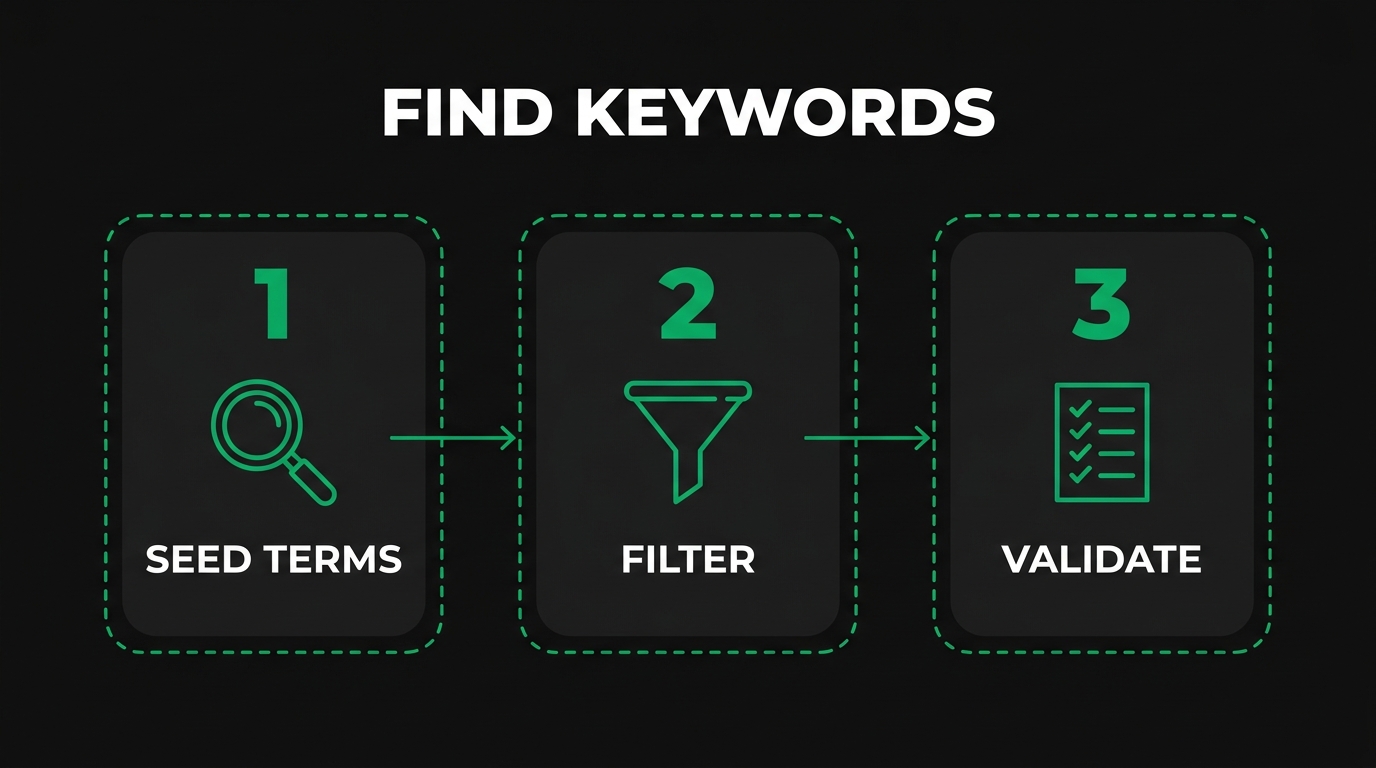
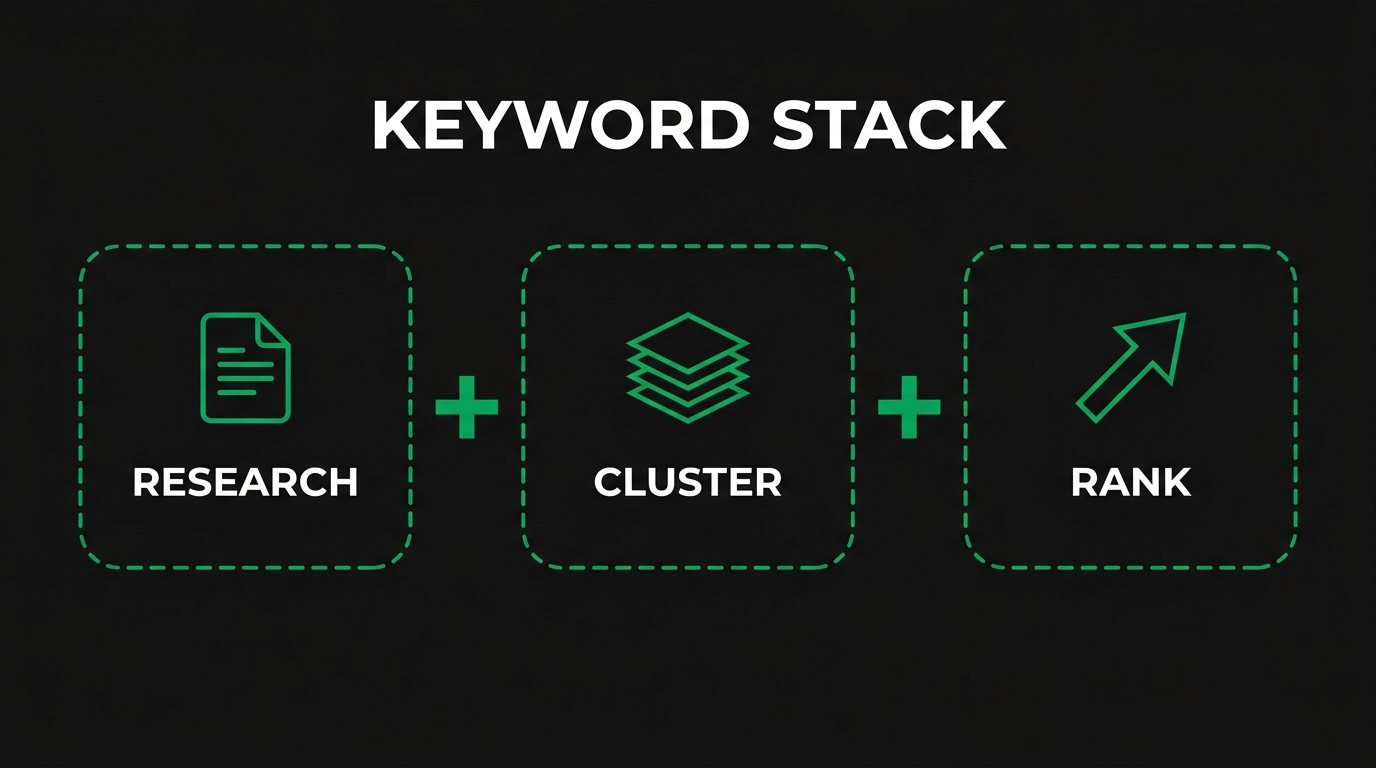
Manufacturers should build a keyword research workflow using these tools by mapping procurement-stage intent, combining process, material, and certification modifiers into seed lists, validating each candidate with SERP and competitor analysis, and prioritizing by RFQ potential. The workflow stays sequential so each stage feeds the next.
How Do You Map Procurement-Stage Intent to Keyword Clusters?
Mapping procurement-stage intent to keyword clusters starts by aligning query modifiers to awareness, consideration, RFQ, and post-purchase stages. "How to" and "what is" queries map to awareness. "Best" and "vs" queries map to consideration. "Quote," "supplier," "manufacturer," and "near me" map to RFQ stage. Post-purchase queries include calibration, maintenance, and material certification requests.
Clean stage-to-cluster mapping is the single highest-leverage output of industrial keyword research.
How Do You Combine Process, Material, and Certification Modifiers Into Seed Keywords?
Combining process, material, and certification modifiers into seed keywords follows a three-axis matrix: list every process the shop performs, every material it handles, and every certification it holds, then multiply these into seed phrases.
Start with twenty processes, ten materials, and five certifications, and the matrix generates a thousand seed permutations. Not every permutation has volume, but the long-tail structure mirrors how engineers actually phrase queries. Tools like Ahrefs, Semrush, and SE Ranking then validate which permutations carry real demand.
How Do You Validate Industrial Keywords With SERP and Competitor Analysis?
Validating industrial keywords with SERP and competitor analysis means reviewing the actual top-ten results for intent alignment, checking whether industrial suppliers currently rank or whether the SERP is dominated by directories and editorial content, and auditing competitor pages for depth and entity coverage. A SERP loaded with Thomas, IndustrySelect, and Global Spec signals a commercial-transactional query worth pursuing; a SERP loaded with academic papers signals an informational query better handled as a blog post.
Competitor analysis determines realistic difficulty; dedicated platforms like best seo competitor analysis tools manufacturing make the per-keyword review faster and surface rising competitors before they saturate the SERP.
How Do You Prioritize Keywords by RFQ Potential Rather Than Search Volume Alone?
Prioritizing keywords by RFQ potential rather than search volume alone requires scoring each query on intent strength, deal value, conversion likelihood, and competitive realism, then weighting volume as a minor tiebreaker. A query with ten monthly searches that converts one $250,000 RFQ outranks a query with a thousand searches converting engineering students.
RFQ-led prioritization turns tool output into pipeline, which connects directly to service-level engagement.
How Can Manufacturers Approach Keyword Research With Industrial Keyword Research Services?
Manufacturers can approach keyword research with industrial keyword research services by partnering with specialists who run the tools, interpret outputs, and tie keyword selection to RFQ and revenue outcomes. Manufacturing SEO Agency offers dedicated industrial keyword research services built around this model.
Can Manufacturing SEO Agency's Industrial Keyword Research Services Help With Tool Selection and Strategy?
Yes, manufacturing seo agency can help with tool selection and strategy through services focused on procurement-intent keyword architecture, topical authority buildout, and revenue-tied reporting. Manufacturing SEO Agency runs manufacturing-specific audits and builds keyword plans that target exact process, material, and certification queries.
Engagements typically include seed-list construction across every shop capability, competitor gap analysis against peer manufacturers, tool selection advice based on budget and team size, and reporting that ties rankings to RFQs. Manufacturing SEO Agency's focus on CNC machining, injection molding, metal fabrication, additive, aerospace, automotive, electronics, and regulated sectors reflects how buying committees actually search.
What Are the Key Takeaways About the Best Keyword Research Tools for Manufacturing SEO We Covered?
The key takeaways about the best keyword research tools for manufacturing SEO we covered are that no single tool fits every industrial program, free and paid tools play complementary roles, and prioritization must reflect RFQ potential.
The essentials are:
- Google Search Console anchors every program as the truth source for existing performance.
- Keyword Planner, Trends, and AnswerThePublic seed ideas but need validation.
- Ahrefs, Semrush, Moz Pro, and SE Ranking add discovery depth and SERP tracking.
- BuzzSumo, AlsoAsked, InLinks, SparkToro, and AI clustering fill niche gaps.
- Evaluation weighs pricing, accuracy against Search Console, and stack integration.
- RFQ-led workflow beats volume-led workflow for industrial pipeline.
Manufacturing SEO Agency applies this framework so tool output becomes quoted revenue.