The best industrial link building strategies are the methods B2B manufacturers use to earn editorial backlinks from trade publications, engineering associations, supplier networks, and authoritative non-commercial sources that align with how procurement managers and design engineers research suppliers. Industrial link building differs from generic SEO because every link must reinforce process, material, and certification authority that buyers actually search for during the RFQ funnel.
This guide covers the foundations of industrial link building and why backlinks influence procurement-intent rankings, the most effective strategies for earning high-authority manufacturing links, the proven solutions that move from theory to placement, and how to vet, compare, localize, and scale a program that ties to pipeline.
The foundations section defines industrial link building, explains its role in editorial authority, and shows why backlinks shape the rankings that matter to engineering buyers. The strategies section walks through trade publication outreach, digital PR, original industrial research, supplier and distributor partnerships, and standards-body authority signals.
The solutions section addresses tactical execution: resource page tactics, broken link recovery, expert sourcing platforms, guest contributions on engineering blogs, and podcast or webinar mentions. The vetting section covers the metrics, topical relevance checks, outbound link audits, and toxic-directory filters that separate quality prospects from waste.
The comparison section evaluates which trade publications to target first, in-house versus specialist outreach, channel ROI, and sibling tactics. The local section explains how regional manufacturer directories, chambers of commerce, and economic development boards build a plant-level footprint. The measurement section closes with KPIs that map to RFQs, referral traffic, and link velocity forecasting for sustainable growth.
What Is Industrial Link Building and Why Does It Matter for Manufacturers?
Industrial link building is the practice of earning editorial backlinks from trade publications, engineering associations, and standards bodies. It matters for manufacturers because backlinks shape the rankings buyers see when sourcing process, material, and certification combinations. The next sections cover differences from generic SEO, ranking influence, and editorial link value.
How Does Industrial Link Building Differ From Generic SEO Link Building?
Industrial link building differs from generic SEO link building in source quality, anchor specificity, and procurement relevance. Generic link building chases volume from any indexed page; industrial link building targets niche trade publications, engineering directories, NIST MEP centers, and standards bodies whose readers buy industrial goods.
Anchor language must mirror procurement vocabulary, naming materials, certifications, and processes rather than vague brand terms. For deeper grounding, see what is industrial seo.
Why Do Backlinks Influence Procurement-Intent Search Rankings?
Backlinks influence procurement-intent search rankings because Google interprets editorial citations as authority signals tied to query relevance, and procurement queries reward topical depth.
Procurement queries are long-tail and competitive; pages with relevant industrial citations win because the algorithm reads each link as a vote for a material, certification, or process combination. To extend this foundation, review broader industrial seo strategies.
What Role Do Editorial Links Play in B2B Manufacturing Authority?
Editorial links play the role of trust transfer in B2B manufacturing authority because they originate from neutral third-party sources whose readership already trusts the publisher. An editorial link sits inside a journalist's analysis, an engineer's case study, or an association's reference page; it carries earned context that a paid placement cannot replicate. Editorial citations also feed the entity layer Google uses to associate manufacturers with materials, processes, and certifications.
The next section turns these foundations into concrete outreach strategies.
What Are the Most Effective Industrial Link Building Strategies?
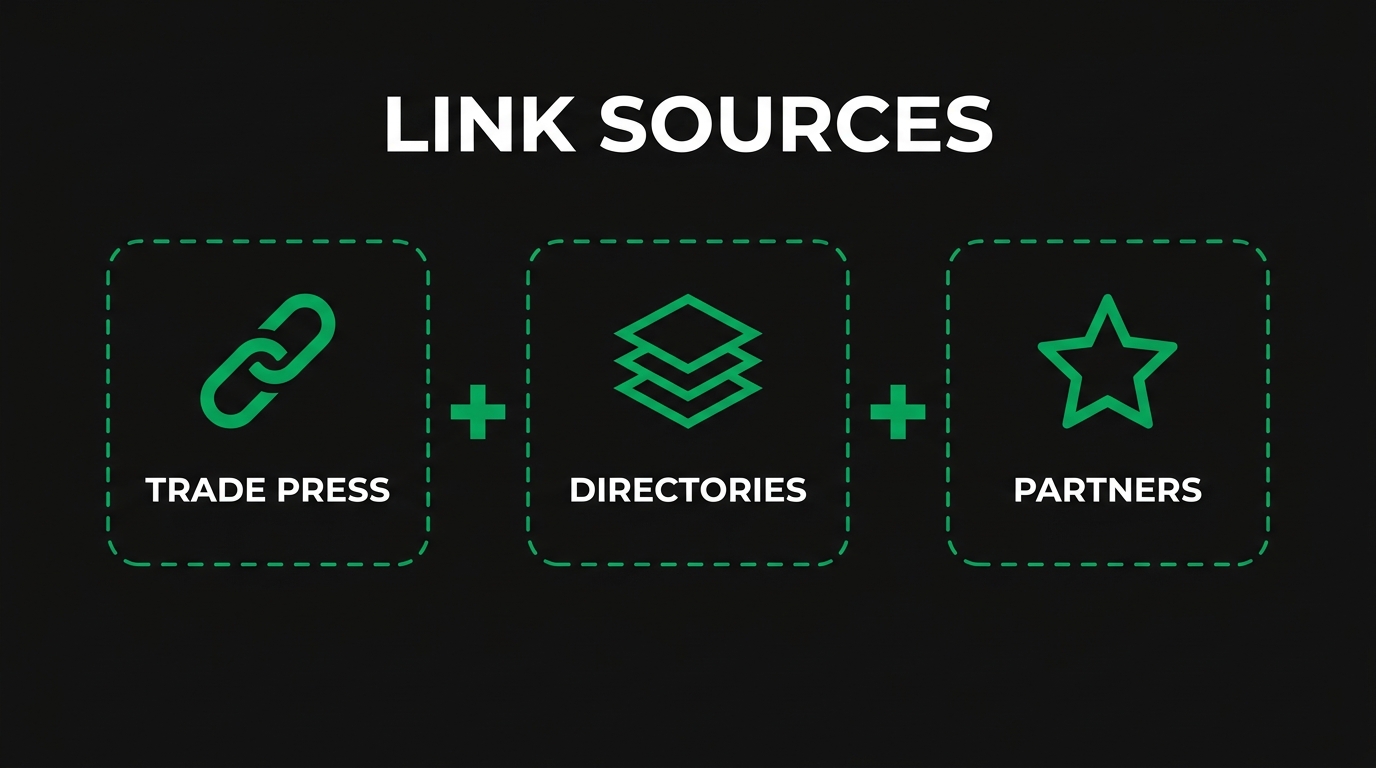
The most effective industrial link building strategies are trade publication outreach, digital PR campaigns, original research, supplier partnerships, and association authority signals. Each channel earns editorial placements on sources procurement readers trust. The H3s below show how each tactic compounds topical authority.
How Does Trade Publication Outreach Build Pillar Backlinks for Manufacturers?
Trade publication outreach builds pillar backlinks for manufacturers by placing technical bylines, case studies, and product news inside publications whose audiences are engineers, procurement managers, and plant operators.
A single bylined feature in a respected manufacturing magazine often delivers permanent author-bio links, contextual in-article links, and follow-on syndication. Pitch angles that win are application-specific case studies tied to a measurable outcome, never generic thought leadership.
How Can Digital PR Campaigns Earn High-Authority Industrial Links?
Digital PR campaigns earn high-authority industrial links by packaging proprietary data, expert commentary, or newsworthy operational milestones into stories trade and business journalists need.
That shift has expanded the pool of journalists covering industrial digitization, so manufacturers with original digital-transformation data points earn placements faster. Effective campaigns lead with the number, attach a chart, and offer a named expert for follow-up.
How Does Original Industrial Research and Data Attract Citations?
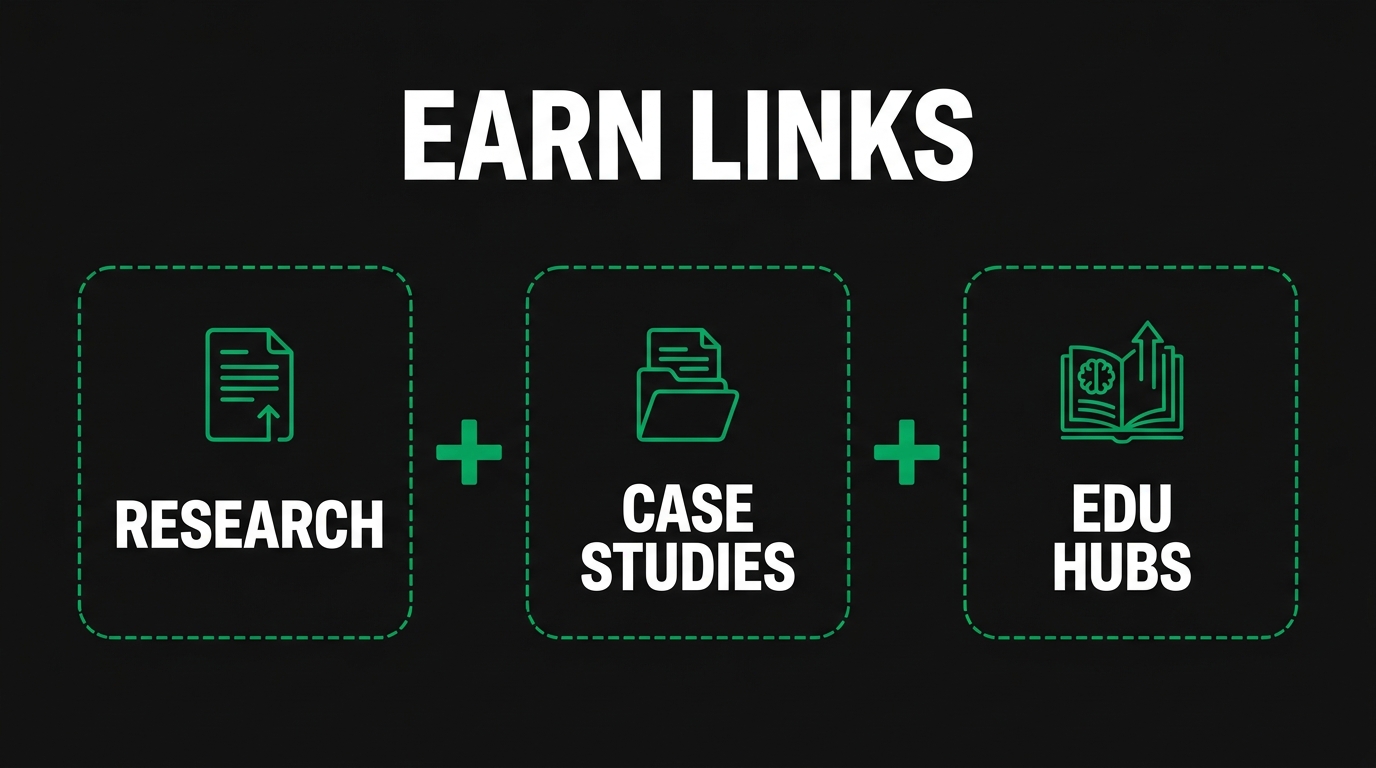
Original industrial research and data attract citations because journalists, analysts, and competing manufacturers cite primary sources rather than recycled commentary.
Manufacturers that publish annual production cost surveys, material price indexes, or certification adoption studies become the cited source on that topic for years. Manufacturing SEO Agency builds topical authority for industrial clients by mapping the exact process, material, and certification combinations buyers search and turning that vocabulary into citation-worthy assets.
How Do Supplier and Distributor Partnerships Generate Relevant Backlinks?
Supplier and distributor partnerships generate relevant backlinks by surfacing your domain on authorized-partner pages, distributor catalogs, and joint case studies that buyers already navigate during sourcing. Each link sits next to product specs, certification badges, and contact details, so the surrounding context reinforces topical relevance for the exact materials and processes your facility supports.
How Do Industry Associations and Standards Bodies Provide Authority Signals?
Industry associations and standards bodies provide authority signals because their .org domains carry decades of editorial credibility and topical concentration.
A reference page link from ASME, AWS, IPC, or a NIST resource transfers durable authority because procurement readers and search engines treat those citations as the canonical entity reference. Pursue committee participation, technical paper contributions, and case-study submissions to convert membership into placements. The next section turns these strategies into tactical solutions.
What Proven Solutions Help Manufacturers Earn High-Quality Backlinks?
Proven solutions that help manufacturers earn high-quality backlinks are resource page tactics, broken link recovery, expert sourcing platforms, guest contributions on engineering blogs, and podcast or webinar mentions. Each tactic targets editorial surfaces engineers and procurement readers visit during research. The H3s below break down execution steps.
How Do Resource Page Link Building Tactics Work for Industrial Sites?
Resource page link building tactics work for industrial sites by identifying curated lists on association, university, and trade-publication domains, then pitching a genuinely useful technical asset for inclusion. The asset must be ungated, deeply technical, and free of sales language, because resource curators reject anything resembling a brochure.
Treat resource page outreach as editorial pitching, never paid placement.
How Does Broken Link Building Recover Lost Equity in Manufacturing Niches?
Broken link building recovers lost equity in manufacturing niches by replacing dead resource links on association, university, and supplier pages with a current, equivalent asset hosted on your domain. Run targeted crawls of trade-publication archives and standards-body resource hubs, surface 404s pointing to closed competitor pages or retired vendor whitepapers, then pitch a refreshed technical replacement.
Maintain an inventory of evergreen technical assets so substitutions ship within days, not weeks.
How Can HARO and Expert Sourcing Platforms Generate Industrial Citations?
HARO and expert sourcing platforms generate industrial citations by connecting subject-matter experts with reporters writing on tight deadlines who need named industrial sources. Strong responses are short, specific, and quote-ready: lead with one declarative sentence the reporter can lift, attach a credential line, and end with a follow-up offer. Volume matters less than match precision; prioritize queries that name your exact materials, processes, or certifications.
How Do Guest Contributions on Engineering Blogs Drive Authority?
Guest contributions on engineering blogs drive authority by placing original technical writing under a named engineer's byline on domains engineers already read. Choose blogs with active comment sections, recent publication dates, and editorial standards that require source citations. Pitch a tutorial-grade article that solves a procurement or production problem readers face this quarter, not a recycled industry overview. Negotiate a contextual in-article link plus an author-bio link to a specific service or technical page, never the homepage, because the contextual link carries the topical relevance signal Google uses.
How Does Podcast and Webinar Outreach Earn Editorial Mentions?
Podcast and webinar outreach earns editorial mentions because hosts publish show notes, transcripts, and resource pages that include guest links and named references. Pitch industry podcasts whose audience matches your buyer persona (operations directors, design engineers, supply chain managers) and arrive with a pre-built outline plus three downloadable assets the host can link in show notes. Each appearance generates a primary link from the show page, syndicated mentions across Apple Podcasts and Spotify, and clip-driven social citations. The next H2 explains how to vet which placements deserve outreach time.
How Do You Identify and Vet Backlink Opportunities for Industrial SEO?
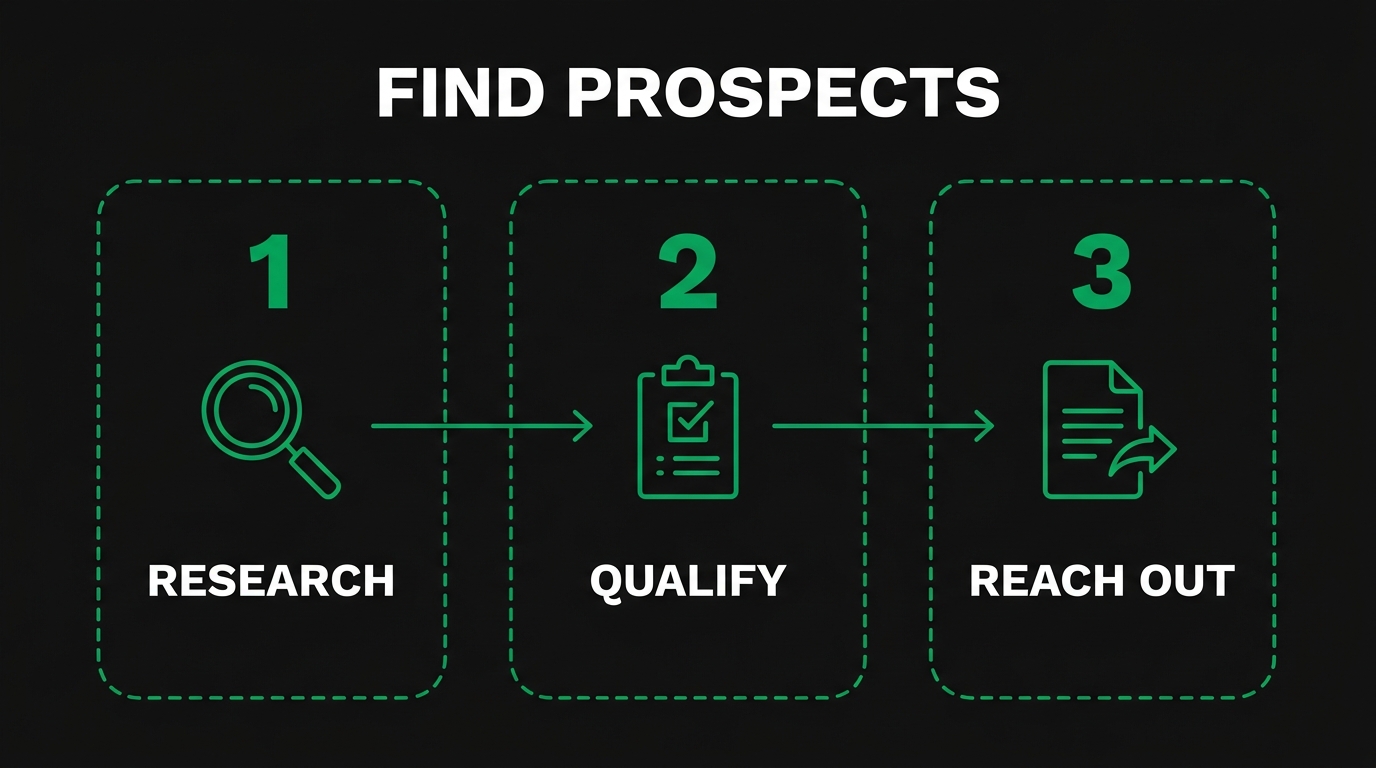
You identify and vet backlink opportunities for industrial SEO by qualifying prospects on authority metrics, topical relevance, outbound link patterns, and toxicity signals before spending outreach effort. The H3s below cover the metrics, topical filters, link audits, and toxicity checks that separate quality prospects from waste.
Which Metrics Should You Use to Qualify Industrial Link Prospects?
The metrics you should use to qualify industrial link prospects are referring-domain count, organic traffic to the linking page, topical relevance score, and editorial transparency signals. Domain-level scores like Domain Rating or Domain Authority give a coarse filter; pair them with page-level traffic estimates because a high-authority domain with a low-traffic resource page transfers less ranking value than a mid-authority page that ranks for the exact procurement query you target.
How Do You Identify Topically Relevant Engineering Domains?
You identify topically relevant engineering domains by reverse-engineering competitor backlink profiles, mining association member directories, and clustering domains by the procurement vocabulary they publish. Start with three competitors ranking on the queries you want, export their referring domains, and isolate domains that link to multiple competitors but not to you. Cross-reference each domain against association member rosters, NIST MEP center partner pages, and trade-publication contributor lists to confirm editorial fit. Tools that surface anchor-context snippets accelerate this; for a worked example, see how to use moz link explorer for industrial.
How Should You Audit a Prospect's Outbound Linking Patterns?
You should audit a prospect's outbound linking patterns by sampling the last 20 to 50 external links the page or domain has published and classifying each as editorial, sponsored, reciprocal, or directory-style. Healthy editorial domains link out to a diverse mix of .gov, .edu, association, and trade sources with contextual anchors. Red flags are repeated links to the same commercial domain, exact-match keyword anchors on every outbound link, and clusters of links inside footer or sidebar widgets. Avoid prospects whose outbound profile reads like a paid network, because Google's link-spam systems devalue the entire neighborhood.
How Do You Spot Toxic or Low-Value Manufacturing Directories to Avoid?
You spot toxic or low-value manufacturing directories to avoid by checking submission requirements, editorial standards, and traffic patterns before paying or pitching. Toxic directories accept any submission with payment, list thousands of unrelated categories, expose user-generated profiles indexed without review, and have negligible organic traffic. Low-value directories duplicate listings across mirror domains, use exact-match keyword anchors site-wide, and lack any procurement context around your listing. Stick to directories operated by associations, MEP centers, chambers of commerce, or established trade publishers, because those carry editorial gatekeeping that satisfies Google's quality bar.
How Do You Compare Options or Vendors for Industrial Backlink and Trade Publication Outreach?
You compare options or vendors for industrial backlink and trade publication outreach by mapping target publications, weighing in-house versus specialist execution, calculating ROI by channel, and benchmarking sibling tactics. The H3s below cover each comparison axis.
Which Trade Publications Should B2B Manufacturers Target First?
The trade publications B2B manufacturers should target first are sector-specific titles whose audited circulation overlaps with your buyer persona. Prioritize publications whose editorial calendars name your processes, materials, or certifications by issue, because editors with a pre-planned slot accept pitches faster.
Filter by audited circulation data, contributor frequency from competitors, and whether bylines link to author bios with contextual links. For a vetted target list, review the top manufacturing trade publications for content submission, and pair that with a broader b2b link building strategy.
What Differentiates In-House Outreach From Specialist Industrial Link Vendors?
What differentiates in-house outreach from specialist industrial link vendors is editorial relationship depth, sector vocabulary fluency, and pitch throughput. In-house teams own the technical accuracy and product context but often lack the editor relationships built over years of weekly pitching. Specialist industrial vendors maintain warm contacts at sector publications, ship pitches in publishable format, and know which editors accept gated assets versus which require open data. The trade-off is cost per placement: in-house scales unit economics once relationships exist; specialists deliver immediate placements but charge a premium per link.
How Should You Evaluate the Cost and ROI of Each Outreach Channel?
You should evaluate the cost and ROI of each outreach channel by tracking cost per editorial placement, cost per ranking lift, and cost per RFQ attributable to organic traffic from the linked page. Build a simple ledger that captures hours, contractor fees, and asset production cost per channel, then divide by placements landed and by RFQs sourced from referral and organic sessions. Channels worth scaling deliver placements on domains your buyers already read; channels worth cutting deliver placements on domains with zero overlap. Re-run the ledger quarterly because publication value drifts.
How Do You Compare Sibling Industrial Link Building Approaches?
You compare sibling industrial link building approaches by holding asset quality constant and varying only the placement channel, then measuring referring domains earned, anchor relevance, and traffic to the linked URL after 90 days. Common sibling tests pit trade-publication features against association resource pages, or podcast guesting against webinar partnerships. Document the win rate per asset type per channel so future campaigns route assets to the channel that historically converts.
The next section shifts from channel comparisons to local footprint building.
How Should You Build a Local SEO Backlink Footprint for Manufacturing Plants?
You should build a local SEO backlink footprint for manufacturing plants by sourcing citations from regional manufacturer directories, chambers of commerce, and economic development boards in every metro where you operate. The H3s below cover both anchor sources.
How Do Citations From Regional Manufacturer Directories Reinforce Local Rankings?
Citations from regional manufacturer directories reinforce local rankings by tying a consistent name, address, and phone number to the procurement vocabulary that defines each facility. Submit to state manufacturing extension partnership directories, regional supplier databases hosted by economic development agencies, and county-level industrial directories. Match every listing's category to the exact NAICS code your facility reports, because mismatched categories dilute the topical signal. Pair directory submissions with local lead generation tactics; for adjacent strategy, read 7 local lead generation strategies for industrial.
How Do Chambers of Commerce and Economic Development Boards Strengthen Authority?
Chambers of commerce and economic development boards strengthen authority because their .org domains carry decades of editorial trust and concentrate on the geography buyers filter by.
Join the chamber in every plant city, request a member spotlight, and submit to economic development supplier-of-record lists. Pair each membership with an annual technical event sponsorship to convert one yearly fee into multiple long-lived editorial citations. The next section turns this footprint into measurable program growth.
How Should You Measure and Scale Your Industrial Link Building Program?
You should measure and scale your industrial link building program by tracking KPIs tied to procurement pipeline, attributing referral traffic to RFQs, and forecasting link velocity against a sustainable growth model. The following H3s define which metrics matter, how to attribute, and how to plan velocity without triggering algorithmic suspicion.
Which KPIs Reflect Real Procurement Pipeline Impact, Not Vanity Metrics?
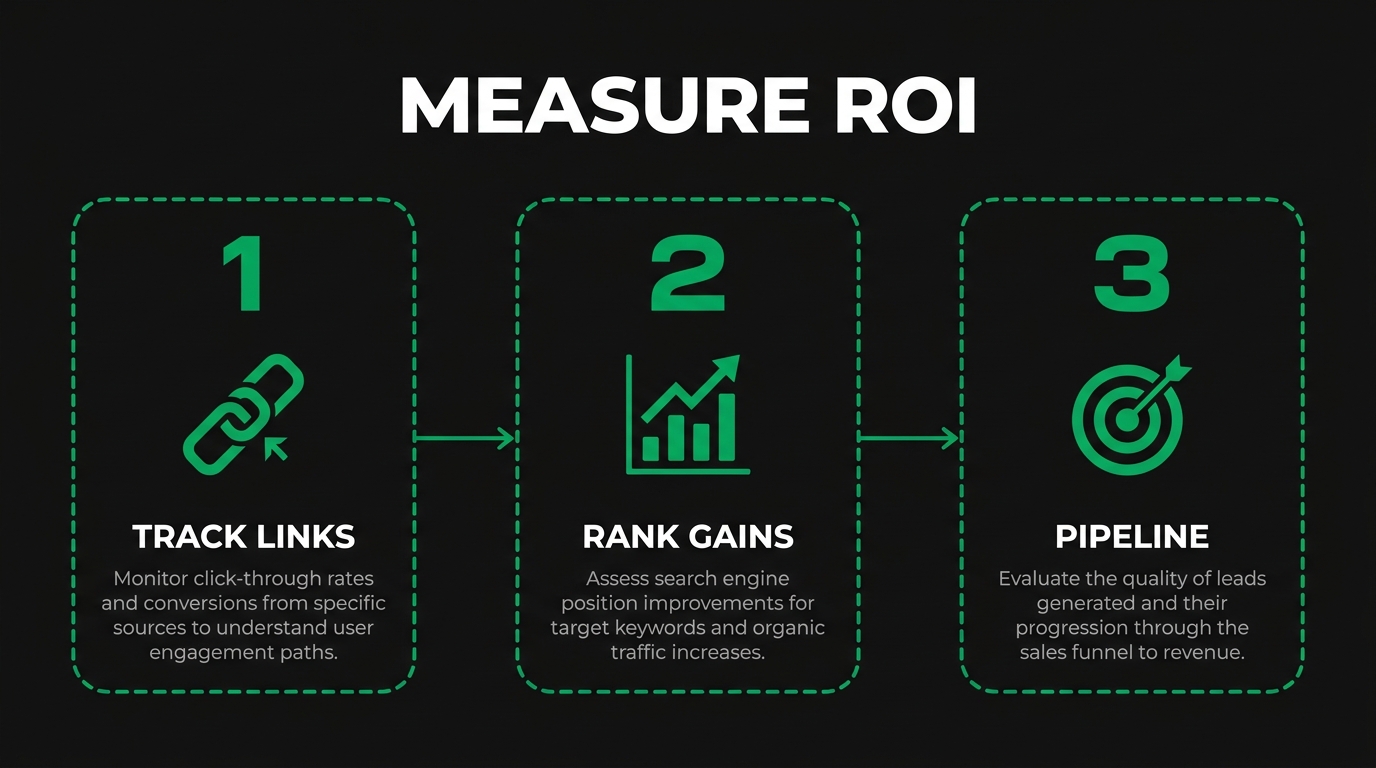
The KPIs that reflect real procurement pipeline impact are referring domains gained per quarter on procurement-aligned pages, organic sessions to RFQ landing pages, RFQ form submissions, qualified RFQ-to-quote conversions, and closed revenue tied to organic-source-of-truth attribution. Vanity metrics include total backlinks, unweighted Domain Rating gains, and impressions on non-converting pages. Tie every link campaign to a specific procurement page so you can isolate which placements move the needle. Manufacturing SEO Agency reports every link campaign against RFQs, pipeline value, and closed revenue rather than vanity ranking metrics, which keeps spending tied to procurement outcomes.
How Do You Track Referral Traffic From Industrial Backlinks to RFQs?
You track referral traffic from industrial backlinks to RFQs by tagging linked URLs with UTM parameters, mapping referrer domain to placement campaign in your analytics, and joining session data to CRM records via a lead identifier. Configure conversion goals on every RFQ form, capture the originating session in a hidden form field, and pass that to your CRM as the lead source. Run weekly reports that aggregate sessions, RFQs, and revenue by referring domain so you can see which editorial placements actually convert procurement traffic.
How Should You Forecast Link Velocity for Sustainable Growth?
You should forecast link velocity for sustainable growth by establishing a baseline referring-domain growth rate from the last twelve months, then planning quarterly increments that align with content production capacity and outreach throughput. Avoid sudden spikes that resemble paid networks; Google's algorithmic systems flag unnatural velocity. Forecast using a rolling four-quarter average and adjust capacity, not pace, when ranking momentum stalls. The bridge to scaling responsibly is choosing partners and processes that maintain editorial quality at volume.
How Should You Approach Industrial Link Building With Manufacturing SEO Agency Services?
You should approach industrial link building with Manufacturing SEO Agency services by partnering with a team that specializes in B2B manufacturing and ties placements to procurement-intent rankings. The H3s below cover the agency's PR-grade editorial approach and the key takeaways from this guide.
Can Manufacturing SEO Agency's PR-Grade Editorial Link Building Help With Industrial Backlink Strategy?
Manufacturing SEO Agency's PR-grade editorial link building can help with industrial backlink strategy by securing placements in major trade publications and high-traffic industry media that procurement readers already trust.
That macro context shapes which sector stories editors prioritize. Manufacturing SEO Agency packages those signals with client production data to win editorial placements, then layers tier-2 amplification. Explore the dedicated industrial link building services page for scope and engagement details.
What Are the Key Takeaways About Industrial Link Building Strategies and Proven Solutions We Covered?
The key takeaways about industrial link building strategies and proven solutions covered here are clear: editorial links from trade publications, associations, and standards bodies outweigh paid placements; original research and data attract durable citations; vetting prospects on relevance and traffic prevents wasted outreach; local citations from chambers and economic development boards reinforce plant-level rankings; and procurement-aligned KPIs separate real impact from vanity. Apply these tactics quarter by quarter to compound topical authority. For manufacturers ready to outsource execution to manufacturing seo experts, Manufacturing SEO Agency provides the procurement-intent expertise that ties every link to pipeline.