Reverse engineering competitor backlinks is the practice of pulling the full referring-domain profile of a manufacturing rival, dissecting how each link was earned, and rebuilding a comparable or better profile through targeted outreach. We treat this work as procurement-grade competitive intelligence rather than a generic backlink count.
This guide covers what reverse engineering actually means for industrial SEO, how to pick the right competitors, the tools and metrics needed to pull clean data, and the audit steps that separate authoritative trade links from spam.
We define the practice and contrast it with standard backlink audits, so you can see why a procurement-focused profile outperforms a vanity-link profile in industrial SERPs.
We then walk through competitor identification across SERP rivals, hidden niche shops, and reference competitors such as trade publications and certification bodies, plus a validation step before you commit time.
We map the tooling stack from free crawlers to paid databases, and the exact metrics worth pulling per backlinking domain so a single inventory feeds the rest of the workflow.
We close on the strategic layers: classifying every link by type and anchor pattern, ranking the most valuable manufacturing source categories, building a replicable outreach motion, and measuring backlink wins against organic traffic and RFQ pipeline.
What Does It Mean to Reverse Engineer Competitor Backlinks?
Reverse engineering competitor backlinks means systematically extracting every external link pointing to a rival manufacturer's domain, then decoding the editorial, directory, and partnership patterns that produced those links. The output is a replicable acquisition playbook, not a passive metric.
Why Is Reverse Engineering Backlinks Important for Industrial SEO?
Reverse engineering backlinks is important for industrial SEO because the link graph is still the dominant authority signal that ranks process-and-material queries inside procurement-driven SERPs.
For a CNC, injection molding, or aerospace shop, mapping which trade publications, standards bodies, and engineering hubs link to a competitor exposes the exact authority pool a buyer-facing page must tap.
What Types of Competitors Should You Analyze?
The types of competitors worth analyzing are direct SERP rivals, capability-overlap shops in adjacent verticals, and reference competitors such as trade publications and directories that intercept procurement intent. There are three working buckets:
- Direct SERP competitors that already rank for your process or material query.
- Capability-overlap manufacturers in adjacent NAICS codes that share the same buyer.
- Reference competitors (trade media, certification bodies, distributor portals) that absorb commercial clicks before a manufacturer is ever considered.
Analyzing all three reveals the full link landscape, not just the ten URLs above your page.
How Does Reverse Engineering Differ From Standard Backlink Audits?
Reverse engineering differs from a standard backlink audit because it inverts the subject and the goal. A standard audit inspects your own profile to flag toxic links, broken redirects, and disavow candidates. Reverse engineering inspects a competitor's profile to identify acquisition patterns you can replicate. The audit is defensive and sanitization-driven; the reverse-engineering pass is offensive and growth-driven.
How Do You Identify the Right Competitors to Reverse Engineer?
Identifying the right competitors involves three filters: SERP overlap on procurement queries, capability and certification overlap with your shop, and audience overlap with the same engineer or purchasing manager. The next four sub-sections walk each filter and the validation gate.
Which SERP Competitors Outrank You for Procurement Queries?
The SERP competitors that outrank you for procurement queries are the domains appearing in the top ten results for your money keywords (process plus material plus certification). Pull the SERP for queries like "5-axis CNC titanium aerospace parts" or "ISO 13485 injection molding," then strip out media, directories, and aggregators to isolate true manufacturer rivals.
Treat any manufacturer holding a top-five slot for three or more of your priority queries as a primary reverse-engineering target. For a deeper workflow, see our guide on competitor backlink analysis manufacturing to translate SERP overlap into a backlink plan.
How Do You Find Hidden Niche Competitors in Industrial Verticals?
Finding hidden niche competitors in industrial verticals requires going beyond Google's first page into trade-publication mentions, supplier directories, and procurement RFQ databases. Hidden competitors often rank for long-tail process specifications and never surface on broad keywords. Cross-reference contributors to industry technical journals, exhibitor lists from sector trade shows, and certification rosters from bodies such as Nadcap. These sources expose specialized shops your standard SERP scrape misses, especially in low-volume aerospace, defense, and medical device subcategories.
Pair this discovery work with structured competitor analysis for industrial seo so the hidden shops feed a single research file rather than scattered notes.
What Role Do Trade Publications and Directories Play as Reference Competitors?
Trade publications and directories play the role of reference competitors because they intercept buyer intent before a manufacturer page is ever clicked. A buyer searching "aluminum die casting suppliers" often lands on an industry directory or a trade-magazine round-up first.
Treating these properties as competitors rather than partners reframes the strategy: their backlink profile becomes a target list, and their editorial calendar becomes an outreach map.
How Do You Validate That a Competitor Is Worth Analyzing?
Validating that a competitor is worth analyzing requires three checks: shared procurement-intent keywords, comparable referring-domain count, and recency of link velocity. There are four data points to verify:
- Keyword overlap of at least 20% on your priority procurement queries.
- Referring-domain count within roughly 0.5x to 3x of your own.
- New referring domains added in the last twelve months above zero.
- Anchor profile that includes process, material, and certification phrases (not just brand).
A competitor failing two of four is usually a poor study target. This validation gate keeps the inventory focused on profiles you can actually replicate.
What Tools Do You Need to Pull Competitor Backlink Data?
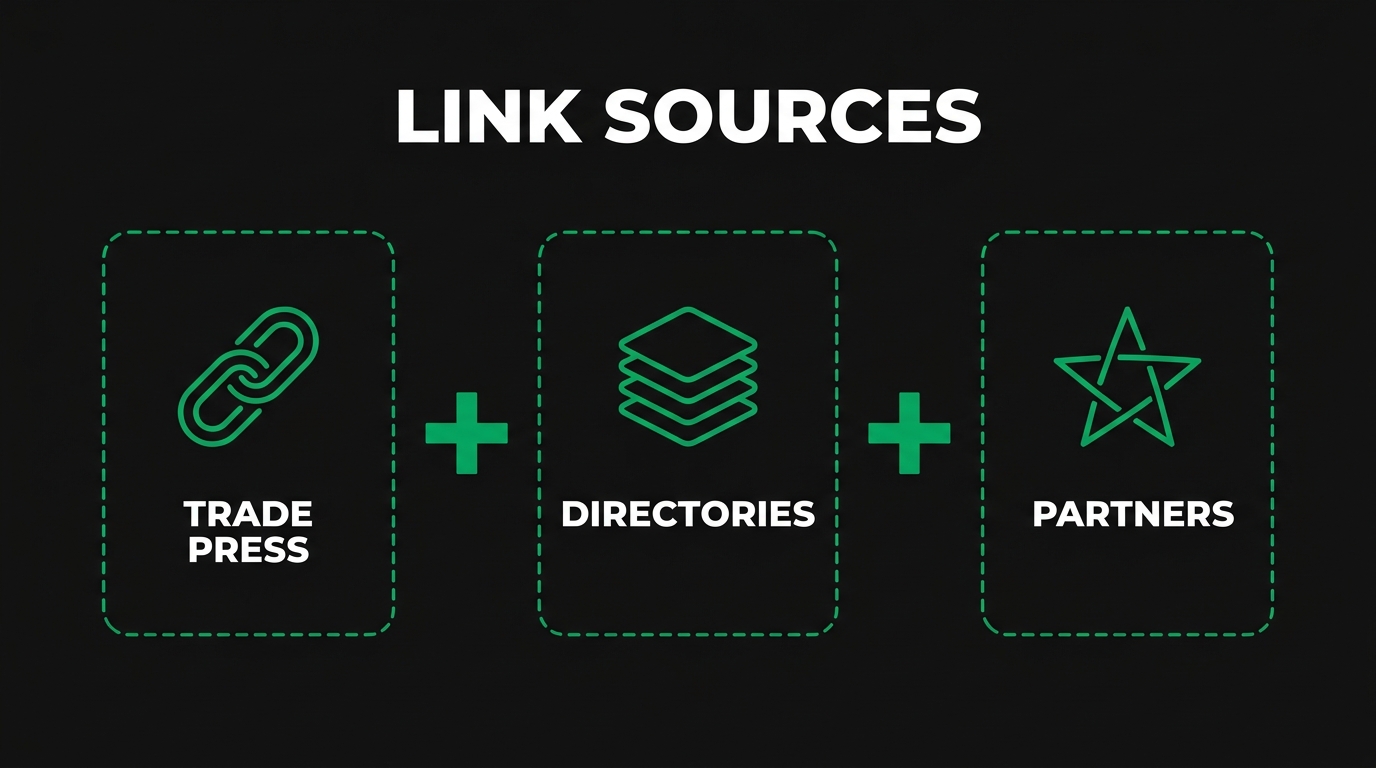
The tools needed to pull competitor backlink data fall into three layers: backlink databases, web archives, and verification crawlers. Each layer solves a different gap, and the three must stitch into one inventory.
What Are the Best Backlink Analysis Tools for Manufacturing SEO?
The best backlink analysis tools for manufacturing SEO combine large index coverage, link-context metadata, and historical reach. Production-grade workflows pair a major commercial backlink index with a public archive for verification.
For a side-by-side breakdown, see our overview of the best seo competitor analysis tools manufacturing teams use day to day.
How Do Free Tools Compare to Paid Backlink Databases?
Free tools compare to paid backlink databases on three axes: index size, refresh cadence, and metric depth. Free crawlers (Search Console, public archives, citation lookups) confirm individual links and surface a partial sample. Paid databases supply continuous indexing, anchor-text segmentation, and domain-authority scoring across millions of referring URLs. For an industrial profile with a few thousand referring domains, a free-only stack misses long-tail trade citations and link velocity changes.
Compare the leading options in the best backlink analysis tools for competitive research round-up before committing to a license.
What Metrics Should You Pull for Each Backlinking Domain?
The metrics worth pulling for each backlinking domain are referring URL, anchor text, link type, dofollow status, domain authority, traffic estimate, first-seen date, and topical relevance. Pull at minimum:
- Root domain and exact referring URL.
- Anchor text and surrounding sentence (for context).
- Link type: editorial, directory, resource, guest post, sponsored.
- Dofollow vs nofollow attribute.
- Estimated organic traffic and domain authority.
- First-seen date and most-recent-crawl date.
- Topical category mapped to your process or material taxonomy.
This eight-field schema lets the inventory feed both classification and outreach prioritization in later phases.
How Do You Combine Tool Outputs Into a Single Backlink Inventory?
Combining tool outputs into a single backlink inventory requires normalizing root domains, deduplicating on canonical URL, and reconciling conflicting link-type tags. Export each tool's data as CSV, normalize protocols and trailing slashes, then merge on the (root_domain, target_url) tuple. When two tools disagree on dofollow status or anchor text, retain both fields and prefer the more recent crawl date.
How Do You Audit and Classify a Competitor's Backlink Profile?
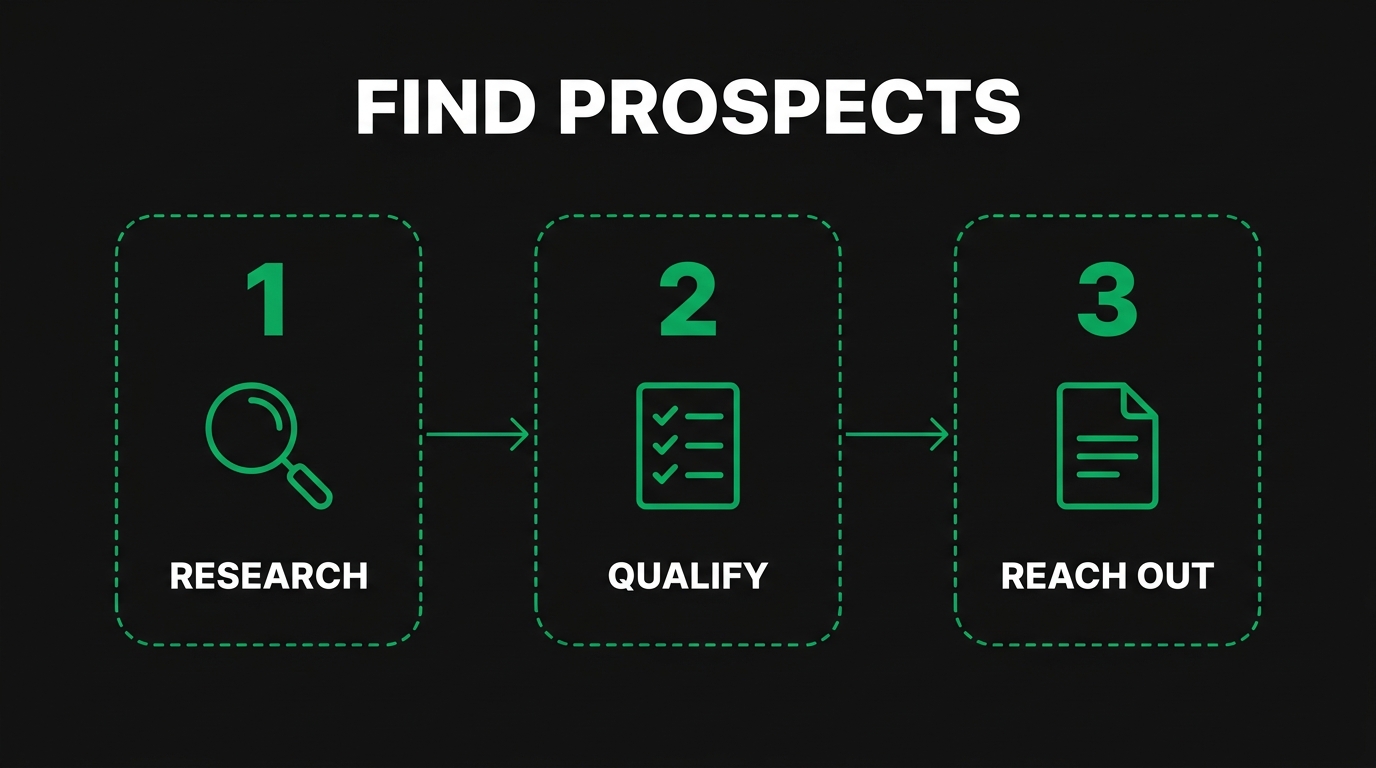
Auditing and classifying a competitor's backlink profile means filtering spam, tagging each remaining link by acquisition type, mapping anchors to topics, and surfacing patterns across multiple competitors. The four sub-sections walk each step.
How Do You Filter Out Spam and Toxic Backlinks?
Filtering out spam and toxic backlinks starts with removing PBN footprints, link farms, and irrelevant foreign-language sites, then validating each remaining domain against authority signals.
For a manufacturing reverse-engineering pass, drop any referring domain with under 100 monthly organic visits, no editorial content history, or anchor text built around unrelated industries (gambling, payday loans, generic SaaS).
How Do You Classify Links by Type (Editorial, Directory, Resource, Guest Post)?
Classifying links by type means tagging each surviving backlink as editorial, directory, resource page, guest post, sponsored, or partnership. There are six working classes for an industrial profile:
- Editorial: in-body mention inside a trade article or news piece.
- Directory: structured listing on a buyer network or supplier index.
- Resource: curated link inside a "best of" or learning hub.
- Guest post: full author byline on a third-party site.
- Sponsored: paid placement, typically rel="sponsored" or disclosed.
- Partnership: reciprocal mention from an association, customer, or distributor.
This taxonomy drives outreach choices because each class requires a different pitch motion.
How Do You Map Backlinks to Anchor Text Themes and Topics?
Mapping backlinks to anchor text themes and topics requires bucketing every anchor into brand, exact-match, partial-match, generic, naked URL, or image-alt categories, then layering a topical tag (process, material, certification, application). Build a two-axis heatmap: anchor type on one axis, topic on the other.
A clean industrial profile usually skews 40 to 60 percent branded, with process and certification anchors filling the remainder.
How Do You Spot Patterns Across Multiple Competitors?
Spotting patterns across multiple competitors requires overlaying three or more competitor inventories and filtering for shared referring domains. Domains linking to two or more rivals but not to you are the highest-value targets because they have already proven they will cover your category. Look for clusters by publication, association, and certification body.
Then segment by anchor topic: if every top-ranking aerospace machine shop has links from three specific trade publications using "AS9100 CNC machining" anchors, that is the editorial pattern your outreach must match.
What Backlink Sources Are Most Valuable for Manufacturing Companies?
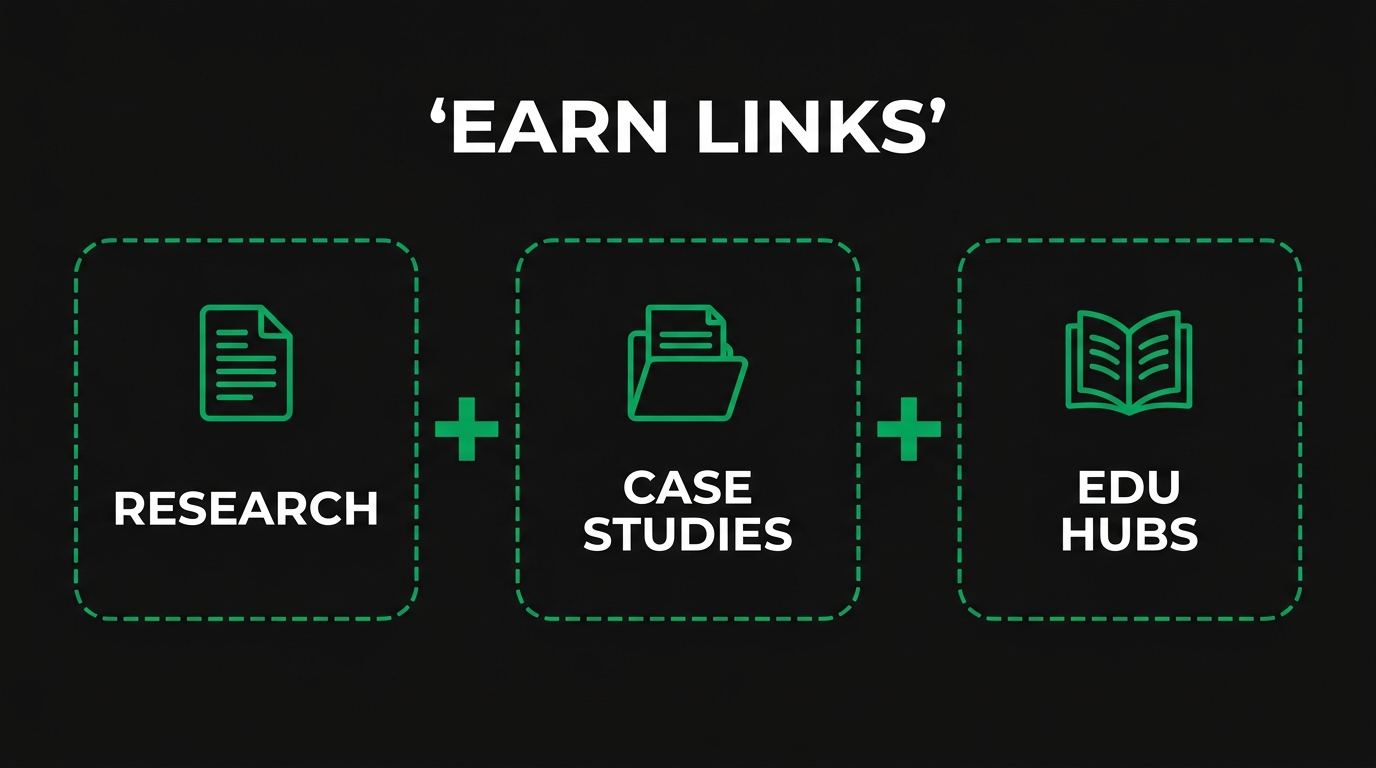
The backlink sources most valuable for manufacturing companies are industrial trade publications, buyer-network directories, standards and certification bodies, and engineering or research hubs. Each category carries different authority, conversion, and topical weight.
Which Industrial Trade Publications Drive the Most Authority?
Industrial trade publications drive the most authority when they pair editorial reach with a procurement-aligned audience. The most-cited industrial titles cover specific process, material, or sector beats (machining, plastics, additive, aerospace, medical device) and feed both Google's E-E-A-T signals and direct RFQ traffic.
For a curated shortlist, see the top manufacturing trade publications for content submission hub.
How Do Manufacturing Directories and Buyer Networks Contribute Link Equity?
Manufacturing directories and buyer networks contribute link equity through structured supplier listings, capability profiles, and category indexes that pass both topical relevance and procurement traffic.
A clean directory listing on a high-authority buyer network drives qualified RFQ clicks even when the link itself is nofollow, because the directory's own organic ranking puts your shop in front of an active sourcing intent.
What Role Do Standards Bodies, Associations, and Certifications Play?
Standards bodies, associations, and certifications play a foundational role because their domains carry decades of editorial authority and procurement-grade trust.
There are four high-value sub-categories:
- Standards bodies (ASTM, ASME, IEEE, SAE) publishing membership directories.
- Sector associations (NAM, AIA, MEMA) maintaining member rosters and committee pages.
- Certification programs (Nadcap, AS9100, IATF 16949, ISO 13485) listing accredited suppliers.
- Government and quasi-government registries (NIST MEP, FDA UDI, EPA TRI) that anchor entity credibility.
Earning even one link from each category materially compresses ranking timelines on regulated keywords.
How Do Engineering Forums, Universities, and Research Hubs Rank as Sources?
Engineering forums, universities, and research hubs rank as sources because they carry topical authority that procurement-grade pages rarely match. DARPA's Open Manufacturing program seeks to lower the cost and speed the delivery of high-quality manufactured goods with predictable performance, and the .edu and .gov domains anchoring such research initiatives are among the highest-trust referring sources Google measures.
University engineering departments, federal research labs, and moderated technical forums (often hosted on .edu or .org) issue links that compound authority over time.
How Do You Turn Competitor Backlinks Into a Replicable Outreach Strategy?
Turning competitor backlinks into a replicable outreach strategy means scoring every target by relevance and difficulty, building pitch templates by link type, packaging original assets editors will accept, and tracking the pipeline as a sales motion. Each sub-section walks one stage.
How Do You Prioritize Backlink Targets by Relevance and Difficulty?
Prioritizing backlink targets by relevance and difficulty requires a two-axis score: topical fit on one side, acquisition difficulty on the other. Score each target one to five on relevance (procurement intent, process and material match) and one to five on difficulty (domain authority, editorial gatekeeping, response history). High-relevance, low-difficulty targets are the first wave; high-relevance, high-difficulty targets warrant a multi-touch campaign with original data.
What Outreach Templates Win Links From Trade Editors?
Outreach templates that win links from trade editors are short, specific, and lead with proprietary data the editor cannot get elsewhere. A winning template includes a one-line subject naming the data point, two sentences of context tied to a recent article the editor wrote, and a link to a one-page asset (chart, dataset, or expert commentary). Avoid generic "we have a great resource" pitches.
How Do You Pitch Original Data, Case Studies, and Engineering Content?
Pitching original data, case studies, and engineering content requires packaging proprietary inputs into editor-ready assets that demand attribution. Manufacturing teams already sit on commissioning reports, tolerance studies, scrap-rate analyses, and cycle-time benchmarks. Convert one of those data sets into a chart plus a one-paragraph methodology note, then offer it under embargo to two or three target editors at once.
How Do You Track Outreach Pipeline and Conversion Rates?
Tracking outreach pipeline and conversion rates requires running outreach through a CRM-style funnel rather than a static spreadsheet. There are five stages worth measuring:
- Targets identified and scored.
- Pitches sent and opened.
- Editor responses (positive, negative, no reply).
- Drafts placed or links agreed.
- Live links indexed and verified.
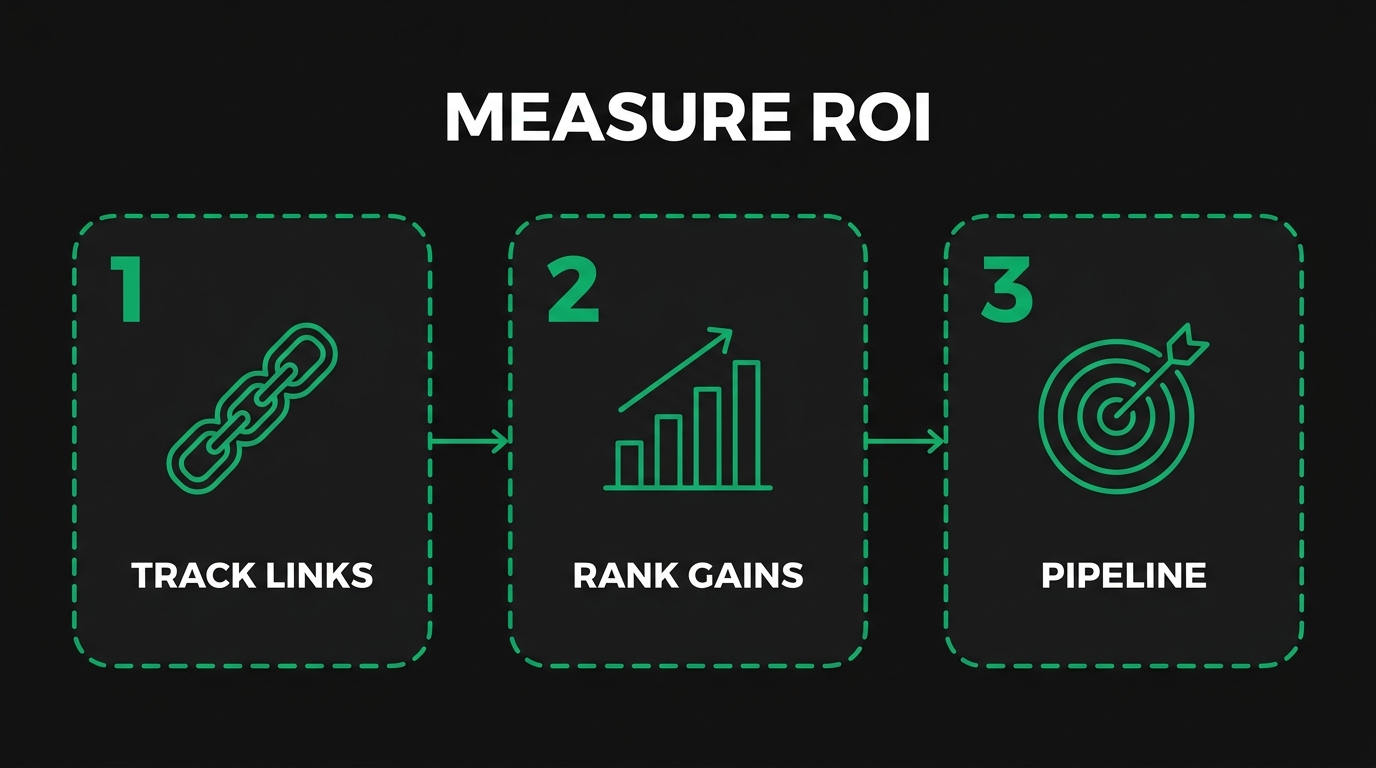
How Do You Measure the Impact of Your Reverse-Engineered Link Strategy?
Measuring the impact of your reverse-engineered link strategy requires tying new referring domains to ranking movement, organic traffic, RFQ volume, and closed pipeline value, then re-running the competitor analysis on a defined cadence.
Which KPIs Show That Replicated Backlinks Are Working?
The KPIs that show replicated backlinks are working are referring-domain growth, anchor-text diversity, ranking lift on procurement queries, and indexed-page coverage. There are five core KPIs to track:
- New referring domains per month, segmented by editorial vs directory.
- Anchor text distribution shifting toward process and certification phrases.
- Top-ten rankings on priority procurement queries.
- Crawl frequency and indexed page count.
- Domain rating or authority score trend over rolling 90-day windows.
A healthy program shows movement on three of five within the first quarter and four of five by month six.
How Do You Tie Backlink Wins to Organic Traffic and RFQ Volume?
Tying backlink wins to organic traffic and RFQ volume requires routing every new live link through annotated analytics events and CRM-linked form fills. Tag each newly placed link with a campaign and source parameter, monitor referral traffic and assisted conversions, then map RFQ submissions back to the originating session.
Without that revenue tie, backlink wins remain a vanity metric and budget conversations stall.
How Often Should You Re-Run Competitor Backlink Analysis?
Re-running competitor backlink analysis is best done quarterly for active campaigns and monthly for high-velocity verticals such as semiconductor or aerospace contract manufacturing. Quarterly cycles catch new editorial placements, dropped links, and shifts in competitor strategy without overloading the inventory. Pair each cycle with a delta report showing newly added domains, lost domains, and anchor-pattern shifts.
How Should You Approach Competitor Backlink Reverse Engineering With a Manufacturing-Focused SEO Agency?
Approaching competitor backlink reverse engineering with a manufacturing-focused seo agency means partnering with a team that already speaks process names, material grades, and certification language fluently, so the link strategy maps directly to the RFQ funnel. Manufacturing SEO Agency builds the inventory, classification, and outreach motion as one connected workflow.
Can Manufacturing SEO Agency's PR-Grade Editorial Link Building Service Help You Replicate and Outperform Competitor Backlink Profiles?
Manufacturing SEO Agency's PR-grade editorial link building service can help you replicate and outperform competitor backlink profiles by combining a full reverse-engineering audit with editorial outreach to trade publications, standards bodies, and engineering hubs. The team layers a manufacturing audit and competitive intelligence pass on top of industrial link building services so every targeted referring domain ties back to a procurement-intent keyword and a tracked RFQ.
Manufacturing SEO Agency operates inside that network rather than guessing at it.
What Are the Key Takeaways About Reverse Engineering Competitor Backlinks We Covered?
The key takeaways about reverse engineering competitor backlinks are that the work is offensive (not defensive), procurement-intent driven, and tightly tied to RFQ pipeline. There are five points worth keeping:
- Reverse engineering inverts a standard audit: study competitor profiles to build a replication plan.
- Identify SERP rivals, capability-overlap shops, and reference competitors (trade media, directories, certifications).
- Combine free and paid tools into a single normalized inventory with eight metric fields per link.
- Filter spam, classify by link type, and map anchors to process, material, and certification topics.
- Tie every replicated link to ranking, traffic, and RFQ data, then re-run the analysis on a quarterly cadence.
Run the loop consistently and the link graph stops being a competitor's advantage.