
Website conversion rate measures the percentage of visitors who complete a defined goal, calculated as conversions divided by total visitors, multiplied by one hundred. For a manufacturing site, the goal is usually a request for quote, a spec-sheet download, a phone call, or a sales-qualified lead.
This guide covers the conversion rate formula and segmented calculations, the goal taxonomy that fits a B2B manufacturing site, the supporting KPIs you should pair with conversion rate, accurate tracking setup using Google Analytics 4 and Google Tag Manager, industrial benchmarks, optimization workflows, and the calculation mistakes that quietly distort every report.
The formula section walks through the standard equation, macro versus micro conversion math, channel-level calculations, and lead-to-customer ratios you need for procurement-driven funnels.
The goal taxonomy section explains which form submissions, RFQ requests, and content downloads count as macro conversions, and which engagement events count as micro conversions that predict pipeline.
The KPI section pairs conversion rate with engagement metrics, cost-per-lead, funnel drop-off, and revenue indicators that connect rankings to closed business.
The tracking setup section configures GA4 events, Google Tag Manager triggers, CRM handoffs, and validation checks that catch broken data before reporting.
The benchmarks, optimization, and mistakes sections give you industrial reference ranges, diagnostic methods using heatmaps and A/B tests, and the bot, attribution, and segmentation pitfalls that inflate or hide your true conversion rate.
What Is Website Conversion Rate and Why Does It Matter for Manufacturers?
Website conversion rate is the percentage of site visitors who complete a defined goal, calculated as conversions divided by total visitors. For manufacturers, it tells you what share of traffic turned into RFQs, spec downloads, or qualified leads, which is the only number that connects SEO to pipeline.
What Does Website Conversion Rate Measure on a B2B Manufacturing Site?
Website conversion rate measures the share of B2B manufacturing site visitors who complete a defined goal action, expressed as a percentage. On a typical industrial site, the goal is an RFQ form submission, a spec-sheet download, a phone call, a CAD file request, or a qualified contact.
For procurement-driven manufacturing sites, the metric reflects whether engineers and purchasing managers are reaching pricing-stage actions, not just landing on the homepage. Understanding how do manufacturers get leads online starts with this baseline number.
How Does Conversion Rate Differ from Click-Through Rate, Bounce Rate, and Engagement Rate?
Conversion rate differs from click-through rate, bounce rate, and engagement rate by measuring completed goal actions, not interest signals or session quality. Click-through rate measures clicks divided by impressions in search. Bounce rate counts sessions without engagement, while engagement rate counts the inverse. Each metric describes a different layer of the funnel.
Why Is Conversion Rate the Primary Indicator of Manufacturing Website Health?
Conversion rate is the primary indicator of manufacturing website health because it ties traffic to revenue actions, not vanity metrics.
For a manufacturer, the macro conversion is the RFQ. Rankings, sessions, and impressions only matter to the extent they push that number upward.
How Does Conversion Rate Connect to RFQ Volume, Pipeline Value, and Revenue?
Conversion rate connects to RFQ volume, pipeline value, and revenue by acting as the multiplier between traffic and closed business. Multiply sessions by conversion rate to get RFQs. Multiply RFQs by quote-to-close rate to get won deals. Multiply won deals by average contract value to get revenue. A 1% lift in conversion rate on 50,000 monthly sessions produces 500 extra RFQs, which at a 20% close rate and a $40,000 average order value adds $4 million in pipeline. This chain is why procurement-intent SEO programs report conversion rate alongside organic ranking gains.
What Is the Formula for Calculating Website Conversion Rate?
The formula for calculating website conversion rate is conversions divided by total visitors, multiplied by one hundred. The same equation supports macro and micro conversion calculations, channel and segment splits, and multi-stage funnel ratios such as lead-to-customer and RFQ-to-close.
What Is the Standard Conversion Rate Formula and How Do You Apply It?
The standard conversion rate formula is (Number of Conversions / Total Visitors) × 100.
Apply it by selecting a goal event, defining the visitor population (sessions or unique users), and choosing a fixed time window. If 600 of 30,000 monthly visitors submit an RFQ, the conversion rate is 2%. Most industrial sites report on sessions because sessions match how analytics tools count traffic by default, and they normalize against repeat returns from the same engineer evaluating multiple suppliers across days.
How Do You Calculate Macro Conversions Versus Micro Conversions?
Macro conversion rate is calculated as primary goal completions divided by visitors, while micro conversion rate uses precursor actions in the numerator. A macro conversion for a manufacturer is an RFQ submission or a quote request. Micro conversions include spec-sheet downloads, datasheet views, capability video plays, and pricing page visits.
Use macro rate for revenue reporting, and micro rate for diagnostics, A/B test scoring, and early warning on funnel decay.
How Do You Compute Conversion Rate by Channel, Page, or Audience Segment?
You compute conversion rate by channel, page, or audience segment by filtering both the numerator and denominator to the same subset. For channel-level conversion rate, divide conversions attributed to organic search by organic sessions. For page-level rate, divide page-specific conversions by page sessions. For audience segment, filter both totals to the segment dimension (industry, device, region). Always lock the same date range and goal definition. Mixing all-traffic conversions with single-channel sessions produces inflated, meaningless numbers.
How Do You Calculate Lead-to-Customer and RFQ-to-Close Conversion Rates?
Lead-to-customer and RFQ-to-close conversion rates are calculated as won deals divided by leads or RFQs in the same cohort, multiplied by one hundred. Pull cohorts from your CRM by lead-source date, not close date, so the funnel math reflects actual progression. If 200 RFQs entered the pipeline in a month and 32 closed, the RFQ-to-close rate is 16%. Manufacturing sales cycles often run 60 to 180 days, so report rolling cohort windows that respect time-to-close. Layer in average contract value to convert percentage shifts into pipeline dollars, which is what executives use to fund SEO and CRO budgets.
Which Conversions Count as Goals on a Manufacturing Website?
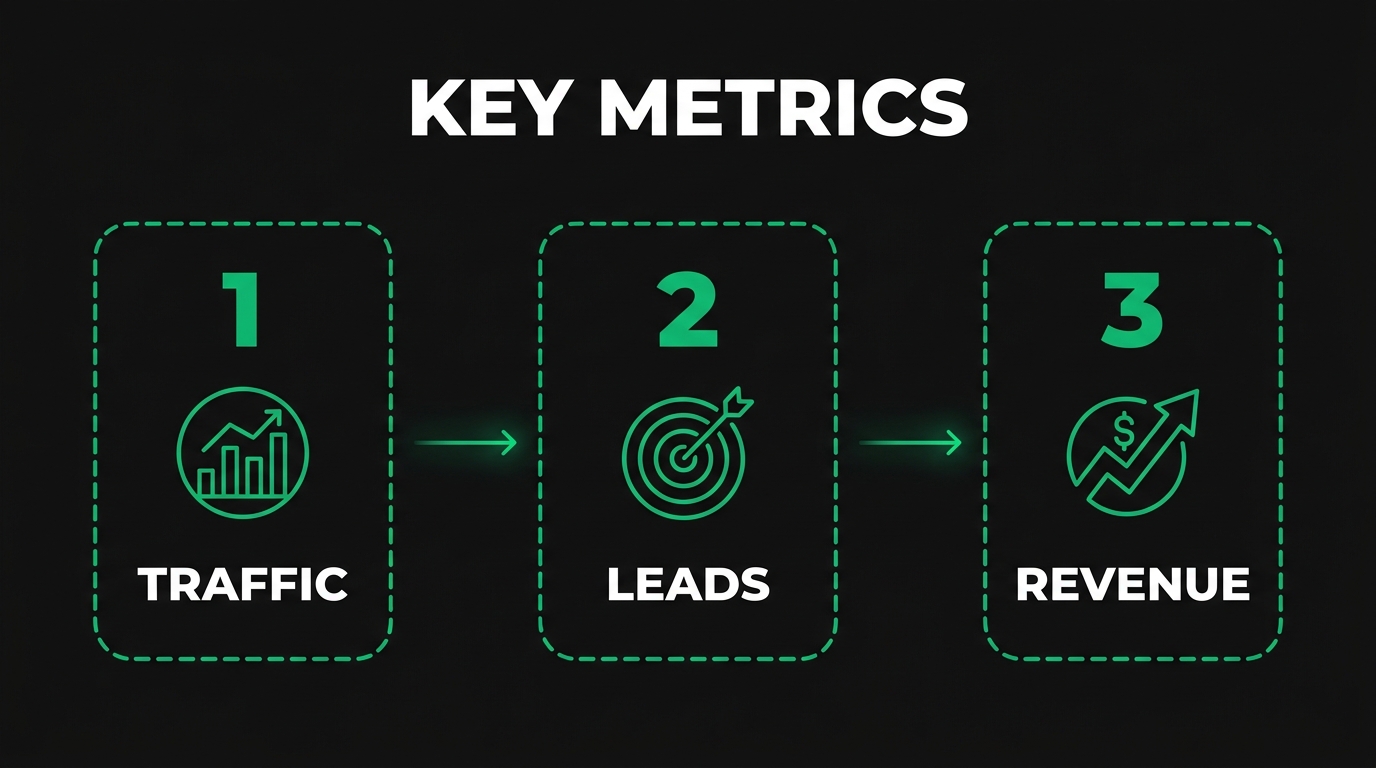
Conversions that count as goals on a manufacturing website include macro events tied to revenue and micro events tied to buyer intent. Macro goals capture RFQs, quote requests, and qualified contacts. Micro goals capture spec downloads, datasheet views, and capability page engagement that predicts pipeline.
What Macro Conversion Goals Should Manufacturers Track First?
Macro conversion goals manufacturers should track first are RFQ form submissions, phone calls from procurement contacts, qualified email inquiries, and CAD or quote-request file uploads. These actions sit closest to revenue. Set each up as a key event in GA4 and tie the value parameter to expected pipeline dollars where possible. Track form completions only after server-side validation fires, not on click of the submit button, so failed submissions do not inflate the count.
What Micro Conversion Goals Indicate Buyer Intent in Procurement?
Micro conversion goals that indicate buyer intent in procurement include spec-sheet downloads, capability matrix views, certification page visits, tolerance calculator usage, sample request clicks, and pricing page scrolls past 75% depth. These actions correlate with deeper RFQ likelihood. Engineers download datasheets to validate fit. Purchasing managers visit certification pages (AS9100, NADCAP, IATF 16949) to gate suppliers. Pricing engagement signals budget readiness. Track each as a distinct event so you can score lead quality and trigger nurture sequences.
Which Form Submissions, RFQ Requests, and Spec-Sheet Downloads Qualify as Conversions?
Form submissions, RFQ requests, and spec-sheet downloads qualify as conversions when they meet three tests: a real human submitted them, the contact data is valid, and the action matches a defined business goal. Discard test submissions, internal IP traffic, and submissions failing reCAPTCHA. Validate email syntax and domain MX records server-side. Auto-tag inbound CRM records with source, medium, campaign, landing page, and timestamp. For spec downloads, count only completed file downloads (server log, not click event) so partial loads do not inflate counts. Standardize naming conventions so RFQ_submit, quote_request, and spec_download stay distinct events across analytics, CRM, and BI dashboards.
How Do You Differentiate Between Marketing-Qualified and Sales-Qualified Conversion Events?
You differentiate marketing-qualified and sales-qualified conversion events by scoring criteria, not event type. Marketing-qualified leads (MQLs) hit a threshold combining engagement (page depth, downloads, email opens) and firmographics (industry, employee count, certifications required). Sales-qualified leads (SQLs) add explicit intent signals like an RFQ with quantities, a target lead time, or a budget statement. Apply the scoring rule inside your CRM, not in GA4, since CRM holds enriched firmographic and behavioral data. Report MQL-to-SQL conversion rate as a separate funnel metric. This split prevents marketing from claiming credit for unqualified form fills and aligns SEO investment with deals sales actually wants to close.
Which KPIs Should You Monitor Alongside Website Conversion Rate?
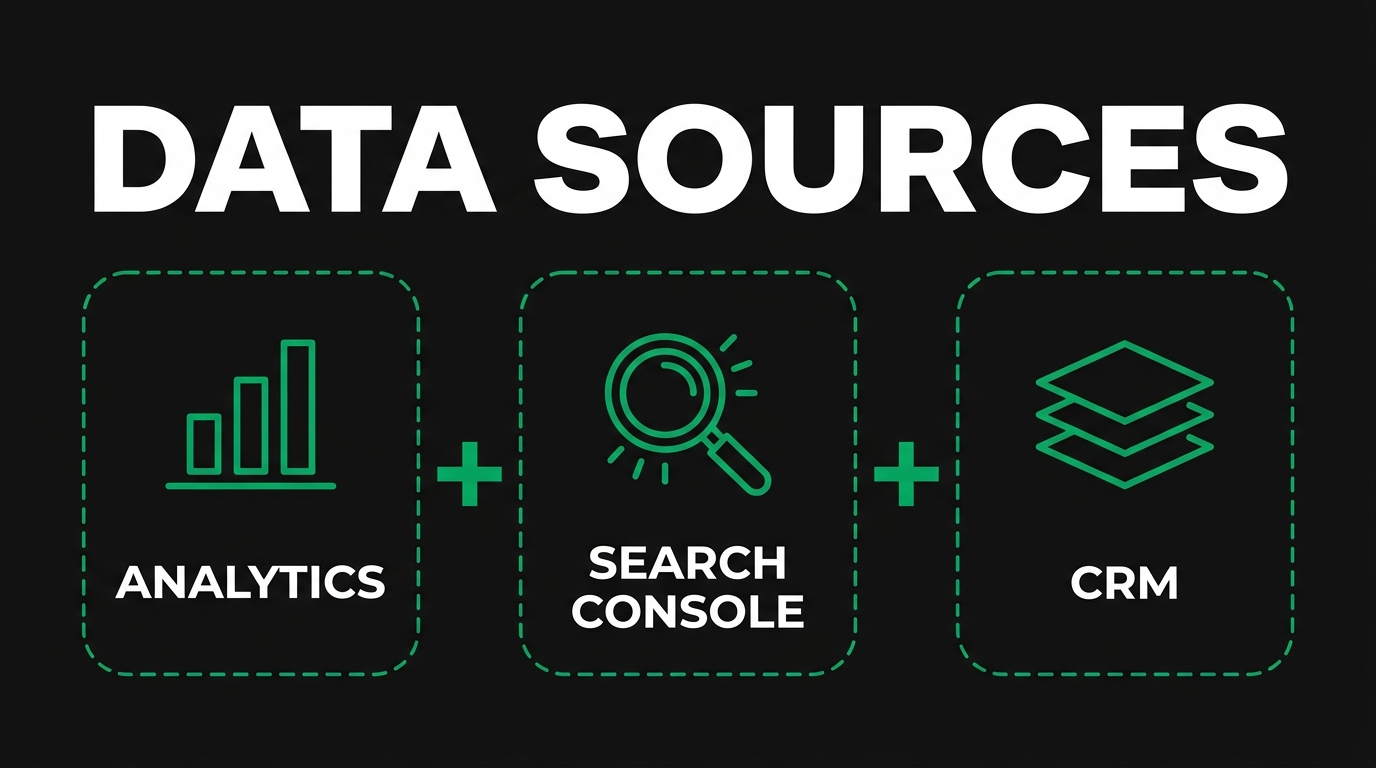
KPIs you should monitor alongside website conversion rate include engagement signals that predict it, cost-per-lead and cost-per-acquisition that price it, funnel drop-off that explains it, and revenue indicators that prove it. Together they convert a single percentage into a complete diagnostic dashboard.
What Engagement KPIs Predict Conversion Rate Movement?
Engagement KPIs that predict conversion rate movement are engaged sessions, average engagement time, scroll depth, internal click depth, and event-per-session counts.
Watch the trend lag, since engagement gains on key landing pages typically precede conversion lifts by two to four weeks. If engagement climbs but conversions stall, the problem is in the form, the offer, or the post-click flow, not the content.
How Do Cost-Per-Lead and Cost-Per-Acquisition KPIs Pair with Conversion Rate?
Cost-per-lead and cost-per-acquisition pair with conversion rate by translating percentage shifts into dollar efficiency. Cost-per-lead equals total channel spend divided by leads. Cost-per-acquisition equals total spend divided by closed customers. When conversion rate rises with spend held flat, both costs drop proportionally. Industrial manufacturing CPL benchmarks typically run $60 to $150 for paid search and $200 to $400 for trade-event sourced leads, so a small conversion rate lift on organic traffic creates outsized savings.
What Funnel KPIs Reveal Drop-Off Between Visit and RFQ Submission?
Funnel KPIs that reveal drop-off between visit and RFQ submission are step-completion rate, time-on-step, abandoned form rate, and exit rate per funnel page.
Build a five-step funnel: landing page, category page, product or capability page, RFQ form view, RFQ submit. Report drop-off at each transition. The biggest drop is your highest-leverage optimization target.
Which Revenue and Pipeline KPIs Tie Conversion Rate to Manufacturing Sales Outcomes?
Revenue and pipeline KPIs that tie conversion rate to manufacturing sales outcomes are pipeline value created, RFQ-to-quote ratio, quote-to-close rate, average contract value, win rate, and revenue per session.
Pull these KPIs from CRM and stamp each opportunity with first-touch and last-touch landing page. This builds the bridge between SEO ranking gains, conversion rate lifts, and the closed deals that fund the program.
How Do You Set Up Accurate Conversion Tracking on a Manufacturing Website?
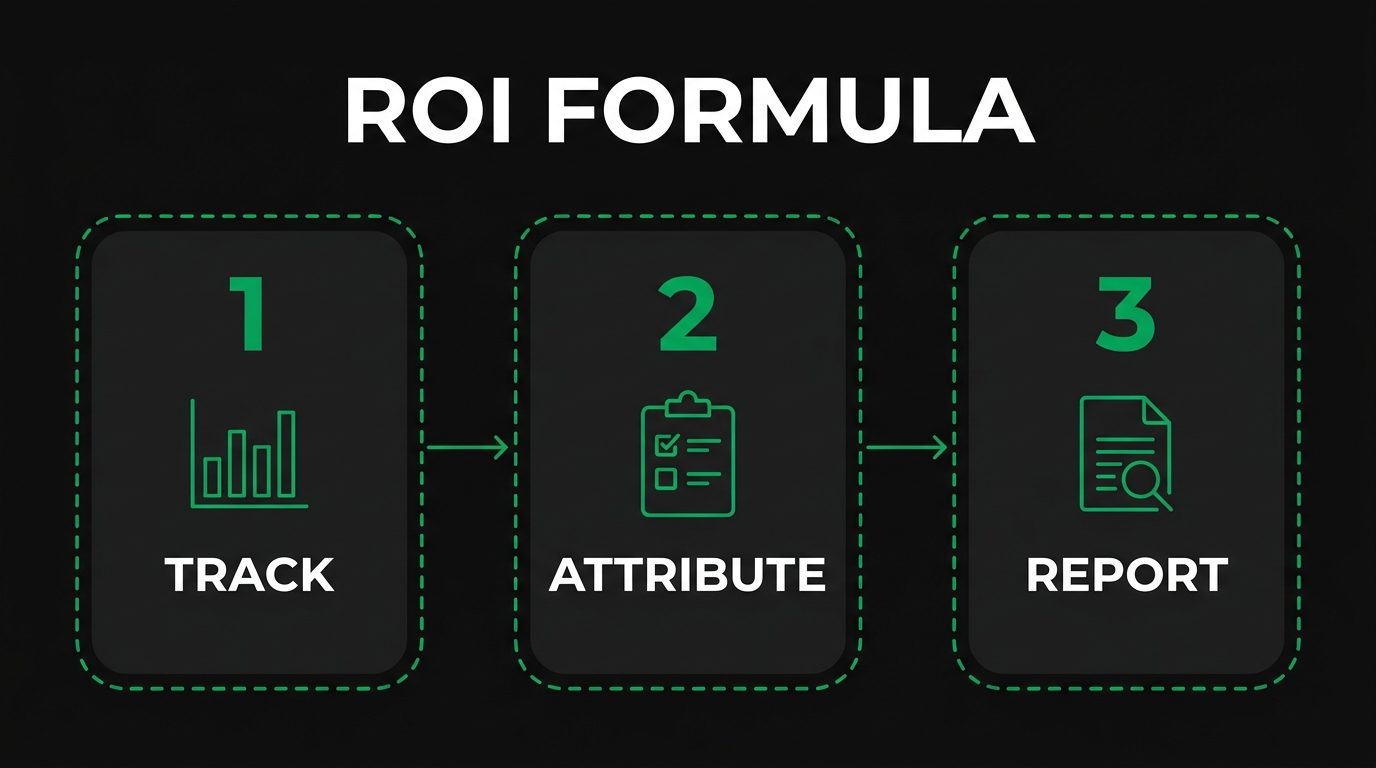
You set up accurate conversion tracking on a manufacturing website by configuring GA4 events for each goal, deploying Google Tag Manager triggers for forms, calls, and downloads, connecting events to CRM and RFQ pipeline records, and validating data quality before any report leaves your dashboard.
How Do You Configure Google Analytics 4 Events for Manufacturing Conversions?
You configure Google Analytics 4 events for manufacturing conversions by sending an event for each goal action, then marking the event as a key event in admin settings.
Use clear event names like rfq_submit, quote_request, spec_download, and phone_call. Add parameters for form_id, page_path, and source so you can segment downstream. Mark only the events that represent business outcomes as key events to keep reports focused. Test each event in DebugView before pushing to production property. Industrial site teams should also follow how to improve industrial website ranking practices to feed those events with qualified organic traffic.
How Do You Use Google Tag Manager to Capture Form, Phone, and Download Events?
You use Google Tag Manager to capture form, phone, and download events by deploying triggers that fire on the correct DOM signal. For forms, use a Form Submission trigger filtered by form ID, plus a server-side validation event so failed submissions do not count. For phone calls, deploy a click trigger on tel: links, paired with a dynamic call-tracking number swap if you measure offline conversions. For downloads, fire a click trigger on PDF, CAD, STEP, and DXF file links, with file path as a parameter. Publish in a versioned container, document each tag, and stage changes in a separate workspace before merging to live.
How Do You Connect Conversion Events to Your CRM and RFQ Pipeline?
You connect conversion events to your CRM and RFQ pipeline by stamping each form submission with UTM parameters, GA4 client_id, and landing page, then passing those fields to the CRM record at create time. Use webhook integrations from form platforms (HubSpot, Pardot, Marketo, native Salesforce Web-to-Lead) that write source data into custom fields. On opportunity creation, copy first-touch and last-touch attribution from the lead. This builds a closed-loop chain from organic landing page to pipeline record to closed revenue.
How Do You Validate Conversion Data Quality Before Reporting?
You validate conversion data quality before reporting by running five checks: deduplicate submissions by email plus timestamp, filter internal IPs and known bot user agents, verify event volume against form-platform totals, sample test submissions weekly to confirm pipeline integrity, and reconcile GA4 conversion counts to CRM lead counts within five percent variance. Document discrepancies. Tag suspicious sessions for review. Configure GA4 to use Google's bot filtering and add custom IP exclusion rules for office and agency networks. Skipping validation produces inflated conversion rates that crater credibility the first time finance asks how marketing got from leads to revenue.
What Is a Good Website Conversion Rate Benchmark for Manufacturers?
A good website conversion rate benchmark for manufacturers sits between 1% and 5% for visitor-to-lead, with top performers reaching 8% to 12%. Benchmarks shift by sub-vertical, traffic source, and device, so always interpret your number against industry peers rather than cross-sector averages.
What Are Average B2B and Industrial Website Conversion Rate Benchmarks?
Average B2B and industrial website conversion rate benchmarks land between 2% and 5% for visitor-to-lead conversions, with top decile sites reaching 8% to 15%.
The range reflects long sales cycles, multi-stakeholder buying committees, and high average contract values. A 2% lead-conversion rate on a precision-machining site producing $50,000 average orders far outperforms a 6% rate on a low-ticket commodity site. Always frame the percentage against contract value and pipeline produced, not against retail conversion benchmarks that compress comparison.
How Do Conversion Rates Differ Across CNC Machining, Injection Molding, and Fabrication Sites?
Conversion rates differ across CNC machining, injection molding, and fabrication sites primarily because of buying-cycle length, RFQ complexity, and visitor specificity. CNC machining and aerospace fabrication sites typically convert 1.5% to 3% on procurement-intent traffic because RFQs require detailed drawings and tolerance specs, which gate the form. Injection molding sites convert slightly higher (2% to 4%) when they offer instant-quote tooling. Metal fabrication sites sit near the higher end (3% to 5%) because of more standardized product catalogs.
How Do Traffic Source and Device Type Affect Manufacturing Conversion Benchmarks?
Traffic source and device type affect manufacturing conversion benchmarks because procurement buyers behave differently by channel and screen size. Organic search converts 1.5x to 3x higher than paid social on industrial sites, because intent is stronger. Direct traffic from procurement repeat visits converts at the highest rate. Desktop dominates B2B manufacturing sessions and converts roughly two times higher than mobile, since RFQ forms with file uploads are easier to complete on a workstation. Segment all benchmarking by source and device. Comparing a mostly mobile paid-social conversion rate to a mostly desktop organic rate produces false alarms and false comfort.
How Should You Interpret Your Conversion Rate Against These Benchmarks?
You should interpret your conversion rate against these benchmarks by anchoring to your own historical baseline first, peer industry benchmarks second, and broad averages last. Look at trend (90-day rolling) before snapshot. Look at conversion-rate-by-segment before site-wide average. Look at revenue per session alongside conversion rate to catch cases where rate falls but quote value rises. A flat conversion rate hides a quietly degrading sub-segment, while a rising headline rate can mask a collapsing core funnel. For specialty verticals, see how to improve website visibility for additive manufacturing for source-specific traffic considerations.
How Do You Diagnose and Improve a Low Website Conversion Rate?
You diagnose and improve a low website conversion rate by isolating the broken funnel step, layering qualitative tools on top of quantitative drop-off data, running structured A/B tests on the highest-leverage pages, and prioritizing optimization tests using an impact-confidence-effort framework.
How Do You Identify the Root Cause of Conversion Rate Drops?
You identify the root cause of conversion rate drops by segmenting the rate by date, device, channel, landing page, and form, then locating the cohort where the drop concentrates. Compare the affected cohort against an unaffected one to isolate variables. Common causes include site-speed regressions, broken form fields after a deploy, tracking misfires, organic traffic mix shift toward lower-intent queries, and seasonal procurement cycles. Layer Google Search Console data to confirm whether ranking-driven traffic mix changed. Check Google Analytics 4 data freshness.
How Do You Use Heatmaps, Session Replays, and Form Analytics to Surface Friction?
You use heatmaps, session replays, and form analytics to surface friction by combining aggregate visual patterns with individual user evidence. Heatmaps show where engineers click, scroll, and stall on capability pages. Session replays expose rage clicks on broken CTAs, dead taps on non-clickable elements, and form abandonment points. Form analytics flag the exact field where buyers quit (often phone, company size, or upload field).
How Do You A/B Test Pages, Forms, and CTAs to Lift Manufacturing Conversion Rates?
You A/B test pages, forms, and CTAs to lift manufacturing conversion rates by isolating one variable per test, sizing the experiment for statistical power, and running until significance.
Test high-impact elements: form length, field labels, RFQ submit copy, hero proposition, certification trust badges. Use a 95% confidence threshold and pre-declare your primary metric. Detailed playbooks for how to improve manufacturing website conversion rate extend these methods into industrial-specific page templates.
How Do You Prioritize Conversion Rate Optimization Tests on an Industrial Site?
You prioritize conversion rate optimization tests on an industrial site using an Impact-Confidence-Effort score for each candidate test. Impact estimates revenue lift if the test wins. Confidence weights how strong the evidence (heatmap, replay, analytics) supporting the hypothesis is. Effort estimates engineer and design hours. Score one to ten on each axis. Run highest-scoring tests first. On industrial sites, prioritize the RFQ form (highest revenue), then capability category pages (highest traffic), then process detail pages. Avoid testing low-traffic pages where statistical significance takes months to reach. Document hypotheses, results, and learnings so the program compounds value across quarters.
What Common Mistakes Distort Website Conversion Rate Calculations?
Common mistakes that distort website conversion rate calculations include counting non-conversion clicks, ignoring bot and internal traffic, mixing branded and non-branded sources in one report, and applying the wrong attribution model to a multi-touch B2B funnel. Each mistake quietly inflates or hides the real number.
Why Does Counting Every Click as a Conversion Inflate the Metric?
Counting every click as a conversion inflates the metric because most clicks signal interest, not committed action. Treating CTA clicks, button hovers, or PDF link clicks as conversions doubles or triples the count without producing a single RFQ. The fix is strict event hygiene: define conversions only on completed business outcomes (validated form submission, completed call, file download served by the server). Track upstream interactions as engagement events, not conversions. This separation keeps the conversion rate honest, makes A/B test scoring meaningful, and prevents false signals from propagating into pipeline forecasts that finance later cannot reconcile.
How Do Bot Traffic, Internal Visits, and Spam Form Fills Skew Conversion Data?
Bot traffic, internal visits, and spam form fills skew conversion data by inflating both numerator and denominator unevenly.
Filter known bot user agents in GA4. Exclude internal IP addresses and agency networks via the Internal Traffic filter. Add reCAPTCHA v3 and honeypot fields to forms to block automated submissions. Audit submissions weekly for obvious spam. Without these guards, conversion rates wobble unpredictably and benchmarks become meaningless.
Why Does Mixing Branded and Non-Branded Traffic Misrepresent Conversion Health?
Mixing branded and non-branded traffic misrepresents conversion health because branded queries convert three to ten times higher than non-branded ones. Buyers searching your company name already have intent, so their conversions are not attributable to SEO outreach. Blending the two hides whether new-audience SEO is working. Split conversion-rate reports into branded organic and non-branded organic in Google Search Console, then mirror the split in GA4 segments. Track each rate over time.
How Do Attribution Errors Distort Channel-Level Conversion Reporting?
Attribution errors distort channel-level conversion reporting by misallocating credit between first-touch, last-touch, and assisting channels. B2B procurement journeys often span 8 to 15 touches across 60 to 180 days. Default last-click attribution credits the closing channel and starves earlier organic content of its real influence. Configure data-driven attribution in GA4 where data volume permits, or run side-by-side comparisons between first-touch, linear, and time-decay models. Document which model funds which decision. Switching attribution models mid-quarter without disclosure produces phantom channel performance shifts that undermine trust in the numbers and waste budget on the wrong channels.
How Should You Approach Website Conversion Rate Measurement with Manufacturing SEO Agency?
You should approach website conversion rate measurement with Manufacturing SEO Agency by aligning event taxonomy, CRM handoffs, and revenue reporting to procurement-intent KPIs. Manufacturing SEO Agency builds reporting that ties organic rankings to RFQs, pipeline value, and closed revenue rather than vanity ranking positions.
Can Manufacturing SEO Agency's Reporting and Analytics Service Strengthen Your Conversion Rate Measurement?
Yes, Manufacturing SEO Agency's manufacturing seo reporting and analytics service strengthens conversion rate measurement by integrating GA4 events, Google Tag Manager triggers, and CRM pipeline data into a single revenue-tied dashboard. Manufacturing SEO Agency operates as a manufacturing-focused seo agency serving B2B manufacturers across CNC machining, injection molding, fabrication, additive, aerospace, automotive, medical, and electronics. The reporting framework maps every organic ranking to RFQs, pipeline value, and closed revenue, replacing position-tracking with a procurement-intent measurement model.
What Are the Key Takeaways About Calculating Website Conversion Rate We Covered?
Key takeaways about calculating website conversion rate covered in this guide are: apply the standard formula (conversions divided by visitors, times one hundred) consistently across segments. Separate macro from micro conversions for revenue reporting and diagnostics. Pair conversion rate with engagement, cost-per-lead, funnel drop-off, and revenue KPIs. Configure GA4 events, Tag Manager triggers, and CRM handoffs with strict validation. Benchmark against industrial peers, not retail averages. Diagnose drops with heatmaps and session replays before A/B testing fixes. Filter bots, internal traffic, and spam, and split branded from non-branded reporting so the headline number reflects real, attributable performance.