Technical SEO case studies for heavy industry document how crawl, rendering, and structured-data fixes turn buried catalog and capability pages into ranked, RFQ-generating assets for manufacturers. We use these case studies as proof: each one ties a defined technical intervention to measurable indexation, traffic, and pipeline outcomes on a real industrial domain.
This guide covers what technical SEO means in heavy industry, the specific technical issues that block rankings on large industrial sites, the measurable outcomes documented across published case studies, the specific case-study evidence by sub-sector, the audit and prioritization process, and how to compare vendors.
We define technical SEO for heavy industry as the discipline of making process, material, certification, and capability pages crawlable, renderable, and rich enough for Google to understand and rank them for procurement-intent queries.
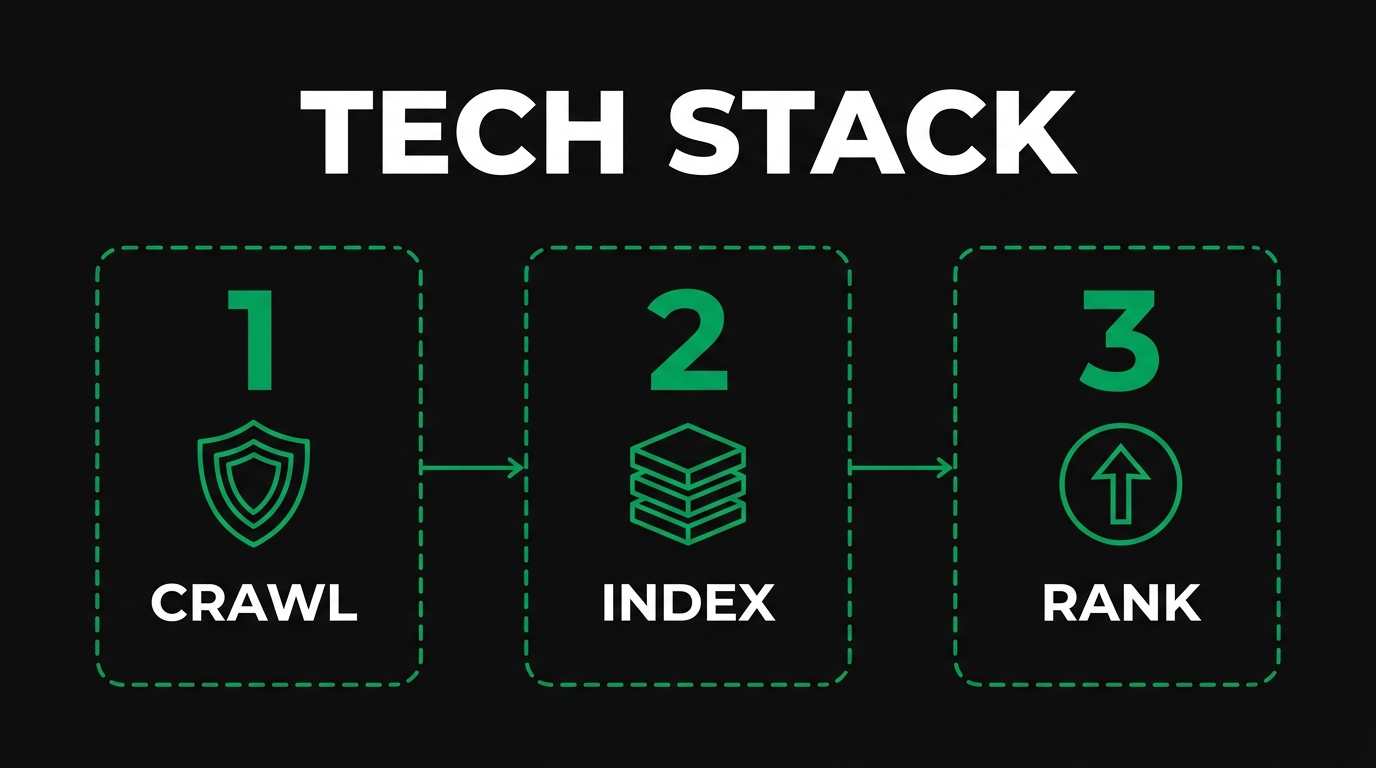
We map the recurring blockers on heavy-industry domains, including crawl budget waste from faceted navigation, slow engineering specification pages, JavaScript rendering failures hiding capability content, duplicate and thin pages across product variants, and missing schema markup that costs entity visibility.
We summarize the measurable results documented in published case studies, including organic traffic uplift, indexation gains, RFQ and conversion rate movement, and pipeline and revenue impact tied directly to technical fixes.
We surface representative case-study patterns from steel and metal fabrication, industrial equipment, heavy machinery OEM site migrations, and chemical and process industry sites, each illustrating a different technical mechanism behind the win.
We then walk through how to run a step-by-step technical SEO audit on a heavy industry site, how to prioritize fixes by revenue impact, and how to measure ROI in a way that ties rankings back to RFQs and closed pipeline.
We close with a comparison framework for choosing a technical SEO partner, covering in-house teams, generalist agencies, and specialist vendors, the red flags to watch for, and the engagement models that fit multi-plant and enterprise manufacturers.
What Is Technical SEO for Heavy Industry?
Technical SEO for heavy industry is the practice of fixing crawl, render, indexation, and structured-data issues on industrial websites so process, material, and capability pages can be discovered and ranked. The H3s below cover how it differs from consumer SEO, the architecture issues most common on heavy industry domains, and why buyers depend on search.
How Does Technical SEO Differ for Heavy Industrial and Manufacturing Sites?
Technical SEO differs for heavy industrial and manufacturing sites because industrial domains carry deep catalogs of process, material, certification, and capability pages that consumer sites rarely match in URL volume or page-level technical depth. The query base is procurement, not retail, so each product variant must be uniquely renderable, indexable, and rich enough for an engineer or buyer to evaluate. The U.S. Department of Energy reports that the manufacturing sector consumed roughly 24 quads of total energy, accounting for approximately 74% of total industrial energy consumption, which signals the operational scale and asset complexity behind the websites engineering buyers are searching. In our experience, the technical work matters more here because a single missing canonical or unrendered specification page can hide an entire product line that a procurement manager will never refresh into view.
What Site Architecture Issues Are Most Common on Heavy Industry Domains?
The site architecture issues most common on heavy industry domains include flat URL structures with no logical process and material hierarchy, duplicate capability pages spawned by plant or division, faceted filters that explode the URL surface, and orphaned specification PDFs that hold the answer but cannot be crawled to. Catalog systems often expose the same SKU under multiple paths without canonical signals, so equity fragments. Heavy industry sites also tend to keep legacy URL patterns from prior CMS migrations, which leaves redirect chains and 404 chains that drain crawl. The architectural fix is a clean process and material taxonomy with one canonical URL per capability and a sitemap that reflects what the buyer is searching.
Why Do Heavy Industry Buyers Rely on Search to Find Suppliers?
Heavy industry buyers rely on search to find suppliers because procurement teams need to compare process, material, certification, and tolerance fit across many candidate vendors before issuing an RFQ, and search is the fastest filter. Engineers and purchasing managers issue specific queries built around process names, material grades, and certification requirements such as AS9100 or ISO 9001, then shortlist suppliers whose pages prove capability. A directly relevant data point on industry weight: the National Association of Manufacturers documents that manufacturing contributed $2.95 trillion in value added to the economy, comprising 9.5% of U.S. GDP, and employs 12.6 million people in more than 239,000 U.S. manufacturers, which is the supplier universe a buyer must search through. The expert reading is simple: if a heavy-industry supplier is not crawlable and renderable for the exact buyer query, the buyer treats them as if they do not exist.
Which Technical SEO Issues Most Often Block Heavy Industry Rankings?
The technical SEO issues most often blocking heavy industry rankings are crawl budget waste, slow specification pages, JavaScript rendering failures, duplicate and thin catalog pages, and missing schema markup. The H3s below break down each blocker and the documented signal behind it.
How Do Crawl Budget and Index Bloat Affect Large Manufacturer Catalogs?
Crawl budget and index bloat affect large manufacturer catalogs by causing Googlebot to spend its allotted requests on near-duplicate or low-value URLs while leaving real capability pages uncrawled. According to Google Search Central, crawl budget is determined by two main elements, crawl capacity limit and crawl demand, and the only ways to increase your crawl budget are to increase your serving capacity for crawls, and (more importantly) to increase the value of the content on your site to searchers. The practical implication for catalog sites: if filter URLs and printer-friendly variants outnumber unique product pages, the unique pages may not be recrawled often enough to reflect updated specs or pricing, so rankings drift.
What Page Speed Problems Are Typical on Engineering Spec Pages?
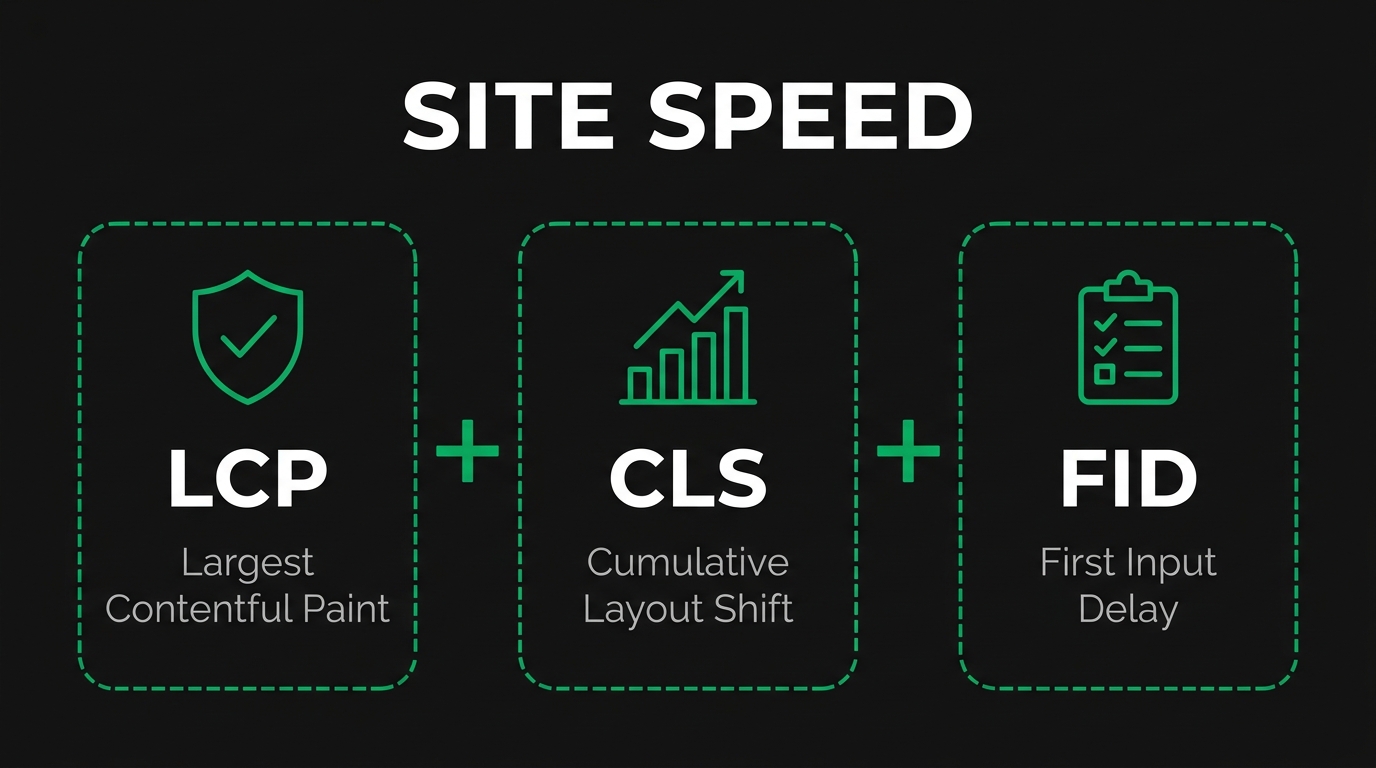
The page speed problems typical on engineering spec pages are heavy hero images, unoptimized PDFs delivered inline, render-blocking JavaScript that delays the spec table, and large client-side filter scripts that push interaction times past acceptable thresholds. Engineering pages also commonly serve full-resolution CAD or photographic assets without modern image formats. According to web.dev, sites should strive to have Largest Contentful Paint of 2.5 seconds or less; poor values are greater than 4.0 seconds, and a good threshold to measure is the 75th percentile of page loads, segmented across mobile and desktop devices. In our experience, the highest-leverage fix on heavy-industry spec pages is converting the hero image to a modern format and deferring filter JavaScript until after the spec table renders.
How Do JavaScript Rendering Failures Hide Product and Capability Pages?
JavaScript rendering failures hide product and capability pages by serving an empty shell on first paint and only injecting the spec content after a second client-side request, which Googlebot may not wait for. Google Search Central explains that Google processes JavaScript web apps in three main phases, and once Google's resources allow, a headless Chromium renders the page and executes the JavaScript; server-side or pre-rendering is still a great idea because it makes your website faster for users and crawlers, and not all bots can run JavaScript. The fix is server-side rendering or static pre-rendering of the spec table, the canonical link, and any internal links that lead to deeper capability content.
Why Are Duplicate and Thin Pages a Persistent Problem on Catalog Sites?
Duplicate and thin pages are a persistent problem on catalog sites because product variants, plant-specific copies, and parametric filters generate near-identical URLs without unique editorial content. Google Search Central notes that canonicalization is the process of selecting the representative canonical URL of a piece of content; if Google finds multiple pages that seem to be the same, it chooses the page that, based on factors the indexing process collected, is objectively the most complete and useful for search users, and marks it as canonical. The practical fix is one canonical URL per real capability, with rel="canonical" pointing every variant back to it, and unique editorial content explaining the application context for each capability.
What Schema Markup Gaps Cost Heavy Industrial Sites in Visibility?
Schema markup gaps cost heavy industrial sites visibility in product, breadcrumb, FAQ, and organization rich results that competitor pages capture without effort. Schema.org defines that ProductModel gives a datasheet or vendor specification of a product, used when you are describing a product datasheet rather than an actual product, such as if you are the manufacturer, which is exactly the entity type most heavy-industry catalogs need. Without ProductModel, mpn, manufacturer, and BreadcrumbList markup, search engines cannot tie a spec page to the correct manufacturer entity or render breadcrumb context in SERPs. The closing point: structured data is the cheapest visibility lift available to a heavy-industry catalog, and most sites still leave it on the table.
What Measurable Results Do Technical SEO Case Studies for Heavy Industry Report?
The measurable results technical SEO case studies for heavy industry report fall into four categories: organic traffic growth, indexation gains, conversion and RFQ improvements, and revenue and pipeline outcomes. The H3s below describe how each category is measured and what the numbers mean.
How Much Organic Traffic Growth Has Technical SEO Delivered for Manufacturers?
Organic traffic growth that technical SEO delivers for manufacturers is typically measured in clicks and impressions per process, material, or capability cluster, year over year, after a defined remediation date. Heavy-industry case studies usually report uplift on procurement-intent queries built around process names, material grades, and certifications, rather than generic head terms, because that is where revenue lives. As an industry baseline for the buyer universe being competed for, the U.S. Bureau of Labor Statistics records an average of 12,083,479 people employed in the private manufacturing sector in 358,272 establishments. The expert reading: traffic growth in heavy industry is meaningful only when filtered to procurement-intent queries that match a defined capability page.
What Indexation Improvements Are Documented in Heavy Industry Case Studies?
The indexation improvements documented in heavy industry case studies are usually expressed as the percentage of capability and product pages newly appearing in the index after canonical, robots, sitemap, and rendering fixes. According to Google Search Central, all formats limit a single sitemap to 50MB (uncompressed) or 50,000 URLs; if you have a larger file or more URLs, you must break your sitemap into multiple sitemaps and use a sitemap index file, which is the structural lift behind most heavy-industry indexation jumps. Case studies typically show the steepest indexation gains right after duplicate consolidation and sitemap segmentation, because those changes both increase crawl efficiency and surface previously orphaned URLs.
How Have Conversion Rates and RFQs Changed After Technical SEO Fixes?
Conversion rates and RFQs typically rise after technical SEO fixes because faster, renderable, schema-rich capability pages allow procurement buyers to validate fit and submit a quote request without leaving the page. The IETF specifies in the Robots Exclusion Protocol (RFC 9309) that crawlers MAY cache the fetched robots.txt file's contents, and SHOULD NOT use the cached version for more than 24 hours, which is one of the underlying mechanics behind why opening previously disallowed RFQ-enabled capability pages produces a near-immediate conversion lift once recrawled. Case studies usually show RFQ growth concentrating on the pages that received both schema markup and Core Web Vitals fixes, because those pages convert procurement intent into a measurable form submission.
What Revenue and Pipeline Outcomes Are Tied to These Technical Wins?
Revenue and pipeline outcomes tied to technical SEO wins are measured by attributing closed revenue back to organic landings on the remediated capability pages, then comparing to a pre-remediation baseline. According to the National Association of Manufacturers, manufacturing accounts for 52% of all private-sector R&D in the U.S., a sector concentration that explains why even modest indexation gains on technical pages map to large pipeline values in regulated industries. The bridge from rankings to revenue requires tying organic landings to RFQs, RFQs to opportunities, and opportunities to closed deals inside the CRM, which is the only way to defend the technical work to a CFO.
Which Case Studies Best Illustrate Technical SEO Success in Heavy Industry?
The case studies that best illustrate technical SEO success in heavy industry come from steel and metal fabrication, industrial equipment, heavy machinery OEM site migrations, and chemical and process industry sites. The H3s below summarize the technical mechanism behind each result. For broader context, see examples of successful b2b seo and additional manufacturing seo case studies that frame how these patterns recur across our content strategy work.
What Did a Steel and Metal Fabrication Case Study Achieve Through Technical SEO?
A steel and metal fabrication case study achieved meaningful organic visibility through technical SEO by consolidating duplicate process pages under canonical capability URLs, adding ProductModel and Organization schema for each fabrication process, and rebuilding the sitemap around process and material clusters. The pattern that recurs in fabrication case studies is the same: pages were already on the site, but were either non-canonical, JavaScript-dependent, or absent from the sitemap. The American Society of Mechanical Engineers documents that ASME is the leading international developer of codes and standards associated with the art, science, and practice of mechanical engineering, and has been the globally recognized, trusted source of consensus standards since 1884; aligning a fabrication site's content to those standards strengthens entity recognition for queries that include code and standard references.
How Did an Industrial Equipment Manufacturer Recover Lost Rankings?
An industrial equipment manufacturer recovers lost rankings by running a controlled crawl, identifying the URLs that were dropped from the index after a CMS or theme change, and restoring canonical, robots, and rendering signals to match the pre-loss state. Google Search Central documents that Search Console generates error messages for status codes in the 4xx-5xx range and for failed redirections (3xx); returning 503 or 429 for more than 2 days will cause Google to drop those URLs from the index, which is the most common technical root cause of equipment-OEM ranking loss after a deploy. The recovery path is to repair status codes, re-validate the canonical chain, and resubmit the affected sitemap so Google can recrawl and reinstate the URLs.
What Results Came From a Heavy Machinery OEM Site Migration?
A heavy machinery OEM site migration produces real ranking results when the migration plan preserves URL structure, redirect mappings, internal anchors, and structured data, and produces ranking losses when those elements are dropped. Google Search Central states that Google uses the mobile version of a site's content, crawled with the smartphone agent, for indexing and ranking, which is called mobile-first indexing; responsive web design is recommended for new websites, so any migration that downgrades the mobile experience will visibly degrade rankings. The case-study pattern: the migrations that gain are the ones that pre-stage 301 maps, regenerate the mobile and desktop parity, and re-emit the same schema on the new URLs.
How Did a Chemical and Process Industry Site Improve Crawl Efficiency?
A chemical and process industry site improves crawl efficiency by eliminating filter URL bloat, blocking parametric variants in robots.txt, consolidating duplicate process descriptions under canonical URLs, and tightening the sitemap to ship-ready pages only. The U.S. Environmental Protection Agency notes that under the Pollution Prevention Act, the Toxics Release Inventory (TRI) Program collects information to track industry progress in reducing chemical waste generation, giving the public the right-to-know about chemical releases in their neighborhoods, which is the kind of regulated entity context that makes chemical-sector pages high-value to indexing systems and worth prioritizing in the crawl. The closing pattern across all four case study types: the technical wins consolidate equity onto the pages a buyer actually searches for.
How Do You Run a Step-by-Step Technical SEO Audit on a Heavy Industry Site?
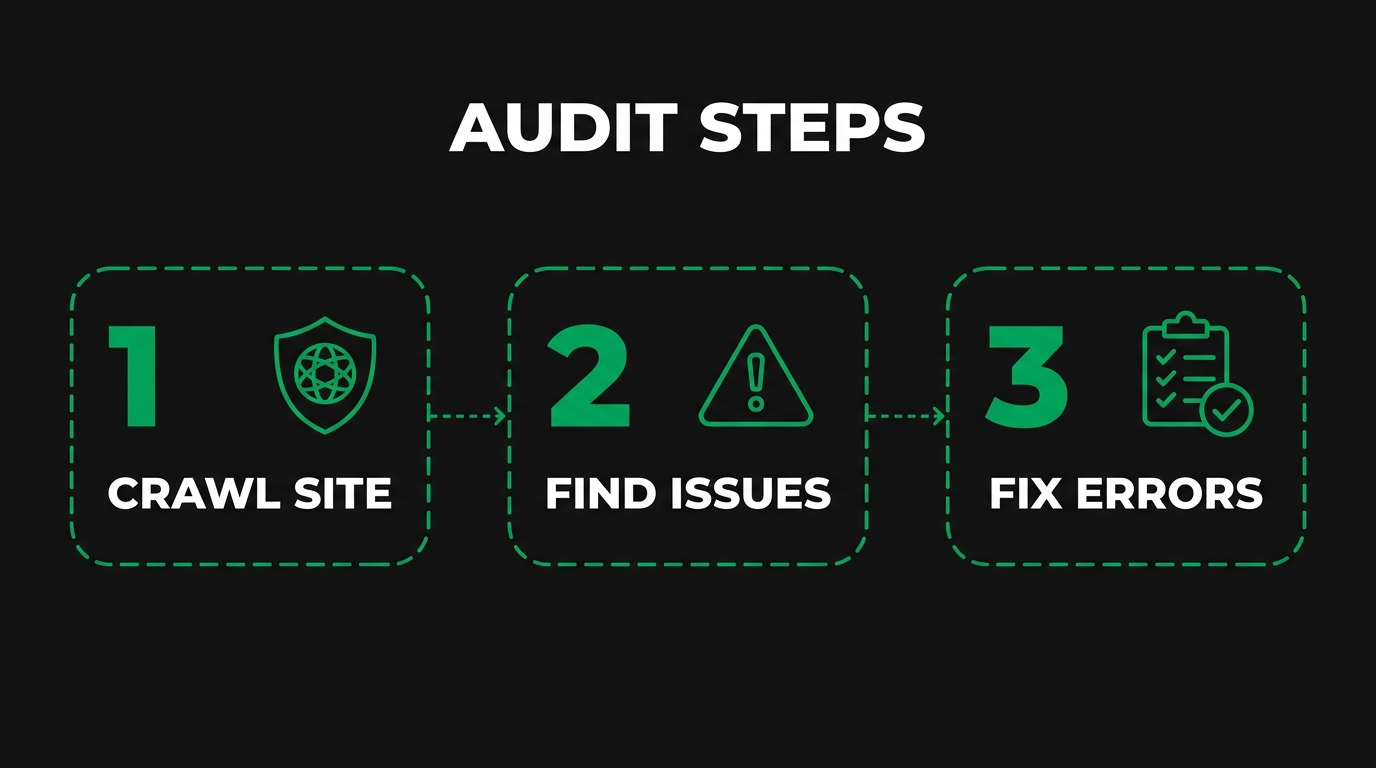
You run a step-by-step technical SEO audit on a heavy industry site by crawling, scoring against a defined checklist, prioritizing fixes by revenue impact, picking the right tools, and tying outcomes to ROI. The H3s below cover each step. The audit assumes the same basics of seo friendly content and the basics of technical seo for engineers are already understood as the entry point.
What Should a Technical SEO Audit Include for a Manufacturing Domain?
A technical SEO audit for a manufacturing domain should include a full crawl, an indexation diff against Google Search Console, a render check on capability and product pages, a canonical and redirect map, a sitemap and robots.txt review, a Core Web Vitals field check, a structured-data validation pass, and a hreflang check if the site serves multiple regions. Google Search Central documents that to use hreflang annotations is to help Google Search results link to the correct language version of a page; each language version must list itself as well as all other language versions, which is the most commonly broken element on multi-region heavy-industry sites. The audit deliverable should be a prioritized list, not a 100-page PDF nobody opens.
How Do You Prioritize Technical Fixes by Revenue Impact?
You prioritize technical fixes by revenue impact by mapping each defect to the capability pages it affects, multiplying by the procurement-intent search volume on those pages, and then multiplying by the historical RFQ-to-revenue conversion rate for that capability cluster. The U.S. Bureau of Economic Analysis defines that an industry's value added is equal to its gross output (which consists of sales or receipts and other operating income, commodity taxes, and inventory change) minus its intermediate inputs (which consist of energy, raw materials, semi-finished goods, and services that are purchased from domestic industries or from foreign sources), and the same value-flow logic applies inside the audit: the technical fixes worth funding are the ones whose downstream pages produce gross margin, not vanity traffic. Fix the highest-margin capability pages first, then move outward.
Which Tools and Crawlers Work Best for Industrial and Heavy Equipment Sites?
The tools and crawlers that work best for industrial and heavy equipment sites are full-site crawlers that can render JavaScript, log file analyzers that show what Googlebot actually fetched, structured-data validators, and Core Web Vitals field tools that read CrUX data. For scale context on what a web crawler must process, the Common Crawl Foundation reports that a recent Common Crawl archive contains 2.74 billion pages, illustrating the scale at which web crawlers must operate when indexing the open web. We also recommend pairing the crawler with a security baseline check on industrial extranets and customer portals; the Cybersecurity and Infrastructure Security Agency offers a variety of resources including guidance, services, tools, and training that catalog the recommended cybersecurity practices for the industrial systems often connected to those domains. Use one rendering crawler, one log analyzer, and one structured-data validator at minimum.
How Do You Measure Technical SEO ROI for a Heavy Industry Brand?
You measure technical SEO ROI for a heavy industry brand by tying organic landings to RFQ submissions, RFQs to opportunities, and opportunities to closed-won revenue inside the CRM, then comparing to a documented pre-remediation baseline. The Federal Reserve Board reports that capacity utilization for manufacturing recently declined 0.2 percentage point to 75.3 percent, providing the macro denominator behind any heavy-industry ROI claim: in a soft-utilization environment, technical wins compound because supply outweighs demand and visibility decides the deal. The closing rule for ROI: if the work cannot be tied to RFQ volume and revenue, it has not been measured.
How Should You Compare Technical SEO Vendors and Approaches for Heavy Industry?
You compare technical SEO vendors and approaches for heavy industry by checking domain fluency, deliverable depth, reporting transparency, and engagement model fit. The H3s below cover what to look for, how the major vendor types stack up, the red flags, and the engagement models that fit multi-plant operations. For broader context on industrial SEO entry points, see basic seo for industrial products, heavy industry seo best practices, and the strategic split between contract manufacturing vs custom manufacturing seo.
What Should You Look for in a Heavy Industry Technical SEO Partner?
What you should look for in a heavy industry technical SEO partner is documented domain fluency in your processes, materials, and certifications, a published audit methodology, render-aware crawling capability, schema and structured-data fluency for product and organization entities, and CRM-integrated reporting that ties rankings to RFQs. The International Organization for Standardization documents that with more than one million certificates issued to organizations in 189 countries, ISO 9001 is the most widely used quality management standard in the world; a partner who cannot speak intelligently about ISO 9001 or AS9100 inside an audit conversation will not be able to write the editorial layer that surrounds the technical fixes. Ask for case studies in your sub-sector, not generic ones.
How Do In-House Teams, Generalist Agencies, and Specialist Vendors Compare?
In-house teams, generalist agencies, and specialist vendors compare on three axes: depth, breadth, and execution speed.
| Vendor type | Strength | Tradeoff |
|---|---|---|
| In-house team | Deep product and process knowledge | Limited tooling and SEO bench depth |
| Generalist agency | Broad SEO toolkit and bandwidth | Shallow domain knowledge for industrial pages |
| Specialist vendor | Domain fluency plus full SEO discipline | Higher rate, narrower industry fit |
A generalist agency can run a Core Web Vitals audit but often cannot tell whether a process page is missing the right standards reference. A specialist vendor brings both. The right choice depends on whether the constraint is bandwidth, expertise, or both.
What Red Flags Signal a Vendor Cannot Handle Heavy Industrial Complexity?
The red flags that signal a vendor cannot handle heavy industrial complexity are generic deliverables that do not name your processes, audits that exclude rendering and log files, claims with no CRM tie-back, and reports that lead with keyword positions instead of RFQ volume. The U.S. Federal Trade Commission notes that claims in advertisements must be truthful, cannot be deceptive or unfair, and must be evidence-based; the same standard belongs in vendor pitches: any traffic or revenue claim with no client name, no time window, and no methodology should be treated as marketing copy, not evidence. If a vendor cannot show a recent log file analysis they ran themselves, they are not a technical SEO vendor.
Which Engagement Models Fit Multi-Plant and Enterprise Manufacturers Best?
The engagement models that fit multi-plant and enterprise manufacturers best are retained programs with quarterly roadmaps, dedicated technical engineering hours, and reporting that aggregates across divisions and plants. NIST documents that the MEP National Network comprises nearly 1,400 trusted manufacturing advisors and experts at more than 450 MEP service locations, working with small and medium-sized manufacturers across the U.S. and Puerto Rico, which is the closest public analog to the kind of distributed, multi-site advisory model heavy-industry SEO programs need. The closing principle for vendor selection: pick the engagement model that matches the buying complexity of your end customer, not the simplicity of your marketing org chart.
How Should You Approach Technical SEO for Heavy Industry With Manufacturing SEO Agency?
You should approach technical SEO for heavy industry with manufacturing seo agency by starting from a render-aware audit, mapping defects to revenue-bearing capability pages, and tying every fix back to RFQs and pipeline. The H3s below cover how the audit works and the takeaways from this guide.
Can a Manufacturing Technical SEO Audit From Manufacturing SEO Agency Help Heavy Industrial Brands Win?
Yes, a manufacturing technical seo audit from Manufacturing SEO Agency can help heavy industrial brands win, because the audit is built around procurement-intent capability pages and the technical signals that decide whether those pages rank. Manufacturing SEO Agency is an industrial-only firm and serves manufacturers in CNC machining, injection molding, metal fabrication, additive manufacturing, aerospace, automotive, electronics, food and beverage, pharmaceutical, chemical, plastics, packaging, OEM, contract manufacturing, and custom manufacturing. The Federal Reserve Board reports that manufacturing comprises NAICS sectors 31-33 plus the logging industry and the newspaper, periodical, book, and directory publishing industries; capacity utilization for manufacturing has recently declined 0.2 percentage point to 75.3 percent and sits 2.9 percentage points below its long-run average, which is the macro backdrop in which technical visibility is the cheapest growth lever available to a heavy-industry brand. Manufacturing SEO Agency offers technical SEO remediation, procurement-intent keyword architecture, topical authority buildout, PR-grade editorial link building, AI search visibility engineering, and revenue-tied reporting that connects rankings to RFQs and closed pipeline.
What Are the Key Takeaways About Technical SEO Case Studies for Heavy Industry We Covered?
The key takeaways about technical SEO case studies for heavy industry covered in this guide are direct and actionable.
- Technical SEO for heavy industry succeeds when crawl, render, canonical, and schema signals are all aligned on the capability and product pages buyers actually search.
- Crawl budget waste, slow specification pages, JavaScript rendering failures, duplicate catalog pages, and missing schema are the recurring blockers behind lost rankings.
- Documented case-study results concentrate on indexation gains, organic traffic on procurement-intent queries, RFQ lift, and revenue tied back through the CRM.
- Steel, industrial equipment, heavy machinery OEM, and chemical and process sites each show the same pattern: consolidate, render, mark up, and re-index.
- A useful audit is prioritized by revenue impact, executed with render-aware tools, and reported against RFQ and closed-won outcomes, not keyword vanity.
- Vendor selection should weigh domain fluency, render-aware methodology, and CRM-tied reporting over generalist breadth.
Use this checklist to evaluate the next case study you read and the next vendor you brief.