SEO basics for industrial companies are the foundational practices that make a manufacturer's website discoverable, indexable, and rankable in the search results that procurement managers and design engineers actually use. A quick-start program sequences those practices into a practical first 90 days that wires keyword research, on-page structure, technical health, content depth, off-page authority, and revenue measurement into one repeatable workflow.
This guide covers what search means for industrial buyers, how crawlers and ranking work on manufacturer sites, how to research procurement-intent keywords, on-page fundamentals for product and service pages, the technical SEO baseline every manufacturing site needs, topical authority through industrial content, off-page link building for B2B manufacturers, performance measurement tied to RFQs, and how a manufacturing-focused partner accelerates the entire program.
The first theme defines industrial SEO and explains why organic search is the highest-intent channel for procurement-driven industries, where buyers research process names, material grades, and certifications long before contacting a supplier.
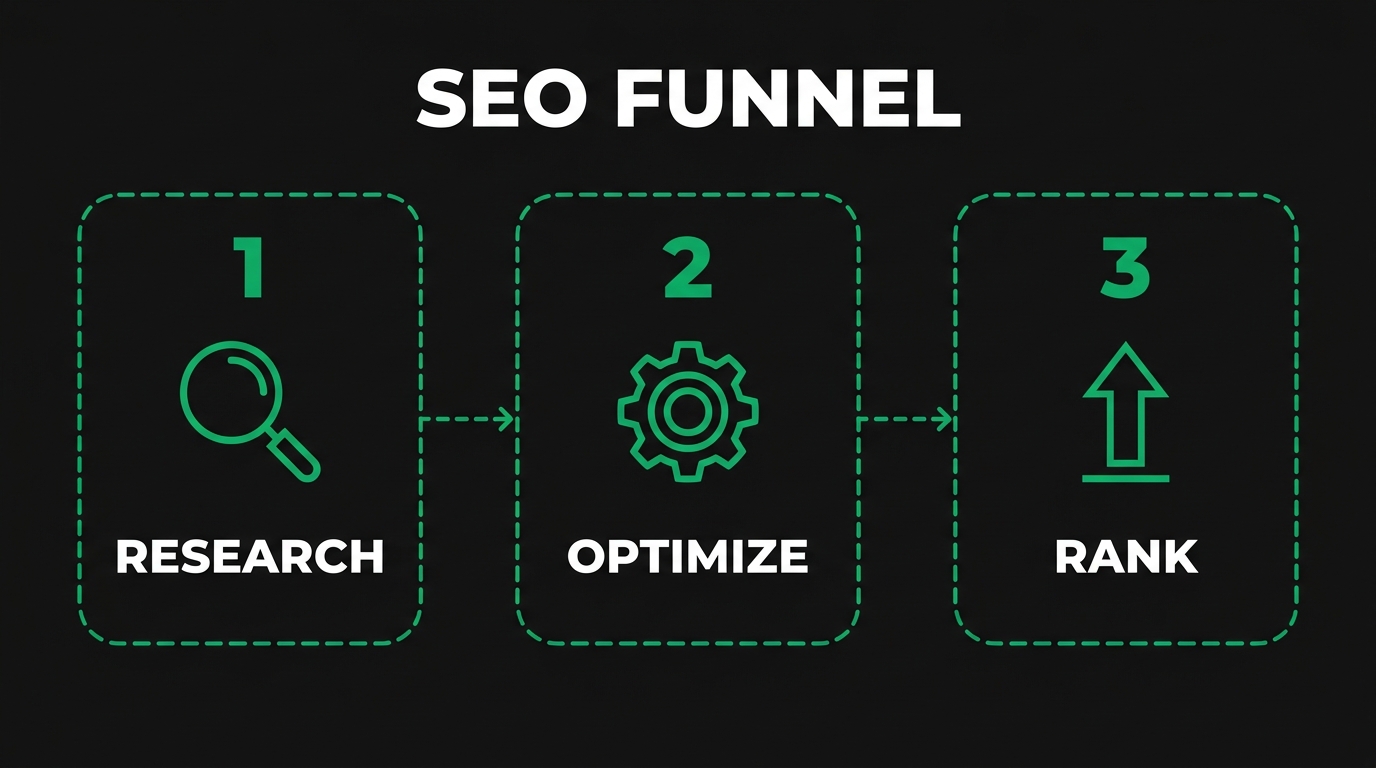
The crawl, index, and rank theme explains how search engines read a manufacturer's site, decide which product pages enter the index, and weight the signals that move industrial pages up the results.
Keyword research, on-page fundamentals, and technical SEO together form the working layer of a quick-start program, mapping process, material, and certification queries to buyer stages while making each page fast, structured, and machine-readable.
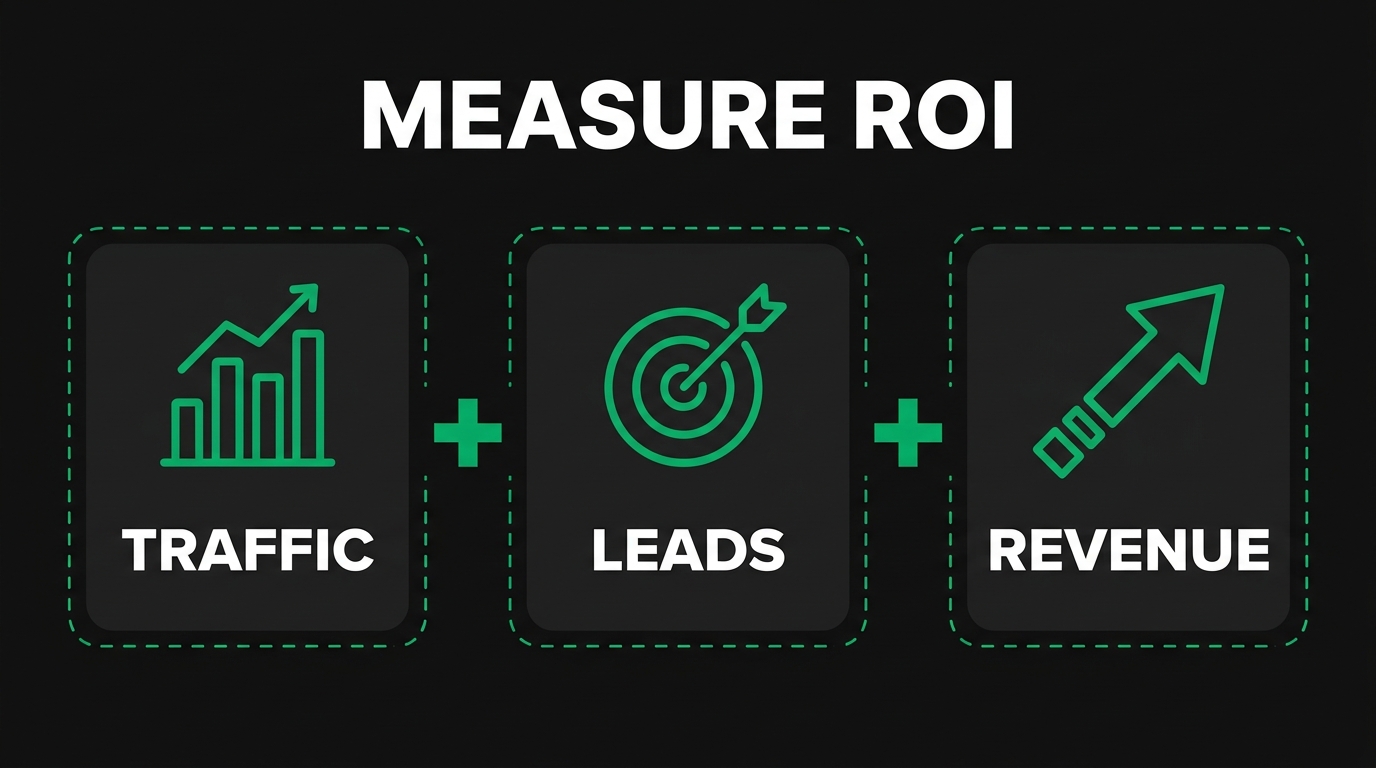
Topical authority and off-page link building extend reach, while measurement closes the loop by tying organic rankings to RFQs, pipeline value, and closed revenue.
The final theme shows how a manufacturing-focused SEO partner compresses the timeline by bringing domain fluency, audit muscle, and revenue-tied reporting on day one.
What Is SEO and Why Does It Matter for Industrial Companies?
SEO for industrial companies is the discipline of making a manufacturer's website discoverable for the exact process, material, and certification queries procurement teams type when sourcing suppliers. It matters because procurement-driven buyers run organic searches before any vendor outreach, so visibility there is visibility into the buying cycle.
How Does Search Engine Optimization Differ for Industrial Buyers Versus Consumer Audiences?
Search engine optimization for industrial buyers differs from consumer audiences by query specificity, decision length, and content depth. Industrial searches use process names, alloy grades, tolerance ranges, and certification acronyms that consumer audiences never type, and the buying committee evaluates each result against engineering criteria, not impulse cues. According to MDN Web Docs, "SEO (Search Engine Optimization) is the process of making a website more visible in search results, also termed improving search rankings." Industrial sites earn that visibility through technical depth: long specification pages, downloadable spec sheets, and tolerances written for engineers. Consumer SEO often optimizes for emotional appeal and short transactional queries, while industrial SEO optimizes for what is industrial seo and the rigorous, evidence-based language of procurement, where a single clarifying spec line decides whether the page enters a shortlist.
Why Is Organic Search the Highest-Intent Channel for Procurement-Driven Industries?
Organic search is the highest-intent channel for procurement-driven industries because buyers self-qualify as they type. A query like "5-axis CNC titanium aerospace components AS9100" reveals the process, material, application, and certification before any sales call begins, and that pre-qualification is rarely matched by display, social, or outbound channels. Engineers searching for technical solutions arrive ready to evaluate, compare, and shortlist, so a top-ranking page intercepts demand at the moment of intent. Pew Research Center reports that "among internet users, 78% say that they at least occasionally conduct product research." For procurement teams the percentage runs higher because each sourcing decision carries financial and compliance weight, making organic discovery the most cost-efficient path into the RFQ pipeline.
What Business Outcomes Should an Industrial Company Expect From SEO?
Business outcomes from industrial SEO include higher RFQ volume, larger average deal size, faster supplier shortlisting, and measurable pipeline contribution from organic sessions. A sustained program lifts rankings on procurement-intent queries, which raises qualified inbound leads, shortens the discovery phase for buying committees, and reduces dependence on paid acquisition. Manufacturers also gain durable assets: process pages, certification pages, and case studies that compound traffic and authority over time. A practical baseline for early-stage operations is captured in basic seo strategies for manufacturers, which sequences foundational tasks before scaling investment. Expect 6 to 12 months for compounding ranking gains in competitive industrial verticals; expect faster wins for low-competition material and tolerance combinations. The long-run outcome is a search footprint that mirrors the actual procurement vocabulary of target buyers, anchoring a steady stream of qualified opportunities into the sales pipeline.
How Do Search Engines Crawl, Index, and Rank Industrial Websites?
Search engines crawl, index, and rank industrial websites through three sequential stages: discovery via links and sitemaps, evaluation of page content for the index, and ranking by relevance and authority signals. MDN Web Docs notes that "search engines crawl the web, following links from page to page, and index the content found." For manufacturers the chain of crawl, index, and rank determines whether a process page surfaces for a procurement query.
What Signals Do Crawlers Read on a Manufacturer's Website?
Crawlers read several structured signals on a manufacturer's website, including HTML markup, internal link patterns, schema.org metadata, image alt text, and the XML sitemap that lists priority URLs. Sitemaps.org explains that a Sitemap "consists of XML tags" and helps webmasters provide details about their pages to search engines via a structured XML format that crawlers can parse and index. Crawlers follow internal links to discover deeper pages, parse the page title and headings to infer topic, read structured data to understand entities like products and organizations, and respect directives in robots.txt. For industrial sites, signals tied to specifications, materials, and certifications carry weight because they map to the queries procurement teams run, so consistent, machine-readable markup turns each spec page into a clear entity for the crawler.
How Does Indexing Decide Whether Your Product Pages Appear in Results?
Indexing decides whether product pages appear in results by evaluating crawlable status, content uniqueness, semantic clarity, and canonical signals. A page must be reachable, not blocked by robots.txt or a noindex tag, and substantive enough to merit storage in the index. MDN guidance warns that "if the content on a page is too little, search engines will not catalog such pages accurately or at all, and pages on MDN Web Docs should not be shorter than around 300 words." Product pages with thin specs, duplicate descriptions, or canonical conflicts often get dropped or merged. Industrial sites improve indexing odds by writing distinct specification blocks per SKU, declaring canonical URLs, surfacing internal links from category pages, and avoiding parameter URLs that fragment crawl budget across near-duplicate variants of the same product.
What Ranking Factors Most Influence Industrial Search Visibility?
Ranking factors that most influence industrial search visibility are topical depth on the queried entity, internal and external link equity, page experience metrics, and structured data quality. Engineers approach search with precise vocabulary; PubMed Central research observes that "engineers prefer keyword search method as the most important criteria among all search methods." Pages that match the exact process, material, tolerance, or certification phrasing in headings, body, and schema typically outrank generic vendor copy. Authoritative inbound links from trade publications and supplier databases reinforce relevance, while fast load times and stable layouts protect rankings on mobile. Topical authority across the full process and material cluster, rather than a single page, is the strongest sustained lever because it signals expertise on the entire procurement vocabulary, not a one-off keyword. The next theme moves from how engines see your site to how to map keywords to procurement intent.
How Should Industrial Companies Conduct Keyword Research for Procurement Intent?
Industrial companies should conduct keyword research for procurement intent by extracting the exact process, material, tolerance, and certification phrases that buyers type, then mapping each phrase to a buyer stage. Pew Research Center notes that "among internet users, 78% say that they at least occasionally conduct product research." For procurement teams, that research begins with technical search terms.
How Do You Map Process, Material, and Certification Keywords to Buyer Stages?
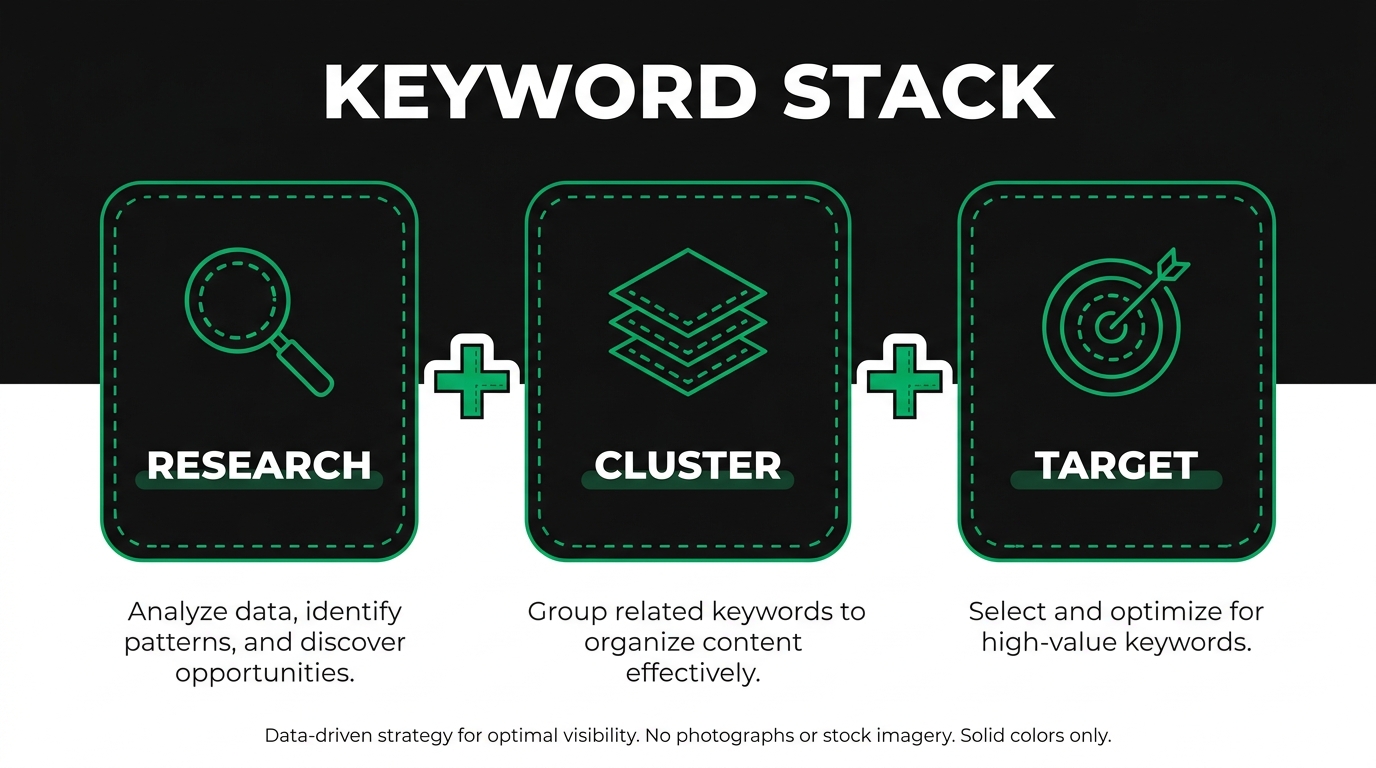
You map process, material, and certification keywords to buyer stages by aligning each query type with awareness, evaluation, or RFQ readiness. Awareness queries name a process or problem ("anodizing aluminum thickness chart"), evaluation queries combine process plus material plus application ("medical-grade PEEK injection molding biocompatibility"), and RFQ-stage queries add certifications, tolerances, or geography ("AS9100 5-axis CNC titanium aerospace supplier"). Group keywords into clusters that mirror procurement decision branches and pair each cluster with a destination page format: capability pages for process plus material, certification pages for compliance proofs, and case studies for application proof. This mapping echoes the basic seo strategies for factories pattern of building topical depth before chasing high-volume head terms, and it ensures the right page meets the right query at the right stage of supplier evaluation.
What Tools Help Identify High-Intent Industrial Search Queries?
Tools that help identify high-intent industrial search queries include Google Search Console for verified click and impression data on existing pages, Google's Keyword Planner for query volume and related terms, Bing Webmaster Tools for additional B2B coverage, and trade-specific directories whose autocomplete reveals procurement vocabulary. Public datasets from supplier databases and patent filings also surface technical phrasing that engineers use but generic SEO tools miss. Cross-reference each candidate keyword against your indexed pages in Search Console to find quick-win opportunities where impressions exist but ranking sits on page two. Pair quantitative tools with qualitative inputs: sales call transcripts, RFQ form fields, and engineering forum threads expose the exact long-tail strings that procurement teams use, which paid tools rarely capture for niche industrial verticals.
How Do You Distinguish Informational, Comparison, and RFQ-Stage Queries?
You distinguish informational, comparison, and RFQ-stage queries by parsing query modifiers, query length, and SERP composition. Informational queries use modifiers such as "what is," "how to," or "guide" and trigger SERPs dominated by educational content. Comparison queries pair two processes, materials, or certifications ("AS9100 vs ISO 9001," "CNC vs 3D printing aerospace") and trigger comparison tables and review-style content. RFQ-stage queries stack specifics, including process plus material plus certification plus geography or capacity, and trigger SERPs dominated by supplier sites with quote forms. Classify every target keyword into one of the three intents before drafting, then match each to its native page format: long-form guide for informational, side-by-side comparison for comparison, and a tightly structured supplier capability page with an RFQ CTA for RFQ-stage queries. This intent-based mapping prevents the common mistake of forcing a quote button onto an educational page that draws non-buyers.
What Are the On-Page SEO Fundamentals for Industrial Product and Service Pages?
The on-page SEO fundamentals for industrial product and service pages are descriptive title tags and meta descriptions, a clear H1 to H3 hierarchy, structured specification blocks, internal links to related processes, and image alt text that names the part, process, and material. Together these elements teach crawlers and buyers exactly what each page covers.
How Should You Structure Title Tags, Meta Descriptions, and Heading Hierarchies?
You should structure title tags, meta descriptions, and heading hierarchies so each element answers the dominant query for that page. MDN Web Docs notes that "the content of the title is one of the components used by search engine algorithms to decide the order in which to list pages in search results." Industrial title tags should lead with the primary process plus material plus modifier (for example, "5-Axis CNC Machining Titanium Aerospace Components"). Meta descriptions should add the certification, tolerance, or capacity differentiator and a concrete CTA. Use one H1 per page that mirrors the primary keyword, H2s for major capability subsections, and H3s for individual specifications. Consistent hierarchy lets crawlers parse passages independently while letting engineers scan for the spec that matters most to their evaluation.
What Belongs in an Industrial Product Page Body and Specification Block?
An industrial product page body and specification block should contain the process or product definition, material grades supported, dimensional and tolerance ranges, certifications and standards met, common applications, and a downloadable spec sheet or CAD file. Add a tabular specification block listing parameter, value, and unit; a leading sentence introduces the table so it never appears cold. Include images of representative parts with descriptive alt text and contextual captions, and place an RFQ form near the top of the page for buyers ready to source. The body should reflect engineering vocabulary used in basics of seo friendly content writing: short, accurate sentences with concrete numbers rather than adjectives. Avoid duplicate boilerplate across SKUs by writing distinct opening paragraphs that reference the specific application or industry the variant serves.
How Do Internal Links and Anchor Text Build Topical Authority?
Internal links and anchor text build topical authority by signaling topic relationships and consolidating link equity around hub pages. Each capability page should link out to related processes, materials, certifications, and case studies using descriptive anchor text that names the destination topic, not generic phrases like "click here." A central hub page (the process pillar) gathers links from every supporting spoke (material variants, certifications, applications), which concentrates equity on the term most important to procurement search. PageRank research at Stanford observed that the algorithm treats a page as more important when linked to by other high-importance pages, so a coherent internal architecture amplifies external authority. The same pattern applies to seo for small manufacturing companies, where a tight cluster of 8 to 12 pages on one process can outrank a sprawling, unfocused site many times larger.
What Are the Technical SEO Basics Every Manufacturing Site Needs?
The technical SEO basics every manufacturing site needs are clean crawlability, fast page experience, valid structured data, and correct directive files (robots.txt, XML sitemap, canonical tags). Each layer ensures crawlers can reach, render, and prioritize the right pages. The basics of technical seo for engineers ground the entire program before any content scaling.
How Do You Audit Crawl Health, Site Speed, and Mobile Usability for Industrial Sites?
You audit crawl health, site speed, and mobile usability for industrial sites by combining server log analysis, Google Search Console coverage reports, Lighthouse runs, and a site crawl with a tool such as Screaming Frog. Confirm that critical capability pages return 200 status, that robots.txt does not block essential paths, and that canonical tags consolidate duplicate variants. Google's web.dev guidance states that "sites should strive to have Largest Contentful Paint of 2.5 seconds or less," measured at the 75th percentile of page loads, segmented across mobile and desktop devices. Address oversized images, render-blocking JavaScript, and slow server response. For practical fixes specific to manufacturing pages, follow the playbook in how to improve core web vitals industrial sites, then validate mobile usability with Google's mobile-friendly test on every template before deploying changes.
What Schema Markup and Structured Data Should Industrial Companies Implement?
Schema markup and structured data industrial companies should implement include Organization, Product, Service, Manufacturer, BreadcrumbList, FAQPage, and Article types from Schema.org. Schema.org explains that "a shared vocabulary makes it easier for webmasters and developers to decide on a schema and get the maximum benefit for their efforts." Use Product schema on capability pages with brand, material, and identifier fields; use Service schema on process pages with serviceType and areaServed; and use Organization schema sitewide with sameAs references to verified profiles such as Wikipedia, the Defense Logistics Agency, or trade association directories. JSON-LD is the encoding most search engines recommend. Validate every implementation with the Schema Markup Validator and Google's Rich Results Test, and version the markup alongside template changes so structural updates do not silently break existing rich results.
How Do You Configure Robots.txt, XML Sitemaps, and Canonical Tags Correctly?
You configure robots.txt, XML sitemaps, and canonical tags correctly by following the published standards and validating each directive. RFC 9309 defines the Robots Exclusion Protocol, which lets service owners "control how content served by their services may be accessed by automatic clients known as crawlers." Place robots.txt at the root, allow critical paths, disallow only true low-value sections (internal search, admin), and reference the XML sitemap at the bottom of the file. Generate XML sitemaps automatically per template (capability pages, case studies, blog) so new URLs appear within a build cycle, and submit each sitemap in Google and Bing Search Console. Use rel=canonical to consolidate signals on the preferred URL when faceted filters or tracking parameters create near-duplicates. For deeper directive guidance follow the playbook in robots.txt best practices industrial sites, then verify behavior in Search Console's URL Inspection tool before pushing template-wide changes.
How Do You Build Topical Authority Through Industrial Content?
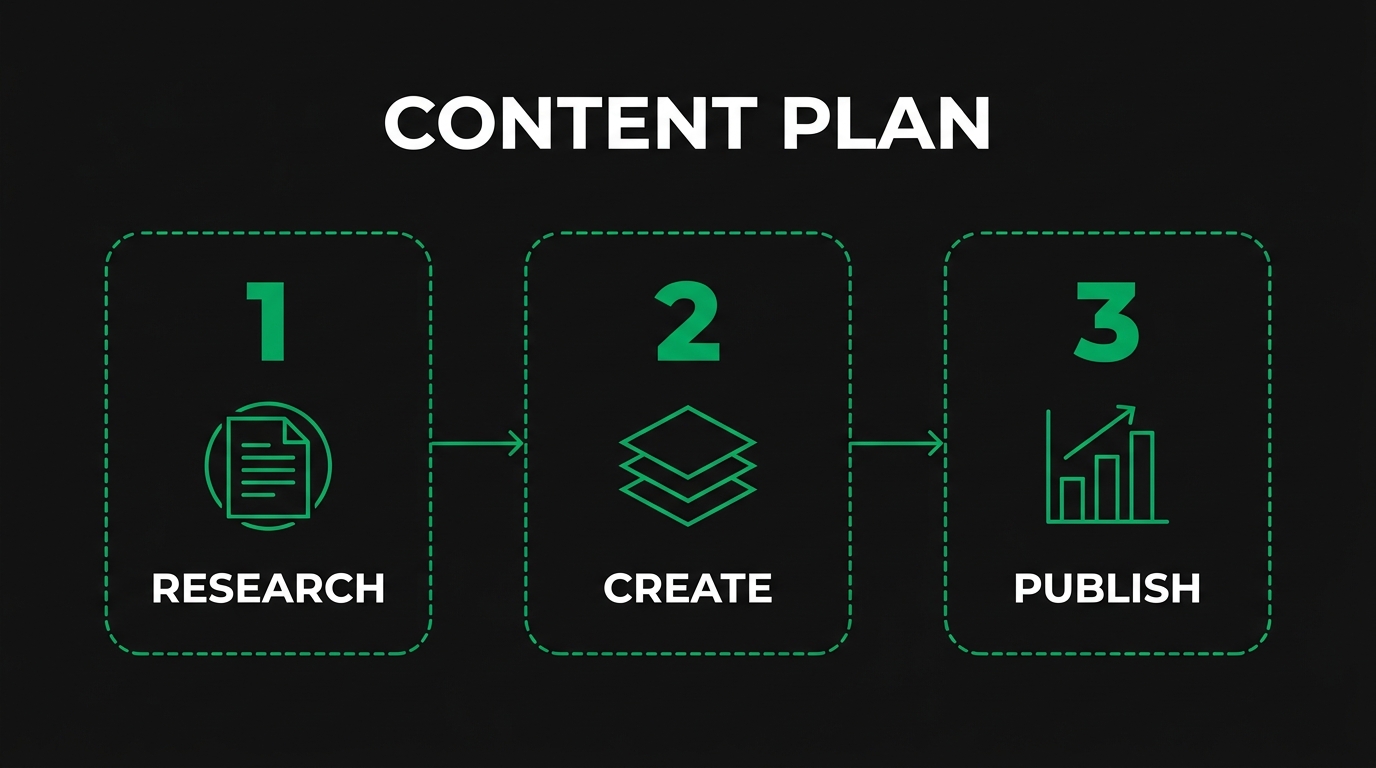
You build topical authority through industrial content by mapping every relevant entity (process, material, certification, application) to a dedicated page, linking the cluster around a hub, and refreshing each page with new evidence. Complete coverage of a topic outranks scattered posts on adjacent topics.
What Topic Clusters Should Manufacturers Cover Across Process, Material, and Application?
Topic clusters manufacturers should cover across process, material, and application include a process pillar (such as "5-axis CNC machining"), material spokes (titanium, Inconel, aluminum 7075), certification spokes (AS9100, ITAR, ISO 9001), and application spokes (aerospace structural parts, medical implants, defense components). Each spoke links back to the pillar with descriptive anchor text and links sideways to compatible spokes (titanium plus aerospace plus AS9100). Census Bureau working paper findings note that "advanced technology adoption is rare and generally skewed towards larger and older firms," which means smaller manufacturers can win clusters that larger competitors ignore by publishing detailed content on niche material plus process intersections. A complete cluster signals topical expertise across the buyer's full evaluation vocabulary, raising rankings for both head and long-tail queries within the topic.
How Do Case Studies, Spec Sheets, and Technical Guides Strengthen Authority?
Case studies, spec sheets, and technical guides strengthen authority by giving search engines and buyers concrete proof of capability, materials handled, certifications met, and outcomes delivered. ISO 29845:2011 "establishes and defines the types of documents required in the documentation for specification of products, equipment and plants at all levels of complexity," and that documentation discipline carries directly into web content. A case study should name the industry, part type, material, tolerance achieved, and certification context; a spec sheet should publish the parameter table that engineers download into RFQs; a technical guide should walk through process selection criteria for a specific application. Each asset earns links naturally because procurement teams cite documented evidence in internal supplier reviews. Together they convert the site from a brochure into a working reference library that ranks for evaluation-stage queries.
How Often Should Industrial Companies Publish and Update Content?
Industrial companies should publish new content on a steady cadence (one to four pieces per month for most mid-sized manufacturers) and update existing pages on a 6 to 12 month review cycle. Steady cadence beats sporadic bursts because crawl frequency follows publication patterns, and consistent depth signals an active topical expert. Updates matter as much as new pages: refresh certifications when standards revise, add new material grades as capacity expands, and append new case study evidence as projects close. Audit performance quarterly and prioritize updates on pages already ranking on positions four through twenty, where small content and link improvements often shift positions into the top three. Tie publication priorities to the highest-revenue process and material clusters first, then expand laterally into adjacent applications once the primary cluster reaches full coverage.
How Should Industrial Companies Approach Off-Page SEO and Link Building?
Industrial companies should approach off-page SEO and link building by earning citations and editorial links from sources procurement teams already trust: trade publications, supplier databases, engineering associations, and certification registries. Each link doubles as an authority signal and a discovery path for buyers.
Which Trade Publications and Industry Directories Drive Authority Backlinks?
Trade publications and industry directories that drive authority backlinks include established trade press and the supplier association directories your target buyers use during sourcing. The International Trade Administration notes that the Manufacturing Council "serves as the principal private sector advisory committee to the Secretary of Commerce on the United States manufacturing sector," which signals the regulatory and editorial weight major industry bodies carry. Pursue links from outlets that cover your specific verticals (aerospace, medical, automotive, industrial automation), industry directories tied to certifications (AS9100 registrar member lists, NADCAP supplier directories), and procurement-side publications that compile supplier guides. Each placement should sit on a page topically aligned with the linked capability, not a generic press release archive, so the link passes both authority and contextual relevance to the destination page.
How Do You Earn Citations From Engineering, Procurement, and Supplier Databases?
You earn citations from engineering, procurement, and supplier databases by registering complete, verified profiles and contributing technical content the database needs. The Defense Logistics Agency offers iGIRDER, "a manufacturers tool (database) that allows manufacturers, vendors and suppliers the ability to review and update product information that is recorded in the Federal Catalog System." Federal supplier registries (SAM.gov, DLA databases), industry association member directories, and engineering reference platforms all accept supplier profiles that link back to your site. Maintain consistent name, address, capability, and certification data across every profile so search engines reconcile them as one entity. Pair profile listings with technical content contributions (white papers, application notes, design guides) on association sites that publish member work, since editorial citations earn stronger ranking signals than directory listings alone.
What Outreach Tactics Work for B2B Manufacturing Link Acquisition?
Outreach tactics that work for B2B manufacturing link acquisition include data-led research pitches to trade journalists, contributed expert articles for engineering publications, partnership announcements with material suppliers or testing labs, and participation in industry roundup features. Lead each pitch with a concrete proof point: a documented tolerance achievement, a new certification, a case study with measurable outcomes, or original research on supplier benchmarks. Avoid generic guest post requests, which trade editors reject; instead offer a specific contribution tied to a current editorial calendar topic. Track placement velocity, referring domain quality, and downstream RFQ contribution rather than raw link counts. Build relationships with five to ten trade editors over time, because repeat placements compound both link equity and brand recognition with the buying community that reads those publications during supplier evaluation.
How Do You Measure SEO Success for an Industrial Business?
You measure SEO success for an industrial business by tracking metrics that connect rankings to revenue: keyword positions on procurement-intent terms, organic sessions on capability pages, RFQ form submissions from organic traffic, and closed pipeline value attributed to those sessions. Vanity metrics matter only if they correlate with quote volume.
Which Key Performance Indicators Tie Organic Rankings to RFQs and Pipeline?
Key performance indicators that tie organic rankings to RFQs and pipeline include keyword position for the highest-revenue procurement queries, organic impressions and clicks per capability page, RFQ form completion rate from organic sessions, average RFQ value, sales-accepted opportunity rate, and closed-won revenue attributed to organic. Position bias research published on arXiv documents that "position bias is a commonly observed phenomenon in Information Retrieval, describing a tendency of people to notice or interact with items in certain positions of lists with higher probability, regardless of the items' actual relevance." That makes top-three rankings on procurement queries the highest-leverage metric to track. Layer engagement signals (scroll depth on spec blocks, spec sheet downloads) as leading indicators of intent, then connect each metric back through CRM stages to closed revenue so the program is judged on pipeline contribution, not click volume.
What Analytics and Search Console Reports Should You Monitor Weekly?
Analytics and Search Console reports you should monitor weekly include the Search Console Performance report (queries, pages, countries, devices), Index Coverage status, Core Web Vitals report, Mobile Usability, and the Sitemaps submission report. In Google Analytics 4, monitor organic landing page performance, conversion events tied to RFQ submissions and spec sheet downloads, and engagement rate by source. Set automated alerts for sudden impression drops, coverage errors, or Core Web Vitals regressions on critical capability pages so issues surface before rankings move. Weekly cadence is enough for trend detection without reacting to noise; supplement with a deeper monthly review of position changes on the top 50 procurement-intent queries and a quarterly content-and-link audit that ties activity to closed pipeline.
How Do You Attribute Closed Revenue Back to Organic Search Activity?
You attribute closed revenue back to organic search activity by stitching together first-click attribution from analytics, RFQ form source tracking, and CRM opportunity-stage progression. Tag every RFQ submission with the original source, medium, landing page, and query (where Search Console data permits). Pass those values into the CRM record so each opportunity carries its discovery path through evaluation, proposal, and close. Apply a multi-touch model on long sales cycles: many industrial deals involve multiple sessions over weeks, so first-touch and last-touch alone underrepresent organic's contribution. Report monthly on organic-sourced RFQs, organic-sourced opportunities, and organic-attributed closed revenue, then validate quarterly against finance records to keep the model honest. Revenue attribution closes the loop that justifies sustained investment in SEO as a procurement-intent acquisition channel.
How Can a Manufacturing-Focused SEO Partner Accelerate Your Quick-Start Program?
A manufacturing-focused SEO partner accelerates your quick-start program by skipping the learning curve on procurement vocabulary, certifications, and process taxonomy, then deploying audit, content, and link plays calibrated to the buying committee from day one. Manufacturing SEO Agency operates as that partner, working only with industrial clients across CNC machining, injection molding, metal fabrication, additive manufacturing, aerospace, automotive, electronics, and regulated industries.
Can a Manufacturing Technical SEO Audit Uncover Quick Wins for Your Industrial Site?
Yes, a manufacturing technical SEO audit can uncover quick wins for your industrial site by exposing crawl waste on parameter URLs, missing schema on capability pages, slow Largest Contentful Paint on product templates, broken canonicalization across SKUs, and high-impression keywords stuck on page two that need only on-page adjustments to break into the top three. Manufacturing SEO Agency runs a manufacturing technical seo audit as the entry point, combining a full technical crawl with current keyword footprint mapping and reverse-engineering of every competitor ranking above the client. The audit prioritizes fixes by procurement-revenue impact, not vanity metrics, so engineering time goes to changes that lift rankings on RFQ-stage queries first. Most audits surface a 30 to 60 day backlog of changes that produce measurable position gains within the first quarter.
What Are the Key Takeaways About SEO Basics for Industrial Companies We Covered?
The key takeaways about SEO basics for industrial companies covered in this guide are: procurement-driven buyers self-qualify through search using process, material, and certification queries, so visibility on those terms intercepts demand at the highest-intent moment. Search engines reward complete topical clusters, structured specification content, fast page experience, valid schema, and authoritative links from trade publications and supplier databases. Measurement must connect rankings to RFQs and closed revenue, not impressions alone. A quick-start program sequences these elements into the first 90 days and compounds from there. Manufacturing SEO Agency works as a manufacturing-focused seo agency tying every deliverable back to revenue from procurement-intent organic traffic, building topical authority across the full process, material, and certification vocabulary buyers use, and reporting on RFQs and closed pipeline so the program is judged on the metrics that determine whether SEO earns its place in the manufacturing growth budget.