SEO-friendly content for manufacturers is web content engineered to rank for procurement-intent queries (process names, material grades, certifications, application searches) while answering the technical questions design engineers and sourcing buyers ask before issuing an RFQ. It blends accurate engineering language with structured on-page elements that Google, Bing, and industrial buyers can both read.
This guide covers what SEO-friendly content means for a manufacturing website, the core on-page elements every industrial page needs, keyword research mapped to the RFQ funnel, content structure choices for process and capability pages, writing techniques that earn engineer trust, the technical SEO foundations that hold it all together, measurement that ties content to pipeline, and how a specialized manufacturing SEO partner can compress the timeline.
The definition section grounds you in how procurement search behavior, process names, and certification language differ from generic B2C marketing copy.
The core elements section covers title tags, meta descriptions, heading hierarchy, internal links, and image optimization specifically tuned for spec sheets, capability pages, and product photography.
The structure and writing sections explain page-type architecture, optimal length, table use, technical tone, citation discipline, and common mistakes that erode authority with engineering audiences.
The technical SEO and measurement sections show how crawling, Core Web Vitals, mobile experience, schema, sitemaps, and KPI tracking convert rankings into qualified RFQs.
The partner section frames how an industrial-only SEO program accelerates topical authority and condenses the takeaways into a working checklist.
What Does SEO-Friendly Content Mean for a Manufacturing Website?
SEO-friendly content for a manufacturing website is technical web content structured so search engines can index it accurately and procurement buyers can verify capabilities quickly. It pairs the exact process names, material grades, and certifications with crawlable on-page elements. The H3s below cover how it differs from generic copy, why procurement search behaves differently, and the role of process and certification language.
How Does SEO-Friendly Content Differ From Generic Marketing Copy?
SEO-friendly content differs from generic marketing copy by prioritizing matchable technical specificity over emotional persuasion. Generic copy chases brand sentiment; SEO-friendly manufacturing pages match query language verbatim, expose tolerances and capacities, and earn ranking signals through structured data and citations. A literature review of website design and user engagement found that "the seven website design elements most often discussed in relation to user engagement in reviewed studies were navigation (62.86%), graphical representation (60%), organization (42.86%), content utility (37.14%), purpose (31.43%), simplicity (31.43%), and readability (31.43%)" (U.S. National Library of Medicine). For an industrial site, that ordering means navigation and organization carry more weight than tagline polish, and broader frameworks like what is industrial seo clarify the discipline.
Why Do Procurement Buyers Search Differently Than Consumers?
Procurement buyers search differently than consumers because they query by part number, alloy designation, tolerance, and certification, not by lifestyle or sentiment. Their queries are short, specific, and verification-oriented: "AS9100 5-axis CNC supplier Ohio," "PEEK injection molding ISO 13485," "blanchard grinding 60 HRC tool steel." McKinsey reports that "76 percent of B2B buyers find it helpful to speak to a salesperson when they are researching a new product or service. That figure falls to around 50 percent for repeat purchases of products with new or different specifications. And only 15 percent want to speak with a salesperson when repurchasing exactly the same product or service." That distribution tells you the page must self-qualify the supplier before any conversation happens.
What Role Do Process Names, Material Grades, and Certifications Play?
Process names, material grades, and certifications play the role of primary keyword anchors and trust signals on a manufacturing page. They map exactly to what design engineers type into Google, and they double as filter criteria buyers use to disqualify suppliers. ISO 9001 alone "is the world's most established quality framework, currently being used by over one million organizations in 189 countries which sets the standard not only for quality management systems, but management systems in general" (International Organization for Standardization). Treat each accepted alloy code, ASTM spec, AS9100 clause, and IATF 16949 reference as a discoverable entity, not boilerplate. These specifics set up the on-page elements covered next.
What Are the Core Elements of SEO-Friendly Content for Manufacturing?
The core elements of SEO-friendly content for manufacturing are title tags, meta descriptions, heading hierarchy, internal links with descriptive anchors, and optimized images. Each element communicates relevance to search engines and helps procurement buyers scan capability quickly. The H3s below address each in turn.
What Makes a Title Tag SEO-Friendly for an Industrial Page?
A title tag is SEO-friendly for an industrial page when it leads with the exact process or capability, includes the qualifying material or certification, and stays under roughly 60 characters so it renders fully in SERPs. Google Search Central instructs to "make sure every page on your site has a title specified in the <title> element" and notes that "title links are critical to giving users a quick insight into the content of a result and why it's relevant to their query. It's often the primary piece of information people use to decide which result to click." For a CNC capability page, "AS9100 5-Axis CNC Machining | Inconel 718, Ti-6Al-4V" outperforms a vague brand-first title every time.
How Should Meta Descriptions Be Written for Procurement Intent?
Meta descriptions should be written for procurement intent by stating the specific capability, the qualifying certifications, and a concrete next step (RFQ, spec sheet, capability brief) in roughly 150 to 160 characters. Google Search Central explains that "a meta description tag generally informs and interests users with a short, relevant summary of what a particular page is about. They are like a pitch that convince the user that the page is exactly what they're looking for." Avoid identical descriptions across template pages. Procurement scans for verifiable terms like "AS9100D," "ITAR-registered," and "DFM included," so put those words near the front.
What Heading Structure Best Supports Manufacturing Topics?
The heading structure that best supports manufacturing topics is a single H1 stating the page's primary capability, H2s covering processes and applications, and H3s nested for materials, tolerances, and certifications. Bing Webmaster Tools states that "optimizing headings helps structure your content and signal the main topics to search engines, impacting your relevancy and rankings"; their Site Scan flags missing H1 tags and improper hierarchy. Never skip levels (H2 directly to H4) and never use heading tags for visual sizing alone. Each heading should answer a discrete buyer or engineer question.
How Important Are Internal Links and Anchor Text in Industrial Content?
Internal links and anchor text are critical to industrial content because they distribute authority across deep capability pages and tell crawlers what each linked page covers. Google Search Central confirms that "Google can only crawl your link if it's an `<a>` HTML element with an href attribute. Most links in other formats won't be parsed and extracted by Google's crawlers"; anchor text "should be descriptive, concise, and relevant" and you should "avoid generic text like 'click here'." On a manufacturing site, anchor a CNC service page from a related process tutorial using the exact process noun. A documented internal linking strategy for large industrial sites prevents orphan pages.
What Image Optimization Practices Apply to Spec Sheets and Product Photos?
The image optimization practices that apply to spec sheets and product photos are descriptive filenames, accurate alt text, compressed file sizes, and proximity to relevant body copy. Google states that "alt text (alternative text) is text that describes an image. It's the most important attribute when it comes to providing more metadata for an image" and that Google "uses alt text along with computer vision algorithms and the contents of the page to understand the subject matter of the image." Name files like `5-axis-cnc-titanium-impeller-as9100.jpg`, write alt text that names the part, material, and process, and keep file weight low to protect Core Web Vitals. Strong on-page elements feed the keyword research process described next.
How Do You Research Keywords for SEO-Friendly Manufacturing Content?
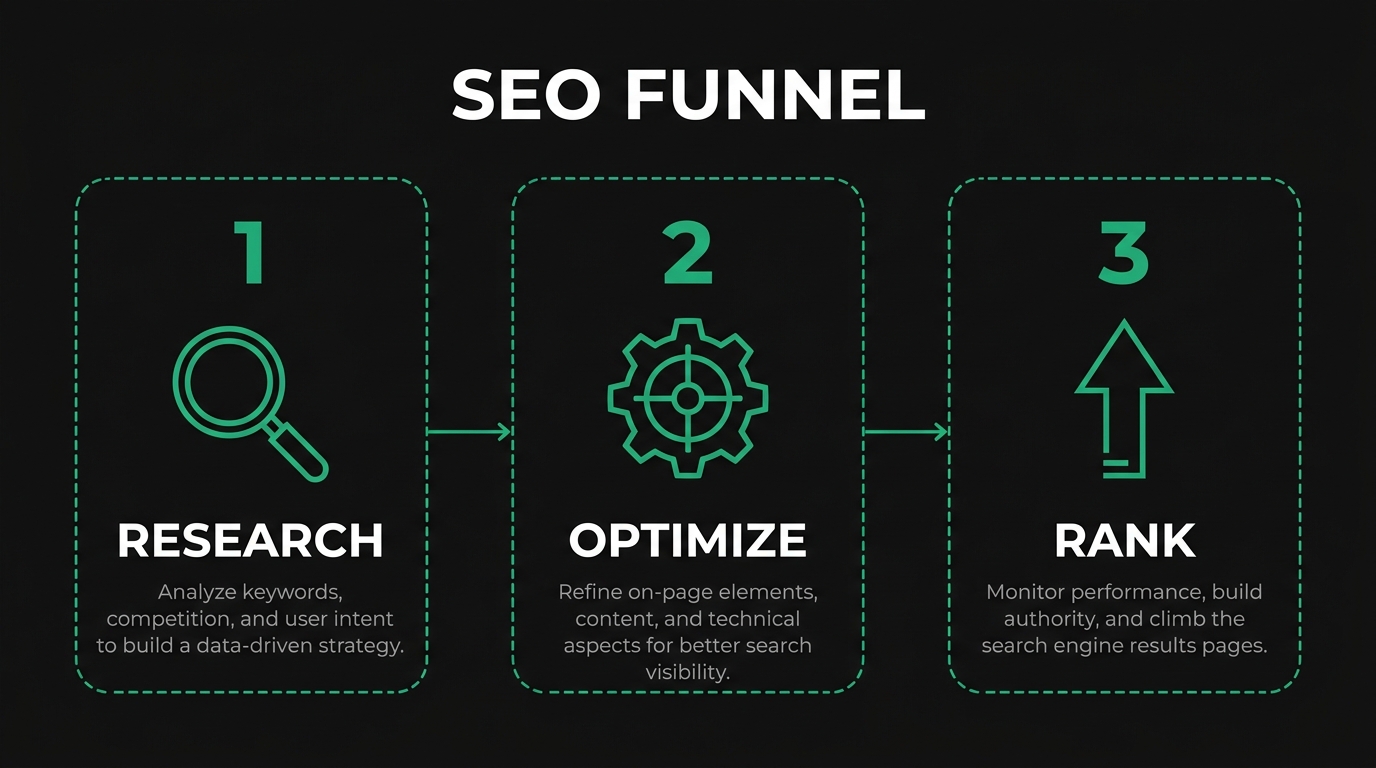
You research keywords for SEO-friendly manufacturing content by mining procurement queries, supplier RFQ language, and certification searches, then organizing them by funnel stage. The H3s below define procurement-intent research, identify the keyword types that matter most, map terms to the RFQ funnel, and list the tools that surface high-value industrial terms.
What Is Procurement-Intent Keyword Research?
Procurement-intent keyword research is the process of identifying the queries buyers and design engineers type when actively sourcing a supplier, vetting a process, or qualifying a material. These queries combine a process or part noun with a qualifier such as a tolerance, alloy, certification, lot size, or geography. Examples include "low-volume aluminum die casting AS9100 supplier" and "ISO 13485 PEEK injection molder." Layered procurement-intent terms outrank generic informational queries on RFQ value because they reach buyers at the moment of vendor selection, not browsing.
Which Keyword Types Matter Most for Manufacturers?
The keyword types that matter most for manufacturers are process keywords, material/grade keywords, certification keywords, application keywords, and geographic modifiers. Process terms ("Swiss machining," "EDM wire cut," "selective laser melting") capture method searches; material terms ("Inconel 625," "PEI Ultem 1010," "6061-T6 aluminum") capture spec searches; certification terms ("AS9100D," "ITAR registered," "NADCAP heat treat") capture compliance gates. The International Organization for Standardization notes ISO 9001 "is the world's most established quality framework, currently being used by over one million organizations in 189 countries which sets the standard not only for quality management systems, but management systems in general," which means certification queries have global reach. A foundational primer on basic seo strategies for manufacturers helps prioritize.
How Do You Map Keywords to the RFQ Funnel?
You map keywords to the RFQ funnel by tagging each term as awareness, consideration, or decision based on intent and then matching the tag to a page type. Awareness terms ("what is hot isostatic pressing") feed educational guides; consideration terms ("hot isostatic pressing vs vacuum heat treat") feed comparison and capability pages; decision terms ("HIP service AS9100 supplier") feed quote-driven landing pages. Mapping eliminates content gaps and ensures every funnel stage has a ranking asset. The result is a keyword-to-URL ledger that drives both new content and refresh decisions.
What Tools Help Identify High-Value Manufacturing Keywords?
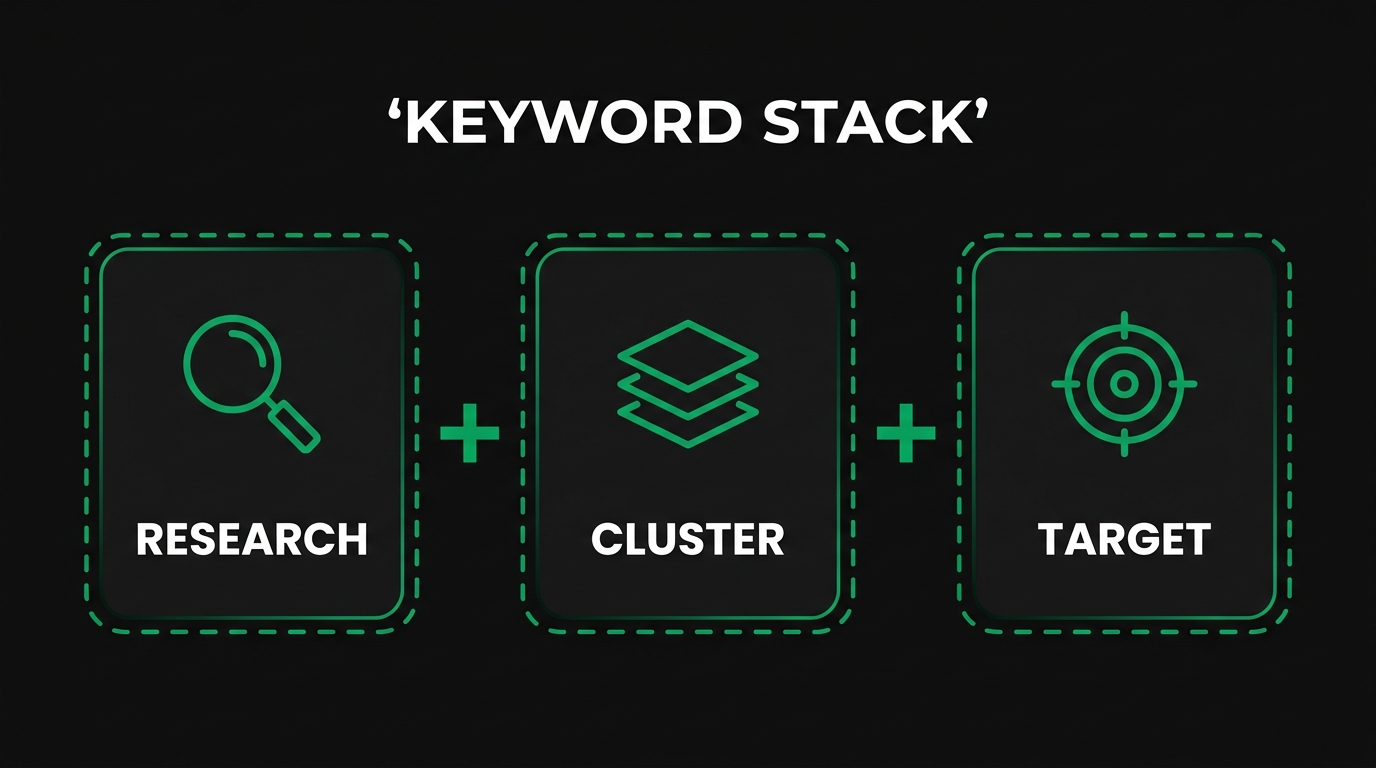
The tools that help identify high-value manufacturing keywords are Google Search Console, Google Keyword Planner, Bing Webmaster Tools, third-party platforms like Ahrefs and Semrush, and direct procurement portals such as Thomasnet. Search Console reveals queries already producing impressions, while sourcing portals surface category-level demand. Cross-reference each candidate term against industry standards bodies; for example, IPC standards "help ensure superior quality, reliability and consistency in electronics manufacturing, with over 300+ active multilingual industry standards covering nearly every stage of the electronics product development cycle. More than 3,000 electronic industry professionals participate in the development of these standards" (Global Electronics Association), which means IPC class designations carry meaningful query volume in PCB and assembly verticals.
Manufacturing SEO Agency builds procurement-intent keyword architectures around exactly these standards-driven queries, mapping process, material, and certification terms to every stage of the buyer journey.
The keyword set then drives the structural choices covered next.
How Should You Structure SEO-Friendly Content for an Industrial Audience?
You should structure SEO-friendly content for an industrial audience around discrete page types per process, material, certification, application, and comparison query. The H3s below cover the page types a manufacturer should publish, how to organize process and certification pages, ideal length, and effective use of tables and lists.
What Page Types Should a Manufacturer Publish?
The page types a manufacturer should publish are process pages, material pages, certification pages, capability pages, application pages, comparison pages, case studies, and FAQ pages. Each type targets a distinct query class. There are several core categories that map directly to procurement intent: process pages such as "Swiss machining services," material pages such as "PEEK injection molding," certification pages such as "AS9100D capabilities," application pages such as "aerospace bracket manufacturing," and comparison pages such as "die casting vs investment casting." This taxonomy prevents thin content and creates topical clusters Google rewards.
How Do You Organize Process, Material, and Certification Pages?
You organize process, material, and certification pages by creating one canonical hub per discipline and supporting it with deep child pages for variants. A "CNC machining" hub links to "5-axis CNC," "Swiss CNC," "lights-out CNC," and material-specific children like "titanium CNC machining." Google Search Central notes that "URL canonicalization is the process of selecting the representative canonical URL of a piece of content. A canonical URL is the URL of a page that Google chose as the most representative from a set of duplicate pages on your site." Use rel="canonical" tags so consolidated authority flows to the hub. A repeatable website structure for multiple manufacturing product lines keeps the hierarchy clean, and broader site architecture best practices for large manufacturing catalogs cover catalog-scale concerns.
What Length Should Manufacturing Content Be to Rank Well?
Manufacturing content should be the length required to fully answer the query and expose every spec a buyer needs, which usually lands between 1,200 and 2,500 words for capability and process pages and 800 to 1,500 for application or comparison pages. Length is not a ranking lever; sufficiency is. Cover tolerances, lot sizes, materials, certifications, lead times, and FAQs. Cut filler. Aim for the shortest page that still answers every legitimate sub-question a design engineer or sourcing manager would ask before issuing an RFQ.
How Do You Use Tables, Spec Charts, and Bullet Lists Effectively?
You use tables, spec charts, and bullet lists effectively by reserving tables for multi-attribute comparisons, charts for tolerance and capacity ranges, and bullets for discrete capability lists. Tables work for comparing materials across yield strength, density, machinability, and cost. Bullets suit certifications, equipment lists, and qualified industries. Avoid stuffing prose facts into tables; keep narrative claims and citations in sentences so crawlers and AI systems extract them cleanly. With structure settled, the next section covers writing tone and trust signals.
How Do You Write SEO-Friendly Content That Engineers and Buyers Trust?
You write SEO-friendly content that engineers and buyers trust by combining technical precision, demonstrated expertise, verifiable citations, and disciplined editing. The H3s below cover tone, expertise demonstration, citation discipline, and the writing mistakes that cost rankings.
What Tone and Reading Level Work Best for Technical Buyers?
The tone and reading level that work best for technical buyers are direct, declarative, and pitched at roughly a 10th to 12th-grade reading level using industry-standard terminology without dumbing down the engineering. Use specs, units, and standard nomenclature; avoid sales adjectives. The Flesch-Kincaid (FK) grade level "developed for the United States Armed Forces in the 1970s, has been used to judge the readability of many documents and is calculated based on the ratio of total words to total sentences and the ratio of total syllables to total words" (U.S. National Library of Medicine). Short sentences carrying technical density read fastest for engineers under deadline pressure.
How Do You Demonstrate Domain Expertise in Every Paragraph?
You demonstrate domain expertise in every paragraph by naming specific equipment, citing exact tolerances, referencing applicable standards by clause, and showing scenario-level judgment. Mention that you hold a Mori Seiki NTX 2500 with B-axis turning, that thread tolerances on the part hold 6H per ISO 965, and that the alloy was selected for galvanic compatibility with the assembly. A deep content marketing guide for manufacturers walks through how to surface that depth across an entire site. Generic claims like "high quality" carry zero ranking or trust value; specific, falsifiable claims do.
How Should You Cite Standards, Certifications, and Test Data?
You should cite standards, certifications, and test data by naming the issuing body, the specification number, the revision, and the applicable clause in prose, with a link to the official source where possible. Google Search Central added experience to its quality framework, noting that "E-A-T gets an extra E for Experience" and that the quality rater guidelines now consider "the extent to which the content creator has the necessary first-hand or life experience for the topic. Trust is the most important member of the E-E-A-T family." Cite ASTM A370 for steel mechanicals, AS9100D for aerospace QMS, and ISO 13485:2016 for medical devices, by exact designation. Never cite by paraphrase.
What Common Writing Mistakes Hurt Manufacturing SEO?
The common writing mistakes that hurt manufacturing SEO are vague capability claims, missing specifications, keyword stuffing, duplicated boilerplate across capability pages, weak internal linking, and unverified certification claims. Avoid generic adjectives ("world-class," "cutting-edge") with no spec backing; avoid copy-paste process descriptions across regions; avoid orphan pages with no inbound internal links. Each error sends a low-quality signal to crawlers and to engineers vetting the supplier. Strong writing sets up the technical SEO layer covered next.
What Technical SEO Foundations Support SEO-Friendly Content?
The technical SEO foundations that support SEO-friendly content are reliable crawling and indexing, fast Core Web Vitals, mobile-first rendering, structured data, and well-maintained sitemaps and robots.txt. The H3s below cover each foundation in the manufacturing context.
How Do Crawling and Indexing Affect Manufacturing Pages?
Crawling and indexing affect manufacturing pages by determining whether your capability, process, and certification URLs ever appear in search results. Google Search Central explains that "Google processes JavaScript web apps in three main phases: crawling, rendering, and indexing. Googlebot queues pages for both crawling and rendering. It is not immediately obvious when a page is waiting for crawling and when it is waiting for rendering." Heavy JavaScript-rendered catalogs commonly stall in the rendering queue, leaving thousands of part pages unindexed for weeks. A primer on how search engines rank sites and the basics of technical seo for engineers explain the pipeline; documented case studies: technical seo for heavy industry show recovery patterns. For a structured assessment, a manufacturing technical seo audit maps every blocker.
What Page Speed and Core Web Vitals Targets Should You Hit?
The page speed and Core Web Vitals targets you should hit are an LCP at or under 2.5 seconds, an INP at or under 200 milliseconds, and a CLS at or under 0.1, measured at the 75th percentile of real users. Schema.org defines "a BreadcrumbList is an ItemList consisting of a chain of linked Web pages, typically described using at least their URL and their name, and typically ending with the current page. The 'position' property is used to reconstruct the order of the items in a BreadcrumbList," which complements speed by giving SERPs richer context. Compress hero imagery, defer non-critical scripts, and host product photos through a CDN. A field guide on how to improve core web vitals industrial sites covers the engineering tradeoffs.
How Should Mobile Experience Be Handled for Industrial Buyers?
Mobile experience should be handled for industrial buyers by treating the mobile rendering as the primary rendering, not a downsized desktop fallback. Google for Developers documents that "PageSpeed Insights (PSI) reports on the user experience of a page on both mobile and desktop devices, and provides suggestions on how that page may be improved" and that real-user data "is powered by the Chrome User Experience Report (CrUX) over the previous 28-day collection period." Spec sheets, FAQ tables, and RFQ forms must function with one thumb on a 5.5-inch screen on a shop floor. The downstream cost of failing this is documented in poor mobile experience.
What Schema Markup Helps Manufacturing Content Rank?
The schema markup that helps manufacturing content rank includes Organization, Product, BreadcrumbList, FAQPage, HowTo, and Service. Product schema exposes part numbers, materials, and certifications; FAQPage surfaces buyer questions in SERPs; BreadcrumbList reinforces taxonomy. Implement JSON-LD in the page head and validate with Google's Rich Results Test before deploying at catalog scale. Skip schema only on low-priority pages; the marginal cost of adding it is near zero. A practical primer on basic seo for industrial products walks through schema implementation order.
How Do Sitemaps and Robots.txt Support Large Catalogs?
Sitemaps and robots.txt support large catalogs by telling Google which URLs to prioritize and which crawl paths to ignore. Google Search Central notes that "you can specify the location of a sitemap in your robots.txt file" and that "the URL doesn't have to be on the same host as the robots.txt file. You can specify multiple sitemap fields." Split catalogs above 50,000 URLs into multiple sitemaps with a sitemap index. The submission walkthrough at how to submit sitemap to google search console and the rules at robots.txt best practices industrial sites cover the operational details. Solid foundations let you measure outcomes, covered next.
How Do You Measure Whether Your SEO-Friendly Content Is Working?
You measure whether your SEO-friendly content is working by tracking impressions, clicks, average position, indexed pages, and downstream RFQ and pipeline value. The H3s below cover the KPIs that matter, how to attribute rankings to revenue, and when to refresh existing pages.
Which KPIs Matter Most for Industrial Content Performance?
The KPIs that matter most for industrial content performance are organic impressions on procurement-intent queries, click-through rate at the page level, average position for primary capability terms, indexed page count, qualified RFQ submissions, and pipeline value from organic. Vanity metrics like total sessions miss the point; a page that ranks #3 for "AS9100 5-axis CNC supplier" with a 12% CTR matters more than a blog post drawing 10× the traffic from informational queries. Focus on RFQ-correlated terms.
How Do You Tie Rankings to RFQs and Pipeline Value?
You tie rankings to RFQs and pipeline value by instrumenting the RFQ form, tagging organic submissions in the CRM, and reconciling closed-won revenue against the landing-page URL. Google Search Console defines the upstream metrics: "Impressions: How many times your site appeared in Search results. CTR (click-through rate): The click count divided by the impression count. Average position: The average position of the topmost result from your site." Pipe Search Console data into a BI tool, join it on landing-page URL with CRM RFQ records, then surface revenue-per-ranking-page. That single view replaces the entire SEO ROI debate.
Manufacturing SEO Agency builds revenue-tied reporting on this exact model, joining ranking data to CRM-tracked RFQs and closed revenue rather than reporting keyword positions in isolation.
When Should You Refresh or Consolidate Existing Content?
You should refresh or consolidate existing content when a page's impressions decline two consecutive quarters, when its primary keyword slips past position 10, when it cannibalizes a stronger sibling page, or when certifications, equipment, or material grades on the page have changed. Refresh by updating specs, citations, FAQs, and internal links; consolidate by merging thin overlapping pages and 301-redirecting losers to the canonical winner. Schedule a quarterly content audit. Measurement closes the loop and feeds the partnership decisions covered next.
How Should You Approach SEO-Friendly Content With a Manufacturing SEO Partner?
You should approach SEO-friendly content with a manufacturing SEO partner by selecting a team that understands procurement queries, certification language, and the RFQ funnel as deeply as the on-page mechanics. The H3s below cover what an industrial-only agency accelerates and the takeaways to act on this quarter.
Can a Manufacturing-Focused SEO Agency Accelerate Your Content Program?
Yes, a manufacturing-focused SEO agency can accelerate your content program by importing keyword libraries, certification taxonomies, and procurement-funnel templates that an in-house team would take 18 to 24 months to build. Manufacturing SEO Agency works exclusively with B2B manufacturers across CNC machining, injection molding, metal fabrication, additive, aerospace, automotive, electronics, and regulated industries. The agency builds procurement-intent keyword architectures, deploys topical authority hubs, and ties rankings to RFQs and closed revenue. For category-specific architecture decisions, the contract manufacturing vs custom manufacturing seo breakdown clarifies the right model for your operation. Manufacturing SEO Agency also runs PR-grade editorial link building and AI search visibility engineering tied to manufacturing buyer journeys.
What Are the Key Takeaways About SEO-Friendly Content for Manufacturers?
The key takeaways about SEO-friendly content for manufacturers are five operational priorities. First, write to procurement intent using exact process names, alloy designations, and certification clauses. Second, optimize the on-page core: title tags, meta descriptions, heading hierarchy, internal anchors, and image metadata. Third, structure the site by page type (process, material, certification, application, comparison) with canonical hubs. Fourth, hit Core Web Vitals targets, validate schema, and keep sitemaps and robots.txt clean. Fifth, measure with Search Console and CRM data so every ranking ties back to RFQs. When that program needs an industrial-only specialist, manufacturing seo agency ships the playbook.