Search engines rank sites by running every URL through three sequential stages, crawling, indexing, and serving, then scoring the indexed page against hundreds of relevance, authority, and experience signals at query time. The output is an ordered list of results designed to answer a user's intent.
This guide covers how a search engine actually works, how crawlers find and fetch URLs, how the index decides what gets stored, the ranking factors and algorithms that order results, the role of structured data, the path to top visibility, and what manufacturers should do next.
We start with the search engine itself, defining the technology, the three core stages, the major engines that dominate query share, and the milestones that shaped modern retrieval.
We then walk through crawling, covering URL discovery, Googlebot's behavior, robots.txt control, crawl budget for large sites, and the issues that block bots from accessing pages.
Indexing is next, including how content is stored, how JavaScript and rendering are handled, the signals that determine inclusion or exclusion, the role of canonical tags, and why some crawled pages never reach the index.
Ranking factors follow, with relevance, backlinks and authority, user experience signals, content quality, and freshness explained as the levers that decide where a page sits in the results.
We then unpack the algorithms behind the score, covering RankBrain and BERT, the helpful content system, Core Web Vitals, personalization and location, and how often the systems are updated.
Structured data and schema get their own section, covering definitions, the most important schema types, rich result generation, and the link between markup and entity recognition.
Visibility is the payoff, so we examine what defines high SERP presence, featured snippets and SERP features, E-E-A-T as a long-term authority signal, and how AI-generated experiences are reshaping click distribution.
We close with how manufacturers should approach crawling, indexing, and ranking through a focused technical SEO audit, plus a takeaways recap.
What Is a Search Engine and How Does It Work?
A search engine is a software system that crawls the web, indexes content, and serves ranked results against user queries. It works by running every URL through discovery, storage, and retrieval so the most relevant pages surface first. The sub-sections below define the system, its three stages, the leading engines, and how the technology evolved.
What Defines a Search Engine in Modern Information Retrieval?
A search engine in modern information retrieval is an automated system that discovers documents, builds a searchable index, and ranks them against a query using relevance, authority, and intent signals. The defining architecture moves from retrieval to ranking, returning pages that best satisfy the searcher's goal. Modern engines treat pages as entities with attributes and relationships, not just bags of words, which is why a query can match a page that never contains the exact search terms.
What Are the Three Core Stages of Search Engine Operation?
The three core stages of search engine operation are crawling, indexing, and serving search results. Crawlers first download text, images, and videos from discovered URLs. Indexing then analyzes and stores that content in a large searchable database. Serving delivers ranked results to the user at query time.
Which Major Search Engines Dominate the Global Market?
The major search engines that dominate the global market are Google, Bing, Yahoo, and Yandex, with Google holding the overwhelming majority of query share worldwide. Share distribution matters for ranking strategy because tactics must prioritize the engine that delivers the most industrial-buyer traffic.
How Has Search Engine Technology Evolved Over Time?
Search engine technology has evolved over time from simple keyword matching to AI-driven understanding of concepts, intent, and entities. Early engines ranked by word frequency. Later systems added link-based authority, then machine learning, then natural language models that interpret meaning across languages and modalities.
The next question is how the first stage, crawling, actually works.
How Do Search Engines Crawl Websites?
Search engines crawl websites by sending automated bots to fetch URLs, parse the response, and queue new links for the next pass. The sub-sections below cover URL discovery, Googlebot's behavior, robots.txt control, crawl budget for large sites, and the issues that block crawlers.
What Is Web Crawling and How Do Crawlers Discover URLs?
Web crawling is the automated process where a search engine bot fetches a URL, downloads its content, and extracts further URLs to add to a discovery queue. Crawlers find URLs through known sitemaps, internal links from indexed pages, external backlinks, and direct submissions. For industrial sites, a clean XML sitemap accelerates discovery; the how to submit sitemap to google search console guide walks through the exact steps. Mastering the basics of seo friendly content helps discovery because crawlable content must be structured, linked, and renderable.
How Do Crawlers Like Googlebot Move Across the Web?
Crawlers like Googlebot move across the web by following hyperlinks, fetching each new URL, parsing HTML, and queuing additional links, all governed by per-host rate limits. Googlebot identifies with a user-agent string, respects host directives, and prioritizes URLs by perceived importance, freshness signals, and historical change rates.
What Role Does Robots.txt Play in Crawl Control?
Robots.txt plays the role of a per-host instruction file that tells crawlers which URL paths they can or cannot fetch, though it does not remove a page from the index on its own. The file lives at the site root and supports allow, disallow, sitemap, and user-agent directives. For vendor-specific behavior and industrial use cases, see robots.txt best practices industrial sites.
How Does Crawl Budget Affect Large Websites?
Crawl budget affects large websites by capping how many URLs Googlebot will fetch in a given window, which shapes how quickly new or updated pages enter the index. Industrial catalogs with auto-generated filter URLs frequently cross the threshold where budget management becomes essential.
What Common Issues Block Crawlers From Accessing Pages?
The common issues that block crawlers from accessing pages include robots.txt disallow rules, server errors (5xx), broken redirects, slow response times, JavaScript-only navigation, login walls, and aggressive bot-detection firewalls. Misconfigured CDNs that challenge Googlebot with CAPTCHAs are a frequent silent killer for industrial sites behind enterprise security layers.
Once pages are successfully fetched, the next question is how indexing decides what to store.
How Do Search Engines Index Web Pages?
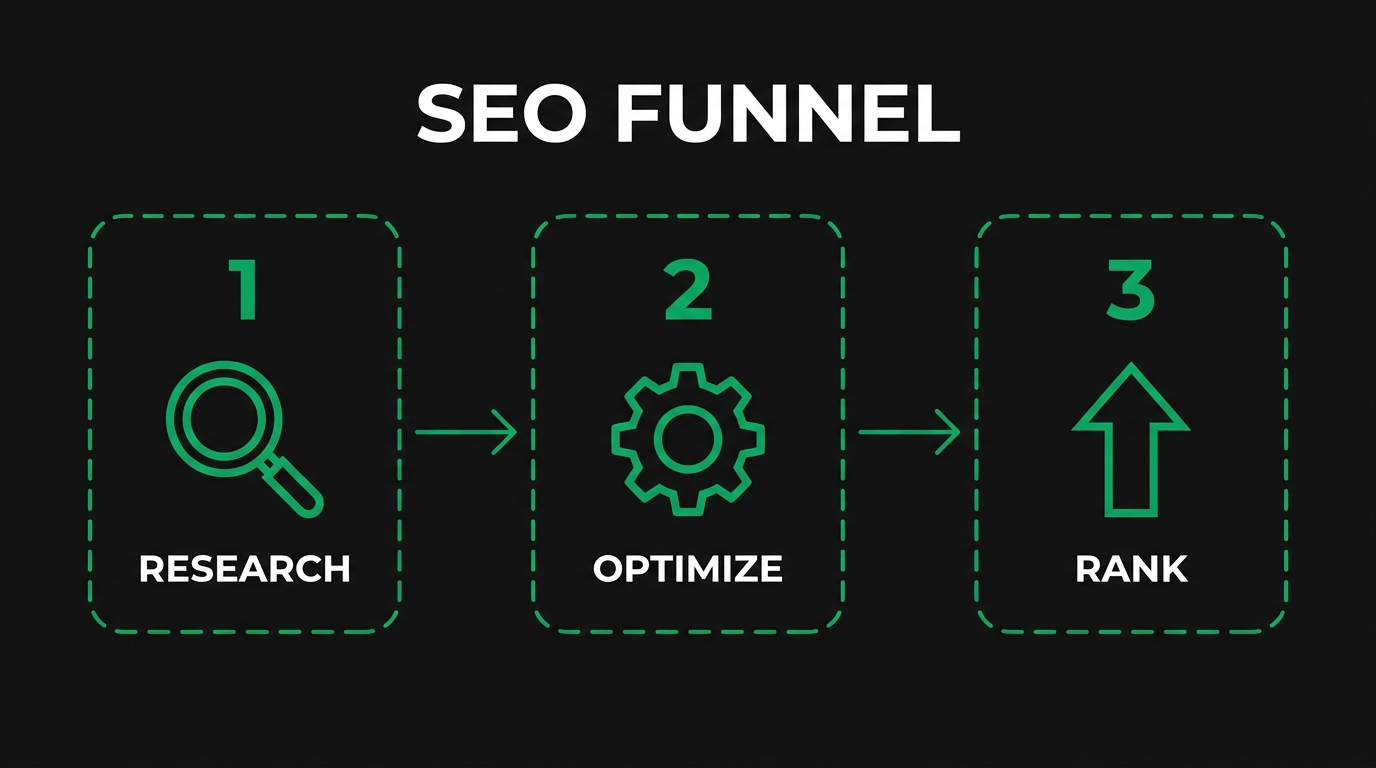
Search engines index web pages by parsing the crawled response, extracting text, media, and metadata, and storing the result in a queryable database. Indexing is gated; not every crawled URL becomes an indexed entry. The sub-sections below cover storage, JavaScript rendering, inclusion signals, canonical tags, and why some crawled pages never reach the index.
What Is Indexing and How Is Content Stored?
Indexing is the stage where the engine analyzes a crawled page and writes its content to a searchable database. Stored content is broken into tokens, mapped to entities, and associated with metadata such as language, canonical URL, lastmod date, and structured data fingerprints. The index itself is sharded across data centers, and the same URL can occupy multiple index tiers based on perceived freshness and quality.
How Does Google Process JavaScript and Rendered Content?
Google processes JavaScript and rendered content in a deferred two-pass model: the initial HTML is crawled first, then the page is queued for rendering using a headless Chromium instance, after which Google indexes the rendered output. Render-stage delays mean JavaScript-injected facts like canonical tags or noindex directives can be applied late or missed entirely.
Which Signals Determine Whether a Page Is Indexed or Excluded?
The signals that determine whether a page is indexed or excluded include the presence of a noindex directive, robots.txt blocks, canonical consolidation to another URL, duplicate-content classification, thin-content scoring, low quality signals from the helpful content system, and slow or error responses during fetch. Engines also weigh internal link signals; a page no other indexed page links to is far more likely to be excluded as low-priority.
How Do Canonical Tags Influence Indexing Decisions?
Canonical tags influence indexing decisions by declaring which URL in a duplicate or near-duplicate set should represent the cluster in the index. The engine treats a self-referencing rel=canonical as a strong consolidation hint and merges link signals from the duplicates onto the chosen canonical.
Why Are Some Pages Crawled but Not Indexed?
Some pages are crawled but not indexed because the engine concluded the page lacks unique value, duplicates other indexed content, fails quality thresholds, or contradicts a higher-priority signal such as a canonical declaration elsewhere on the site. Google Search Console flags these in the "Crawled, currently not indexed" report. Common industrial triggers include thin product pages with only specs and no descriptive copy, duplicate landing pages across regions, and orphan pages with no inbound internal links. Building each page on the basics of seo friendly content framework, with original copy, useful media, and a clear topical anchor, is the most consistent way to move pages from crawled-only to indexed.
With indexing gated and storage understood, the next layer is how the engine ranks the stored candidates at query time.
What Are the Main Ranking Factors Search Engines Use?
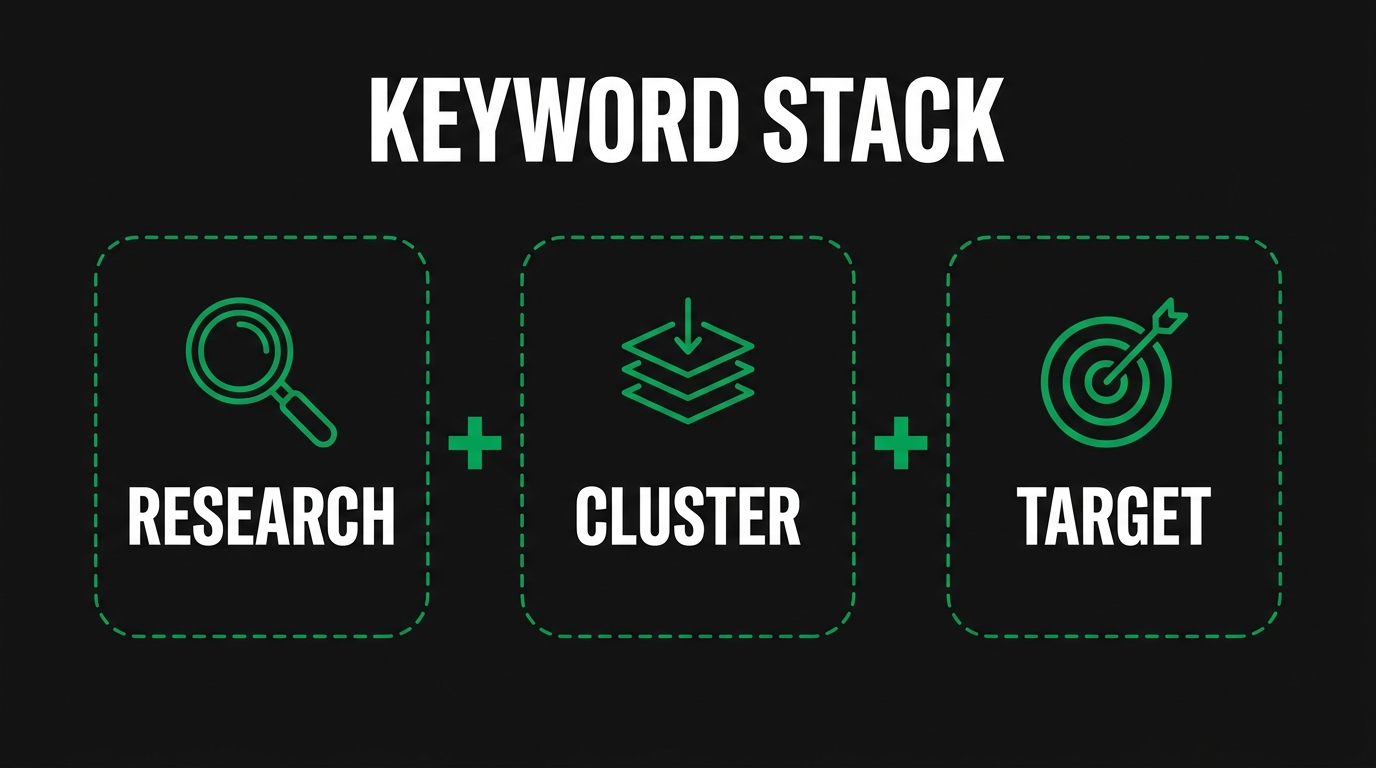
The main ranking factors search engines use are relevance to the query, authority signals from links and brand mentions, on-page user experience, content quality, and freshness. Each factor is itself a stack of sub-signals scored at query time. The sub-sections below explain how each one moves a page up or down the SERP.
How Does Relevance Match a Query to Content?
Relevance matches a query to content by aligning the query's intent and entities with the page's terms, structure, and semantic context. Modern engines interpret meaning, so a single deep H3 can rank for a long-tail query even when the broader page targets a different head term. Pages should answer the query at the heading level and repeat the intent's noun phrase in the opening sentence.
How Do Backlinks and Authority Signals Affect Ranking?
Backlinks and authority signals affect ranking by serving as third-party endorsements that vouch for a page's relevance and trustworthiness. Modern variants weight links by the linking site's relevance to the topic, the anchor text, the surrounding context, and the link's position on the page. A single editorial link from a trade publication outweighs dozens of generic directory citations.
How Do User Experience Signals Shape Search Position?
User experience signals shape search position by feeding page experience inputs into the ranking model alongside relevance and authority. Core Web Vitals, mobile-friendliness, HTTPS, and intrusive interstitial penalties all contribute. Pages that load slowly, shift unexpectedly, or block content with full-screen pop-ups receive a lower experience score, which can be the deciding factor between two otherwise equal candidates.
How Does Content Quality Affect Where a Page Ranks?
Content quality affects where a page ranks because Google's reviews, helpful content, and core systems all evaluate originality, depth, and demonstrated expertise. High-quality industrial content cites real measurements, references applicable standards (ASTM, ISO, ASME), shows process photography, and names the engineer or technician behind the post.
How Do Freshness and Update Frequency Influence Visibility?
Freshness and update frequency influence visibility on time-sensitive queries, where Google's query-deserves-freshness systems show fresher content when expected. Static evergreen guides keep their position for years, while pages tied to rapidly changing topics lose ground if they are not refreshed. Update cadence works only when the change is substantive; cosmetic timestamp changes do not move the score.
Relevance, authority, experience, quality, and freshness combine through algorithms that score each candidate at query time.
How Do Search Algorithms Process and Rank Results?
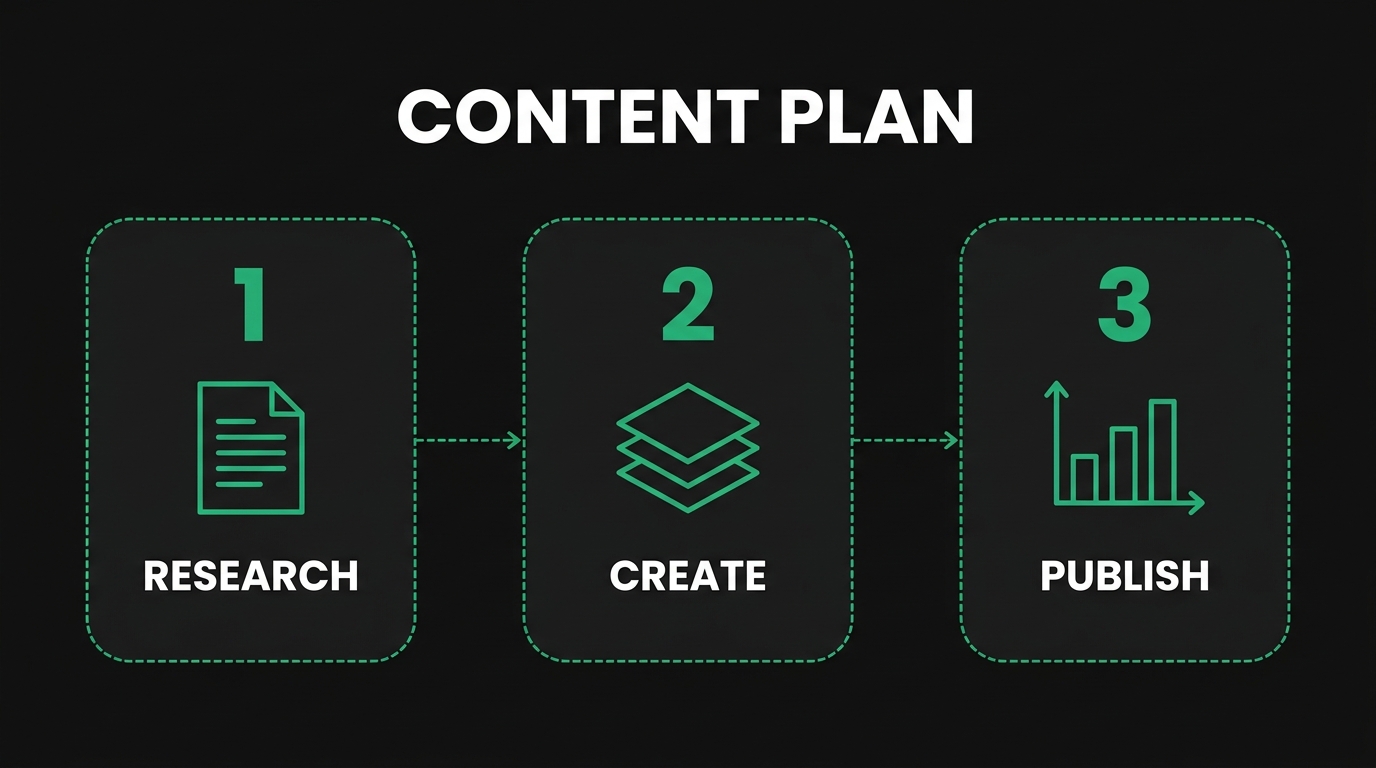
Search algorithms process and rank results by combining specialized AI and rules-based systems that score candidate pages on relevance, quality, experience, and context. The sub-sections below cover RankBrain and BERT, the helpful content system, Core Web Vitals, personalization and location, and how often these algorithms get updated.
How Do Core Algorithms Like RankBrain and BERT Function?
Core algorithms like RankBrain and BERT function by interpreting query intent and matching it to page content, rather than relying on exact-keyword overlap. BERT considers the full context of a word by looking at the words before and after it, and MUM extends the approach across 75 languages for specific retrieval tasks.
How Does the Helpful Content System Evaluate Pages?
The helpful content system evaluates pages by scoring whether content was created primarily for people with first-hand expertise, or primarily to game search rankings. The classifier sits alongside neural matching and became part of core ranking systems, so pages flagged as unhelpful drag down the entire site's score.
How Do Core Web Vitals Factor Into Ranking Decisions?
Core Web Vitals factor into ranking decisions as part of Google's page experience signal stack, where loading, interactivity, and visual stability each have published thresholds. Largest Contentful Paint should occur within 2.5 seconds, Interaction to Next Paint should be 200 milliseconds or less, and Cumulative Layout Shift should stay at 0.1 or less, all measured at the 75th percentile of real-user data. For industrial sites with heavy spec sheets, optimizing image delivery and deferring non-critical scripts is the fastest path to the threshold. The how to improve core web vitals industrial sites walkthrough covers the specific tactics.
How Do Personalization and Location Adjust Search Results?
Personalization and location adjust search results by reordering candidates based on the user's geographic location, language, device, and, for signed-in users, some prior interaction signals. Local intent queries trigger the local pack, gated by Google Business Profile data, proximity, and prominence.
How Frequently Are Search Algorithms Updated?
Search algorithms are updated continuously, with thousands of small adjustments per year and several broad core updates announced publicly. Core updates typically run for two to three weeks during rollout, during which rankings can fluctuate before settling. Spam updates, helpful content refreshes, and reviews system updates land on their own cadences.
Algorithms score the ranked output, but structured data is what lets the engine understand exactly what a page represents.
How Do Search Engines Handle Structured Data and Schema?
Search engines handle structured data and schema by parsing standardized markup on a page, mapping the declared entities and attributes into the engine's knowledge layer, and using the result to enable rich result display and entity recognition. The sub-sections below cover what structured data is, the most important schema types, how rich results are generated, and the link to entity recognition.
What Is Structured Data and Why Do Search Engines Use It?
Structured data is a standardized format for declaring page entities, attributes, and relationships in machine-readable form, and search engines use it to disambiguate page content and qualify pages for enhanced result display. Google supports JSON-LD (recommended), Microdata, and RDFa, and the W3C published JSON-LD 1.1 as a stable Recommendation in July 2020. AI Overviews now leverage structured data alongside other signals, so well-marked pages are easier to surface as supporting citations. For deeper context on industrial use cases, why use schema on industrial e-commerce sites walks through the buyer-facing benefits.
Which Schema Types Are Most Important for Ranking?
The most important schema types for ranking on a typical commercial site are Organization, Product, Article, FAQPage, BreadcrumbList, and Review, with industry-specific types layered on top for manufacturing, e-commerce, or local listings. Adding Person schema with sameAs links to verified author profiles strengthens trust signals on cornerstone content. For implementation tooling, the best schema markup plugins for industrial sites comparison covers vendor options and tradeoffs.
How Does Schema Markup Generate Rich Results?
Schema markup generates rich results by providing the structured fields the search engine needs to render enhanced SERP elements such as star-rating snippets, FAQ accordions, breadcrumb trails, product price tiles, and how-to step lists. The page must be crawlable, indexable, and pass schema validation, and the content of the markup must match the visible page. Eligibility never guarantees display, since Google chooses rich results based on query intent, device, and SERP layout. The Rich Results Test in Search Console shows which features a given URL is currently eligible for.
How Does Structured Data Support Entity Recognition?
Structured data supports entity recognition by giving the engine explicit identifiers such as schema.org @id and sameAs URLs that link a page's mentioned entities to known graph nodes. Without markup, the engine infers entities from natural language; with markup, it can directly resolve a page's subject to a stable knowledge-graph node.
Markup turns unknown strings into known entities, and entity recognition is the bridge from indexation to visibility.
How Do Search Engines Achieve Top Search Visibility?
Search engines achieve top search visibility through a combination of strong relevance match, accumulated authority, technical compliance, and the right SERP feature qualifications. The sub-sections below cover what defines high SERP visibility, how featured snippets and SERP features shape clicks, how E-E-A-T builds long-term authority, and how AI-generated experiences are changing the visibility map.
What Defines High Search Visibility in the SERP?
High search visibility in the SERP is defined by appearing for a meaningful share of the queries in a target topic cluster, in positions and SERP features that capture clicks. Visibility scores typically combine ranking position, query volume, click-through rate, and SERP feature ownership such as featured snippets, knowledge panel, image pack, and AI Overview citation. Visibility is volume-weighted, not rank-weighted.
How Do Featured Snippets and SERP Features Affect Visibility?
Featured snippets and SERP features affect visibility by shifting clicks away from the classic ten blue links and toward enhanced result formats displayed on the SERP itself. Owning the featured snippet, image pack, or People Also Ask answer can outperform the #1 organic position on many queries.
How Do E-E-A-T Signals Build Long-Term Authority?
E-E-A-T signals build long-term authority by demonstrating experience, expertise, authoritativeness, and trustworthiness across the site, not just on a single page. Trust is built through verifiable author bylines, transparent business information, secure HTTPS delivery, citations to recognized standards bodies, and a track record of accurate content.
How Do AI-Generated Search Experiences Change Visibility?
AI-generated search experiences change visibility by inserting summary panels above or alongside classic results, which compresses the click distribution and elevates the supporting links Google chooses to cite. AI Overviews and AI Mode may use a query fan-out technique, issuing multiple related searches across subtopics to build a response, and pages that are clearly structured, well-cited, and entity-rich tend to be selected as the supporting links.
The next section translates these visibility principles into concrete next steps for a manufacturing site.
How Should Manufacturers Approach Crawling, Indexing, and Ranking With a Manufacturing SEO Audit?
Manufacturers should approach crawling, indexing, and ranking through a focused technical SEO audit that surfaces every block between Googlebot and the buyer-intent pages, then closes those gaps in priority order. The sub-sections below cover how a manufacturing technical SEO audit improves rankings on industrial sites, and a recap of the article's most actionable takeaways.
Can a Manufacturing Technical SEO Audit Improve How Search Engines Rank Industrial Sites?
Yes, a manufacturing technical SEO audit can improve how search engines rank industrial sites by systematically uncovering crawl, index, and ranking gaps that generic audits miss. Industrial catalogs typically have deep filter trees, gated PDFs, slow CAD viewers, and inconsistent canonical strategy across SKU variants, all of which suppress indexing and dilute authority. Manufacturing SEO Agency runs a manufacturing technical seo audit that maps server-log Googlebot behavior, crawl-budget allocation, render-tier coverage, canonical consolidation, and Core Web Vitals against the procurement-intent query map. Manufacturing SEO Agency specializes in B2B manufacturers in CNC machining, injection molding, metal fabrication, aerospace, automotive, medical, and other regulated industries.
What Are the Key Takeaways About How Search Engines Rank Sites We Covered?
The key takeaways about how search engines rank sites are that ranking is the third stage of a three-stage pipeline (crawl, index, serve), gated at every step by signals the site owner controls. Crawling is governed by robots.txt, internal linking, and crawl budget; indexing is gated by canonical declarations, noindex directives, and quality signals; ranking layers relevance, authority, page experience, content quality, and freshness on top of the indexed candidate set. AI systems like RankBrain, BERT, and the helpful content classifier interpret intent, while structured data feeds entity recognition and rich result eligibility. For manufacturers ready to translate this into ranked procurement-intent traffic, working with a manufacturing-focused seo agency that audits the technical foundation, builds topical authority, and earns procurement-grade backlinks is the most direct path from theory to revenue.