The basics of SEO for raw material suppliers are the technical, on-page, content, link, and measurement practices that make a supplier's catalog, datasheets, and certifications discoverable to procurement managers and design engineers in Google and AI search. SEO for raw material suppliers maps every material grade, specification, and compliance signal to the procurement-intent queries buyers actually type.
This guide covers the strategic case for SEO, foundational technical and on-page elements, procurement-intent keyword research, content and topical authority, link building, AI search optimization, and performance measurement.
The strategic case explains why procurement buyers research suppliers online before submitting an RFQ, and what business outcomes ranking for material specifications produces.
Foundational elements include technical SEO factors, on-page structure for material specification pages, site architecture for catalogs, and mobile usability for procurement teams.
Keyword research focuses on procurement-intent queries built around material grades, alloys, polymers, certifications, and the stages of the procurement journey from initial research to RFQ.
Content strategy and topical authority cover the page types suppliers should build, datasheet structure, application pages, publication cadence, and the topic mapping that signals deep coverage to Google.
Authoritative backlinks come from trade publications, industry associations, and digital PR, with strict avoidance of manipulative tactics.
AI search optimization covers how LLMs decide which suppliers to cite, the schema and entity signals that improve citation likelihood, and how to track visibility inside AI-generated answers.
Performance measurement ties organic rankings to RFQs, pipeline revenue, and audit cadence.
What Is SEO for Raw Material Suppliers and Why Does It Matter?
SEO for raw material suppliers structures catalogs, datasheets, and certification pages so procurement managers and engineers find them on Google and AI search. The sections below cover how this work differs from general manufacturing SEO, why buyers search online, and what outcomes effective SEO produces.
How Does SEO Differ for Raw Material Suppliers Compared to General B2B Manufacturers?
SEO for raw material suppliers differs from general B2B manufacturer SEO in three ways: the queries are specification-led, the catalogs are deeper, and the buying signals come from compliance and grade data rather than brand or finished-product features. Raw material catalogs may contain thousands of grade variants, alloys, and form factors, each demanding its own indexable page.
This is the same context that what is industrial seo frames at a broader level.
Why Are Procurement Managers and Engineers Searching for Raw Material Suppliers Online?
Procurement managers and engineers are searching for raw material suppliers online because most of their evaluation work happens before they ever contact a supplier.
Buyers compare grades, certifications, lead times, and minimum order quantities across supplier sites in parallel. A grade page that surfaces composition, mechanical properties, and certifications wins the click and the shortlist.
What Business Outcomes Can Raw Material Suppliers Expect from Effective SEO?
The business outcomes raw material suppliers can expect from effective SEO include higher RFQ volume, better-qualified inbound inquiries, shorter sales cycles, and stronger pricing power on technical specifications.
What Are the Foundational Elements of SEO for a Raw Material Supplier Website?
The foundational elements of SEO for a raw material supplier website are crawlability, on-page specification structure, scalable site architecture, and mobile usability. Each one carries weight because procurement buyers evaluate suppliers against the depth and clarity of technical content surfaced in search.
Which Technical SEO Factors Most Affect a Raw Material Supplier Site?
The technical SEO factors that most affect a raw material supplier site are crawl access, indexable content, descriptive titles, and page-load speed.
For catalogs with thousands of grade pages, predictable URL patterns and clean canonical signals decide whether each material grade gets indexed at all. Server response time, image optimization, and JavaScript rendering close the loop, since procurement teams abandon slow sites mid-evaluation. These same fundamentals back seo strategies for manufacturing specifications.
How Should On-Page SEO Be Structured for Material Specification Pages?
On-page SEO for material specification pages should be structured with one grade per URL, a descriptive H1 that includes the grade designation, and a body that surfaces composition, mechanical properties, certifications, and applications above the fold.
Use tables for comparable property values across grades. Include downloadable datasheets, but never make the PDF the only place where the spec lives, since Google indexes HTML far more reliably than embedded documents.
What Role Does Site Architecture Play in Ranking Material Catalogs?
Site architecture plays a decisive role in ranking material catalogs because it controls crawl budget, internal authority flow, and topical clustering. A flat hierarchy keeps every grade page within three clicks of the homepage, which improves discovery and indexing.
Group materials by family (alloys, polymers, composites), then by grade, then by form factor. Faceted filters should canonicalize to the parent category to prevent duplicate-URL bloat. Sitemaps should list every indexable grade page.
Why Is Mobile Usability Critical for Procurement Buyers Visiting Supplier Sites?
Mobile usability is critical for procurement buyers visiting supplier sites because field engineers, plant managers, and traveling buyers compare specifications on phones between meetings.
Tap targets must accommodate gloved hands. Datasheet PDFs must render natively in mobile browsers. Forms must accept paste from procurement tools. A mobile-hostile catalog quietly disqualifies the supplier before a sales rep ever sees an inquiry.
How Do Raw Material Suppliers Conduct Effective Keyword Research?
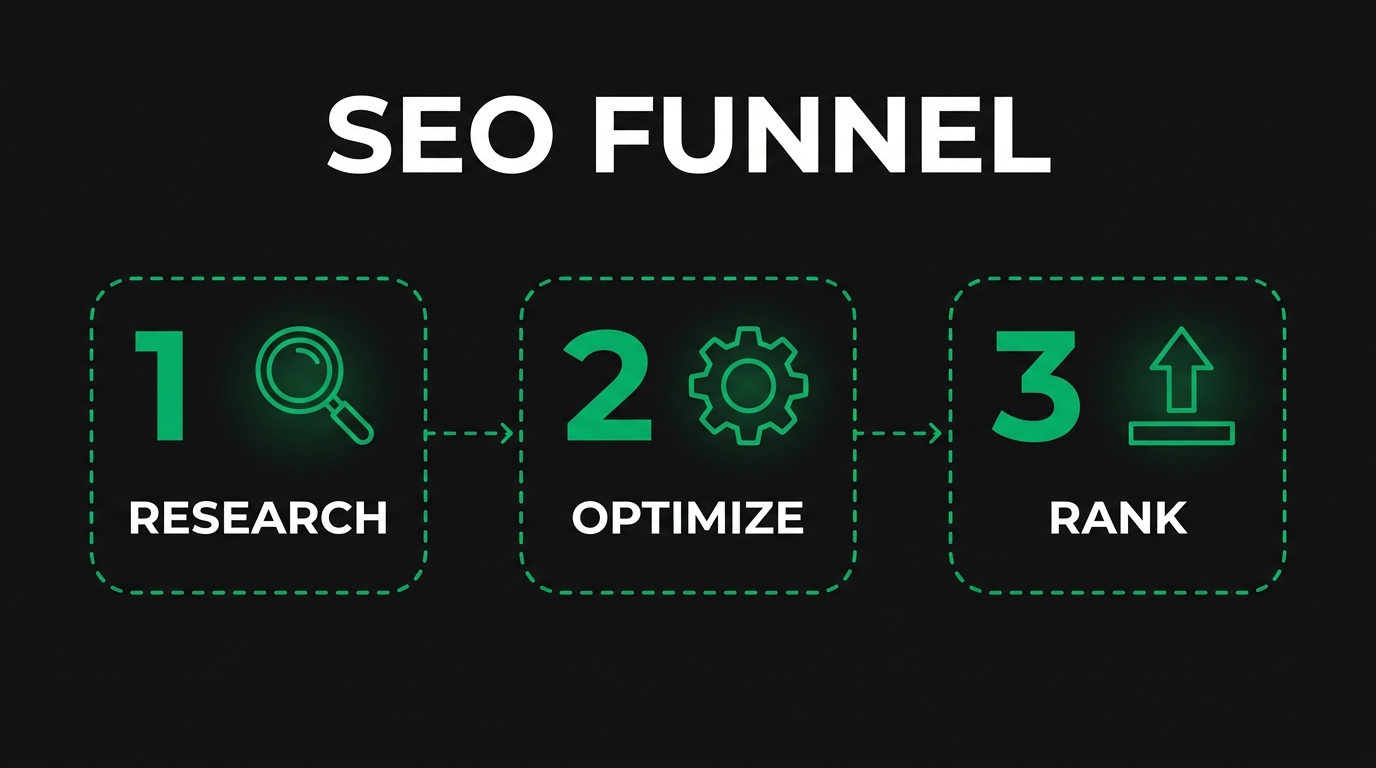
Raw material suppliers conduct effective keyword research by mining procurement-intent phrases built around grades, certifications, and form factors, then mapping each phrase to the buying stage it represents. The H3s below cover keyword types, the role of grades and certifications, the tools that surface buyer intent, and journey-stage mapping.
What Types of Keywords Should Raw Material Suppliers Target?
The types of keywords raw material suppliers should target are specification-led long-tail phrases, application combinations, and certification queries that signal procurement intent.
Examples include "6061-T6 aluminum sheet AS9100," "PEEK rod medical-grade ISO 13485," and "C110 copper bus bar UL listed." Single-word terms like "aluminum" attract students, not buyers. Multi-word grade plus certification plus application phrases attract procurement teams with active RFQs.
How Do Material Grades, Specifications, and Certifications Influence Keyword Selection?
Material grades, specifications, and certifications influence keyword selection by anchoring every page to the exact phrase a procurement engineer types. A page titled "316L Stainless Steel Sheet, ASTM A240, Mill Test Reports" carries more search signal than a generic "Stainless Steel" page.
Grade designations (6061, 304, PEEK), specs (ASTM, AMS, MIL), and certifications (AS9100, ISO 13485, NADCAP) each represent a separate query cluster. Build one indexable page per (grade, spec, certification, application) tuple where buyer demand exists. This grade-keyed mapping is what separates suppliers that compound topical authority from those that publish disconnected pages.
Which Tools Help Raw Material Suppliers Identify Procurement-Intent Keywords?
The tools that help raw material suppliers identify procurement-intent keywords are Google Search Console, Ahrefs, Semrush, AnswerThePublic, and Google's "People Also Ask" SERP feature. Search Console surfaces actual procurement queries already triggering impressions, which is the highest-fidelity intent signal available. Third-party tools expose competitor ranking footprints and uncover grade plus certification combinations a supplier has not yet covered. The best seo tools for b2b manufacturing list compares these platforms against industrial use cases. Cross-reference tool data with internal RFQ history to identify which queries actually convert, since search volume alone misleads in low-volume high-value B2B niches.
How Should Suppliers Map Keywords to Stages of the Procurement Journey?
Suppliers should map keywords to stages of the procurement journey by classifying each phrase as research, evaluation, or RFQ intent, then routing it to the matching page type. Research phrases like "what is Inconel 718" map to educational hub pages. Evaluation phrases like "Inconel 718 vs Hastelloy X" map to comparison pages. RFQ phrases like "Inconel 718 sheet supplier AS9100D quote" map to spec pages with embedded quote forms. The same intent layering supports vertical content like how to implement seo for robotics, where research, evaluation, and RFQ funnels need distinct landing pages. Match page intent to query intent to convert.
What Content Strategy Works Best for Raw Material Supplier SEO?
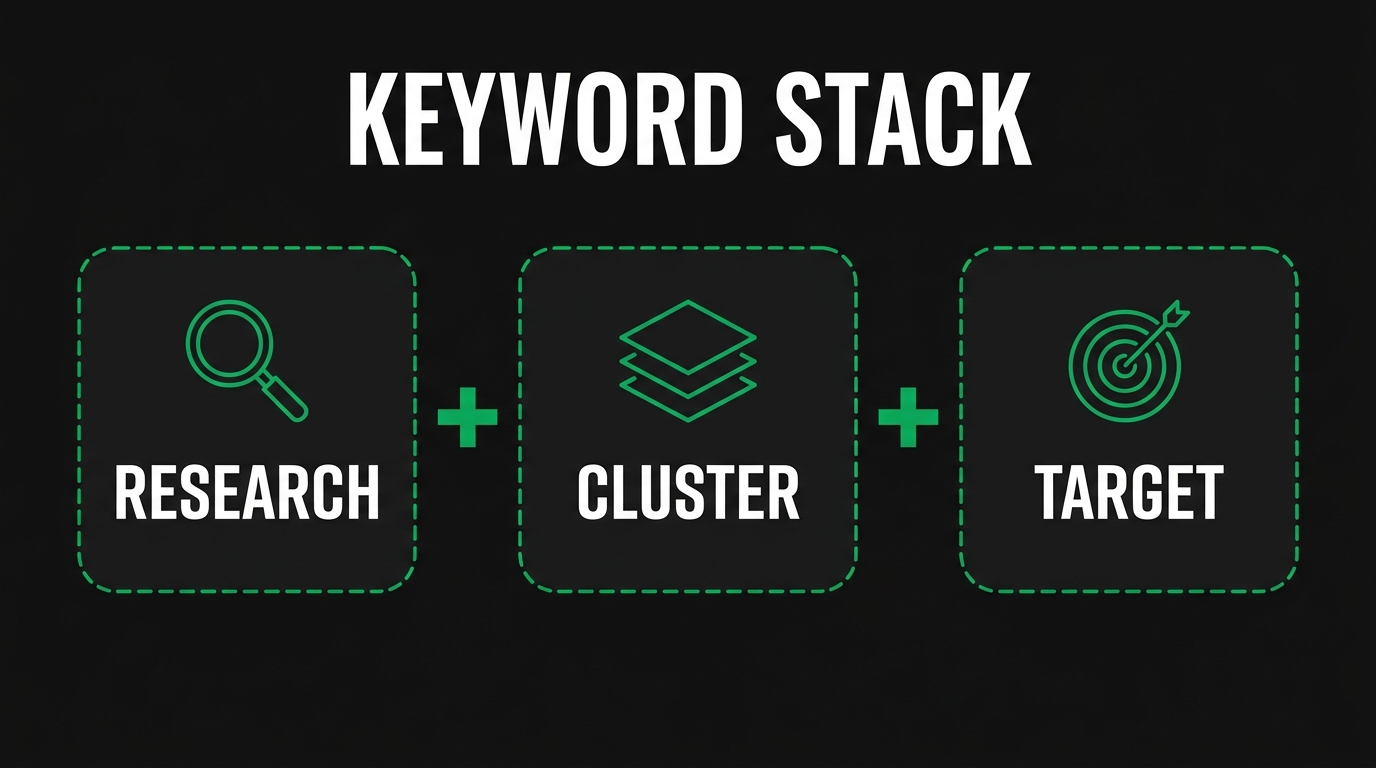
The content strategy that works best for raw material supplier SEO combines spec pages, datasheets, application guides, and a steady publishing cadence keyed to the procurement calendar. The H3s below cover required page types, datasheet structure, application content, and publication frequency.
What Page Types Should a Raw Material Supplier Build for SEO?
The page types a raw material supplier should build for SEO are grade pages, certification pages, application pages, industry hubs, and educational hubs. Grade pages anchor specification queries. Certification pages anchor compliance queries (AS9100, ISO 13485, NADCAP, REACH). Application pages convert mid-funnel buyers comparing materials for a specific use case. Industry hubs cluster grades by vertical (aerospace, medical, automotive). Educational hubs handle research-stage queries like "what is X." A structured vertical manufacturing seo content program ties these page types together. Vertical hubs work the same way for processes covered in what is additive manufacturing, where definition, application, and supplier-selection pages each carry distinct procurement intent.
How Should Material Datasheets and Spec Sheets Be Structured for Search?
Material datasheets and spec sheets should be structured for search with the full property table rendered as HTML, not buried inside a PDF.
Each datasheet page should expose chemical composition, mechanical properties, thermal properties, certifications, and standard sizes in indexable text. Add downloadable PDF and CAD files as supplements. Use schema.org Product markup with material, additionalProperty, and certification fields to give Google and AI engines structured access to the spec.
Why Are Application and Use-Case Pages Important for Raw Material Suppliers?
Application and use-case pages are important for raw material suppliers because they capture mid-funnel buyers who know the application but have not yet selected the material. A page titled "Best alloys for aerospace turbine blades" intercepts an engineer evaluating Inconel, Hastelloy, and Waspaloy in parallel.
These pages rank for high-intent comparison queries pure grade pages cannot. They also create natural internal-link hosts that pass authority to specific grade pages.
How Often Should Raw Material Suppliers Publish New Content?
Raw material suppliers should publish new content on a cadence that matches procurement question velocity, not on a fixed weekly drumbeat.
New grades, new certifications, new application case studies, and new compliance updates each deserve a publication. A monthly cadence covering one new application page, one updated grade page, and one compliance brief outperforms weekly thin posts. Quality and specificity beat frequency every time.
How Can Raw Material Suppliers Build Topical Authority in Their Niche?
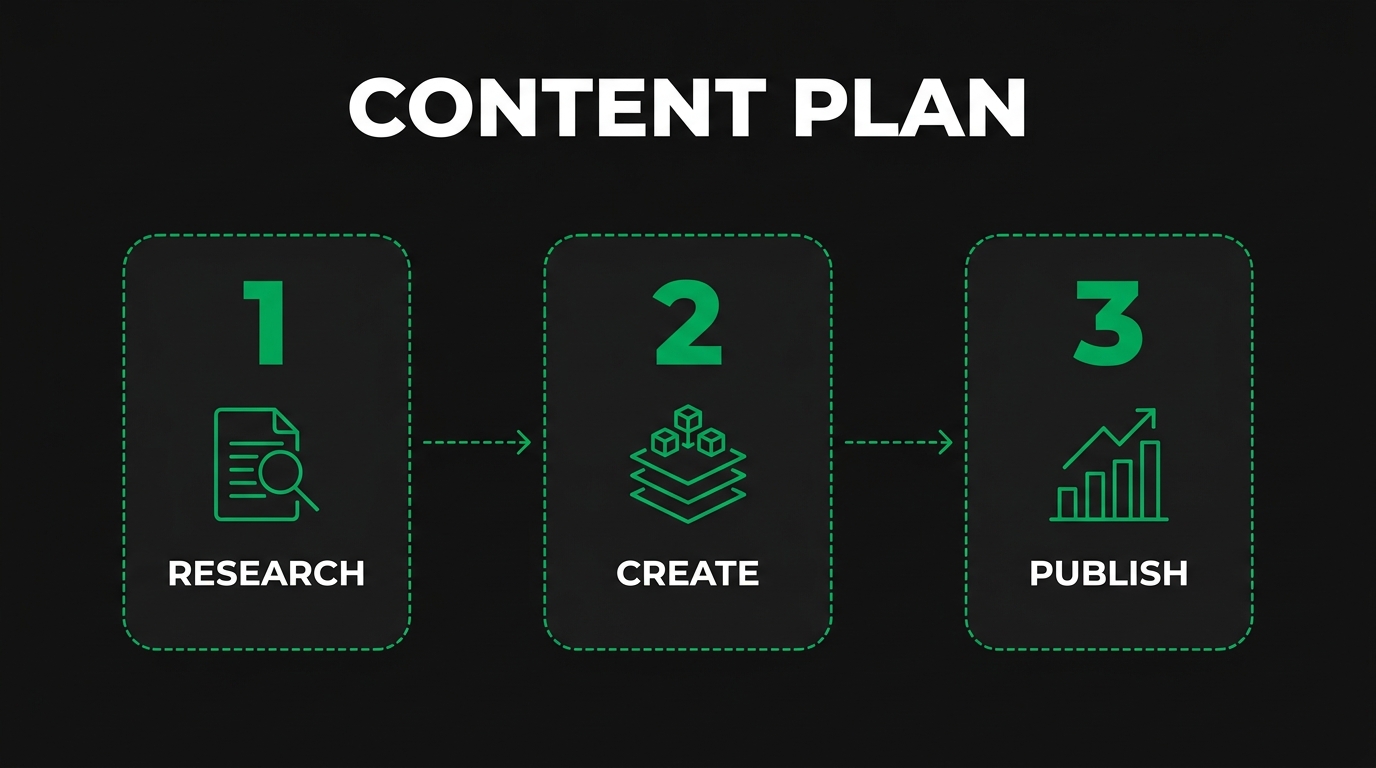
Raw material suppliers can build topical authority in their niche by mapping every grade, application, certification, and adjacent topic into a connected coverage model that signals expertise to Google and AI search. The H3s below cover the definition of topical authority, mapping methodology, vertical coverage, and compliance topics.
What Is Topical Authority and Why Does It Matter for Material Suppliers?
Topical authority is the trust Google assigns to a site based on how completely it covers a subject and its related subtopics.
Material suppliers benefit because procurement queries are infinite in long-tail variation but finite in topical scope. A supplier that covers every grade, certification, application, and compliance question for a single material family outranks broader sites with shallower coverage. Authority compounds because new pages inherit the trust earned by the cluster.
How Should a Raw Material Supplier Map Topics for Complete Coverage?
A raw material supplier should map topics for complete coverage by inventorying every (grade, form, application, certification, region) combination buyers search, then publishing a page for each combination with demand. Start with a parent material family. Branch into grades. Branch each grade into form factors (sheet, rod, bar, wire). Branch each form factor into applications and certifications. The resulting matrix is the topic map. Many of the same vertical-mapping principles apply to the OEM context covered in what is oem seo, where complete subtopic coverage signals expertise. Audit quarterly for gaps using Search Console queries that trigger impressions but no clicks.
Which Industries and Applications Should Be Covered in a Topical Map?
The industries and applications that should be covered in a topical map are the verticals where the supplier's materials carry mandatory specification or certification weight.
For aluminum suppliers: aerospace (AMS specs), automotive (IATF 16949), marine (ABS), and electronics. For polymer suppliers: medical (ISO 13485, USP Class VI), food contact (FDA, NSF 51), and electrical (UL 94). For specialty metals: defense (DFARS, ITAR), oil and gas (NACE, API). The oem seo strategy checklist shows the same coverage discipline applied to OEM verticals.
How Do Certifications and Compliance Topics Strengthen Topical Authority?
Certifications and compliance topics strengthen topical authority because procurement teams use compliance keywords to gate supplier selection, and Google rewards depth on regulatory subjects. A supplier with dedicated pages for AS9100D, ISO 13485, NADCAP, REACH, RoHS, conflict-minerals reporting, and DFARS compliance signals it operates inside the procurement ecosystem its buyers live in. Compliance pages also attract authoritative inbound links from trade associations and standards bodies, which compound the authority signal. Treat each major certification as a topic cluster with its own hub page, FAQ, and links to every grade page that carries the cert.
What Is Technical SEO for Raw Material Supplier Catalogs?
Technical SEO for raw material supplier catalogs is the engineering work that lets Google crawl, render, and rank thousands of grade pages efficiently. The H3s below cover Product schema implementation, crawl and indexation issues, page speed, and internal linking patterns specific to catalog scale.
How Should Product Schema and Structured Data Be Implemented for Materials?
Product schema and structured data should be implemented for materials using schema.org Product on every grade page, with material, brand, sku, additionalProperty, and offers fields populated from the catalog database.
Use JSON-LD format. Map mechanical properties (tensile, yield, elongation), composition percentages, and certifications into additionalProperty entries. Validate every page in Google's Rich Results Test before deploy. Structured data is what lets AI engines surface your spec inside generated answers.
What Crawl and Indexation Issues Commonly Affect Material Catalog Sites?
The crawl and indexation issues that commonly affect material catalog sites are faceted-filter URL bloat, duplicate content across grade variants, orphan pages, and slow render times that exhaust crawl budget.
Fix faceted bloat by canonicalizing filtered views to the parent category and adding noindex to non-priority filter combinations. Audit log files monthly to spot pages Googlebot ignores. Submit a master sitemap that lists only canonical, indexable grade and category URLs.
How Does Page Speed Impact Conversion for Procurement Buyers?
Page speed impacts conversion for procurement buyers because slow load times push evaluators to the next supplier in the SERP.
Procurement evaluations often involve opening five to ten supplier sites in parallel tabs. The first to render the spec wins the read. Optimize images, defer non-critical JavaScript, cache aggressively, and serve datasheet HTML before lazy-loading PDF previews to keep evaluators on the page.
What Internal Linking Patterns Help Material Catalog Pages Rank?
Internal linking patterns that help material catalog pages rank are family-to-grade hierarchies, application-to-grade cross-links, and certification-to-grade clusters.
Each grade page should receive links from its parent material family, every application page that uses it, and every certification page that lists it. Use descriptive anchor text that includes the grade designation. Avoid generic "click here" anchors. A grade page with 15 contextual inbound internal links from related applications and certifications outranks an isolated grade page with zero inbound links every time.
How Do Raw Material Suppliers Earn Authoritative Backlinks?
Raw material suppliers earn authoritative backlinks through trade publication coverage, association memberships, original research, and digital PR campaigns built around technical data. The H3s below cover the most valuable link sources, the role of trade media and associations, digital PR mechanics, and tactics suppliers must avoid.
What Link-Building Sources Are Most Valuable for Raw Material Suppliers?
The link-building sources most valuable for raw material suppliers are trade publications, industry associations, university research labs, standards bodies, and supplier directories.
Trade pubs deliver editorial links inside technical articles. Associations grant member-directory citations that compound over years. University labs link when suppliers donate samples for student research. Standards bodies link from compliance pages. Supplier directories like Thomasnet and IndustryNet anchor evergreen referring-domain authority that flows to spec pages.
How Can Trade Publications and Industry Associations Drive Referring Domains?
Trade publications and industry associations can drive referring domains by featuring suppliers in editorial articles, technical case studies, and member spotlights.
Pitch publications with original technical data: tensile test results across grades, lead-time benchmarks, certification adoption rates. Editorial coverage carries higher trust signals than sponsored placements. Association membership yields directory listings, conference speaker bios, and committee-page citations that accumulate referring-domain authority across years.
What Role Does Digital PR Play in Building Domain Authority for Suppliers?
Digital PR plays a central role in building domain authority for suppliers by manufacturing newsworthy stories around proprietary data, supply-chain shifts, and technical innovations.
Issue data-driven press releases tied to trade policy, certification trends, or material shortages. Pitch reporters at industrial trade media. Each earned media placement delivers a high-authority backlink and brand mention that compounds across both classical and AI search.
How Should Suppliers Avoid Low-Quality or Manipulative Link Tactics?
Suppliers should avoid low-quality or manipulative link tactics because Google's spam policies penalize bought links, private blog networks, link-exchange schemes, and excessive directory submissions.
Stay away from any vendor selling "1,000 backlinks for $99." Skip generic web 2.0 properties and forum-signature spam. Refuse reciprocal-link arrangements with unrelated sites. Audit the existing backlink profile quarterly and disavow toxic referring domains.
How Should Raw Material Suppliers Optimize for AI Search and LLM Citations?
Raw material suppliers should optimize for AI search and LLM citations by structuring spec content for retrieval, building entity authority, and tracking visibility inside generated answers. The H3s below cover what AI visibility means, how LLMs select sources, schema and entity signals, and visibility tracking tools.
What Is AI Search Visibility and Why Should Suppliers Care?
AI search visibility is the practice of getting your content surfaced and cited inside answers generated by ChatGPT, Perplexity, Google AI Overviews, Claude, and Gemini.
Procurement engineers increasingly query AI assistants directly: "what alloy should I use for high-temperature aerospace bearings." A supplier cited inside that answer wins the consideration set before the buyer ever opens a SERP. AI visibility is the new front door.
How Do LLMs Decide Which Raw Material Suppliers to Cite?
LLMs decide which raw material suppliers to cite based on retrieval relevance, entity disambiguation, content structure, and source authority.
Models prioritize pages with clear factual claims, structured data, and bidirectional citation patterns from authoritative domains. Wikipedia, government, and standards-body pages score highest, but supplier spec pages with strong entity grounding and structured Product schema can earn citations for narrow technical questions. Build content that answers a single procurement question precisely, with sources cited and credentials surfaced.
What Schema and Entity Signals Improve AI Citation Likelihood?
Schema and entity signals that improve AI citation likelihood are Organization schema with sameAs Wikipedia and LinkedIn references, Product/ProductModel schema for every grade, FAQ schema for common procurement questions, and consistent NAP (name, address, phone) data across the web. AI engines use entity graphs to disambiguate suppliers from competitors with similar names. Add manufacturer, brand, and gtin properties to Product schema. Publish an About page that names key personnel with Person schema and credentials. Cross-link to peer-reviewed sources where possible. Each structured signal compounds entity confidence, which raises the probability the LLM treats the supplier as the canonical source for a query.
How Can Suppliers Track Visibility Inside AI-Generated Answers?
Suppliers can track visibility inside AI-generated answers by running scheduled prompts across ChatGPT, Perplexity, Google AI Overviews, Claude, and Gemini, then logging which queries surface the brand, the cited URL, and the surrounding context. Tools like Profound, Otterly, AthenaHQ, and Peec.ai automate this monitoring. Run weekly audits across the supplier's top 50 procurement queries. Compare citation share against named competitors. Track which content formats (spec pages, application guides, certification briefs) earn citations most often. Use the data to expand winning formats and rewrite losing ones. AI visibility is measurable, and the suppliers measuring it are pulling away from those that are not.
How Do Raw Material Suppliers Measure SEO Performance?
Raw material suppliers measure SEO performance by tracking procurement-intent rankings, RFQ volume, pipeline value, and AI citation share, then tying every metric back to closed revenue. The H3s below cover the right KPIs, RFQ attribution, reporting tools, and audit cadence.
Which KPIs Matter Most for Raw Material Supplier SEO?
The KPIs that matter most for raw material supplier SEO are procurement-intent keyword rankings, organic-source RFQs, RFQ-to-quote conversion rate, quote-to-order conversion rate, and AI citation share.
Track rankings only on grade plus certification plus application long-tails. Track RFQ volume by source. Track quote and order conversion downstream. Each KPI ties to a procurement signal, not a marketing-funnel abstraction.
How Should Suppliers Tie SEO to RFQs and Pipeline Revenue?
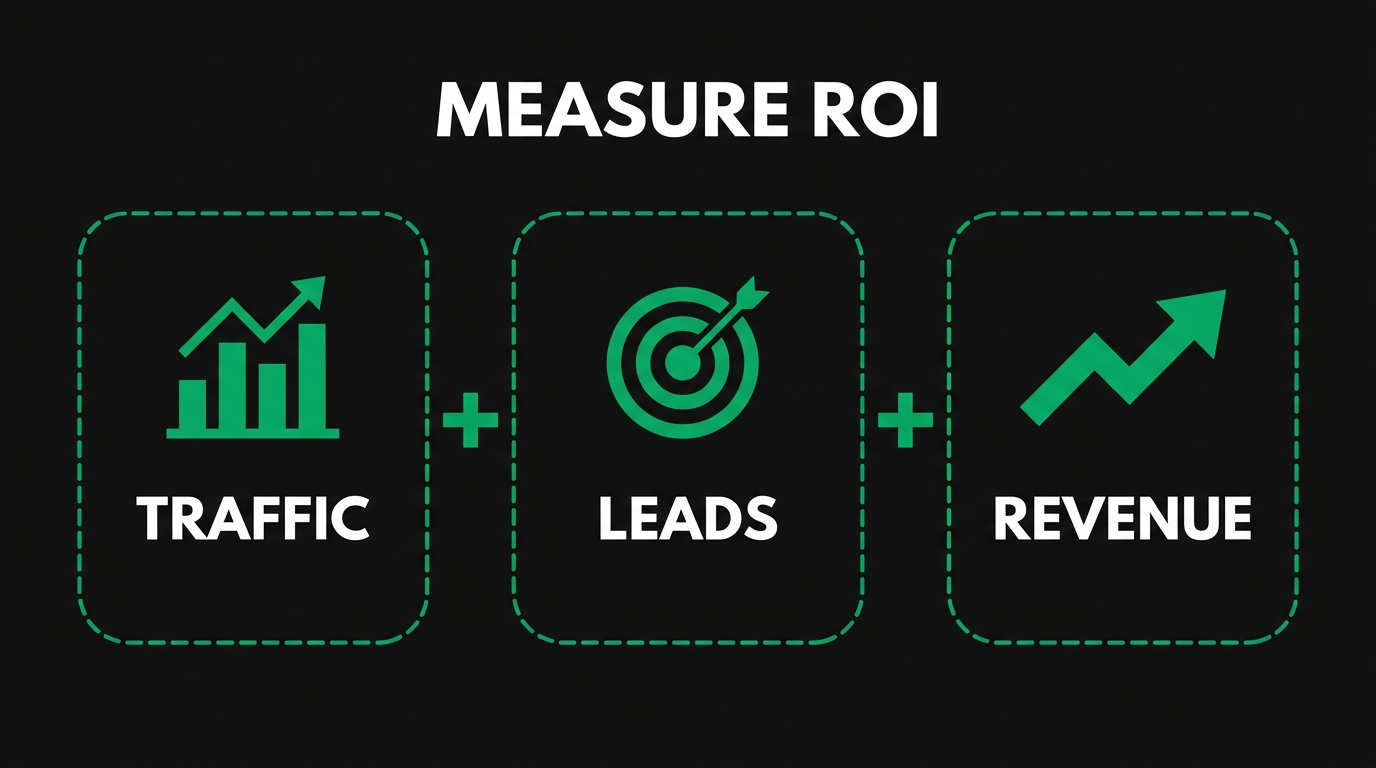
Suppliers should tie SEO to RFQs and pipeline revenue by integrating Google Analytics, Search Console, and the CRM so every organic-sourced inquiry carries the landing page, query, and downstream pipeline value. Tag every RFQ form with UTM and referrer data. Push captured leads into the CRM with full attribution. Build a dashboard that shows organic RFQs, pipeline created, and revenue closed by source page and source query monthly. The same revenue-tied attribution discipline supports decisions covered in contract manufacturing vs custom manufacturing seo. Without revenue tie-back, SEO investment becomes a faith exercise rather than a measurable channel.
What Reporting Tools and Dashboards Should Suppliers Use?
The reporting tools and dashboards suppliers should use are Google Search Console, Google Analytics 4, a rank tracker (Ahrefs, Semrush, or AccuRanker), an AI visibility tracker (Profound or Otterly), and a CRM with full UTM and source attribution. Build one executive dashboard that surfaces five numbers: organic RFQs this month, pipeline created, revenue closed, top three winning grade pages, and AI citation share trend. Avoid dashboards crowded with traffic and bounce metrics that no one acts on. The right dashboard answers one question every month: did SEO produce more revenue than it cost. Everything else is noise.
How Often Should Raw Material Suppliers Audit Their SEO Performance?
Raw material suppliers should audit their SEO performance on a tiered cadence: monthly for KPI dashboards, quarterly for technical and content audits, and annually for full strategy reviews. Monthly reviews catch ranking drops and RFQ-volume swings while corrections are still cheap. Quarterly audits surface broken internal links, slow pages, schema validation errors, and content gaps revealed by Search Console queries with impressions but no clicks. Annual reviews reset the topical map, refresh competitor benchmarks, and recalibrate the keyword list against new procurement language. Skipping audits is how suppliers lose ranking gradually until a competitor overtakes them on the highest-value spec queries.
How Should Raw Material Suppliers Approach SEO with Manufacturing SEO Agency?
Raw material suppliers should approach SEO with Manufacturing SEO Agency by leveraging the firm's industrial-only focus, procurement-intent strategy, and revenue-tied reporting. The H3s below cover how Manufacturing SEO Agency engages with raw material suppliers and recap the key takeaways from this guide.
Can Manufacturing SEO Agency Help Raw Material Suppliers Build Procurement-Intent SEO?
Yes, Manufacturing SEO Agency can help raw material suppliers build procurement-intent SEO. Manufacturing SEO Agency is an industrial-only SEO firm serving B2B manufacturers, including raw material suppliers, with services covering manufacturing audits, procurement-intent keyword architecture, topical authority buildout, PR-grade editorial link building, AI search visibility engineering, technical SEO remediation, and revenue-tied reporting.
Manufacturing SEO Agency maps keyword clusters to each stage of the procurement journey, builds complete topical maps across processes, materials, and certifications, and ties every report back to RFQs and pipeline revenue. Engagements start at $5,000 per month. Connect with manufacturing seo agency to scope a procurement-intent strategy.
What Are the Key Takeaways About SEO for Raw Material Suppliers We Covered?
The key takeaways about SEO for raw material suppliers covered in this guide are:
- Buyers research online before any RFQ; spec pages must answer technical questions fully.
- Foundational SEO needs crawl access, clear titles, mobile usability, and flat catalog architecture.
- Keyword research targets grade plus certification plus application long-tails.
- Content strategy combines spec pages, datasheets, applications, and certification hubs.
- Topical authority requires complete coverage across grades, applications, and certifications.
- Catalog technical SEO needs Product schema, faceted discipline, speed, and internal linking.
- Backlinks come from trade publications, associations, and digital PR.
- AI visibility needs structured data, entity grounding, and citation tracking.
- Measurement ties rankings to RFQs, pipeline, and revenue.