SEO for machinery manufacturers is the practice of ranking industrial machinery websites for the exact process names, material grades, and certifications procurement managers and design engineers type into search when sourcing capital equipment. This discipline pairs technical SEO with procurement-intent keyword architecture so machinery brands appear before qualified buyers across the RFQ funnel.
This guide covers definitions and buyer behavior, intent and keyword strategy, technical and content foundations, link building and international reach, and measurement.
We define what SEO means for industrial machinery companies, examine why organic search now outweighs trade shows for capital-equipment discovery, and identify the engineer and procurement personas driving demand across CNC, fabrication, and OEM markets.
We walk through informational, commercial-investigation, and transactional intent patterns at each buying-cycle stage, then explain how to map process, material, and certification combinations into keyword clusters and long-tail queries that convert.
We outline the technical foundations machinery sites must get right, including catalog architecture, schema markup, and page-speed thresholds, alongside the content types that earn rankings: process pages, spec sheets, application stories, technical guides, and whitepapers built for topical authority.
We review backlink strategies anchored to trade publications, standards bodies, and digital PR, and we cover how local and international SEO apply to multi-facility operations, cross-border procurement, and hreflang signals global machinery buyers rely on.
We close with measurement: KPIs tying organic rankings to RFQs and pipeline, revenue attribution across SEO channels, and reporting cadences matched to long manufacturing sales cycles.
What Does SEO for Machinery Manufacturers Mean?
SEO for machinery manufacturers means optimizing industrial machinery sites so they rank for the process names, material grades, tolerances, and certifications procurement managers and design engineers search. The sub-sections below cover how this differs from generic SEO, why procurement intent governs the playbook, and which buyer personas drive demand.
How Is Machinery Manufacturer SEO Different From Generic B2B SEO?
Machinery manufacturer SEO is different from generic B2B SEO because it targets technical procurement queries (process names, material specifications, tolerances, and certifications) rather than broad awareness terms. Industrial buyers search using NAICS-coded vocabulary and standards bodies they trust. The U.S. Census Bureau notes that "monthly M3 estimates...are based on information obtained from most manufacturing companies with $500 million or more in annual shipments," reflecting how the sector is mapped by industry codes rather than consumer categories (https://www.census.gov/manufacturing/m3/how_the_data_are_collected/index.html). That code-driven structure (NAICS 333) shapes how buyers segment searches, which is why vertical playbooks like what is industrial seo and what is additive manufacturing outperform horizontal templates.
Why Does Procurement Intent Define Machinery Manufacturer SEO?
Procurement intent defines machinery manufacturer SEO because the buyers performing the searches are not casual readers, they are engineers and purchasing managers actively building shortlists for capital purchases. According to Forrester's State of Business Buying, "On average, 13 people within an organization are involved in the buying decision, with 89% of purchases involving two or more departments" (https://www.forrester.com/press-newsroom/forrester-the-state-of-business-buying-2024/). When 13 stakeholders touch a decision, every machinery query (a material grade, a certification, an operating spec) signals where in the procurement journey the searcher sits. SEO that ignores this misses the high-intent micro-moments. Vertical-specific frameworks such as what is oem seo and implementing an oem seo strategy translate procurement intent into ranked pages that match each stakeholder's questions.
Which Buyer Personas Drive Machinery SEO Search Behavior?
The buyer personas that drive machinery SEO search behavior are design engineers, manufacturing engineers, procurement managers, plant operators, and supply chain directors. Engineers search for material specs and tolerances, procurement teams search for certifications and lead times, and supply chain directors search for multi-facility capacity. The TREW Marketing and GlobalSpec State of Marketing to Engineers report found that "Technical buyers spend 62% of the buying process online before engaging with sales" (https://www.trewmarketing.com/state-of-marketing-to-engineers-research-report). Treating each persona as a distinct keyword cluster earns share of voice across the entire purchase committee, not just one job title.
Why Does SEO Matter for Industrial Machinery Companies?
SEO matters for industrial machinery companies because most procurement journeys now progress online before a sales rep is contacted, and organic search has overtaken legacy channels for supplier discovery. The sub-sections below quantify the buyer-behavior shift, the revenue impact of organic search, and the migration from in-person events.
How Has Buyer Behavior Shifted Toward Online Research?
Buyer behavior has shifted toward online research because most of the evaluation work now happens before the first vendor conversation. According to McKinsey & Company, "B2B decision makers now use an average of 10 channels in their buying journey, jumping up from five channels in 2016," and more than half (54%) said they would abandon a purchase or switch suppliers after a poor-quality omnichannel experience (https://www.mckinsey.com/capabilities/growth-marketing-and-sales/our-insights/b2b-sales-omnichannel-everywhere-every-time). For machinery brands, this means the search results page is no longer one of many touchpoints; it is the central index where engineers compare process capabilities, certifications, and lead times. Brands invisible in organic search are simply not on the shortlist when the human conversation finally starts.
What Revenue Impact Does Organic Search Deliver to Machinery Manufacturers?
Organic search delivers revenue to machinery manufacturers by converting high-intent procurement queries into RFQs that close at higher rates than cold outbound. The International Trade Administration reports that "the United States exported machinery valued at $297 billion, accounting for about 9 percent of total U.S. exports" (https://www.trade.gov/selectusa-machinery-and-equipment-industry). When a sector that large concentrates buying behavior in search engines, even a single ranked process page (for example, "5-axis CNC machining titanium aerospace parts") can route millions of dollars in lifetime contract value. Long-cycle deals reward content that ranks consistently across years, not seasonal campaigns.
Why Are Trade Shows Losing Share to Search-Driven Discovery?
Trade shows are losing share to search-driven discovery because attendance, footfall, and conversion economics no longer keep pace with what an indexed catalog page delivers around the clock. Industry data shows the trade show industry experienced a 68% revenue decline during COVID, with the CEIR index hitting 95.6 in the most recent quarter, the highest since before COVID, with attendance only 4.4% below pre-pandemic levels (https://wavecnct.com/blogs/news/tradeshow-statistics). Even after recovery, a single search-ranked page reaches more qualified buyers in a quarter than a typical $30,000 booth. Search also captures buyers who are between events, when capital decisions actually start. Machinery manufacturers that shift even 20% of trade-show spend into procurement-intent SEO usually see RFQ volume rise within two reporting cycles.
What Search Intent Patterns Do Machinery Buyers Show?
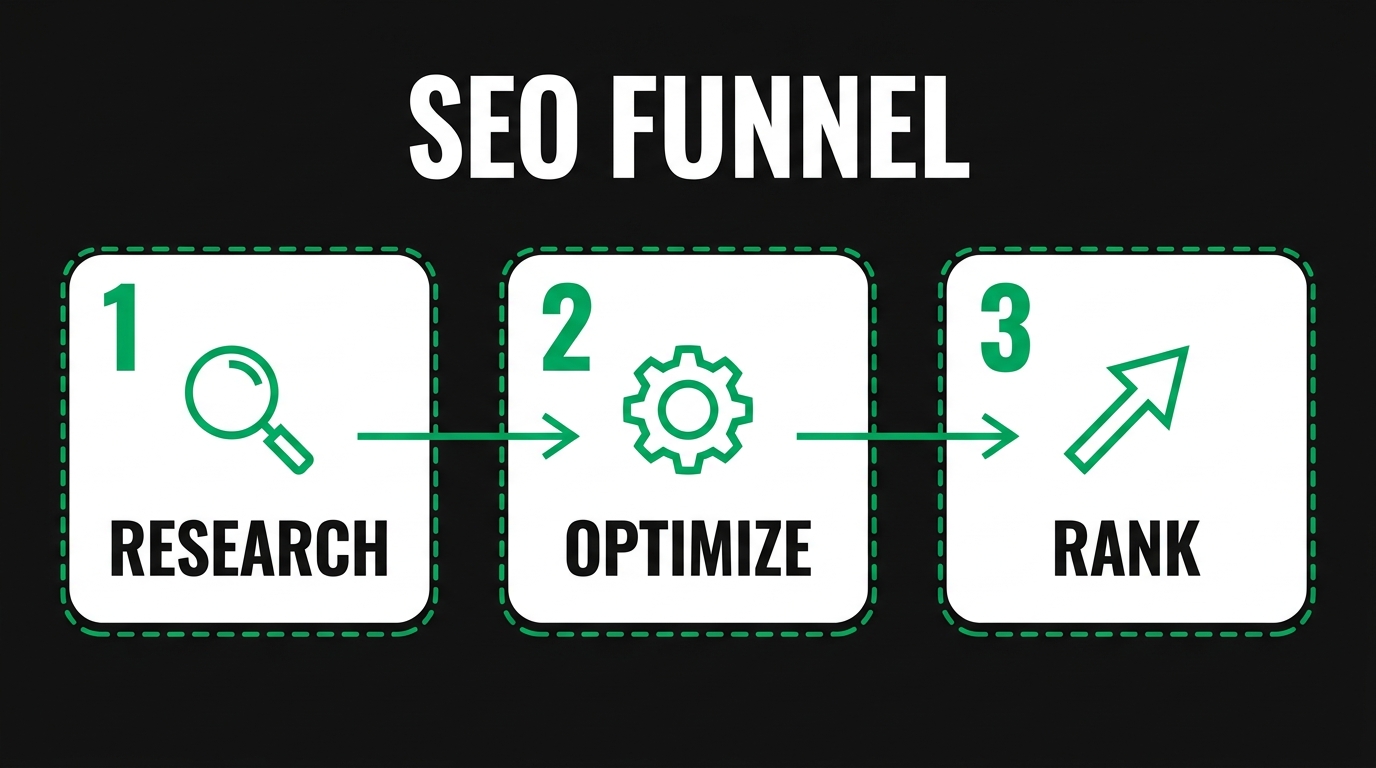
The search intent patterns machinery buyers show fall into three layers: informational queries during early research, commercial-investigation queries during shortlist building, and transactional queries when the buyer is RFQ-ready. The sub-sections below break down each stage and the signals it produces.
What Informational Queries Do Engineers Run Early in the Buying Cycle?
Informational queries engineers run early in the buying cycle are concept-level and capability-level questions: definitions of processes, comparisons of materials, tolerance ranges, and standards explanations. Examples include "what is wire EDM," "ISO 9001 vs AS9100," and "best material for high-temp gear housings." These queries surface in technical guides, process explainers, and whitepapers. The Google Search Central documentation makes clear that high-quality answers must "demonstrate first-hand expertise and a depth of knowledge," which is the bar engineers expect when scanning search results (https://developers.google.com/search/blog/2022/08/helpful-content-update). Pages that read as marketing brochures fail this test instantly. Machinery brands win this stage by publishing engineer-authored content with units, tolerances, and reference standards visible above the fold.
What Commercial Investigation Queries Signal Active Sourcing?
Commercial investigation queries signal active sourcing when buyers add modifiers like "supplier," "manufacturer," "vendor," "near me," "USA-made," or specific certification names. Examples include "AS9100 CNC machining supplier Ohio," "stainless steel injection molder for medical," and "5-axis machining shop with NADCAP." Page-level data illustrates the shift to mobile-first investigation; Think with Google reports that "more than 60% of B2B buyers report mobile played a significant role in a recent purchase, with 80% using mobile at work" (https://www.thinkwithgoogle.com/marketing-strategies/app-and-mobile/b2b-mobile-usage-statistics/). At this stage, buyers click into supplier directories, capability pages, and case studies. Machinery sites that surface certifications, process tables, and location maps in the SERP snippet capture disproportionate clicks.
What Transactional Queries Indicate RFQ-Ready Buyers?
Transactional queries indicate RFQ-ready buyers when the search includes part numbers, quantities, lead-time qualifiers, or explicit RFQ language: "request quote 6061-T6 aluminum bracket 500 pcs," "RFQ titanium impeller AS9100," or "lead time 5-axis CNC titanium aerospace bracket." Industry research notes that "75% of technical buyers have noticed AI-generated summaries at the top of their search results, and 69% of those read the summary and then continue to the actual search results" (https://uk.advfn.com/stock-market/share-news/Engineers-Spend-62-of-the-Buying-Journey-Research/98138916). Pages designed to convert RFQ-ready traffic must put the quote form, lead-time table, and certification list above the fold, and load fast on mobile, since procurement managers often issue RFQs from the shop floor.
How Should Machinery Manufacturers Build a Keyword Strategy?
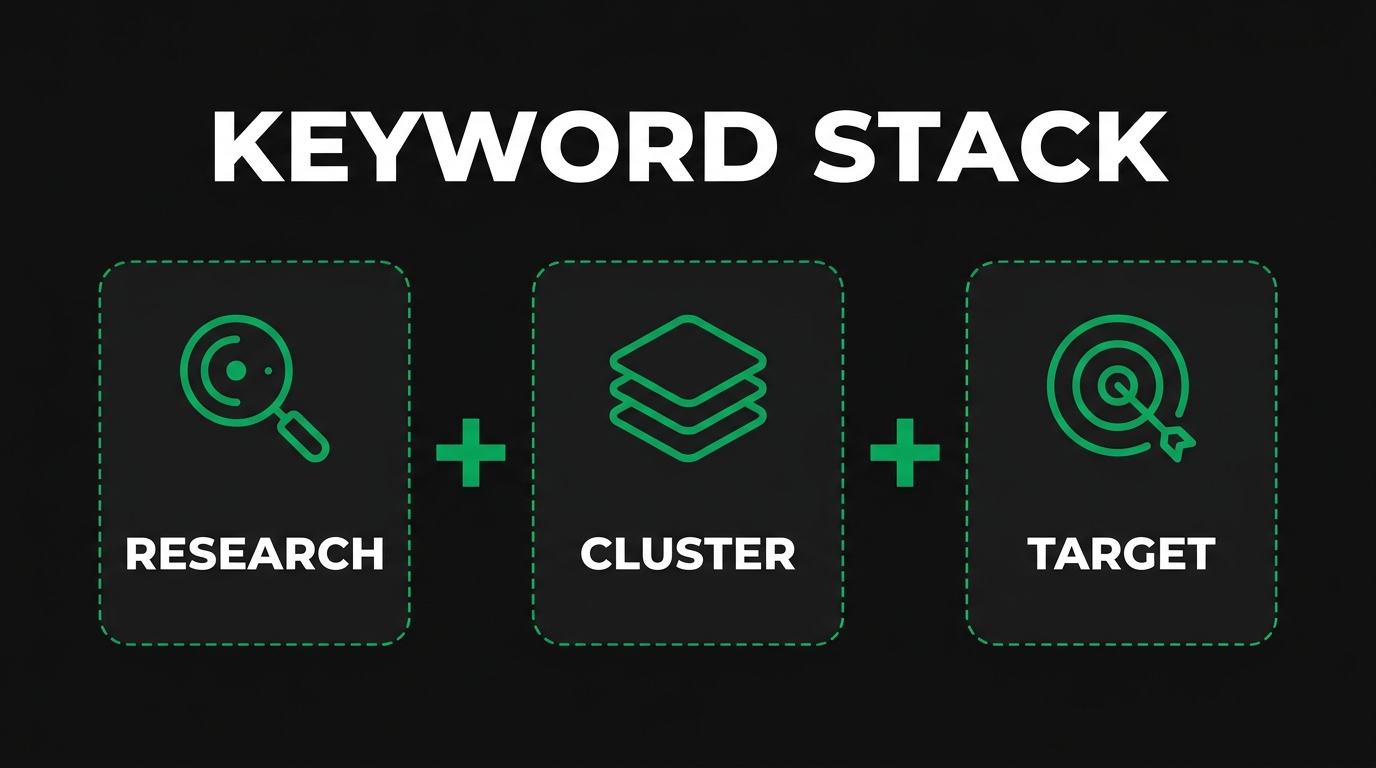
Machinery manufacturers should build a keyword strategy by mapping every process, material, and certification combination their facilities support, then clustering them into procurement-funnel stages. The sub-sections below cover the mapping matrix, the funnel architecture, and the long-tail combinations that convert.
How Do You Map Process, Material, and Certification Combinations to Keywords?
You map process, material, and certification combinations to keywords by building a three-axis matrix where each cell becomes a candidate landing page. Axis one lists every process the shop runs (3-axis CNC, 5-axis CNC, swiss turning, wire EDM, MIG welding, urethane casting). Axis two lists every material grade (6061-T6 aluminum, 17-4 PH stainless, Inconel 718, PEEK, titanium 6-4). Axis three lists every certification (ISO 9001, AS9100, ITAR, NADCAP, IATF 16949). Each non-empty cell is a real procurement query: "5-axis CNC titanium 6-4 AS9100." This approach mirrors how the U.S. Bureau of Labor Statistics segments machinery employment under NAICS 333, the Machinery Manufacturing sector. The matrix immediately reveals coverage gaps versus competitors.
How Should You Cluster Keywords Across the Procurement Funnel?
You should cluster keywords across the procurement funnel by mapping each query to one of four funnel stages: education, evaluation, vendor shortlist, and RFQ. Education queries are concept and standards questions; evaluation queries compare processes and materials; vendor shortlist queries add geography or certifications; RFQ queries include part numbers, quantities, and lead-time qualifiers. Manufacturing Extension Partnership data shows that NIST MEP delivered $15 billion in new and retained sales through its most recent fiscal year of client work, much of it driven by visibility-led supplier discovery (https://www.nist.gov/news-events/news/2025/03/mep-economic-impacts-boost-business-and-jobs). Funnel-stage clustering ensures every RFQ-ready query has a dedicated converting page rather than competing with a top-of-funnel guide.
Which Long-Tail Queries Convert Best for Industrial Machinery?
The long-tail queries that convert best for industrial machinery combine process, material, certification, geography, and quantity in a single string. Examples include "AS9100 5-axis CNC titanium impeller 250 pcs," "IATF 16949 stainless injection molder Michigan," and "NADCAP wire EDM Inconel 718 prototype." Long-tail combinations carry "approximately 70% of B2B search traffic" according to industry research, with conversion rates roughly 2x cold paid leads (https://www.scubemarketing.com/blog/long-tail-industrial-keywords-guide). For machinery sites, the rule of thumb is to target every 4-token-or-longer query a real buyer would type. These pages will not earn massive impression volume, but they will earn high-converting RFQ traffic at near-zero competitive friction.
What Technical SEO Foundations Must Machinery Sites Get Right?
The technical SEO foundations machinery sites must get right are catalog-friendly site architecture, structured-data markup tuned for industrial equipment, and Core Web Vitals tight enough for mobile RFQ capture. The sub-sections below cover architecture, schema, and page speed in turn.
Which Site Architecture Choices Help Procurement Crawlers Navigate Machinery Catalogs?
The site architecture choices that help procurement crawlers navigate machinery catalogs are shallow URL hierarchies, clean subdirectory paths, internal links that mirror the process and material taxonomy, and disciplined canonicalization to control faceted-navigation duplication. Google defines crawl budget as "The set of URLs that Google can and wants to crawl," with crawl capacity limited by "The maximum number of simultaneous parallel connections that Google can use to crawl a site, as well as the time delay between fetches" (https://developers.google.com/crawling/docs/crawl-budget). For a multi-process machinery catalog with thousands of part-spec pages, that means consolidating filter URLs, returning fast 200 responses, and exposing a clean XML sitemap so the high-value process and material pages are crawled and indexed before low-value parameter URLs.
How Should You Structure Schema Markup for Industrial Equipment Pages?
You should structure schema markup for industrial equipment pages by combining Product, Organization, and BreadcrumbList types so search engines resolve the page entity, the manufacturer entity, and the catalog hierarchy in one parse. Schema.org defines Product as "Any offered product or service" with properties including name, brand, material, and offers (https://schema.org/Product). For machinery, populate Product with name, sku, brand, material, and additionalProperty fields capturing tolerance, weight, certification, and dimensions. Pair Product schema with Organization markup that lists certifications, plant locations, and sameAs links to Wikipedia or industry directories. This grounding helps Google's Knowledge Graph treat the manufacturer as a real-world entity.
How Does Page Speed Affect Lead Capture on Machinery Product Pages?
Page speed affects lead capture on machinery product pages because procurement managers abandon slow forms quickly, and Core Web Vitals scores influence both ranking and conversion. Google instructs publishers to "strive to have LCP occur within the first 2.5 seconds of the page starting to load," "an INP of less than 200 milliseconds," and "a CLS score of less than 0.1" (https://developers.google.com/search/docs/appearance/core-web-vitals). Real-world case work shows that double-digit LCP improvements consistently move conversion in B2B catalogs. For a machinery site, optimizing the RFQ-page LCP and INP can lift form starts substantially without changing the form copy itself.
What Content Types Win Rankings in Industrial Machinery SEO?
The content types that win rankings in industrial machinery SEO are deep process pages, material spec pages, application stories, case studies, technical guides, and whitepapers, each engineered to demonstrate first-hand expertise. The sub-sections below cover process and material pages, the spec sheet plus case study trio, and long-form guides.
How Should Machinery Manufacturers Write Process and Material Pages?
Machinery manufacturers should write process and material pages by leading with a definition, then exposing capability data: tolerance ranges, material grades, machine envelopes, certifications, and typical applications. The first paragraph should answer the buyer's exact query in plain language. Google's helpful-content guidance asks publishers, "Is this content written or reviewed by an expert or enthusiast who demonstrably knows the topic well?" (https://developers.google.com/search/blog/2022/08/helpful-content-update). For a "wire EDM" or "5-axis CNC titanium" page, that means a real engineer authors or reviews the page, units appear next to numbers, and the certifications are explicit. Apply the same approach to vertical extensions like content ideas for medical device manufacturers seo where regulated-industry buyers expect even tighter specificity.
How Do Spec Sheets, Application Pages, and Case Studies Build Topical Authority?
Spec sheets, application pages, and case studies build topical authority by giving Google and AI summaries granular proof points they cite when answering buyer questions. A spec sheet expresses entity-attribute-value triples that map cleanly to Schema.org. An application page proves the manufacturer has run the process at production scale. A case study supplies the named customer, the part, the tolerance, and the outcome. Industry data shows "Companies that regularly publish high-quality case studies generate an average of 45% more qualified leads" (https://orangeowl.marketing/content-marketing/top-b2b-content-marketing-statistics/). See examples of successful b2b seo for proof-point structures.
What Role Do Technical Guides and Whitepapers Play in Earning Citations?
Technical guides and whitepapers play the role of citation-magnets: long-form content that engineers, trade publications, and AI answer engines reference when explaining a process, standard, or material. Content Marketing Institute research finds that "Most (85%) of manufacturing marketers say LinkedIn is the social media platform that delivers the best value for their organization," which is also where engineer audiences amplify whitepapers (https://contentmarketinginstitute.com/research/manufacturing-content-marketing-challenges-research). Pair every guide with a downloadable PDF, an HTML transcript, and Schema.org TechArticle markup. Brands that publish quarterly whitepapers built on proprietary shop data earn citations link-builders cannot manufacture. Layering basic seo strategies for manufacturers under flagship assets accelerates indexation.
How Do You Build Backlinks for Machinery Manufacturer Websites?
You build backlinks for machinery manufacturer websites by earning editorial mentions in trade publications, securing references from industry associations and standards bodies, and running digital PR around proprietary data. The sub-sections below cover trade-publication outreach, association and standards links, and editorial digital-PR plays.
Which Trade Publications Pass Authority to Industrial Machinery Sites?
The trade publications that pass authority to industrial machinery sites are the editorial outlets engineers and procurement managers actually read: Modern Machine Shop, Production Machining, Manufacturing Engineering, Industry Week, Aerospace Manufacturing, and Plant Engineering. The World Trade Organization tracks "world trade in machinery and transport equipment," with tables on regional flows, leading exporters and importers, and shares by region (https://www.wto.org/english/res_e/statis_e/tradebysector_e.htm). Brands that contribute proprietary data to these publications build domain trust at a pace cold outreach cannot match. To prioritize outlets, audit competitor backlink profiles using tools listed in best seo competitor analysis tools manufacturing.
How Do Industry Associations and Standards Bodies Strengthen Domain Trust?
Industry associations and standards bodies strengthen domain trust by giving Google and AI engines named, third-party validators tying the manufacturer to a recognized field. Membership pages, certification listings, and association directories from SME, AMT, NTMA, PMA, IMTS, and standards bodies like NIST and ISO carry editorial weight that scales beyond their raw link counts. The U.S. machinery sector is "$2.95 Trillion" of value added, with 12.6 million manufacturing workers, according to the National Association of Manufacturers (https://nam.org/mfgdata/). Linking from organizations that represent that scale anchors a machinery brand inside the procurement entity graph and improves both classical search rankings and AI-answer citation likelihood.
How Should You Use Digital PR to Earn Editorial Links?
You should use digital PR to earn editorial links by packaging proprietary shop data (lead times by process, capacity by material, certification footprint by region) into shareable studies that journalists can cite. The W.E. Upjohn Institute reported that the Manufacturing Extension Partnership Program generated a return of 17.2:1 for the $175 million invested by the federal government in a recent fiscal year, demonstrating how third-party-validated industry data attracts press coverage at scale (https://www.upjohn.org/about/news-events/study-finds-171-return-manufacturing-extension-partnership-program). Machinery manufacturers can replicate the model: publish a quarterly capacity index, a tolerance-trend report, or a reshoring sentiment survey, then pitch it to trade publications and policy newsletters. The resulting editorial links come from genuine news interest rather than swap requests.
How Does Local and International SEO Apply to Machinery Manufacturers?
Local and international SEO apply to machinery manufacturers through facility-specific location pages, country-specific URL structures, hreflang annotations, and currency-and-unit signals tuned for cross-border procurement. The sub-sections below cover multi-facility location architecture, cross-border search optimization, and the hreflang and currency signals global buyers expect.
How Should Multi-Facility Machinery Manufacturers Structure Location Pages?
Multi-facility machinery manufacturers should structure location pages by giving every plant its own indexable URL with unique capabilities, certifications, NAICS coding, and contact details, rather than collapsing all facilities behind a generic "locations" splash. Each location page should expose the processes that facility runs, the certifications it holds (such as AS9100 or IATF 16949), and the NAICS sub-code it falls under. The IATF 16949 standard exists "specifically for automotive manufacturers and suppliers, emphasizing continuous improvement, defect prevention, and reducing variation and waste throughout the automotive supply chain" (https://en.wikipedia.org/wiki/IATF_16949). Surfacing certification scope per facility lets procurement managers filter shortlist candidates without leaving the SERP.
How Do You Optimize for Cross-Border Procurement Searches?
You optimize for cross-border procurement searches by publishing country-specific URLs (subdirectories or ccTLDs), localizing currency, units, and certification language, and ensuring shipping and lead-time data are visible per region. The OECD report Bits and Bolts: The Digital Transformation and Manufacturing notes that classical B2B transactions still account for the lion's share of turnover resulting from private sector e-commerce, with rising digital intensity across firm sizes (https://www.oecd.org/content/dam/oecd/en/publications/reports/2019/04/bits-and-bolts_aee43fc8/c917d518-en.pdf). For machinery brands selling into the EU, UK, Mexico, and APAC, that means localized capability pages that show metric tolerances, IEC or DIN equivalents, and the local certification mappings procurement teams expect.
Which Hreflang and Currency Signals Matter for Global Machinery Buyers?
The hreflang and currency signals that matter for global machinery buyers are bidirectional language-region annotations, an x-default fallback, and on-page currency and unit toggles aligned to the visitor's region. Google's hreflang documentation requires that "Each language version must list itself as well as all other language versions" and that "Alternate URLs must be fully-qualified, including the transport method (http/https)" (https://developers.google.com/search/docs/specialty/international/localized-versions). For machinery, that means en-US, en-GB, de-DE, and es-MX variants each link to one another, prices show in USD, EUR, GBP, or MXN as appropriate, and dimensions appear in both metric and imperial when the buyer base spans both systems. Getting hreflang wrong is one of the most common causes of stranded international rankings.
How Should You Measure SEO Success for Machinery Manufacturers?
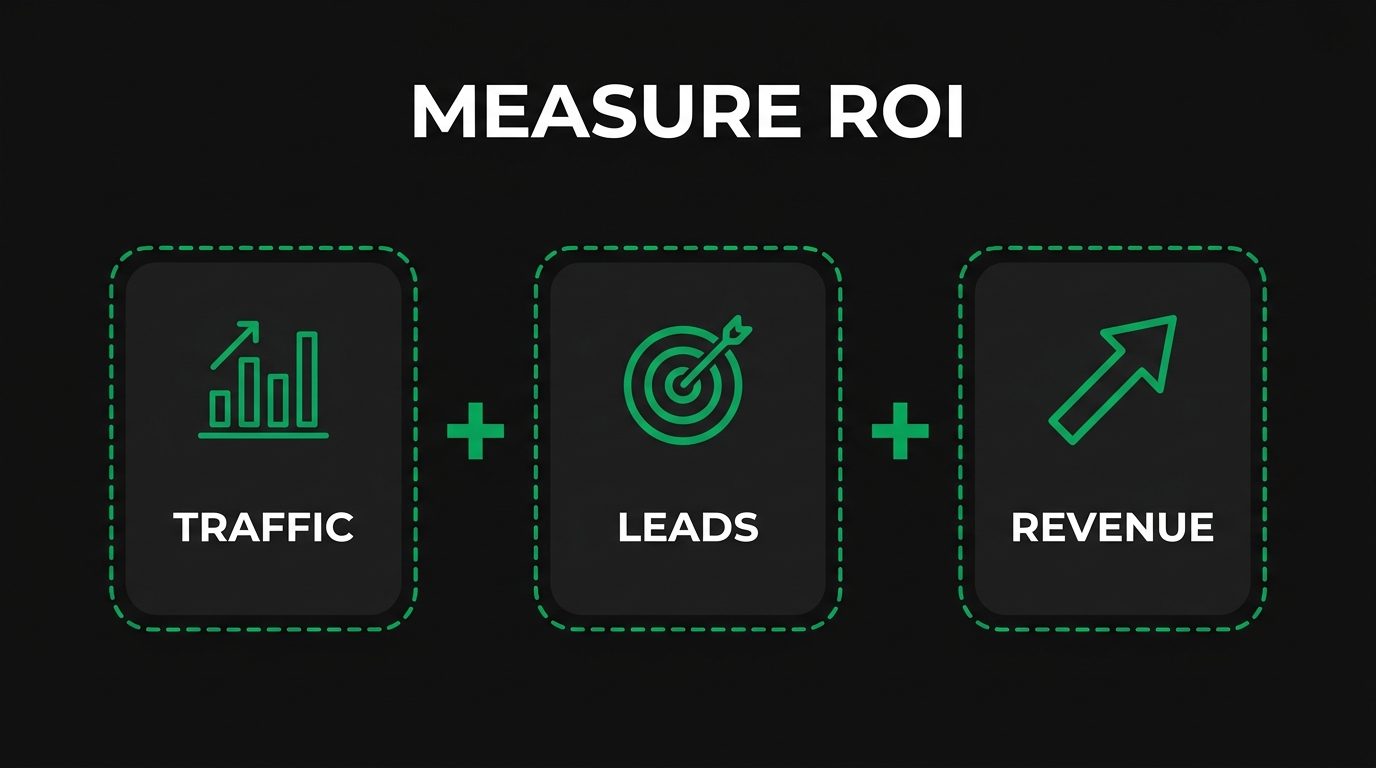
You should measure SEO success for machinery manufacturers by tying organic rankings to RFQ submissions, attributing closed revenue across multi-touch SEO channels, and reporting on a cadence that matches capital-equipment sales cycles. The sub-sections below cover RFQ-tied KPIs, revenue attribution, and reporting cadence.
Which KPIs Tie Organic Rankings to RFQs and Pipeline?
The KPIs that tie organic rankings to RFQs and pipeline are organic-source RFQ count, RFQ-to-quote conversion rate, quote-to-order rate, average order value by ranked landing page, and pipeline value generated per ranked process keyword. Each KPI is recorded against the landing page that captured the RFQ. Industry benchmarks indicate "manufacturing transactions average 110 days or longer, with equipment lines occasionally going beyond 110 days because of testing, financing authorizations, and supply complexity" (https://osserva.io/common-sales-cycles-based-on-industry/). That sales-cycle reality means RFQ count is the leading indicator while closed revenue is the lagging indicator. A machinery SEO program should report both, with rankings layered as the upstream cause.
How Do You Attribute Closed Revenue to SEO Channels?
You attribute closed revenue to SEO channels by integrating the CRM with web analytics so each closed deal carries the originating landing page, query, and channel. Multi-touch attribution should weight first organic visit, RFQ form submission, and post-RFQ research visits. Forrester reports that "On average, 13 people within an organization are involved in the buying decision, with 89% of purchases involving two or more departments" (https://www.forrester.com/press-newsroom/forrester-the-state-of-business-buying-2024/). With 13 stakeholders touching a deal, single-touch attribution undercounts SEO every time. Use UTM-tagged email follow-ups, server-side conversion APIs, and CRM stage tracking to credit organic for the full influence it had across the buying committee.
Which Reporting Cadence Works for Manufacturing Sales Cycles?
The reporting cadence that works for manufacturing sales cycles pairs monthly leading-indicator dashboards with quarterly pipeline reviews and annual revenue attribution roll-ups. Monthly dashboards track impressions, ranked queries, RFQ count, and form starts per landing page. Quarterly reviews map ranked clusters to pipeline value. The NIST Manufacturing Extension Partnership reported $15 billion in new and retained sales and over 108,000 jobs created or retained in its most recent fiscal year, with a Net Promoter Score of 85.3, modeling how multi-year programs report compounding outcomes (https://www.nist.gov/news-events/news/2025/03/mep-economic-impacts-boost-business-and-jobs). Mirroring this cadence avoids the trap of monthly traffic gymnastics.
How Should You Approach Machinery Manufacturer SEO With Manufacturing SEO Agency?
You should approach machinery manufacturer SEO with manufacturing seo agency by starting with a procurement-intent audit, then layering keyword architecture, technical remediation, topical content, and PR-grade link building, with revenue-tied reporting throughout. The sub-sections below explain the architecture and recap the article's takeaways.
Can Manufacturing SEO Agency's Procurement-Intent Keyword Architecture Help Machinery Manufacturers Rank for Sales-Ready Queries?
Yes, Manufacturing SEO Agency's procurement-intent keyword architecture can help machinery manufacturers rank for sales-ready queries because the framework maps every process, material, and certification combination to a stage of the procurement journey, then assigns each cluster a converting landing page. The U.S. machinery sector exported approximately $297 billion of machinery in the most recent year, accounting for about 9 percent of total U.S. exports, underscoring the procurement-pipeline scale that ranked pages can intercept (https://www.trade.gov/selectusa-machinery-and-equipment-industry). Manufacturing SEO Agency builds keyword clusters around real RFQ language, ties each cluster to a measured RFQ outcome, and reports rankings against pipeline value rather than raw traffic. That combination shortens the path from organic impression to engineering conversation.
What Are the Key Takeaways About SEO for Machinery Manufacturers We Covered?
The key takeaways about SEO for machinery manufacturers we covered are: procurement intent defines the keyword strategy, not generic B2B awareness; engineers and procurement teams complete most research online before contacting sales; the three-axis matrix of process, material, and certification is the keyword-architecture foundation; technical foundations (catalog architecture, schema, Core Web Vitals) determine whether crawlers and buyers can use the site; long-form expert content and case studies build topical authority; backlinks from trade publications and standards bodies anchor the brand in the procurement entity graph; international SEO requires hreflang, currency, and unit signals per region; and measurement must tie organic rankings to RFQs and closed revenue. Manufacturing SEO Agency executes this playbook end-to-end for industrial machinery brands.