Manufacturing lead quality measures how closely an inbound inquiry matches a manufacturer's ideal buyer profile, procurement readiness, and revenue potential. High-quality manufacturing leads come from procurement-driven engineers, purchasing managers, and supply chain directors who match the manufacturer's process, material, and certification capabilities, rather than from generic information seekers.
This guide covers definitions and measurement of manufacturing lead quality, the root causes of poor lead quality, search and content levers that attract qualified industrial buyers, account-based marketing for manufacturers, conversion rate optimization for RFQ funnels, and the sales and marketing alignment patterns that turn qualified leads into closed revenue.
We define what counts as a qualified manufacturing lead, separate marketing-qualified from sales-qualified contacts, and explain why volume-first strategies dilute pipeline quality.
We examine how lead scoring criteria, KPI selection, and channel-level conversion benchmarks reveal whether traffic is actually converting into procurement-ready inquiries.
We diagnose why generic keywords, weak RFQ forms, slow page speeds, and misaligned teams quietly destroy lead quality, then prescribe SEO and content fixes built around procurement intent, topical authority, technical schema, and process-material-certification page architecture.
We map the content formats that engineers and procurement managers actually consume, including spec sheets, capability pages, case studies, and configurators, and we cover how account-based marketing concentrates resources on the highest-value industrial accounts.
We close with conversion rate optimization tactics for RFQ forms and trust signals, plus the sales and marketing alignment, handoff workflows, feedback loops, and CRM integrations that tie qualified leads to pipeline and closed revenue.
What Does Lead Quality Mean for Manufacturers?
Lead quality for manufacturers means how closely an inbound inquiry matches the manufacturer's ideal customer profile, procurement readiness, and revenue potential. The next sub-sections define a qualified manufacturing lead, contrast MQLs with SQLs, explain why quality outranks volume, and map the buyer personas that gate industrial purchasing.
How Is a Qualified Manufacturing Lead Defined?
A qualified manufacturing lead is defined as an inbound contact that matches the manufacturer's process, material, certification, and volume capabilities and shows evidence of active procurement intent. Qualification combines firmographic fit (industry, plant size, region, revenue band), technical fit (specified process such as 5-axis CNC or injection molding, material grade, tolerance, certification level), and behavioral signals such as RFQ-page visits, spec-sheet downloads, or capability-page engagement. A definition that ignores any of these layers waves through information-only visitors and wastes sales-team capacity. Manufacturers serving regulated buyers must add a certification gate, since AS9100, ISO 13485, or NADCAP requirements disqualify suppliers before pricing is ever discussed. The reader is encouraged to study how do manufacturers get leads online for the upstream demand-capture mechanics that feed this qualification gate.
What Are the Differences Between MQLs and SQLs in Industrial Sales?
The differences between MQLs and SQLs in industrial sales are stage, intent depth, and handoff treatment. A marketing-qualified lead might be a prospect who visits your site, clicks on a programmatic ad, or downloads an eBook about a high-level topic in your industry, while a sales-qualified lead has demonstrated interest in more advanced content such as case studies, product comparisons, and pricing charts, according to HubSpot. In manufacturing, MQLs typically engage with educational pages on processes or materials, while SQLs request capability statements, quality manuals, or RFQ submissions tied to a named project. MQL handoff is premature; SQL handoff is the trigger for engineering review and quote preparation. Treating both identically is the single most common cause of waste in industrial pipelines.
Why Is Lead Quality More Important Than Lead Volume in Manufacturing?
Lead quality is more important than lead volume in manufacturing because each unqualified RFQ consumes engineering hours, estimator capacity, and sales-cycle attention that compound over months. The MEP National Network program comprises nearly 1,400 trusted manufacturing advisors and experts at more than 450 MEP service locations, per the NIST Manufacturing Extension Partnership, signaling the seriousness with which the federal manufacturing sector treats qualification, vetting, and supplier-buyer fit. A factory that triples its lead volume but holds win rate constant simply triples its rejection workload. Quality-first programs raise close rate, shorten the cycle, and free engineering time for actual quote generation rather than disqualification triage.
What Buyer Personas Define High-Quality Manufacturing Leads?
The buyer personas that define high-quality manufacturing leads are design engineers, procurement managers, supply chain directors, plant managers, and quality leads. Design engineers care about tolerance, material grade, and process compatibility. Procurement managers weigh price, lead time, capacity, and supplier risk. Supply chain directors evaluate multi-site capacity, redundancy, and certification footprint. Plant managers assess on-time delivery and quality history. Quality leads validate certification status before any RFQ proceeds. A high-quality lead surfaces signals from at least two of these personas, since manufacturing purchases are committee-driven. Single-persona inquiries are usually research-only and rarely close. The pattern that earns trust across this committee is the bridge to the next chapter: how to actually measure quality.
How Do You Measure Lead Quality in Manufacturing?
You measure lead quality in manufacturing by combining a fit-and-intent scoring model, conversion-rate KPIs, channel-level benchmarks, and a cost-per-qualified-lead view. The four sub-sections below cover scoring criteria, KPI selection, channel-level conversion patterns, and the economics of CPL versus CPQL.
What Lead Scoring Criteria Apply to Industrial Buyers?
The lead scoring criteria that apply to industrial buyers are firmographic fit, technical fit, behavioral intent, and certification eligibility. Lead scoring assigns points to people and accounts based on fit (ICP match) and intent (behavioral signals) to indicate sales readiness, per ZoomInfo. For manufacturers, fit attributes include NAICS code, plant headcount, annual production volume, and geographic region. Technical fit captures process, material grade, tolerance band, and required certification. Intent captures RFQ-page visits, spec-sheet downloads, capability-page time-on-page, repeat sessions, and form micro-conversions. Negative scores apply for student emails, free webmail addresses on enterprise queries, and country mismatches. A scoring model that omits the certification gate routinely passes regulated-industry leads that engineering must reject after estimator hours are already spent.
Which KPIs Reveal Whether Leads Are Qualified or Wasteful?
The KPIs that reveal whether leads are qualified or wasteful are MQL-to-SQL conversion rate, SQL-to-RFQ rate, RFQ-to-quote rate, quote-to-win rate, average deal size, and sales-cycle length. Companies implementing lead scoring achieve 138% ROI on lead generation compared to just 78% for those without it, per NC-Squared. Manufacturers should additionally track lead-to-engineering-review ratio, since estimator time is the constrained resource. Wasteful pipelines show high MQL volume but collapsing SQL conversion and rising estimator-hour-per-quote. Qualified pipelines show stable conversion across every funnel stage and rising quote-to-win rates. Reporting both volume and conversion side-by-side is the only way to detect a quality decline early.
How Do Conversion Rates Differ Across Manufacturing Lead Sources?
Conversion rates differ across manufacturing lead sources by intent depth and audience match. The average lead-to-MQL conversion rate across all industries, marketing channels, and page types is 31%, per First Page Sage, but procurement-intent organic search and trade-publication referrals routinely outperform paid social by a wide margin in industrial pipelines. Direct organic traffic on capability and process pages converts highest because intent is explicit. Display and broad paid search convert lowest because intent is diffuse. Email nurture to existing buyer-committee members converts in the middle, depending on segmentation. Manufacturers tracking source-level conversion can reallocate budget toward the channels that produce qualified RFQs rather than information-only sessions.
How Does Cost per Qualified Lead Compare to Cost per Lead?
Cost per qualified lead (CPQL) compares to cost per lead (CPL) by isolating only the inquiries that pass scoring thresholds, exposing the true unit economics of each channel. CPL flatters channels that produce volume; CPQL flatters channels that produce fit. A trade-publication backlink costing $4,000 producing six SQLs delivers a $667 CPQL even if the visit-to-form CPL appears high. A paid display campaign producing 200 information-seekers at $15 CPL but zero SQLs delivers an undefined CPQL and represents pure waste. Manufacturers should report both metrics monthly and recalibrate budget toward the lowest CPQL channel. The next chapter shifts from measurement to diagnosis: what causes lead quality to collapse in the first place.
What Causes Poor Lead Quality in Manufacturing Pipelines?
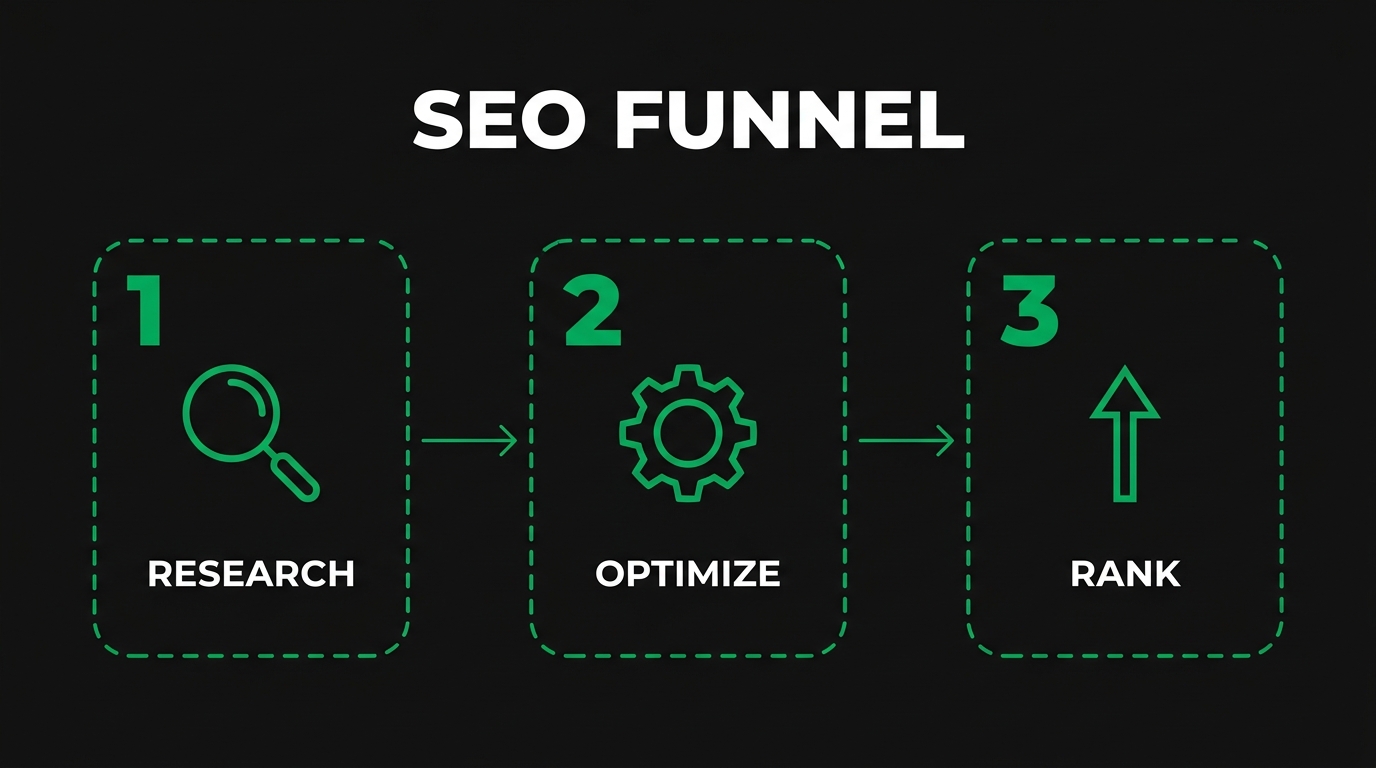
Poor lead quality in manufacturing pipelines is caused by generic keyword strategies, weak RFQ forms, slow site speed, and misaligned sales and marketing teams. The four sub-sections diagnose each root cause and prescribe the immediate fix.
Why Do Generic Keyword Strategies Attract Unqualified Inquiries?
Generic keyword strategies attract unqualified inquiries because broad terms pull research-stage students, hobbyists, distributors, and tire-kickers alongside actual procurement buyers. A page targeting "CNC machining" surfaces against millions of intent-mismatched searches, while a page targeting "5-axis CNC machining titanium aerospace AS9100" pulls only buyers with explicit procurement need. Manufacturers ranking on broad heads attract bounce-prone traffic that pads analytics dashboards but never reaches the RFQ form. The fix is to architect keyword clusters around process-material-certification combinations that mirror procurement queries rather than vanity industry terms. Pages following the lead generation strategies for b2b manufacturing playbook concentrate authority on long-tail procurement triples and filter out information-only traffic at the search-result level.
How Do Weak RFQ Forms Damage Lead Quality?
Weak RFQ forms damage lead quality by collecting either too little qualifying data or too much friction-inducing data, both of which degrade fit. Most B2B manufacturers lose conversions due to long, confusing, or multi-step RFQ forms, but shorter forms, auto-fill functionality, and guided selection improve performance, per B2B Tail. A two-field form captures contact info but no technical specification, leaving estimators to chase qualification by phone. A twenty-field form scares off real buyers and rewards only the most committed. The right form asks for company, role, process, material, target volume, certification requirement, and timeline, surfacing technical fit before a human ever responds. Conditional logic that adapts fields to selected process keeps the form short while preserving qualification depth.
What Role Does Site Speed Play in Losing Qualified Buyers?
Site speed plays a decisive role in losing qualified buyers because procurement managers research from mobile devices during plant tours, supplier visits, and trade shows. Website conversion rates drop by an average of 4.42% for each additional second of load time between 0 and 5 seconds, according to Portent. A capability page that takes seven seconds to load on a job-site cellular connection loses the buyer before the H1 even renders. Compressed images, deferred non-critical scripts, and a CDN-served template recover most of that loss. Manufacturers measuring Largest Contentful Paint and Interaction to Next Paint on procurement-intent landing pages typically uncover several seconds of avoidable delay that directly translates to lost RFQs.
Why Do Misaligned Sales and Marketing Teams Reduce Lead Quality?
Misaligned sales and marketing teams reduce lead quality by working from different definitions of "qualified" and routing leads on volume targets rather than fit thresholds. Misalignment between sales and marketing costs businesses an estimated $1 trillion annually, yet only 8% of companies report strong alignment between their sales and marketing departments, per Mutiny. In manufacturing, misalignment shows up as marketing celebrating MQL volume while sales privately drops 70% of those leads as untechnical, untimely, or unqualified. The correction is a written service-level agreement defining MQL, SQL, response-time targets, and disqualification criteria. The bridge into the next chapter is direct: once root causes are diagnosed, the search and content levers that systematically improve lead quality come into focus.
How Do You Improve Manufacturing Lead Quality Through SEO?
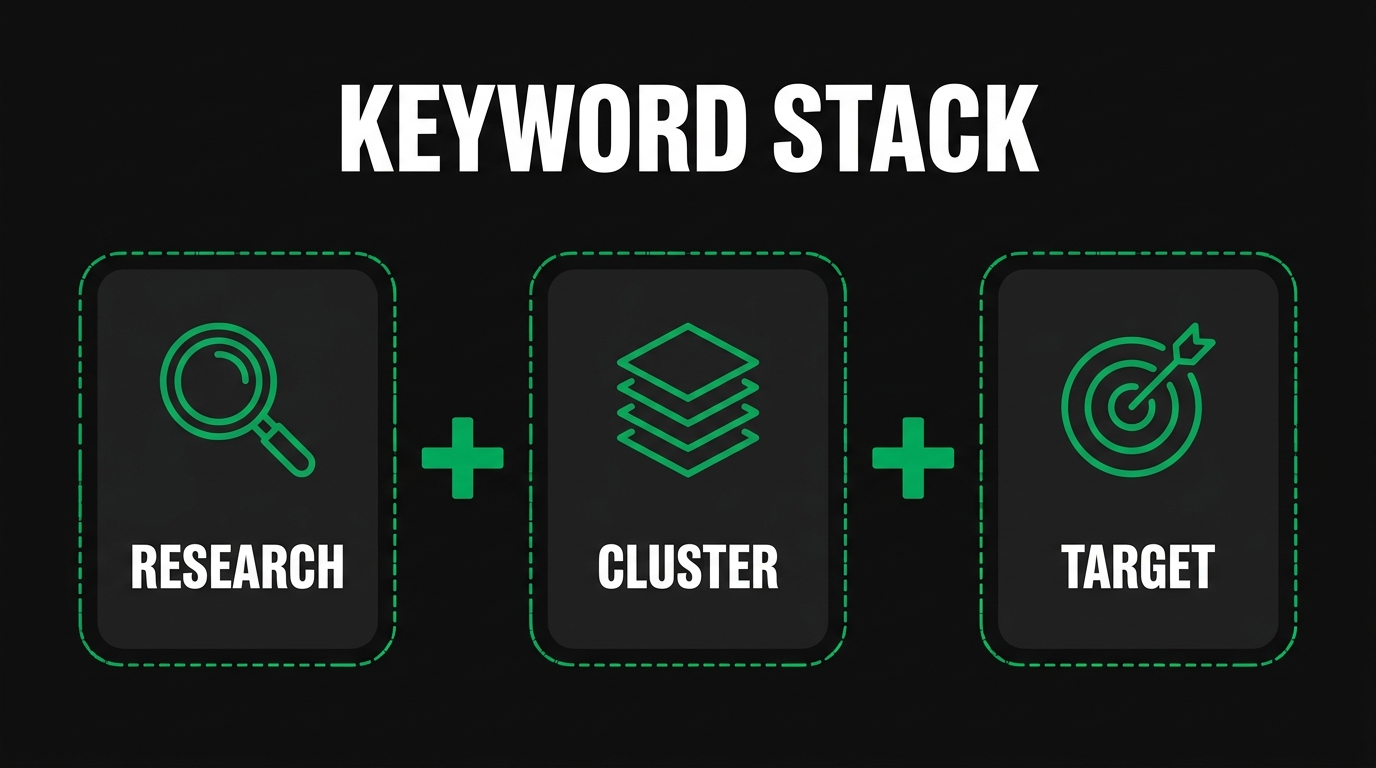
You improve manufacturing lead quality through SEO by targeting procurement-intent keywords, building topical authority, deploying technical schema, and architecting process-material-certification pages. The four sub-sections show how each lever filters unqualified traffic before it ever reaches a form.
Which Procurement-Intent Keywords Bring Higher-Quality Traffic?
Procurement-intent keywords that bring higher-quality traffic combine process, material, certification, and application in long-tail phrases mirroring how engineers and buyers actually search. Examples include "5-axis CNC machining titanium aerospace AS9100," "ISO 13485 injection molding medical device contract manufacturer," and "NADCAP heat treatment Inconel 718 supplier." These triples narrow the audience to buyers with explicit specification, quality, and intent. Vanity heads such as "manufacturer" or "supplier" attract every unrelated searcher. Procurement-intent terms typically have lower volume but radically higher conversion. Manufacturers ranking for 50 procurement triples often outperform competitors ranking for 5 vanity heads, because every visit carries pre-qualified intent. Studying seo for industrial lead generation clarifies how to map keyword clusters to each stage of the procurement journey rather than to traffic volume.
How Does Topical Authority Filter Out Unqualified Visitors?
Topical authority filters out unqualified visitors because Google increasingly rewards sites that comprehensively cover a domain with rankings for the exact long-tail queries that procurement buyers use. A manufacturer publishing 80 interconnected pages on every process, material grade, certification, and application earns rankings on procurement triples that a thin site cannot reach. Information-only seekers are diverted to broad reference pages elsewhere. Procurement-ready buyers land on technically dense pages that pre-qualify them through depth alone. The pattern is well documented in basic seo strategies for factories, which lays out the foundational topical-map architecture that powers this filtering effect over time.
What Schema and Technical Signals Help Attract Engineers and Buyers?
Schema and technical signals that help attract engineers and buyers include Organization schema with sameAs links to authoritative entity references, Product and Service schema for capability pages, FAQPage schema for spec questions, and BreadcrumbList for site navigation depth. Sites implementing structured data and FAQ blocks saw a 44% increase in AI search citations in a study by BrightEdge, per Search Engine Journal. Manufacturers should additionally implement HowTo schema for process explanations, ImageObject schema for technical drawings, and Manufacturer schema with NAICS and certification properties. These signals feed both classical SERPs and AI answer engines, ensuring procurement buyers researching from a chatbot or a Google search land on the same authoritative pages.
How Do Process, Material, and Certification Pages Improve Lead Fit?
Process, material, and certification pages improve lead fit by giving each procurement query a dedicated, deeply technical landing page that answers exactly what the buyer searched. A buyer searching "AS9100D-certified CNC machining Inconel 718" who lands on a page titled "AS9100D-Certified CNC Machining of Inconel 718 for Aerospace Components" instantly recognizes fit. A buyer landing on a generic "About Our Capabilities" page does not. Each dedicated page should cover process tolerance, material grade compatibility, certification scope, application examples, and lead-time bands. Reviewing how manufacturing seo for market share layers these pages into a competitive content moat completes the SEO lead-quality picture and bridges into the content formats that engineers and procurement managers actively consume.
What Content Formats Generate the Most Qualified Manufacturing Leads?
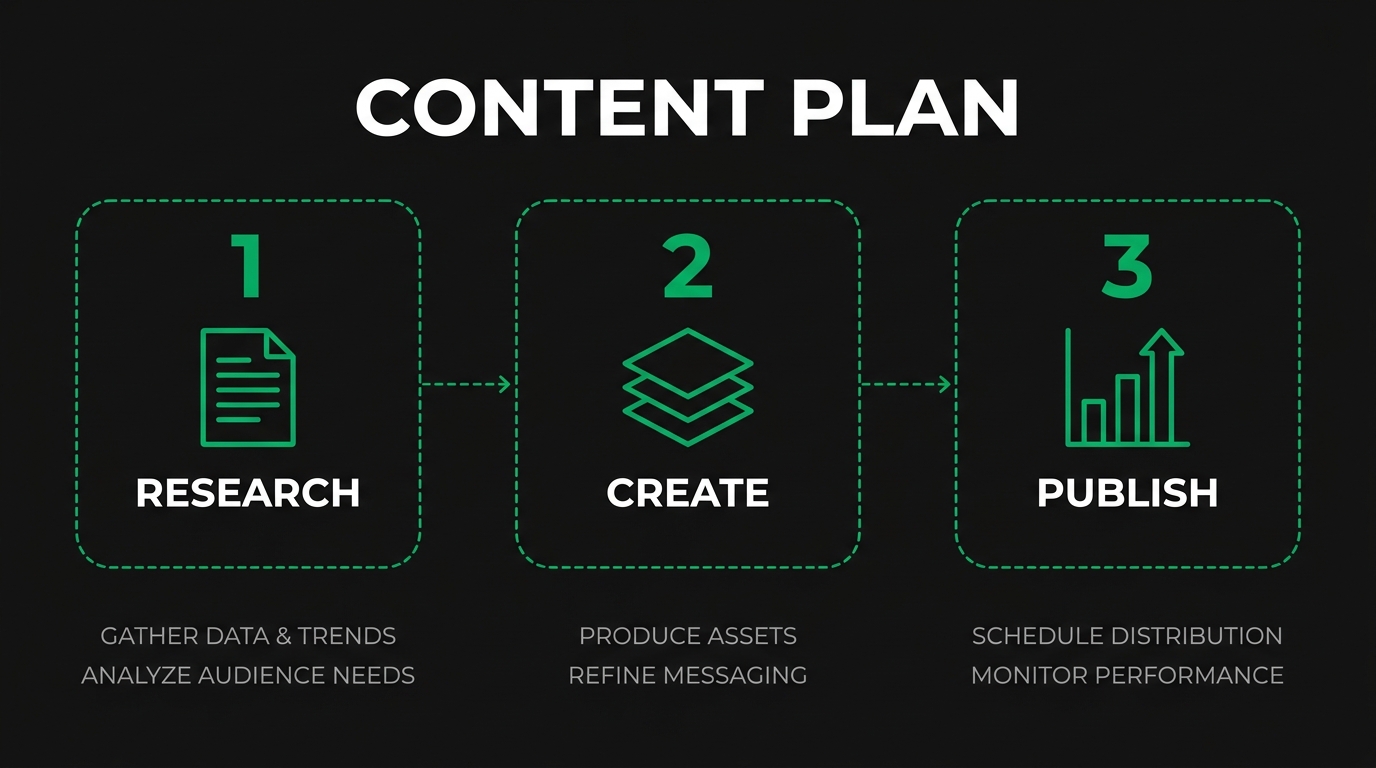
The content formats that generate the most qualified manufacturing leads are technical spec sheets, capability pages, case studies, and calculators or configurators. The four sub-sections explain why each format pre-qualifies buyers before any sales contact occurs, drawing on documented preferences of engineers and procurement managers.
Why Do Technical Spec Sheets Attract Procurement-Ready Buyers?
Technical spec sheets attract procurement-ready buyers because the document itself is the qualification gate: only buyers with active procurement need download a 12-page tolerance, material, and certification specification. Casual researchers leave at the contact-gate. The download itself is a behavioral signal worth more than ten generic page views in a lead score. Spec sheets should cover dimensional tolerance, material grade compatibility, surface finish, certification scope, lead-time bands, and minimum order quantity. Distributing them through gated forms with progressive profiling collects the technical fit data that estimators need before responding. The format also supports useful directory and citation strategy, and reviewing directory listings for manufacturing lead generation clarifies how spec-sheet hosting on industrial directories amplifies discovery by procurement researchers using vertical search.
How Do Capability Pages Pre-Qualify RFQ Submissions?
Capability pages pre-qualify RFQ submissions by stating exactly what the manufacturer can and cannot produce, which deters mismatched inquiries before a form is ever submitted. A capability page covering "5-axis CNC machining of titanium and Inconel up to 600mm part envelope, AS9100D-certified, 0.0005-inch tolerance" turns away buyers needing larger envelopes or different alloys, raising the qualification rate of remaining inquiries. Each capability page should list process specs, material list, certification scope, equipment list, and example applications. 67% of manufacturing marketers say their content strategy is moderately effective, while only 20% report very effective strategies, per the Content Marketing Institute, suggesting that most capability pages are still too generic to perform this filtering function effectively.
What Role Do Case Studies Play in Building Buyer Trust?
Case studies play a decisive role in building buyer trust because procurement committees evaluate suppliers on demonstrated outcomes, not promised capabilities. 70% of B2B buyers find case studies to be one of the most valuable types of content during their decision-making process, and 78% of B2B buyers said they were more likely to consider a vendor who provided case studies throughout their evaluation, according to SocialTargeter. Effective manufacturing case studies cover the application context, technical challenge, process selection, certification compliance, measured outcome, and named customer where confidentiality permits. The trust-density of a case study compresses procurement evaluation time and accelerates SQL conversion, especially when paired with quantified results such as on-time-delivery rates and yield improvements.
How Do Calculators and Configurators Improve Lead Fit?
Calculators and configurators improve lead fit by collecting technical specification data inline and routing only buyers whose inputs match supplier capability into the RFQ funnel. A material-cost-per-part calculator gathers process, material grade, volume, and tolerance, then displays an indicative cost band. A configurator for sheet-metal parts captures geometry, gauge, finish, and quantity. Both formats convert anonymous traffic into pre-qualified inquiries and seed the CRM with structured technical data that estimators can act on immediately. Manufacturers using configurators frequently see RFQ-to-quote conversion improve sharply because the inbound spec is already complete. Pairing these tools with best industrial link building strategies brings high-authority referrers directly into the configurator funnel and lifts both volume and fit, which sets up the account-based marketing patterns covered next.
How Does Account-Based Marketing Improve Industrial Lead Quality?
Account-based marketing improves industrial lead quality by concentrating budget, content, and outreach on a curated list of high-fit accounts rather than spraying generic campaigns across an unsegmented market. The four sub-sections cover target list selection, personalized landing pages, outreach sequences, and intent data tooling.
Which Target Account Lists Deliver the Highest-Value Leads?
The target account lists that deliver the highest-value leads combine ideal customer profile firmographics with verified procurement signals and addressable buying-committee size. High-value lists prioritize accounts that match plant headcount, industry vertical, certification requirement, annual procurement spend, and geographic footprint. Manufacturers building tier-1 lists usually start with their existing top-decile customers and reverse-engineer shared attributes, then expand to lookalikes with verified buying-committee contacts at engineering, procurement, and supply chain levels. Lists that include only a single contact per account chronically underperform; lists with three to seven contacts per account match the actual size of industrial buying committees and produce far stronger pipeline conversion.
How Do Personalized Landing Pages Increase Lead Fit?
Personalized landing pages increase lead fit by reflecting the visiting account's industry, application, and certification context inside the headline, hero copy, and case-study selection. A page personalized for an aerospace prime contractor leads with AS9100 certification, titanium and Inconel capability, and a relevant aerospace case study. A page personalized for a medical device OEM leads with ISO 13485, validated cleanroom assembly, and a relevant medical case study. The reflection of the account's own context shortens evaluation time and lifts the probability that the visit converts into a meaningful inquiry. Personalization at the industry-vertical level captures most of the upside without requiring per-account custom build.
What Outreach Sequences Work Best for Procurement Buyers?
The outreach sequences that work best for procurement buyers are multi-touch, multi-channel, and explicitly value-led rather than meeting-led. While only 16% of B2B website traffic comes from mobile devices, 80% of B2B buyers actively use their mobiles to research and make purchases during work, according to Sopro, which means mobile-optimized outreach assets are non-negotiable. Effective sequences combine email with relevant case studies, LinkedIn posts referencing the buyer's industry challenge, trade-event follow-up, and direct mail of physical sample parts to engineering contacts. Sequences pitching meetings on the first touch underperform sequences leading with a relevant technical asset.
How Do Intent Data Tools Help Prioritize Manufacturing Accounts?
Intent data tools help prioritize manufacturing accounts by surfacing which target accounts are actively researching specific processes, materials, or certifications across the industrial web. 96% of B2B marketers have seen success when using intent data to achieve their associated goals, and 99% of large corporations are utilizing intent data in some way, per The Insight Collective. Intent platforms aggregate signals from trade-publication site visits, capability-page interactions across industrial directories, and procurement keyword research, then rank accounts by activity surge. Manufacturers using intent data route SDR effort toward accounts in active research mode, doubling response rates compared with cold outbound. The natural follow-on chapter covers conversion rate optimization, since ABM-driven traffic still must convert at the form.
What Conversion Rate Optimization Tactics Boost Lead Quality?
Conversion rate optimization tactics that boost lead quality center on RFQ form structure, industrial trust signals, mobile experience, and engineer-and-procurement-targeted CTAs. The four sub-sections below show how each tactic shifts the mix of inbound inquiries toward better-qualified buyers.
How Should RFQ Forms Be Structured to Pre-Qualify Leads?
RFQ forms should be structured to pre-qualify leads by collecting process, material, certification, volume, and timeline data inline, using conditional logic to keep the form short for any single buyer. The first three fields ask name, company, and primary process; subsequent fields adapt to the selected process. A buyer selecting CNC machining sees fields for material, tolerance, and part envelope; a buyer selecting injection molding sees fields for resin, cavitation, and annual volume. Required certification appears as a checkbox group. File upload accepts STEP, IGES, and PDF drawings. Forms structured this way collect the data estimators need without scaring buyers off, and they pre-route inquiries by capability so engineering review time falls. The full mechanics are documented in how to improve manufacturing website conversion rate, which extends these patterns to thank-you pages, micro-conversions, and post-submission nurture.
Which Trust Signals Reassure Industrial Buyers Before They Convert?
The trust signals that reassure industrial buyers before they convert are certification badges, named-customer logos, case-study links, quality manuals, and quantitative performance metrics. 83% of B2B buyers trust peer experiences more than manufacturer statements, and 84% of B2B decision-makers begin their purchasing process with a reference or recommendation, per Trustmary. Manufacturers should display AS9100, ISO 9001, ISO 13485, NADCAP, IATF 16949, or sector-specific certifications above the fold on capability pages. On-time-delivery rate, first-pass yield, and average lead time should appear as quantified metrics rather than adjectives. A "speak to our customer" option is a high-conversion trust signal because it transfers credibility from supplier to peer.
How Does Mobile Experience Affect Qualified Inquiries?
Mobile experience affects qualified inquiries because procurement researchers increasingly initiate evaluation on mobile devices during plant visits, trade shows, and travel. A capability page that renders cleanly on a phone, loads in under three seconds, and exposes a tap-to-call number captures researchers who would otherwise abandon. A mobile experience that buries the RFQ form behind a sluggish navigation menu loses them. Manufacturers should test forms on iOS Safari and Android Chrome, ensure file upload works on mobile browsers, and replace dropdown menus longer than ten options with searchable inputs. Mobile-failure inquiries are not lost forever, but they convert at a fraction of the desktop rate.
What CTAs Convert Engineers and Procurement Managers Best?
The CTAs that convert engineers and procurement managers best are specific, technical, and outcome-defined rather than generic. "Get a Quote" underperforms "Submit RFQ for AS9100 CNC Machining," because specificity signals fit. "Contact Us" underperforms "Speak to a Manufacturing Engineer," because the second names the kind of person the buyer wants to reach. CTAs that pair an action with a deliverable, such as "Download AS9100 Capability Statement," pre-qualify the click. CTAs sized large enough for a thumb tap on mobile and placed at the end of every major content block double aggregate conversion rate without diluting fit. The next chapter brings the discussion full circle: even the best-converting form fails if sales and marketing are not aligned on what to do with the resulting lead.
How Do You Align Sales and Marketing for Better Lead Quality?
You align sales and marketing for better lead quality through a written service-level agreement, a documented handoff workflow, a closed feedback loop, and CRM integrations that tie every lead to pipeline and revenue. The four sub-sections detail each lever in turn.
What Does a Service Level Agreement Between Sales and Marketing Look Like?
A service level agreement between sales and marketing looks like a written document defining MQL criteria, SQL criteria, monthly volume targets, response-time targets, and disqualification grounds. The SLA should specify the exact firmographic, technical, and behavioral thresholds that promote a lead from MQL to SQL. It should define the maximum time sales has to attempt first contact (often 5 to 15 minutes for high-intent inbound). It should list valid disqualification reasons and require a CRM disposition note for each. SLAs without quantified thresholds collapse into subjective debate. SLAs reviewed quarterly and adjusted on close-rate data steadily compress sales-cycle length and improve quote-to-win rates.
How Should Marketing Hand Off Qualified Leads to Industrial Sales Teams?
Marketing should hand off qualified leads to industrial sales teams through automated CRM routing the moment scoring thresholds are crossed, with full lead context attached. The handoff record should include lead source, scoring history, page-view sequence, downloaded assets, RFQ form fields, certification requirement, and matched buying-committee contacts at the account. Sales teams should not have to ask marketing for context. Sales teams that work closely with marketing report 30% shorter sales cycles, and aligning sales and marketing leads to 38% higher sales win rates, per Sopro. Hand-off-by-spreadsheet introduces delay that destroys high-intent leads, since procurement inquiries cool within hours.
Which Feedback Loops Help Refine Lead Quality Continuously?
The feedback loops that help refine lead quality continuously are weekly disposition reviews, monthly source-attribution audits, and quarterly SLA recalibration. Sales should record disposition (qualified, disqualified-with-reason, won, lost-with-reason) on every lead. Marketing should aggregate disposition data by source, content asset, and persona to find which lead generators produce closeable pipeline versus inflated MQL counts. Loops without quantitative disposition collapse into anecdote. Loops with disposition data drive evidence-based reallocation of budget and content investment toward the channels that produce qualified industrial buyers. Quarterly SLA reviews close the loop by adjusting scoring thresholds to match observed conversion patterns.
How Do CRM Integrations Tie Leads to Pipeline and Revenue?
CRM integrations tie leads to pipeline and revenue by stamping every contact, opportunity, and closed deal with the original lead source, content asset, and campaign. Integrations should connect website forms, marketing automation, sales engagement, and the CRM into a single record. Multi-touch attribution then assigns proportional credit to every touchpoint that influenced a closed deal. Manufacturers without integration report rankings and traffic in isolation; manufacturers with integration report rankings tied to RFQ count, RFQ tied to quote, quote tied to revenue, and revenue tied to source content. The closed-loop view exposes which procurement-intent keywords, capability pages, and case studies actually generate revenue, not just clicks. The bridge into the final chapter is the natural conclusion: choosing a partner who can architect this entire system end to end.
How Should You Approach Manufacturing Lead Quality with Manufacturing SEO Agency?
You should approach manufacturing lead quality with Manufacturing SEO Agency by combining procurement-intent keyword architecture, topical authority buildout, and revenue-tied reporting into one coordinated program. The two sub-sections below outline the agency's reporting-analytics capability and recap the full guide.
Can Manufacturing SEO Agency's Reporting Analytics Service Improve Your Lead Quality?
Manufacturing SEO Agency's reporting-analytics service can improve your lead quality by tying every organic ranking to actual RFQ count, pipeline value, and closed revenue inside the CRM. Manufacturing SEO Agency provides manufacturing seo reporting and analytics that integrates rankings, RFQ submissions, and pipeline data so leadership can see which procurement-intent keywords, capability pages, and case studies generate qualified inquiries rather than vanity traffic. Manufacturing SEO Agency operates as an industrial seo agency focused exclusively on manufacturers in CNC machining, injection molding, fabrication, additive, aerospace, automotive, electronics, food and beverage, pharmaceutical, chemical, plastics, packaging, OEM, contract, and custom manufacturing. Manufacturing SEO Agency's reporting framework exposes the lowest-cost channels for qualified RFQs and reallocates budget accordingly, replacing keyword-position dashboards with revenue-attribution dashboards.
What Are the Key Takeaways About Manufacturing Lead Quality We Covered?
The key takeaways about manufacturing lead quality covered in this guide are six. First, qualified leads combine firmographic, technical, and behavioral fit, with certifications acting as a hard gate in regulated sectors. Second, measurement requires fit-and-intent scoring plus channel-level conversion KPIs and a CPQL view. Third, poor lead quality stems from generic keywords, weak RFQ forms, slow site speed, and team misalignment, each of which has a direct fix. Fourth, SEO levers including procurement-intent keyword architecture, topical authority, technical schema, and process-material-certification pages systematically filter unqualified traffic. Fifth, technical content formats, account-based marketing, and conversion rate optimization compound to lift pipeline quality. Sixth, sales-and-marketing alignment with CRM integrations turns qualified leads into closed revenue and exposes which channels actually deserve continued investment.