PPC places a manufacturer in front of procurement buyers through paid, bid-based placements on Google, Microsoft, LinkedIn, and industrial portals, while organic search earns visibility through unpaid rankings built on technical content, authority signals, and structured data. The two disciplines differ in cost behavior, buyer trust, lead quality, and long-term compounding.
This guide covers what defines each channel, how costs compare, which delivers stronger long-term ROI, how lead quality differs, when each channel wins, and the pitfalls that drain industrial budgets.
PPC and organic each represent a distinct discipline. PPC buys immediate placement above search results and across industrial publisher networks, while organic search rewards manufacturers that build topical depth on process, material, and certification queries.
Cost comparisons reveal sharp contrasts in per-click pricing, per-lead economics, and monthly burn rates across 130-day procurement cycles. Hidden costs sit beneath the surface of both channels.
ROI patterns diverge over time. Paid delivers lead flow tied directly to spend, while organic compounds as content ranks, earns backlinks, and builds entity authority inside Google's Knowledge Graph.
Lead quality signals differ sharply between paid clicks and organic arrivals. Buyers who type specific process-material-certification queries self-qualify before the click, while broad paid bids can pull lower-intent traffic.
Channel choice depends on time horizon, competitive density, capacity urgency, and funnel stage. We also cover pitfalls that waste industrial spend and tracking mistakes that distort channel comparisons.
What Defines PPC Advertising in Industrial Marketing?
PPC advertising in industrial marketing is any digital placement purchased on a per-click, per-impression, or per-lead basis to put a manufacturer in front of procurement buyers across Google, Microsoft, LinkedIn, and industrial portals. The four sub-questions below cover the main platforms, how Google Ads structures industrial campaigns, the role of LinkedIn and Bing, and how retargeting and display fit.
What Are the Main PPC Platforms for Industrial Buyers?
The main PPC platforms for industrial buyers are Google Ads, Microsoft Advertising (Bing), LinkedIn Ads, sponsored placements on industrial portals like Thomasnet and GlobalSpec, and trade publication digital sponsorships. When evaluating potential suppliers, 73% of industrial buyers pay close attention to the company's website, with Thomasnet.com visited by over 1.5 million buyers per month sourcing products and services from 500,000 North American suppliers, according to Thomasnet.
Each platform targets a distinct buyer moment. Google captures active procurement queries, Bing serves federal and government contracting audiences, LinkedIn reaches buyers by job title and seniority, and trade portals intercept buyers during supplier discovery. Platform selection should map to where your procurement audience actually researches, not to ad rep pitches.
How Does Google Ads Structure Industrial Campaigns?
Google Ads structures industrial campaigns around keyword match types, ad groups segmented by process or material, geographic targeting, and conversion tracking tied to RFQs and form fills. Manufacturing & Industrial has an average Google Ads cost per click of $2.96, with Manufacturing & Industrial clients spending the most on Google Ads overall at an average of $7,689 per month, per WordStream. A good Google Ads CTR runs 4–6% on search across industries.
Effective structure separates bottom-funnel commercial keywords from informational queries. Most industrial advertisers concentrate budget on exact-match RFQ-stage terms because the 1.84% conversion rate punishes broad-match waste. Smart bidding requires clean conversion definitions.
What Role Do LinkedIn and Bing Ads Play in B2B Manufacturing?
LinkedIn and Bing Ads play complementary roles in B2B manufacturing by reaching buyers during research and consideration rather than active search. LinkedIn filters by job title, company size, industry, and seniority, which suits manufacturers selling into specific engineering and procurement audiences. Bing carries federal and government contracting traffic that Google often misses. Sixty-seven percent of manufacturing marketers say their content strategy is moderately effective, with 85% citing LinkedIn as the social platform that delivers the best value, per the Content Marketing Institute.
LinkedIn Sponsored Content, Message Ads, and Lead Gen Forms work well for white paper offers and webinar registrations. Bing search ads often cost less per click than Google for the same industrial keywords.
How Do Retargeting and Display Networks Support Paid Campaigns?
Retargeting and display networks support paid campaigns by re-engaging buyers who visited a manufacturer's site but did not convert, keeping the brand visible through the 130-day procurement cycle. Display placements expand reach beyond search into trade publication sites, engineering forums, and procurement platforms. Retargeting lists segment visitors by page visited, allowing tailored ads for capabilities pages, spec sheets, or RFQ forms.
Display alone rarely drives RFQs; its value is pipeline maintenance rather than lead generation. Retargeting ROI depends on conversion-intent signal strength at the initial visit. Paid dimensions stack: search captures intent, display sustains awareness, and retargeting closes the loop before the organic pipeline matures.
What Defines Organic Search for Industrial Marketing?
Organic search for industrial marketing is the discipline of earning unpaid rankings on Google and Bing for procurement-intent queries on processes, materials, and certifications, using technical content, backlinks, structured data, and topical authority. Organic search drove 53.3% of all website traffic, while paid search delivered 15%, per BrightEdge. The sub-questions cover what industrial SEO is, which ranking signals matter, how technical content earns procurement traffic, and the role of backlinks and topical authority.
What Is Industrial SEO and How Does It Work?
Industrial SEO is the practice of optimizing a manufacturer's website, content, and authority signals to rank for procurement queries that engineers, purchasing managers, and supply chain directors type into search engines. It works by mapping every process-material-certification combination a buyer searches, then building dedicated pages that answer technical specifications with depth. The disciplined approach to industrial SEO lead generation combines keyword architecture, schema markup, and editorial link building to rank pages above generalist content.
Industrial SEO differs from generic SEO in vocabulary and intent. It targets queries like "AS9100 5-axis CNC titanium aerospace parts," not "CNC machining." The buyer reads the page to qualify the supplier before contact.
Which Organic Ranking Signals Matter for Manufacturers?
The organic ranking signals that matter for manufacturers are content relevance, site authority, backlink quality, structured data, page experience, mobile-friendliness, and entity recognition inside Google's Knowledge Graph. Google primarily uses the mobile version of a site's content for indexing and ranking, which Google calls mobile-first indexing, per Google Search Central. Manufacturers with slow, non-responsive sites lose rankings regardless of content quality.
Additional signals include internal linking depth, schema.org markup with sameAs references, page speed, HTTPS security, and E-E-A-T signals (experience, expertise, authoritativeness, trustworthiness). Rankings hinge on the cumulative weight of dozens of factors, not any single optimization.
How Does Technical Content Earn Procurement-Intent Traffic?
Technical content earns procurement-intent traffic by answering the exact specifications, tolerances, and certification scopes buyers verify before issuing an RFQ. Pages that document AS9100 audit scope, NADCAP requirements for special processes, or material traceability for IATF 16949 earn rankings that vague capability pages never reach. Manufacturers and industrial companies' use of paid print or other offline promotion is higher than any other group studied; however, search engine marketing gets a much higher effectiveness grade (52% vs 34%), per MarketingProfs.
Depth beats breadth. A single page covering 5-axis Swiss turning of nitinol outperforms ten shallow posts on generic machining. Buyers reward precision with clicks and RFQ submissions.
What Role Do Backlinks and Topical Authority Play?
Backlinks and topical authority play a decisive role in organic search because Google uses them as third-party validation that a manufacturer's content deserves to rank. Topical authority develops when a site publishes comprehensive coverage of every relevant process, material, and certification in its field. Backlinks from trade publications, engineering associations, and authoritative industry media signal that domain experts endorse the content.
Earned editorial links carry more weight than bulk directory listings or guest-post schemes. Domains with consistent topical coverage and PR-grade backlinks compound rankings over years, while thin-content sites remain stuck on page three. The organic lead channel rewards patience; shortcuts rarely survive algorithm updates.
How Do PPC and Organic Search Costs Compare for Manufacturers?
PPC and organic search costs compare for manufacturers across per-click pricing, per-lead acquisition, monthly budget burn, and hidden costs that rarely appear on invoices. Organic and Paid Search dominate websites' traffic, with Organic Social Media flat at 5%, contributing on average 1/3 as much traffic as Paid Search and just 1/11 as much as Organic Search, per BrightEdge. The sub-questions cover per-click costs, per-lead costs, monthly budget differences, and hidden costs.
What Is the Average Cost per Click for Industrial Keywords?
The average cost per click for industrial keywords is $2.96 in the Manufacturing & Industrial segment on Google Ads, with bids reaching higher on specialized queries that involve certifications or aerospace-grade materials. The average click rate for the first organic position in Google is 28.5%, for the second position is 15.7%, and for the third position is 11%, with only 2.5% of users clicking on the tenth position result, per Sistrix. Ranking outside the top three organic spots sharply reduces visibility.
Specialized queries cost more. Bids for "NADCAP heat treat titanium aerospace" or "ISO 13485 medical injection molding" run higher than "CNC machining" because intent is tighter and competitive density rises among qualified shops.
What Is the Average Cost per Lead for Manufacturing SEO?
The average cost per lead for manufacturing SEO varies by site maturity, with mid-sized manufacturers typically reaching effective per-lead costs in the low-three-figure range once organic content compounds over 12 to 18 months. Organic traffic conversion rates deliver between 2.7% to 3.75%, often outperforming paid search across industries, per SEO benchmark research. Industrial visitor-to-lead rates fall in the 2% to 6% band depending on form design and RFQ trust signals.
Organic CPL drops over time as content earns rankings and backlinks. The per-lead math improves sharply in years two and three because prior content continues producing RFQs without new ad spend.
How Do Monthly Budgets Differ Between PPC and Organic?
Monthly budgets differ between PPC and organic in both structure and flexibility: PPC budgets must pay for every impression every month, while organic investment produces assets that continue generating traffic after spending stops. Most industrial PPC programs run $5,000 to $25,000 per month on Google Ads alone, with additional LinkedIn and Bing spend on top. Organic budgets cover content production, link building, and technical SEO at comparable monthly rates but build permanent inventory.
Published manufacturing SEO pricing for mid-sized industrial programs commonly falls between $5,000 and $15,000 per month. Budget comparison should measure asset accumulation, not just monthly outlay.
What Hidden Costs Exist in Each Channel?
The hidden costs in each channel differ by structure: PPC carries click fraud, platform fee creep, audience list expiration, and landing-page maintenance, while organic carries content refresh cycles, technical SEO audits, and the editorial relationships required to earn links. Roughly 14% to 22% of all search campaign clicks are fraudulent, with brands losing between 15% and 25% of annual ad spend to non-human traffic, per Click Fortify.
Organic hidden costs include monthly technical audits, schema updates after Google guideline changes, and internal-linking maintenance. Both channels conceal labor cost more than media cost. Manufacturers that budget only for media miss half the true cost.
Which Channel Delivers Better Long-Term ROI for B2B Manufacturers?
The channel that delivers better long-term ROI for B2B manufacturers is organic search for horizons of 12 months or longer, while PPC wins inside the first 90 days when speed to RFQ volume matters more than cost efficiency. The sub-questions cover ROI measurement, conversion rate comparisons, the compounding effect, and attribution.
How Is ROI Measured Across PPC and Organic Search?
ROI is measured across PPC and organic search by tracking the full path from impression through RFQ to closed-won revenue, not just lead volume. Google requires that ads must clearly identify as advertisements, and ads labeled "Sponsored" appear at the top of search results to distinguish paid placements from organic results, per Google Ads Help. That labeling affects buyer trust, which feeds into conversion rate differentials.
Proper ROI calculation ties both channels to CRM pipeline stages. Rigorous measuring marketing ROI frameworks attribute revenue using first-touch, last-touch, and multi-touch models rather than defaulting to a single-click view. Without CRM integration, paid looks artificially strong because its conversions arrive within 48 hours while organic conversions trail weeks behind.
How Do Conversion Rates Compare Between Paid and Organic Traffic?
Conversion rates compare between paid and organic traffic by showing organic visitors typically converting at higher rates because they arrive with stronger pre-qualification. Industrial manufacturing sees an 8.5% conversion rate from organic search, the highest among B2B sectors tracked, per First Page Sage. Manufacturing & Industrial has an average conversion rate of 1.84% on Google Ads, per LocaliQ.
The gap widens for capital equipment. Teams that regularly calculate conversion rate at the source level see organic RFQ-stage pages outperform paid landing pages by 3x to 5x for technical B2B audiences. Organic visitors self-qualify by searching specific tolerances and certifications.
Why Does Organic Compound While PPC Does Not?
Organic compounds because ranked pages continue producing traffic without further spend, backlinks strengthen domain authority with each new publication, and entity recognition in Google's Knowledge Graph primes future rankings. SEO offers some of the highest returns in B2B, with a 748% ROI and 9.10 ROAS over three years, per Data-Mania research. PPC does not compound because pausing the budget stops impressions within hours.
The compounding effect is structural. Each new technical page on a mature domain ranks faster than the prior one because trust signals accumulate. Pipeline grows non-linearly from year one to year three on identical content production spend.
How Do Attribution Models Affect Channel ROI?
Attribution models affect channel ROI by dictating which touchpoint gets credit when a buyer converts after multiple interactions. Buyers across all geographies and sectors expect a full omnichannel experience, with respondents using an average of ten ways to interact across their journey, with the top three touchpoints being the company's website, in-person sales, and video conference, per McKinsey. Last-click attribution structurally favors paid because the final click before conversion is often a branded search after months of organic discovery.
Multi-touch attribution models give organic its fair credit, which usually flips the ROI ranking. Manufacturers relying on default Google Analytics reports undercount organic value and over-allocate paid budget. Clean attribution is the foundation of honest channel comparison.
How Does Lead Quality Differ Between PPC and Organic Search?
Lead quality differs between PPC and organic search because organic visitors self-qualify through the act of searching specific processes, materials, or certifications, while PPC keywords often catch broader research intent that has not yet reached RFQ readiness. The sub-questions cover procurement-intent signals, organic conversion patterns, lower-intent PPC clicks, and how to qualify leads from each channel.
What Signals Indicate Procurement-Intent Leads?
The signals that indicate procurement-intent leads are query specificity, time on technical content, depth of spec-sheet engagement, and form field completeness. A buyer who types "AS9100 5-axis titanium aerospace CNC" signals RFQ readiness; a buyer who types "CNC machining" is still in awareness. 75% of B2B buyers prefer a rep-free sales experience, and a Gartner survey found 61% of B2B buyers said they prefer an overall rep-free buying experience, per Gartner.
Form behavior also signals intent. Buyers who complete part-drawing uploads, certification requirement fields, and quantity specifications pre-qualify themselves. Thin forms yield thin leads regardless of channel.
Why Do Organic Leads Often Convert at Higher Rates?
Organic leads often convert at higher rates because the buyer has already narrowed supplier requirements before clicking. SEO leads close at 14.6%, compared to 1.7% for outbound leads, making SEO-generated leads roughly 8.5 times more likely to convert, per SEO Inc. The self-selection happens during the search itself, so the click represents a later-stage buyer.
Organic content pages also carry authority signals (depth, citations, visible expertise) that paid landing pages rarely match. Our broader coverage of organic leads vs paid ads documents how first-page technical content compounds qualified RFQ volume.
How Do PPC Keywords Attract Lower-Intent Clicks?
PPC keywords attract lower-intent clicks when bids drift into broad-match territory, when informational queries get commercial bids, and when negative keyword lists stay neglected. Manufacturing & Industrial has an average conversion rate of 1.84% on Google Ads, per LocaliQ, which means roughly 98% of clicks do not convert on the first visit. Broad-match "machining" bids can pull students, hobbyists, and job seekers rather than procurement specialists.
The problem compounds when ad copy promises capabilities the landing page cannot qualify against. Tight exact-match bidding and aggressive negative keyword hygiene are the mitigation.
How Can Manufacturers Qualify Leads From Each Channel?
Manufacturers can qualify leads from each channel by tagging every form submission with source, medium, campaign, and content fields, then tracking each lead through CRM pipeline stages to win/loss outcome. Channels with high lead volume but low qualification rates signal intent mismatch. Solid manufacturing lead generation frameworks standardize scoring across paid and organic so teams compare apples to apples.
Qualification fields should include annual volume, certification requirements, target lead time, and application industry. Short forms yield more submissions but fewer qualified opportunities. Long forms filter but cost volume. Channel comparison is only honest when lead definitions match.
When Should Industrial Companies Choose PPC, Organic, or Both?
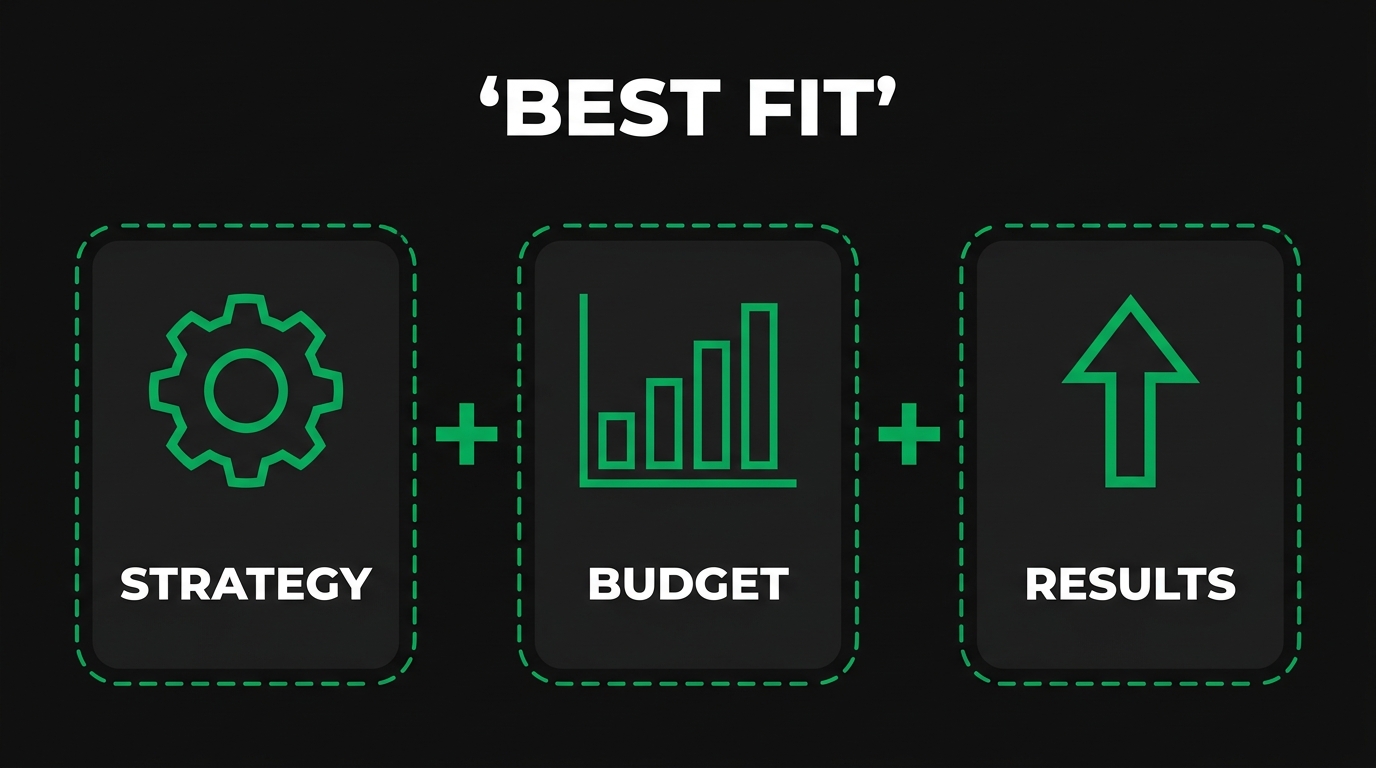
Industrial companies should choose PPC, organic, or both based on time horizon, competitive density, capacity urgency, and procurement funnel stage. The sub-questions cover scenarios that favor PPC-first, scenarios that favor organic-first, how a hybrid model works, and how budget should be allocated.
Which Scenarios Favor a PPC-First Strategy?
Scenarios that favor a PPC-first strategy include new market entry, time-sensitive capacity sales, launching a new process or service line, and competing in commoditized categories where organic ranking would take 18+ months. Manufacturers with excess capacity needing immediate fill turn to paid because campaigns produce measurable RFQs within weeks rather than months. B2B digital advertising spending in the United States amounted to an estimated 18.3 billion U.S. dollars in 2024, projected to increase to 23.05 billion U.S. dollars in 2026, per Statista.
PPC also fits geographic expansion (a Texas shop entering Ohio aerospace markets) where local search authority has not been earned. The trade-off is that every dollar buys one cycle of impressions and builds no lasting asset.
Which Scenarios Favor an Organic-First Strategy?
Scenarios that favor an organic-first strategy include manufacturers with deep technical expertise, multi-year horizons, regulated-industry credentials that buyers verify online, and budgets that cannot sustain continuous paid spend. Aerospace, medical, and automotive shops with AS9100, ISO 13485, or IATF 16949 credentials usually win organic faster because their content covers entities competitors cannot fake. The comparison between SEO vs trade shows also favors organic for long-horizon lead pipelines.
Niche capabilities (5-axis Swiss turning of nitinol, NADCAP heat treat for titanium aerospace forgings) face low search volume but high intent, where organic rankings deliver strong RFQs without paid budgets large enough to outbid generalist shops.
How Does a Hybrid PPC and Organic Model Work?
A hybrid PPC and organic model works by running paid for bottom-funnel exact-match commercial keywords while building organic on the broader topical map of process, material, and certification queries. Paid captures buyers ready to issue an RFQ this week; organic captures buyers in the three-to-twelve-month research window. Most successful manufacturing programs allocate roughly 25% to 35% of total digital budget to paid and the balance to organic content and link building.
The hybrid creates measurement leverage: paid keyword data reveals which terms actually convert, which prioritizes organic content production. Organic-ranked pages also reduce future paid spend on the same queries.
How Should Budget Be Allocated Across Channels?
Budget should be allocated across channels by mapping each dollar to a specific procurement funnel stage and measuring return at the pipeline level, not the click level. B2B organizations spend around 11% of total marketing spend on SEO, more than on market research (9%) or print advertisements (8%), per SeoProfy. A balanced industrial program commonly dedicates 50%-60% to organic content, technical SEO, and link building, 25%-35% to paid search and LinkedIn, and the remainder to email, events, and retargeting.
Allocation should shift over time. Year one often weighs paid higher for RFQ volume; year three flips toward organic as ranked content compounds. Quality of lead, not channel label, decides the final mix.
What Are the Common Pitfalls of PPC and Organic for Manufacturers?
The common pitfalls of PPC and organic for manufacturers are predictable: paid campaigns burn budget when bidding drifts broad, organic strategies stall when content lacks technical depth, and both channels suffer when tracking is sloppy. The sub-questions cover PPC budget burn, organic stalls, tracking mistakes, and how to avoid wasting digital spend.
Why Do PPC Campaigns Burn Through Industrial Budgets?
PPC campaigns burn through industrial budgets when bidding strays into broad-match keywords, when conversion tracking misfires, when click fraud goes unmonitored, and when landing pages fail to convert qualified clicks. Manufacturing & Industrial has an average conversion rate of 1.84% on Google Ads, reflecting longer sales cycles typical in B2B manufacturing, per LocaliQ. That low rate means every wasted click matters.
Other drains include neglected negative keyword lists, audience targeting that catches personal-project searchers, and remarketing lists that reset before the 130-day procurement cycle completes. Budget leaks compound when no one owns weekly pruning.
Why Do Organic Strategies Stall for B2B Manufacturers?
Organic strategies stall for B2B manufacturers when content stays generic, when topical coverage fails to cover the full process-material-certification map, when backlink profiles lack trade-publication authority, and when teams measure vanity traffic instead of RFQ outcomes. Click-through rate falls below average for all positions when the top of the SERP is full of Google Ads, with Google Ads reducing the CTR by approximately 10 percentage points; the worst click rates appear on commercial searches, per Search Engine Journal.
Site structure also stalls programs. Manufacturers often hide capability detail behind PDFs that search engines barely index. Weekly publishing on shallow topics wastes budget that could fund deep technical pages.
What Tracking Mistakes Distort Channel Performance?
Tracking mistakes that distort channel performance include single-touch attribution that overcredits paid, missing UTM parameters that misclassify organic as "direct," inconsistent conversion definitions across platforms, and CRM-marketing integration gaps that hide pipeline outcomes. Manufacturers relying on default Google Analytics last-click attribution structurally favor paid because the final click before conversion is often a branded search after months of organic discovery.
Form tracking errors also distort: separate forms on paid landing pages and organic content pages that don't unify into a single CRM record produce inflated lead counts. Clean tracking requires consistent taxonomy, CRM integration, and weekly data hygiene.
How Can Manufacturers Avoid Wasting Digital Spend?
Manufacturers can avoid wasting digital spend by tying every budget line to a pipeline outcome, auditing keyword lists monthly, unifying form tracking across paid and organic, and investing in long-horizon organic assets that reduce future paid dependency. 89.4% of manufacturers surveyed plan on emphasizing digital transformation in their operations in the next 12 months, an increase from 84.7% in Q2 of the prior period, per the National Association of Manufacturers.
Waste avoidance also requires governance. NIST research indicates that data on manufacturing digitalization is sporadic and incomplete, and U.S. manufacturers have been particularly slow to adopt digital manufacturing practices. Teams that document channel assumptions, measure weekly, and cut underperformers fast preserve budget for the tactics that actually compound pipeline.
How Should You Approach PPC vs Organic Search with Manufacturing SEO Agency?
You should approach PPC vs organic search with Manufacturing SEO Agency by anchoring on procurement-intent keyword architecture, then layering paid where speed to RFQ matters and organic where compounding value matters. The two sub-questions below cover how Manufacturing SEO Agency builds sustainable organic pipelines and the key takeaways from this guide.
Can Manufacturing SEO Agency Help Build Sustainable Organic Pipelines?
Manufacturing SEO Agency helps build sustainable organic pipelines by combining manufacturing audits, procurement-intent keyword architecture, topical authority buildout, PR-grade editorial link building, AI search visibility engineering, technical SEO remediation, and content created by writers fluent in the difference between AS9100 and ISO 13485 or 3-axis and 5-axis machining. As an industrial-only firm serving manufacturers across the United States, Manufacturing SEO Agency declines retail, SaaS, and local-services work to keep every engagement focused on procurement reality. Teams weighing outsource vs in-house SEO or considering how to choose an SEO agency can map those decisions against the program scope below.
Engagements start at $5,000/month and reach $15,000/month for multi-facility enterprise operations, scoped by process count, competitive density, and whether the work covers content, link building, or technical SEO. Reporting ties rankings to RFQs, pipeline value, and closed revenue rather than keyword positions in a vacuum.
What Are the Key Takeaways About PPC vs Organic Search for Industrial Marketing?
The key takeaways about PPC vs organic search for industrial marketing are direct: organic compounds and paid does not, organic converts at higher rates than paid because buyers self-qualify through specific process-material-certification queries, paid wins inside a 90-day window while organic wins after 12 to 24 months, and most manufacturers benefit from a hybrid that dedicates roughly 25% to 35% of budget to paid for bottom-funnel commercial keywords.
Channel choice depends on time horizon, certification depth, competitive density, and procurement funnel stage. The manufacturers that win measure both channels against pipeline value, not lead volume, and refuse to abandon organic investment during quarters when paid feels easier. Pick the strategy that survives a quarter when the budget freezes.