Schema types for product pages are the specific Schema.org classes and properties that describe a product, its offers, its ratings, and its relationships so search engines can render richer SERP features. We use this guide to map every schema type that applies to a product page, from the foundational Product class to specialized subtypes, technical identifiers, and validation routines.
This guide covers what schema markup does for product pages, core Product and Offer types, technical schema types manufacturers rely on, specialized extensions for digital and industrial catalogs, the properties every product page should carry, selection logic for the right schema per page, and the validation workflow that keeps deployments error-free.
The first section defines structured data, explains the formats Google accepts, and clarifies how rich results differ from standard listings. The second walks through Product, Offer, AggregateOffer, AggregateRating, and Review: the baseline types behind almost every product rich result.
The technical section turns to ProductGroup, ProductModel, IndividualProduct, GTIN, MPN, SKU, and the properties that capture material, dimensions, tolerances, and certifications. The specialized section extends coverage to SoftwareApplication, Vehicle, Service, FAQPage, HowTo, and VideoObject.
The properties section lists the required and recommended fields Google looks for, including availability, priceValidUntil, itemCondition, shippingDetails, and hasMerchantReturnPolicy. The selection section helps teams pick the right schema for B2B, spec-sheet, and PLP pages. The validation section covers the Rich Results Test, Schema Markup Validator, common errors, and scaling strategy for large catalogs.
What Is Schema Markup and Why Does It Matter for Product Pages?
Schema markup is structured data in a shared vocabulary that describes products, offers, and ratings so Google can render richer SERP features. This section defines structured data, lists the formats Google accepts, and contrasts rich results with plain listings.
What Does Structured Data Actually Do for a Product Page?
Structured data tells Google exactly what a product page is about so the engine can display price, availability, ratings, and images beyond a plain blue link. Google's official guidance states: "Add Product structured data to your product pages, and Google can show product information in a richer manner in search results, including Google Images" (Google Search Central). Adoption is wide: 42 percent of mobile pages carry structured data, and Product is one of the most-used types on e-commerce sites. For a manufacturer, that translates into better thumbnail visibility, spec prominence in the SERP snippet, and eligibility for shopping and merchant-listing experiences. We treat this as the foundation of our schema markup guide methodology for industrial catalogs.
Which Formats Does Google Accept for Product Schema?
The formats Google accepts for product schema are JSON-LD, Microdata, and RDFa, with JSON-LD as the recommended serialization (Google Search Central). JSON-LD ships as a script tag in the page head or body and decouples markup from visible HTML, which makes templated deployment safer across thousands of SKUs. Microdata and RDFa remain supported for legacy stacks, but most modern CMS integrations, CDN injectors, and tag managers emit JSON-LD. Properties such as additionalProperty, category, shippingDetails, and custom MPN/GTIN identifiers slot cleanly into the JSON-LD object without touching the rendered HTML, which is why engineering teams standardize on it.
How Do Rich Results Differ from Standard Search Listings?
Rich results differ from standard search listings by showing enhanced visual and data features like price, availability, star ratings, thumbnails, and shipping information inside the SERP row. Google expanded this with product merchant listings, a richer appearance feature now available to any seller, not just those who submit feeds to Merchant Center (Google Search Central Blog). Standard listings render only title, URL, and meta description. Rich results earn more SERP real estate, win more clicks, and increasingly anchor LLM citations. The business case for schema on product catalogs is straightforward and we cover it in depth when we explain schema on industrial ecommerce. Rich results depend on valid, complete markup, which the next section's core types define.
Which Core Schema Types Apply to Product Pages?
The core schema types that apply to product pages are Product, Offer, AggregateOffer, AggregateRating, and Review. This section defines each type, explains when to use it, and clarifies how the types nest together in a valid JSON-LD block.
What Is the Product Schema Type and When Should You Use It?
Product is the foundational Schema.org type for any offered product or service and is the first schema to apply to any product page. Schema.org defines Product as "Any offered product or service. For example: a pair of shoes; a concert ticket; the rental of a car; a haircut; or an episode of a TV show streamed online" (Schema.org). Use Product for physical goods, configurable items, replacement parts, and industrial components that sit in a catalog. Subtypes such as ProductGroup, ProductModel, IndividualProduct, and Vehicle extend Product when a page needs to describe variants, prototypes, single-instance units, or motor vehicles specifically. Product alone is enough for a basic rich result; the other core types stack on top of it.
How Does the Offer Schema Work with Product Markup?
Offer describes the commercial terms under which a Product is available: price, currency, availability, condition, and seller. Schema.org defines Offer as representing "an offer to transfer some rights to an item or to provide a service" (Schema.org). In practice, you nest one or more Offer objects inside the Product's offers property. itemCondition accepts ItemAvailabilityEnumeration values including NewCondition, UsedCondition, RefurbishedCondition, and DamagedCondition, which matters for surplus distributors and refurbished industrial equipment. A valid Offer needs price, priceCurrency, and availability at minimum, and those three properties drive most of the eligibility for shopping-style rich results.
When Should You Add AggregateOffer for Multiple SKUs?
Add AggregateOffer when a single product page represents multiple offers, such as the same component available from multiple distributors or multiple price tiers for volume breaks. Schema.org explains: "When a single product is associated with multiple offers (for example, the same pair of shoes is offered by different merchants), then AggregateOffer can be used. It has properties lowPrice, highPrice, offerCount, and priceCurrency" (Schema.org). For industrial marketplaces and distributor catalogs, AggregateOffer is the correct choice on landing pages that surface a price range rather than a single transactable unit. For a single SKU with one price, stick with a plain Offer.
What Role Does AggregateRating Play in Product Visibility?
AggregateRating earns the star rating visible in SERP snippets and is one of three properties (along with offers and review) that satisfy Google's Product rich-result eligibility rule. Google confirms: "For merchant listing experiences, required properties on Product are name, image, and either offers, review, or aggregateRating" (Google Search Central). AggregateRating requires ratingValue, itemReviewed, and either reviewCount or ratingCount. For industrial buyers, the rating bar signals third-party validation in a market where review count is usually low, so even a handful of honest ratings with verified reviewCount outperforms a blank listing.
Why Are Review Schema Properties Critical for Industrial Buyers?
Review schema properties are critical for industrial buyers because they surface the trust signals that procurement teams look for in a supplier: author, rating, and the specific item under review. Schema.org defines Review as "A review of an item, for example, of a restaurant, movie, or store," with required properties author, reviewRating, and itemReviewed (Schema.org). For B2B buyers, reviewBody text that names the application, tolerance, or certification context carries more weight than a five-star vanity rating. Schema-level Review nesting makes those details machine-readable for LLM answer engines as well as classical SERPs. The next section moves from core types to the technical subtypes that matter most for manufacturers.
What Technical Product Schema Types Matter for Manufacturers?
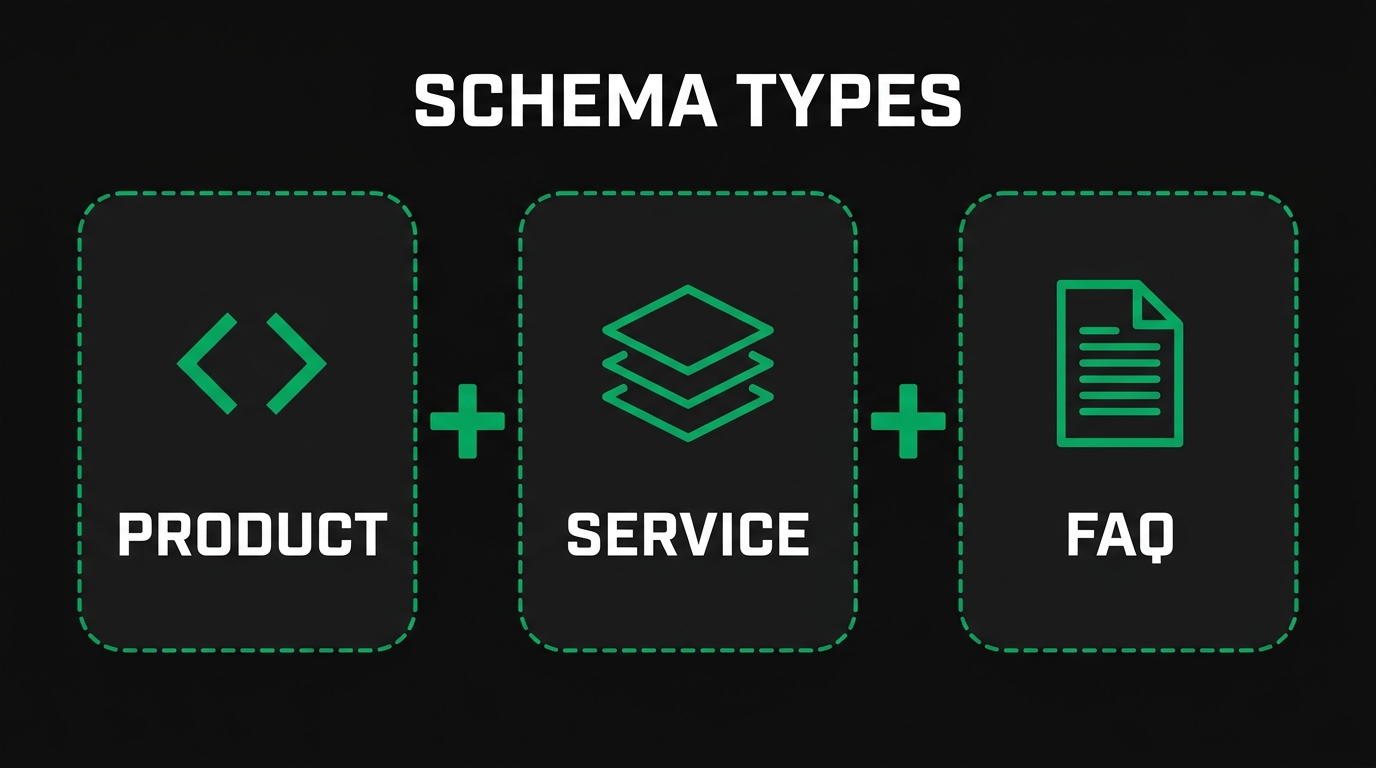
The technical product schema types that matter for manufacturers are ProductGroup, ProductModel, IndividualProduct, and the identifier and certification properties that describe industrial SKUs. Google has migrated Manufacturer Center capabilities into Merchant Center, so clean on-page schema now carries authoritative product data directly.
What Is ProductGroup and How Does It Handle Variants?
ProductGroup is the Schema.org type that clusters SKU variants of the same product under a single parent entity. Schema.org defines ProductGroup as representing "a group of Products that vary only in certain well-defined ways, such as by size, color, material etc. The ProductGroup serves as a parent entity for the specific variants. The property productGroupID on Product links a variant to its parent ProductGroup" (Schema.org). For a manufacturer selling a bolt in forty diameter-length-grade permutations, the parent page uses ProductGroup and each child SKU uses Product with isVariantOf pointing back. Google then understands the catalog structure rather than treating forty SKUs as forty unrelated products, which is critical for the component vs finished product schema distinction we apply on complex BOMs.
How Does ProductModel Describe Configurable Industrial Products?
ProductModel describes configurable industrial products as prototypical specifications rather than stocked SKUs. Schema.org defines ProductModel as "a datasheet or vendor specification of a product (in the sense of a prototypical description). It is a subtype of Product and is commonly used with the isVariantOf and predecessorOf properties" (Schema.org). Use ProductModel for build-to-order CNC fixtures, configurable pumps, or modular machinery where the page describes a blueprint rather than an available unit.
Manufacturing SEO Agency regularly maps ProductModel across configurable industrial catalogs so each spec variation stays crawlable and attributable to its parent SKU family.
The material property accepts a Product, text, or URL and describes what the item is made from, which lets a ProductModel page anchor material grade alongside the model designation.
Which Properties Capture Material, Dimensions, and Tolerances?
Material, dimensions, and tolerances are captured by the material, width, height, depth, weight, and additionalProperty properties on Product. additionalProperty expects PropertyValue and, per Schema.org, "can be used for any properties that are not explicitly defined or for which no specific schema.org property is available. It is the canonical way to express custom attributes such as tolerances or certifications" (Schema.org). For tolerances on a machined part, encode each as a PropertyValue with name ("Diametric tolerance"), value ("0.005"), and unitText ("mm"). This is the same pattern we teach for manufacturing specifications SEO when spec sheets need to be both human-readable and machine-parseable.
What Are the GTIN, MPN, and SKU Identifier Requirements?
GTIN, MPN, and SKU are the three product identifiers Google uses to link an industrial product to the global product graph. GS1 defines GTIN as "an identifier for trade items, developed by GS1. Such identifiers are used to look up product information in a database (often by entering the number through a bar code scanner pointed at an actual product)" (GS1). MPN is the Manufacturer Part Number and uniquely identifies a product to its manufacturer; SKU is the retailer-internal stock identifier. For new products, supply at least one of GTIN or MPN plus a brand name. This is where industrial keywords converge with schema: the part number a buyer types is usually the MPN, and the MPN in markup lets Google match the query to your page.
How Do You Mark Up Certifications and Compliance Attributes?
Certifications and compliance attributes are marked up using the hasCertification property on Product (or Organization or Service) with a Certification object containing certificationIdentification, certificationStatus, and validIn.
Manufacturing SEO Agency applies this pattern across regulated catalogs in aerospace, medical, and automotive, where certifications like AS9100, ISO 13485, NADCAP, and IATF 16949 gate buying decisions.
Schema.org defines Certification as "an official and authoritative statement about a subject, for example a product, service, person, or organization. It includes properties such as certificationIdentification, certificationStatus, and validIn" (Schema.org). For AS9100, ISO 13485, NADCAP, or UL listings, we recommend one Certification node per credential with the issuing body as certifiedBy. Machine-readable certifications move industrial pages up the trust hierarchy for procurement-intent queries. The next section extends this foundation into specialized schema types.
How Do Specialized Schema Types Extend Product Pages?
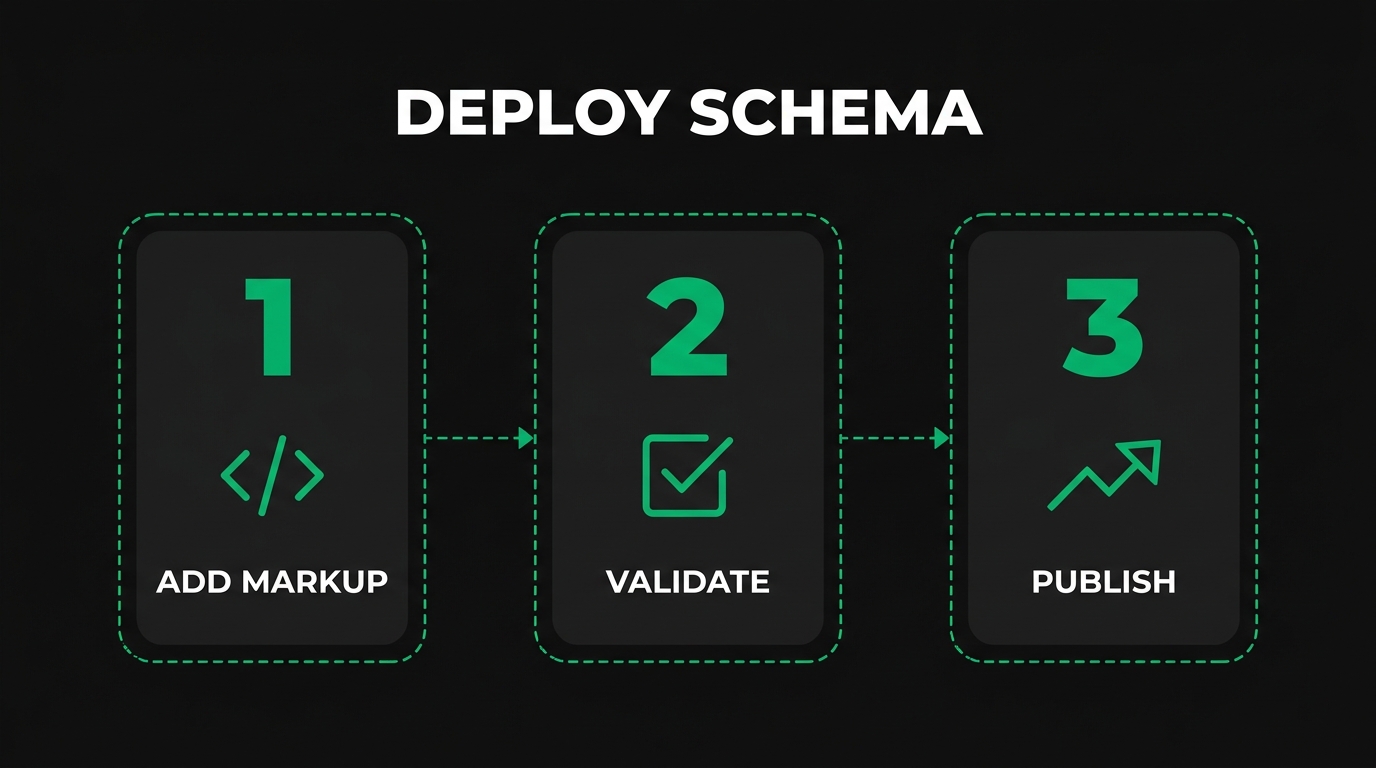
Specialized schema types extend product pages by replacing or complementing the base Product class when the offering is software, a vehicle, a service, or supporting content like FAQs and videos. This section walks through SoftwareApplication, Vehicle, IndividualProduct, Service, FAQPage, HowTo, and VideoObject.
What Is SoftwareApplication Schema for Digital Products?
SoftwareApplication is the Schema.org type for digital products, apps, and software downloads. Schema.org defines SoftwareApplication as "A software application. It includes properties such as applicationCategory, operatingSystem, softwareVersion, and downloadUrl. It is used in place of Product for digital/app products" (Schema.org). For manufacturers, this applies to machine-control firmware, PLC configuration utilities, simulation suites, and digital twins distributed as downloads. Key properties include operatingSystem ("Windows 11, Linux"), softwareVersion, fileSize, downloadUrl, and softwareRequirements. A SoftwareApplication page should include an offers block for paid software, the same way Product does, so pricing and licensing terms remain machine-readable.
When Should You Use Vehicle or IndividualProduct Subtypes?
Use Vehicle when the product is a land, water, air, or space transport device, and use IndividualProduct when the page describes a single identifiable unit rather than a product line. Schema.org states that IndividualProduct "represents a single, identifiable instance of a certain product, e.g. the car with a specific VIN, or the Aston Martin DB7 with the vehicle identification number 12345. It is a subtype of Product" (Schema.org). For manufacturers, IndividualProduct fits used capital equipment listings where each machine has its own serial number, hour meter, and condition report. Vehicle fits fleet and industrial mobility products and adds vehicleEngine, vehicleTransmission, and vehicleIdentificationNumber.
How Does Service Schema Complement Product Markup for Custom Manufacturing?
Service schema complements Product markup for custom manufacturing by describing the work performed rather than a stocked item. Schema.org defines Service as "A service provided by an organization, e.g. delivery service, print services, etc. Service is a subtype of Intangible and is distinct from Product; it is used for service offerings including custom manufacturing services" (Schema.org). A CNC job shop landing page typically carries both: Service for the capability (5-axis machining, laser cutting, precision grinding) and Product for any catalog item available for direct purchase. Service accepts areaServed, provider, hoursAvailable, and serviceType, which lets a procurement page signal geographic reach and process specialization without misusing Product.
What Is FAQPage Schema and How Does It Support Product Queries?
FAQPage schema is the structured data type that marks up question and answer pairs so Google can render FAQ rich results and feed LLM answer engines. Google documents FAQPage as "eligible to show as rich results in search. It uses the FAQPage type containing a mainEntity of Question items, each with an acceptedAnswer of type Answer" (Google Search Central). For product pages, FAQPage captures buyer questions about compatibility, certifications, lead times, and minimum order quantities. Even after Google narrowed FAQ rich-result visibility, the markup still helps answer engines and AI overviews cite the page, so it remains a high-value addition to any product detail page with recurring sales questions.
How Do HowTo and VideoObject Schemas Enhance Product Content?
HowTo and VideoObject schemas enhance product content by making installation steps and product videos machine-readable for carousels, key moments, and LLM citations. VideoObject requires name, description, thumbnailUrl, and uploadDate and unlocks Video rich results, key moments, live badges, and host-carousel eligibility (Google Search Central). HowTo marks up a set of steps to complete a task with support for images, tools, materials, and time estimates; Google narrowed HowTo rich-result visibility for consumer queries, but the markup still feeds entity understanding. For industrial pages, VideoObject attached to a product video delivers the largest SERP gain today. The next section drills into the properties every product page needs to include.
Which Schema Properties Should Every Product Page Include?
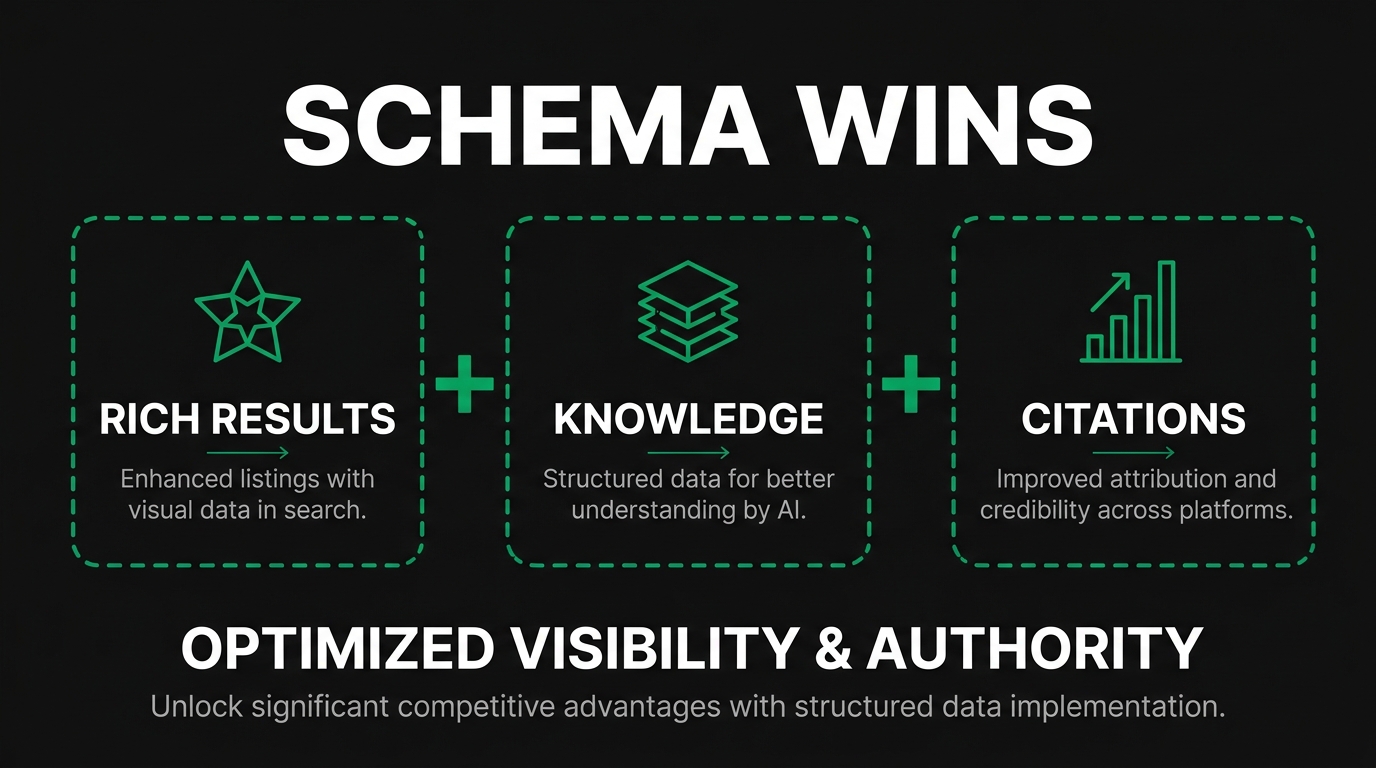
Every product page should include the required Product properties plus the recommended ones that unlock the richest SERP appearance. This section lists required and recommended properties and explains what availability, priceValidUntil, itemCondition, shippingDetails, and hasMerchantReturnPolicy do for visibility.
What Are the Required Properties Google Expects on Products?
The required properties Google expects on Products for merchant listing experiences are name, image, and one of offers, review, or aggregateRating. Google confirms: "For merchant listing experiences, required properties on Product are name, image, and either offers, review, or aggregateRating" (Google Search Central). AggregateRating adds "The average rating based on multiple ratings or reviews" with ratingValue, itemReviewed, and either reviewCount or ratingCount required. For product snippet rich results, you also need review with author and reviewRating. Leave any of these required fields blank and Google disqualifies the page from enhanced appearance, regardless of how rich the rest of the JSON-LD is. The implement product schema playbook walks through a working JSON-LD example with every required field in place.
Which Recommended Properties Boost Eligibility for Rich Results?
The recommended properties that boost eligibility for rich results are aggregateRating, brand, gtin, mpn, sku, priceValidUntil, shippingDetails, hasMerchantReturnPolicy, and itemCondition. Google lists these as recommended Product properties and notes that pages without them receive "Valid with warnings" status in Search Console (Google Search Central). Recommended properties are what separate a minimal-eligible page from a fully-featured merchant listing with shipping, return, and condition badges in the SERP row. Brand signals manufacturer identity; gtin/mpn/sku anchor the product to the global catalog; the offer-detail properties populate the shopping-style snippet. Treat all nine as mandatory for any page you want to rank for buyer-intent queries.
How Do availability, priceValidUntil, and itemCondition Affect Visibility?
availability, priceValidUntil, and itemCondition directly affect SERP visibility by turning static listings into live shopping snippets. Per Schema.org, availability accepts ItemAvailability values such as InStock, OutOfStock, PreOrder, BackOrder, Discontinued, LimitedAvailability, and SoldOut (Schema.org). priceValidUntil defines "the date after which the price is no longer available" as a Date. itemCondition takes NewCondition, UsedCondition, RefurbishedCondition, or DamagedCondition. Stale priceValidUntil dates trigger Search Console warnings and cause Google to suppress price in the snippet. Keep availability and priceValidUntil dynamically populated from inventory, and itemCondition tied to the SKU template so refurbished and used equipment listings render correctly.
What Is shippingDetails and Why Does It Matter?
shippingDetails is the OfferShippingDetails type that describes shipping destination, delivery time, and rate for a product offer, and Google uses it to display shipping cost directly in Shopping results (Schema.org). The object accepts shippingDestination (a DefinedRegion), shippingRate (a MonetaryAmount), and deliveryTime (a ShippingDeliveryTime with handlingTime and transitTime). For industrial distributors, shippingDetails lets the SERP show "Free shipping" or "Ships from Ohio, 2-3 business days" without the buyer clicking through. We see click-through lifts in the double digits once shippingDetails is populated on merchant-eligible pages, because the friction of guessing freight cost disappears from the first result.
How Does hasMerchantReturnPolicy Influence SERP Appearance?
hasMerchantReturnPolicy influences SERP appearance by unlocking return-policy badges in merchant-listing and shopping-style results. Schema.org documents MerchantReturnPolicy as describing "return policy details including returnPolicyCategory, merchantReturnDays, and returnMethod, and is used by Google to display return policy information in Shopping results" (Schema.org). returnPolicyCategory accepts values such as MerchantReturnFiniteReturnWindow, MerchantReturnUnlimitedWindow, and MerchantReturnNotPermitted. For B2B, even a conservative 30-day finite window builds buyer confidence versus silence. Populate the return policy once at the Organization level and reference it with sameAs from each Product to avoid duplicating the object across thousands of SKUs. The next section translates all these properties into selection logic.
How Do You Choose the Right Schema Type for Each Product Page?
You choose the right schema type for each product page by asking what the page actually represents: a single SKU, a variant family, a prototype, a listing grid, or a spec sheet. This section gives the selection questions, the B2B vs consumer differences, PLP vs PDP rules, spec-sheet patterns, and when nesting beats flat markup.
What Questions Should You Ask Before Selecting a Schema Type?
The questions to ask before selecting a schema type are about page intent, purchasability, and hierarchy. Run this short checklist on every page template:
- Is the page selling one transactable unit, a family of variants, or a prototype specification?
- Are prices, availability, or review data rendered on this page?
- Does the page describe a physical good, a service, a software download, or a vehicle?
- Is the page a listing of multiple products or a single product detail view?
- Does the page carry certifications, material grades, or regulated attributes?
The answers route you to Product, ProductGroup, ProductModel, Service, SoftwareApplication, or Vehicle. Start with the basics of technical SEO basics when the engineering team needs a primer before schema design.
How Do B2B Industrial Products Differ from Consumer Products in Schema Needs?
B2B industrial products differ from consumer products in schema needs because buyers search by part number, material grade, and certification rather than brand or style. Schema.org's category property "can be a Thesaurus/Taxonomy, Text, URL, CategoryCode, or PhysicalActivityCategory" and is the canonical way to anchor a B2B product to its industrial taxonomy such as UNSPSC or eClass (Schema.org). B2B pages rely on additionalProperty for tolerances, hasCertification for compliance, MPN for part numbers, and Service for process capabilities. Consumer pages lean on brand, color, size, and rating. Industrial schema therefore carries heavier metadata payloads and a flatter dependence on AggregateRating for visibility.
What Is the Difference Between a Product Listing Page and a Single Product Page?
The difference between a product listing page (PLP) and a single product page (PDP) is that a PLP presents many products in a grid while a PDP describes one product in detail. Google's guidance says PLPs should use an ItemList wrapping Product summaries with at minimum name, image, and url, while PDPs carry the full Product JSON-LD with offers, identifiers, and descriptive properties. Do not put full Product markup with price and aggregateRating on a PLP row: Google treats that as the canonical product and may surface the PLP URL in the SERP instead of the PDP. ItemList of Product URLs keeps the hierarchy clean.
How Should You Mark Up a Spec Sheet or Datasheet Page?
Mark up a spec sheet or datasheet page using ProductModel or Product with a heavy additionalProperty payload and, when relevant, a downloadable associatedMedia of type DataDownload. Schema.org defines ProductModel as "a datasheet or vendor specification of a product (in the sense of a prototypical description). It is a subtype of Product and is commonly used with the isVariantOf and predecessorOf properties" (Schema.org). Each specification becomes a PropertyValue with name, value, unitText, and minValue/maxValue when tolerances apply. Add hasCertification for regulated attributes and material for composition. The resulting page ranks for highly specific procurement queries because the machine-readable specs match the exact string buyers type.
When Does Nested Schema Outperform Flat Markup?
Nested schema outperforms flat markup when entities genuinely relate to each other, because nesting expresses those relationships as a graph rather than repeating them as strings. A Product nested with brand as an Organization, manufacturer as an Organization, offers as an Offer, hasCertification as a Certification, and review as a Review object lets Google resolve every entity to its own Knowledge Graph node. Flat markup that repeats the brand name as a string in multiple properties fragments the entity signal. Always nest when Schema.org supports an object type for the property; use a string only when no typed object exists. The next section covers validation and deployment at scale.
How Do You Validate and Deploy Product Schema Without Errors?
You validate and deploy product schema without errors by running every template through the Rich Results Test and Schema Markup Validator before launch, then monitoring Search Console for drift. This section covers the tools, the most common errors, debugging, scaling, and ongoing maintenance.
Which Tools Confirm Your Structured Data Is Valid?
The tools that confirm your structured data is valid are the Google Rich Results Test, the Schema Markup Validator, and the Enhancements report in Google Search Console. Google's Rich Results Test is "a tool that lets you validate your structured data and preview your Google Search rich results. It tests rendered output (including JavaScript-injected markup) against Google's eligibility rules for rich-result features" (Google Search Central). The Schema Markup Validator at validator.schema.org checks conformance to the Schema.org vocabulary without evaluating Google-specific rules. JSON-LD itself is a W3C Recommendation published in 2014, which means any validator tracks a stable spec. Run both tools on every product template before promoting it to production.
What Are the Most Common Product Schema Errors and Warnings?
The most common Product schema errors and warnings are missing image, missing offers.price, missing review.reviewRating.ratingValue, and a missing offers, review, or aggregateRating field entirely. Google documents these exact errors: "The most common Product markup errors Google logs are 'Missing field image', 'Missing field offers.price', 'Missing field review.reviewRating.ratingValue', and 'Either offers, review, or aggregateRating should be specified'" (Google Search Central). Warnings typically flag missing recommended properties like brand, gtin, or priceValidUntil. Errors disqualify the page from rich results; warnings downgrade the SERP appearance. A pre-launch QA that fails the build on any error class is the simplest way to keep production clean.
How Do You Debug Missing Rich Results in Search Console?
Debug missing rich results in Search Console by opening the Enhancements section, identifying invalid and warning items, and using the Rich Results Test on the live URL to inspect rendered markup. Google Search Central Help documents that Search Console "surfaces structured-data errors per rich-result category under the Enhancements section, including 'Invalid items' that are ineligible for rich results and 'Valid with warnings' items where recommended properties are missing" (Google Search Central Help). Common root causes include client-side rendering that Googlebot misses, stale priceValidUntil dates, dynamic inventory not firing availability, and cached templates missing a new required field. Always test the rendered DOM, not just the source HTML.
How Should You Scale Schema Across Thousands of Product Pages?
Scale schema across thousands of product pages using templated JSON-LD generated at build time from the product database, with optional CDN injection or Google Tag Manager for legacy stacks. Tag managers, CMS integrations, and WordPress schema plugins each have a role depending on how the catalog is built. For monolithic catalogs, template the JSON-LD block in the PDP theme with every property bound to a database field; for headless setups, emit JSON-LD at the edge. Never hand-write JSON-LD per SKU. The catalog architecture matters as much as the markup itself, which is why we treat large catalog architecture as a parallel workstream to schema deployment.
What Ongoing Maintenance Does Product Schema Require?
Ongoing product schema maintenance requires weekly Search Console checks, monthly template audits, and synchronization with inventory and pricing data feeds. The weight property expects a QuantitativeValue using unitCode values from the UN/CEFACT Common Code for units of measure (Schema.org), which illustrates how many properties depend on controlled vocabularies that evolve. Audit availability transitions, priceValidUntil rollovers, and hasMerchantReturnPolicy updates every quarter. Track Google's structured data documentation for new required fields; Product required fields shifted more than once in the last three years. A stale schema implementation silently loses rich-result eligibility over time. The bridge section explains how to run all of this at scale.
How Can a Manufacturing SEO Agency Help You Implement Product Schema at Scale?
Manufacturing SEO Agency helps manufacturers implement product schema at scale by combining technical SEO remediation, templated JSON-LD deployment, and ongoing monitoring tied to procurement pipeline. Google itself recommends JSON-LD "because it's the easiest to implement at scale and maintain."
Can Manufacturing SEO Agency's Technical SEO Remediation Solve Schema Gaps on Your Product Catalog?
Yes, Manufacturing SEO Agency's technical SEO remediation solves schema gaps on product catalogs through a workflow built specifically for industrial SKUs. The team audits every PDP template, maps required and recommended properties against Google's current spec, writes templated JSON-LD tied to the product database, and validates with the Rich Results Test and Schema Markup Validator before promotion. Manufacturing SEO Agency specializes in JSON-LD with Wikipedia sameAs references for entity grounding, additionalProperty blocks for tolerances, hasCertification nodes for AS9100 and NADCAP, and ProductGroup parents for variant families. Because engagements tie rankings to RFQs and closed revenue, schema fixes are prioritized by their impact on buyer-intent queries, not vanity traffic. The result is schema on industrial ecommerce done correctly across thousands of pages.
What Are the Key Takeaways About Product Page Schema Types We Covered?
The key takeaways about product page schema types are: Product is the foundation and the other types stack on top; Offer, AggregateOffer, AggregateRating, and Review are the core nested types that drive rich-result eligibility; ProductGroup, ProductModel, and IndividualProduct solve variant, prototype, and unit-specific pages respectively; GTIN, MPN, SKU, hasCertification, and additionalProperty carry the metadata buyers search by; SoftwareApplication, Vehicle, Service, FAQPage, and VideoObject extend coverage for specialized pages; availability, priceValidUntil, itemCondition, shippingDetails, and hasMerchantReturnPolicy unlock the richest SERP appearance; and the Rich Results Test, Schema Markup Validator, and Search Console Enhancements report gate every deployment. Choose the type that matches the page's actual intent, nest entities where Schema.org defines a typed object, and template JSON-LD so every SKU inherits a clean, validated payload.